
REMEDIAL III REnal Insufficiency Following Contrast MEDIA Administration
- Slides: 22
REMEDIAL III REnal Insufficiency Following Contrast MEDIA Administration III Tria. L Urine flow rate-guided versus left-ventricular end-diastolic pressureguided hydration in high-risk patients for contrast-induced acute kidney injury. Carlo Briguori, MD, Ph. D Interventional Cardiology Mediterranea Cardiocentro, Naples, Italy
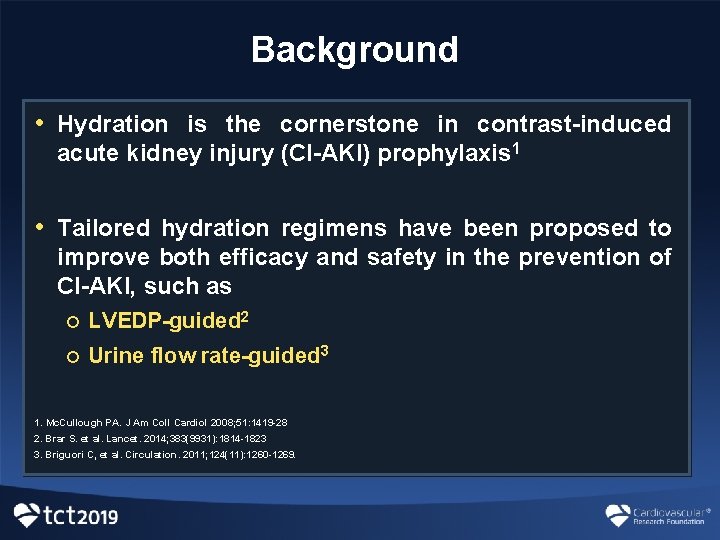
Background • Hydration is the cornerstone in contrast-induced acute kidney injury (CI-AKI) prophylaxis 1 • Tailored hydration regimens have been proposed to improve both efficacy and safety in the prevention of CI-AKI, such as ¡ LVEDP-guided 2 ¡ Urine flow rate-guided 3 1. Mc. Cullough PA. J Am Coll Cardiol 2008; 51: 1419 -28 2. Brar S. et al. Lancet. 2014; 383(9931): 1814 -1823 3. Briguori C, et al. Circulation. 2011; 124(11): 1260 -1269.
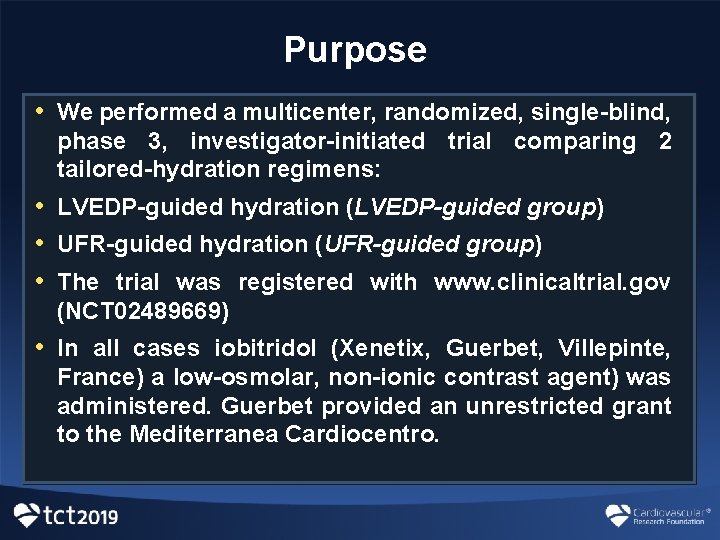
Purpose • We performed a multicenter, randomized, single-blind, phase 3, investigator-initiated trial comparing 2 tailored-hydration regimens: • LVEDP-guided hydration (LVEDP-guided group) • UFR-guided hydration (UFR-guided group) • The trial was registered with www. clinicaltrial. gov (NCT 02489669) • In all cases iobitridol (Xenetix, Guerbet, Villepinte, France) a low-osmolar, non-ionic contrast agent) was administered. Guerbet provided an unrestricted grant to the Mediterranea Cardiocentro.
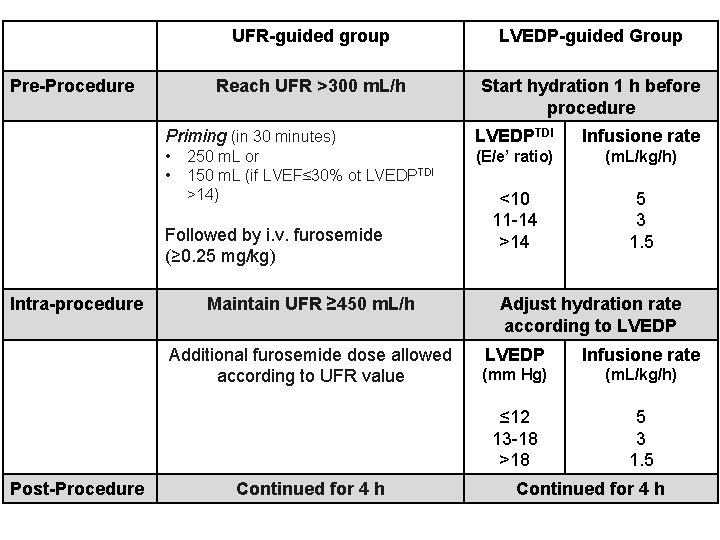
Pre-Procedure UFR-guided group LVEDP-guided Group Reach UFR >300 m. L/h Start hydration 1 h before procedure Priming (in 30 minutes) LVEDPTDI Infusione rate • • (E/e’ ratio) (m. L/kg/h) <10 11 -14 >14 5 3 1. 5 250 m. L or 150 m. L (if LVEF≤ 30% ot LVEDPTDI >14) Followed by i. v. furosemide (≥ 0. 25 mg/kg) Intra-procedure Maintain UFR ≥ 450 m. L/h Additional furosemide dose allowed according to UFR value Post-Procedure Continued for 4 h Adjust hydration rate according to LVEDP Infusione rate (mm Hg) (m. L/kg/h) ≤ 12 13 -18 >18 5 3 1. 5 Continued for 4 h
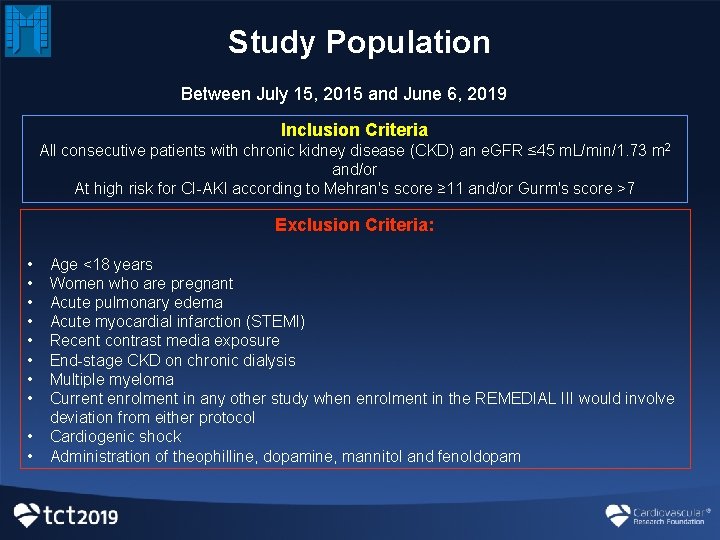
Study Population Between July 15, 2015 and June 6, 2019 Inclusion Criteria All consecutive patients with chronic kidney disease (CKD) an e. GFR ≤ 45 m. L/min/1. 73 m 2 and/or At high risk for CI-AKI according to Mehran's score ≥ 11 and/or Gurm's score >7 Exclusion Criteria: • • • Age <18 years Women who are pregnant Acute pulmonary edema Acute myocardial infarction (STEMI) Recent contrast media exposure End-stage CKD on chronic dialysis Multiple myeloma Current enrolment in any other study when enrolment in the REMEDIAL III would involve deviation from either protocol Cardiogenic shock Administration of theophilline, dopamine, mannitol and fenoldopam
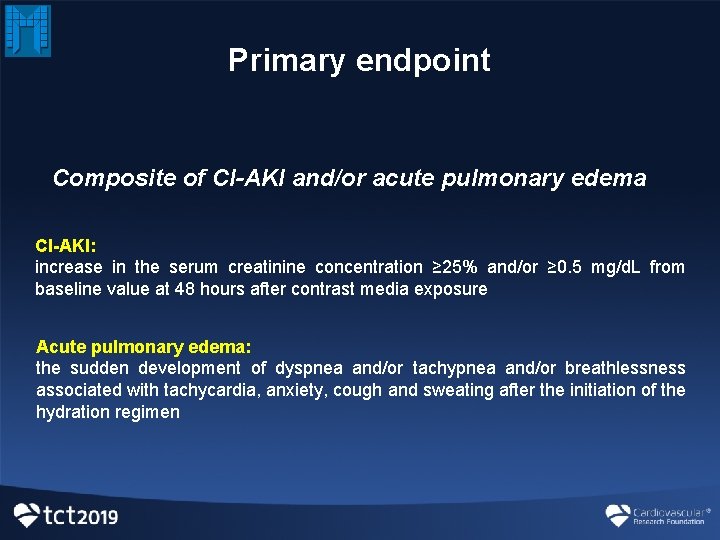
Primary endpoint Composite of CI-AKI and/or acute pulmonary edema CI-AKI: increase in the serum creatinine concentration ≥ 25% and/or ≥ 0. 5 mg/d. L from baseline value at 48 hours after contrast media exposure Acute pulmonary edema: the sudden development of dyspnea and/or tachypnea and/or breathlessness associated with tachycardia, anxiety, cough and sweating after the initiation of the hydration regimen
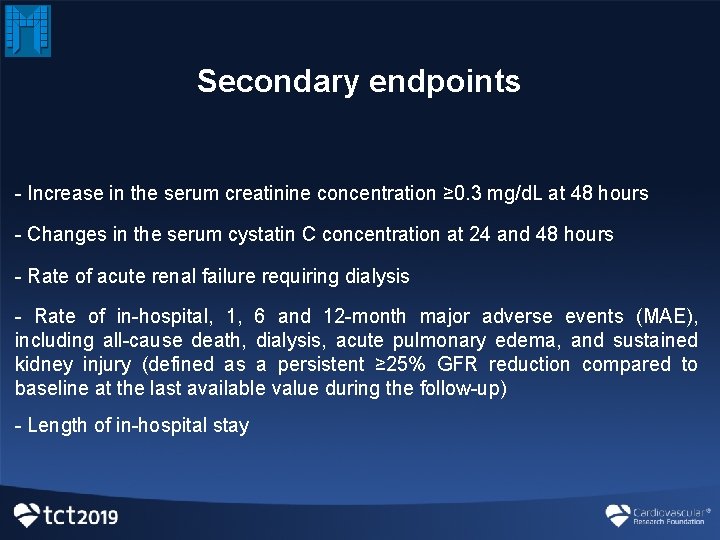
Secondary endpoints - Increase in the serum creatinine concentration ≥ 0. 3 mg/d. L at 48 hours - Changes in the serum cystatin C concentration at 24 and 48 hours - Rate of acute renal failure requiring dialysis - Rate of in-hospital, 1, 6 and 12 -month major adverse events (MAE), including all-cause death, dialysis, acute pulmonary edema, and sustained kidney injury (defined as a persistent ≥ 25% GFR reduction compared to baseline at the last available value during the follow-up) - Length of in-hospital stay
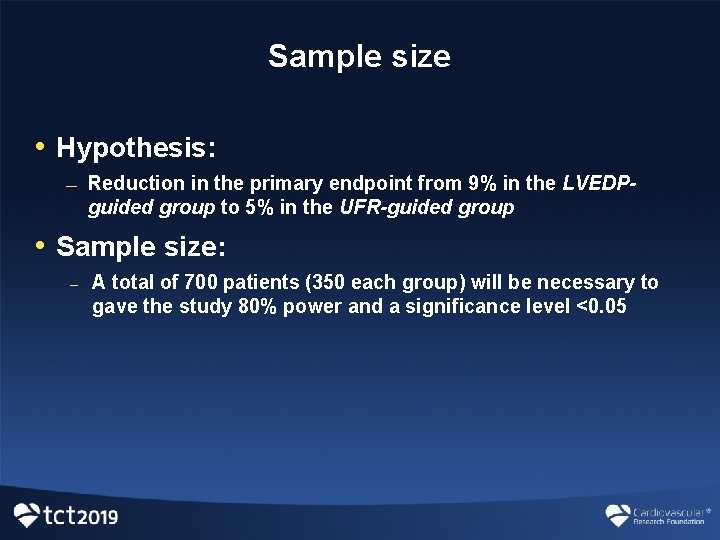
Sample size • Hypothesis: — Reduction in the primary endpoint from 9% in the LVEDPguided group to 5% in the UFR-guided group • Sample size: – A total of 700 patients (350 each group) will be necessary to gave the study 80% power and a significance level <0. 05
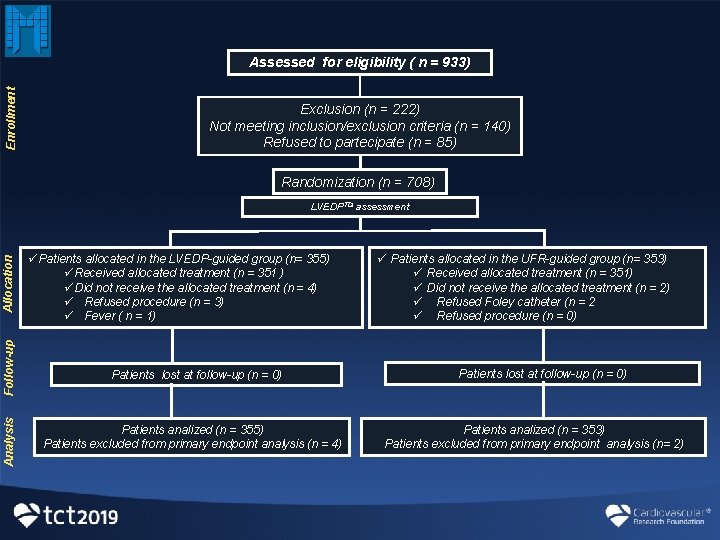
Enrollment Assessed for eligibility ( n = 933) Exclusion (n = 222) Not meeting inclusion/exclusion criteria (n = 140) Refused to partecipate (n = 85) Randomization (n = 708) Analysis Follow-up Allocation LVEDPTDI assessment üPatients allocated in the LVEDP-guided group (n= 355) üReceived allocated treatment (n = 351 ) üDid not receive the allocated treatment (n = 4) ü Refused procedure (n = 3) ü Fever ( n = 1) Patients lost at follow-up (n = 0) Patients analized (n = 355) Patients excluded from primary endpoint analysis (n = 4) ü Patients allocated in the UFR-guided group (n= 353) ü Received allocated treatment (n = 351) ü Did not receive the allocated treatment (n = 2) ü Refused Foley catheter (n = 2 ü Refused procedure (n = 0) Patients lost at follow-up (n = 0) Patients analized (n = 353) Patients excluded from primary endpoint analysis (n= 2)
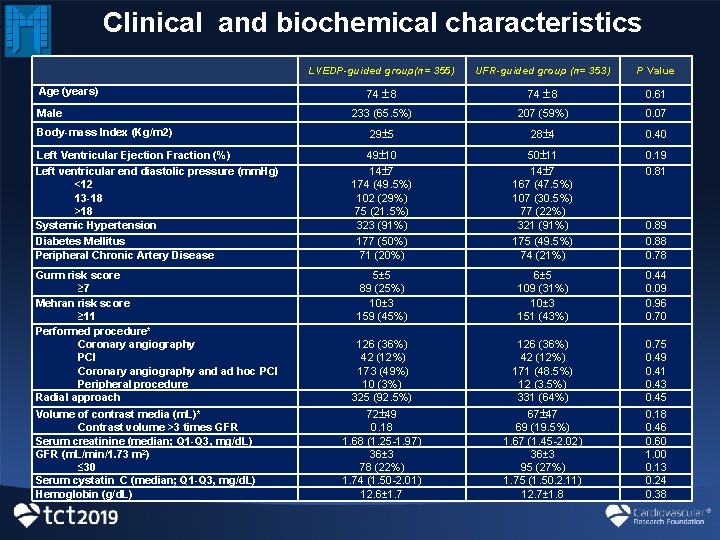
Clinical and biochemical characteristics LVEDP-guided group(n= 355) UFR-guided group (n= 353) P Value 74 8 0. 61 233 (65. 5%) 207 (59%) 0. 07 29 5 28 4 0. 40 Left Ventricular Ejection Fraction (%) Left ventricular end diastolic pressure (mm. Hg) <12 13 -18 >18 Systemic Hypertension Diabetes Mellitus Peripheral Chronic Artery Disease 49 10 14 7 174 (49. 5%) 102 (29%) 75 (21. 5%) 323 (91%) 177 (50%) 71 (20%) 50 11 14 7 167 (47. 5%) 107 (30. 5%) 77 (22%) 321 (91%) 175 (49. 5%) 74 (21%) 0. 19 0. 81 Gurm risk score ≥ 7 Mehran risk score ≥ 11 Performed procedure* Coronary angiography PCI Coronary angiography and ad hoc PCI Peripheral procedure Radial approach 5± 5 89 (25%) 10± 3 159 (45%) 0. 44 0. 09 0. 96 0. 70 126 (36%) 42 (12%) 173 (49%) 10 (3%) 325 (92. 5%) 6± 5 109 (31%) 10± 3 151 (43%) 126 (36%) 42 (12%) 171 (48. 5%) 12 (3. 5%) 331 (64%) 72 49 0. 18 1. 68 (1. 25 -1. 97) 36± 3 78 (22%) 1. 74 (1. 50 -2. 01) 12. 6± 1. 7 67 47 69 (19. 5%) 1. 67 (1. 45 -2. 02) 36± 3 95 (27%) 1. 75 (1. 50. 2. 11) 12. 7± 1. 8 Age (years) Male Body-mass Index (Kg/m 2) Volume of contrast media (m. L)* Contrast volume >3 times GFR Serum creatinine (median; Q 1 -Q 3, mg/d. L) GFR (m. L/min/1. 73 m 2) ≤ 30 Serum cystatin C (median; Q 1 -Q 3, mg/d. L) Hemoglobin (g/d. L) 0. 89 0. 88 0. 78 0. 75 0. 49 0. 41 0. 43 0. 45 0. 18 0. 46 0. 60 1. 00 0. 13 0. 24 0. 38
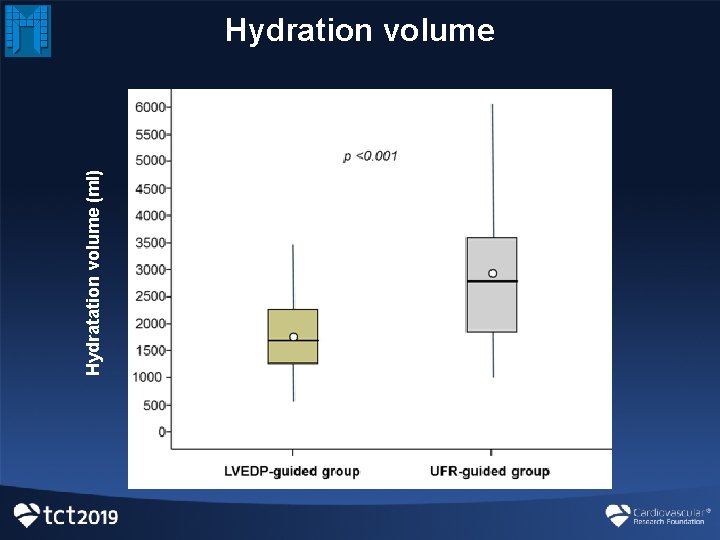
Hydratation volume (ml) Hydration volume
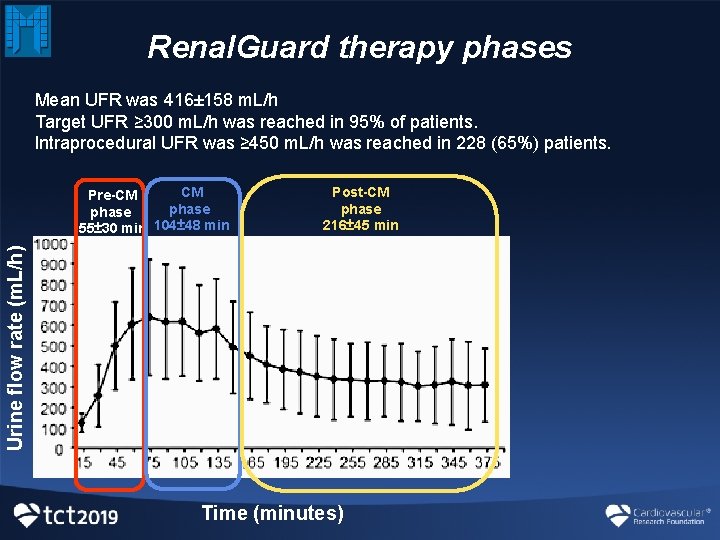
Renal. Guard therapy phases Mean UFR was 416± 158 m. L/h Target UFR ≥ 300 m. L/h was reached in 95% of patients. Intraprocedural UFR was ≥ 450 m. L/h was reached in 228 (65%) patients. Post-CM phase 216± 45 min Urine flow rate (m. L/h) CM Pre-CM phase 55± 30 min 104± 48 min Time (minutes)
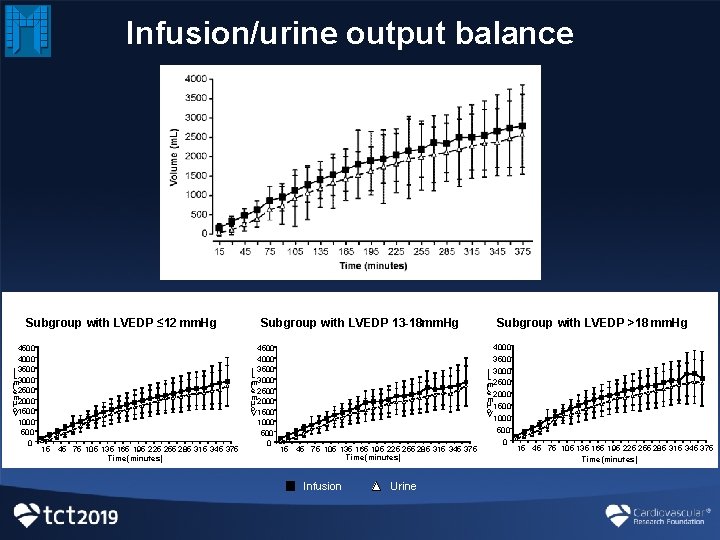
Infusion/urine output balance B Subgroup with LVEDP ≤ 12 mm. Hg 4500 4000 ) 3500 L 3000 m ( 2500 e m 2000 lu o V 1500 1000 500 0 15 45 75 105 135 165 195 225 255 285 315 345 375 Time (minutes) Subgroup with LVEDP 13 -18 mm. Hg 4500 4000 ) 3500 L 3000 m ( e 2500 m 2000 lu o V 1500 1000 500 0 15 45 75 105 135 165 195 225 255 285 315 345 375 Time (minutes) Infusion Urine Subgroup with LVEDP >18 mm. Hg 4000 3500 ) 3000 L m ( 2500 e 2000 m u l 1500 o V 1000 500 0 15 45 75 105 135 165 195 225 255 285 315 345 375 Time (minutes)
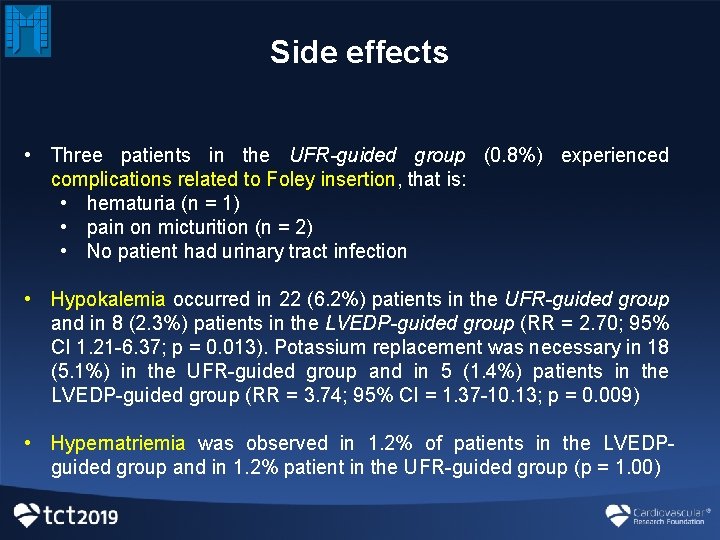
Side effects • Three patients in the UFR-guided group (0. 8%) experienced complications related to Foley insertion, that is: • hematuria (n = 1) • pain on micturition (n = 2) • No patient had urinary tract infection • Hypokalemia occurred in 22 (6. 2%) patients in the UFR-guided group and in 8 (2. 3%) patients in the LVEDP-guided group (RR = 2. 70; 95% CI 1. 21 -6. 37; p = 0. 013). Potassium replacement was necessary in 18 (5. 1%) in the UFR-guided group and in 5 (1. 4%) patients in the LVEDP-guided group (RR = 3. 74; 95% CI = 1. 37 -10. 13; p = 0. 009) • Hypernatriemia was observed in 1. 2% of patients in the LVEDPguided group and in 1. 2% patient in the UFR-guided group (p = 1. 00)
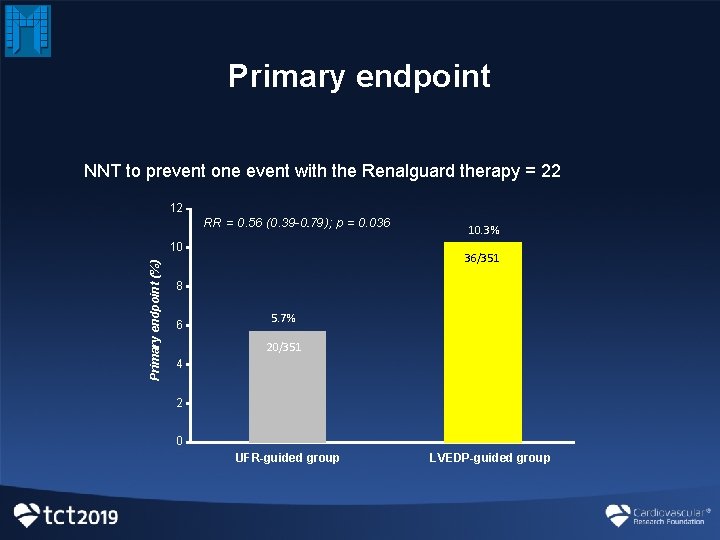
Primary endpoint NNT to prevent one event with the Renalguard therapy = 22 12 RR = 0. 56 (0. 39 -0. 79. ); p = 0. 036 Primary endpoint (%) 10 10. 3% 36/351 8 6 5. 7% 20/351 4 2 0 UFR-guided group LVEDP-guided group
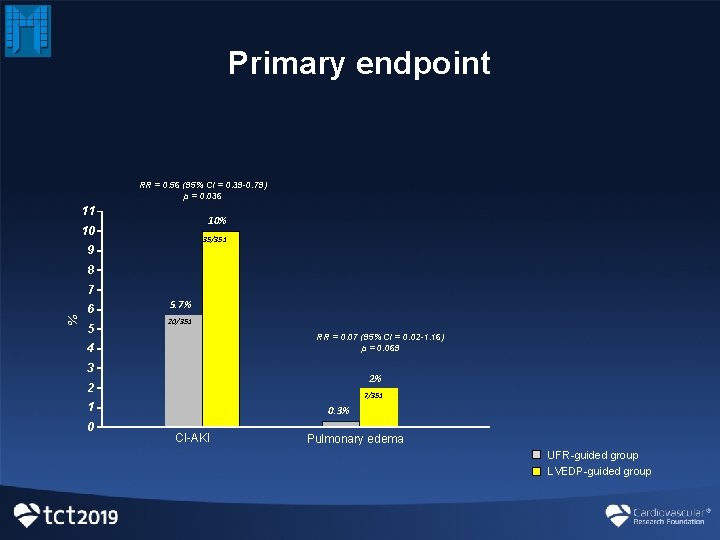
Primary endpoint RR = 0. 56 (95% CI = 0. 39 -0. 79) p = 0. 036 11 10% 10 35/351 9 8 % 7 6 5 5. 7% 20/351 RR = 0. 07 (95% CI = 0. 02 -1. 16) p = 0. 069 4 3 2% 2 7/351 1 0 0. 3% CI-AKI Pulmonary edema UFR-guided group LVEDP-guided group
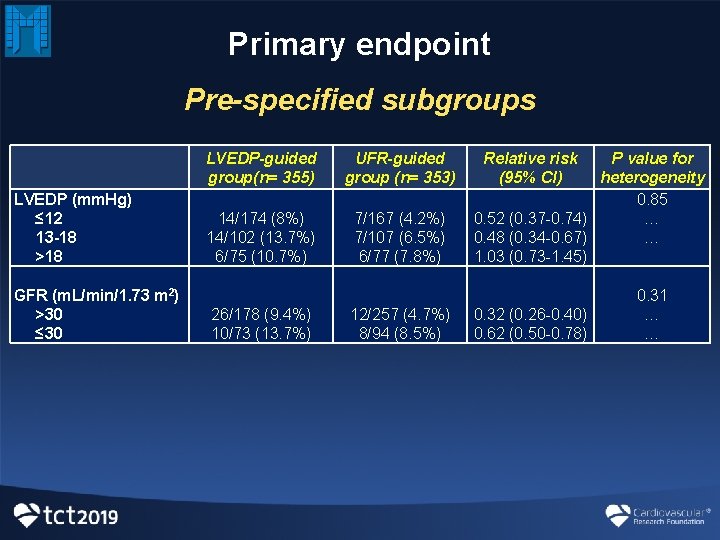
Primary endpoint Pre-specified subgroups LVEDP (mm. Hg) ≤ 12 13 -18 >18 GFR (m. L/min/1. 73 m 2) >30 ≤ 30 LVEDP-guided group(n= 355) 14/174 (8%) 14/102 (13. 7%) 6/75 (10. 7%) 26/178 (9. 4%) 10/73 (13. 7%) UFR-guided group (n= 353) 7/167 (4. 2%) 7/107 (6. 5%) 6/77 (7. 8%) 12/257 (4. 7%) 8/94 (8. 5%) Relative risk P value for (95% CI) heterogeneity 0. 85 0. 52 (0. 37 -0. 74) … 0. 48 (0. 34 -0. 67) … 1. 03 (0. 73 -1. 45) 0. 31 0. 32 (0. 26 -0. 40) … 0. 62 (0. 50 -0. 78) …
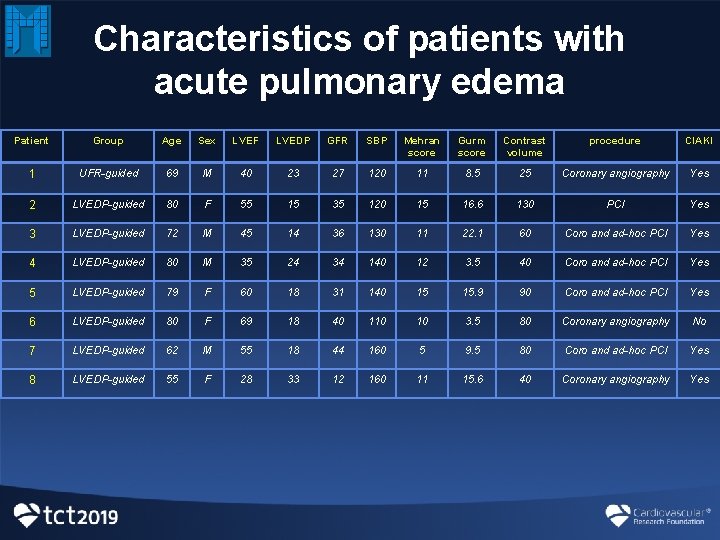
Characteristics of patients with acute pulmonary edema Patient Group Age Sex LVEF LVEDP GFR SBP Mehran score Gurm score Contrast volume procedure CIAKI 1 UFR-guided 69 M 40 23 27 120 11 8. 5 25 Coronary angiography Yes 2 LVEDP-guided 80 F 55 15 35 120 15 16. 6 130 PCI Yes 3 LVEDP-guided 72 M 45 14 36 130 11 22. 1 60 Coro and ad-hoc PCI Yes 4 LVEDP-guided 80 M 35 24 34 140 12 3. 5 40 Coro and ad-hoc PCI Yes 5 LVEDP-guided 79 F 60 18 31 140 15 15. 9 90 Coro and ad-hoc PCI Yes 6 LVEDP-guided 80 F 69 18 40 110 10 3. 5 80 Coronary angiography No 7 LVEDP-guided 62 M 55 18 44 160 5 9. 5 80 Coro and ad-hoc PCI Yes 8 LVEDP-guided 55 F 28 33 12 160 11 15. 6 40 Coronary angiography Yes
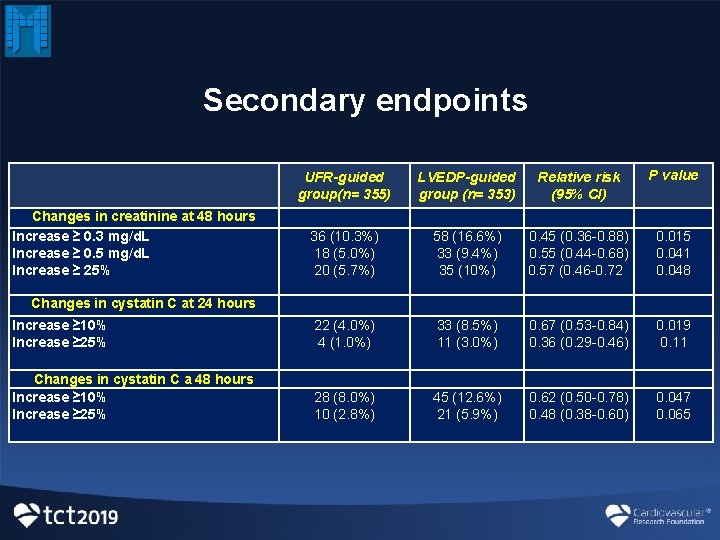
Secondary endpoints UFR-guided group(n= 355) LVEDP-guided group (n= 353) Relative risk (95% CI) P value Changes in creatinine at 48 hours Increase ≥ 0. 3 mg/d. L Increase ≥ 0. 5 mg/d. L Increase ≥ 25% Changes in cystatin C at 24 hours 36 (10. 3%) 18 (5. 0%) 20 (5. 7%) 58 (16. 6%) 33 (9. 4%) 35 (10%) 0. 45 (0. 36 -0. 88) 0. 55 (0. 44 -0. 68) 0. 57 (0. 46 -0. 72 0. 015 0. 041 0. 048 Increase ≥ 10% Increase ≥ 25% 22 (4. 0%) 4 (1. 0%) 33 (8. 5%) 11 (3. 0%) 0. 67 (0. 53 -0. 84) 0. 36 (0. 29 -0. 46) 0. 019 0. 11 Changes in cystatin C a 48 hours Increase ≥ 10% Increase ≥ 25% 28 (8. 0%) 10 (2. 8%) 45 (12. 6%) 21 (5. 9%) 0. 62 (0. 50 -0. 78) 0. 48 (0. 38 -0. 60) 0. 047 0. 065
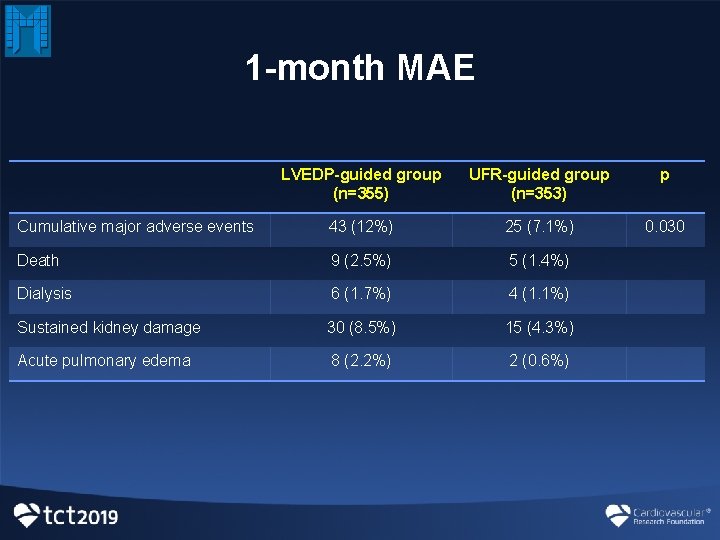
1 -month MAE LVEDP-guided group (n=355) UFR-guided group (n=353) p Cumulative major adverse events 43 (12%) 25 (7. 1%) 0. 030 Death 9 (2. 5%) 5 (1. 4%) Dialysis 6 (1. 7%) 4 (1. 1%) Sustained kidney damage 30 (8. 5%) 15 (4. 3%) Acute pulmonary edema 8 (2. 2%) 2 (0. 6%)
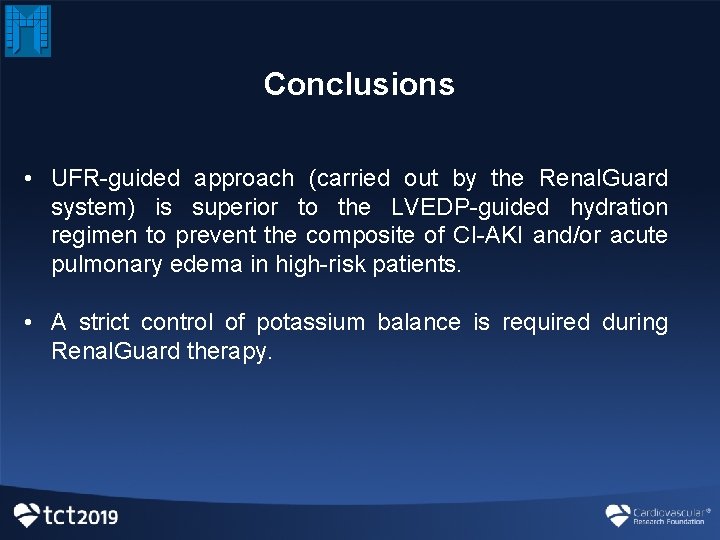
Conclusions • UFR-guided approach (carried out by the Renal. Guard system) is superior to the LVEDP-guided hydration regimen to prevent the composite of CI-AKI and/or acute pulmonary edema in high-risk patients. • A strict control of potassium balance is required during Renal. Guard therapy.
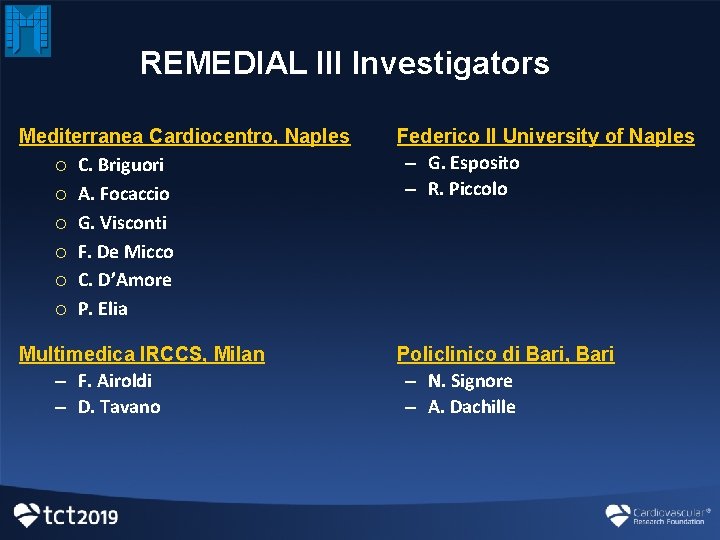
REMEDIAL III Investigators Mediterranea Cardiocentro, Naples Federico II University of Naples – G. Esposito ¡ C. Briguori – R. Piccolo ¡ A. Focaccio ¡ G. Visconti ¡ F. De Micco ¡ C. D’Amore ¡ P. Elia Multimedica IRCCS, Milan – F. Airoldi – D. Tavano Policlinico di Bari, Bari – N. Signore – A. Dachille