
Remains by Simon Armitage GCSE ENGLISH LITERATURE POETRY
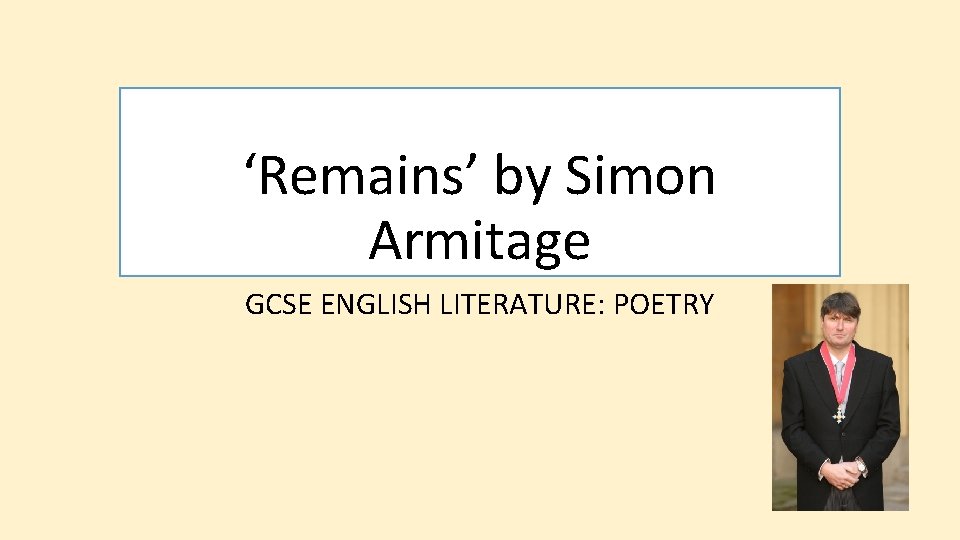
‘Remains’ by Simon Armitage GCSE ENGLISH LITERATURE: POETRY
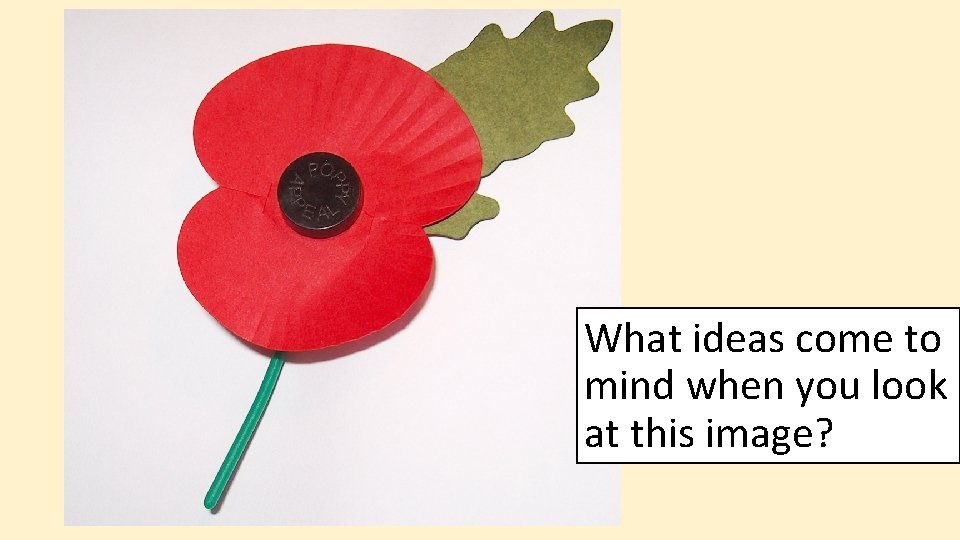
What ideas come to mind when you look at this image?
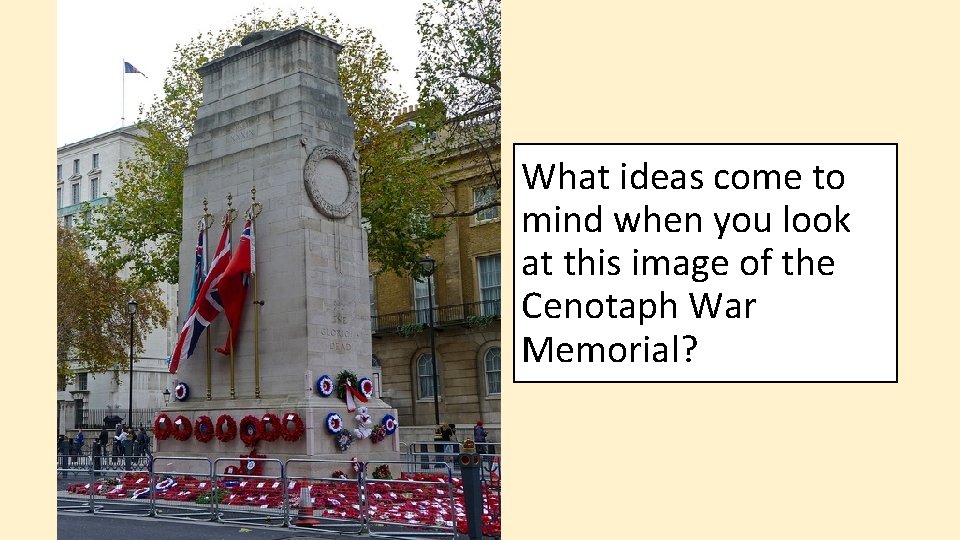
What ideas come to mind when you look at this image of the Cenotaph War Memorial?
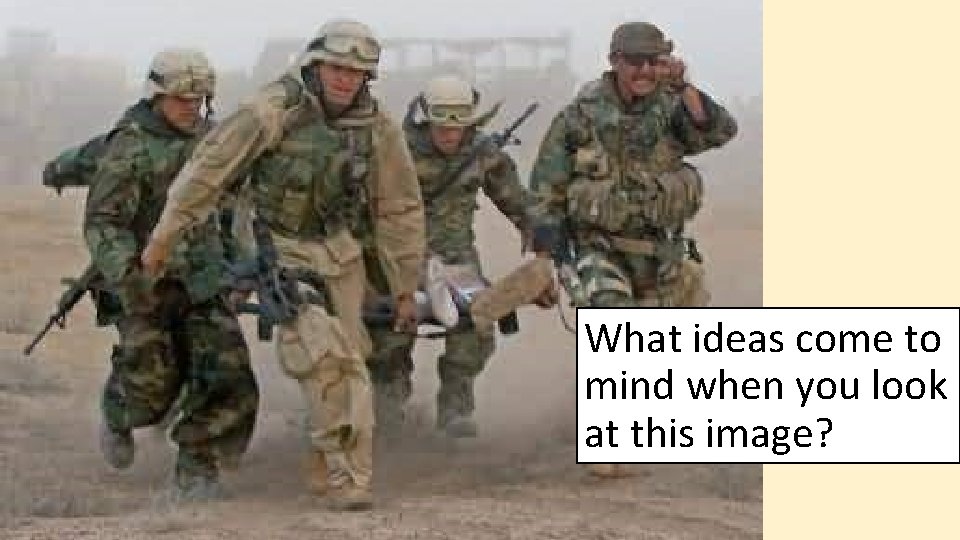
What ideas come to mind when you look at this image?
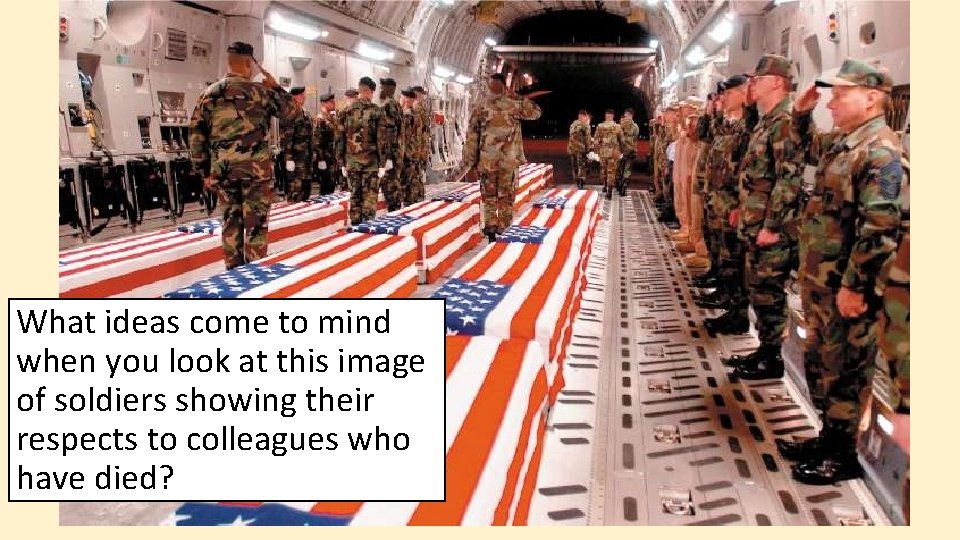
What ideas come to mind when you look at this image of soldiers showing their respects to colleagues who have died?
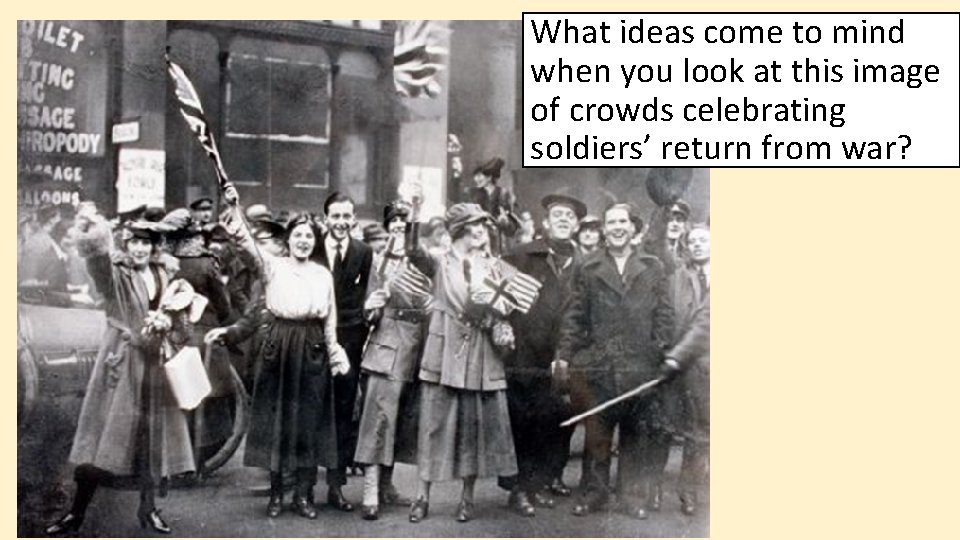
What ideas come to mind when you look at this image of crowds celebrating soldiers’ return from war?
What about these words – what does this semantic field make you think of? 1. anxiety 2. fear 3. flashbacks 4. distress 5. upset 6. traumatic 7. severe 8. stress
Post-traumatic stress disorder (PTSD) is an anxiety disorder caused by very stressful, frightening or distressing events. • The type of events that can cause PTSD include: serious road accidents; violent personal assaults, such as sexual assault, mugging or robbery; prolonged sexual abuse, violence or severe neglect; witnessing violent deaths; military combat; being held hostage; terrorist attacks; natural disasters, such as severe floods, earthquakes or tsunamis. • PTSD can develop immediately after someone experiences a disturbing event or it can occur weeks, months or even years later. • PTSD is estimated to affect about 1 in every 3 people who have a traumatic experience.
How does PTSD affect people? • Someone with PTSD will often relive the traumatic event through nightmares and flashbacks, and may experience feelings of isolation, irritability and guilt. • They may also have problems sleeping, such as insomnia, and find concentrating difficult. • These symptoms are often severe and persistent enough to have a significant – and often extremely damaging – impact on the person’s day-to-day life.

‘Remains’ Discuss: 1. What do you think the definition of the word ‘remains’ is? 2. In what ways do you think it might link to the images we’ve just been looking at? 3. In what ways do you think it might link to the words and information we’ve just been looking at?
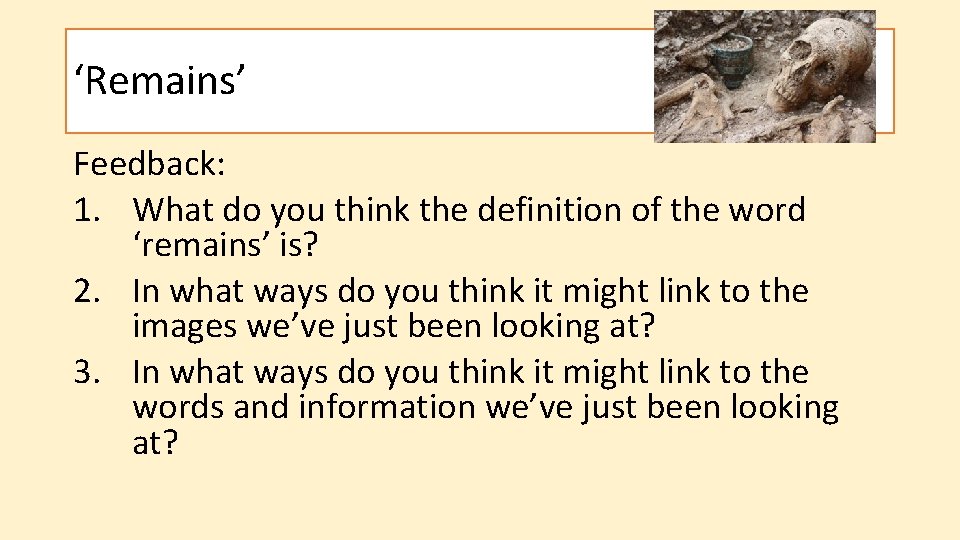
‘Remains’ Feedback: 1. What do you think the definition of the word ‘remains’ is? 2. In what ways do you think it might link to the images we’ve just been looking at? 3. In what ways do you think it might link to the words and information we’ve just been looking at?

‘Remains’ • Now let’s read the poem. Extra Challenge: whilst you are reading, can you link any of the ideas from the starter activities to what is being described?

‘Remains’, by Simon Armitage On another occasion, we got sent out to tackle looters raiding a bank. And one of them legs it up the road, probably armed, possibly not.

Well myself and somebody else are all of the same mind, so all three of us open fire. Three of a kind all letting fly, and I swear I see every round as it rips through his life I see broad daylight on the other side. So we've hit this looter a dozen times and he's there on the ground, sort of inside out, pain itself, the image of agony. One of my mates goes by and tosses his guts back into his body. Then he's carted off in the back of a lorry.

End of story, except not really. His blood-shadow stays on the street, and out on patrol I walk right over it week after week. Then I'm home on leave. But I blink and he bursts again through the doors of the bank. Sleep, and he's probably armed, and possibly not. Dream, and he's torn apart by a dozen rounds. And the drink and the drugs won't flush him out -

he's here in my head when I close my eyes, dug in behind enemy lines, not left for dead in some distant, sun-stunned, sand-smothered land or six-feet-under in desert sand, but near to the knuckle, here and now, his bloody life in my bloody hands.
So, what do you think? 1. What do you think the poem is about? Share your ideas with a partner. 2. What do you think the poem is about? Share your ideas with a different partner. 3. Be prepared to share your ideas – get ready to write some notes! Extra Challenge: why do you think the poet might have written this poem?
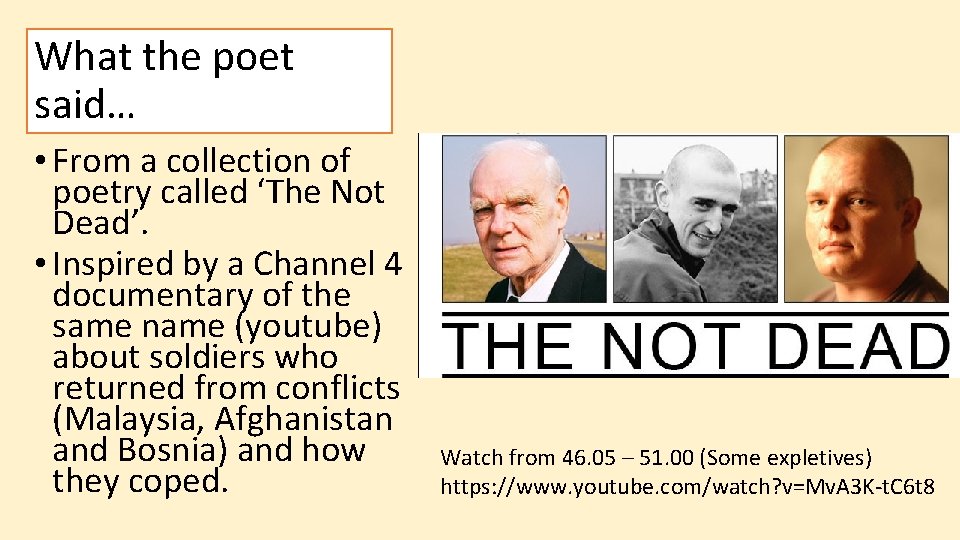
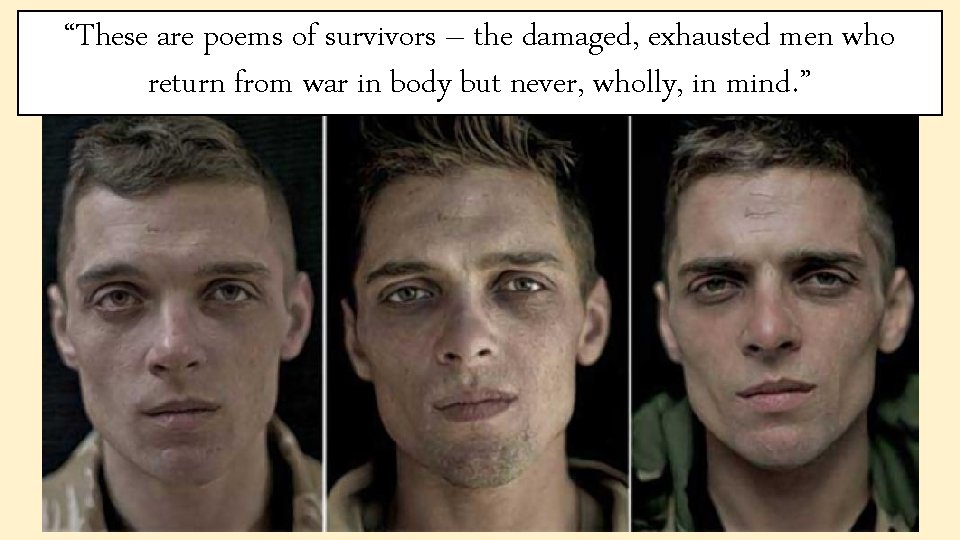
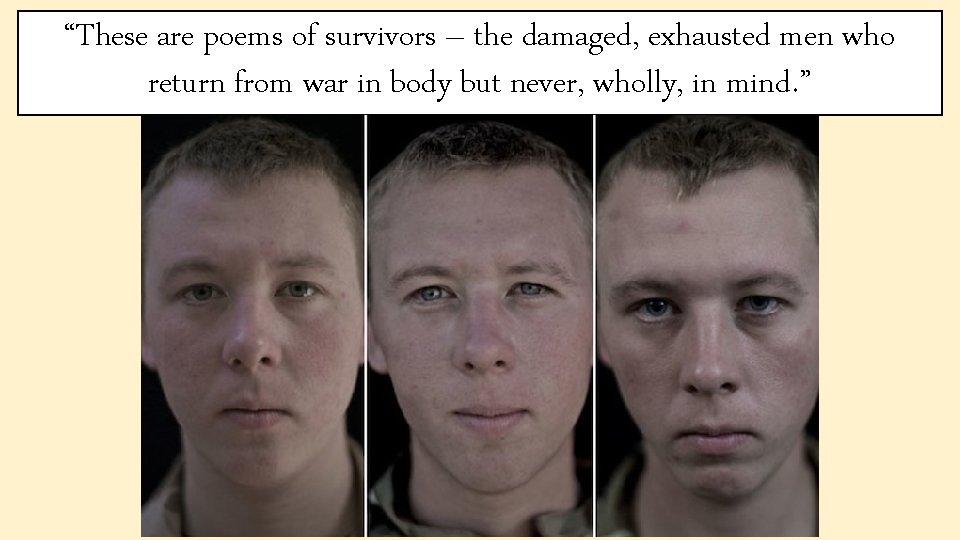
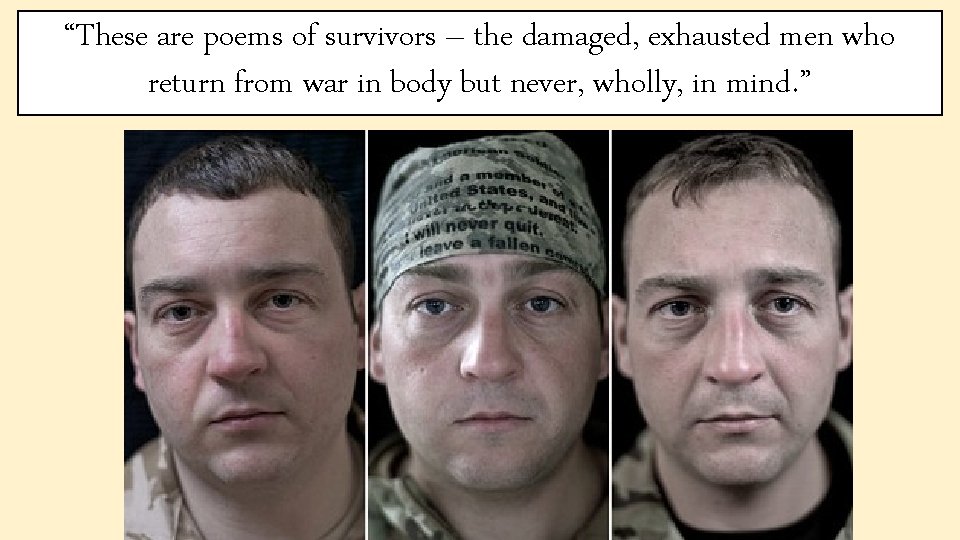
What the poet said… • From a collection of poetry called ‘The Not Dead’. • Inspired by a Channel 4 documentary of the same name (youtube) about soldiers who returned from conflicts (Malaysia, Afghanistan and Bosnia) and how they coped. Watch from 46. 05 – 51. 00 (Some expletives) https: //www. youtube. com/watch? v=Mv. A 3 K-t. C 6 t 8
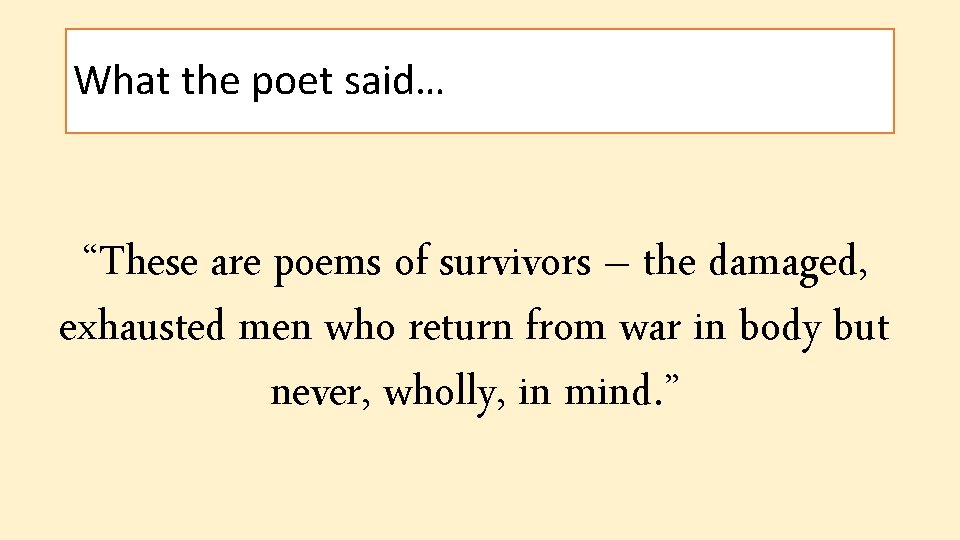
What the poet said… “These are poems of survivors – the damaged, exhausted men who return from war in body but never, wholly, in mind. ”
“These are poems of survivors – the damaged, exhausted men who return from war in body but never, wholly, in mind. ”
“These are poems of survivors – the damaged, exhausted men who return from war in body but never, wholly, in mind. ”
“These are poems of survivors – the damaged, exhausted men who return from war in body but never, wholly, in mind. ”
Now let’s look more closely at the poem… • In your groups, you have been allocated a stanza of the poem. • You must answer the following five questions, writing detailed notes, and then get ready to share your responses with the rest of the class – this is a S & L activity. • We’ll do one stanza together first so that you understand exactly what to do and the level of thinking required.
Stanza 1 – as a class 1. Describe what you think is happening/being referred to in your stanza. 2. Highlight/underline examples of simplistic or informal language. Add notes to say what effects these choices have: why do you think Armitage might have used them? 3. Identify and label any poetic devices (figurative language, enjambment, rhyme, etc. ). Add comments to try and explain what effects these have. 4. Look carefully at the structure of the poem: which words are emphasised by the use of enjambment and full stops? Identify these and add comments to try and explain what effects these have. (Tip: think about how the structure might link to the subject matter). 5. Try and sum up the speaker’s feelings or emotions in your stanza using words and/or images.
Now look more closely at your stanza of the poem… • In your groups, you now need to follow the same steps to annotate your section of this poem.
Feedback your stanza of the poem…
Review: What do you think? • What do you think is the most effective part of this poem? Justify your response. Extra Challenge: Do you think poetry (or literature) is ever able truly describe these soldiers’ feelings?
Exam Style Response • Compare the ways poets present ideas about conflict in ‘Remains’ and in one other poem from ‘Power and conflict’. ØUnderline the key words in the question. ØBrainstorm key ideas for ‘Remains’. ØLink to one other poem – add ideas to your brainstorm. ØPick your top idea and write a point/topic sentence which you could write to answer this question.
- Slides: 28