
RELIGION STUDIES GRADE 12 Formal assessment in Religion
- Slides: 13
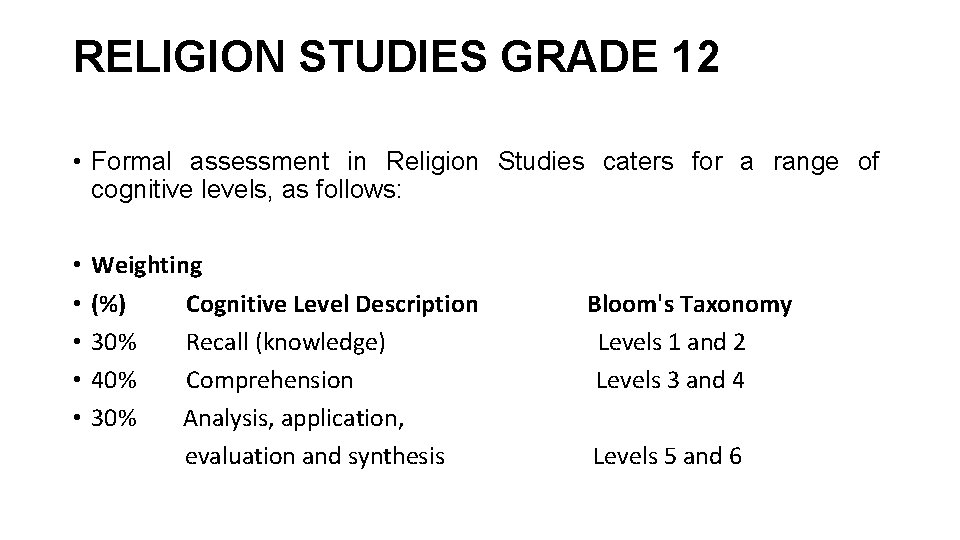
RELIGION STUDIES GRADE 12 • Formal assessment in Religion Studies caters for a range of cognitive levels, as follows: • • • Weighting (%) Cognitive Level Description 30% Recall (knowledge) 40% Comprehension 30% Analysis, application, evaluation and synthesis Bloom's Taxonomy Levels 1 and 2 Levels 3 and 4 Levels 5 and 6
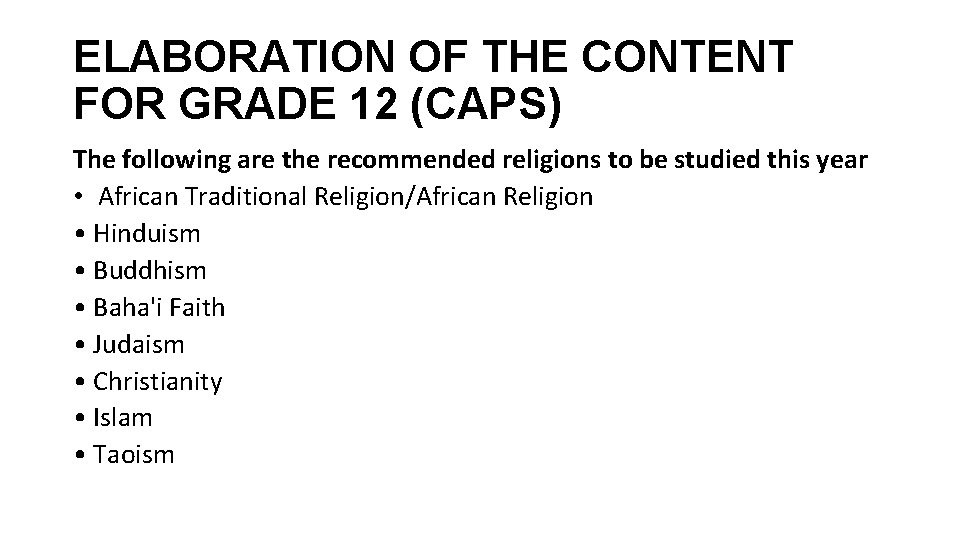
ELABORATION OF THE CONTENT FOR GRADE 12 (CAPS) The following are the recommended religions to be studied this year • African Traditional Religion/African Religion • Hinduism • Buddhism • Baha'i Faith • Judaism • Christianity • Islam • Taoism
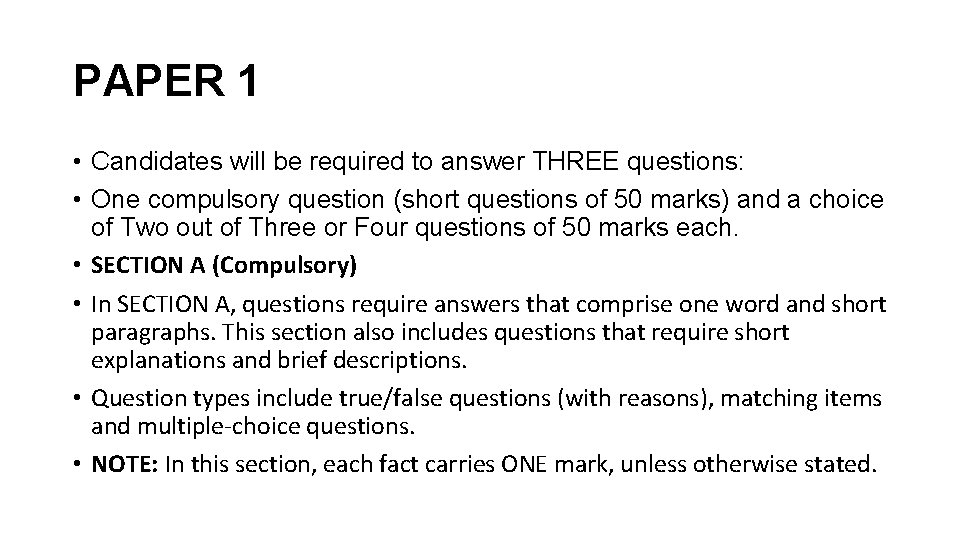
PAPER 1 • Candidates will be required to answer THREE questions: • One compulsory question (short questions of 50 marks) and a choice of Two out of Three or Four questions of 50 marks each. • SECTION A (Compulsory) • In SECTION A, questions require answers that comprise one word and short paragraphs. This section also includes questions that require short explanations and brief descriptions. • Question types include true/false questions (with reasons), matching items and multiple-choice questions. • NOTE: In this section, each fact carries ONE mark, unless otherwise stated.
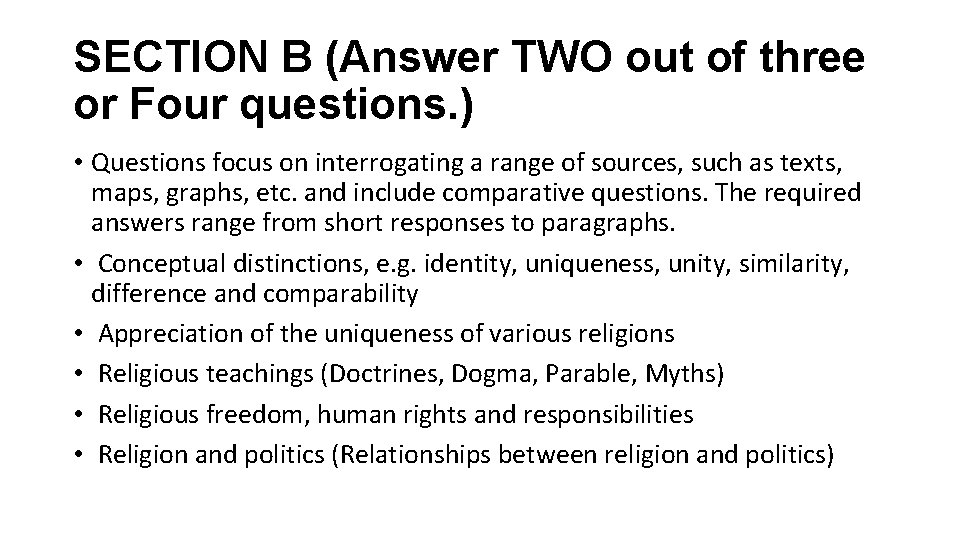
SECTION B (Answer TWO out of three or Four questions. ) • Questions focus on interrogating a range of sources, such as texts, maps, graphs, etc. and include comparative questions. The required answers range from short responses to paragraphs. • Conceptual distinctions, e. g. identity, uniqueness, unity, similarity, difference and comparability • Appreciation of the uniqueness of various religions • Religious teachings (Doctrines, Dogma, Parable, Myths) • Religious freedom, human rights and responsibilities • Religion and politics (Relationships between religion and politics)
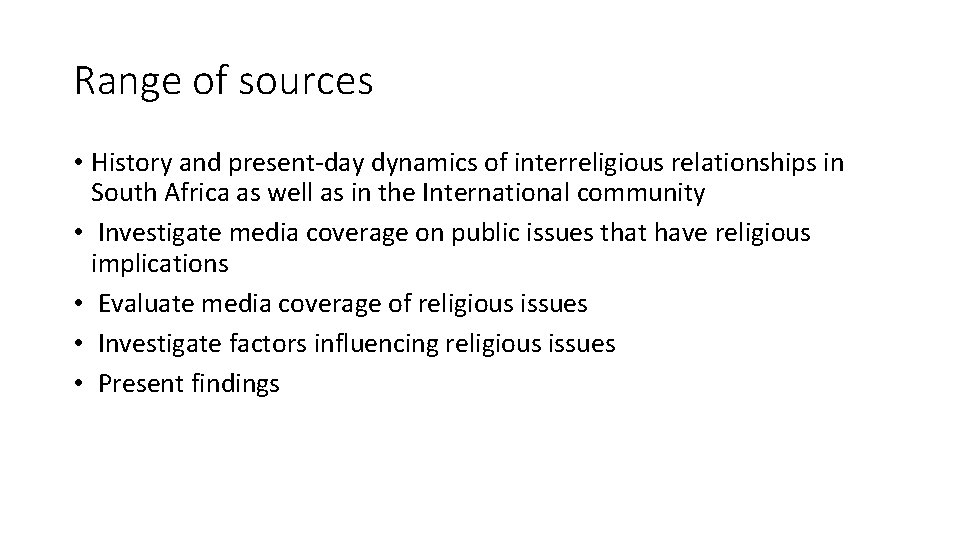
Range of sources • History and present-day dynamics of interreligious relationships in South Africa as well as in the International community • Investigate media coverage on public issues that have religious implications • Evaluate media coverage of religious issues • Investigate factors influencing religious issues • Present findings
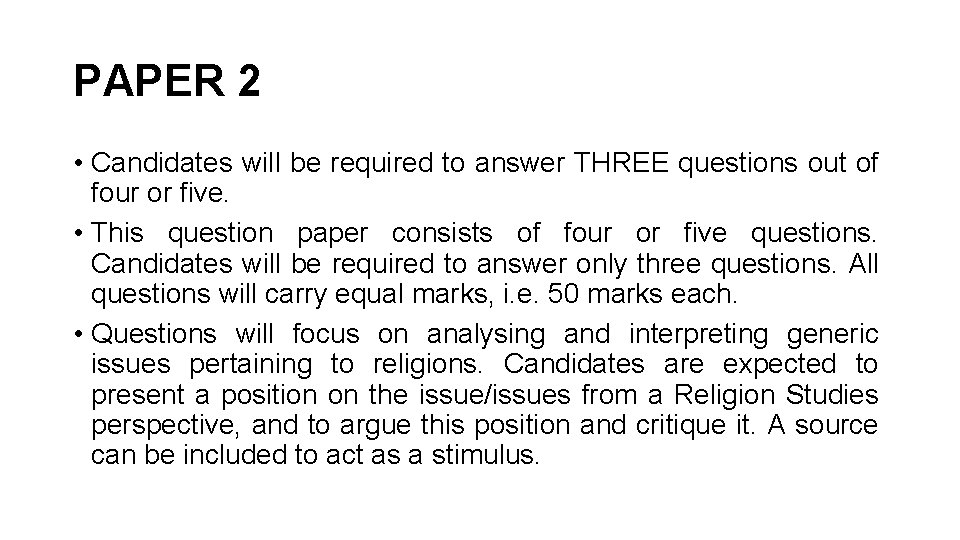
PAPER 2 • Candidates will be required to answer THREE questions out of four or five. • This question paper consists of four or five questions. Candidates will be required to answer only three questions. All questions will carry equal marks, i. e. 50 marks each. • Questions will focus on analysing and interpreting generic issues pertaining to religions. Candidates are expected to present a position on the issue/issues from a Religion Studies perspective, and to argue this position and critique it. A source can be included to act as a stimulus.
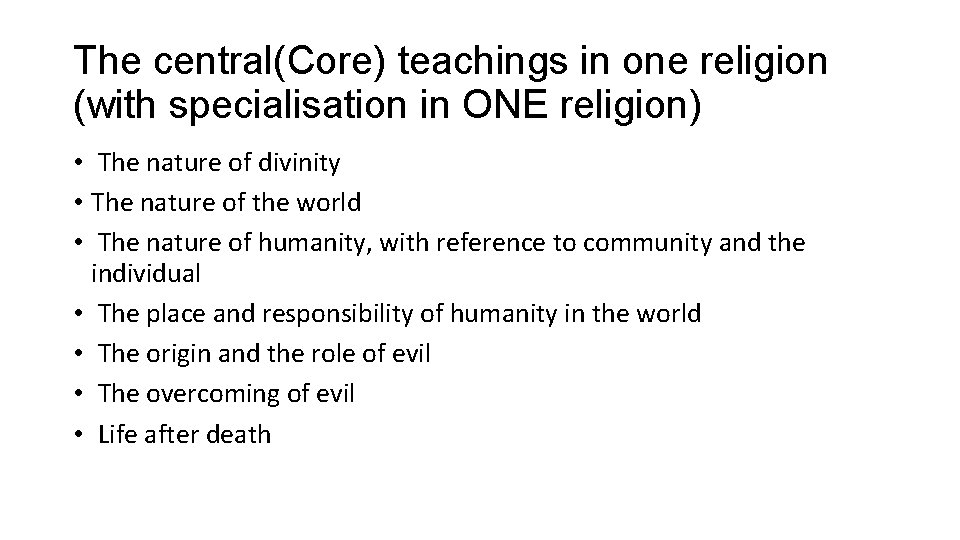
The central(Core) teachings in one religion (with specialisation in ONE religion) • The nature of divinity • The nature of the world • The nature of humanity, with reference to community and the individual • The place and responsibility of humanity in the world • The origin and the role of evil • The overcoming of evil • Life after death
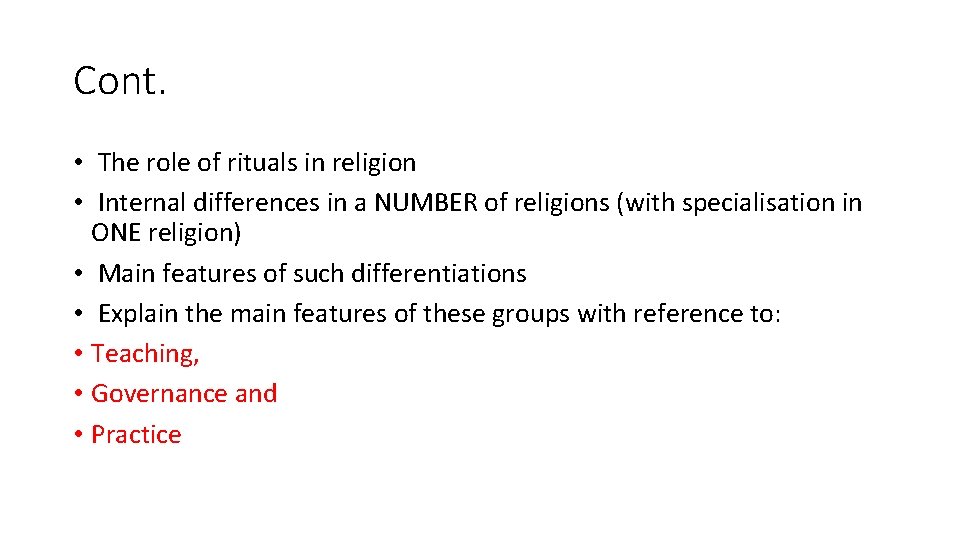
Cont. • The role of rituals in religion • Internal differences in a NUMBER of religions (with specialisation in ONE religion) • Main features of such differentiations • Explain the main features of these groups with reference to: • Teaching, • Governance and • Practice
Religion in areas of recent conflict in South Africa, Africa and the world • Analyse the situation • In what ways is religion part of the problem? • In what ways is religion part of the solution? • Relationship between politics and religion • (colonialism, imperialism, liberation and transformation)
• Normative sources in various religions • Ways of interpreting normative sources (hermeneutical principles) (with specialisation in ONE religion) • Actual interpretation of normative sources • Interpreting in detail one normative source
Religion and the sciences • Examine the changing relationship between religion and the natural sciences • Creation and evolution from scientific and various religious viewpoints
Analysis of at least TWO secular world views. • The four stipulated world views in the CAPS are • atheism, agnosticism, humanism and materialism • The origin, purpose and influencing factors behind at least TWO secular worldviews
Developing a strategy towards solving a major social problem, as specified below For the final examination 2019 and June examination 2020: • Diseases such as HIV and Aids • Crime and violence • Suicide