
Religion Diffusion and Landscape Classification of Religions Paths



- Slides: 43
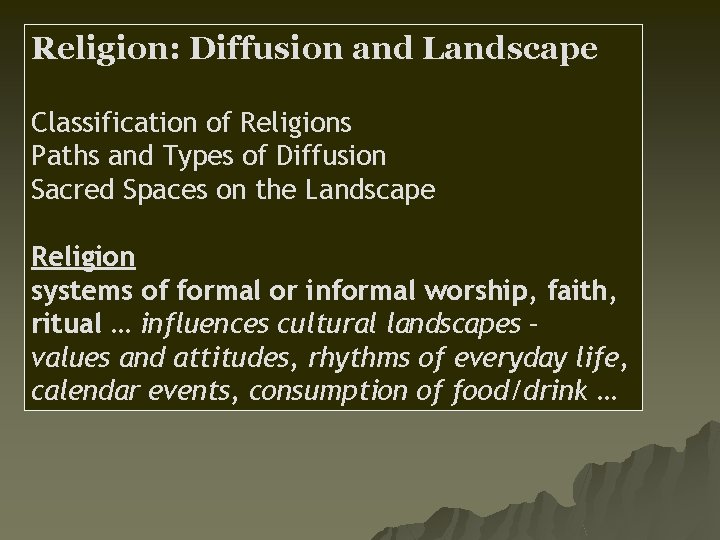
Religion: Diffusion and Landscape Classification of Religions Paths and Types of Diffusion Sacred Spaces on the Landscape Religion systems of formal or informal worship, faith, ritual … influences cultural landscapes – values and attitudes, rhythms of everyday life, calendar events, consumption of food/drink …
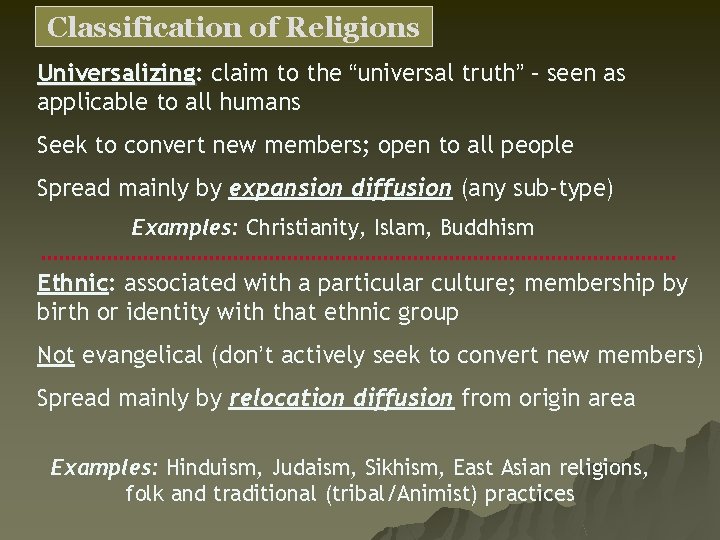
Classification of Religions Universalizing: claim to the “universal truth” – seen as applicable to all humans Seek to convert new members; open to all people Spread mainly by expansion diffusion (any sub-type) Examples: Christianity, Islam, Buddhism Ethnic: associated with a particular culture; membership by birth or identity with that ethnic group Not evangelical (don’t actively seek to convert new members) Spread mainly by relocation diffusion from origin area Examples: Hinduism, Judaism, Sikhism, East Asian religions, folk and traditional (tribal/Animist) practices
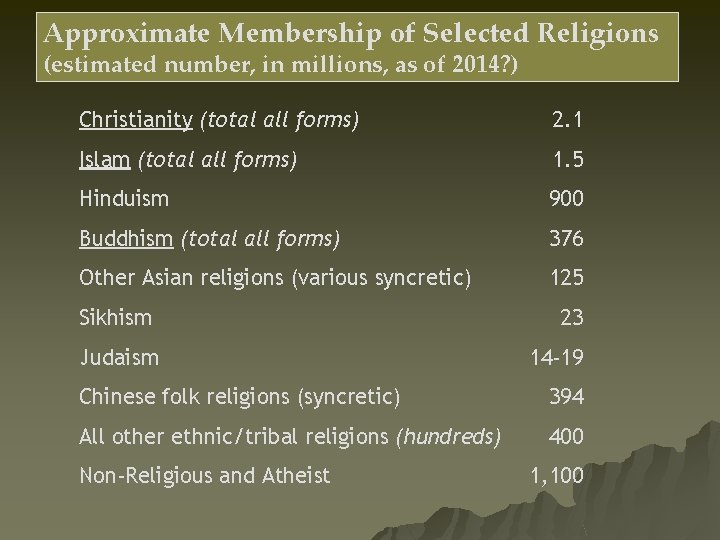
Approximate Membership of Selected Religions (estimated number, in millions, as of 2014? ) Christianity (total all forms) 2. 1 Islam (total all forms) 1. 5 Hinduism 900 Buddhism (total all forms) 376 Other Asian religions (various syncretic) 125 Sikhism 23 Judaism 14 -19 Chinese folk religions (syncretic) 394 All other ethnic/tribal religions (hundreds) 400 Non-Religious and Atheist 1, 100
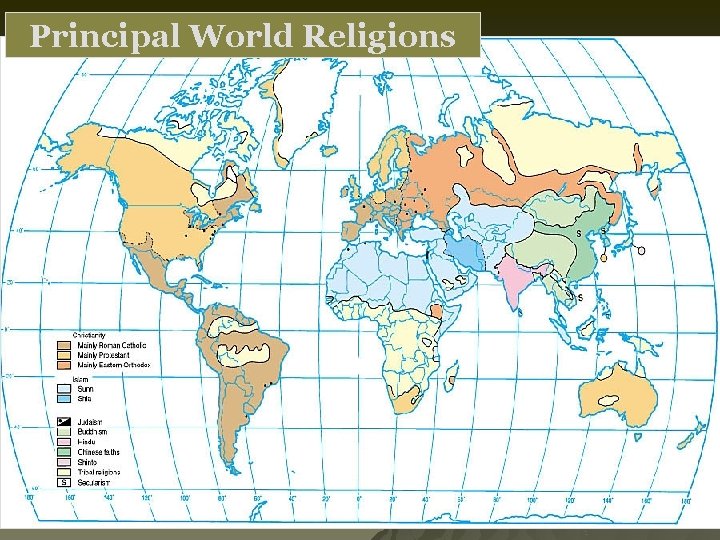
Principal World Religions
Religious Regions of Lebanon Small-scale world religion maps fail to show local details Understanding religion regions is key to several current conflicts
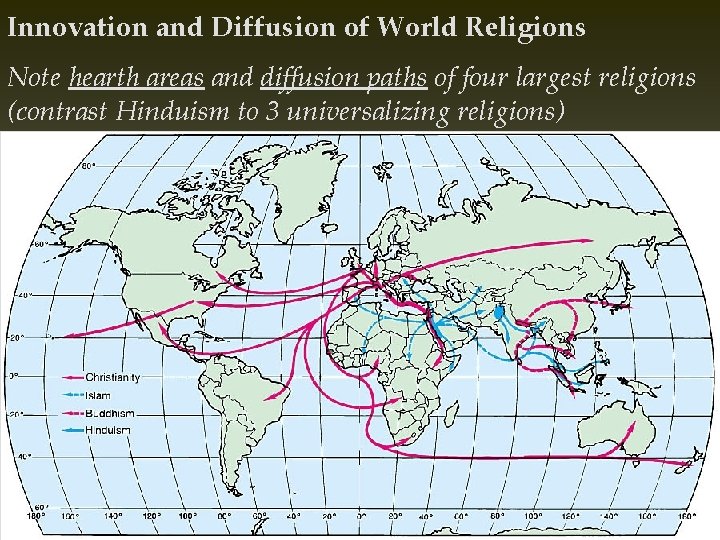
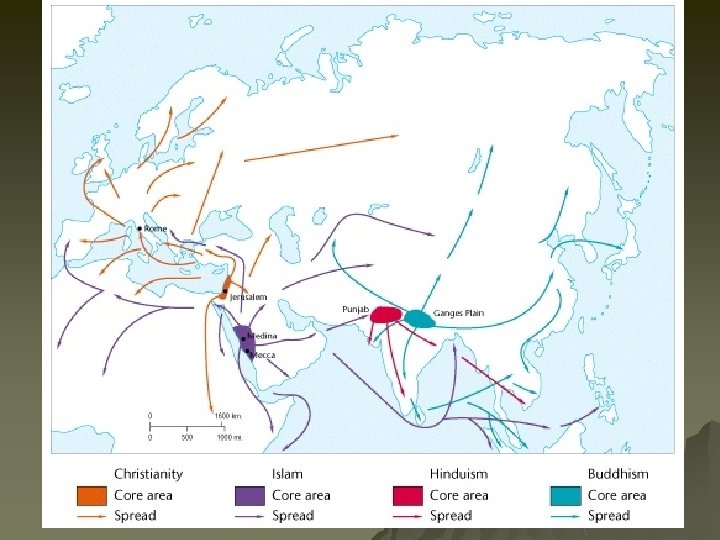
Innovation and Diffusion of World Religions Note hearth areas and diffusion paths of four largest religions (contrast Hinduism to 3 universalizing religions)
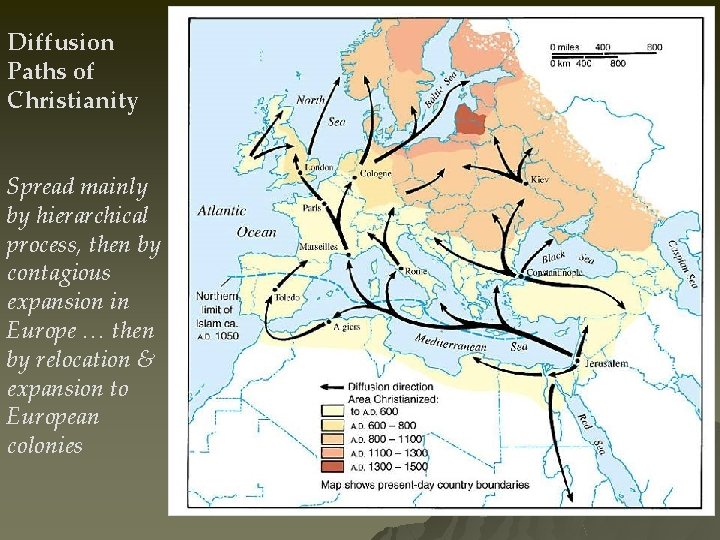
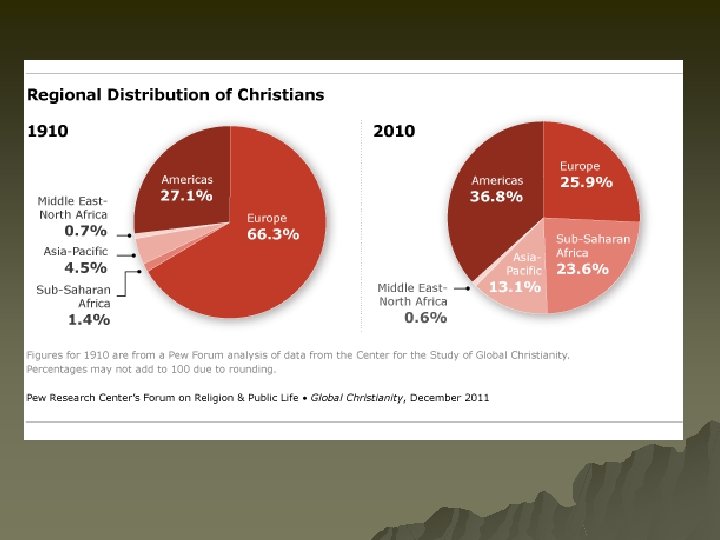
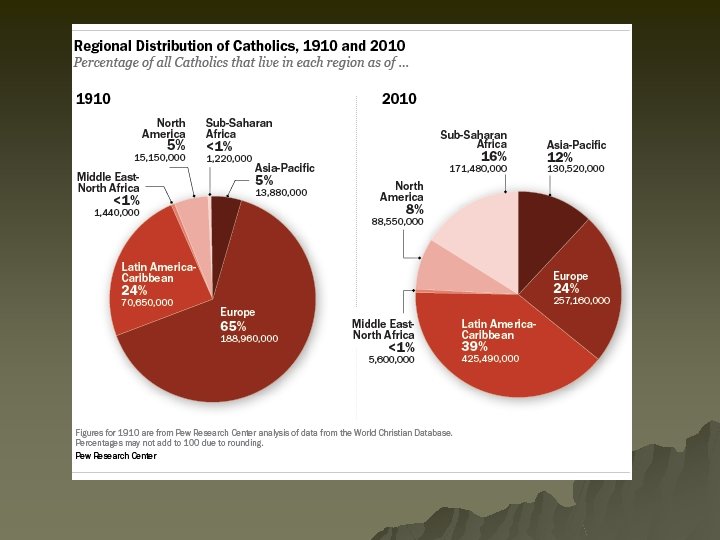
Diffusion Paths of Christianity Spread mainly by hierarchical process, then by contagious expansion in Europe … then by relocation & expansion to European colonies
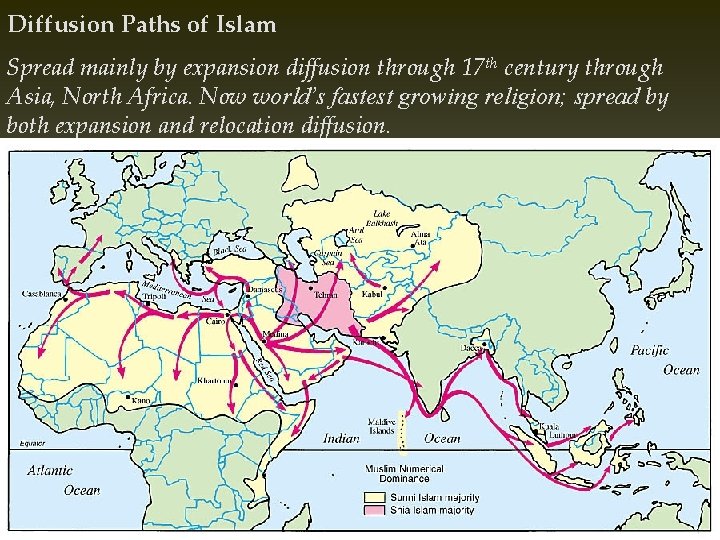
Diffusion Paths of Islam Spread mainly by expansion diffusion through 17 th century through Asia, North Africa. Now world’s fastest growing religion; spread by both expansion and relocation diffusion.
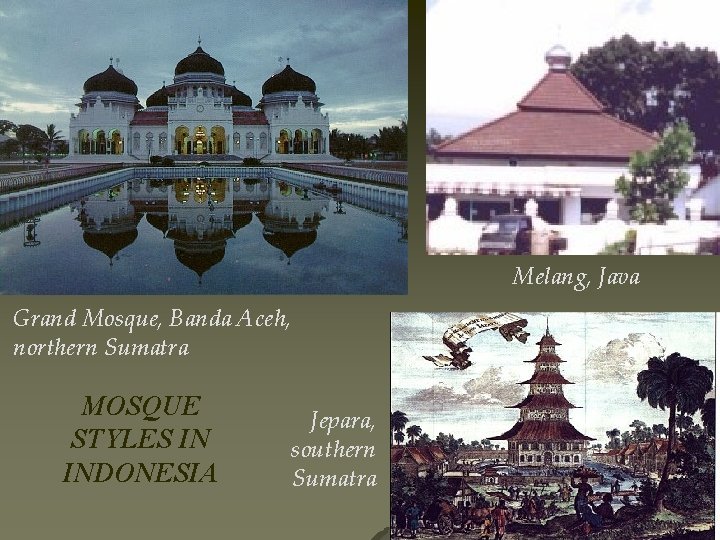
Melang, Java Grand Mosque, Banda Aceh, northern Sumatra MOSQUE STYLES IN INDONESIA Jepara, southern Sumatra
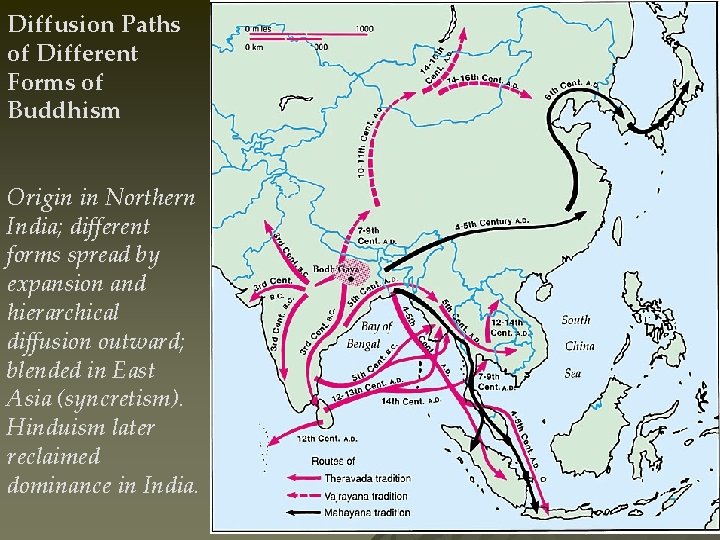
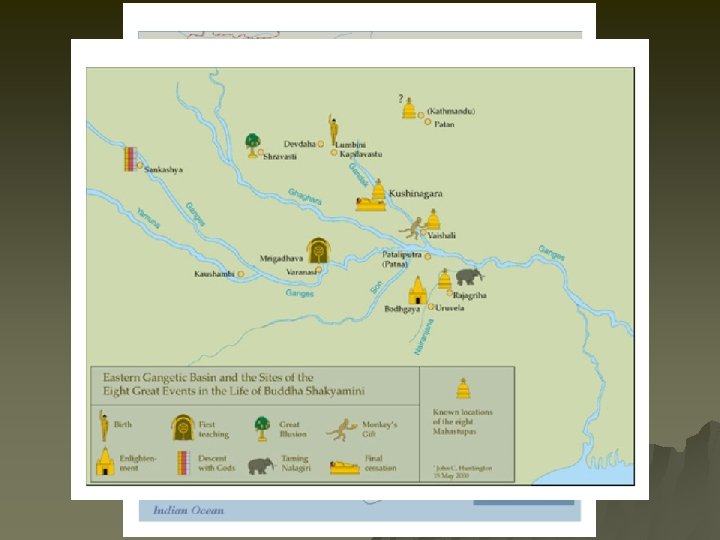
Diffusion Paths of Different Forms of Buddhism Origin in Northern India; different forms spread by expansion and hierarchical diffusion outward; blended in East Asia (syncretism). Hinduism later reclaimed dominance in India.
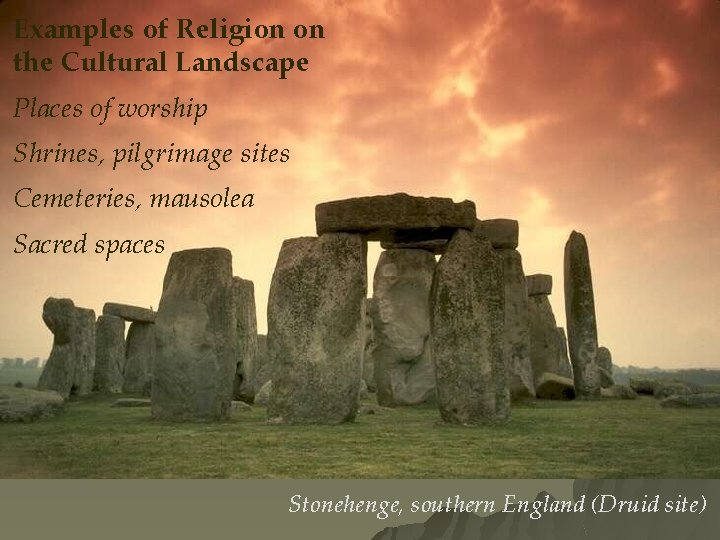
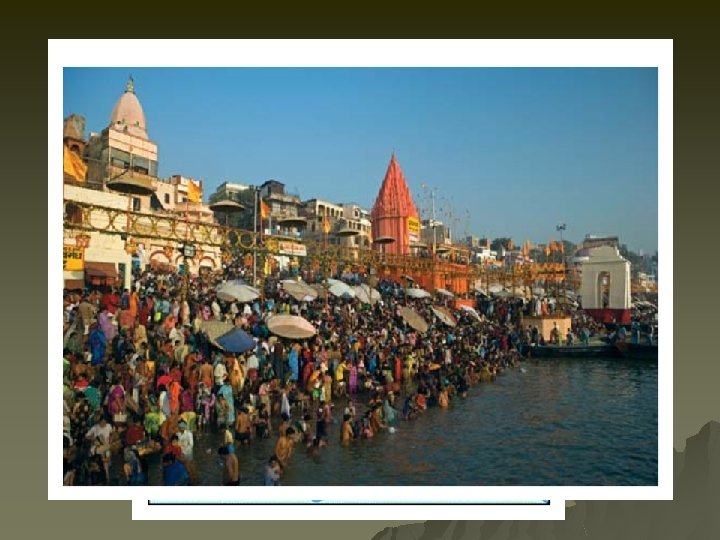
Examples of Religion on the Cultural Landscape Places of worship Shrines, pilgrimage sites Cemeteries, mausolea Sacred spaces Stonehenge, southern England (Druid site)
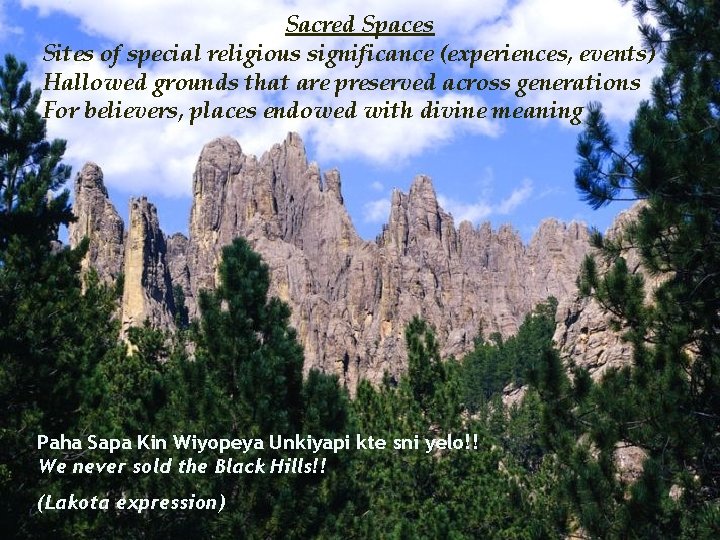
Sacred Spaces Sites of special religious significance (experiences, events) Hallowed grounds that are preserved across generations For believers, places endowed with divine meaning Paha Sapa Kin Wiyopeya Unkiyapi kte sni yelo!! We never sold the Black Hills!! (Lakota expression)
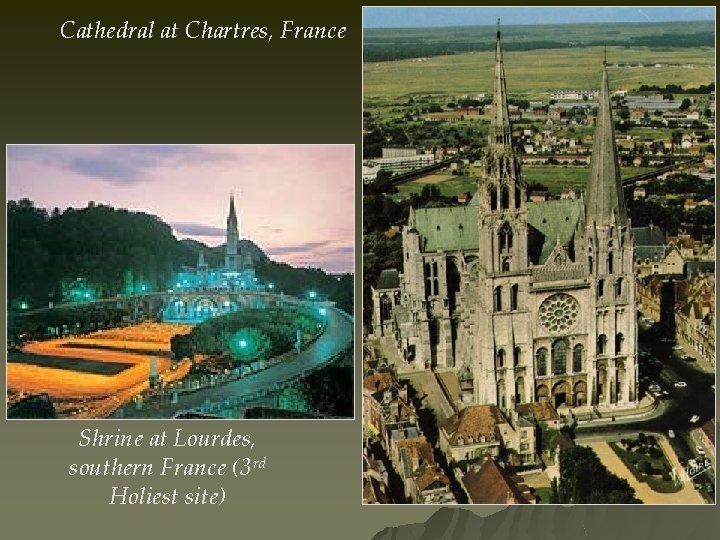
Cathedral at Chartres, France Shrine at Lourdes, southern France (3 rd Holiest site)
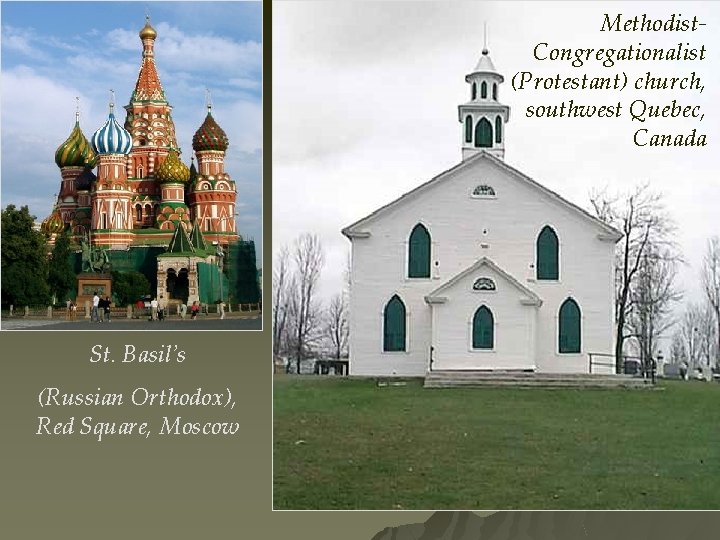
Methodist. Congregationalist (Protestant) church, southwest Quebec, Canada St. Basil’s (Russian Orthodox), Red Square, Moscow
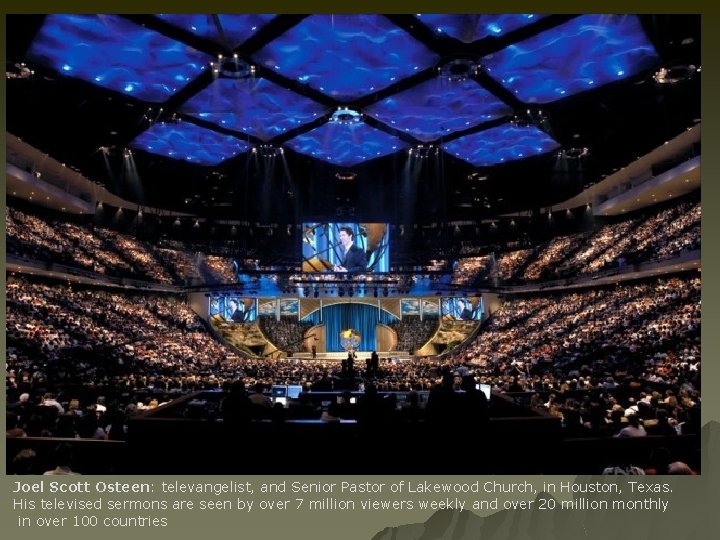
Joel Scott Osteen: televangelist, and Senior Pastor of Lakewood Church, in Houston, Texas. His televised sermons are seen by over 7 million viewers weekly and over 20 million monthly in over 100 countries
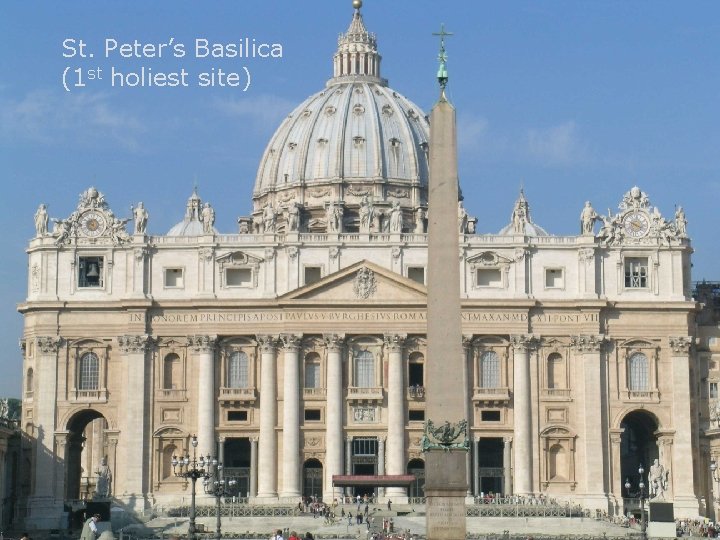
St. Peter’s Basilica (1 st holiest site)
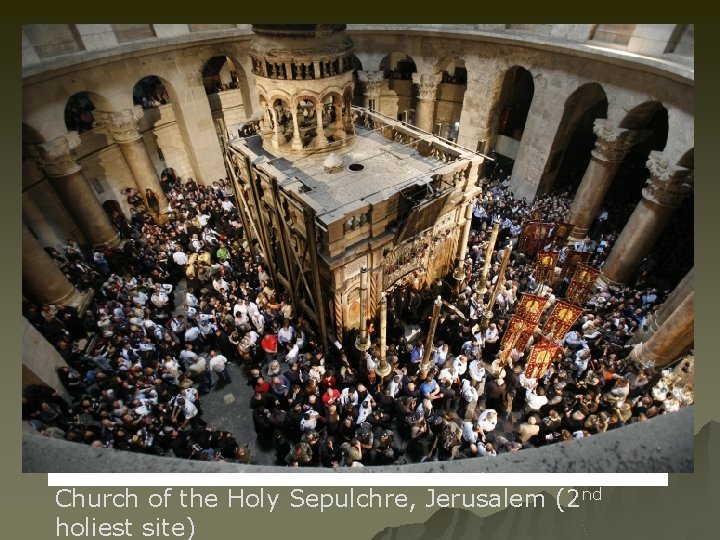
Church of the Holy Sepulchre, Jerusalem (2 nd holiest site)
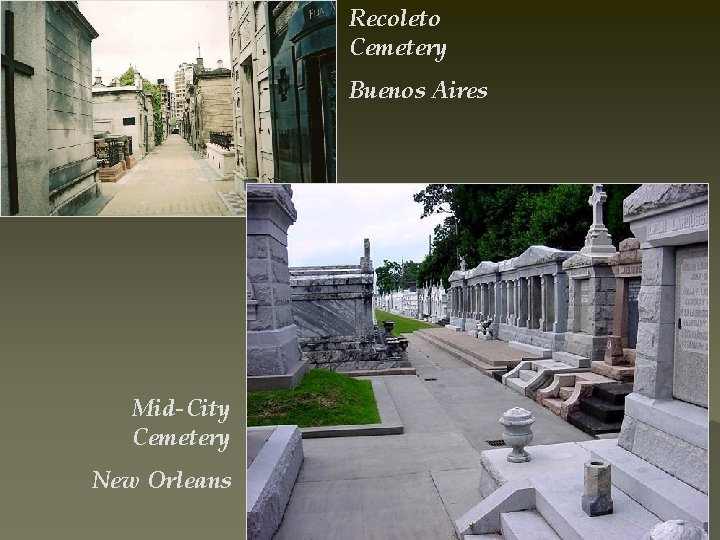
Recoleto Cemetery Buenos Aires Mid-City Cemetery New Orleans
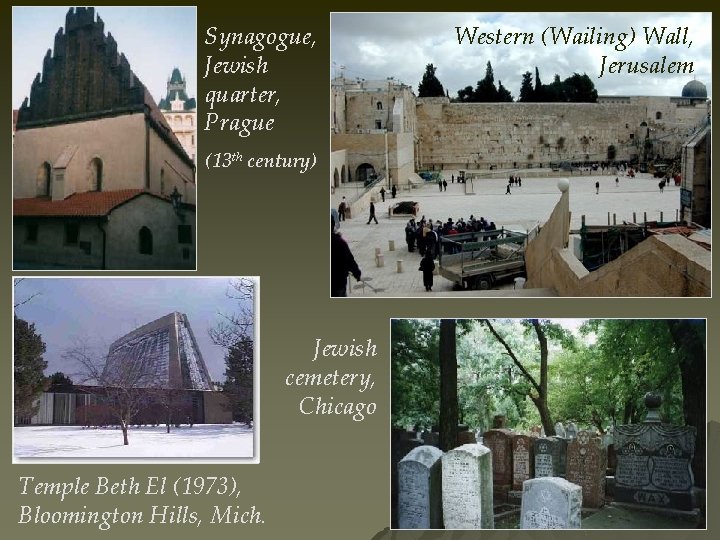
Synagogue, Jewish quarter, Prague (13 th century) Jewish cemetery, Chicago Temple Beth El (1973), Bloomington Hills, Mich. Western (Wailing) Wall, Jerusalem
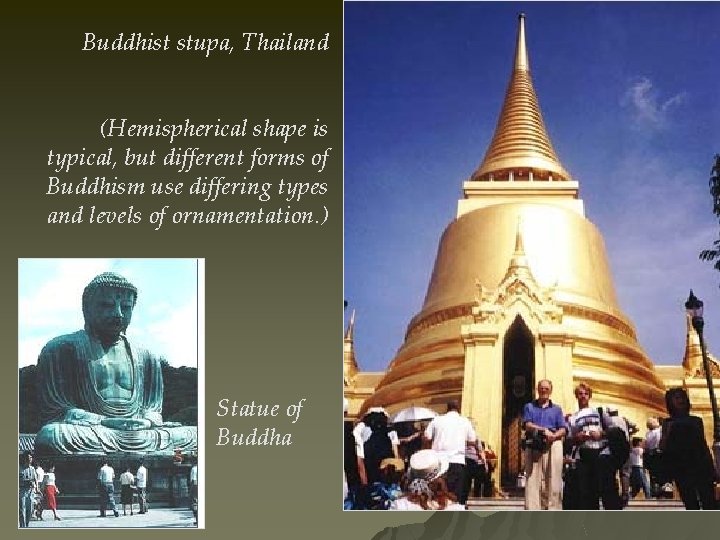
Buddhist stupa, Thailand (Hemispherical shape is typical, but different forms of Buddhism use differing types and levels of ornamentation. ) Statue of Buddha
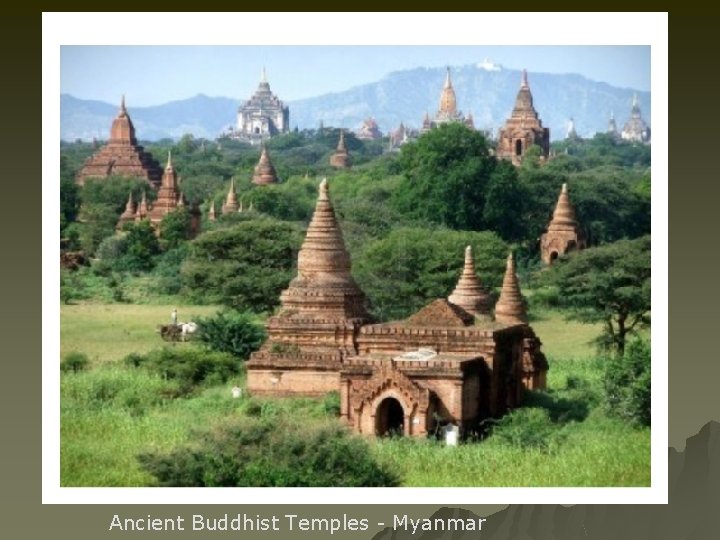
Ancient Buddhist Temples - Myanmar
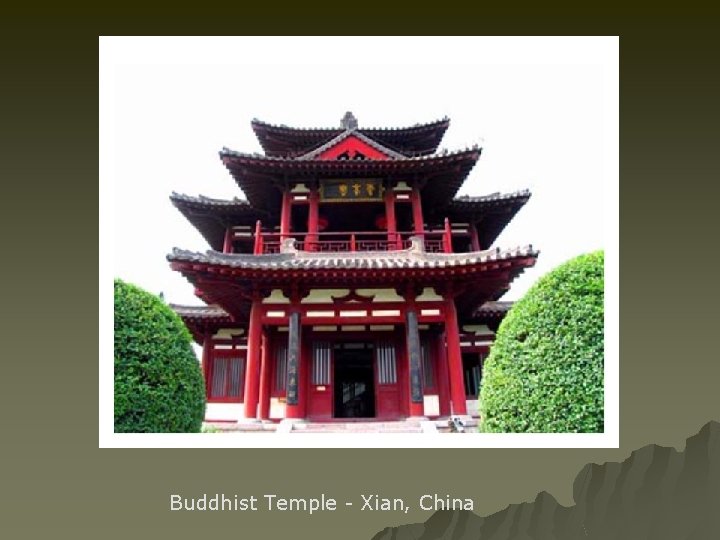
Buddhist Temple - Xian, China
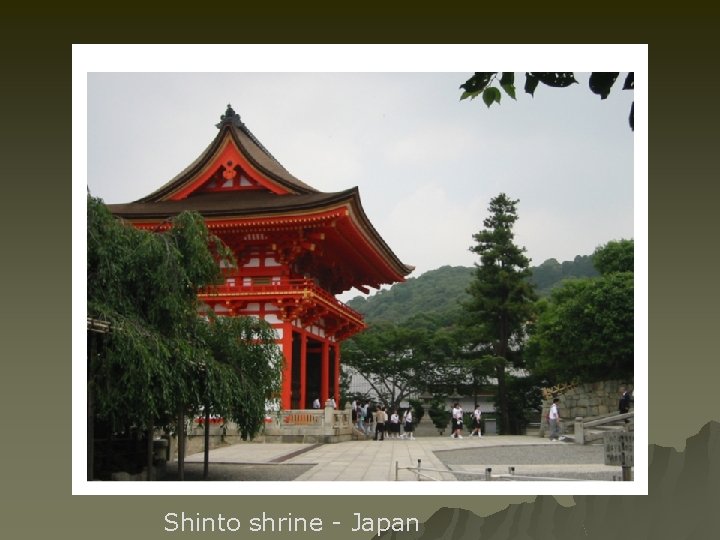
Shinto shrine - Japan
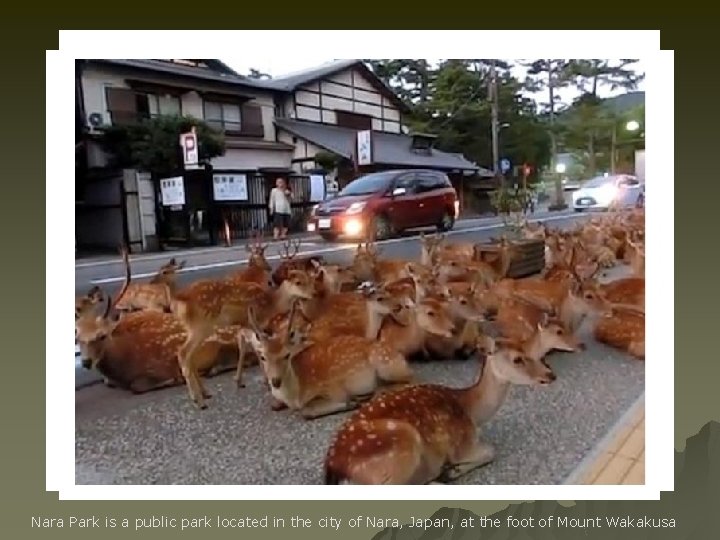
Nara Park is a public park located in the city of Nara, Japan, at the foot of Mount Wakakusa
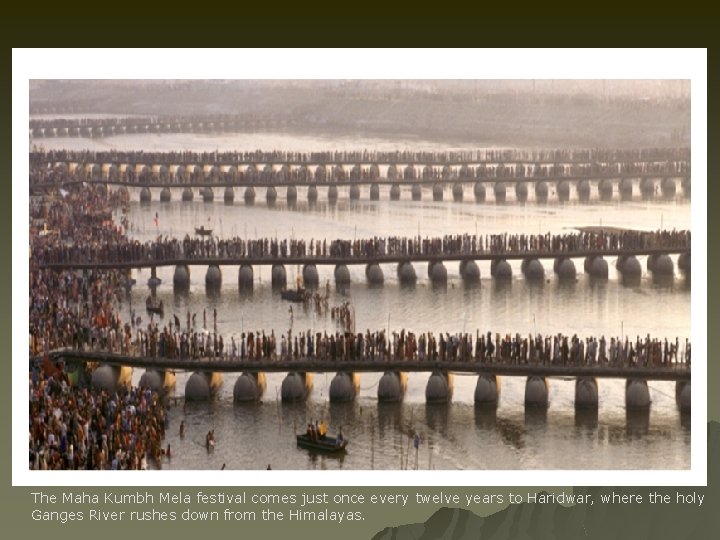
The Maha Kumbh Mela festival comes just once every twelve years to Haridwar, where the holy Ganges River rushes down from the Himalayas.
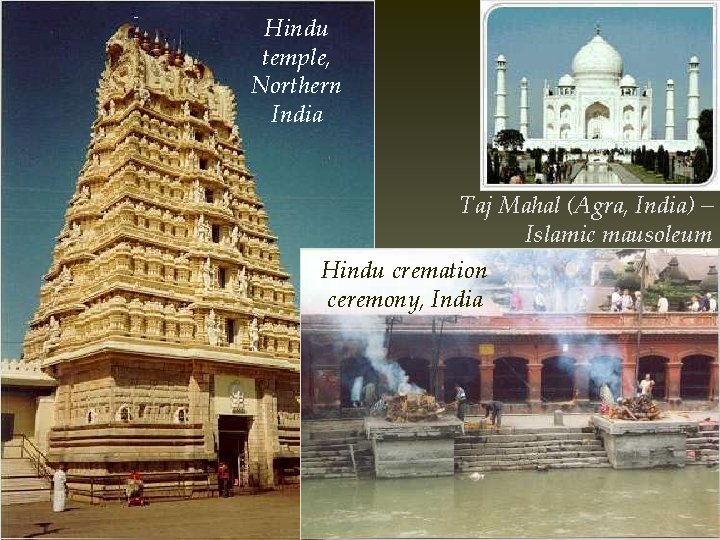
Hindu temple, Northern India Taj Mahal (Agra, India) – Islamic mausoleum Hindu cremation ceremony, India
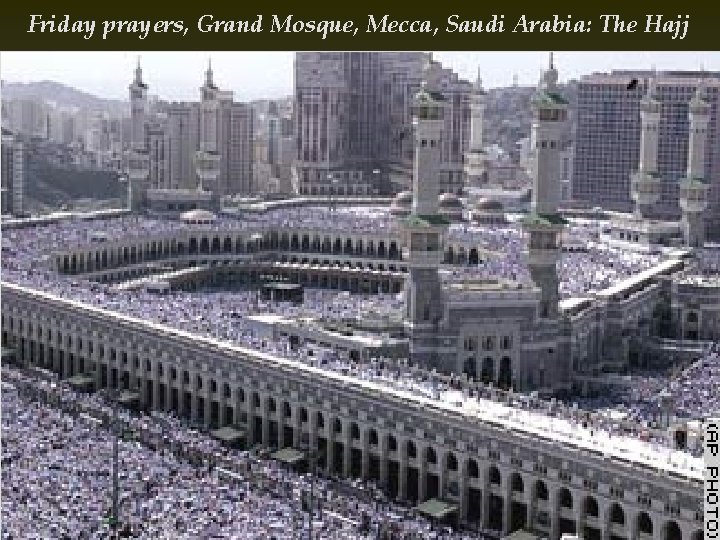
Friday prayers, Grand Mosque, Mecca, Saudi Arabia: The Hajj
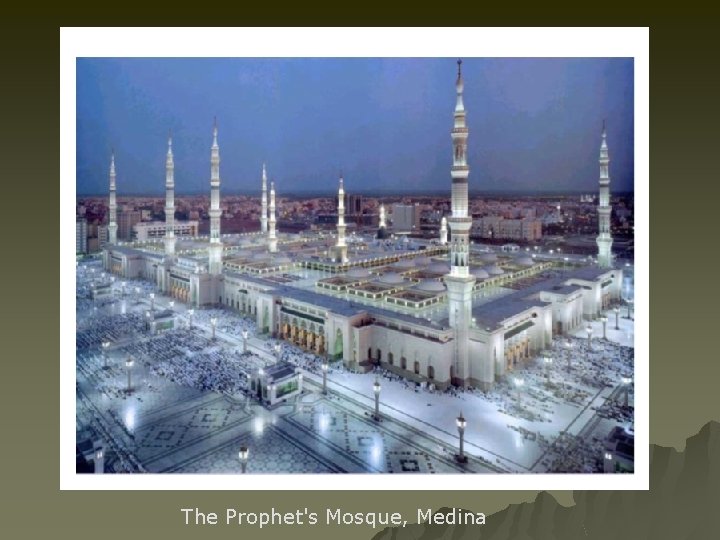
The Prophet's Mosque, Medina
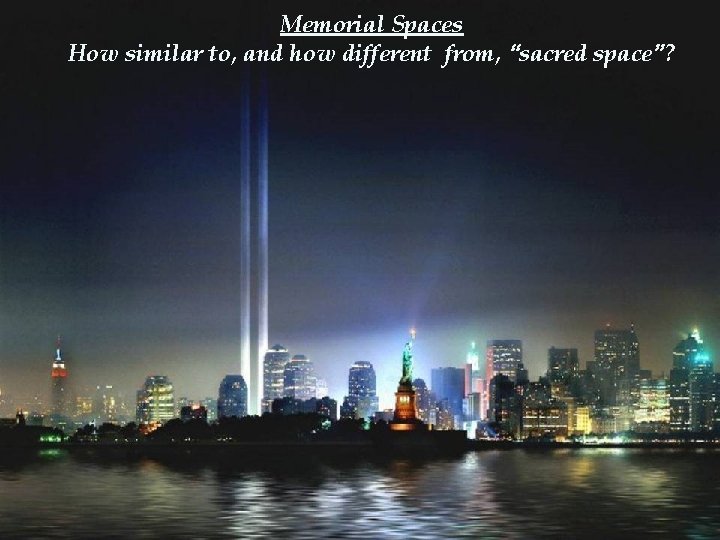
Memorial Spaces How similar to, and how different from, “sacred space”?
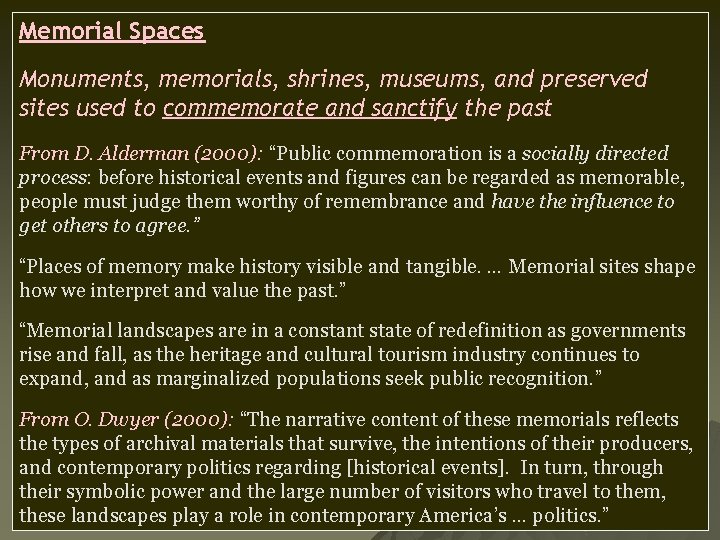
Memorial Spaces Monuments, memorials, shrines, museums, and preserved sites used to commemorate and sanctify the past From D. Alderman (2000): “Public commemoration is a socially directed process: before historical events and figures can be regarded as memorable, people must judge them worthy of remembrance and have the influence to get others to agree. ” “Places of memory make history visible and tangible. … Memorial sites shape how we interpret and value the past. ” “Memorial landscapes are in a constant state of redefinition as governments rise and fall, as the heritage and cultural tourism industry continues to expand, and as marginalized populations seek public recognition. ” From O. Dwyer (2000): “The narrative content of these memorials reflects the types of archival materials that survive, the intentions of their producers, and contemporary politics regarding [historical events]. In turn, through their symbolic power and the large number of visitors who travel to them, these landscapes play a role in contemporary America’s. . . politics. ”