
Religion Christianity Patterns of Diffusion Review Movement of
- Slides: 47
Religion (Christianity)
Patterns of Diffusion (Review) • Movement of people = migration (Unit 2) • “diffusion” = Movement of ideas/culture – hearth = place of origination – Two “categories” or types of diffusion • 1) Relocation diffusion spread through migration – In this type of diffusion there is LESS presence in the “hearth” or place of origin and more in the new location. There is no overall growth unless it is through natural population growth. » Transfer NOT growth • 2) Expansion diffusion = relocation not req’d – snowball effect as MORE people are exposed. – Place of origination retains its number but NEW members are gained = “expansion”
Patterns of Diffusion Sub-types of Expansion Diffusion • 3 types of expansion diffusion – a) Contagious » fast, widespread to those in contact or adjacent » Disease, things that go viral on the internet – b) Hierarchical » spread through nodes of power or influence or authority » Rap music, fashion trends – c) Stimulus » underlying principles/idea spread but not end product » Maharaja burger, missionary/cannibals
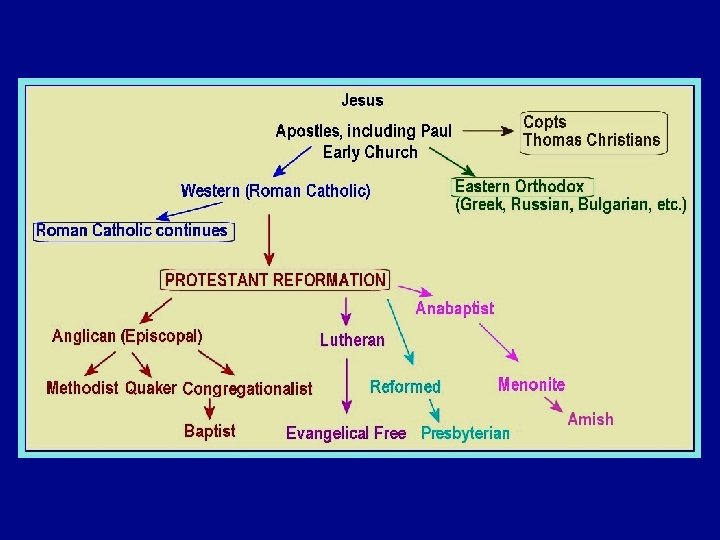
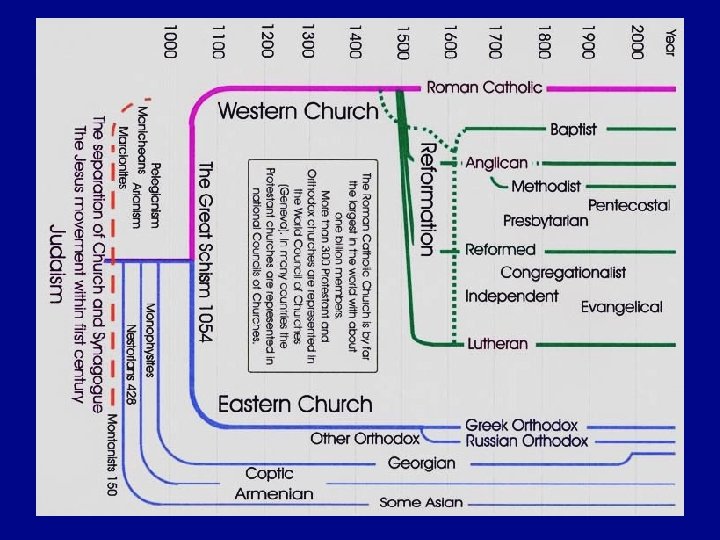
Christianity • largest world religion – over 2 billion adherents – Many adherents in Europe, the Americas • Three major branches + “other” – Roman Catholicism (51% of all Christians) – Protestant Christianity (24%) • “denominations” include Lutheran, Baptist, Methodist, Anglican, Presbyterian, Episcopal etc. – Eastern Orthodox (11%) – Other (14%) • Coptic (Egypt), Mormons (Church of Jesus Christ of Latter-day Saints), Jehovah’s Witnesses
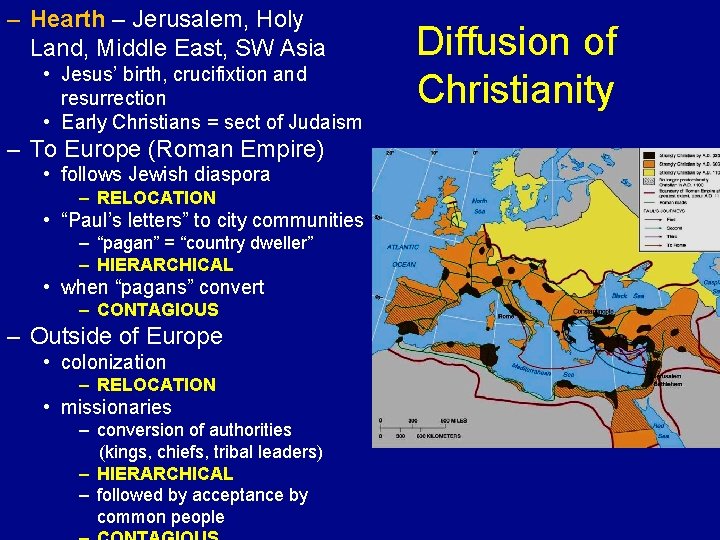
– Hearth – Jerusalem, Holy Land, Middle East, SW Asia • Jesus’ birth, crucifixtion and resurrection • Early Christians = sect of Judaism – To Europe (Roman Empire) • follows Jewish diaspora – RELOCATION • “Paul’s letters” to city communities – “pagan” = “country dweller” – HIERARCHICAL • when “pagans” convert – CONTAGIOUS – Outside of Europe • colonization – RELOCATION • missionaries – conversion of authorities (kings, chiefs, tribal leaders) – HIERARCHICAL – followed by acceptance by common people Diffusion of Christianity
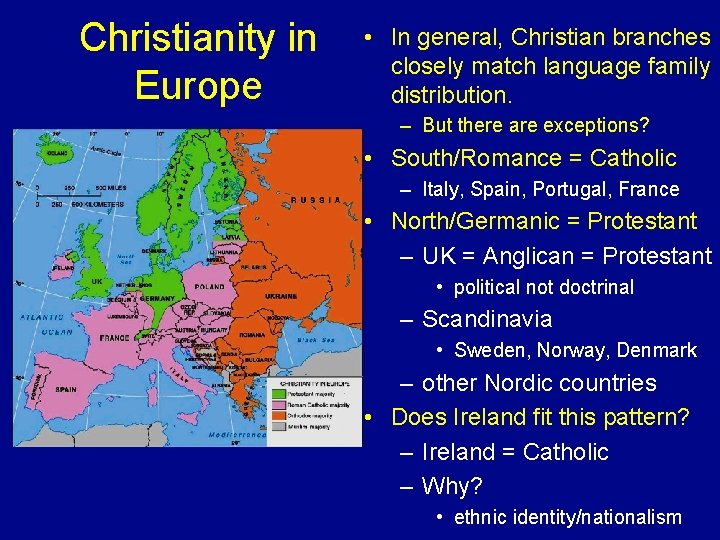
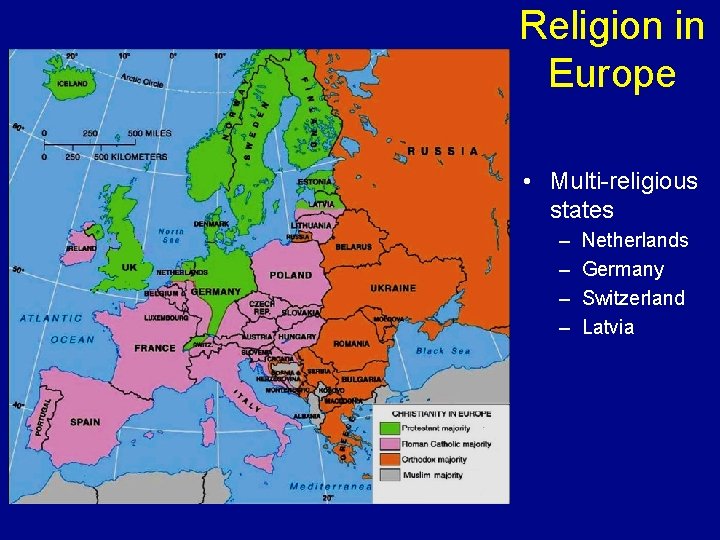
Christianity in Europe • In general, Christian branches closely match language family distribution. – But there are exceptions? • South/Romance = Catholic – Italy, Spain, Portugal, France • North/Germanic = Protestant – UK = Anglican = Protestant • political not doctrinal – Scandinavia • Sweden, Norway, Denmark – other Nordic countries • Does Ireland fit this pattern? – Ireland = Catholic – Why? • ethnic identity/nationalism
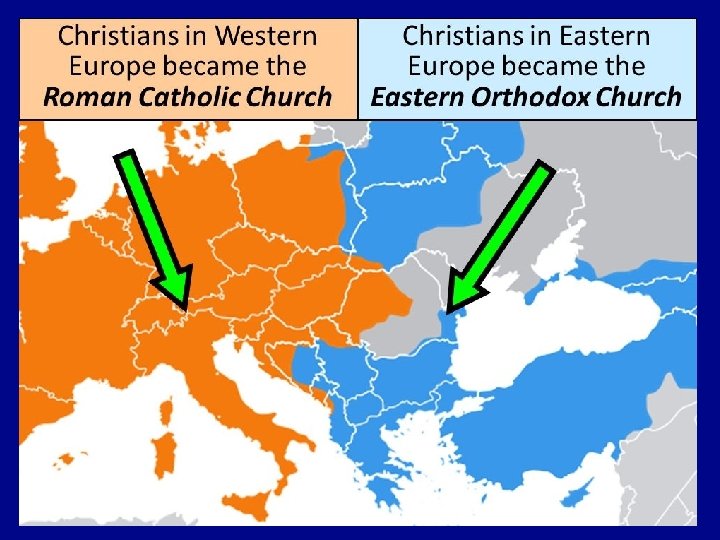
Diffusion of Christianity • Global – Secondary hearths influence global distribution • not the place of origin but place from which there was significant change • Roman Catholicism = Rome/Vatican City – Spanish, Portuguese, French colonies = Catholic – “Latin” America • Protestantism = Northern Europe (Germany/UK) – British/Dutch colonies = Protestant – North America (we will handle tomorrow) – Australia, New Zealand • Eastern Orthodox = Constantinople (now Istanbul) – – Orthodox missionaries → Eastern Europe/Russia St. Cyril and Methodius = Cyrillic Alphabet Moscow = “the Third Rome” after fall of Constantinople to Muslims relocation diffusion to Siberia
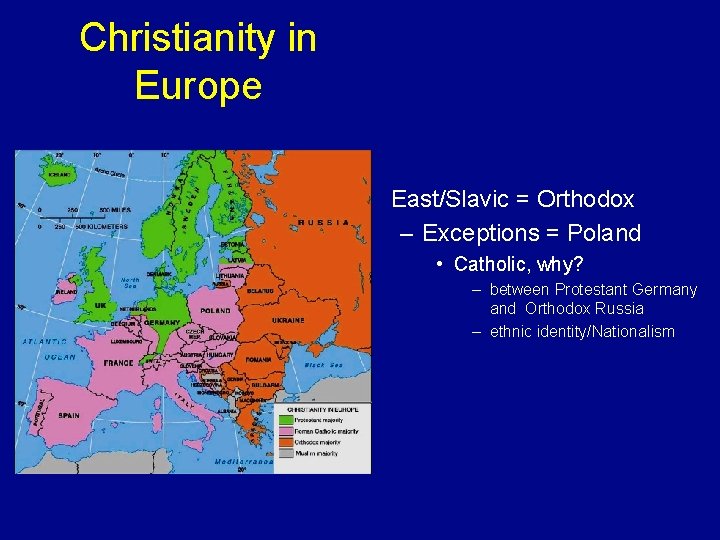
Christianity in Europe • East/Slavic = Orthodox – Exceptions = Poland • Catholic, why? – between Protestant Germany and Orthodox Russia – ethnic identity/Nationalism
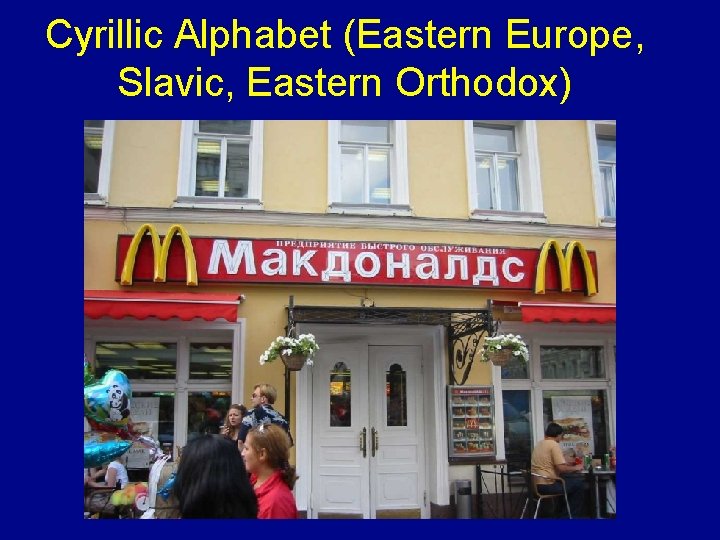
Cyrillic Alphabet (Eastern Europe, Slavic, Eastern Orthodox)
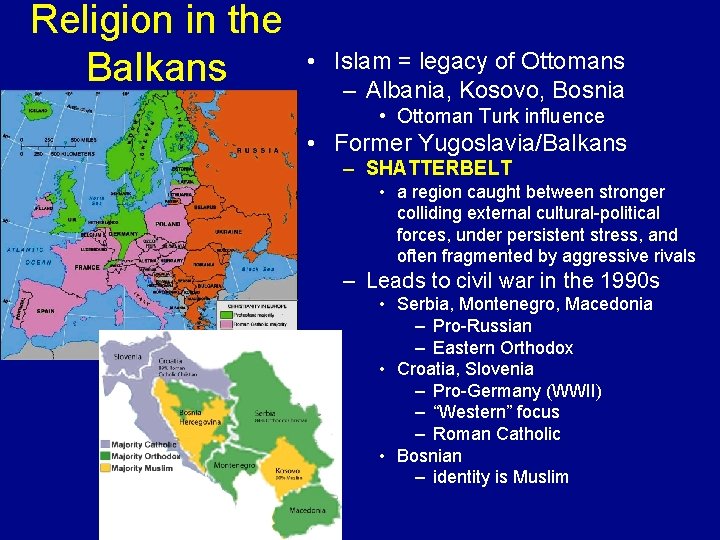
Religion in the Balkans • Islam = legacy of Ottomans – Albania, Kosovo, Bosnia • Ottoman Turk influence • Former Yugoslavia/Balkans – SHATTERBELT • a region caught between stronger colliding external cultural-political forces, under persistent stress, and often fragmented by aggressive rivals – Leads to civil war in the 1990 s • Serbia, Montenegro, Macedonia – Pro-Russian – Eastern Orthodox • Croatia, Slovenia – Pro-Germany (WWII) – “Western” focus – Roman Catholic • Bosnian – identity is Muslim
Religion in Europe • Multi-religious states – – Netherlands Germany Switzerland Latvia
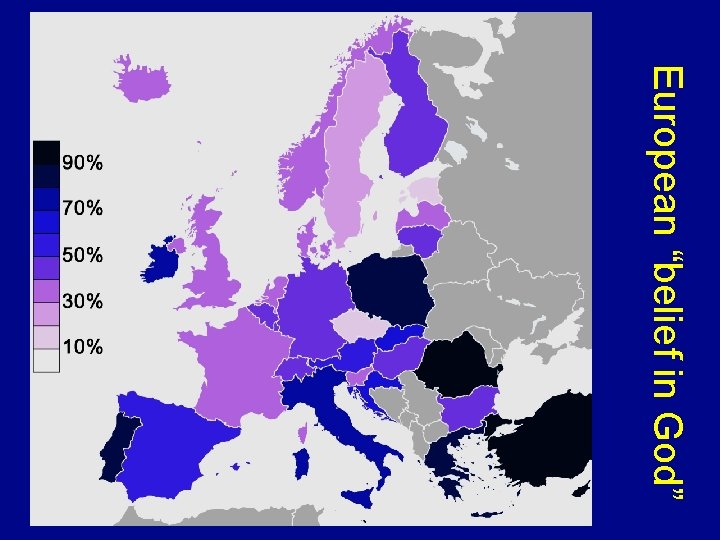
European “belief in God”
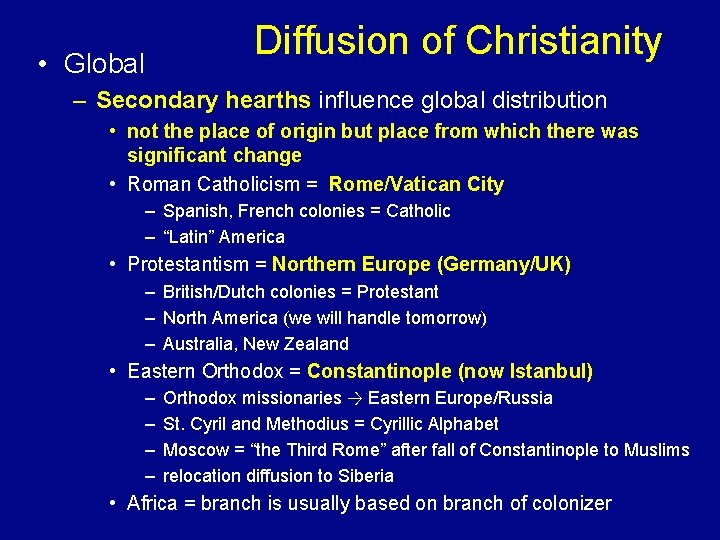
Diffusion of Christianity • Global – Secondary hearths influence global distribution • not the place of origin but place from which there was significant change • Roman Catholicism = Rome/Vatican City – Spanish, French colonies = Catholic – “Latin” America • Protestantism = Northern Europe (Germany/UK) – British/Dutch colonies = Protestant – North America (we will handle tomorrow) – Australia, New Zealand • Eastern Orthodox = Constantinople (now Istanbul) – – Orthodox missionaries → Eastern Europe/Russia St. Cyril and Methodius = Cyrillic Alphabet Moscow = “the Third Rome” after fall of Constantinople to Muslims relocation diffusion to Siberia • Africa = branch is usually based on branch of colonizer
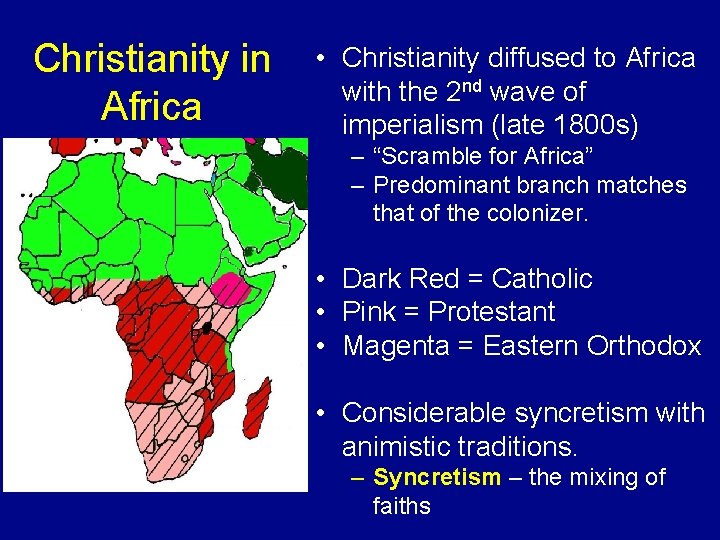
Christianity in Africa • Christianity diffused to Africa with the 2 nd wave of imperialism (late 1800 s) – “Scramble for Africa” – Predominant branch matches that of the colonizer. • Dark Red = Catholic • Pink = Protestant • Magenta = Eastern Orthodox • Considerable syncretism with animistic traditions. – Syncretism – the mixing of faiths
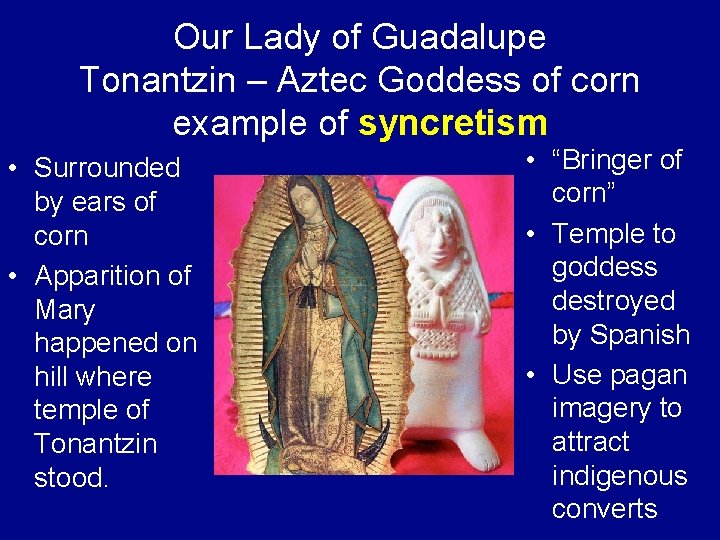
Our Lady of Guadalupe Tonantzin – Aztec Goddess of corn example of syncretism • Surrounded by ears of corn • Apparition of Mary happened on hill where temple of Tonantzin stood. • “Bringer of corn” • Temple to goddess destroyed by Spanish • Use pagan imagery to attract indigenous converts
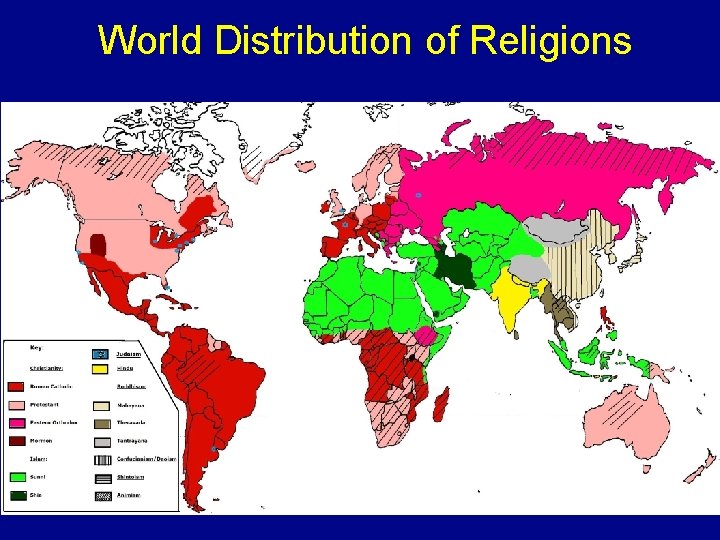
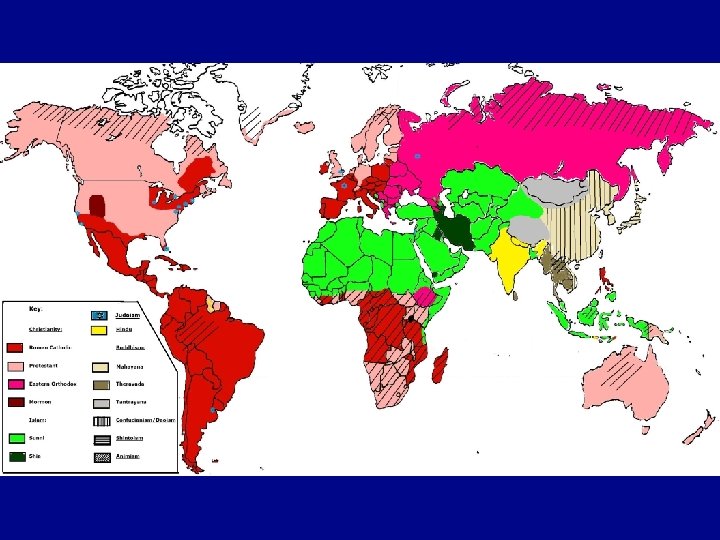
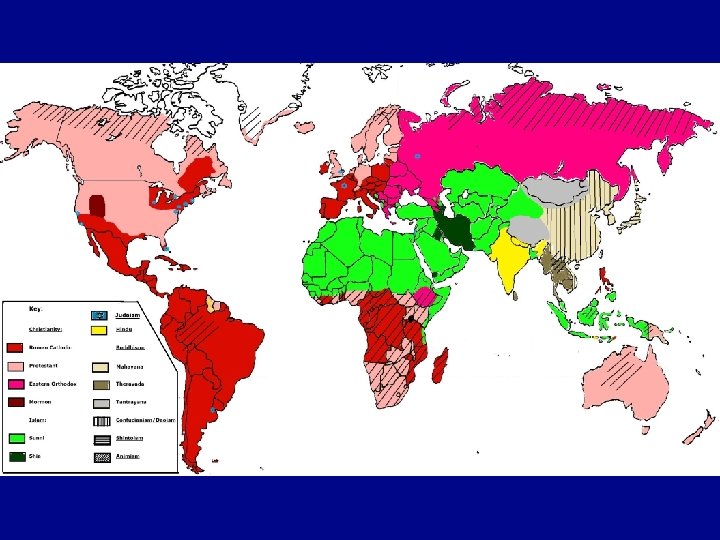
World Distribution of Religions
Religion (Islam)
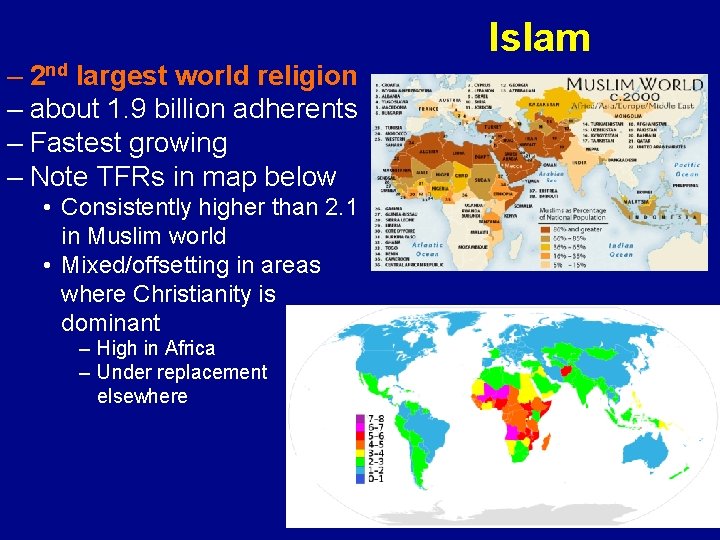
– 2 nd largest world religion – about 1. 9 billion adherents – Fastest growing – Note TFRs in map below • Consistently higher than 2. 1 in Muslim world • Mixed/offsetting in areas where Christianity is dominant – High in Africa – Under replacement elsewhere Islam
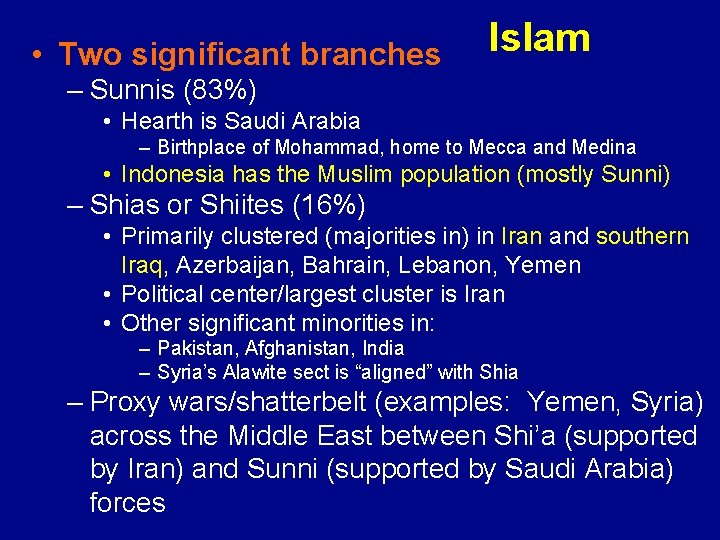
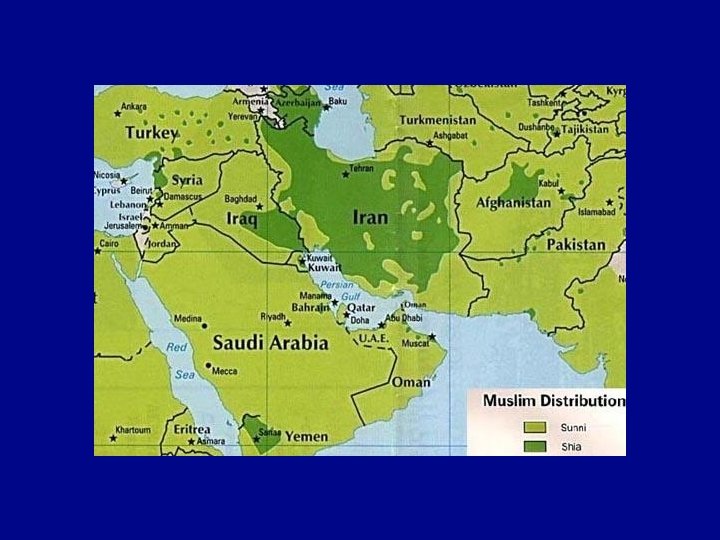
• Two significant branches Islam – Sunnis (83%) • Hearth is Saudi Arabia – Birthplace of Mohammad, home to Mecca and Medina • Indonesia has the Muslim population (mostly Sunni) – Shias or Shiites (16%) • Primarily clustered (majorities in) in Iran and southern Iraq, Azerbaijan, Bahrain, Lebanon, Yemen • Political center/largest cluster is Iran • Other significant minorities in: – Pakistan, Afghanistan, India – Syria’s Alawite sect is “aligned” with Shia – Proxy wars/shatterbelt (examples: Yemen, Syria) across the Middle East between Shi’a (supported by Iran) and Sunni (supported by Saudi Arabia) forces
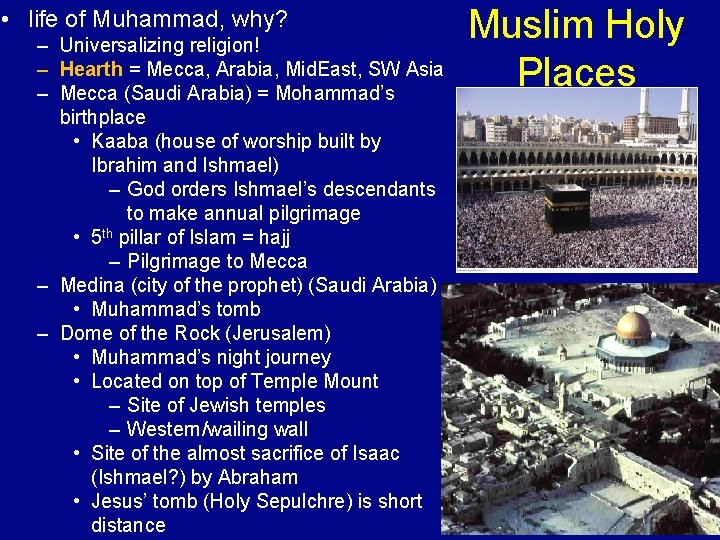
• life of Muhammad, why? – Universalizing religion! – Hearth = Mecca, Arabia, Mid. East, SW Asia – Mecca (Saudi Arabia) = Mohammad’s birthplace • Kaaba (house of worship built by Ibrahim and Ishmael) – God orders Ishmael’s descendants to make annual pilgrimage • 5 th pillar of Islam = hajj – Pilgrimage to Mecca – Medina (city of the prophet) (Saudi Arabia) • Muhammad’s tomb – Dome of the Rock (Jerusalem) • Muhammad’s night journey • Located on top of Temple Mount – Site of Jewish temples – Western/wailing wall • Site of the almost sacrifice of Isaac (Ishmael? ) by Abraham • Jesus’ tomb (Holy Sepulchre) is short distance Muslim Holy Places
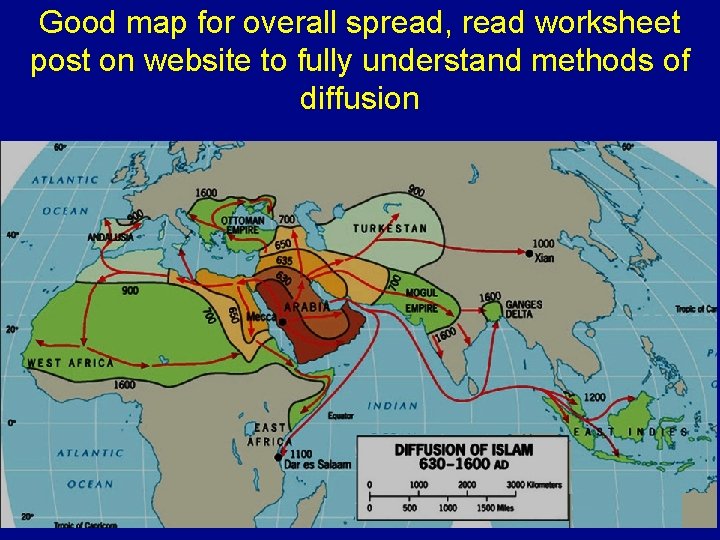
Good map for overall spread, read worksheet post on website to fully understand methods of diffusion
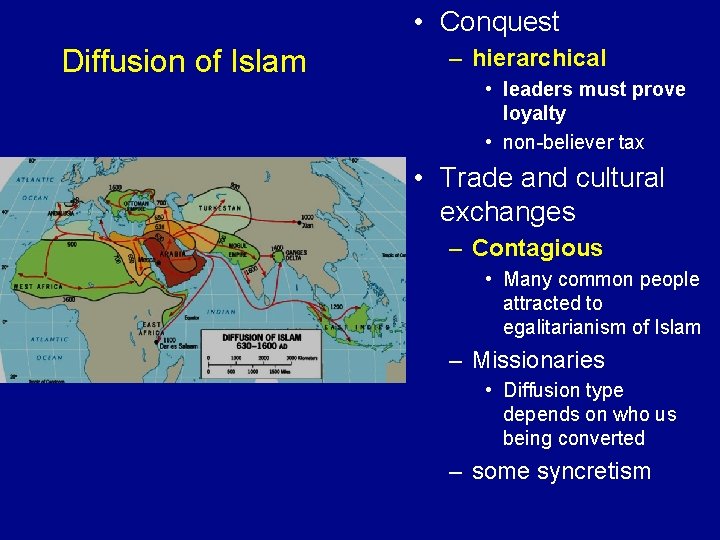
• Conquest Diffusion of Islam – hierarchical • leaders must prove loyalty • non-believer tax • Trade and cultural exchanges – Contagious • Many common people attracted to egalitarianism of Islam – Missionaries • Diffusion type depends on who us being converted – some syncretism
Religion (Buddhism)
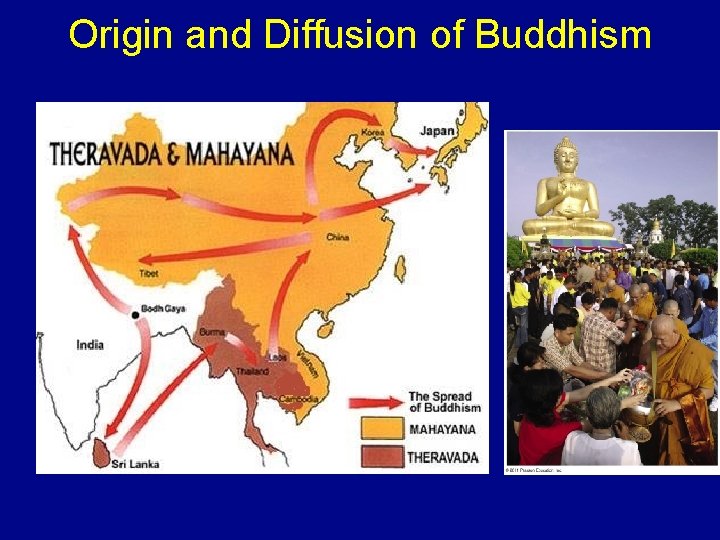
• About 500 million adherents – difficult to quantify due to syncretism Buddhism • Hearth is Northern India – Founder is Siddhartha Gautama • Four Noble Truths • Eightfold Path (basically moderation) – Holy places relate to Buddha’s life • Bodh Gaya = where Buddha achieved Enlightenment • Benares (Varanasi) = Deer Park was his first sermon – This city is also holy to Hindus – Emperor Asoka later converts and sends out missionaries • Central Asia → then silk road trade route to China • Sri Lanka → Southeast Asia • Three branches – Mahayana (56%) (China, Japan, Korea, Vietnam) – Theravada/Hinayana (38%) (Southeast Asia) – Tantrayana/Vajrayana (6%) (Tibet, Mongolia)
Origin and Diffusion of Buddhism
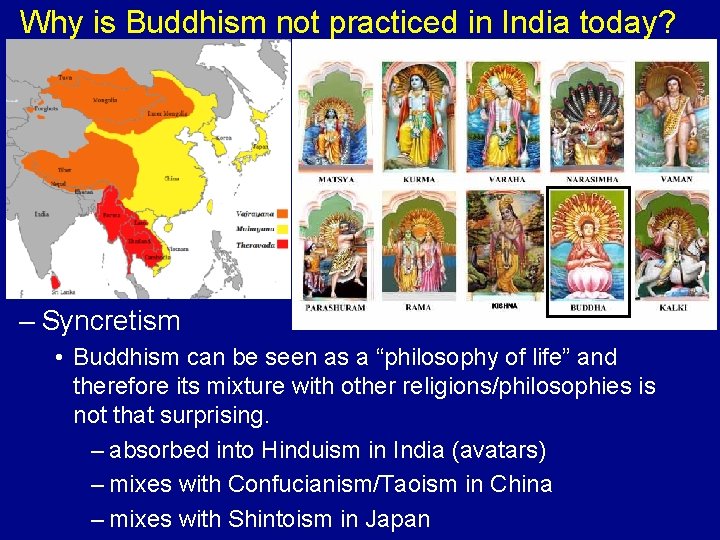
Why is Buddhism not practiced in India today? – Syncretism • Buddhism can be seen as a “philosophy of life” and therefore its mixture with other religions/philosophies is not that surprising. – absorbed into Hinduism in India (avatars) – mixes with Confucianism/Taoism in China – mixes with Shintoism in Japan
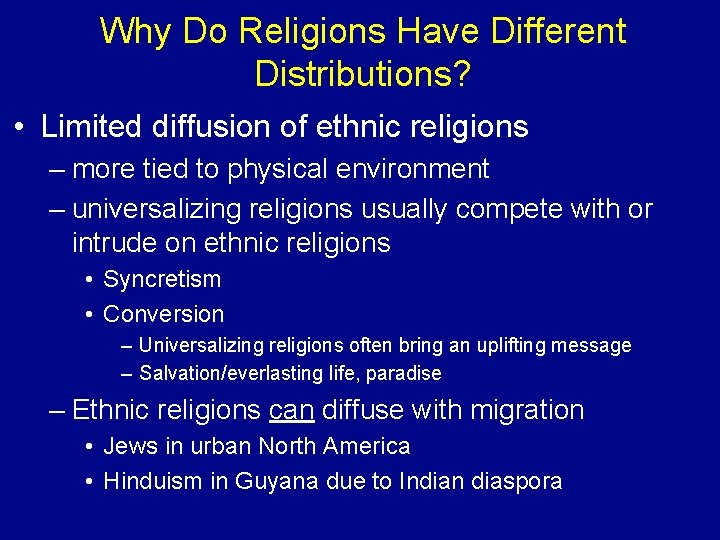
Why Do Religions Have Different Distributions? • Limited diffusion of ethnic religions – more tied to physical environment – universalizing religions usually compete with or intrude on ethnic religions • Syncretism • Conversion – Universalizing religions often bring an uplifting message – Salvation/everlasting life, paradise – Ethnic religions can diffuse with migration • Jews in urban North America • Hinduism in Guyana due to Indian diaspora
Hinduism • 3 rd largest religion in the world – 900+ million adherents – 97% of Hindus are found in India • rest in Nepal
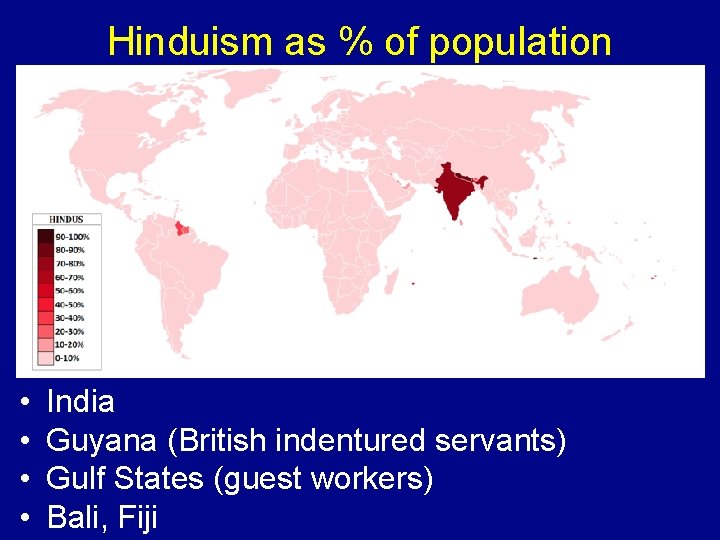
Hinduism as % of population • • India Guyana (British indentured servants) Gulf States (guest workers) Bali, Fiji
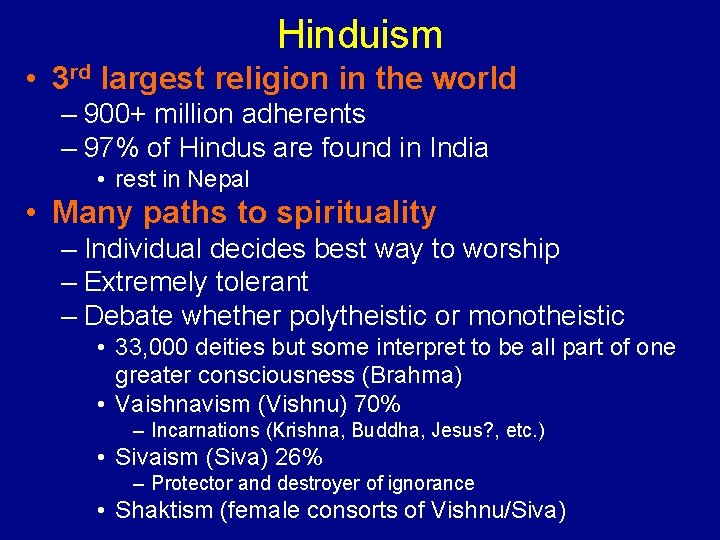
Hinduism • 3 rd largest religion in the world – 900+ million adherents – 97% of Hindus are found in India • rest in Nepal • Many paths to spirituality – Individual decides best way to worship – Extremely tolerant – Debate whether polytheistic or monotheistic • 33, 000 deities but some interpret to be all part of one greater consciousness (Brahma) • Vaishnavism (Vishnu) 70% – Incarnations (Krishna, Buddha, Jesus? , etc. ) • Sivaism (Siva) 26% – Protector and destroyer of ignorance • Shaktism (female consorts of Vishnu/Siva)
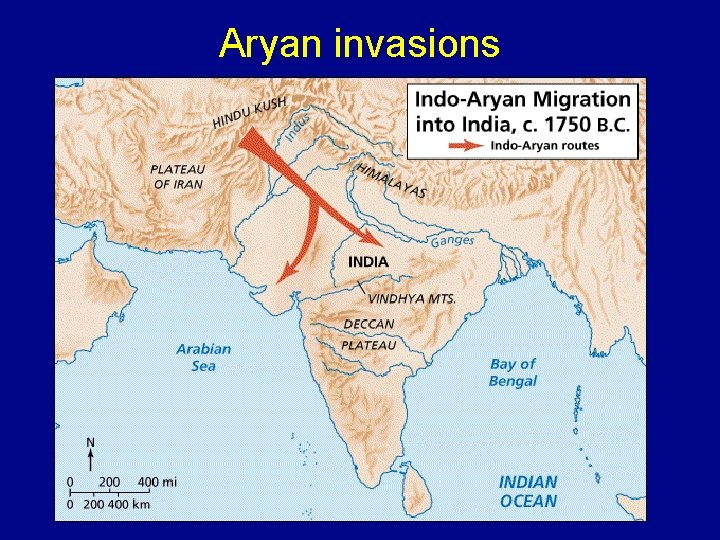
• Origin Hinduism – Basic ideas brought by Aryans (Indo-Europeans) – Intermingled with Dravidians – No clear founder, archaeological evidence dating from 2500 B. C.
Aryan invasions
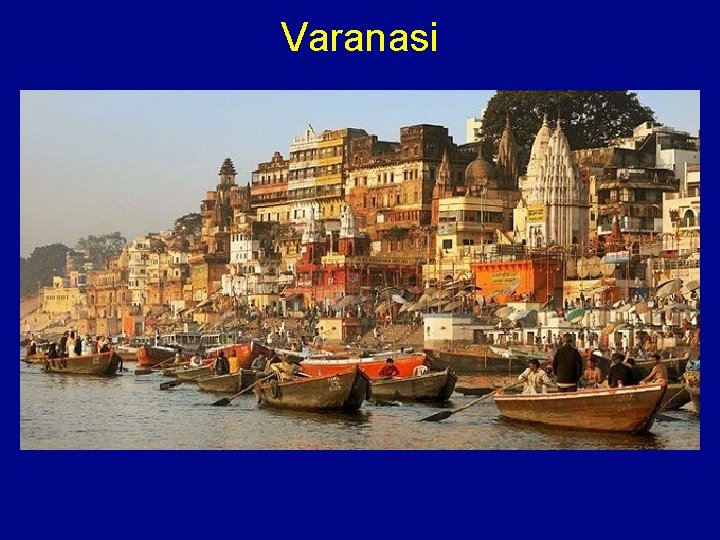
• Origin Hinduism – Basic ideas brought by Aryans (Indo-Europeans) – Intermingled with Dravidians – No clear founder, archaeological evidence dating from 2500 B. C. – ‘Karmic” religion (cause and effect) – Believe in reincarnation, goal is to escape cycle of rebirth – Karma = balance sheet that determines how you will be reborn » Dharma = must follow set of rules for caste » Caste = social class – Social mobility is limited, Why? discuss • Holy places – Riverbanks, coastlines, mountains – Temples often located on riverbanks/water – Ganges River is the most sacred, Varanasi = pilgrimage site
Varanasi
• 14 - 15 million globally – 1/3 USA, 1/3 Israel, 1/3 elsewhere – 15% in Europe (90% before WWII) Judaism • Origin and diffusion – Abraham’s migration/covenant – Promised land ↔ monotheism – 10 lost tribes (Assyrians)/ – 2 tribes remain (Babylon) – Jews write Bible to preserve identity » Do they absorb Babylonian mythology? ? (Flood story, Zoroastrian monotheism) – Tribe of Judah = “Jewish” – Diaspora (after 70 AD by Romans) – makes Jews an exception that ethnic religions are clustered – “re-clustering” due to establishment of Israel • Zionism = political movement for a Jewish homeland – began late 1800 s, reaction to persecution – Pressure accelerates after Holocaust
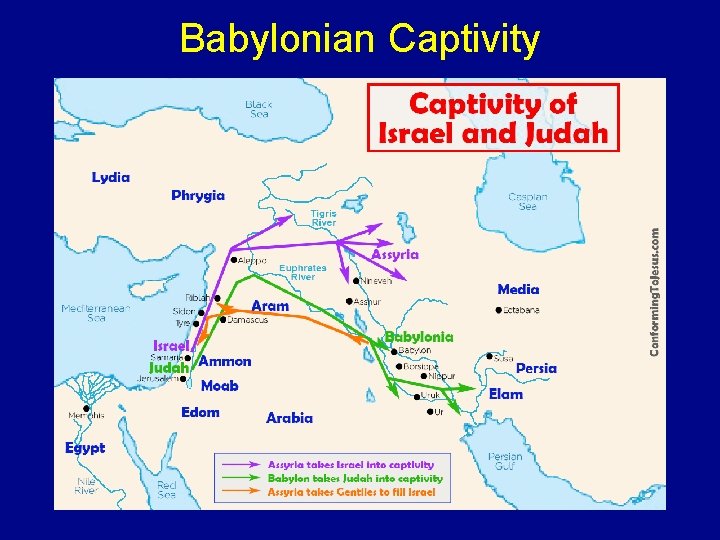
• 14 - 15 million globally – 1/3 USA, 1/3 Israel, 1/3 elsewhere – 15% in Europe (90% before WWII) Judaism • Origin and diffusion – Abraham’s migration/covenant – Promised land ↔ monotheism – 10 lost tribes (Assyrians)/ – 2 tribes remain (Babylon) – Jews write Bible to preserve identity » Do they absorb Babylonian mythology? ? (Flood story, Zoroastrian monotheism) – Tribe of Judah = “Jewish”
Babylonian Captivity
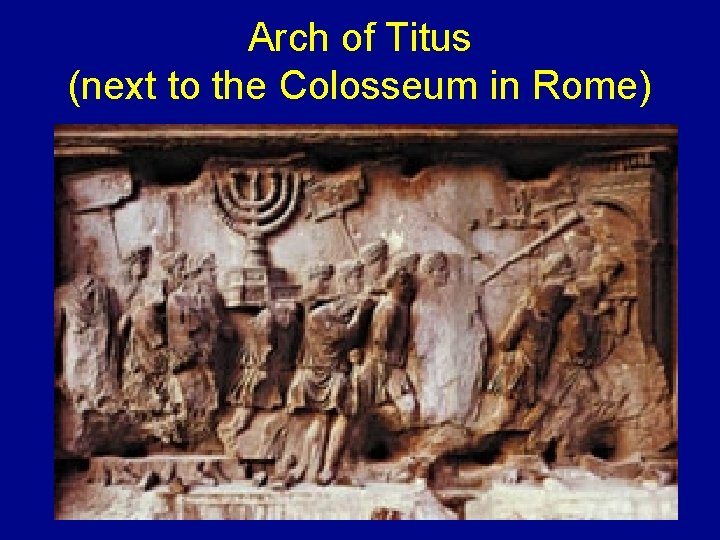
• 14 - 15 million globally – 1/3 USA, 1/3 Israel, 1/3 elsewhere – 15% in Europe (90% before WWII) Judaism • Origin and diffusion – Abraham’s migration/covenant – Promised land ↔ monotheism – 10 lost tribes (Assyrians)/ – 2 tribes remain (Babylon) – Jews write Bible to preserve identity » Do they absorb Babylonian mythology? ? (Flood story, Zoroastrian monotheism) – Tribe of Judah = “Jewish” – Diaspora (after 70 AD by Romans) – makes Jews an exception that ethnic religions are clustered
Arch of Titus (next to the Colosseum in Rome)
• 14 - 15 million globally – 1/3 USA, 1/3 Israel, 1/3 elsewhere – 15% in Europe (90% before WWII) Judaism • Origin and diffusion – Abraham’s migration/covenant – Promised land ↔ monotheism – 10 lost tribes (Assyrians)/ – 2 tribes remain (Babylon) – Jews write Bible to preserve identity » Do they absorb Babylonian mythology? ? (Flood story, Zoroastrian monotheism) – Tribe of Judah = “Jewish” – Diaspora (after 70 AD by Romans) – makes Jews an exception that ethnic religions are clustered – “re-clustering” due to establishment of Israel • Zionism = political movement for a Jewish homeland – began late 1800 s, reaction to persecution – Pressure accelerates after Holocaust
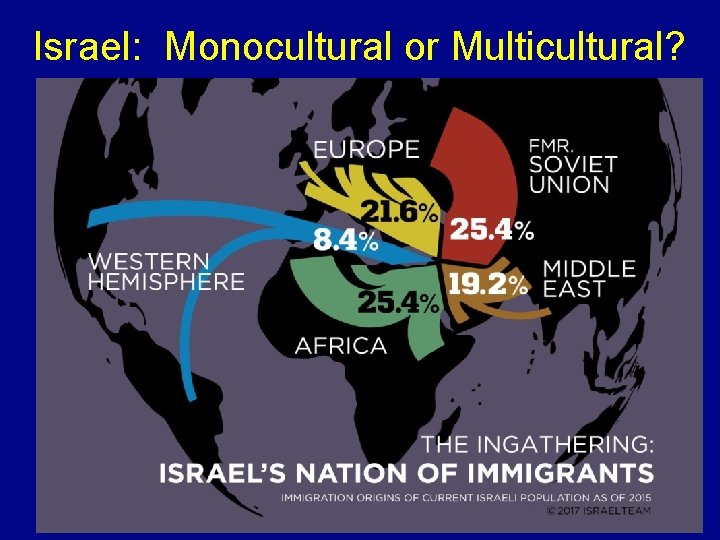
Israel: Monocultural or Multicultural?