
RELIABILITY CENTRED MAINTENANCE RCM Application within RCAF and
RELIABILITY CENTRED MAINTENANCE (RCM) Application within RCAF and Implementation in Omega. PS Mike Martin OMUG 2013 M. Martin
BRIEFING OUTLINE Maintenance Environment within RCAF RCM Process (MSG-3) – – – Principles of RCM Significant Item Selection Functional FMEA Level 1 & 2 Decision Logic Task Assignment and Packaging Implementation in Omega. PS (FRCM) OMUG 2013 M. Martin 2
MAINTENANCE ENVIROMENT WITHIN RCAF • Maintenance Program part of Design • Changes tightly regulated • Conduct of Maintenance on aircraft / equipment recorded and controlled • Support to Legacy fleets becoming more challenging OMUG 2013 M. Martin 3
WHAT IS RCM? A Definition: – RCM is a structured process to identify the appropriate level of preventive maintenance for an item to: • Retain inherent levels of performance, reliability and safety • Minimize cost of maintenance and failures over the life cycle Primary Objectives: – Ensure safety through PM actions; when PM cannot effectively ensure safety, redesign is mandatory – When safety is not a concern, preserve functionality in the most economical manner with the least impact on Operations OMUG 2013 M. Martin 4

WHY DO RCM? New Programs: – Requirement of design (ICAs) – Identify APPLICABLE and EFFECTIVE scheduled maintenance tasks – Initial programs conservative and generic Legacy Programs: – Able to modify generic programs to suit environment and fleet performance – Structured, disciplined approach to substantiating proposed Design Changes OMUG 2013 M. Martin 5
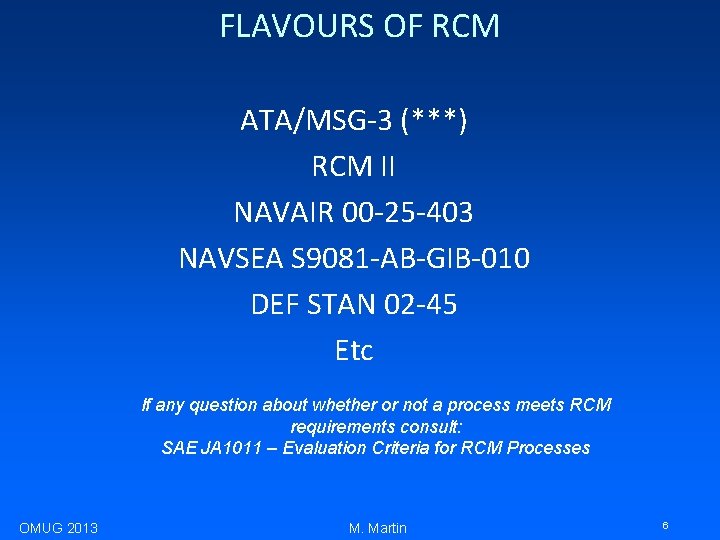
FLAVOURS OF RCM ATA/MSG-3 (***) RCM II NAVAIR 00 -25 -403 NAVSEA S 9081 -AB-GIB-010 DEF STAN 02 -45 Etc If any question about whether or not a process meets RCM requirements consult: SAE JA 1011 – Evaluation Criteria for RCM Processes OMUG 2013 M. Martin 6
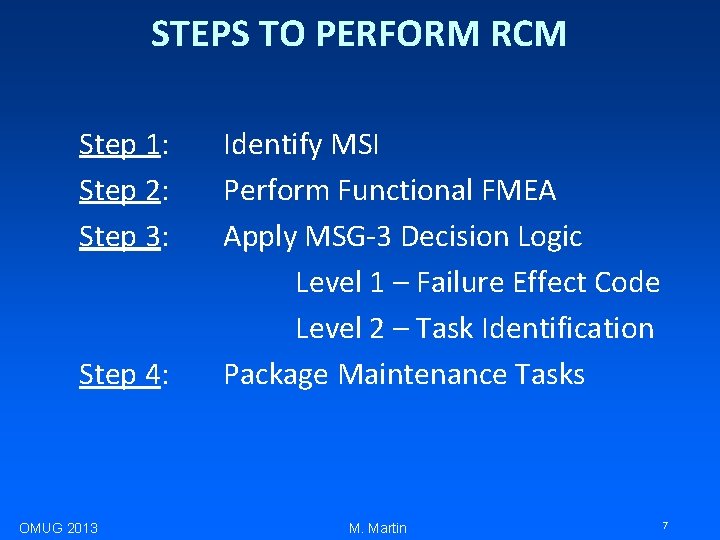
STEPS TO PERFORM RCM Step 1: Step 2: Step 3: Step 4: OMUG 2013 Identify MSI Perform Functional FMEA Apply MSG-3 Decision Logic Level 1 – Failure Effect Code Level 2 – Task Identification Package Maintenance Tasks M. Martin 7

MAINTENANCE SIGNIFICANT ITEMS (MSIs) – Objective of MSI selection: select appropriate systems / components for analysis – Why be selective? • A/C equipment and systems have many components and parts • Analysis of every component on an aircraft would be unrealistically costly and time consuming • Failure of many items have no immediate impact on the a/c as a whole – RCM derived maintenance program directs tasks where they matter – at Significant Items OMUG 2013 M. Martin 8
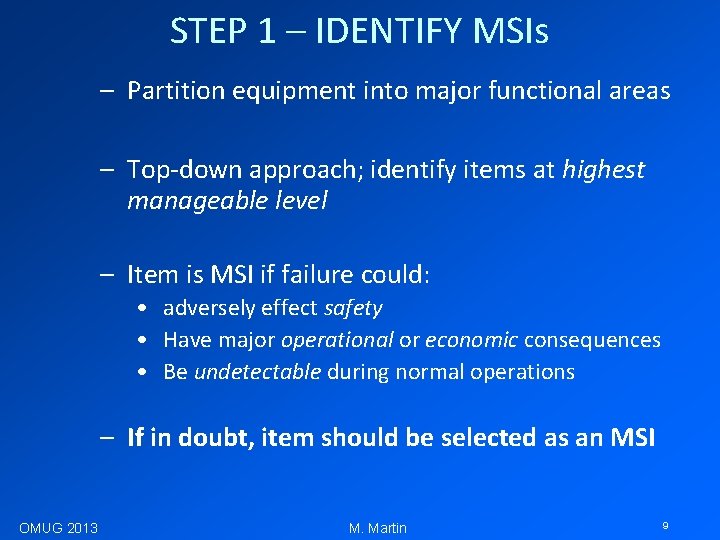
STEP 1 – IDENTIFY MSIs – Partition equipment into major functional areas – Top-down approach; identify items at highest manageable level – Item is MSI if failure could: • adversely effect safety • Have major operational or economic consequences • Be undetectable during normal operations – If in doubt, item should be selected as an MSI OMUG 2013 M. Martin 9
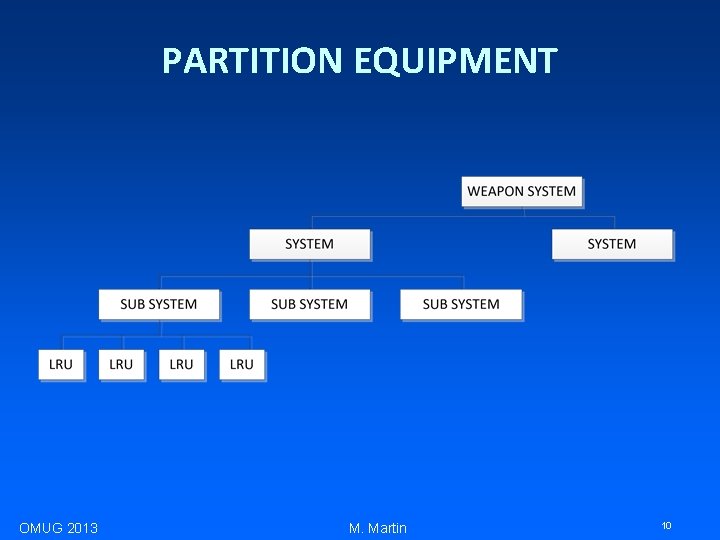
PARTITION EQUIPMENT OMUG 2013 M. Martin 10
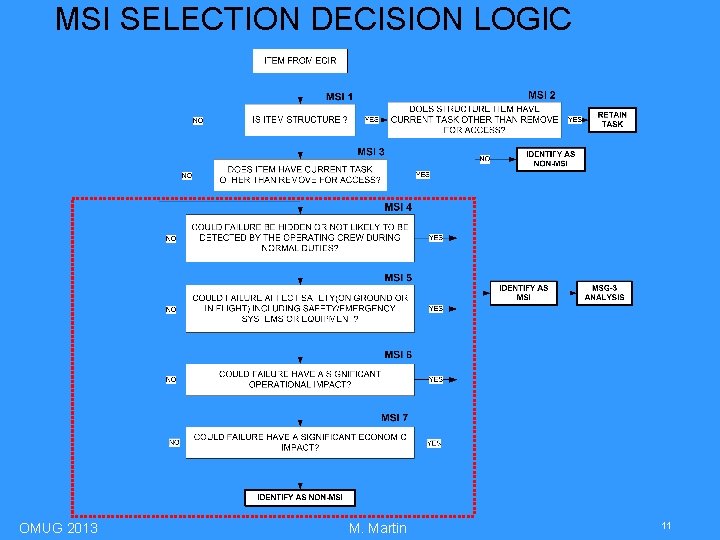
MSI SELECTION DECISION LOGIC OMUG 2013 M. Martin 11
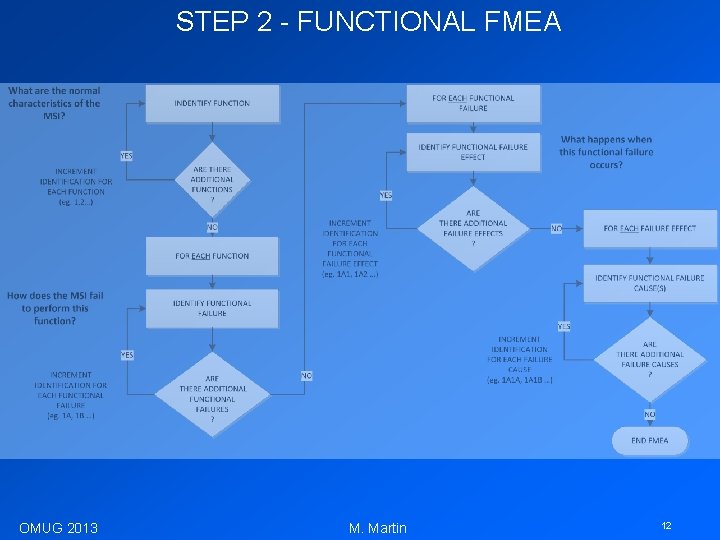
STEP 2 - FUNCTIONAL FMEA OMUG 2013 M. Martin 12
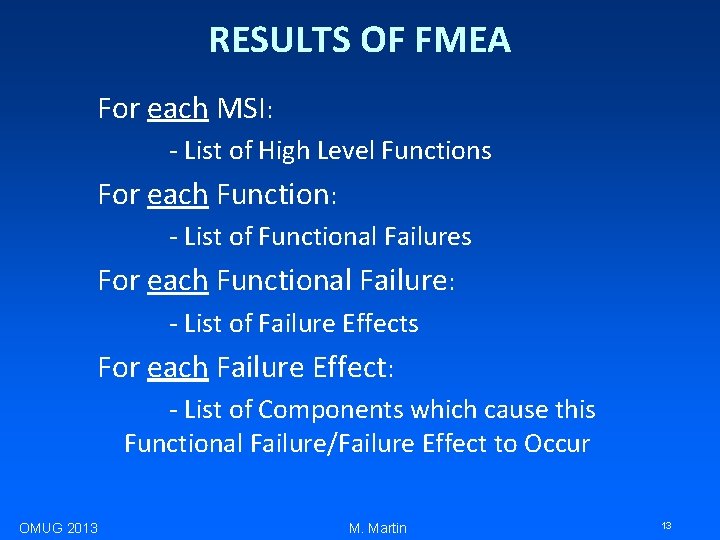
RESULTS OF FMEA For each MSI: - List of High Level Functions For each Function: - List of Functional Failures For each Functional Failure: - List of Failure Effects For each Failure Effect: - List of Components which cause this Functional Failure/Failure Effect to Occur OMUG 2013 M. Martin 13
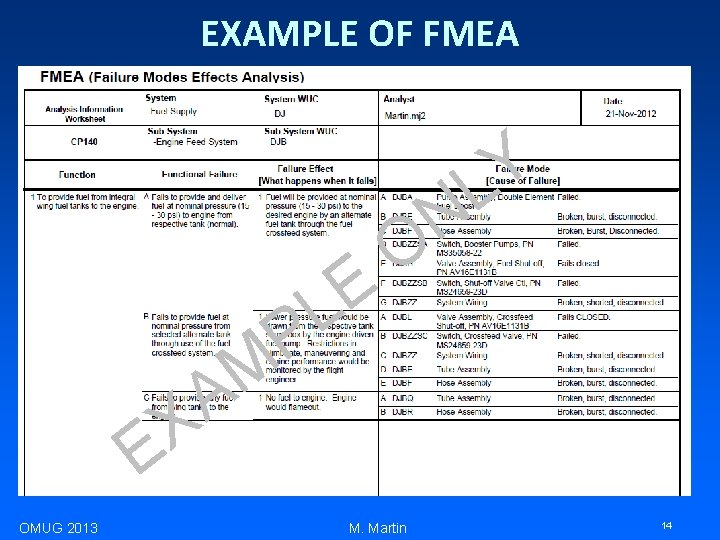
EXAMPLE OF FMEA Y L M A X E OMUG 2013 E L N O P M. Martin 14
STEP 3 – APPLY MSG-3 DECISION LOGIC LEVEL 1 – Identification of Functional failure Effect (FEC) LEVEL 2 – Identification of APPLICABLE and EFFECTIVE Preventive Maintenance Task OMUG 2013 M. Martin 15
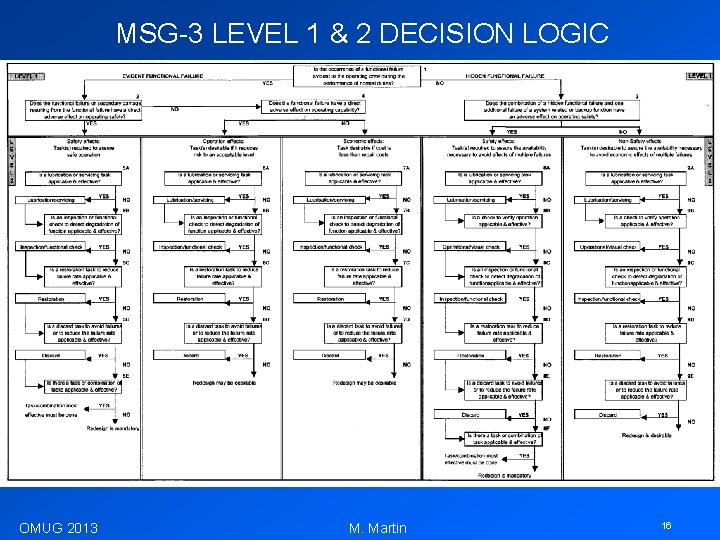
MSG-3 LEVEL 1 & 2 DECISION LOGIC OMUG 2013 M. Martin 16
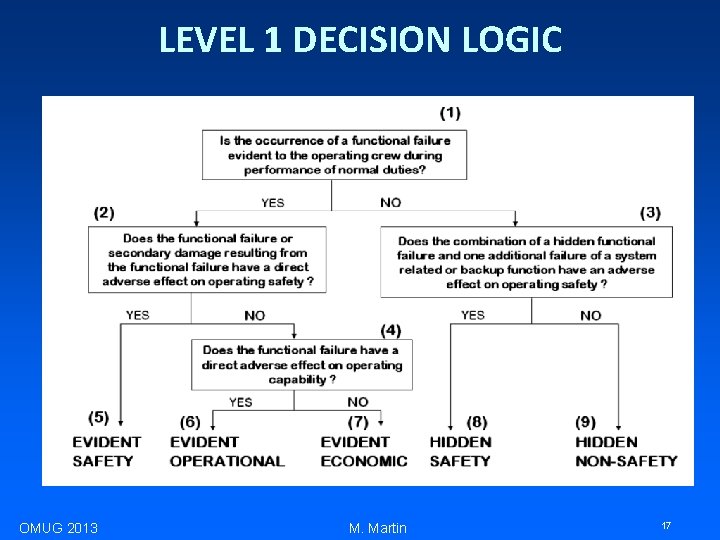
LEVEL 1 DECISION LOGIC OMUG 2013 M. Martin 17
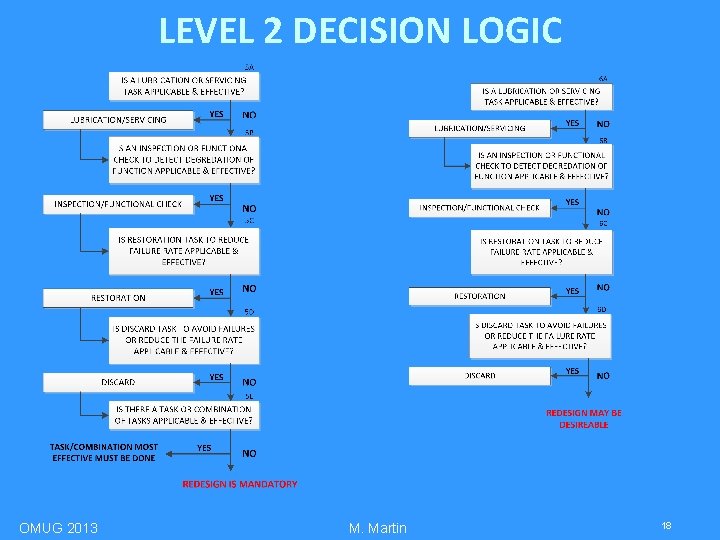
LEVEL 2 DECISION LOGIC OMUG 2013 M. Martin 18
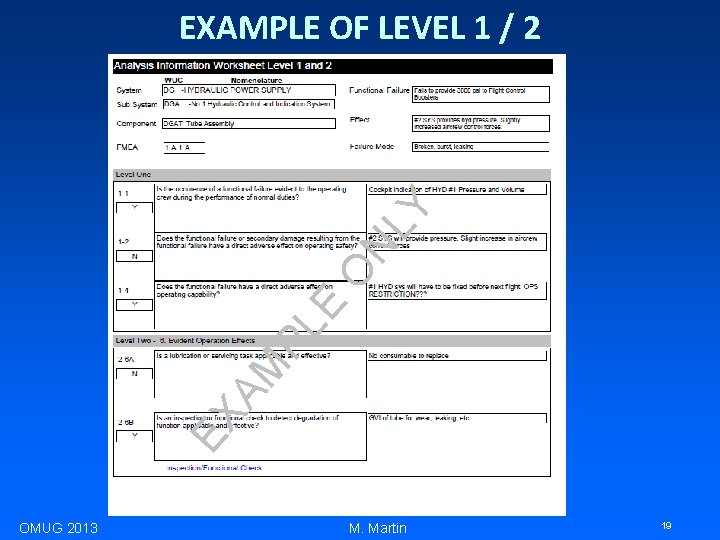
EX AM PL E O NL Y EXAMPLE OF LEVEL 1 / 2 OMUG 2013 M. Martin 19
STEP 4 – TASK PACKAGING Select Significant Intervals Fit Others into this interval or multiples Group Individual Tasks Together By: OMUG 2013 Location Trade Complexity Frequency M. Martin 20
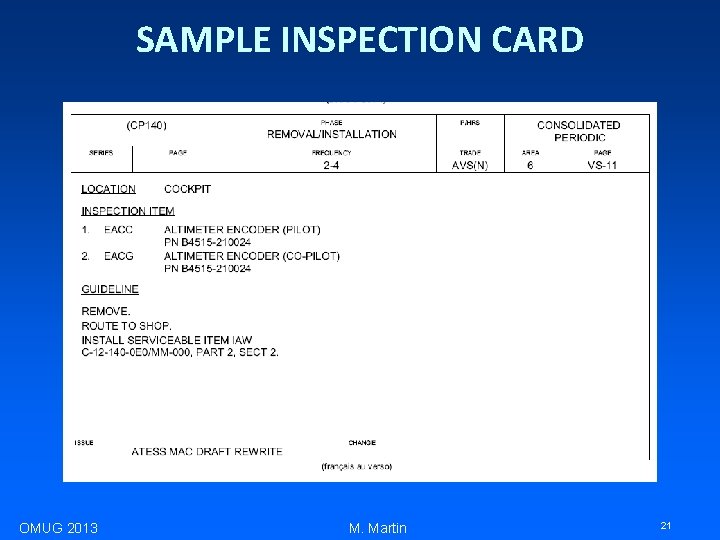
SAMPLE INSPECTION CARD OMUG 2013 M. Martin 21
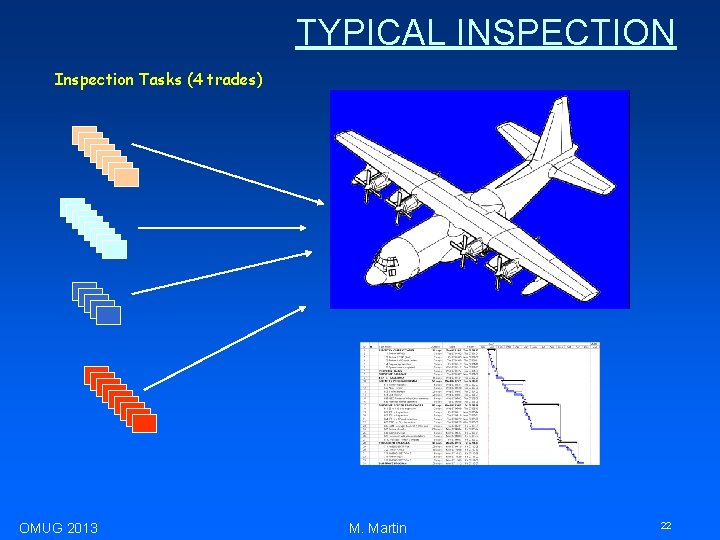
TYPICAL INSPECTION Inspection Tasks (4 trades) OMUG 2013 M. Martin 22
CURRENT TOOLS • AEPM Performa – ADAM data from the field – Extracted into Excel files • Maintenance Analyzer (ATESS) – Access Database • MSI • FMEA • Level 1 / 2 analysis • Audit – MS Excel OMUG 2013 M. Martin 23
CURRENT TOOLS • Card Deck – Access Database – MS Word Templates – Contactor Database (IETM) – ? ? • Scheduling / Planning – MS Project / MS Excel – Paper – ? ? OMUG 2013 M. Martin 24
FUNCTIONAL RCM (FRCM) IN Omega. PS OMUG 2013 M. Martin 25
FRCM MODULE • • OMUG 2013 Create FUNCTIONAL structure MANAGE analysis assignments Perform FMEA Audit FMEA Perform Level 1 / Level 2 analysis Assign Task and Interval Audit Level 1 / Level 2 and Task analysis M. Martin 26
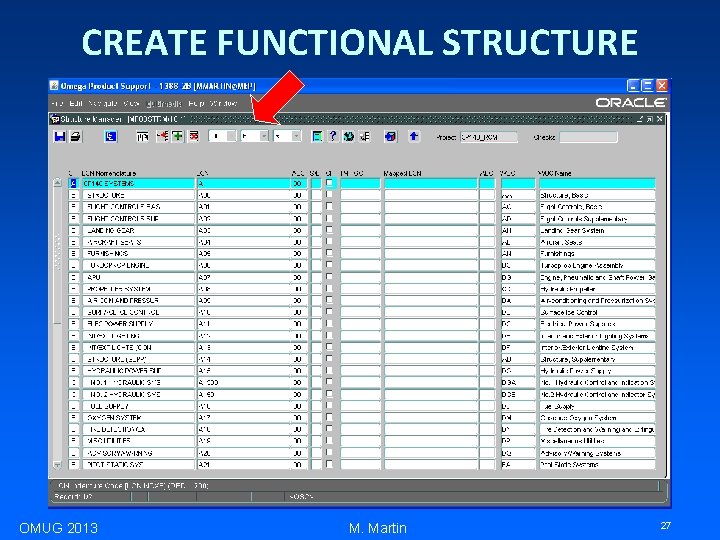
CREATE FUNCTIONAL STRUCTURE OMUG 2013 M. Martin 27
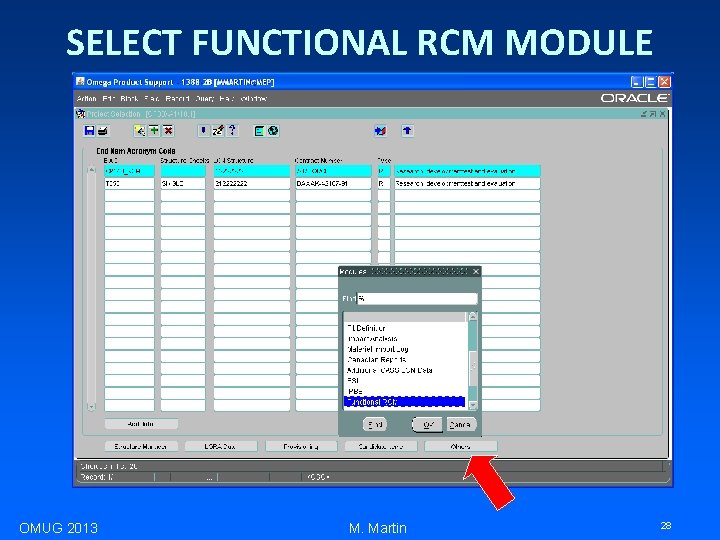
SELECT FUNCTIONAL RCM MODULE OMUG 2013 M. Martin 28
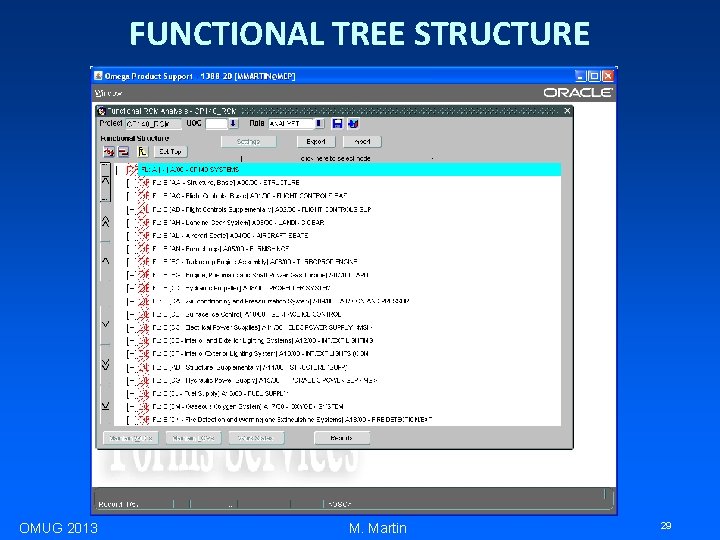
FUNCTIONAL TREE STRUCTURE OMUG 2013 M. Martin 29
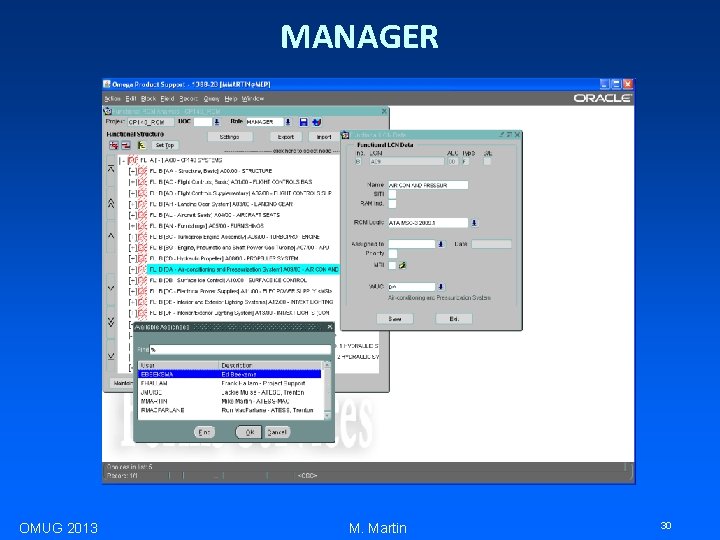
MANAGER OMUG 2013 M. Martin 30
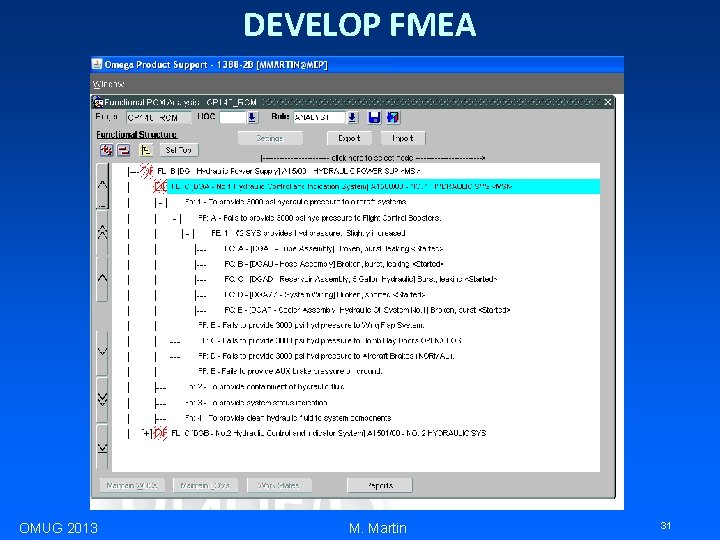
DEVELOP FMEA OMUG 2013 M. Martin 31
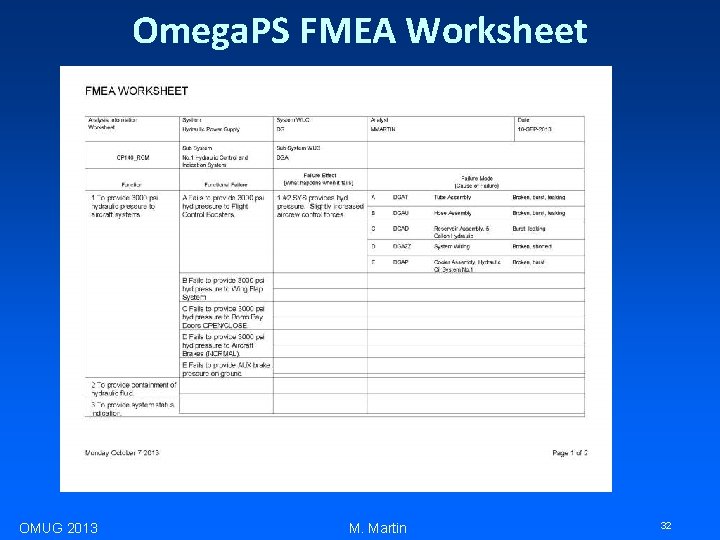
Omega. PS FMEA Worksheet OMUG 2013 M. Martin 32
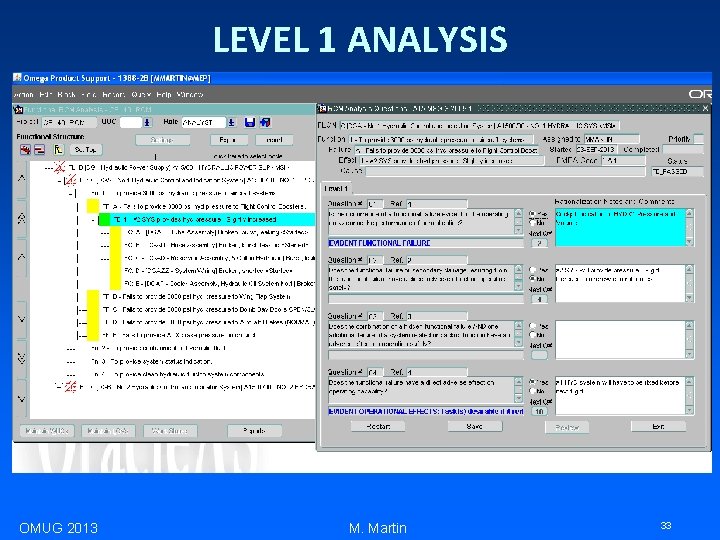
LEVEL 1 ANALYSIS OMUG 2013 M. Martin 33
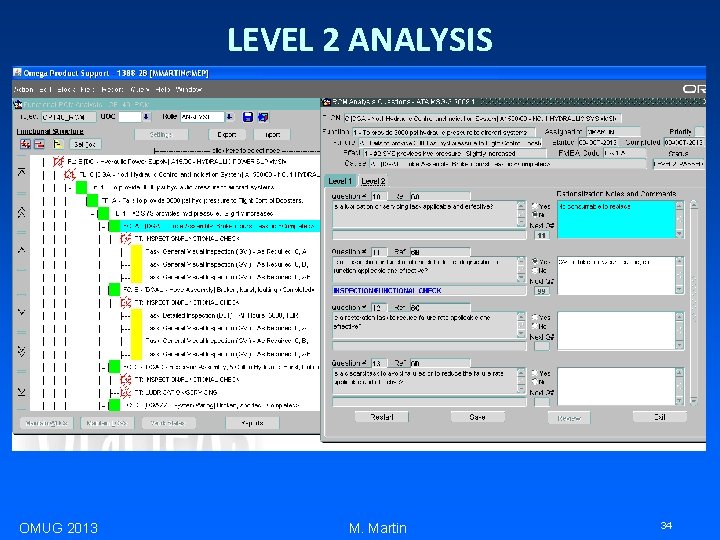
LEVEL 2 ANALYSIS OMUG 2013 M. Martin 34
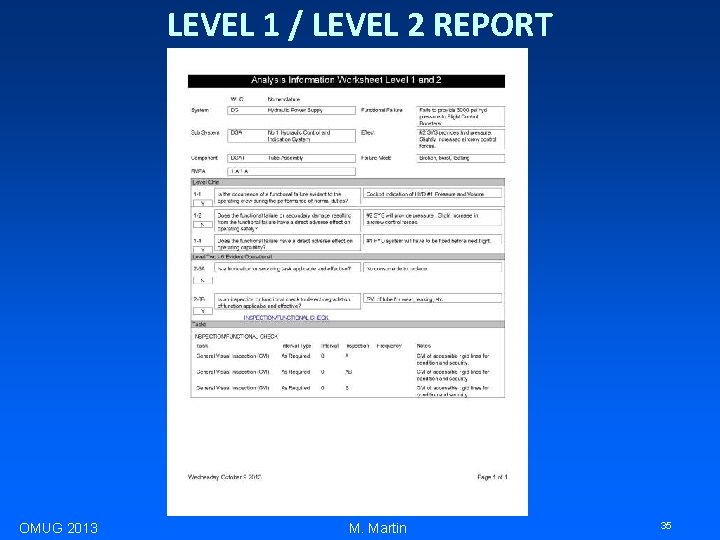
LEVEL 1 / LEVEL 2 REPORT OMUG 2013 M. Martin 35
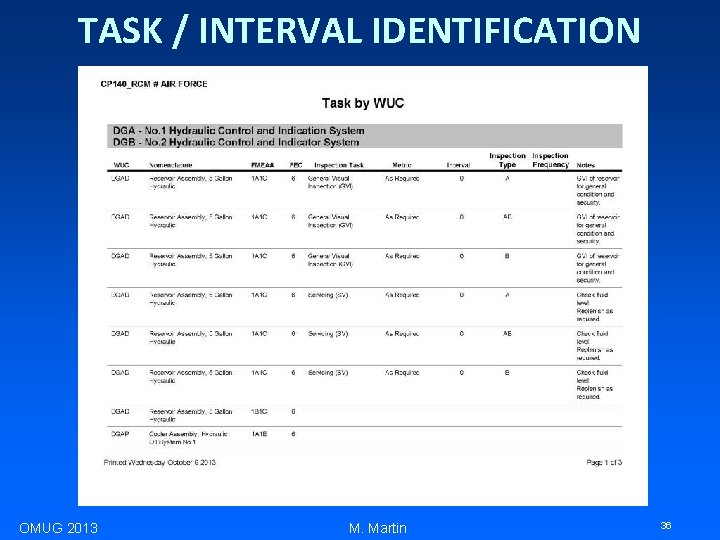
TASK / INTERVAL IDENTIFICATION OMUG 2013 M. Martin 36
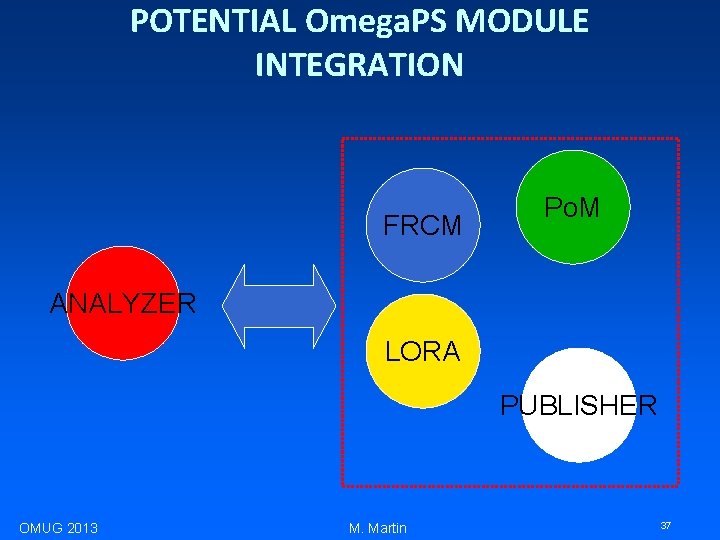
POTENTIAL Omega. PS MODULE INTEGRATION FRCM Po. M ANALYZER LORA PUBLISHER OMUG 2013 M. Martin 37

Questions?
- Slides: 38