
RELEVANT COMPUTER LITERACY TODAY presented by Ken Baldauf
RELEVANT COMPUTER LITERACY TODAY presented by Ken Baldauf
RELEVANT COMPUTER LITERACY TODAY presented by Ken Baldauf
3 AXIOMS 1. The “Intro Computer Course” can be a relevant course for students. 2. Everyone benefits from more computing and technology in the curriculum. 3. It’s not just what we teach, it’s also how we teach it.
1. The “Intro Computer Course” can be a relevant course for students.
Computer Literacy Requirement Relevant circa 1997 @ FSU • Basic familiarity with computer hardware, operating systems, and file concepts; • working knowledge of a word processor or text editor and at least one other software application (e. g. , spreadsheet, database, etc. ); • working knowledge of the World Wide Web (WWW) and electronic mail.
Computer Literacy Course (Intro Course) Relevant circa 1997 @ FSU • Computer Concepts • • • Digital Technology Hardware Software Internet Networking • Microsoft Windows • File management • Microsoft Office • • Word Excel Power. Point Access • Web/Email
Computer Literacy Today What is relevant? • • Computer Concepts? Microsoft Windows? Microsoft Office? Web/Email? A recent IDC study reveals that the top two skills employers look for in new hires are oral and written communication and Microsoft Office. Do incoming students already know these topics and have these skills?
Computer Literacy Today What is new? • • • Mac Mobile Platforms BYOD Apps and apps Cloud Computing Online Collaboration Social Media Computer Security Social Issues Including coverage of these technologies increases relevance!
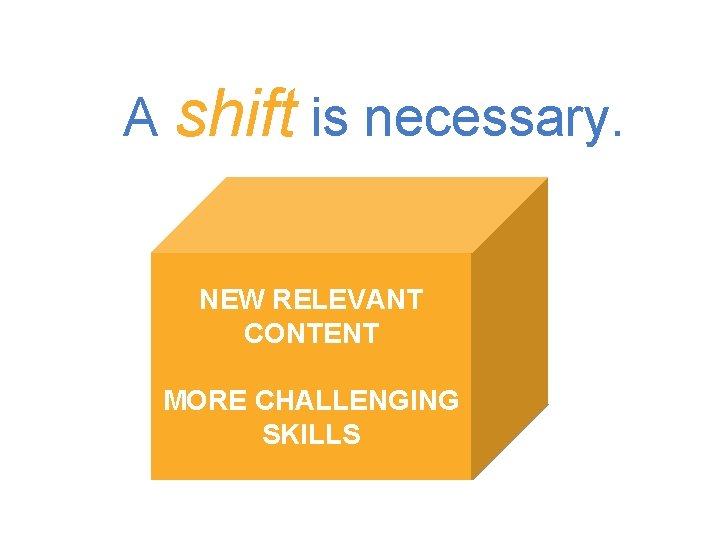
A shift is necessary. OUTDATE NEW RELEVANT IRRELEVANT CONTENT MORE CHALLENGING SKILLS TOO EASY SKILLS FOR MOST
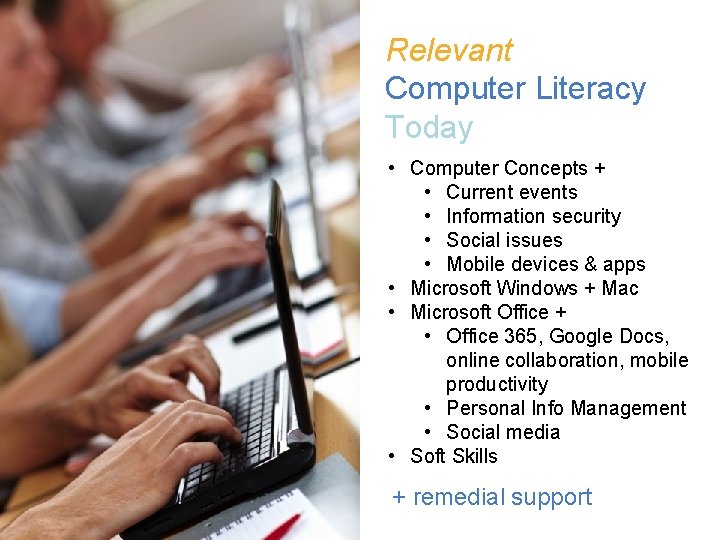
Relevant Computer Literacy Today • Computer Concepts + • Current events • Information security • Social issues • Mobile devices & apps • Microsoft Windows + Mac • Microsoft Office + • Office 365, Google Docs, online collaboration, mobile productivity • Personal Info Management • Social media • Soft Skills + remedial support
AXIOM #1 The “Intro Course” will be relevant for students today so long as: 1. it addresses contemporary skills and content 2. it challenges the majority of the students.
2. Everyone benefits from more computing and technology in the curriculum.
BEYOND
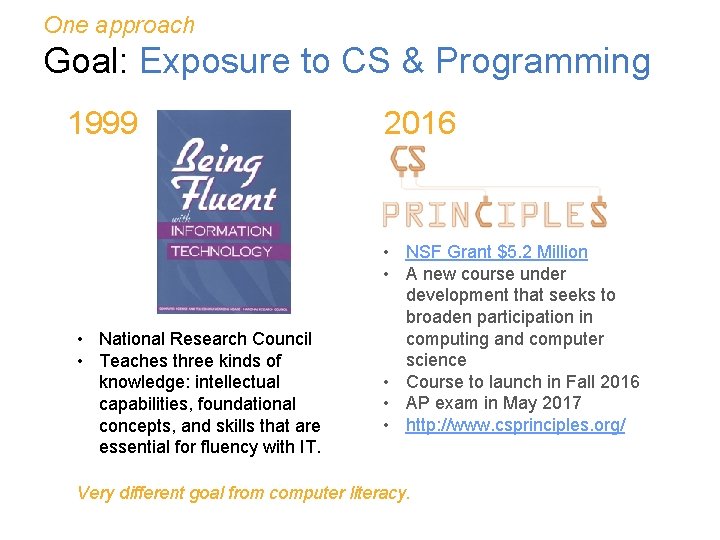
One approach Goal: Exposure to CS & Programming 1999 • National Research Council • Teaches three kinds of knowledge: intellectual capabilities, foundational concepts, and skills that are essential for fluency with IT. 2016 • NSF Grant $5. 2 Million • A new course under development that seeks to broaden participation in computing and computer science • Course to launch in Fall 2016 • AP exam in May 2017 • http: //www. csprinciples. org/ Very different goal from computer literacy.
Another approach Goal: Advanced Skills in Major Computer Literacy Requirement SA AC CR Relevant TODAY @ FSU Competent use of a discipline-useful software package The ability to perform simple transactions using the Web/Internet Associated with each major is a required course(s) that provides instruction in the discipline-specific computer skills, and students passing this course(s) with a grade of “C–” or better will be considered to have completed the requirement. ED CS ITE D
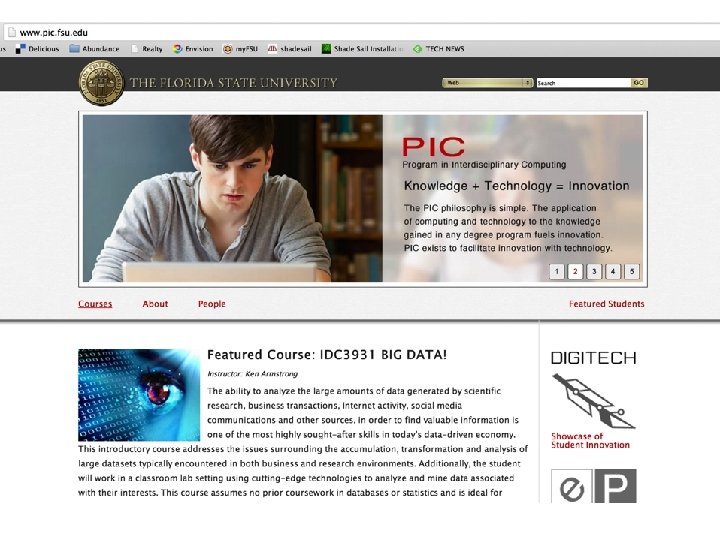
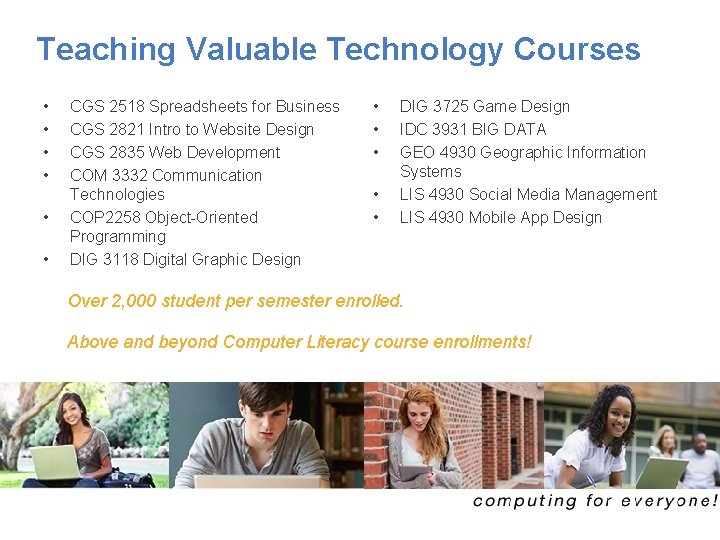
Teaching Valuable Technology Courses • • • CGS 2518 Spreadsheets for Business CGS 2821 Intro to Website Design CGS 2835 Web Development COM 3332 Communication Technologies COP 2258 Object-Oriented Programming DIG 3118 Digital Graphic Design • • • DIG 3725 Game Design IDC 3931 BIG DATA GEO 4930 Geographic Information Systems LIS 4930 Social Media Management LIS 4930 Mobile App Design Over 2, 000 student per semester enrolled. Above and beyond Computer Literacy course enrollments!
AXIOM #3…
It’s not just what we teach, it’s also how we teach it.
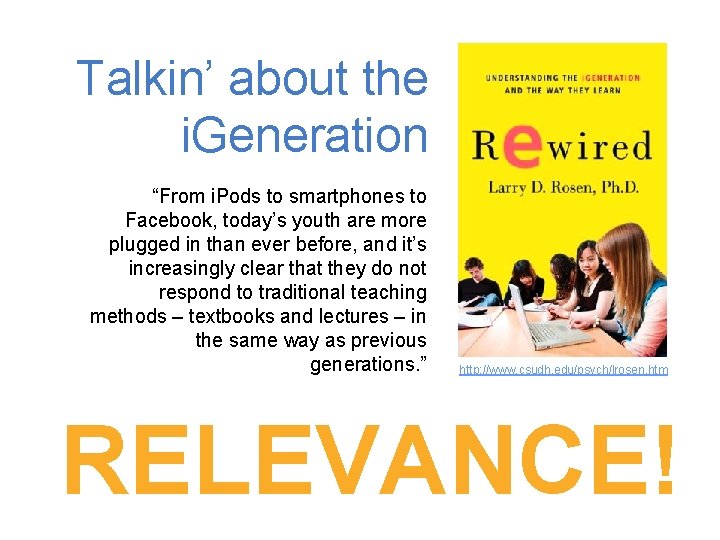
Talkin’ about the i. Generation “From i. Pods to smartphones to Facebook, today’s youth are more plugged in than ever before, and it’s increasingly clear that they do not respond to traditional teaching methods – textbooks and lectures – in the same way as previous generations. ” http: //www. csudh. edu/psych/lrosen. htm RELEVANCE!
New Teaching Methods Blended Learning - combining online learning activities with face-to-face class meetings Flipped Classroom- students acquire knowledge independently through online and/or group activities (rather than through lecture) allowing the teacher to serve as a facilitator and tutor during class time Active Learning - places the focus of the responsibility of learning on the learners Project-based Learning - students work in groups, under the guidance of the teacher, to solve problems or answer driving questions that have to do with real-life situations Collaborative Learning - when two or more people learn or attempt to learn something together Gamification - the use of games and competition as educational tools Online Learning Communities - utilizing social media to create online groups dedicated to achieving a shared learning objective http: //www. teachemerge. com/

Questions? techminded. co Ken Baldauf | kbaldauf@pic. fsu. edu | 850. 645. 8649 www. pic. fsu. edu, www. kenbaldauf. com @kenbaldauf on twitter, linkedin, and skype @kbaldauf on google+ and facebook
- Slides: 22