
Relative stability biomechanics techniques and fracture healing AO
Relative stability: biomechanics, techniques, and fracture healing AO Trauma Basic Principles Course

Learning objectives • Define relative stability • Describe the biological behavior of fractured bone and how it is affected by relative stability • Define indication for selection of relative stability according to AO principles • Explain techniques for achieving relative stability
How stability affects healing • Fixation of fractures alters the biology of fracture healing • Method of bone healing depends on: • Type of fracture (simple or complex) • Type of reduction (anatomical or alignment) • Type of stability achieved (absolute or relative) • Type of implant chosen (providing absolute or relative stability)
Definition of relative stability • • Indicates there is some motion between fracture fragments Motion must be below the limits of tolerance of healing bone tissue (otherwise healing disruption will occur) Best methods to produce relative stability include some type of extramedullary or intramedullary splint Bones that heal by relative stability are characterized by a callus formation
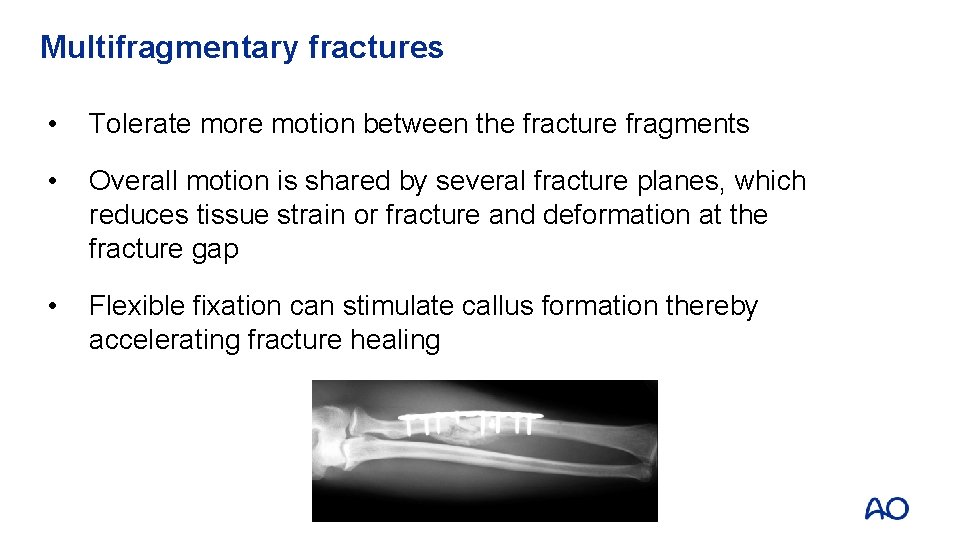
Multifragmentary fractures • Tolerate more motion between the fracture fragments • Overall motion is shared by several fracture planes, which reduces tissue strain or fracture and deformation at the fracture gap • Flexible fixation can stimulate callus formation thereby accelerating fracture healing

Cascade of events in fracture healing Acute fracture Hematoma formation Type of healing depends on: Microvascular ingrowth of granulation tissue Cell differentiation to bone Surgical intervention • Type of fracture • Type of reduction • Stability needed • Implant chosen Simple fracture Complex fracture Anatomical reduction Anatomical alignment Absolute stability Relative stability Direct bone healing Indirect bone healing
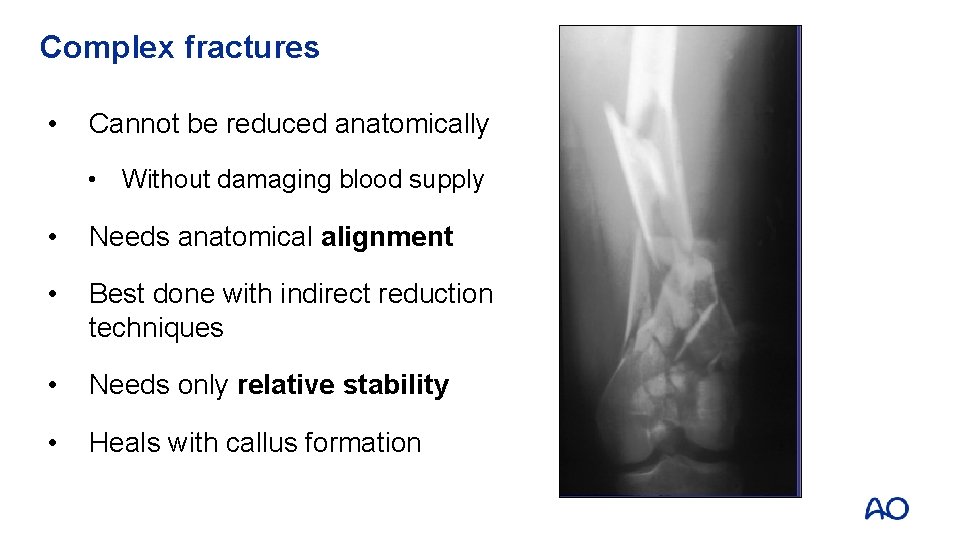
Complex fractures • Cannot be reduced anatomically • Without damaging blood supply • Needs anatomical alignment • Best done with indirect reduction techniques • Needs only relative stability • Heals with callus formation

Types of stability required • Multifragmentary fractures can tolerate more motion between the many displaced fragments • Require indirect reduction and only relative stability
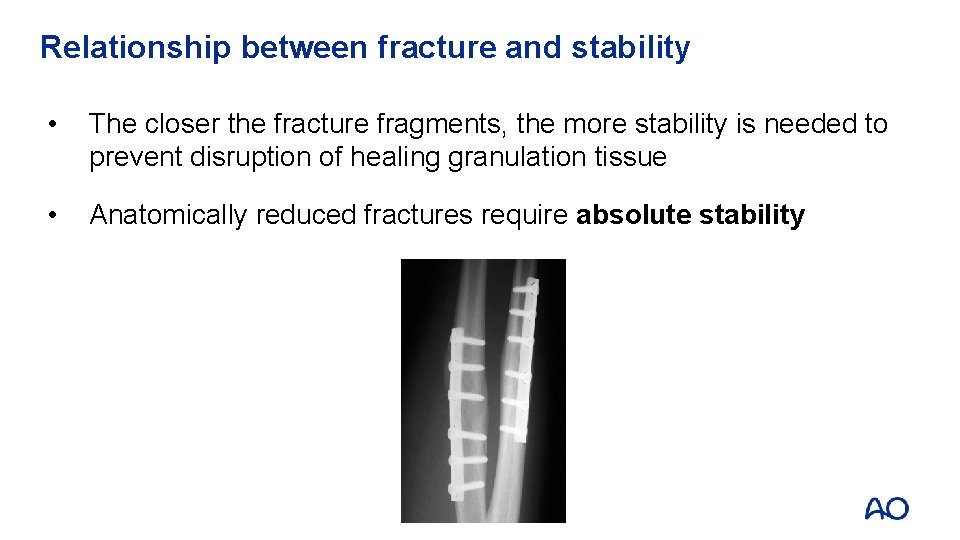
Relationship between fracture and stability • The closer the fracture fragments, the more stability is needed to prevent disruption of healing granulation tissue • Anatomically reduced fractures require absolute stability
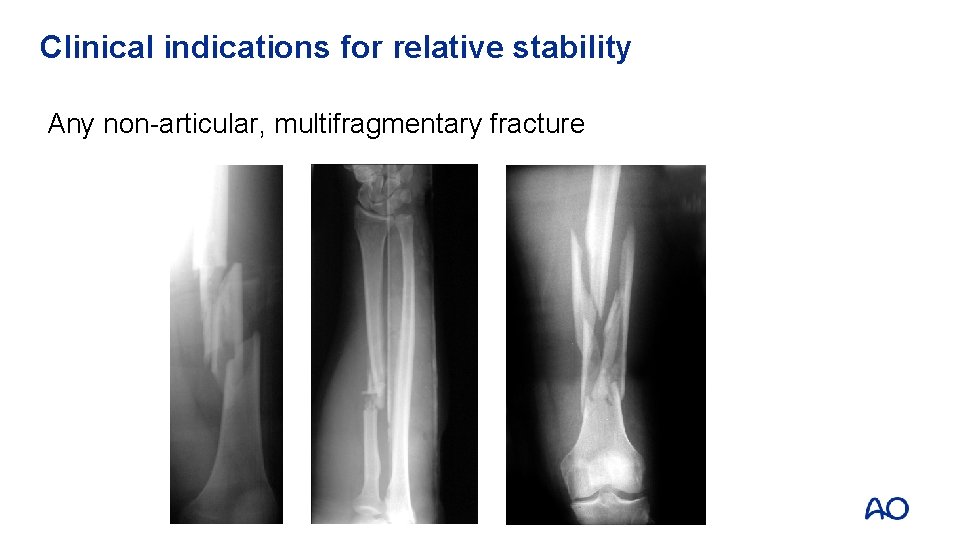
Clinical indications for relative stability Any non-articular, multifragmentary fracture

Methods to produce relative stability • Traction • Casts • External fixation • Internal fixators (fixed-angle devices) • Intramedullary nailing • Bridge plating

Examples of methods for relative stability • Traction

Examples of methods for relative stability • Casting
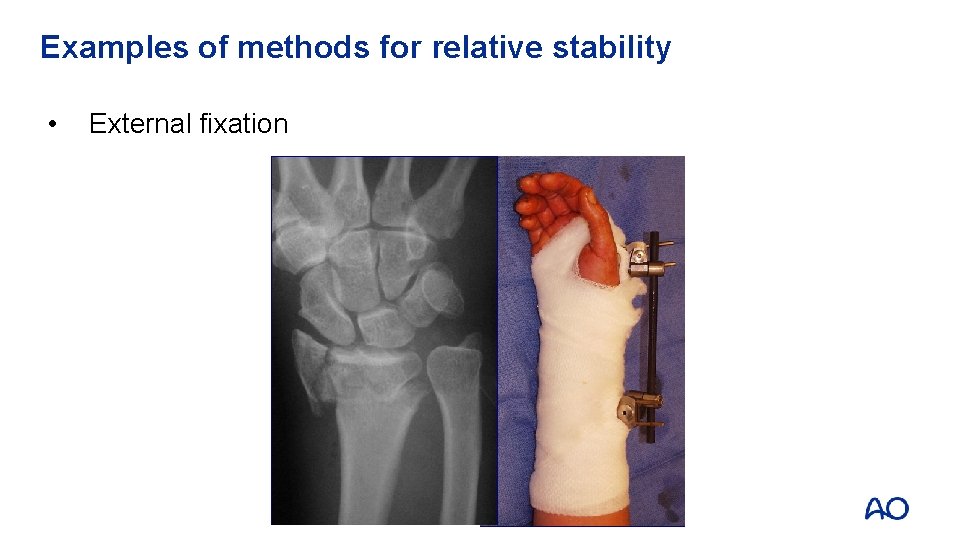
Examples of methods for relative stability • External fixation
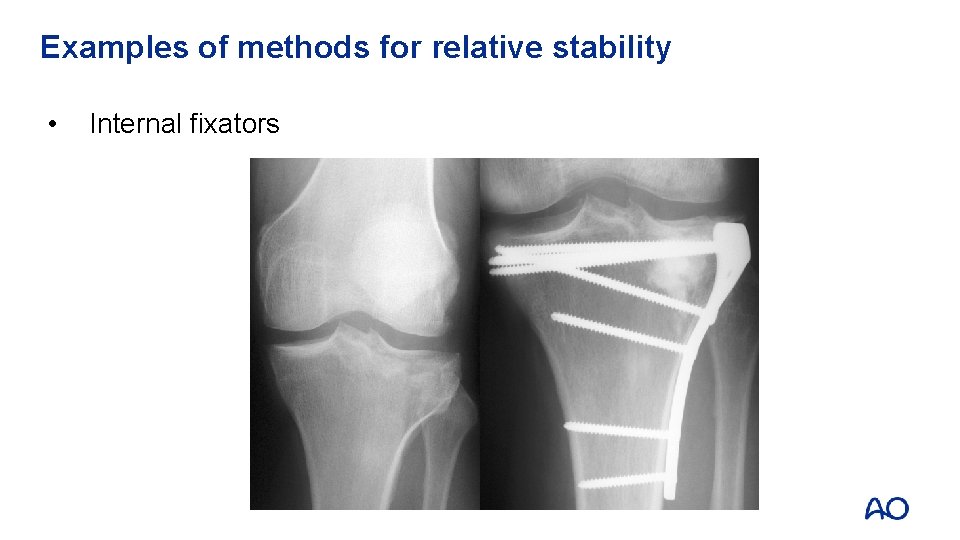
Examples of methods for relative stability • Internal fixators
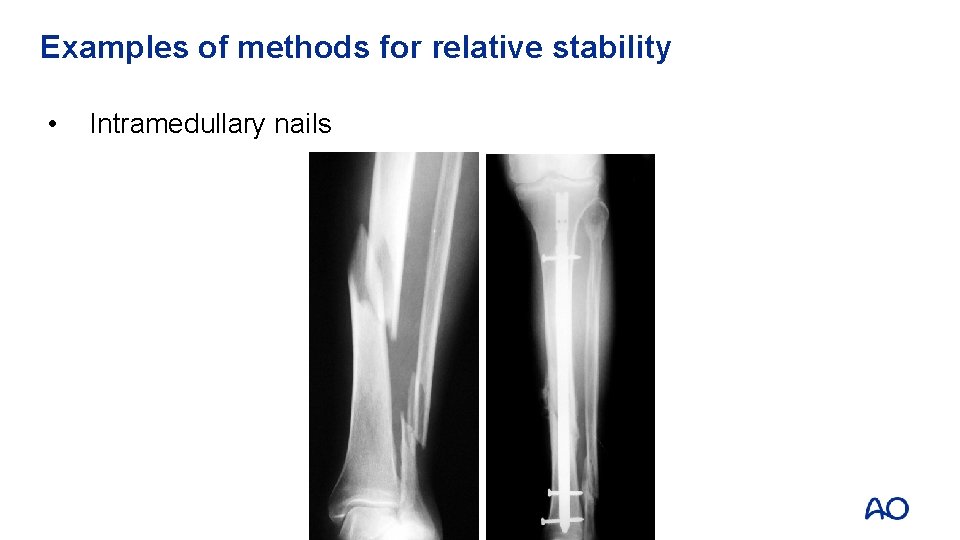
Examples of methods for relative stability • Intramedullary nails
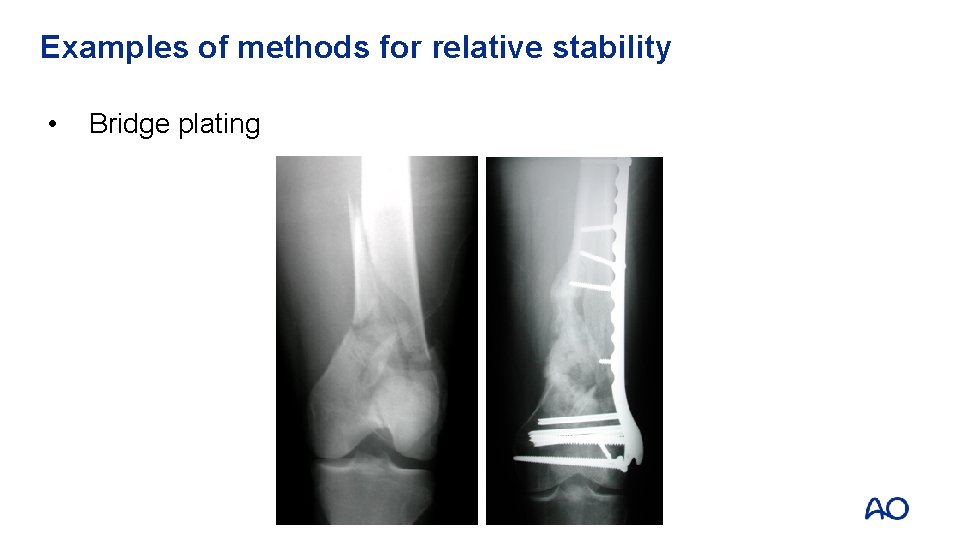
Examples of methods for relative stability • Bridge plating
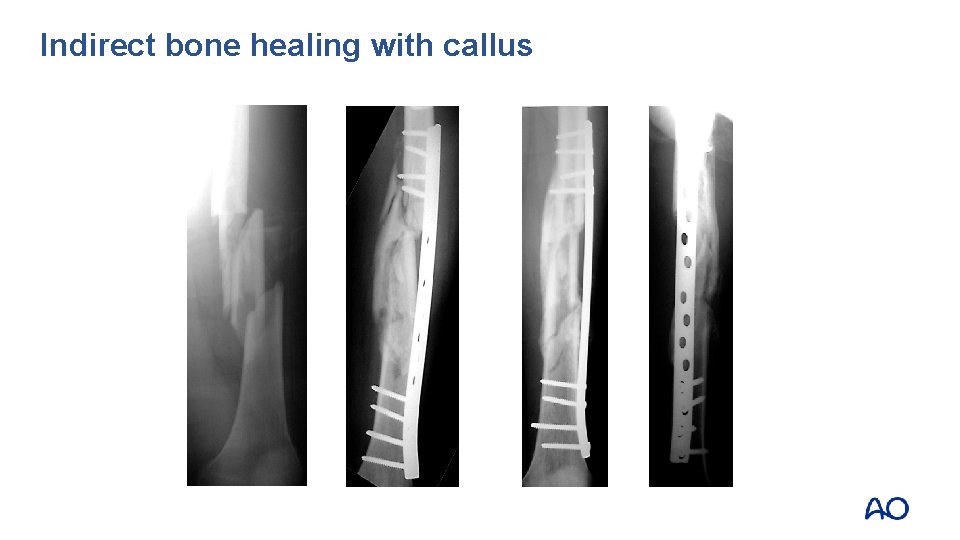
Indirect bone healing with callus
Take-home messages • Relative stability indicates that there is a small amount of motion between fracture fragments • Clinical indication for applying implants for relative stability include all non-articular, multifragmentary fractures • A small amount of interface with motion will stimulate callous formation and accelerate bone healing • Common methods for relative stability include traction, casting, external fixation, internal fixation, bridge plating, and intramedullary nails
- Slides: 19