
Relative Humidity Eric Angat Teacher 1 What is

- Slides: 22
Relative Humidity Eric Angat Teacher
1. What is Humidity? https: //www. youtube. com/watch? v=Mp. LNNBSp. Wj. Y
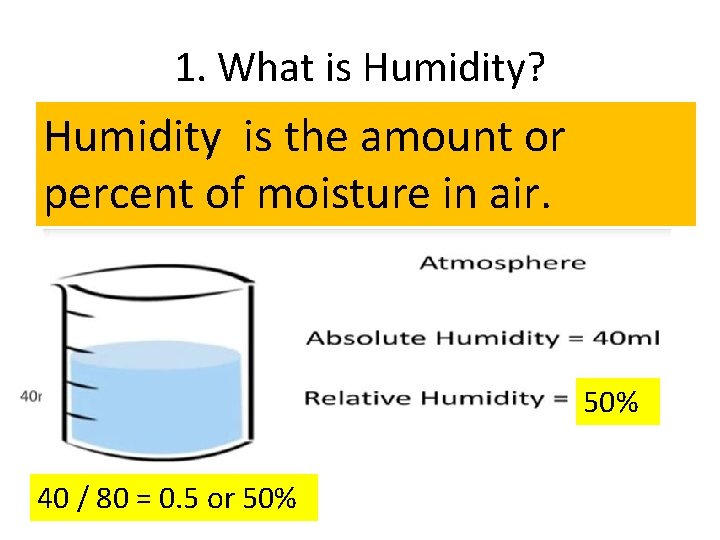
1. What is Humidity? Humidity is the amount or percent of moisture in air. 50% 40 / 80 = 0. 5 or 50%
2. How is Relative Humidity different from Absolute Humidity? https: //www. youtube. com/watch? v=Mp. LNNBSp. Wj. Y
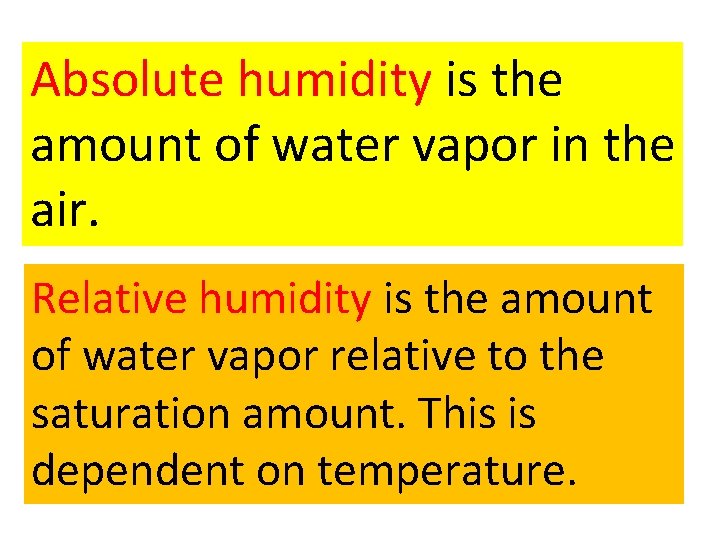
Absolute humidity is the amount of water vapor in the air. Relative humidity is the amount of water vapor relative to the saturation amount. This is dependent on temperature.
3. How do I use the Relative Humidity Chart? https: //www. youtube. com/watch? v=14 Q 3 -Vt. VDAI
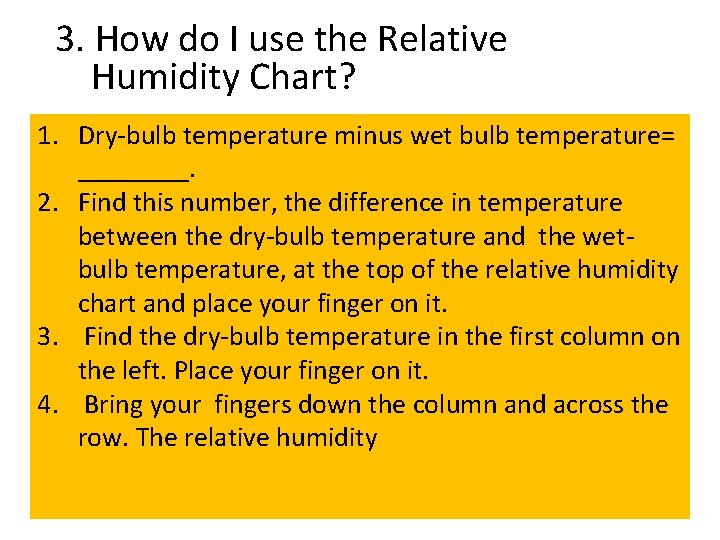
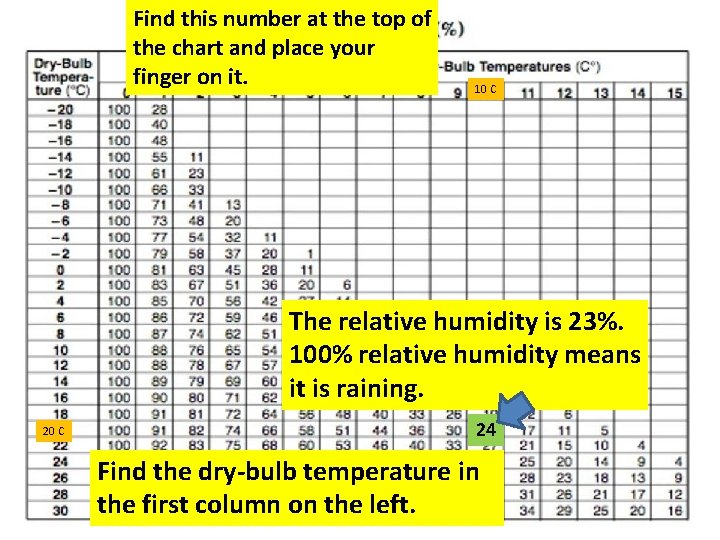
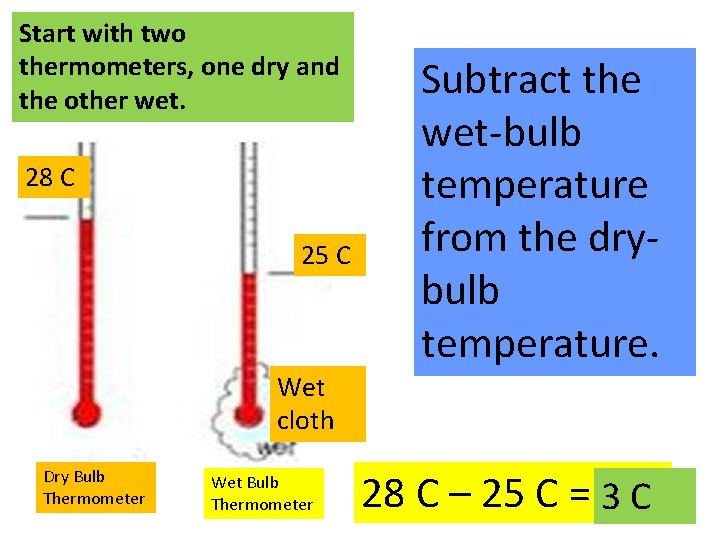
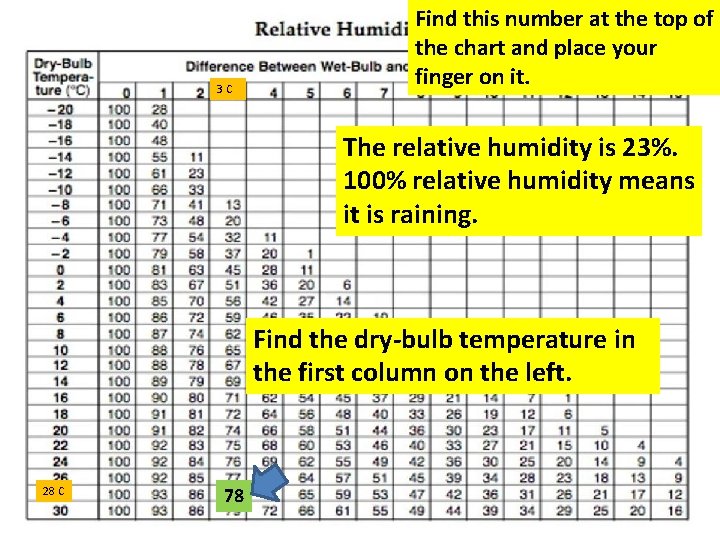
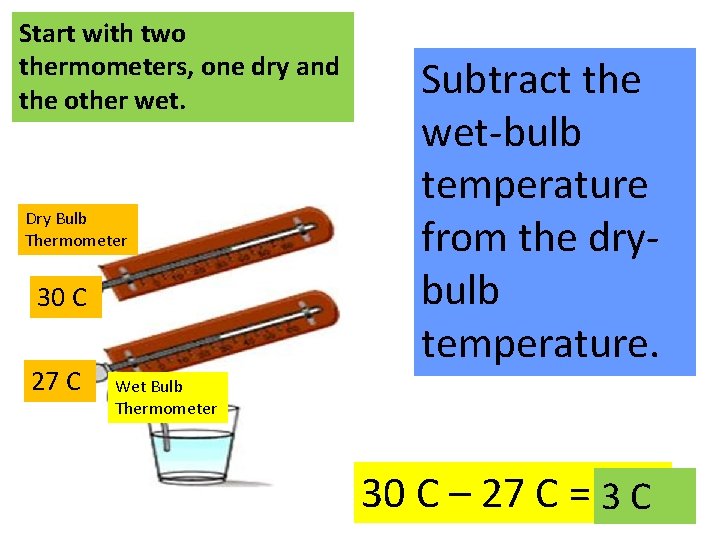
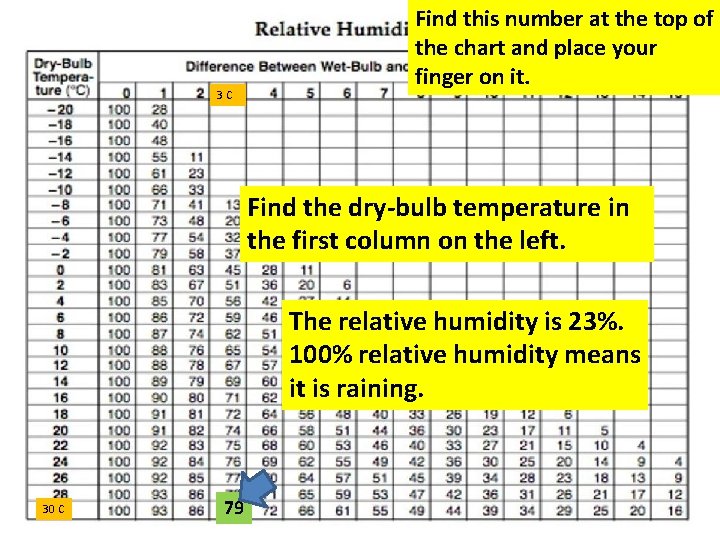
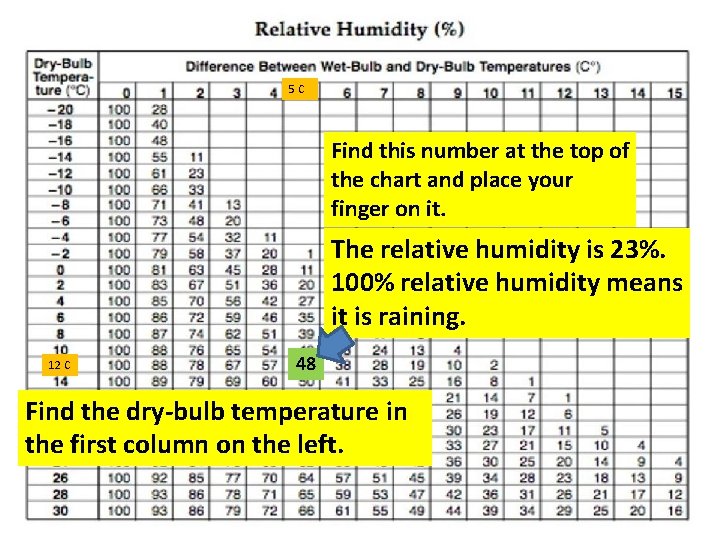
3. How do I use the Relative Humidity Chart? 1. Dry-bulb temperature minus wet bulb temperature= ____. 2. Find this number, the difference in temperature between the dry-bulb temperature and the wetbulb temperature, at the top of the relative humidity chart and place your finger on it. 3. Find the dry-bulb temperature in the first column on the left. Place your finger on it. 4. Bring your fingers down the column and across the row. The relative humidity
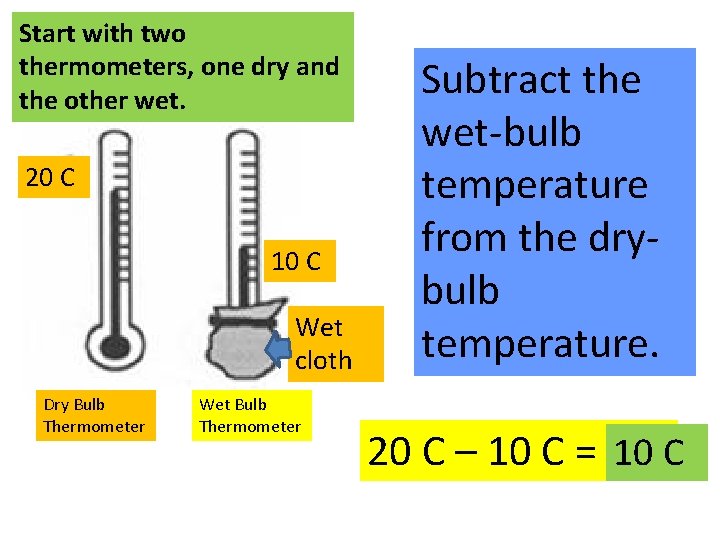
Start with two thermometers, one dry and the other wet. 20 C 10 C Wet cloth Dry Bulb Thermometer Wet Bulb Thermometer Subtract the wet-bulb temperature from the drybulb temperature. 20 C – 10 C = 10 C
Find this number at the top of the chart and place your finger on it. 10 C The relative humidity is 23%. 100% relative humidity means it is raining. 20 C 24 Find the dry-bulb temperature in the first column on the left.
Start with two thermometers, one dry and the other wet. 28 C 25 C Subtract the wet-bulb temperature from the drybulb temperature. Wet cloth Dry Bulb Thermometer Wet Bulb Thermometer 28 C – 25 C = 3 C
3 C Find this number at the top of the chart and place your finger on it. The relative humidity is 23%. 100% relative humidity means it is raining. Find the dry-bulb temperature in the first column on the left. 28 C 78
Start with two thermometers, one dry and the other wet. Dry Bulb Thermometer 30 C 27 C Subtract the wet-bulb temperature from the drybulb temperature. Wet Bulb Thermometer 30 C – 27 C = 3 C
3 C Find this number at the top of the chart and place your finger on it. Find the dry-bulb temperature in the first column on the left. The relative humidity is 23%. 100% relative humidity means it is raining. 30 C 79
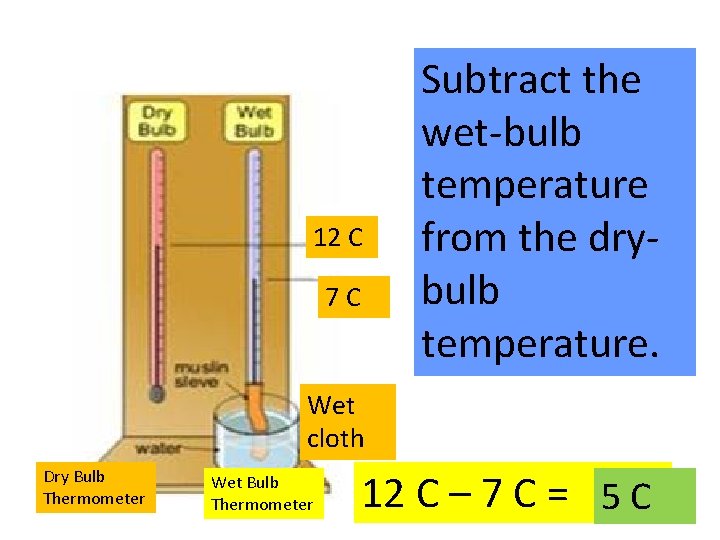
12 C 7 C Subtract the wet-bulb temperature from the drybulb temperature. Wet cloth Dry Bulb Thermometer Wet Bulb Thermometer 12 C – 7 C = 5 C
5 C Find this number at the top of the chart and place your finger on it. The relative humidity is 23%. 100% relative humidity means it is raining. 12 C 48 Find the dry-bulb temperature in the first column on the left.
4. How can the air hold water? https: //www. youtube. com/watch? v=-9 JGe 5 y. U-Us
4. How can air hold water? Air is like a sponge. Water molecules can fit between the molecules of air. The hotter it is the bigger are the spaces between air molecules thus more water vapor can fit in.
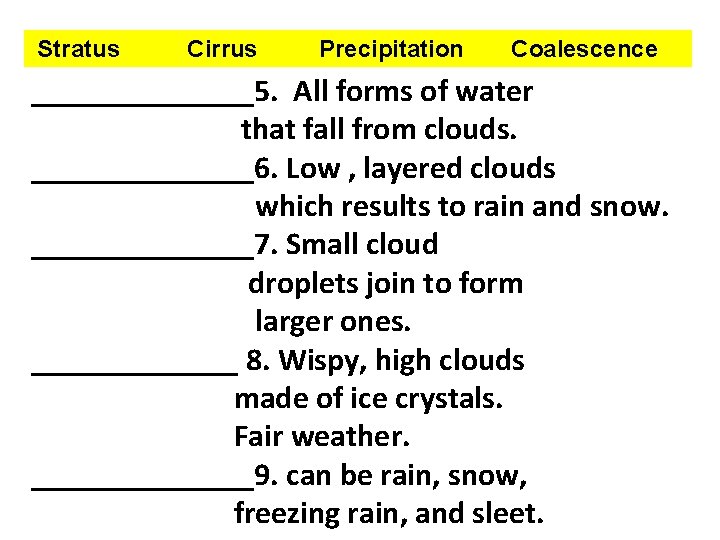
Stratus Cirrus Precipitation Coalescence _______5. All forms of water that fall from clouds. _______6. Low , layered clouds which results to rain and snow. _______7. Small cloud droplets join to form larger ones. _______ 8. Wispy, high clouds made of ice crystals. Fair weather. _______9. can be rain, snow, freezing rain, and sleet.
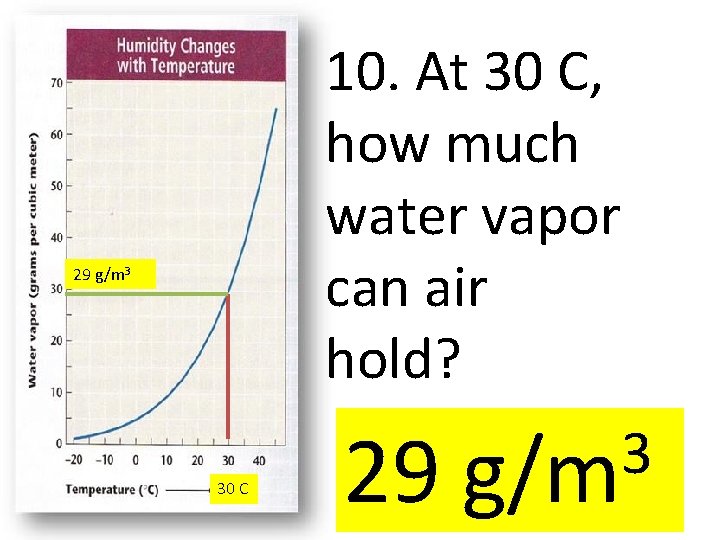
10. At 30 C, how much water vapor can air hold? 29 g/m 3 30 C 29 3 g/m
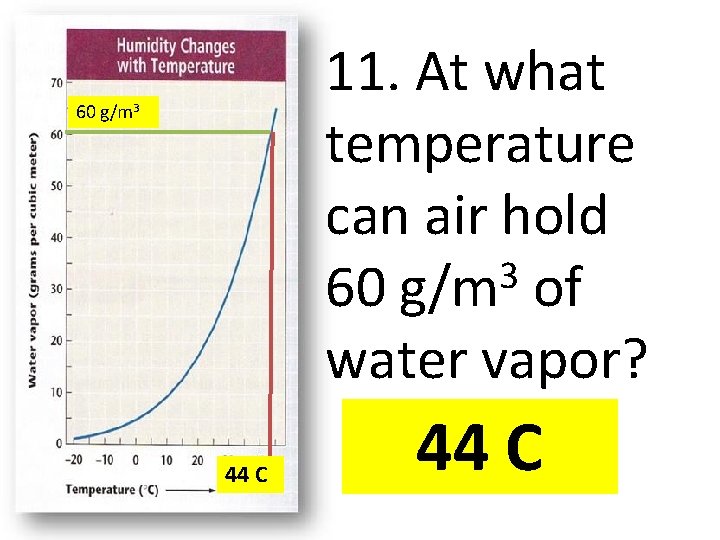
11. At what temperature can air hold 3 60 g/m of water vapor? 60 g/m 3 44 C
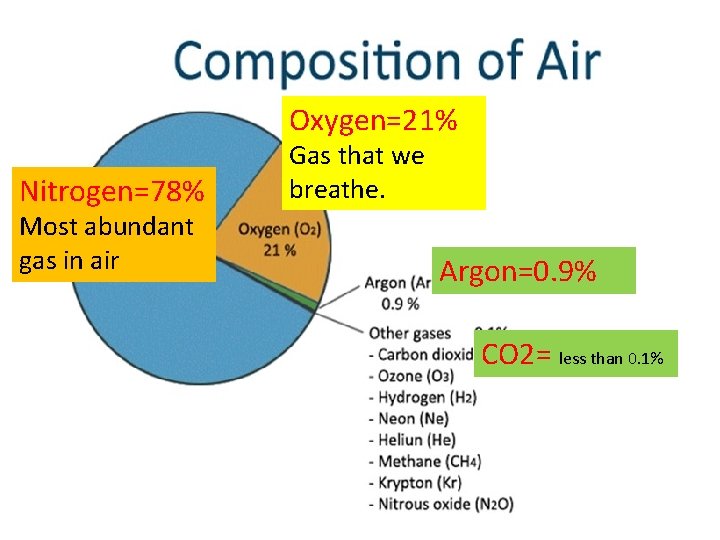
Oxygen=21% Nitrogen=78% Most abundant gas in air Gas that we breathe. Argon=0. 9% CO 2= less than 0. 1%
Layers of the Atmosphere