
Relative Dating 12 1 Discovering Earths History Rocks

- Slides: 21
Relative Dating
12. 1 Discovering Earth’s History Rocks Record Earth History Rocks record geological events and changing life forms of the past. We have learned that Earth is much older than anyone had previously imagined and that its surface and interior have been changed by the same geological processes that continue today.
12. 1 Discovering Earth’s History A Brief History of Geology u Uniformitarianism means that the forces and processes that we observe today have been at work for a very long time. u. Examples: tides, gravity
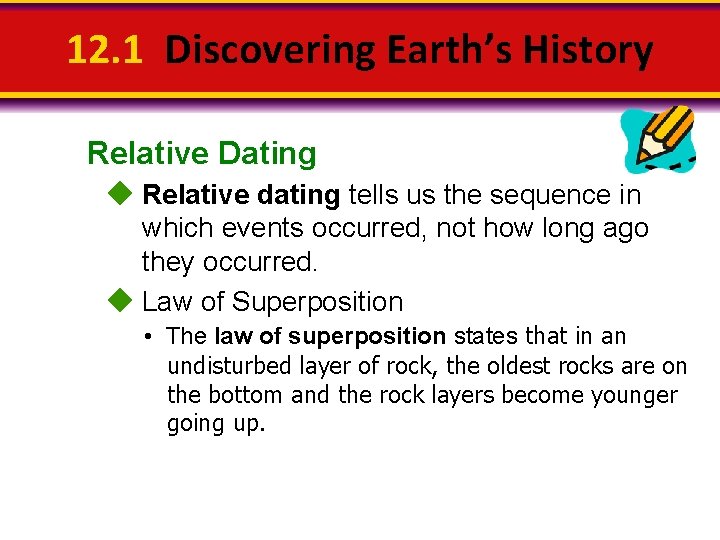
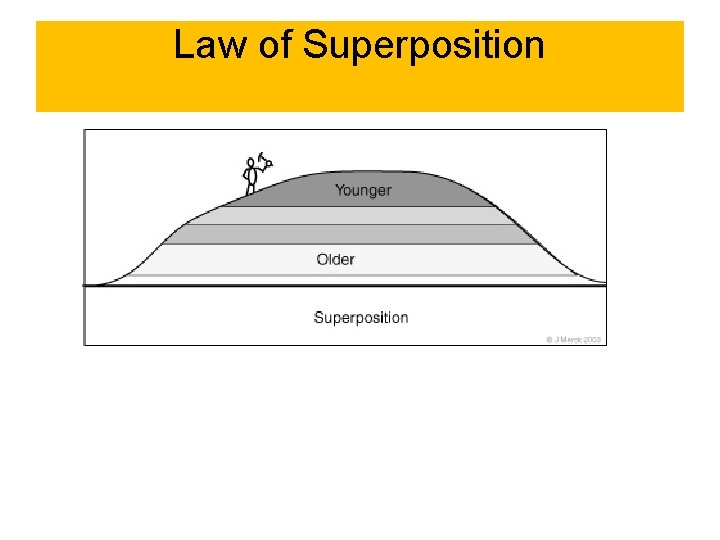
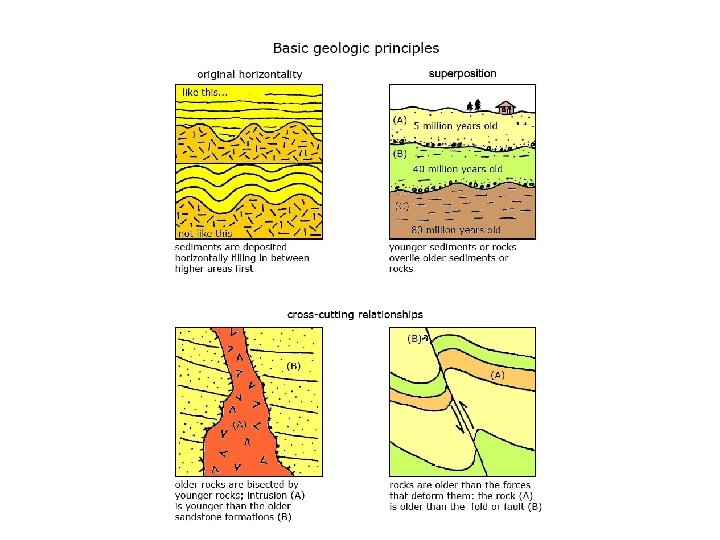
12. 1 Discovering Earth’s History Relative Dating Relative dating tells us the sequence in which events occurred, not how long ago they occurred. Law of Superposition • The law of superposition states that in an undisturbed layer of rock, the oldest rocks are on the bottom and the rock layers become younger going up.
Law of Superposition
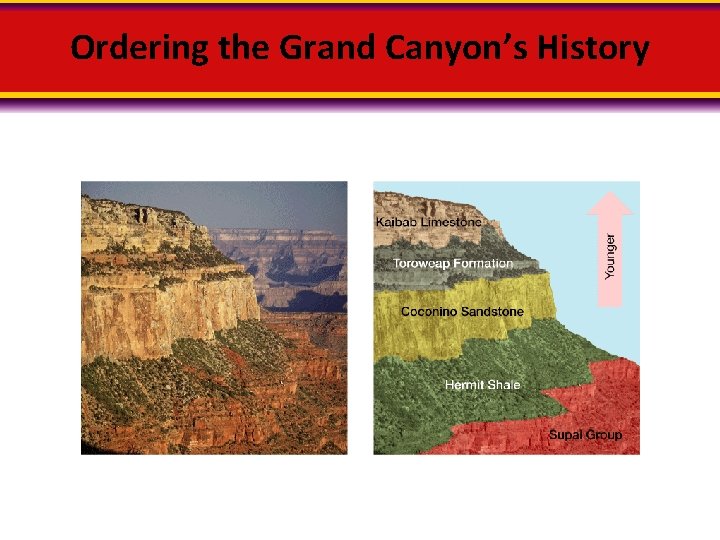
Ordering the Grand Canyon’s History
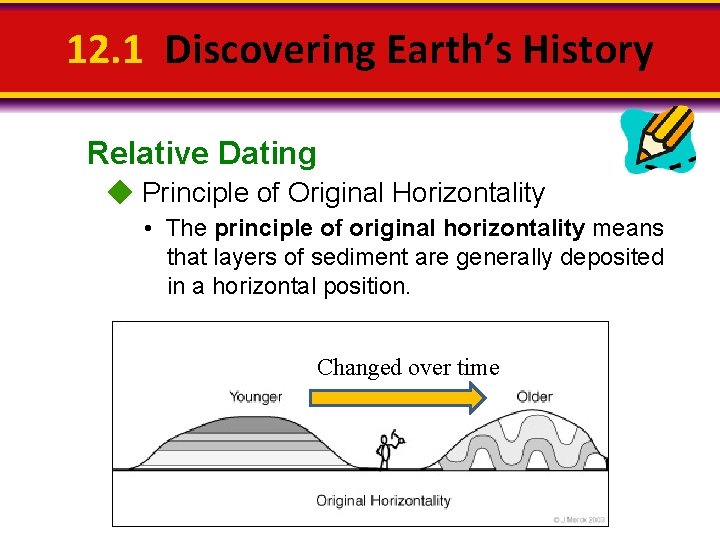
12. 1 Discovering Earth’s History Relative Dating Principle of Original Horizontality • The principle of original horizontality means that layers of sediment are generally deposited in a horizontal position. Changed over time
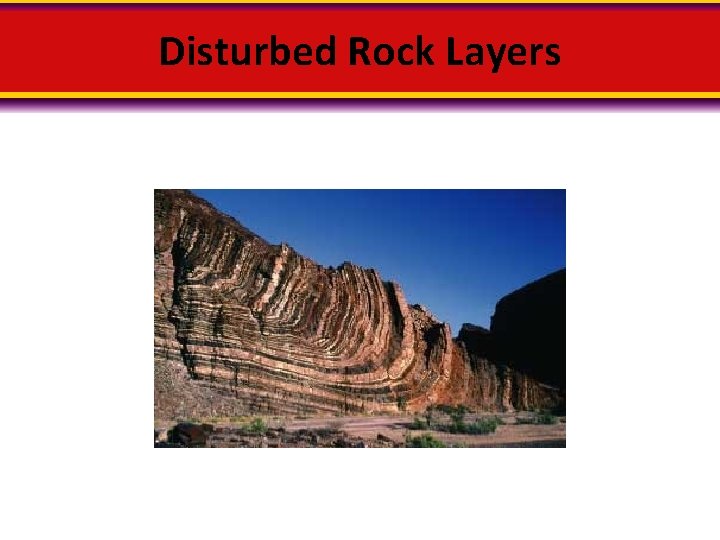
Disturbed Rock Layers
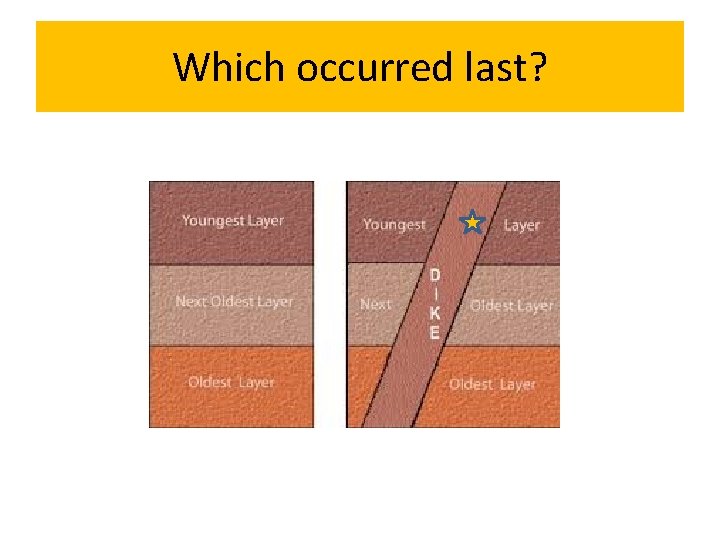
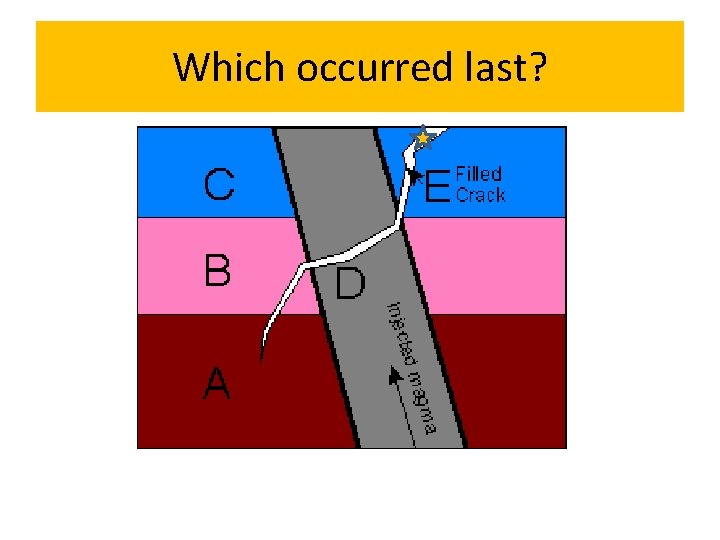
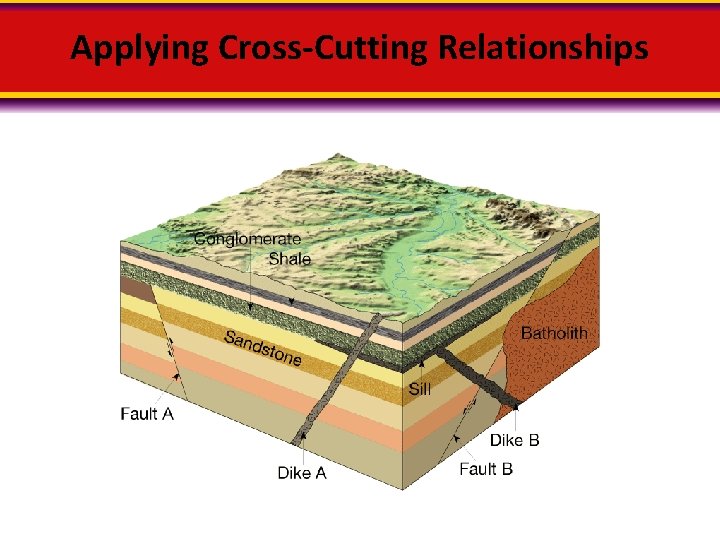
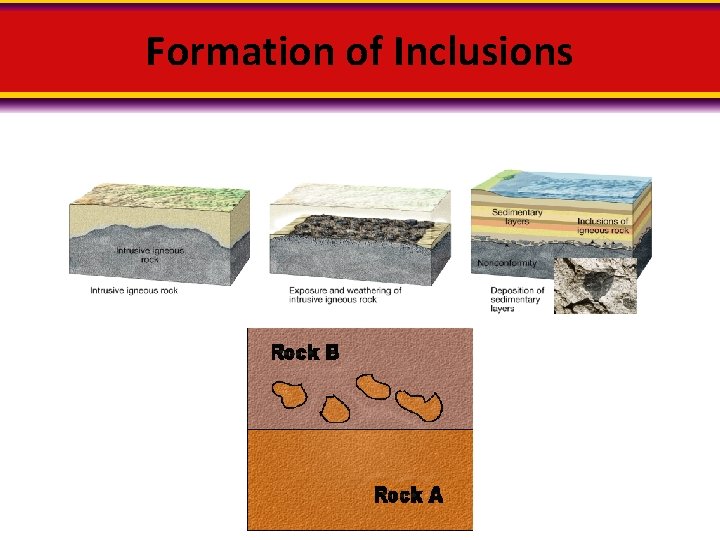
12. 1 Discovering Earth’s History Relative Dating Principle of Cross-Cutting Relationships • The principle of cross-cutting relationships states that when a fault cuts through rock layers, or when magma intrudes other rocks and crystallizes (dike) , we can assume that the fault or intrusion is younger than the rocks affected. Inclusions • Inclusions are rocks contained within other rocks. • Rocks containing inclusions are younger than the inclusions they contain.
Which occurred last?
Which occurred last?
Applying Cross-Cutting Relationships
Formation of Inclusions
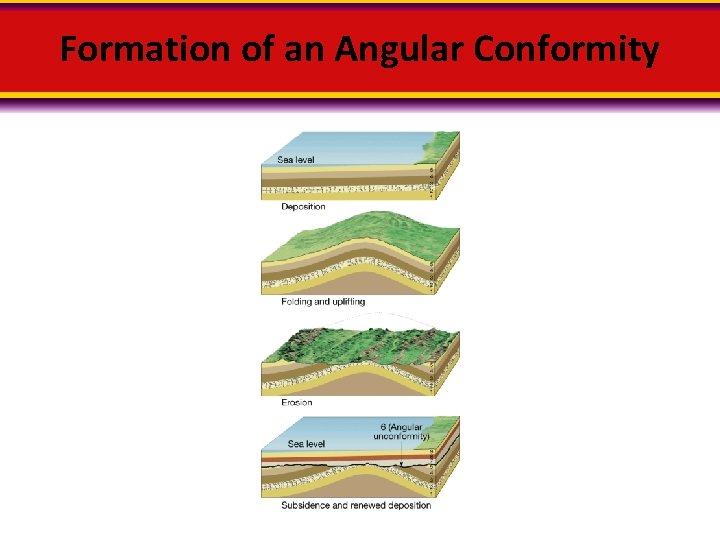
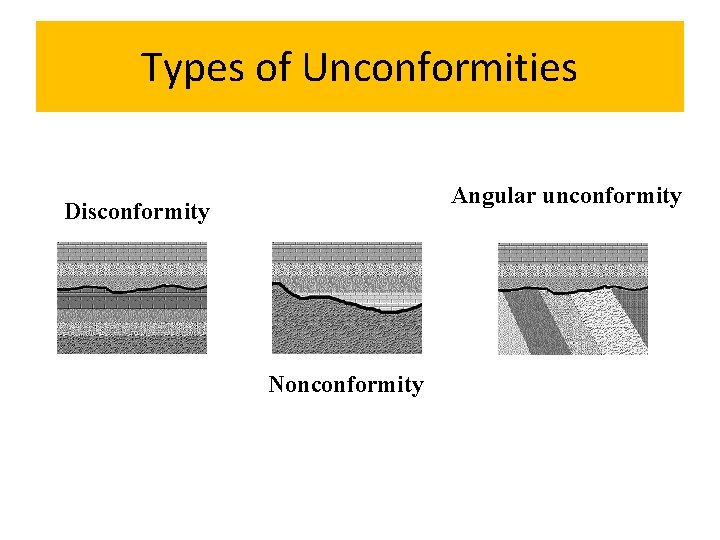
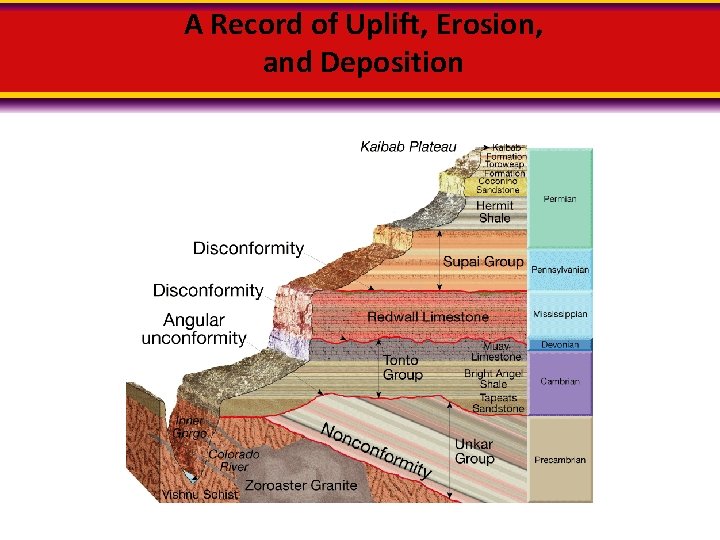
12. 1 Discovering Earth’s History Relative Dating Unconformities • An unconformity represents a long period during which deposition stopped, erosion removed previously formed rocks, and then deposition resumed. 1. An angular unconformity indicates that during the pause in deposition, a period of deformation (folding or tilting) and erosion occurred.
Formation of an Angular Conformity
12. 1 Discovering Earth’s History Relative Dating Unconformities 2. A nonconformity is when the erosional surface separates older metamorphic or intrusive igneous rocks from younger sedimentary rocks. 3. A disconformity is when two sedimentary rock layers are separated by an erosional surface.
Types of Unconformities Angular unconformity Disconformity Nonconformity
A Record of Uplift, Erosion, and Deposition
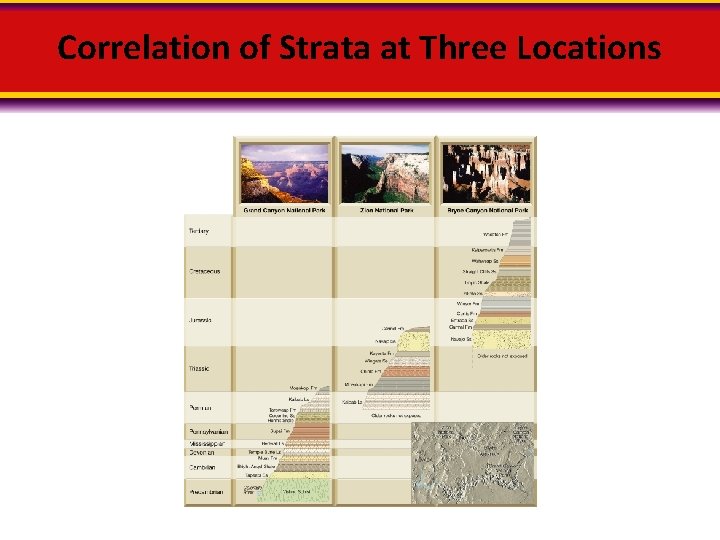
12. 1 Discovering Earth’s History Correlation of Rock Layers Correlation is establishing the equivalence of rocks of similar age in different areas.
Correlation of Strata at Three Locations