
RELATIVE CLAUSES An adjective modifies a noun Modify


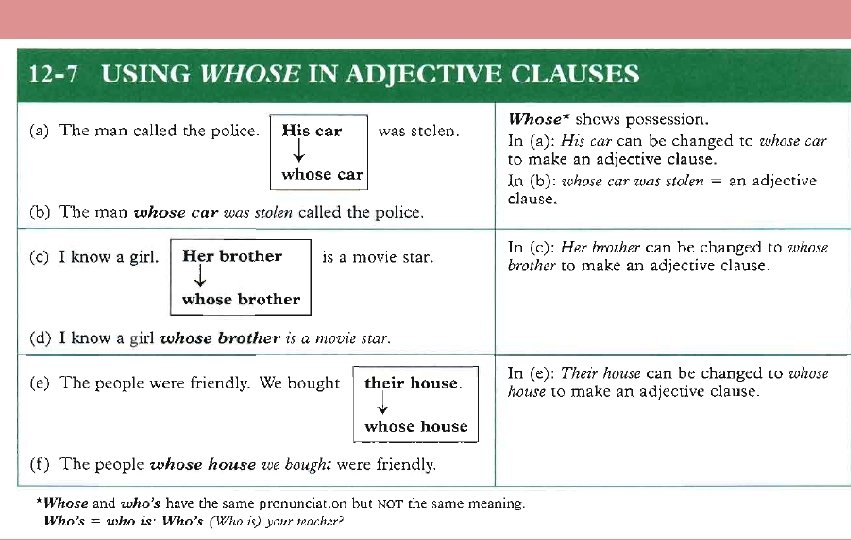


- Slides: 21
RELATIVE CLAUSES
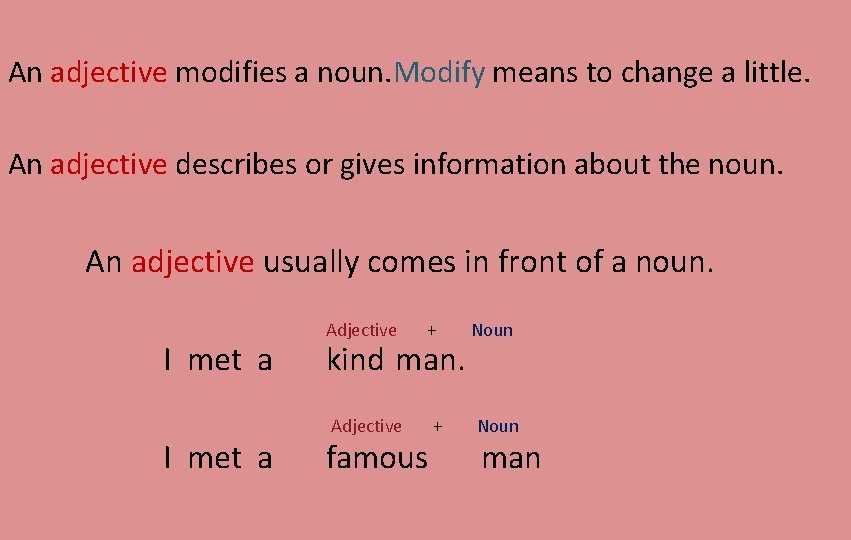
An adjective modifies a noun. Modify means to change a little. An adjective describes or gives information about the noun. An adjective usually comes in front of a noun. I met a Adjective + Noun kind man. famous man
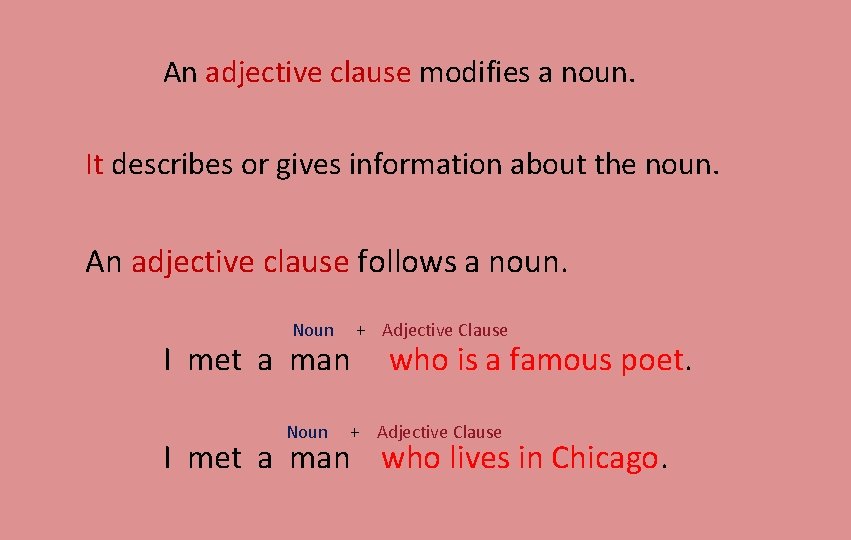
An adjective clause modifies a noun. It describes or gives information about the noun. An adjective clause follows a noun. Noun + Adjective Clause I met a man who is a famous poet. I met a man who lives in Chicago.
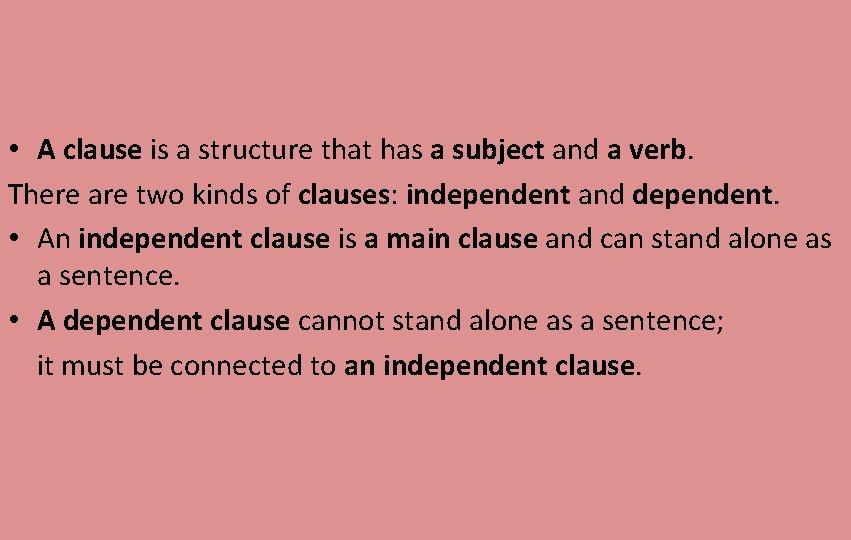
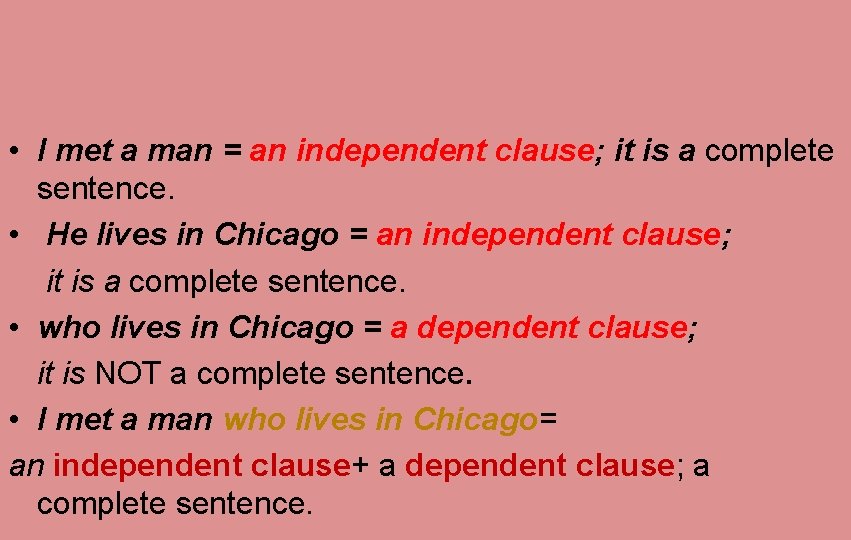
• A clause is a structure that has a subject and a verb. There are two kinds of clauses: independent and dependent. • An independent clause is a main clause and can stand alone as a sentence. • A dependent clause cannot stand alone as a sentence; it must be connected to an independent clause.
• I met a man = an independent clause; it is a complete sentence. • He lives in Chicago = an independent clause; it is a complete sentence. • who lives in Chicago = a dependent clause; it is NOT a complete sentence. • I met a man who lives in Chicago= an independent clause+ a dependent clause; a complete sentence.
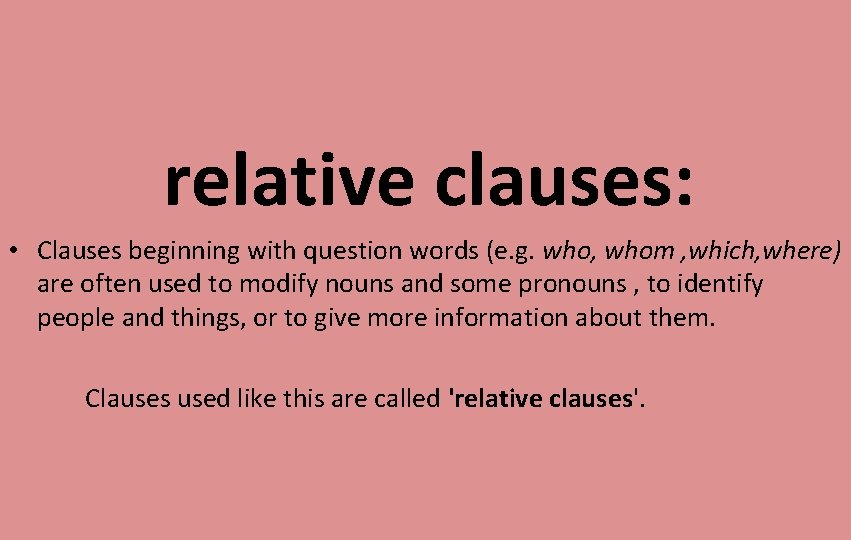
relative clauses: • Clauses beginning with question words (e. g. who, whom , which, where) are often used to modify nouns and some pronouns , to identify people and things, or to give more information about them. Clauses used like this are called 'relative clauses'.
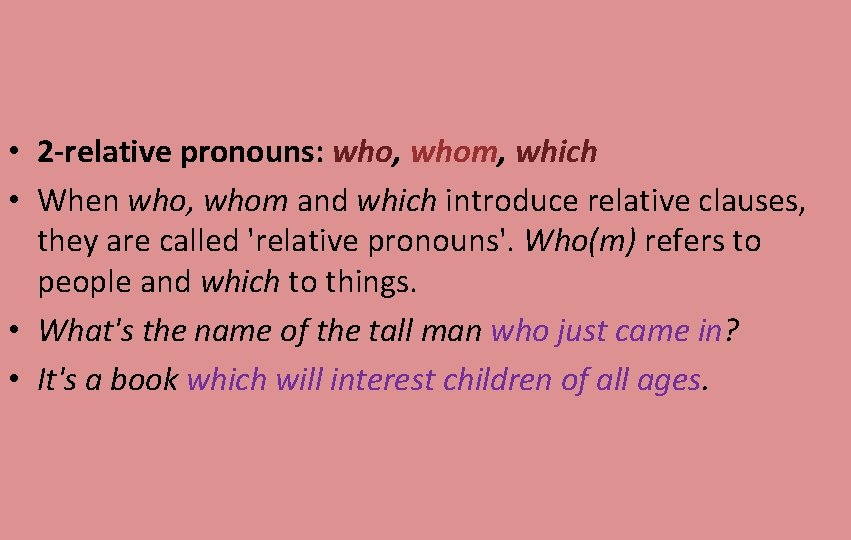
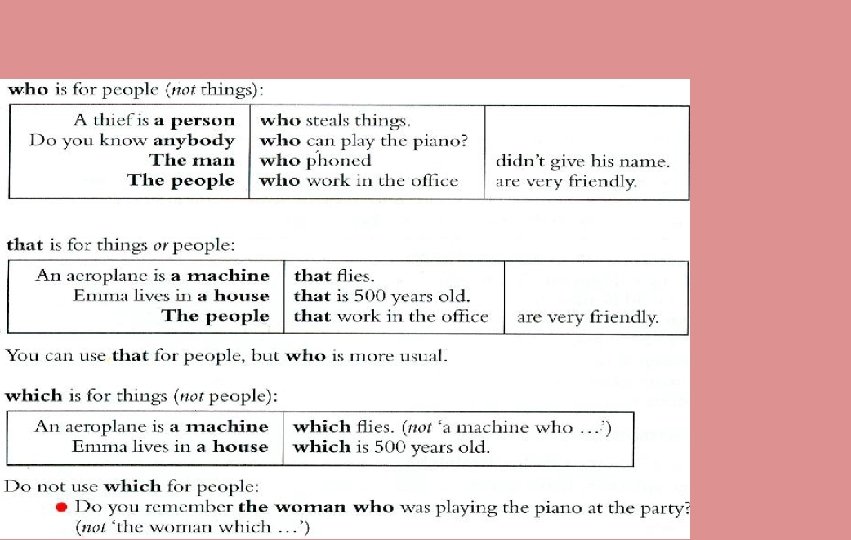
• 2 -relative pronouns: who, whom, which • When who, whom and which introduce relative clauses, they are called 'relative pronouns'. Who(m) refers to people and which to things. • What's the name of the tall man who just came in? • It's a book which will interest children of all ages.
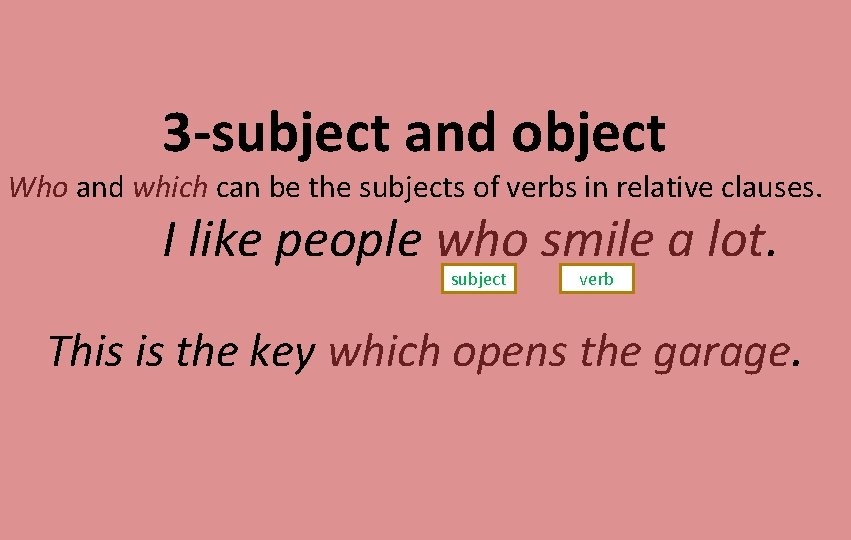
3 -subject and object Who and which can be the subjects of verbs in relative clauses. I like people who smile a lot. subject verb This is the key which opens the garage.
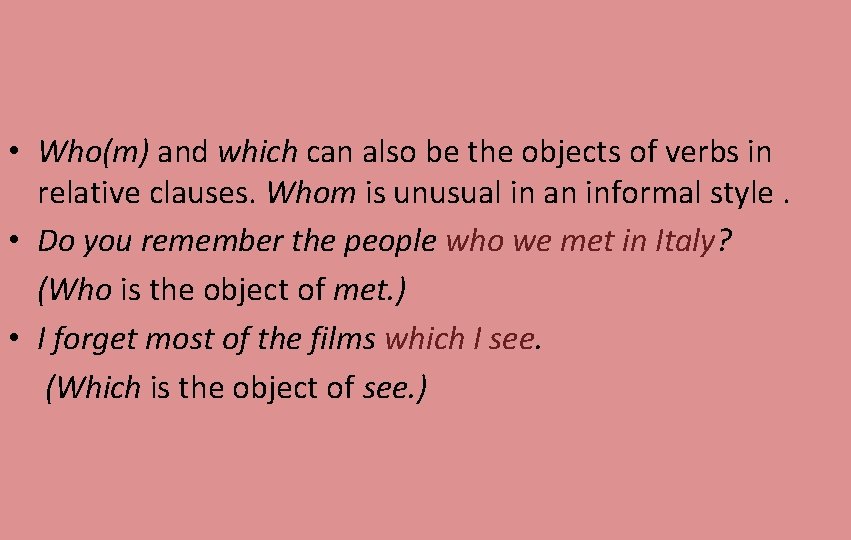
• Who(m) and which can also be the objects of verbs in relative clauses. Whom is unusual in an informal style. • Do you remember the people who we met in Italy? (Who is the object of met. ) • I forget most of the films which I see. (Which is the object of see. )
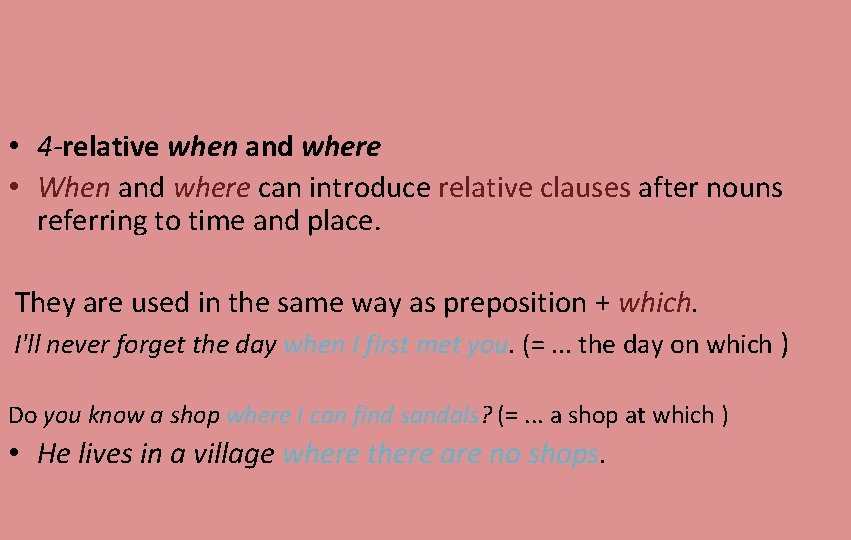
• 4 -relative when and where • When and where can introduce relative clauses after nouns referring to time and place. They are used in the same way as preposition + which. I'll never forget the day when I first met you. (=. . . the day on which ) Do you know a shop where I can find sandals? (=. . . a shop at which ) • He lives in a village where there are no shops.
She’s someone who you can trust.
She’s someone who you can trust. Adjective Clause
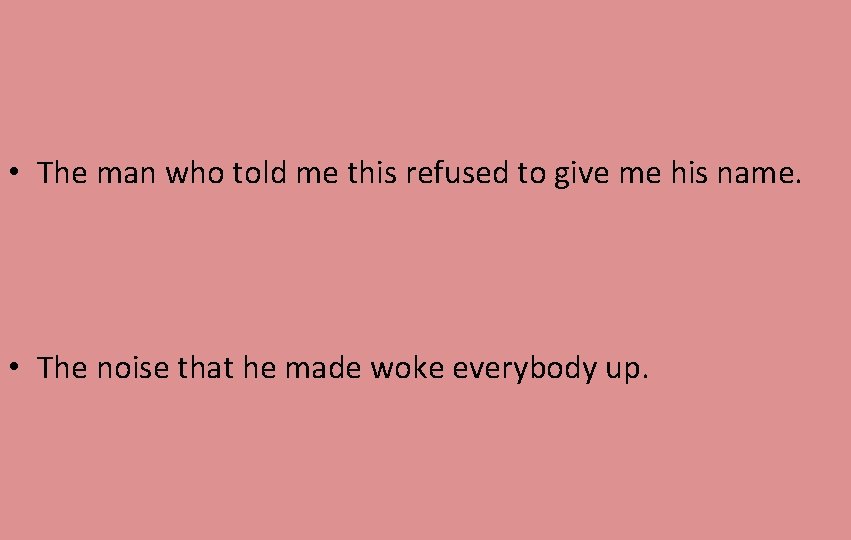
• The man who told me this refused to give me his name. • The noise that he made woke everybody up.
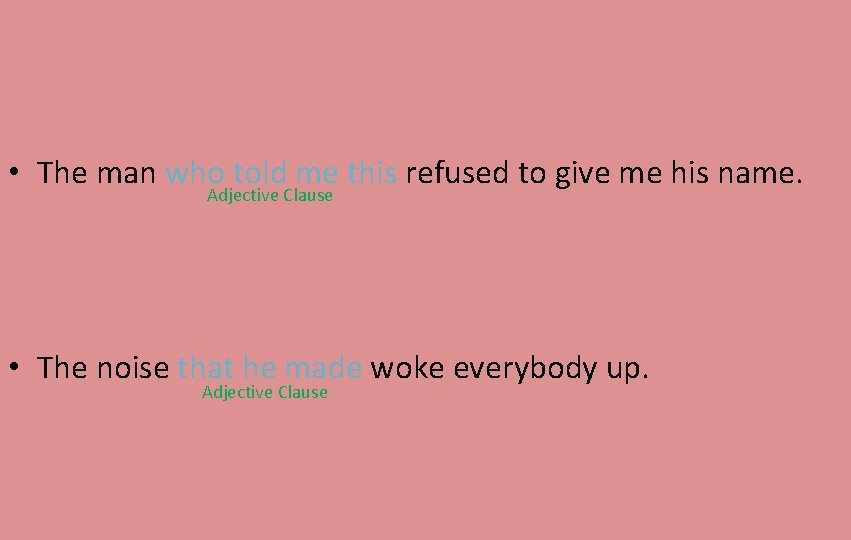
• The man who told me this refused to give me his name. Adjective Clause • The noise that he made woke everybody up. Adjective Clause
• • This is not something that I want. Everyone who came to the party was from our class. Everything that we learnt last week was on the test. This is something you need to know. A friend is a person who accepts you are. I met a man who knows you. I met a man whose sister knows you.
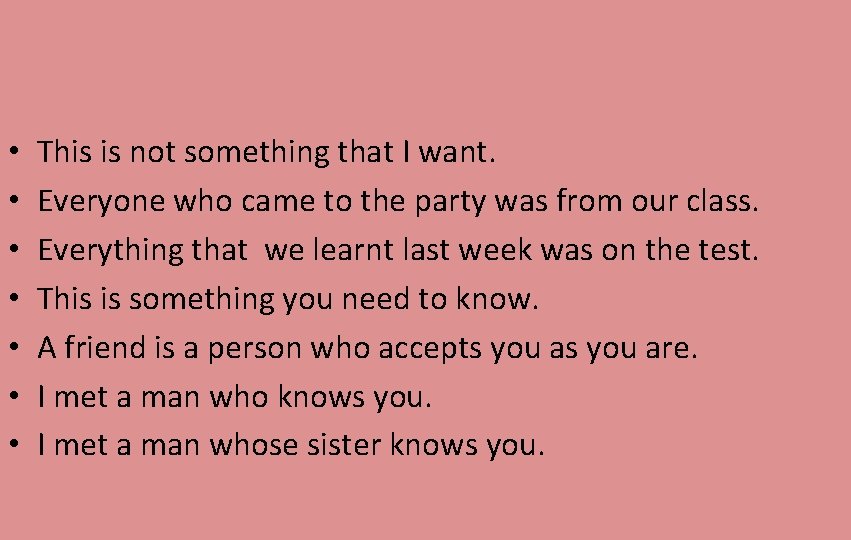
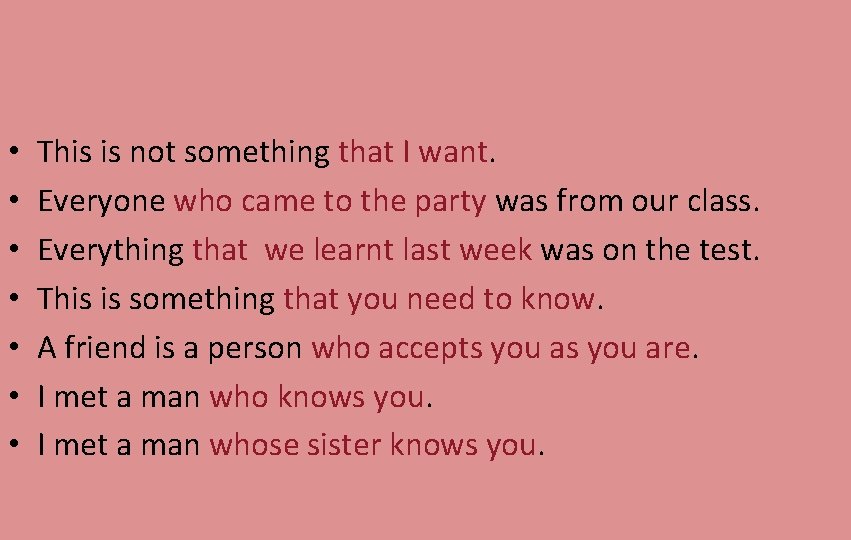
• • This is not something that I want. Everyone who came to the party was from our class. Everything that we learnt last week was on the test. This is something that you need to know. A friend is a person who accepts you are. I met a man who knows you. I met a man whose sister knows you.