
Relationships in the Ecosystem Predation Predation the act
- Slides: 12
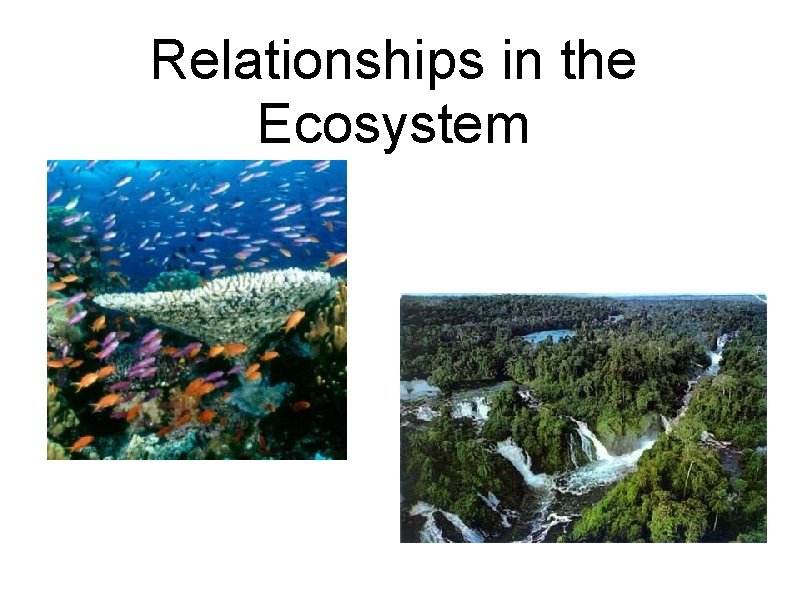
Relationships in the Ecosystem
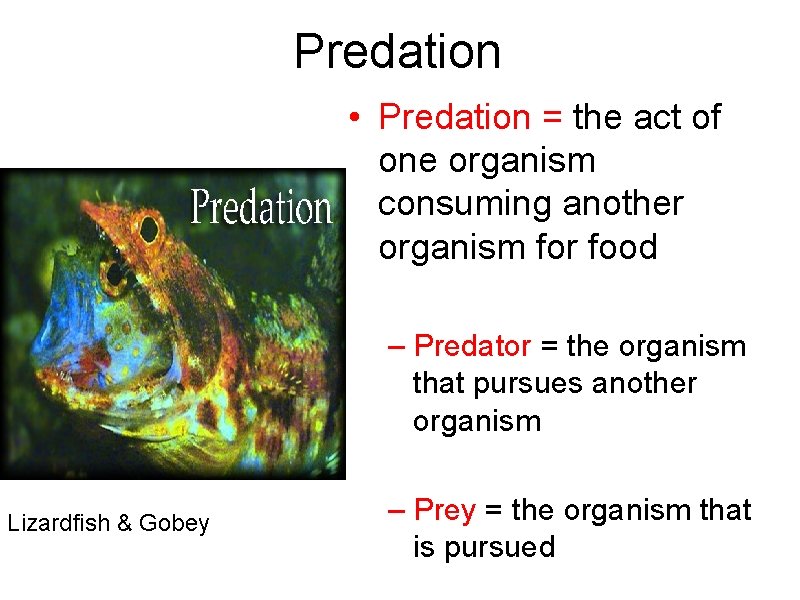
Predation • Predation = the act of one organism consuming another organism for food – Predator = the organism that pursues another organism Lizardfish & Gobey – Prey = the organism that is pursued
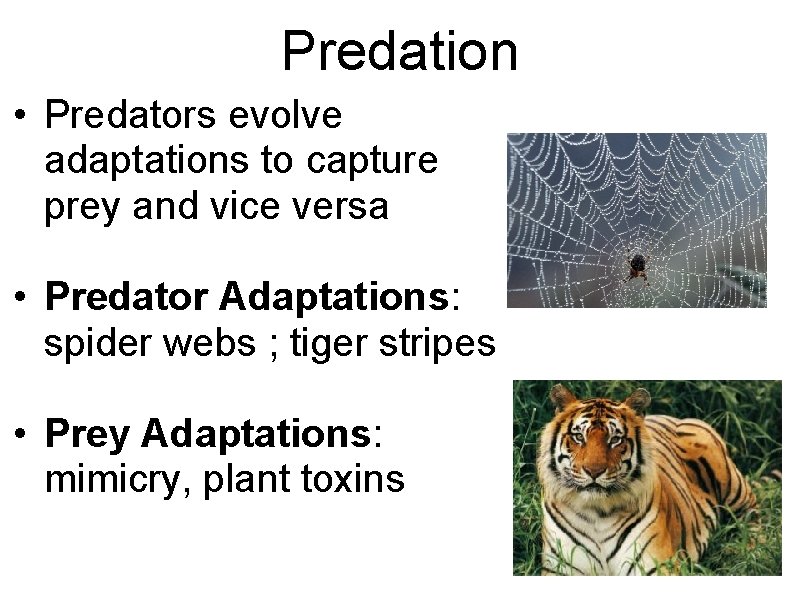
Predation • Predators evolve adaptations to capture prey and vice versa • Predator Adaptations: spider webs ; tiger stripes • Prey Adaptations: mimicry, plant toxins
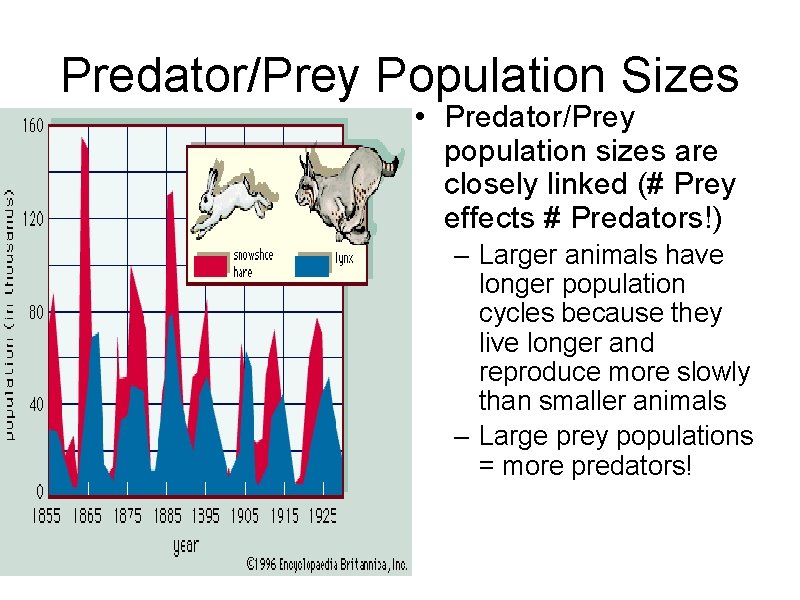
Predator/Prey Population Sizes • Predator/Prey population sizes are closely linked (# Prey effects # Predators!) – Larger animals have longer population cycles because they live longer and reproduce more slowly than smaller animals – Large prey populations = more predators!
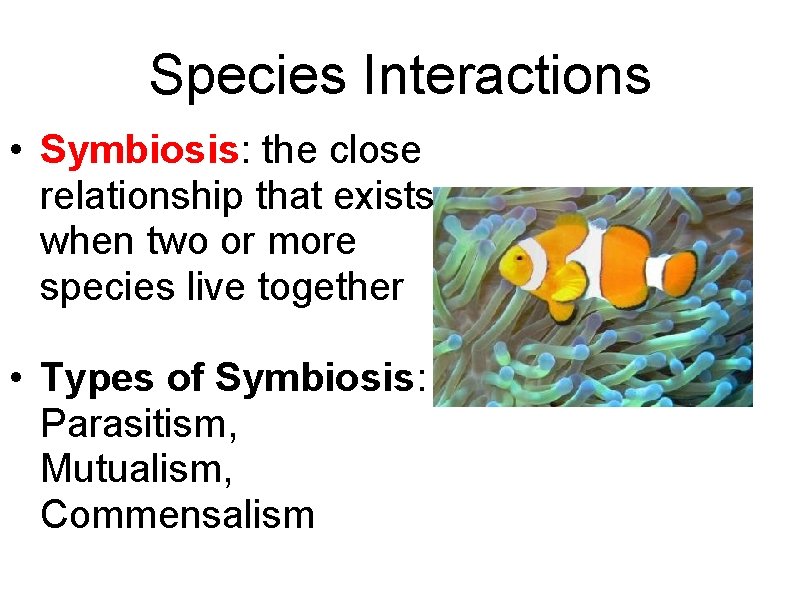
Species Interactions • Symbiosis: the close relationship that exists when two or more species live together • Types of Symbiosis: Parasitism, Mutualism, Commensalism
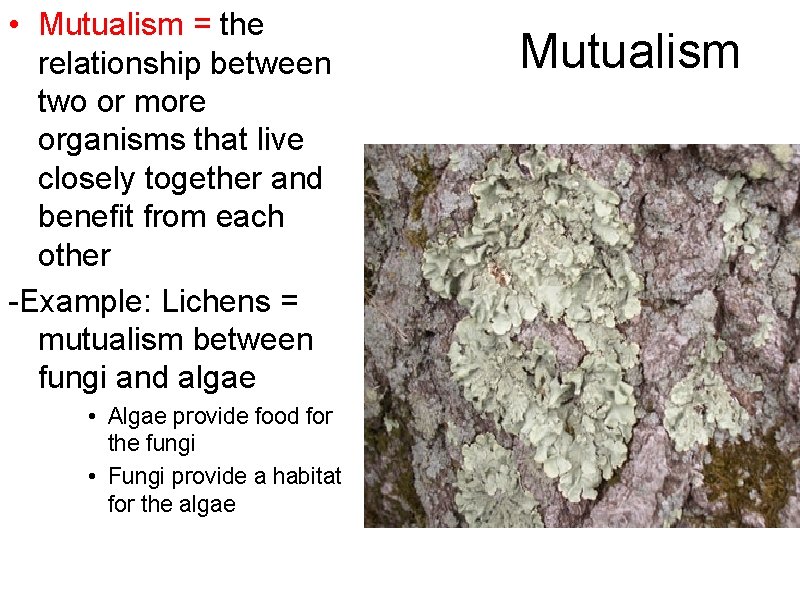
• Mutualism = the relationship between two or more organisms that live closely together and benefit from each other -Example: Lichens = mutualism between fungi and algae • Algae provide food for the fungi • Fungi provide a habitat for the algae Mutualism
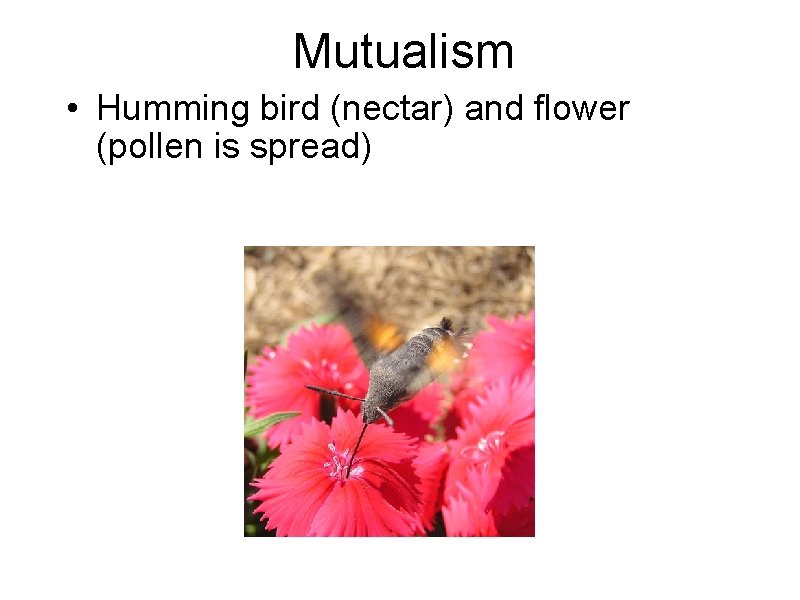
Mutualism • Humming bird (nectar) and flower (pollen is spread)
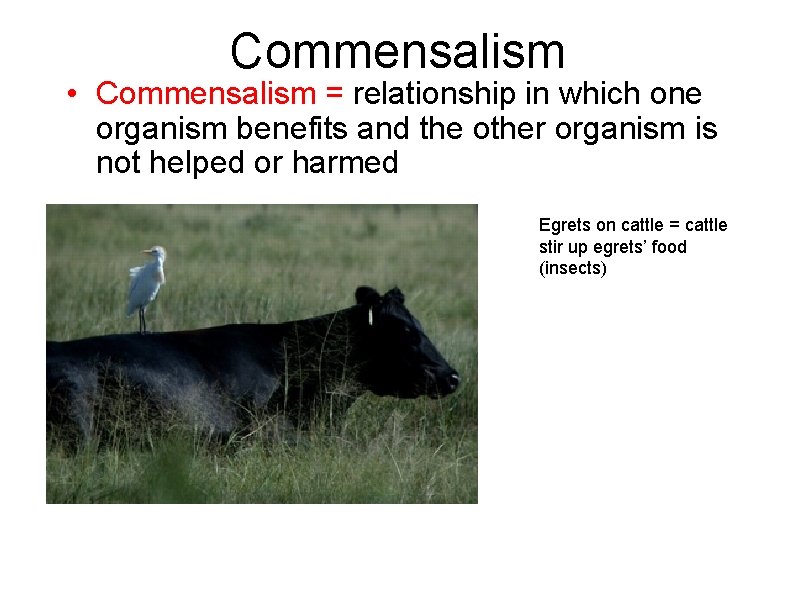
Commensalism • Commensalism = relationship in which one organism benefits and the other organism is not helped or harmed Egrets on cattle = cattle stir up egrets’ food (insects)
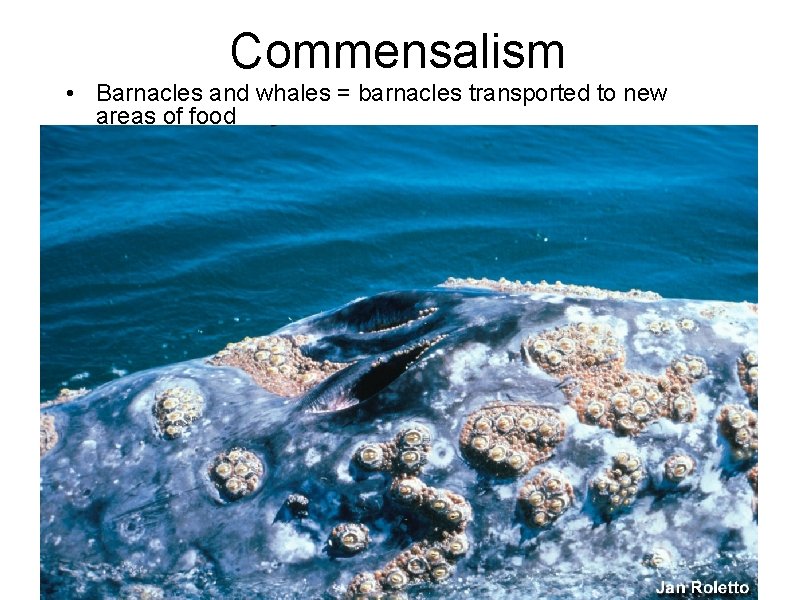
Commensalism • Barnacles and whales = barnacles transported to new areas of food
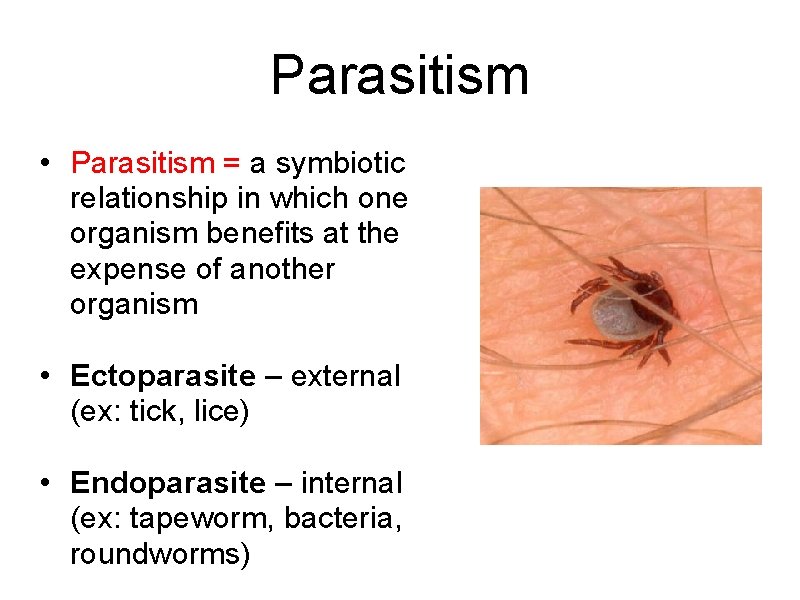
Parasitism • Parasitism = a symbiotic relationship in which one organism benefits at the expense of another organism • Ectoparasite – external (ex: tick, lice) • Endoparasite – internal (ex: tapeworm, bacteria, roundworms)
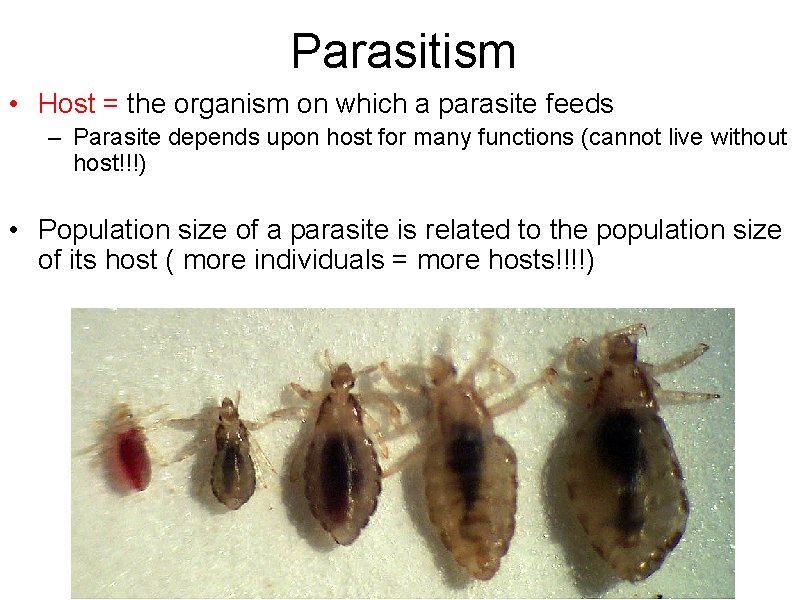
Parasitism • Host = the organism on which a parasite feeds – Parasite depends upon host for many functions (cannot live without host!!!) • Population size of a parasite is related to the population size of its host ( more individuals = more hosts!!!!)
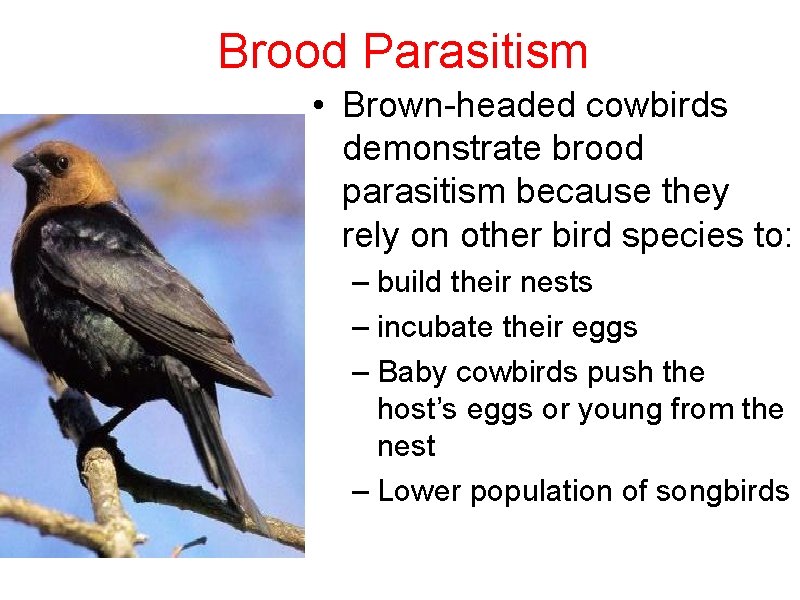
Brood Parasitism • Brown-headed cowbirds demonstrate brood parasitism because they rely on other bird species to: – build their nests – incubate their eggs – Baby cowbirds push the host’s eggs or young from the nest – Lower population of songbirds