
Relationships in Ecology By Amanda Definitions and examples
Relationships in Ecology By Amanda Definitions and examples of various relationships in nature.

Biological Community A biological community consists of many populations of the same species occupying the same geographical area. One example is mosquito larvae living in a pond.
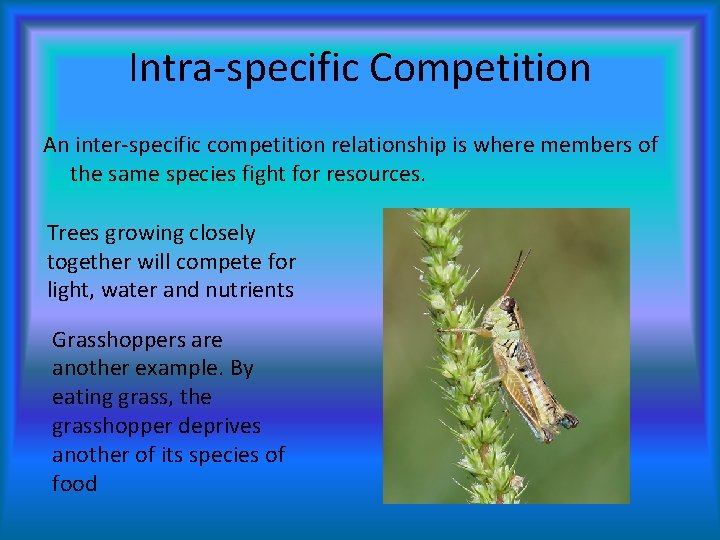
Intra-specific Competition An inter-specific competition relationship is where members of the same species fight for resources. Trees growing closely together will compete for light, water and nutrients Grasshoppers are another example. By eating grass, the grasshopper deprives another of its species of food
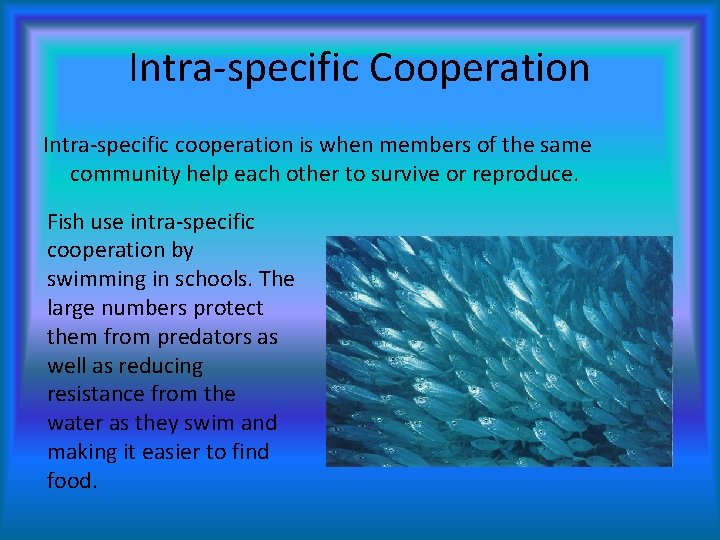
Intra-specific Cooperation Intra-specific cooperation is when members of the same community help each other to survive or reproduce. Fish use intra-specific cooperation by swimming in schools. The large numbers protect them from predators as well as reducing resistance from the water as they swim and making it easier to find food.
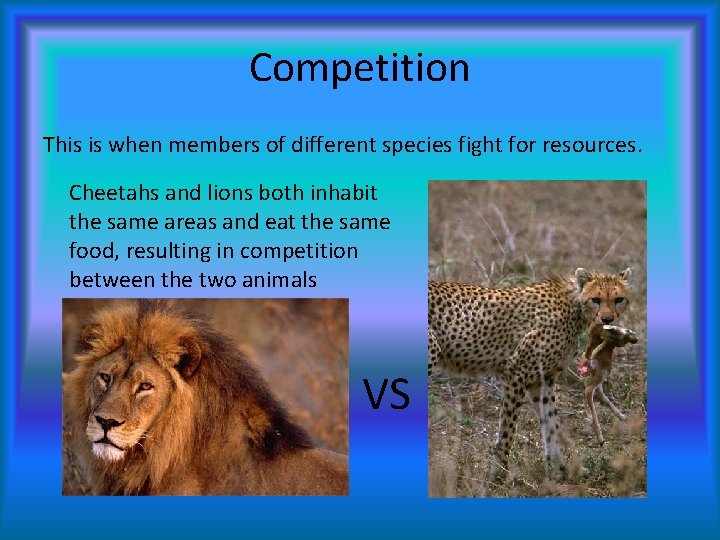
Competition This is when members of different species fight for resources. Cheetahs and lions both inhabit the same areas and eat the same food, resulting in competition between the two animals VS

Inter-specific Browsing/Grazing Browsing animals eat the leaves, bark and stems from tall plants whereas grazers eat the plants that are at or near ground level. An example of a browser is a giraffe An example of a grazer is a cow
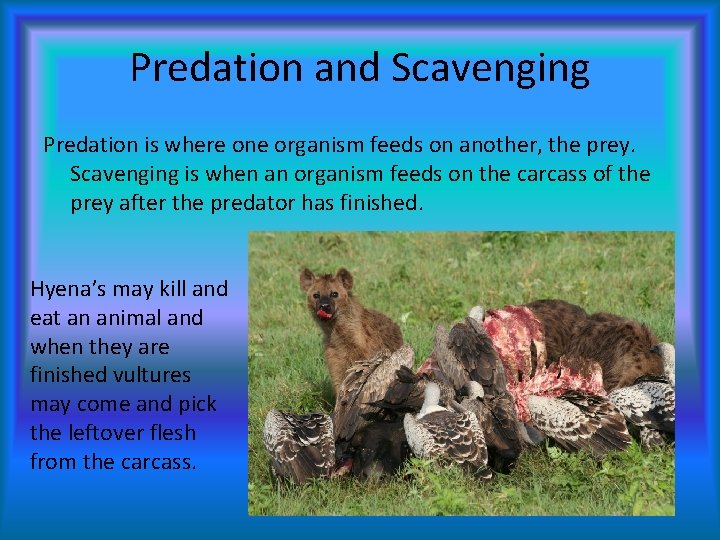
Predation and Scavenging Predation is where one organism feeds on another, the prey. Scavenging is when an organism feeds on the carcass of the prey after the predator has finished. Hyena’s may kill and eat an animal and when they are finished vultures may come and pick the leftover flesh from the carcass.

Commensalism is a relationship between two organisms in which one benefits while the other is neither harmed nor helped. A bird building its nest in a tree is an example of commensalism
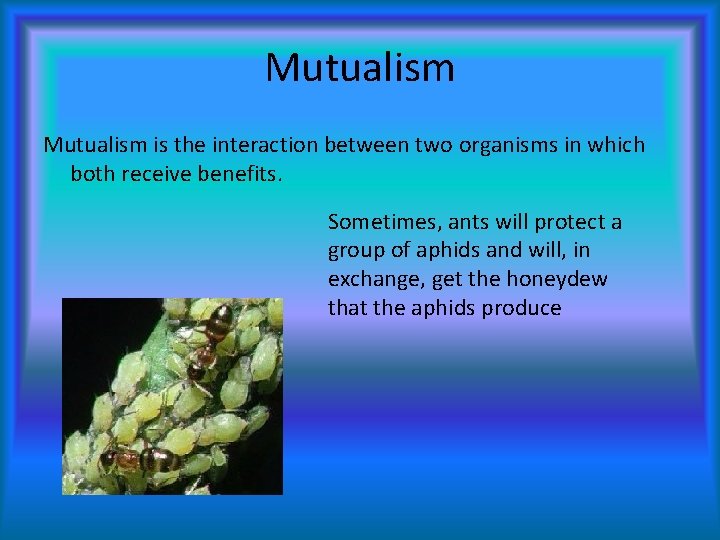
Mutualism is the interaction between two organisms in which both receive benefits. Sometimes, ants will protect a group of aphids and will, in exchange, get the honeydew that the aphids produce
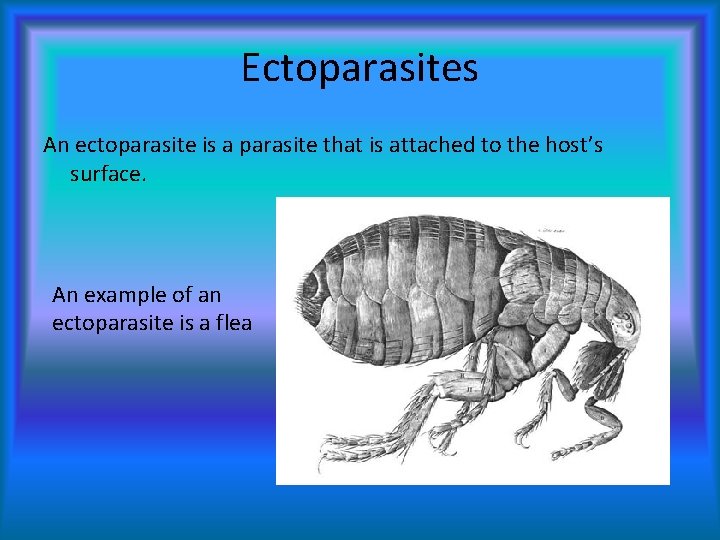
Ectoparasites An ectoparasite is a parasite that is attached to the host’s surface. An example of an ectoparasite is a flea

Endoparasites An endoparasite is a parasite that lives within the host organism. One example of a endoparasite is Plasmodium, the protozoa responsible for malaria
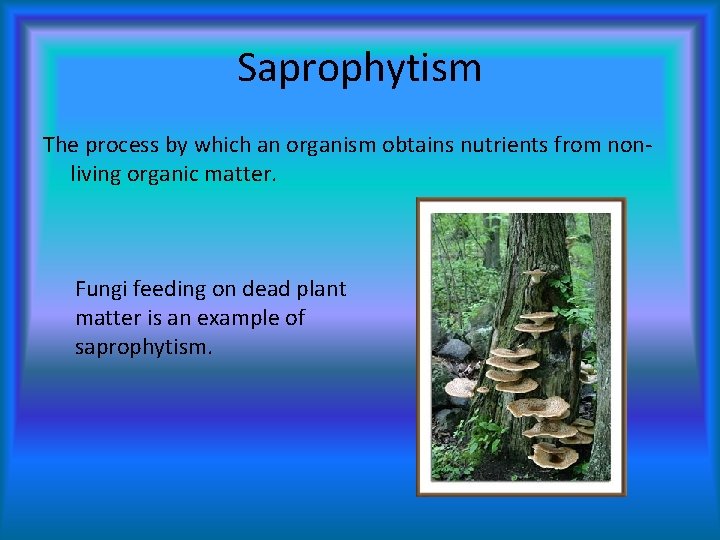
Saprophytism The process by which an organism obtains nutrients from nonliving organic matter. Fungi feeding on dead plant matter is an example of saprophytism.
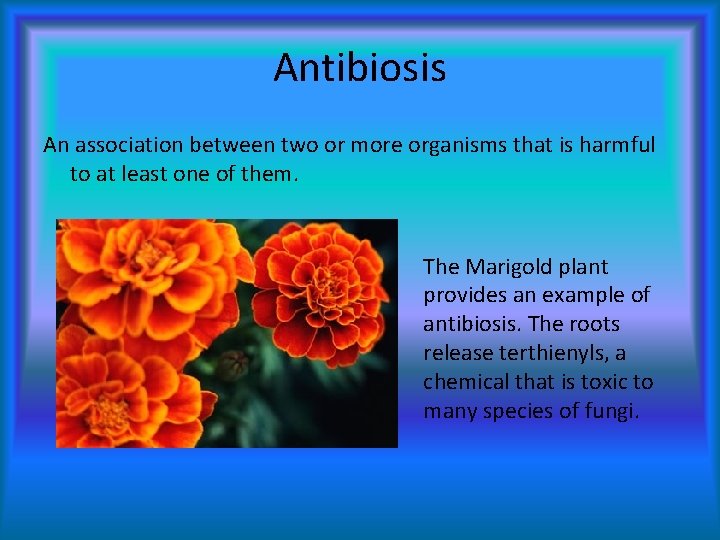
Antibiosis An association between two or more organisms that is harmful to at least one of them. The Marigold plant provides an example of antibiosis. The roots release terthienyls, a chemical that is toxic to many species of fungi.
- Slides: 13