
Relationships How do different species affect one another
- Slides: 30
Relationships How do different species affect one another?
Symbiosis A close relationship between the individuals of two (or more) different biological species Three types: mutualism, commensalism, and parasitic relationships
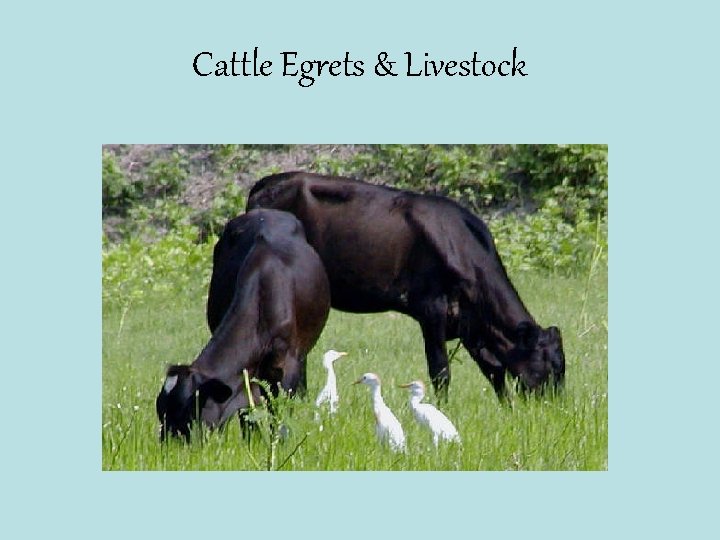
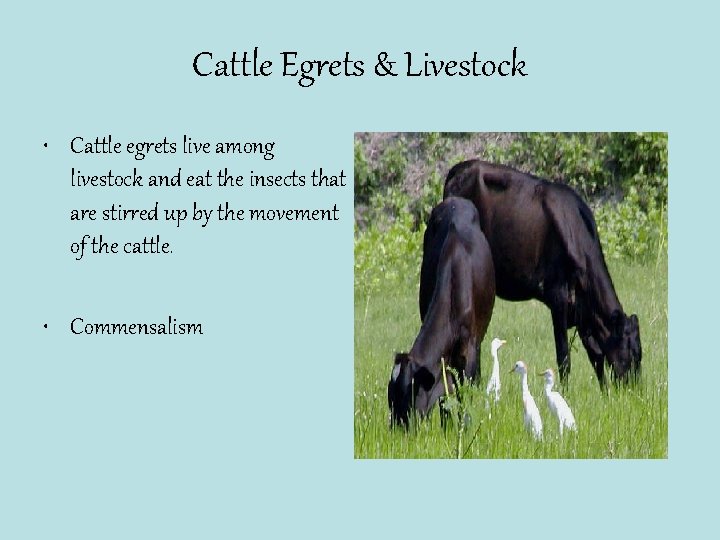
Commensalism A type of relationship between two individual organisms where one organism benefits and the other organism is unaffected
Mutualism A type of relationship between organisms where both organisms benefit from the relationship
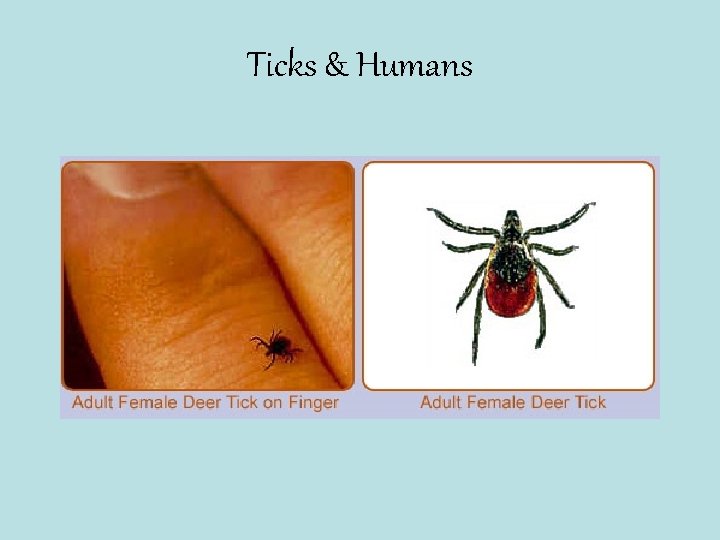
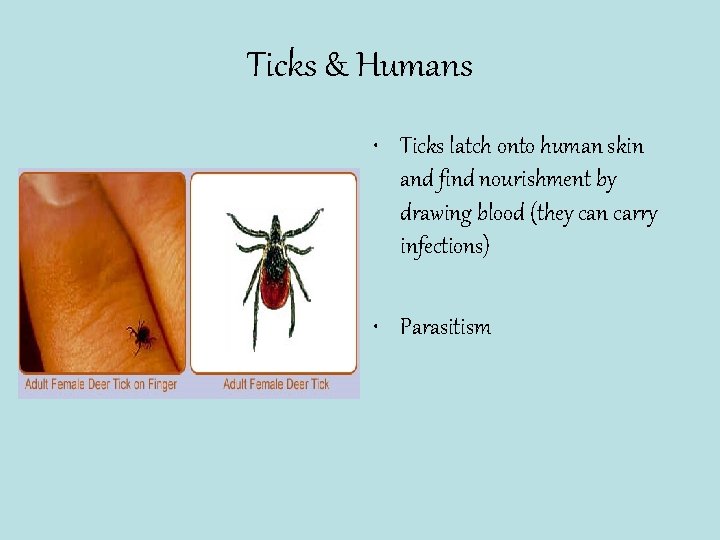
Parasitism A type of relationship between organisms where one organism benefits and the other organism is harmed by the relationship
Important Things to Remember • All species interact with other species around it and the habitat around it • A change to one species can affect another species or habitat • A change in a habitat can affect one or more species
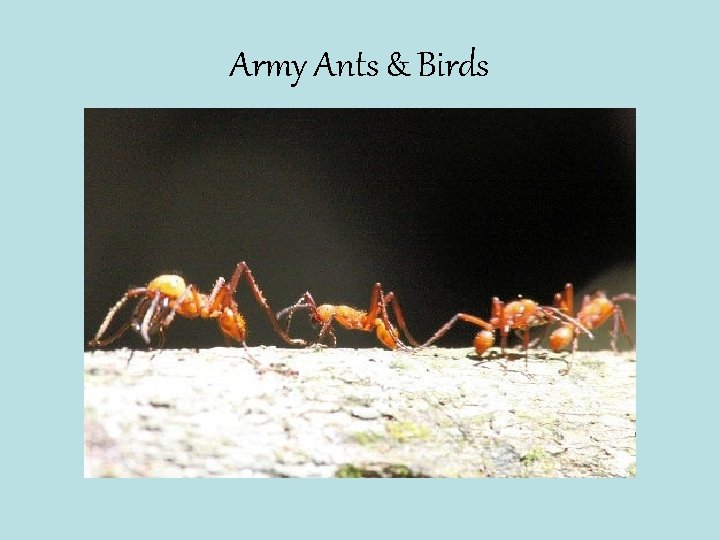
Army Ants & Birds
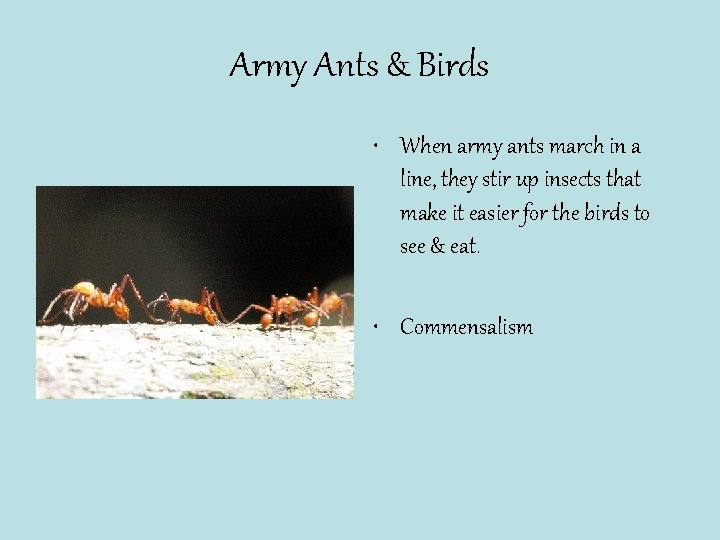
Army Ants & Birds • When army ants march in a line, they stir up insects that make it easier for the birds to see & eat. • Commensalism
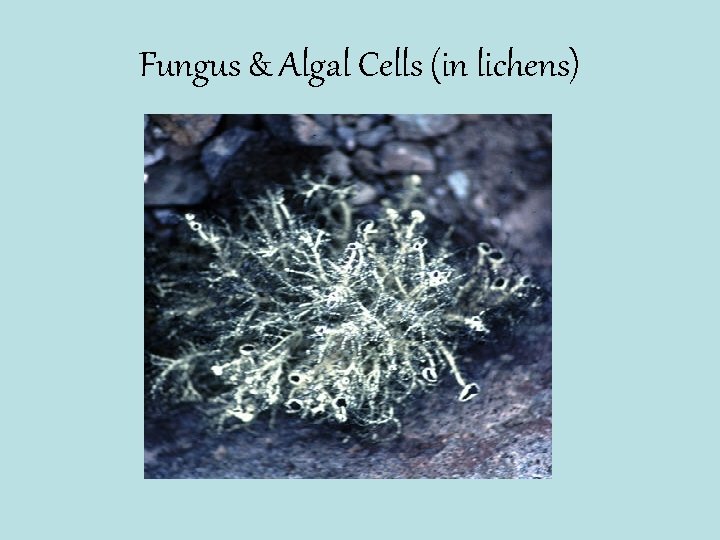
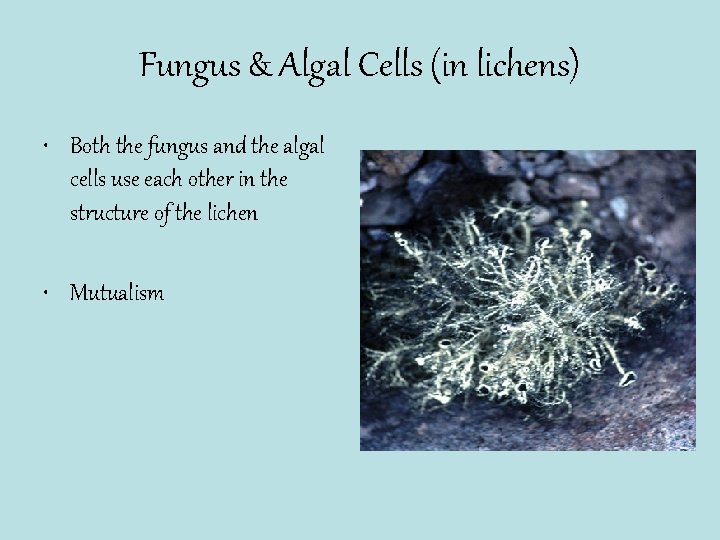
Fungus & Algal Cells (in lichens)
Fungus & Algal Cells (in lichens) • Both the fungus and the algal cells use each other in the structure of the lichen • Mutualism
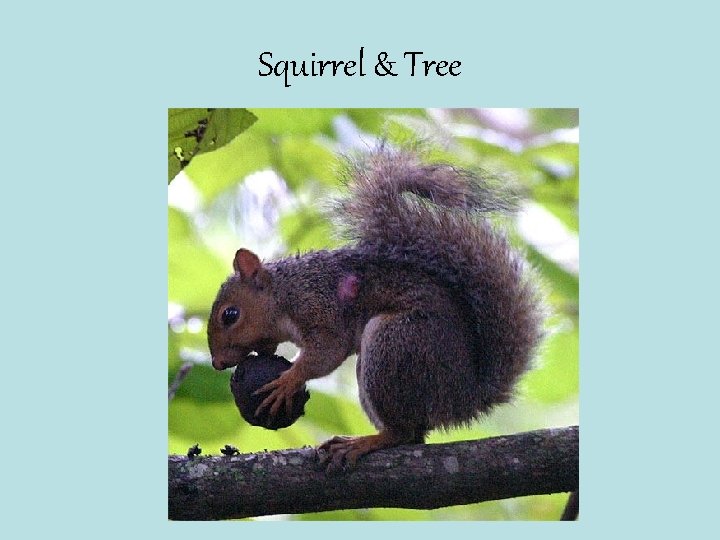
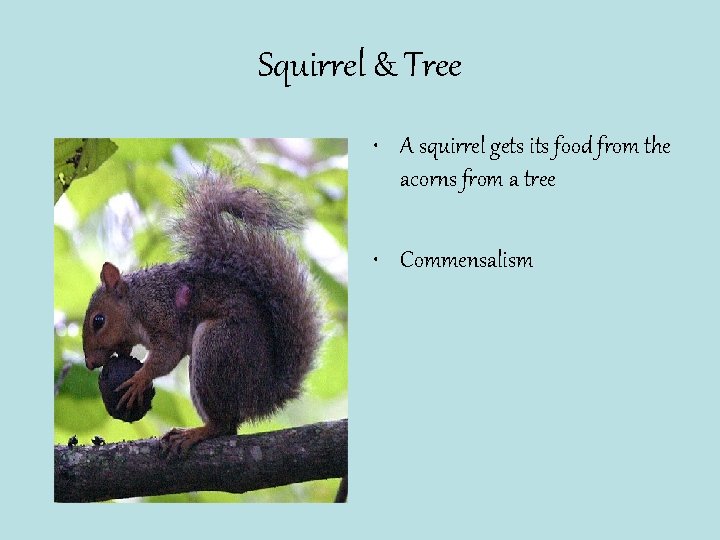
Squirrel & Tree
Squirrel & Tree • A squirrel gets its food from the acorns from a tree • Commensalism
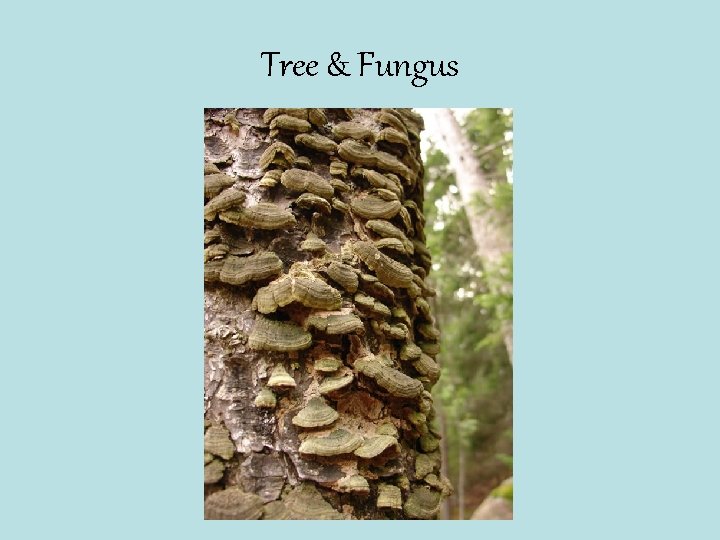
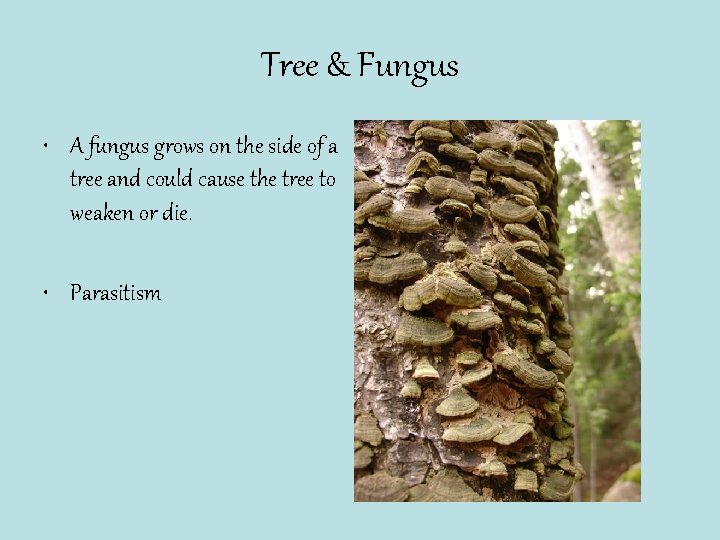
Tree & Fungus
Tree & Fungus • A fungus grows on the side of a tree and could cause the tree to weaken or die. • Parasitism
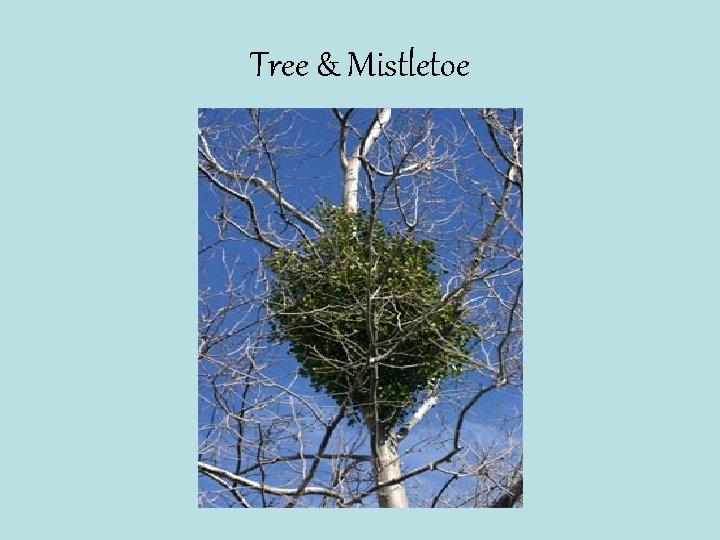
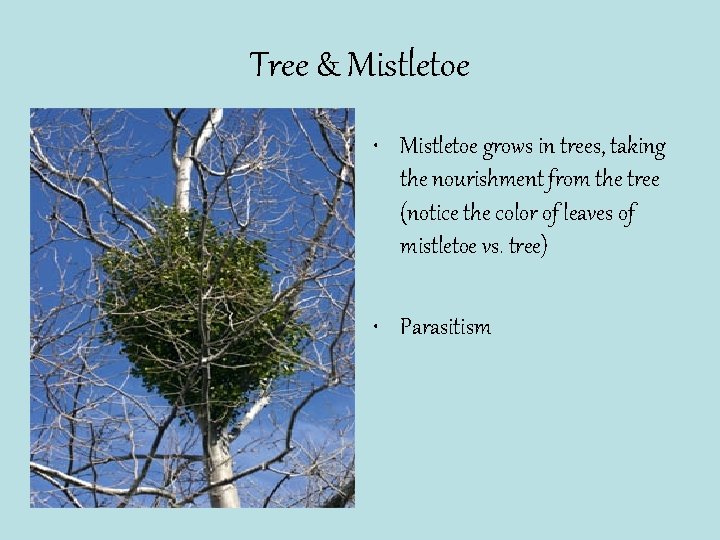
Tree & Mistletoe
Tree & Mistletoe • Mistletoe grows in trees, taking the nourishment from the tree (notice the color of leaves of mistletoe vs. tree) • Parasitism
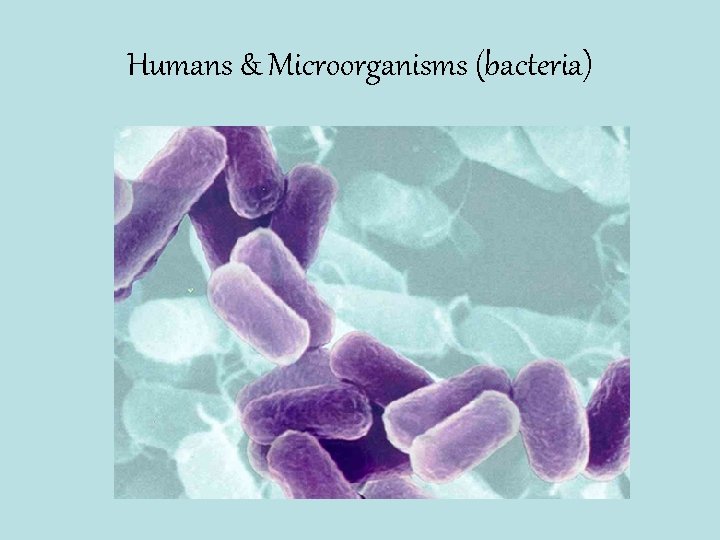
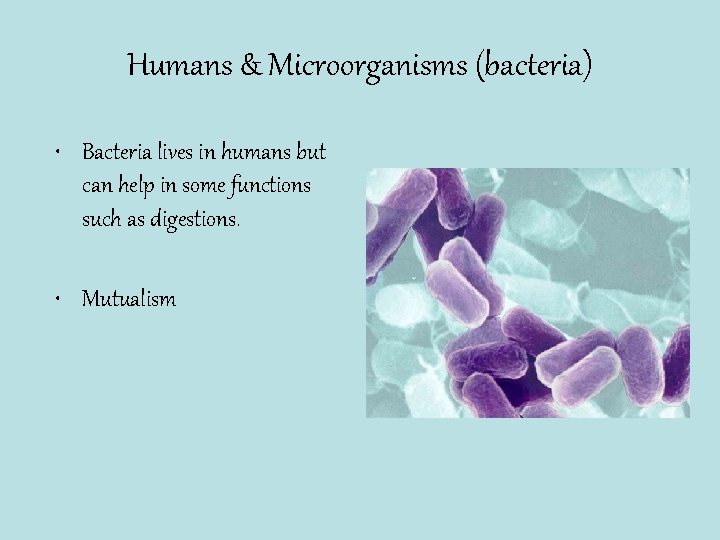
Humans & Microorganisms (bacteria)
Humans & Microorganisms (bacteria) • Bacteria lives in humans but can help in some functions such as digestions. • Mutualism
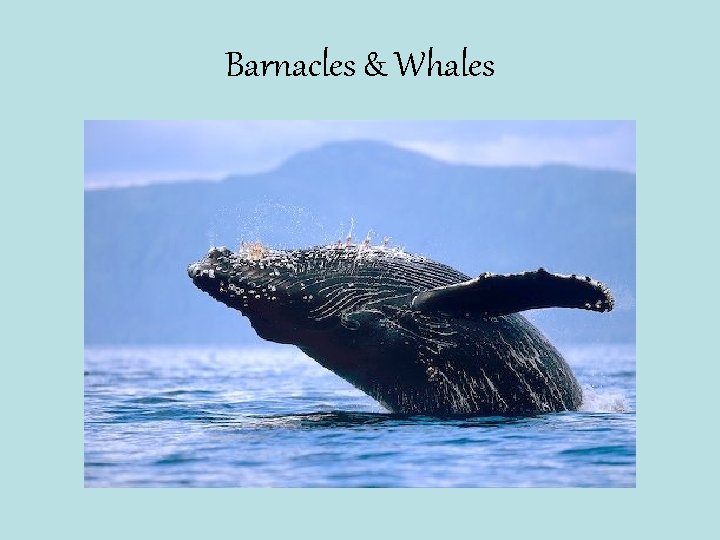
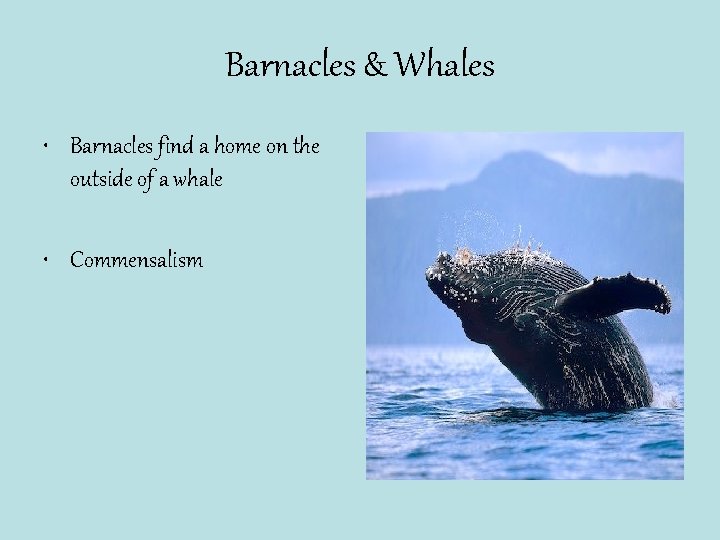
Barnacles & Whales
Barnacles & Whales • Barnacles find a home on the outside of a whale • Commensalism
Ticks & Humans
Ticks & Humans • Ticks latch onto human skin and find nourishment by drawing blood (they can carry infections) • Parasitism
Cattle Egrets & Livestock
Cattle Egrets & Livestock • Cattle egrets live among livestock and eat the insects that are stirred up by the movement of the cattle. • Commensalism
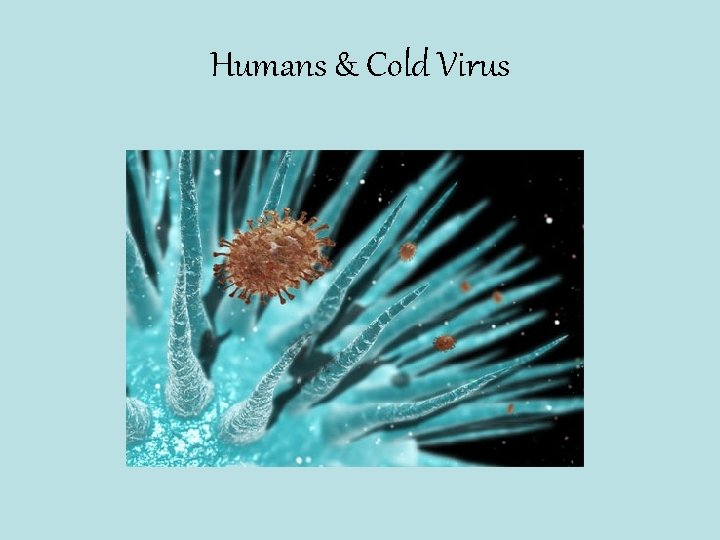
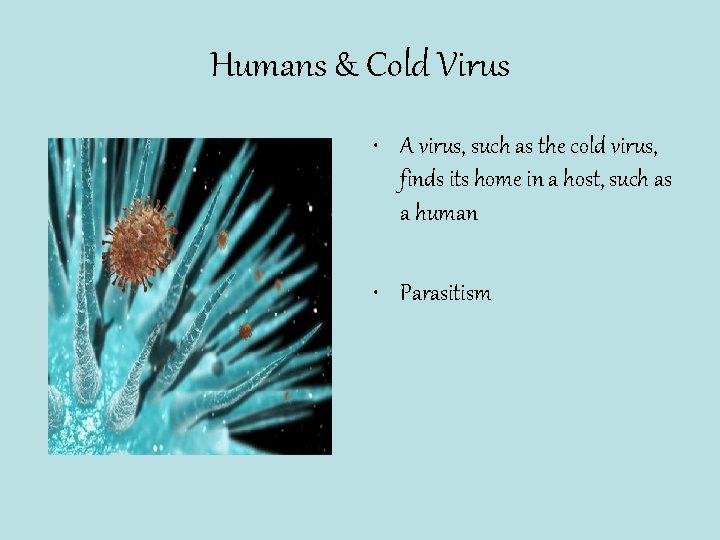
Humans & Cold Virus
Humans & Cold Virus • A virus, such as the cold virus, finds its home in a host, such as a human • Parasitism
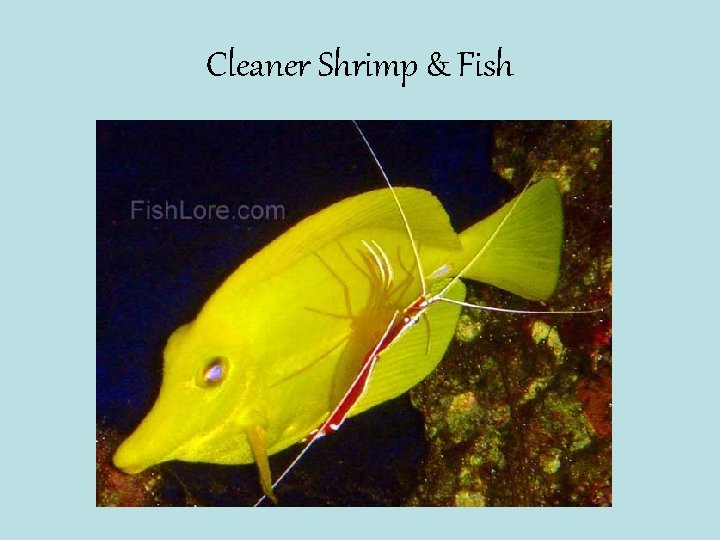
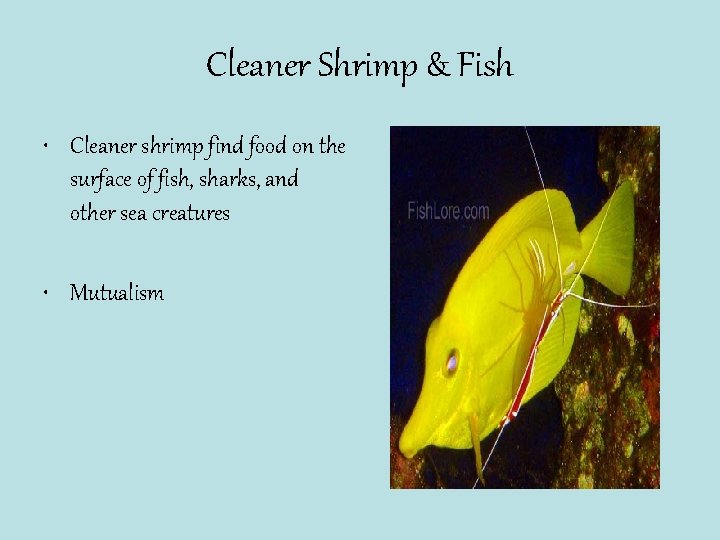
Cleaner Shrimp & Fish
Cleaner Shrimp & Fish • Cleaner shrimp find food on the surface of fish, sharks, and other sea creatures • Mutualism
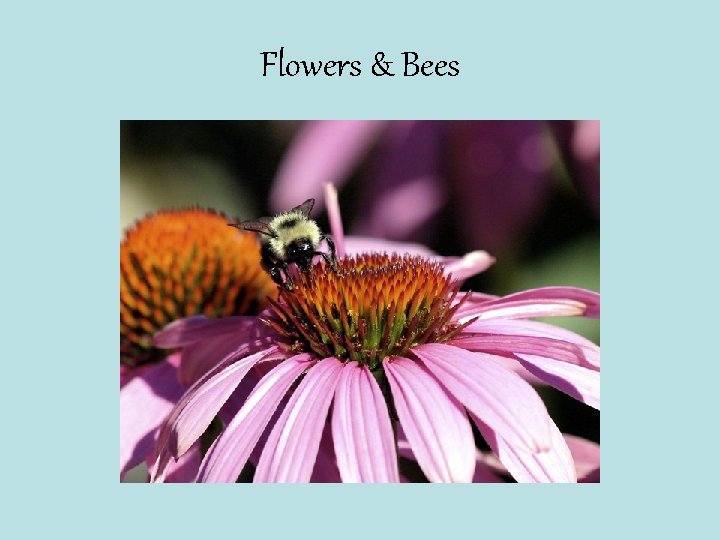
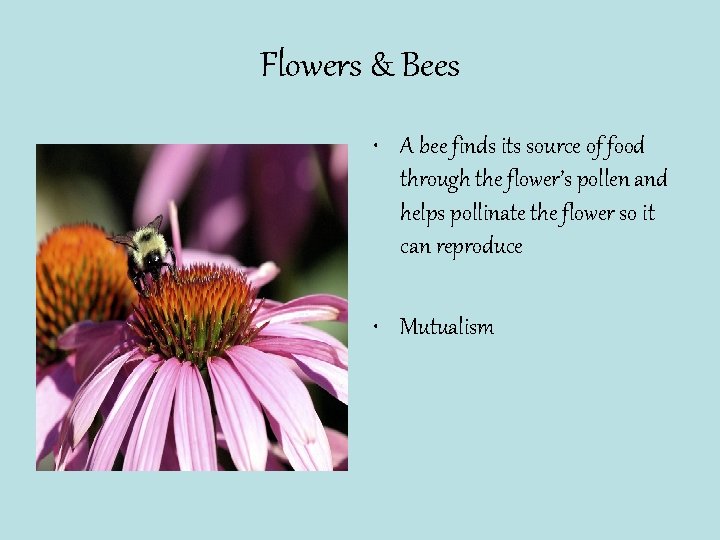
Flowers & Bees
Flowers & Bees • A bee finds its source of food through the flower’s pollen and helps pollinate the flower so it can reproduce • Mutualism