
RELATIONSHIPS Evaluating and Identifying Healthy Relationships Some Examples
- Slides: 41
RELATIONSHIPS Evaluating and Identifying Healthy Relationships
Some Examples of Relationships: l l l l Friendship Parent-child Boss-worker Boyfriend-girlfriend Sibling Acquaintance Roommate
What Relationships Provide l Emotional needs l Social satisfactions l Basic needs like shelter and food
EVALUATING l l l l How does your relationship affect your life? In school At work My physical health My emotional health My use of drugs or alcohol My family and friends My ability to function independently
In School l How does this person encourage me? l Have my grades improved or fallen? l Have I missed school because of this person? l Have I limited my extracurricular activities so I can spend time with this person?
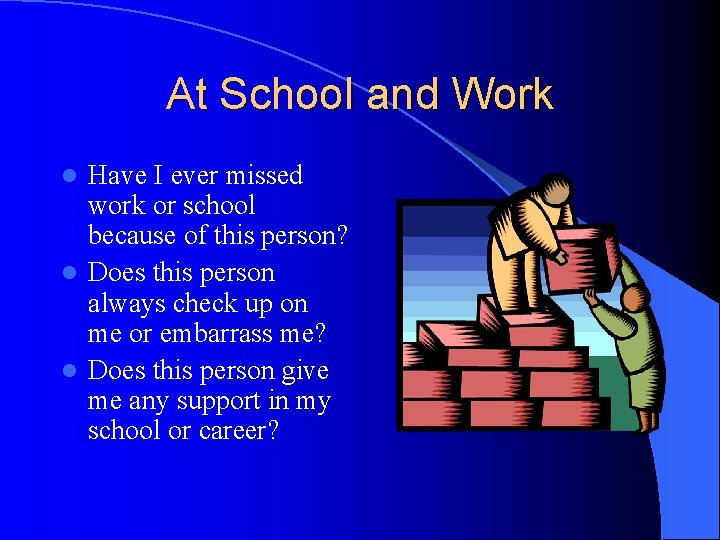
At School and Work Have I ever missed work or school because of this person? l Does this person always check up on me or embarrass me? l Does this person give me any support in my school or career? l
My Physical Health l l l Have I had any physical injuries due to a fight with this individual? Have I gained or lost weight? Have I contracted any sexually transmitted diseases from this person? Have I become physically upset because of confrontation with this individual? Have I been coerced into having sex? Have I had any unplanned pregnancy from this relationship?
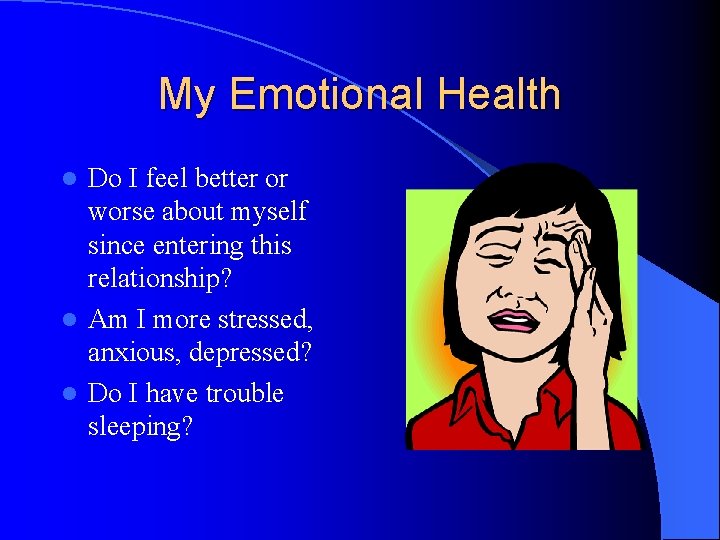
My Emotional Health Do I feel better or worse about myself since entering this relationship? l Am I more stressed, anxious, depressed? l Do I have trouble sleeping? l
My Family and Friendships l l l How do my family and friends feel about this person? How does this person feel about them? Have I grown apart from family and friends since forming this relationship? Does this person ever act jealous of my family/friends? Do I lie to my family and friends to cover up for this person? Do we spend time separately with others we know?
Ability to Function Independently l Do I have control over my own money? l Have I become dependent on this person for my living arrangements? l Do I feel that I just couldn’t make it on my own without this person?
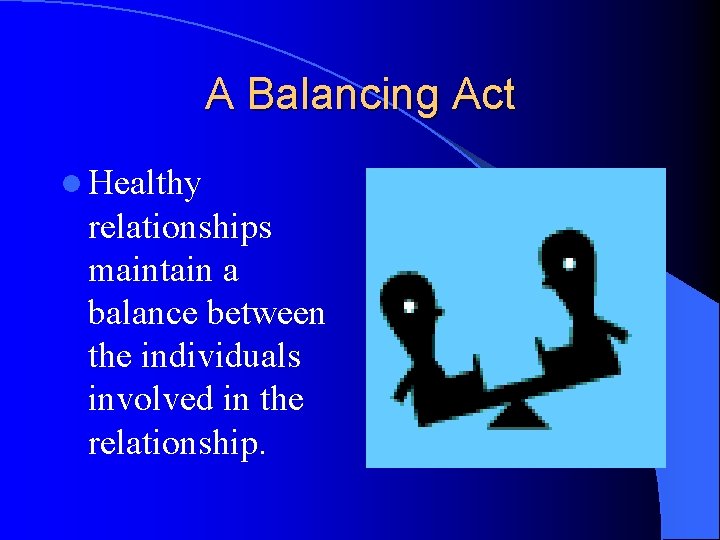
A Balancing Act l Healthy relationships maintain a balance between the individuals involved in the relationship.
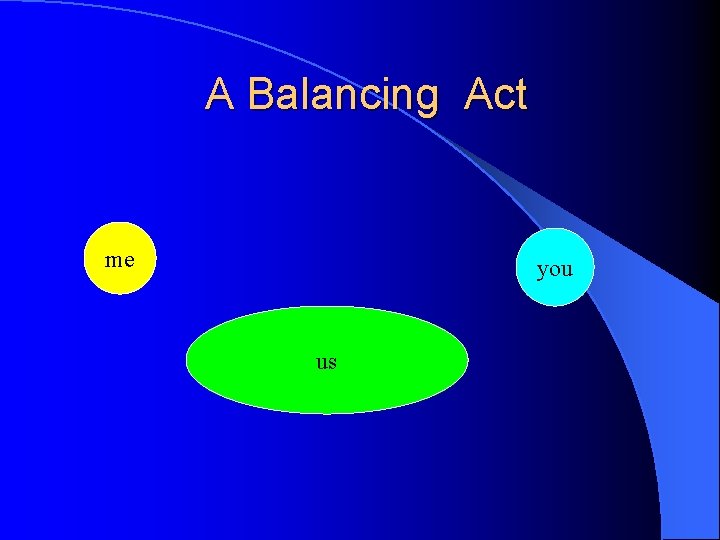
A Balancing Act me you us
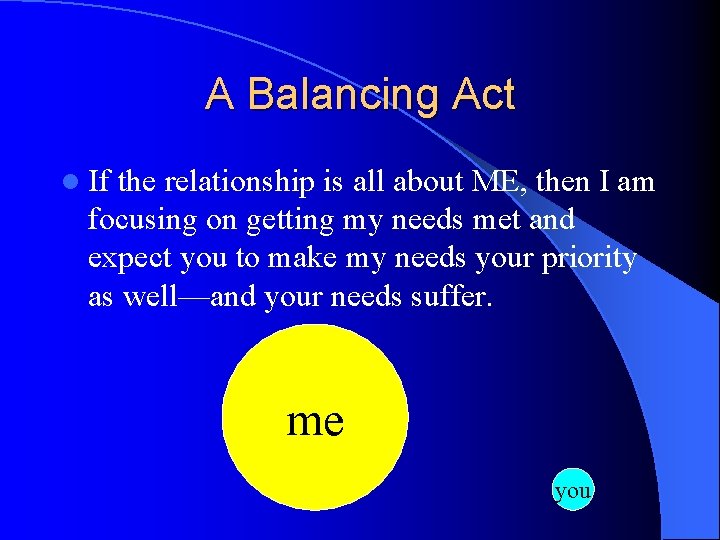
A Balancing Act l If the relationship is all about ME, then I am focusing on getting my needs met and expect you to make my needs your priority as well—and your needs suffer. me you
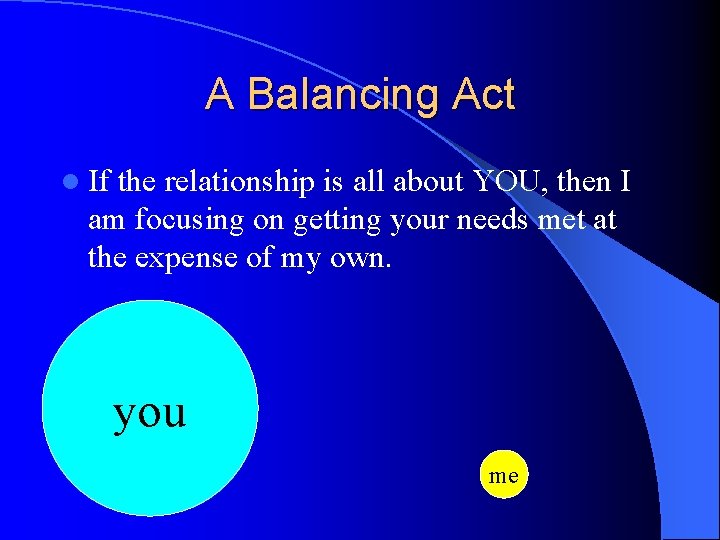
A Balancing Act l If the relationship is all about YOU, then I am focusing on getting your needs met at the expense of my own. you me
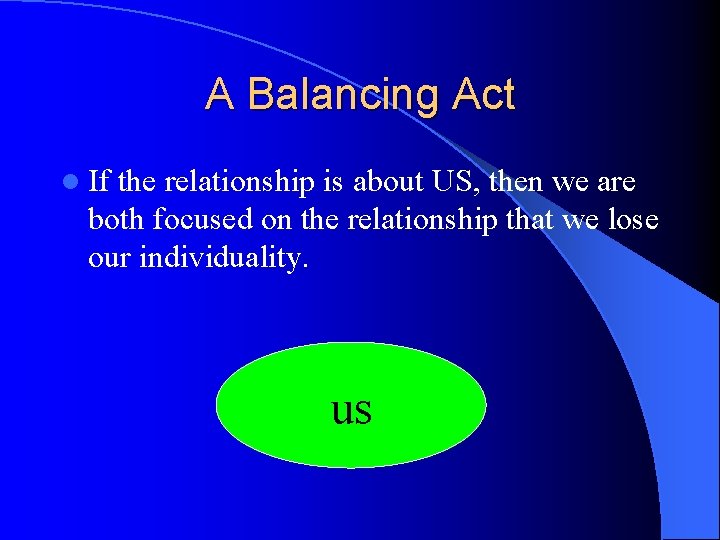
A Balancing Act l If the relationship is about US, then we are both focused on the relationship that we lose our individuality. us
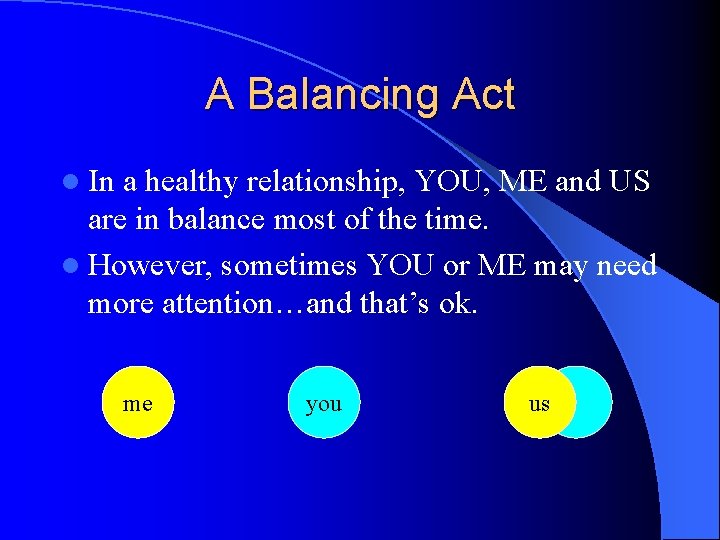
A Balancing Act l In a healthy relationship, YOU, ME and US are in balance most of the time. l However, sometimes YOU or ME may need more attention…and that’s ok. me you us
Healthy Relationships How healthy is your relationship? l The next few slides contain questions that may help you determine the health of your relationships. l
Healthy Relationships Can you name 2 -4 things about this person you really like? 2. Can your name 2 -4 things about this person you really dislike? 3. Can you name 3 things this person is interested in besides you? 4. Can you name 3 activities you can be involved in without this person? 1.
Healthy Relationships Do you both have equal decision-making power in the relationship? 6. How do you handle conflicts? 7. Do you think this person’s relationships with family/friends are healthy? 8. Since forming this relationship, do you generally feel worse, better, or the same about yourself? 5.
Healthy Relationships l If you’re confused about your relationship and where it’s going and what it’s doing for you, please get help from the appropriate counseling services.
Human Reproduction, Sexuality, and intimacy.
l Complete Exercise 4. 1 What do I know about Human Reproduction, Sexuality, and intimacy?
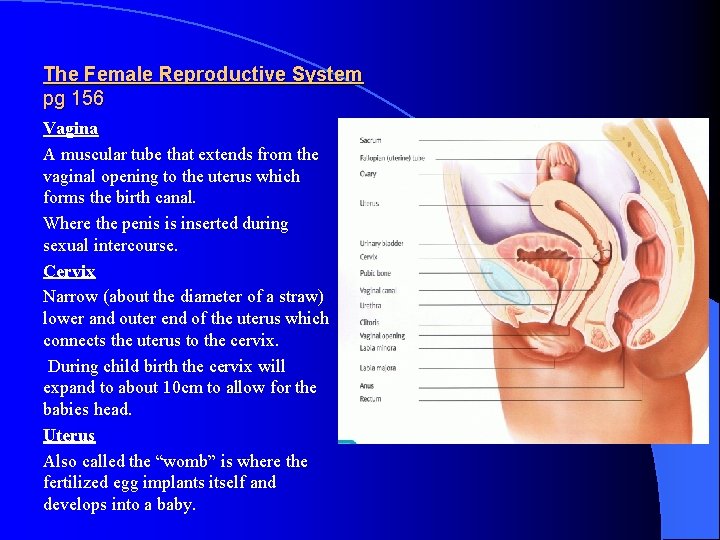
The Female Reproductive System pg 156 Vagina A muscular tube that extends from the vaginal opening to the uterus which forms the birth canal. Where the penis is inserted during sexual intercourse. Cervix Narrow (about the diameter of a straw) lower and outer end of the uterus which connects the uterus to the cervix. During child birth the cervix will expand to about 10 cm to allow for the babies head. Uterus Also called the “womb” is where the fertilized egg implants itself and develops into a baby.
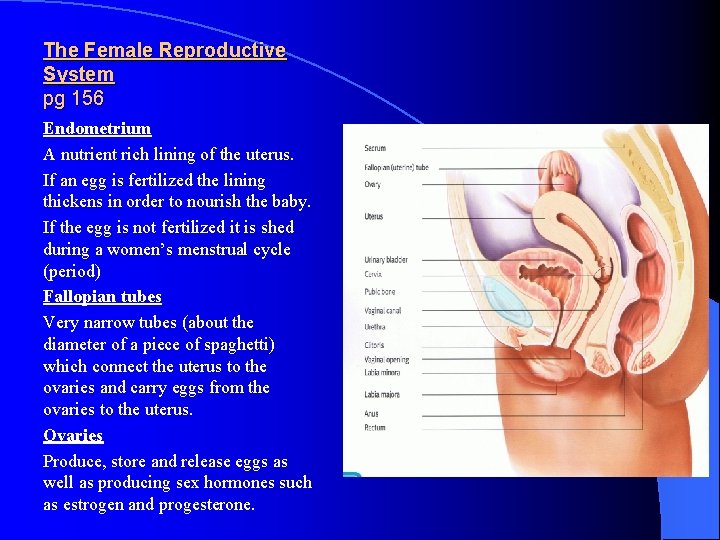
The Female Reproductive System pg 156 Endometrium A nutrient rich lining of the uterus. If an egg is fertilized the lining thickens in order to nourish the baby. If the egg is not fertilized it is shed during a women’s menstrual cycle (period) Fallopian tubes Very narrow tubes (about the diameter of a piece of spaghetti) which connect the uterus to the ovaries and carry eggs from the ovaries to the uterus. Ovaries Produce, store and release eggs as well as producing sex hormones such as estrogen and progesterone.
Caring of Female Reproductive System (pg 159 -161) Vulvovaginitis- inflammation or infection causing an itchy feeling in the vulva or vagina caused by irritating substances (soaps, bubble bath etc. ) l Yeast Infections-caused by the yeast fungus Candida, found in every woman’s normal healthy vagina, which may grow to much inside the vagina causing an infection. l Endometriosis-when tissue normally found in the endometrium starts to grow on the other internal reproductive parts of the system. l Ovarian Cysts-non-cancerous sacs (lumps) that may or may not cause pain, therefore may or may not need treatment. l
Cancer in Women (pg 160) Cervical and Ovarian Cancer l Higher risk for young women who are sexually active before the age of 18. l Risk increases with number of sexual partners l H. P. V. major link to cancer. l Once a women becomes sexually active they should have a yearly Pap Test.
Breast Self-Examination (pg 161) Breast Cancer l Most frequently diagnosed cancer in Canadain women. (1 in 9 expected to develop it) l Genetics, smoking, diet and possibly a virus are leading causes. EARLY DETECTION IS THE KEY
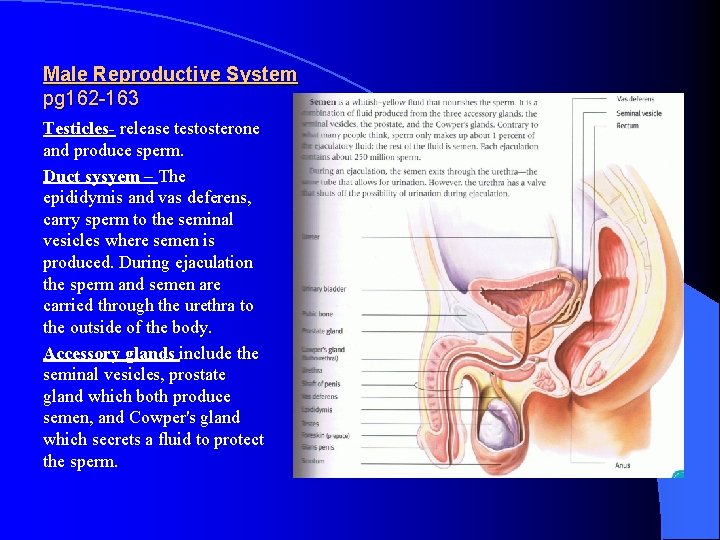
Male Reproductive System pg 162 -163 Testicles- release testosterone and produce sperm. Duct sysyem – The epididymis and vas deferens, carry sperm to the seminal vesicles where semen is produced. During ejaculation the sperm and semen are carried through the urethra to the outside of the body. Accessory glands include the seminal vesicles, prostate gland which both produce semen, and Cowper's gland which secrets a fluid to protect the sperm.
Caring for the Male Reproductive System (pg 164) Hernia – a bulge in the groin area, caused by a portion of the intestine pushes through an opening in the abdominal wall. l Testicular Injury- accidental impact to the testicles. l Steroid Use – Serious side effects, such as decreased sex drive, organ shrinkage, heart and liver problems. l Problems Caused By STI’s- may cause inflammation, sores, or genital warts. l
Cancer in Men(pg 164 -165) l Testicular Cancer- one of the most common forms of cancer in men. If detected early can usually be treated successfully. l Prostate Cancer- most frequently diagnosed form of cancer in men, 1 in 7 men will develop it. Yearly prostate examinations and blood test are very important for men over 40.
Testicular Self-Examination (pg 165) l EARLY DETECTION IS THE KEY
Pregnancy Step by Step
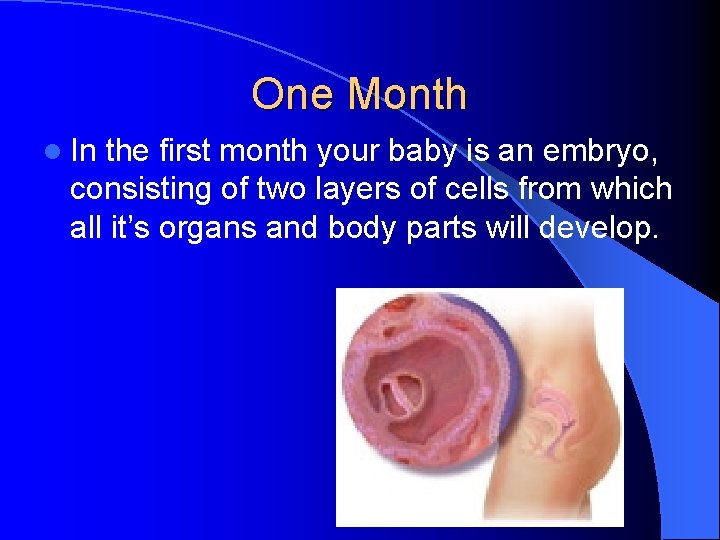
One Month l In the first month your baby is an embryo, consisting of two layers of cells from which all it’s organs and body parts will develop.
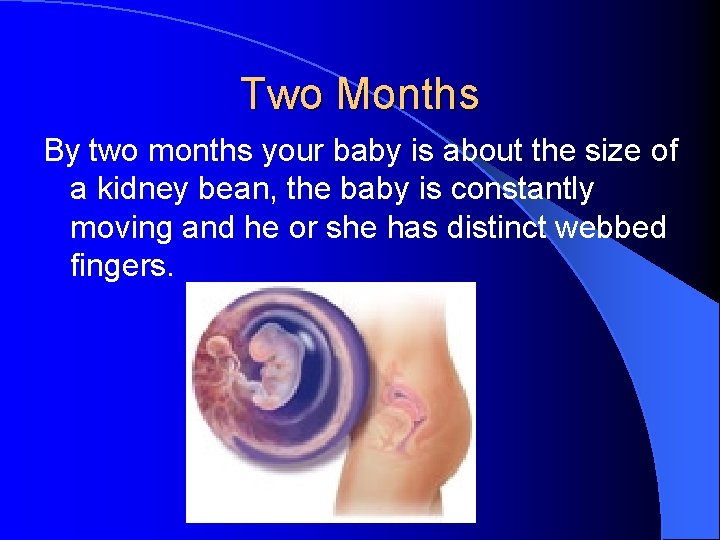
Two Months By two months your baby is about the size of a kidney bean, the baby is constantly moving and he or she has distinct webbed fingers.
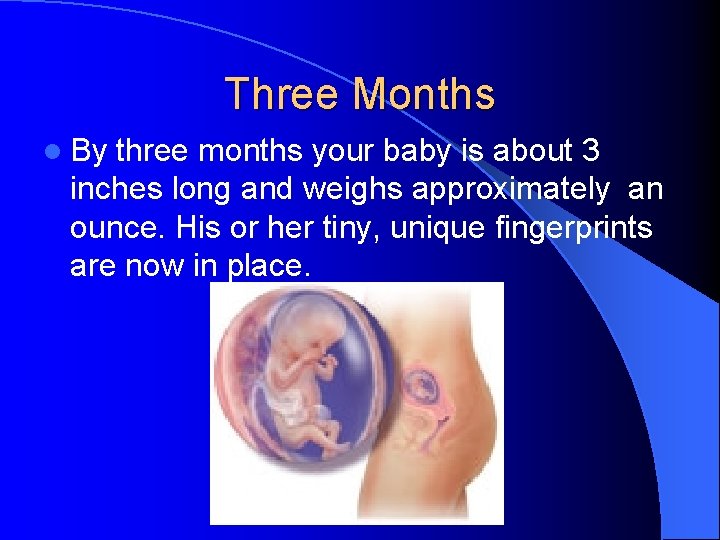
Three Months l By three months your baby is about 3 inches long and weighs approximately an ounce. His or her tiny, unique fingerprints are now in place.
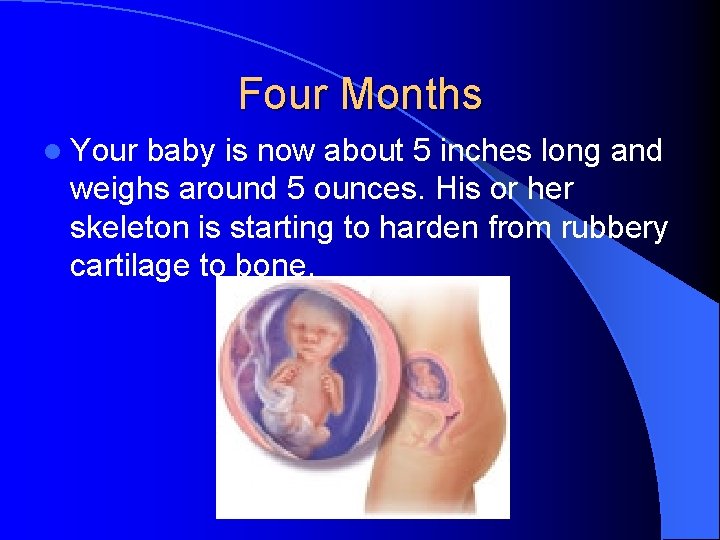
Four Months l Your baby is now about 5 inches long and weighs around 5 ounces. His or her skeleton is starting to harden from rubbery cartilage to bone.
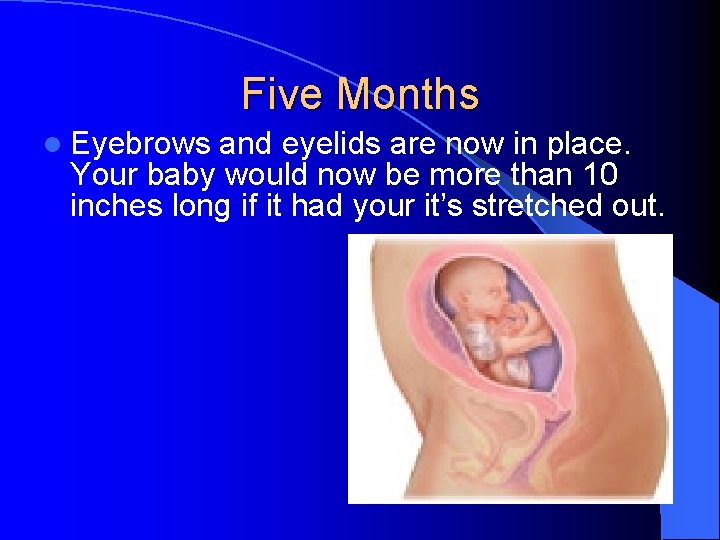
Five Months l Eyebrows and eyelids are now in place. Your baby would now be more than 10 inches long if it had your it’s stretched out.
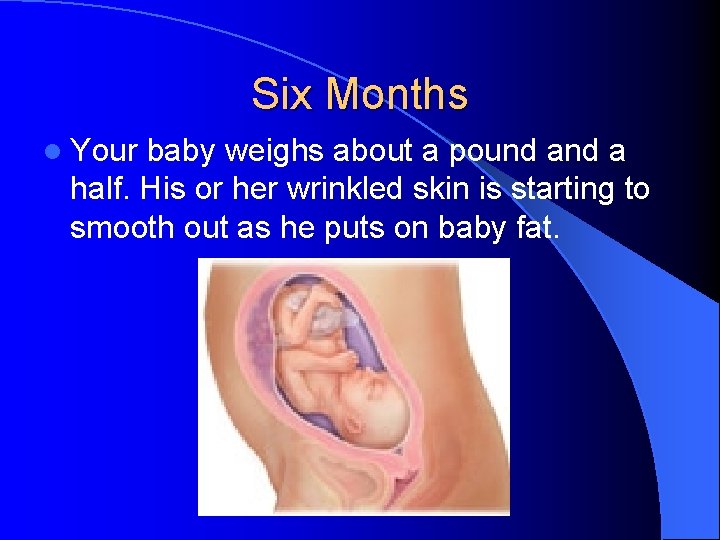
Six Months l Your baby weighs about a pound a half. His or her wrinkled skin is starting to smooth out as he puts on baby fat.
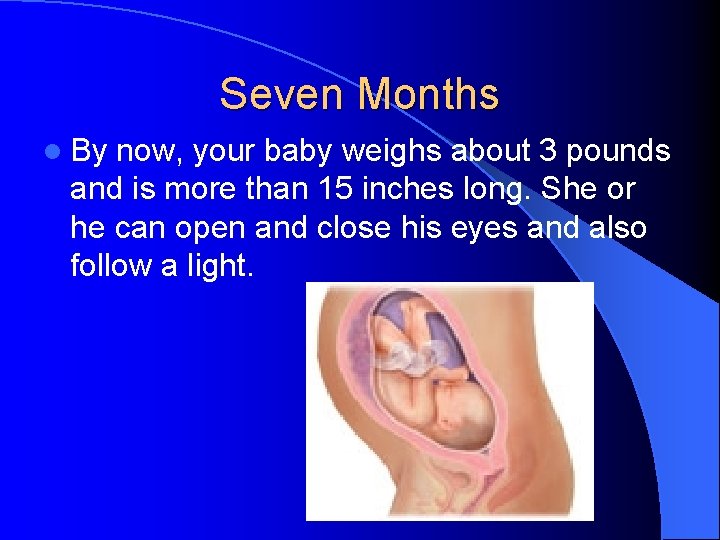
Seven Months l By now, your baby weighs about 3 pounds and is more than 15 inches long. She or he can open and close his eyes and also follow a light.
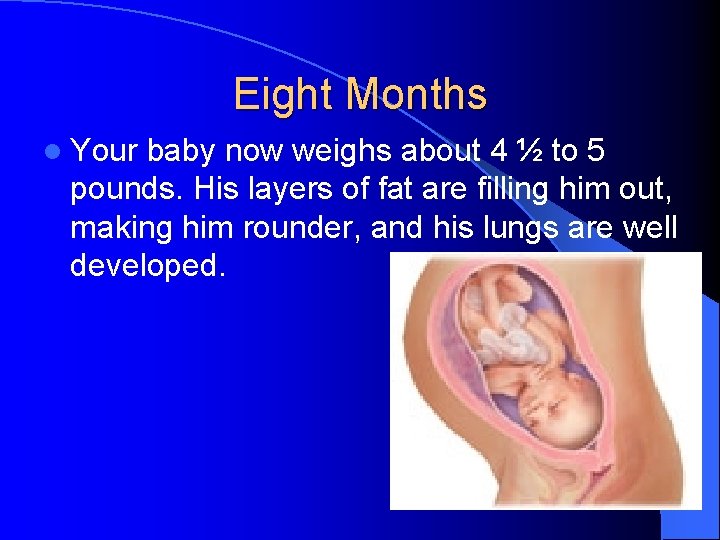
Eight Months l Your baby now weighs about 4 ½ to 5 pounds. His layers of fat are filling him out, making him rounder, and his lungs are well developed.
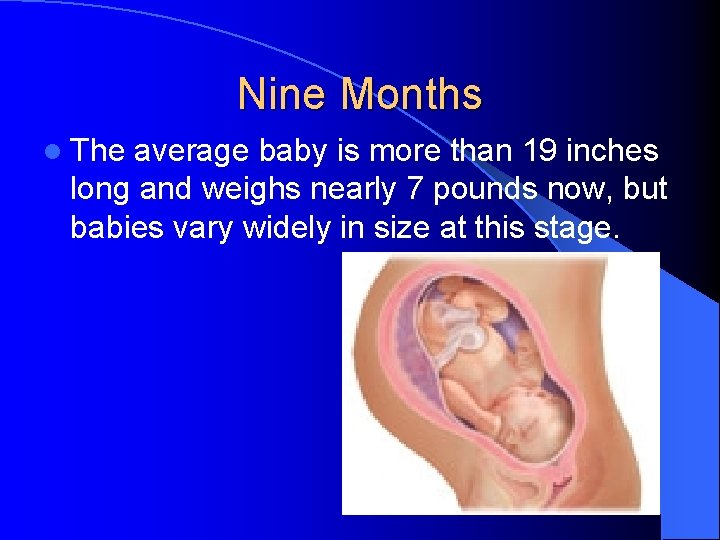
Nine Months l The average baby is more than 19 inches long and weighs nearly 7 pounds now, but babies vary widely in size at this stage.