
Relationships and Interactions 8 th Grade Science Spring










- Slides: 53
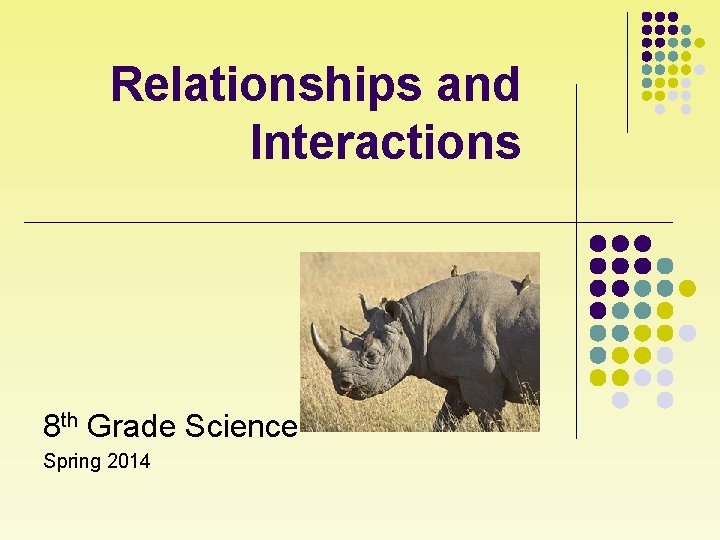
Relationships and Interactions 8 th Grade Science Spring 2014
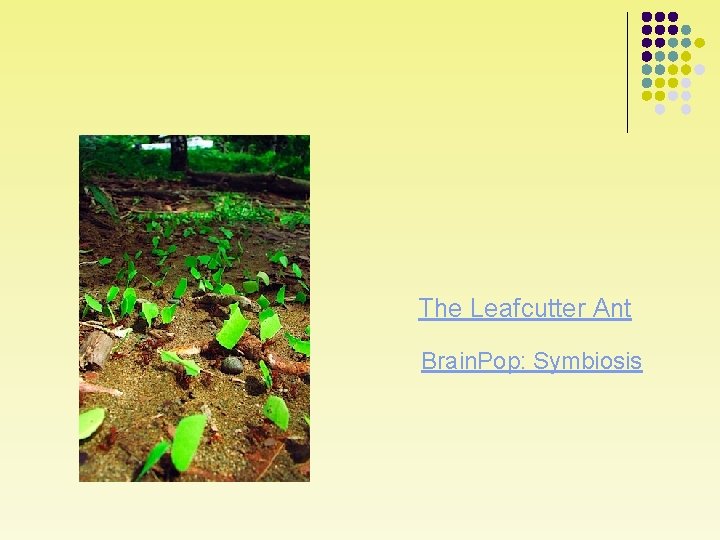
The Leafcutter Ant Brain. Pop: Symbiosis
Activity - Worksheet Check your status…. . There are ten scenarios on your worksheet. Each side in the relationship can be defined by a + (positive interaction), - (negative interaction, or 0 (neutral interaction). Use a “+” when the organism in the scenario benefits Use a “-” when the organism in the scenario is harmed Use a “ 0” when the organism in the scenario is neutral; neither benefits nor is harmed Let’s try two examples…
Example #1 1. THE HONEY BEE & THE FLOWER As the honey bee feeds from flower to flower, the bee spreads the pollen from one flower to another and as a result, the flowers get pollinated. l Honey bee + l Flower +
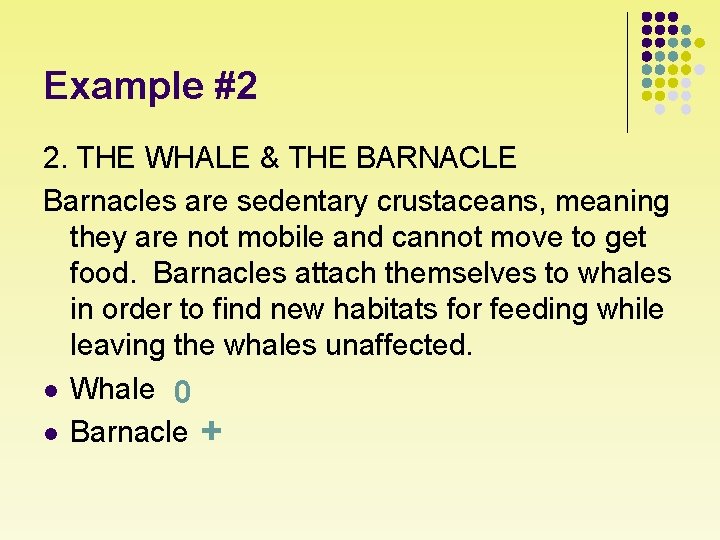
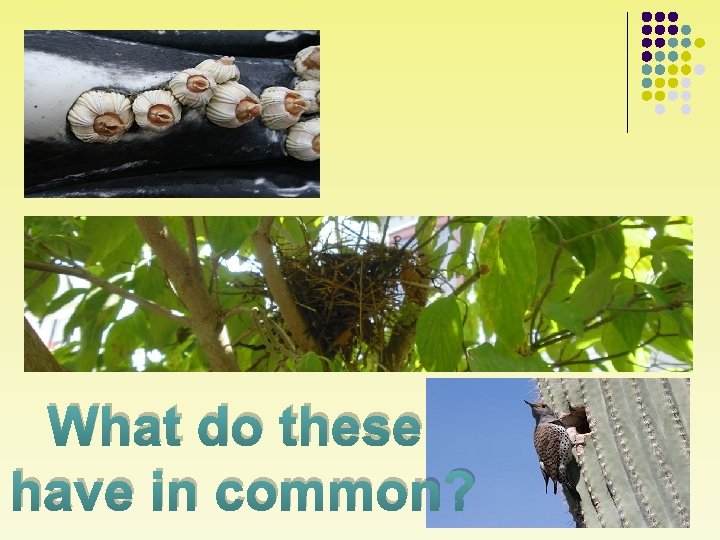
Example #2 2. THE WHALE & THE BARNACLE Barnacles are sedentary crustaceans, meaning they are not mobile and cannot move to get food. Barnacles attach themselves to whales in order to find new habitats for feeding while leaving the whales unaffected. l Whale 0 l Barnacle +
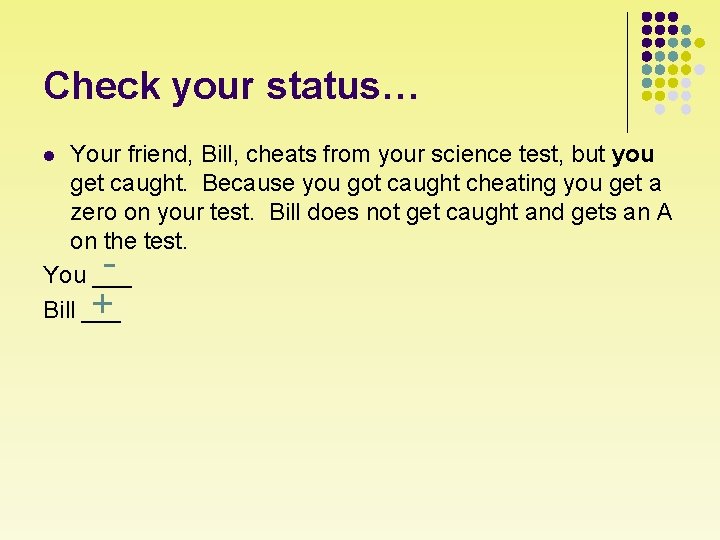
Check your status… Your friend, Bill, cheats from your science test, but you get caught. Because you got caught cheating you get a zero on your test. Bill does not get caught and gets an A on the test. You ___ Bill ___ l +
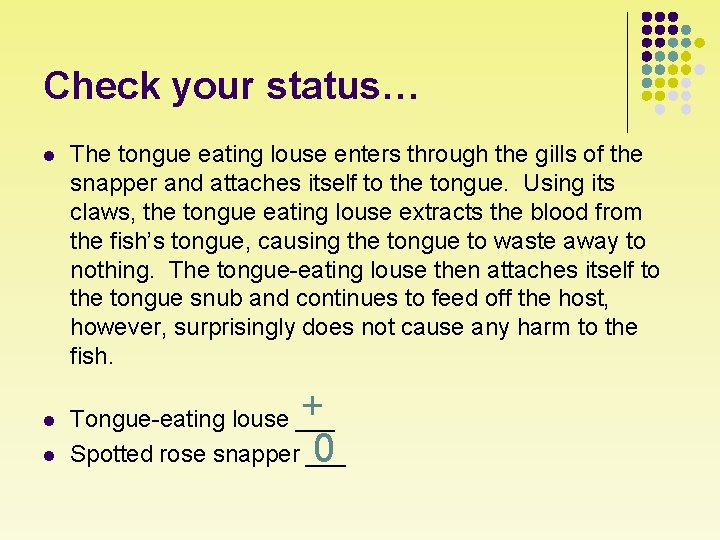
Check your status… l The tongue eating louse enters through the gills of the snapper and attaches itself to the tongue. Using its claws, the tongue eating louse extracts the blood from the fish’s tongue, causing the tongue to waste away to nothing. The tongue-eating louse then attaches itself to the tongue snub and continues to feed off the host, however, surprisingly does not cause any harm to the fish. l Tongue-eating louse ___ Spotted rose snapper ___ l + 0
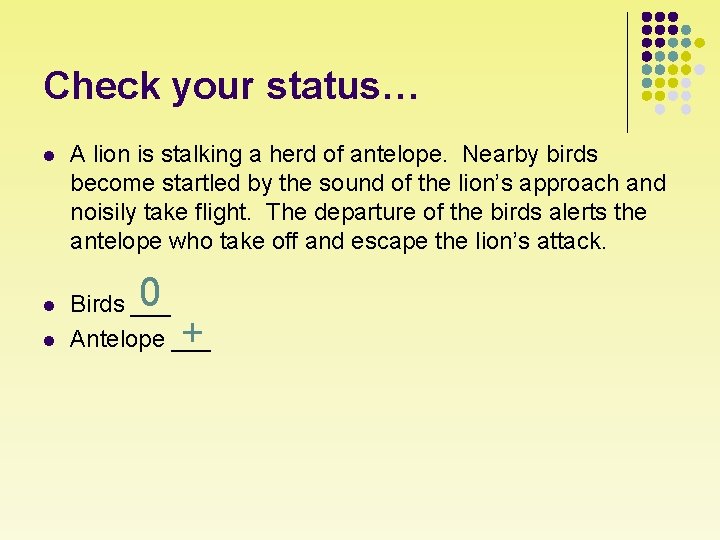
Check your status… l A lion is stalking a herd of antelope. Nearby birds become startled by the sound of the lion’s approach and noisily take flight. The departure of the birds alerts the antelope who take off and escape the lion’s attack. l Birds ___ Antelope ___ l 0 +
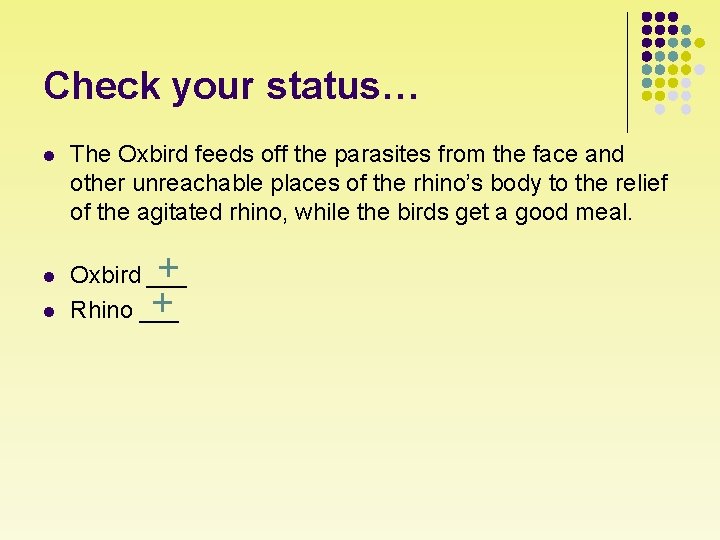
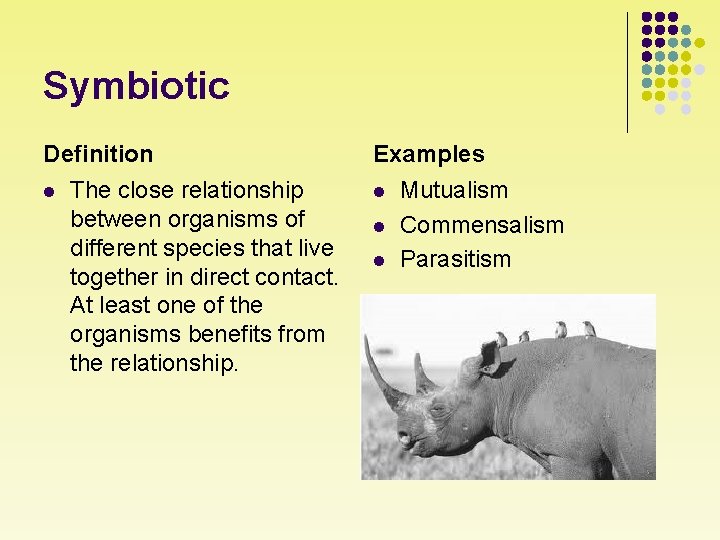
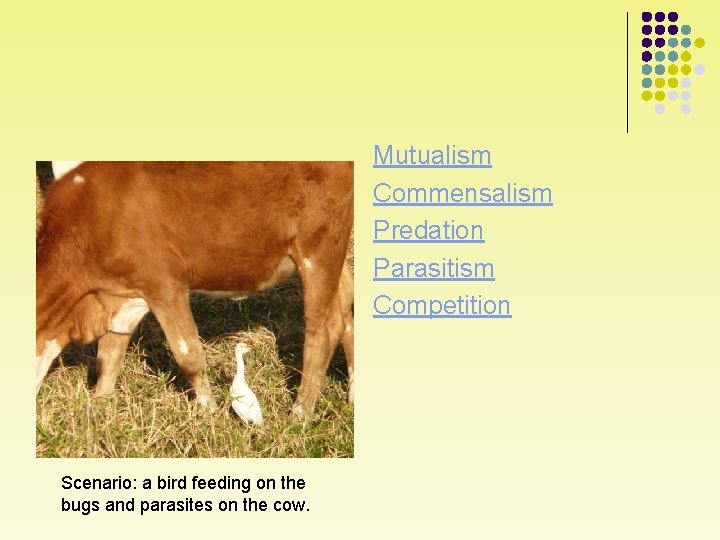
Check your status… l The Oxbird feeds off the parasites from the face and other unreachable places of the rhino’s body to the relief of the agitated rhino, while the birds get a good meal. l Oxbird ___ Rhino ___ l + +
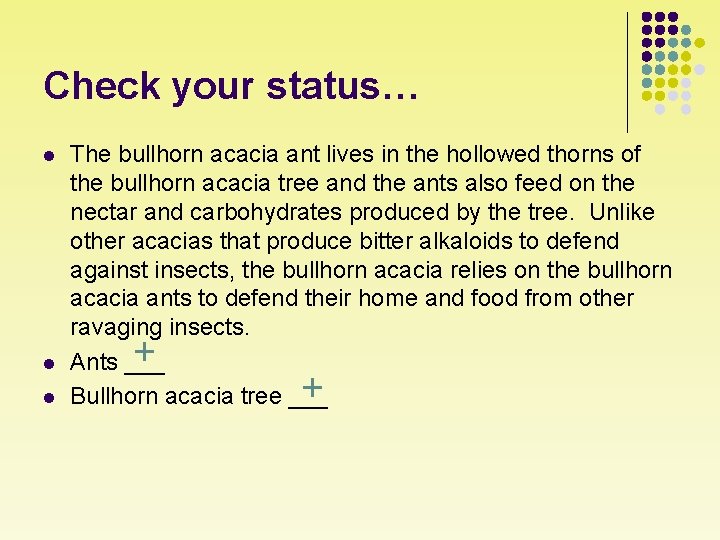
Check your status… l l l The bullhorn acacia ant lives in the hollowed thorns of the bullhorn acacia tree and the ants also feed on the nectar and carbohydrates produced by the tree. Unlike other acacias that produce bitter alkaloids to defend against insects, the bullhorn acacia relies on the bullhorn acacia ants to defend their home and food from other ravaging insects. Ants ___ Bullhorn acacia tree ___ + +
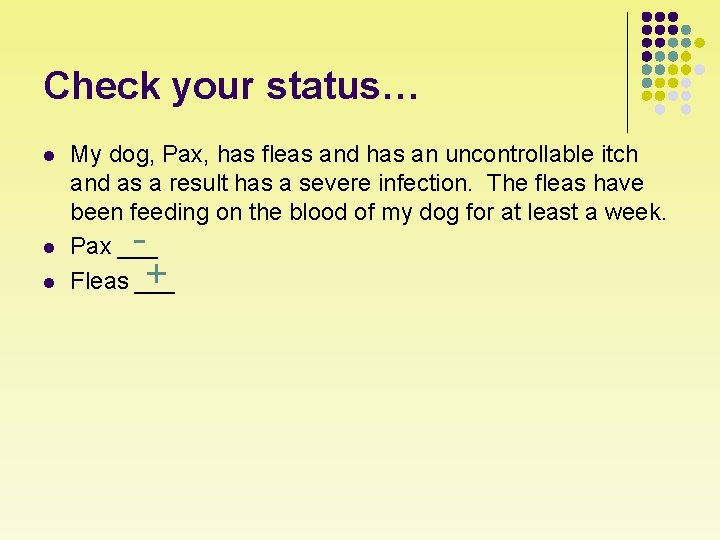
Check your status… l l l My dog, Pax, has fleas and has an uncontrollable itch and as a result has a severe infection. The fleas have been feeding on the blood of my dog for at least a week. Pax ___ Fleas ___ +
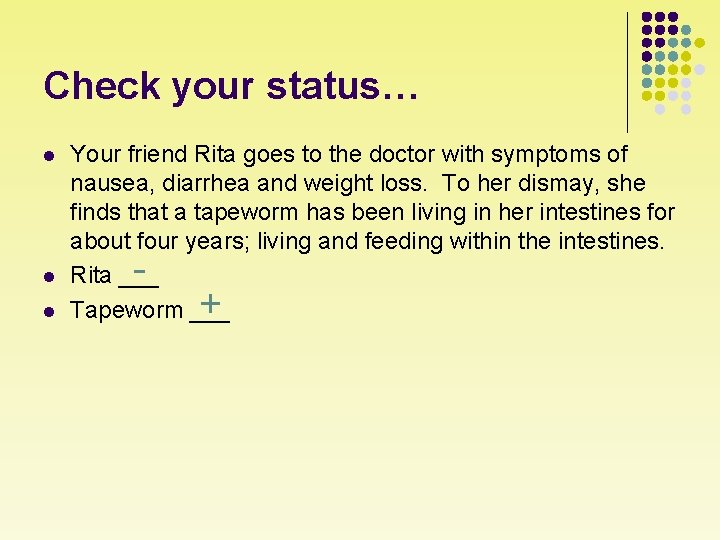
Check your status… l l l Your friend Rita goes to the doctor with symptoms of nausea, diarrhea and weight loss. To her dismay, she finds that a tapeworm has been living in her intestines for about four years; living and feeding within the intestines. Rita ___ Tapeworm ___ - +
Check your status… l l l Corals are marine organisms found in tropical oceans, which secrete calcium carbonate to form a hard skeleton. Algae adheres to the coral skeleton in the calm environment of the reef and use the carbon dioxide and nitrogen waste produced from the coral. The photosynthesis conducted by the algae provides energy and nutrients for the coral. Coral ___ Algae ___ + +
Check your status… l l l Birds and army ants As army ants travel through the forest, they stir up insects that flee from the ants’ path. Birds follow the army ants and feed on the other insects as they flee from the army ants. Birds ___ Army ants ___ + 0
Check your status… l Leafcutter ants cultivate the fungus, “feeding” the fungus leaves, which are toxic to the ants. Additionally, the ants maintain the fungus by keeping it free of pests and other molds. The fungus in turn is used to feed the ant larvae. l Leafcutter ants ___ Fungus ___ l + +
8 th Grade Science Spring 2013 RELATIONSHIP & INTERACTION VOCABULARY
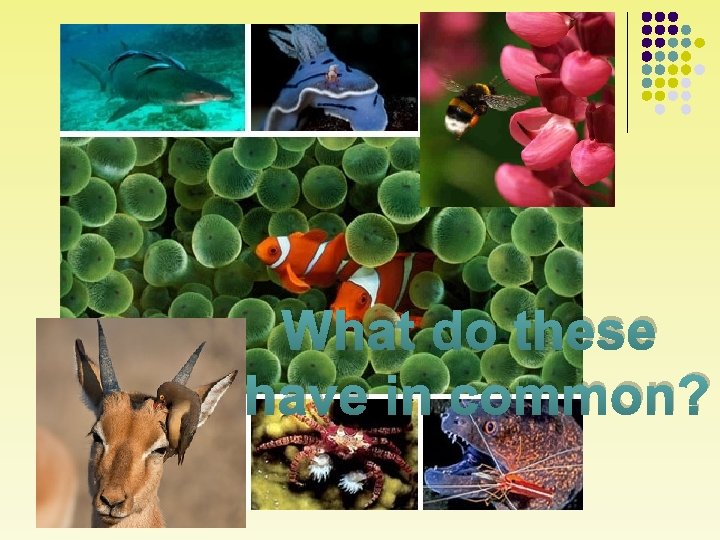
What do these have in common?
Symbiotic Definition l The close relationship between organisms of different species that live together in direct contact. At least one of the organisms benefits from the relationship. Examples l l l Mutualism Commensalism Parasitism
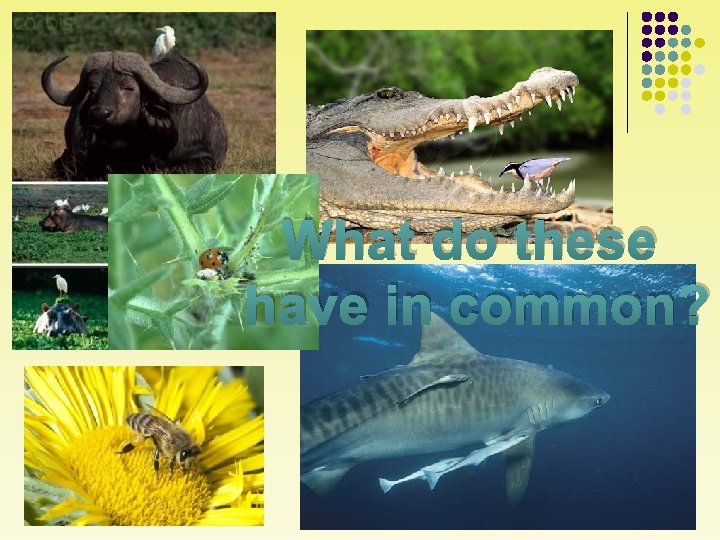
What do these have in common?
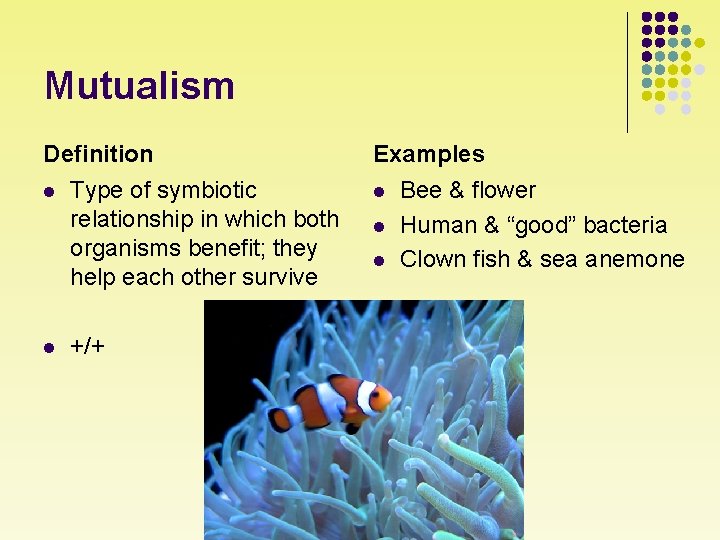
Mutualism Definition l l Type of symbiotic relationship in which both organisms benefit; they help each other survive +/+ Examples l l l Bee & flower Human & “good” bacteria Clown fish & sea anemone
What do these have in common?
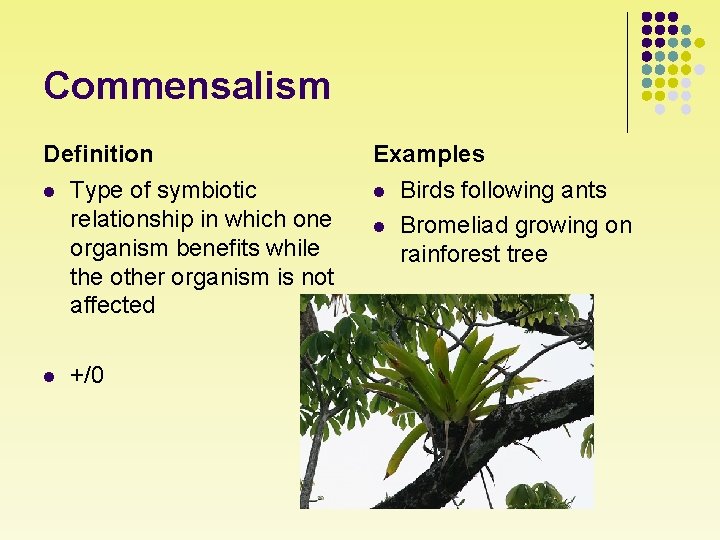
Commensalism Definition l l Type of symbiotic relationship in which one organism benefits while the other organism is not affected +/0 Examples l l Birds following ants Bromeliad growing on rainforest tree
What do these have in common?
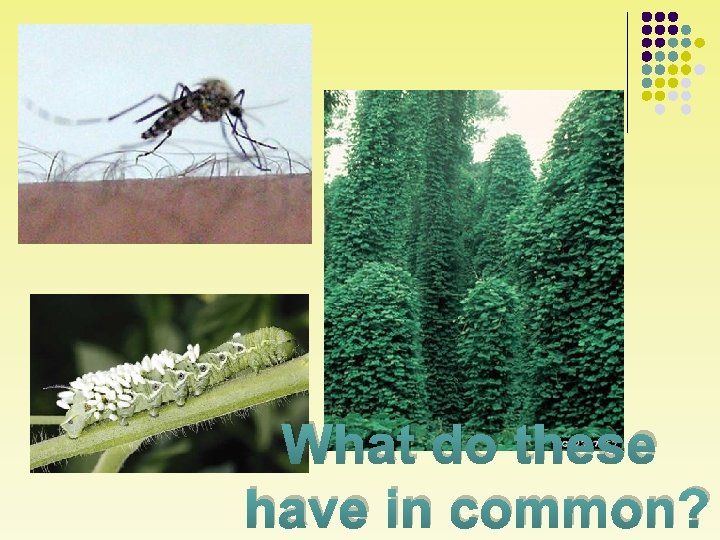
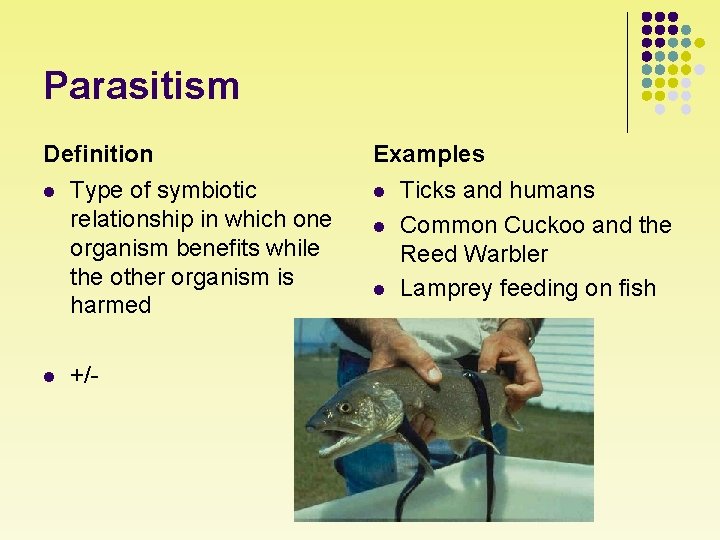
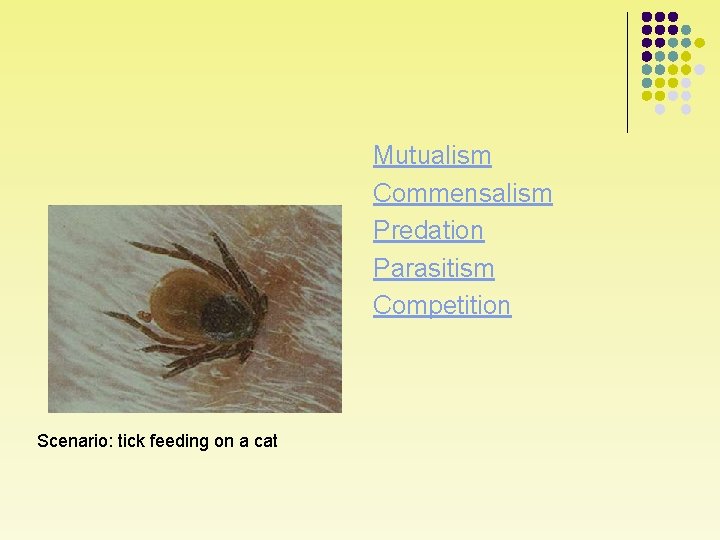
Parasitism Definition l l Type of symbiotic relationship in which one organism benefits while the other organism is harmed +/- Examples l l l Ticks and humans Common Cuckoo and the Reed Warbler Lamprey feeding on fish
What do these have in common?
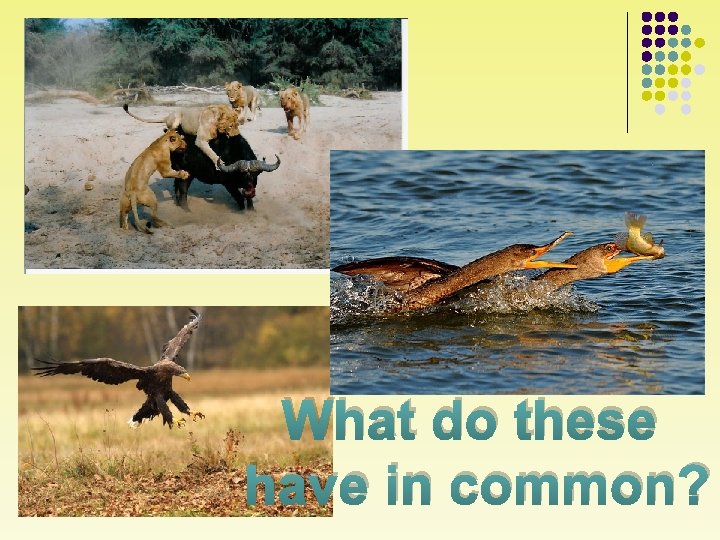
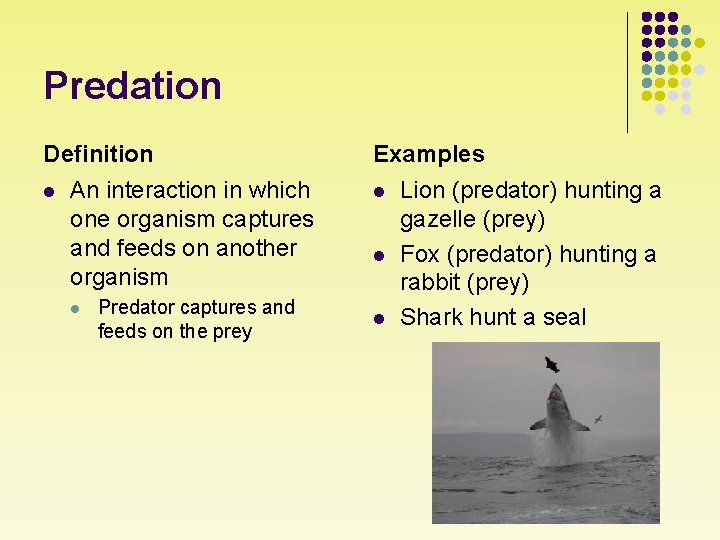
Predation Definition l An interaction in which one organism captures and feeds on another organism l Predator captures and feeds on the prey Examples l l l Lion (predator) hunting a gazelle (prey) Fox (predator) hunting a rabbit (prey) Shark hunt a seal
What do these have in common?
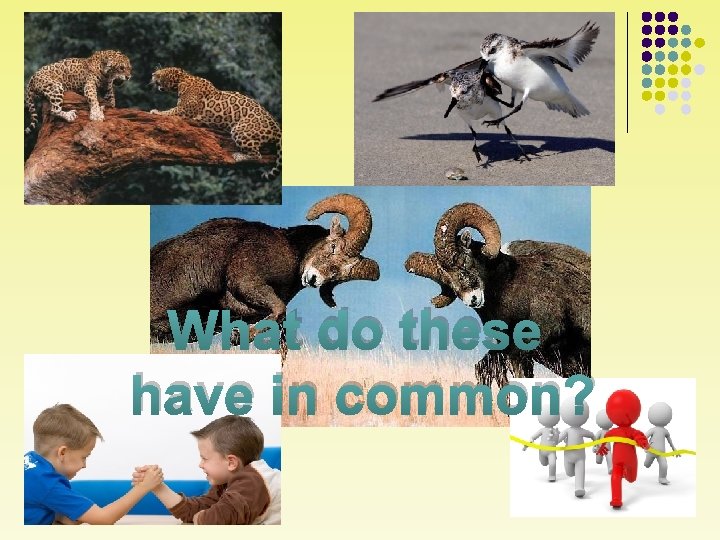
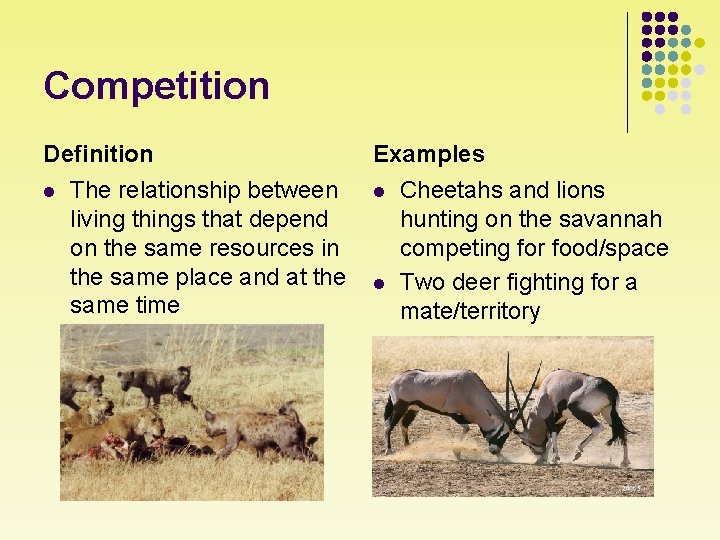
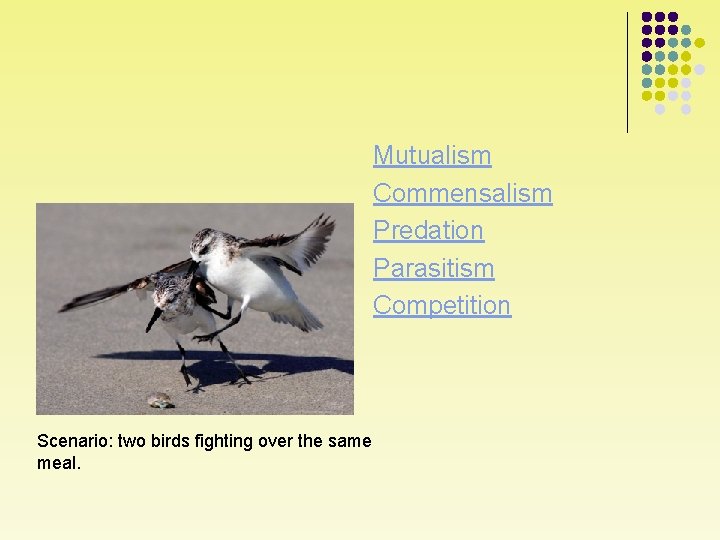
Competition Definition l The relationship between living things that depend on the same resources in the same place and at the same time Examples l l Cheetahs and lions hunting on the savannah competing for food/space Two deer fighting for a mate/territory
What do these have in common?
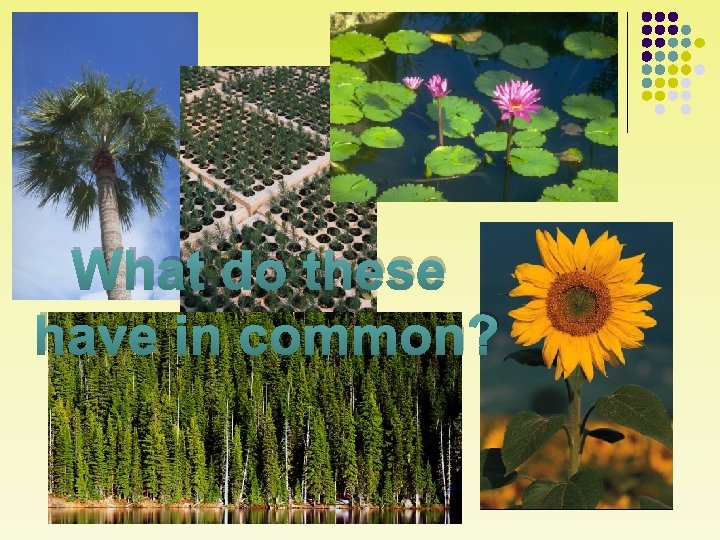
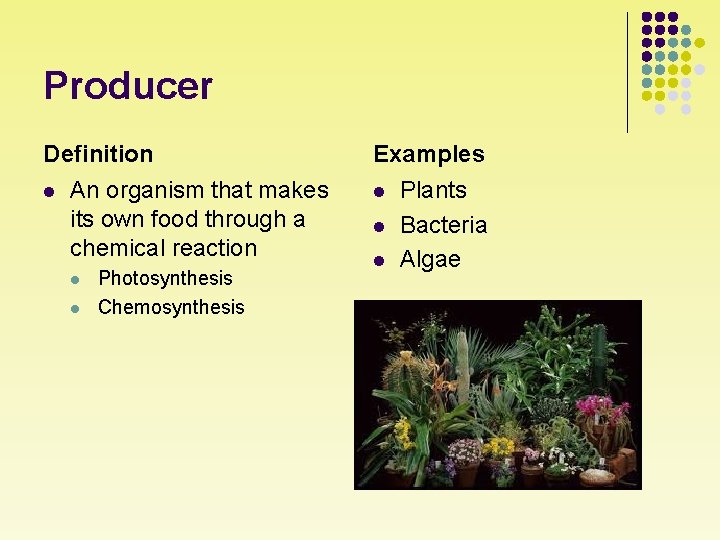
Producer Definition l An organism that makes its own food through a chemical reaction l l Photosynthesis Chemosynthesis Examples l l l Plants Bacteria Algae
What do these have in common?
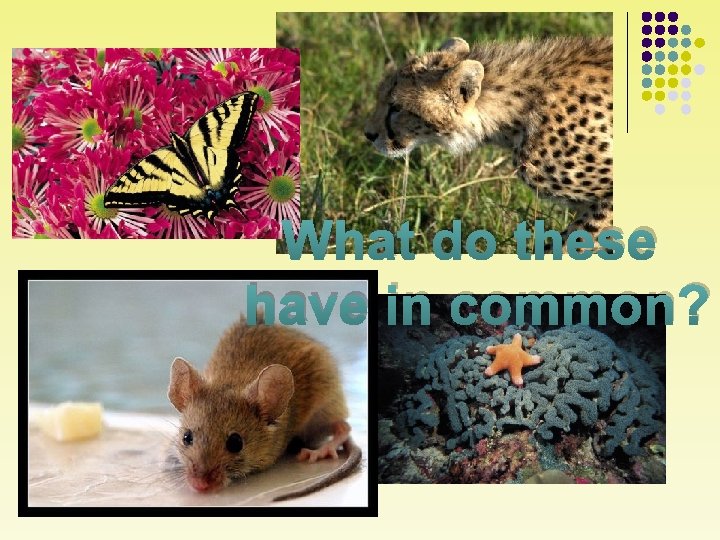
Consumer Definition l An organism that consumes (feeds on) other organisms for food Examples l l l Humans Lions Birds
What do these have in common?
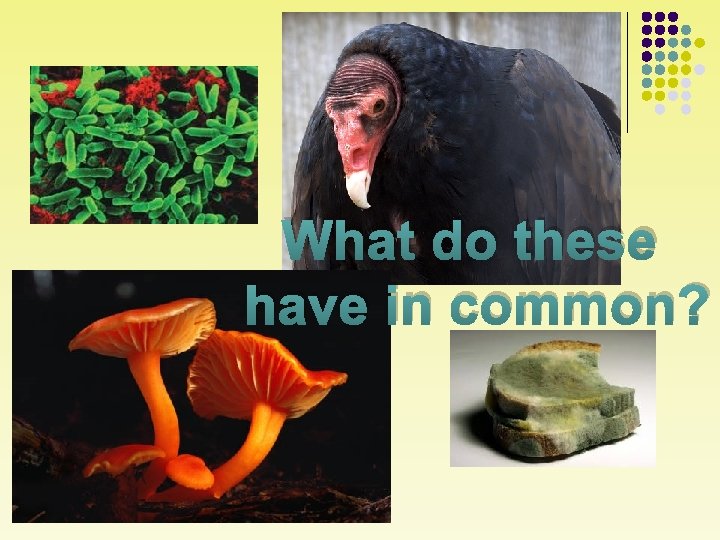
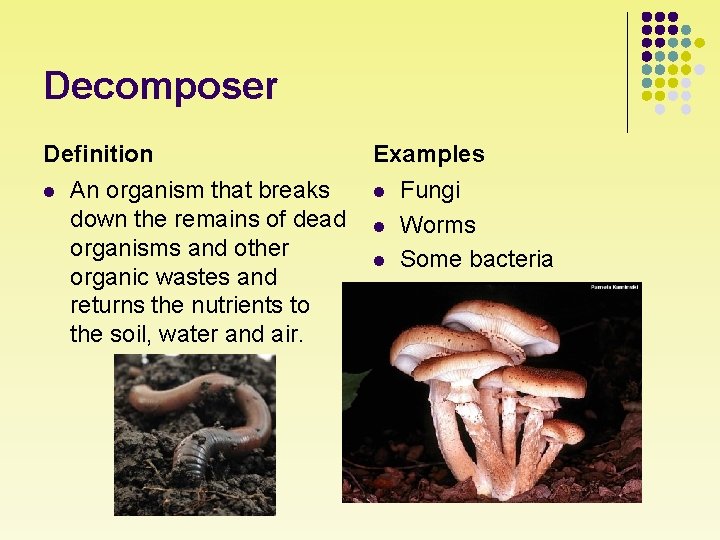
Decomposer Definition l An organism that breaks down the remains of dead organisms and other organic wastes and returns the nutrients to the soil, water and air. Examples l l l Fungi Worms Some bacteria
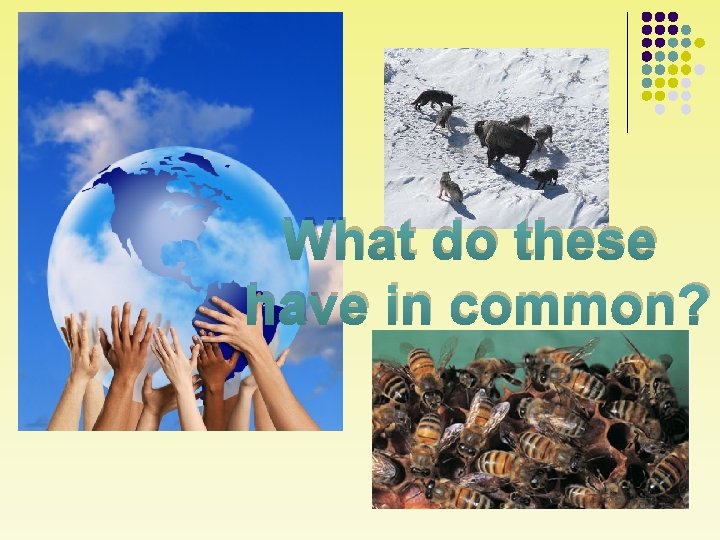
What do these have in common?
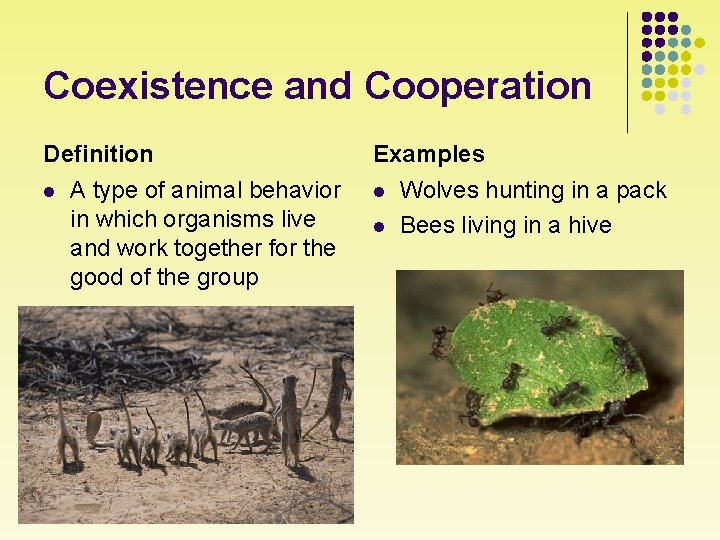
Coexistence and Cooperation Definition l A type of animal behavior in which organisms live and work together for the good of the group Examples l l Wolves hunting in a pack Bees living in a hive
Check your status… l Now go back and label each question on your Check your status worksheet with the new terms based on the definitions: mutualism, commensalism, and parasitism
REVIEW
Mutualism Commensalism Predation Parasitism Competition Scenario: a bird feeding on the bugs and parasites on the cow.
WRONG! TRY AGAIN
RIGHT! NEXT QUESTION
Mutualism Commensalism Predation Parasitism Competition Scenario: two birds fighting over the same meal.
WRONG!!!! TRY AGAIN
RIGHT! Next Question
Mutualism Commensalism Predation Parasitism Competition Scenario: tick feeding on a cat
WRONG! TRY AGAIN
RIGHT! NEXT QUESTION
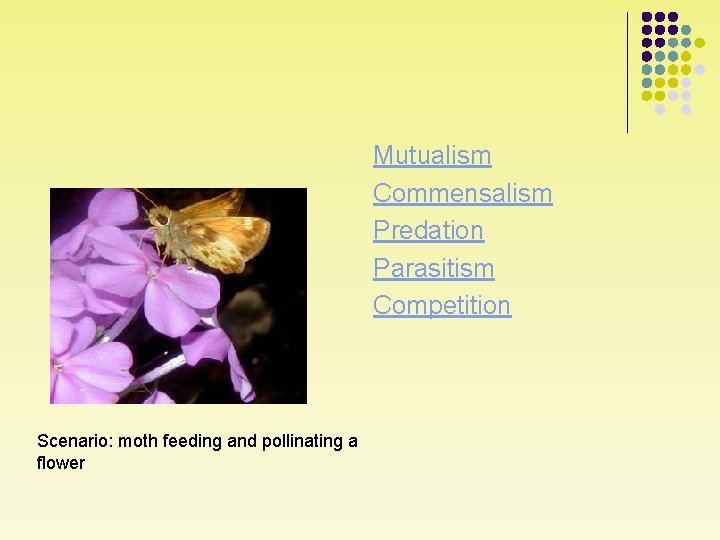
Mutualism Commensalism Predation Parasitism Competition Scenario: moth feeding and pollinating a flower
WRONG! TRY AGAIN
RIGHT! NEXT QUESTION
Mutualism Commensalism Predation Parasitism Competition Scenario: lion hunting an antelope
WRONG!!!! TRY AGAIN
RIGHT! RIGHT