
Relationships Among Organisms Biology EOCT Review Habitats and
Relationships Among Organisms Biology EOCT Review
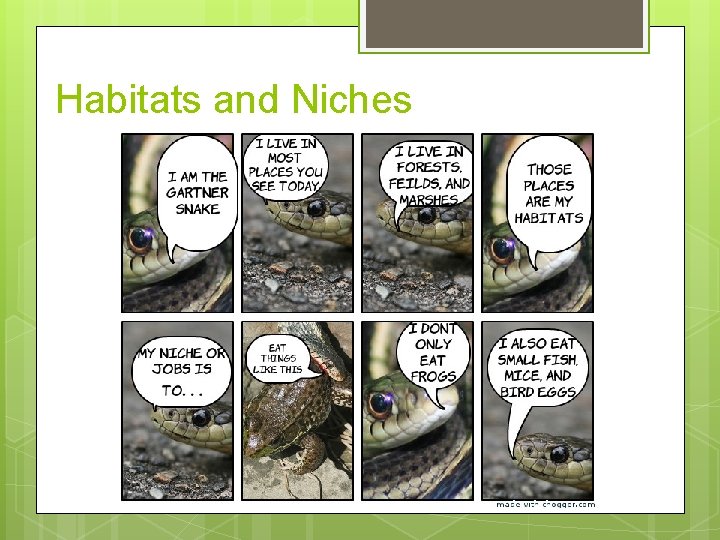
Habitats and Niches Habitat: the place where an organism lives (WHERE) Forest is a common habitat for squirrels Many species of organisms can share the same habitat The resources (food, water, and shelter) that a habitat provides can be divided into different niches. Niche: an organism’s role in its community; include what it eats, where it is in the food change, where it feeds (HOW)
Habitats and Niches
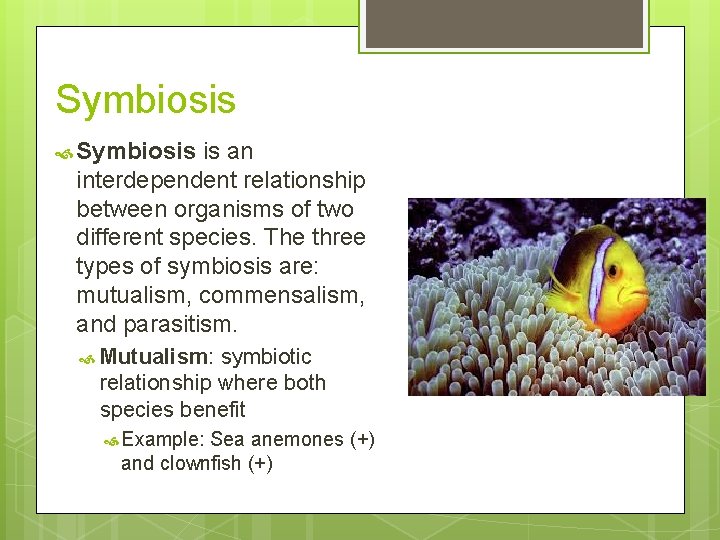
Symbiosis is an interdependent relationship between organisms of two different species. The three types of symbiosis are: mutualism, commensalism, and parasitism. Mutualism: symbiotic relationship where both species benefit Example: Sea anemones (+) and clownfish (+)
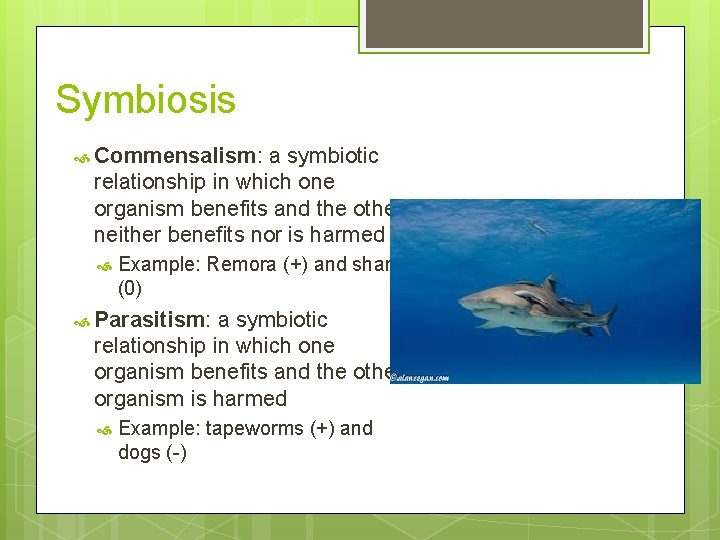
Symbiosis Commensalism: a symbiotic relationship in which one organism benefits and the other neither benefits nor is harmed Example: Remora (+) and sharks (0) Parasitism: a symbiotic relationship in which one organism benefits and the other organism is harmed Example: tapeworms (+) and dogs (-)
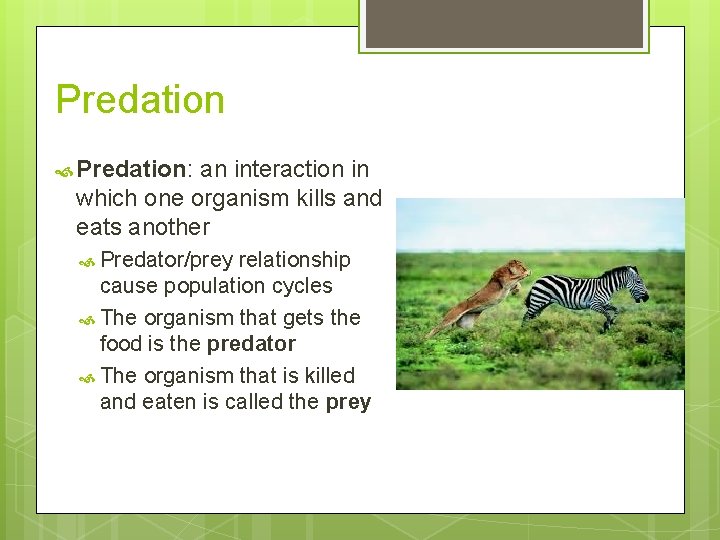
Predation Predation: an interaction in which one organism kills and eats another Predator/prey relationship cause population cycles The organism that gets the food is the predator The organism that is killed and eaten is called the prey
Competition Competition: is an interaction in which two or more organisms try to use the same resources Competition can occur within species (intraspecific competition) or between different species (interspecific competition)
- Slides: 7