
Relationship Marketing RM and The Volunteer Life Cycle

- Slides: 17
Relationship Marketing (RM) and The Volunteer Life Cycle Deborah Forbes Newcastle University Sports Volunteering Research Network April 2013
Content • • • Background to Volunteer research Relationship Marketing defined The VLC explained Sector specific The future?
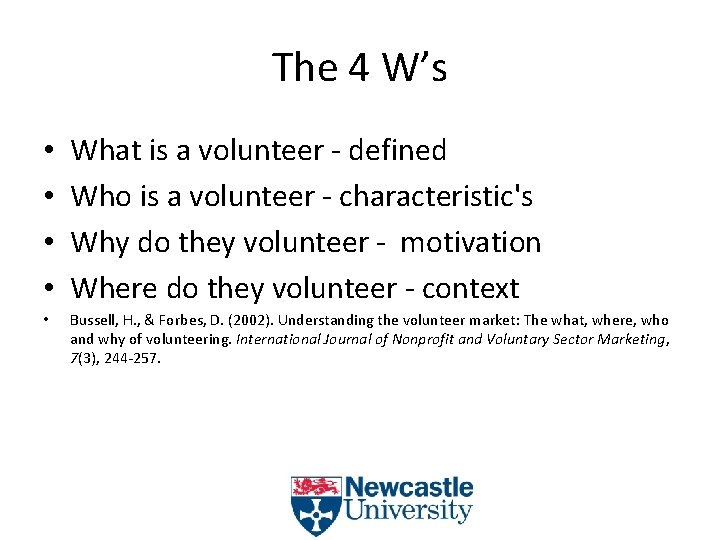
The 4 W’s • • What is a volunteer - defined Who is a volunteer - characteristic's Why do they volunteer - motivation Where do they volunteer - context • Bussell, H. , & Forbes, D. (2002). Understanding the volunteer market: The what, where, who and why of volunteering. International Journal of Nonprofit and Voluntary Sector Marketing, 7(3), 244 -257.
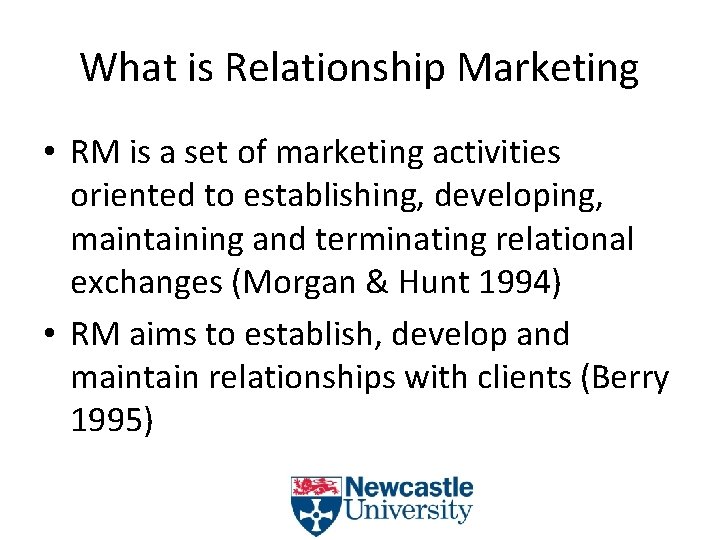
What is Relationship Marketing • RM is a set of marketing activities oriented to establishing, developing, maintaining and terminating relational exchanges (Morgan & Hunt 1994) • RM aims to establish, develop and maintain relationships with clients (Berry 1995)
The Volunteer Lifecycle explained
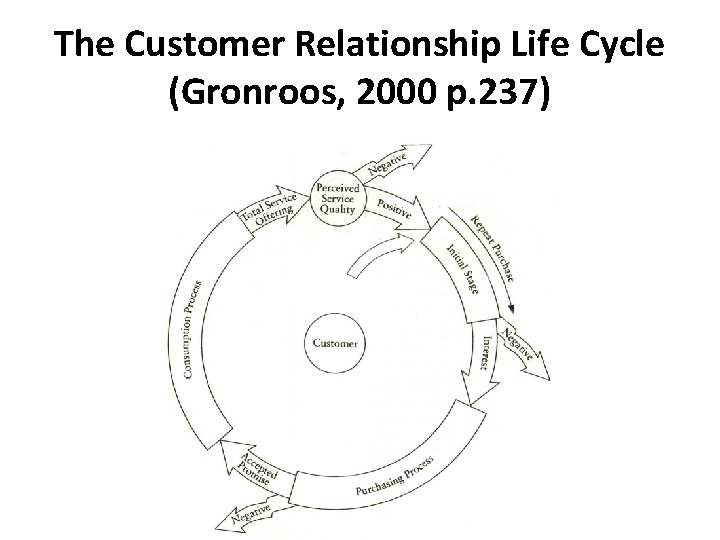
The Customer Relationship Life Cycle (Gronroos, 2000 p. 237)
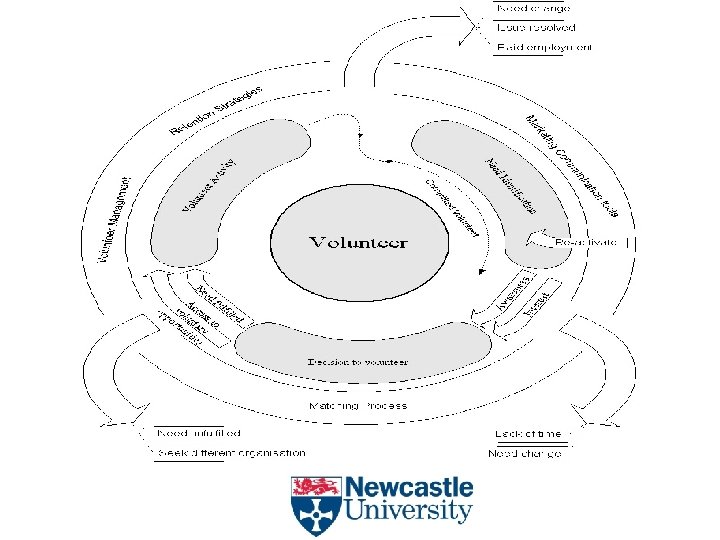
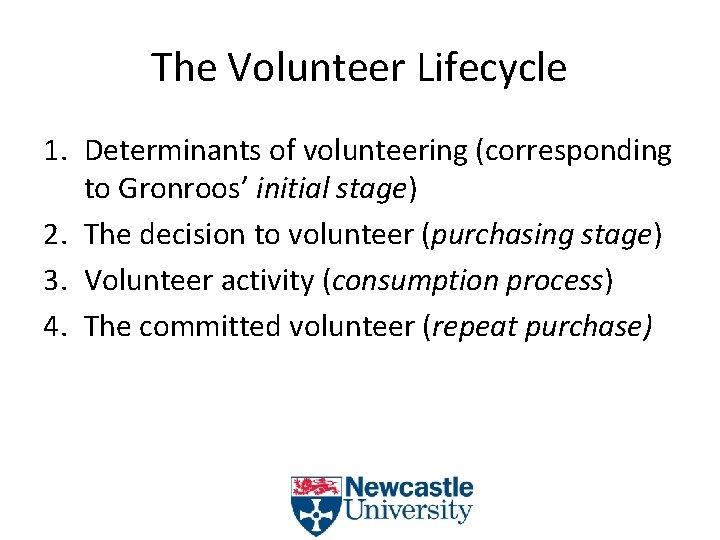
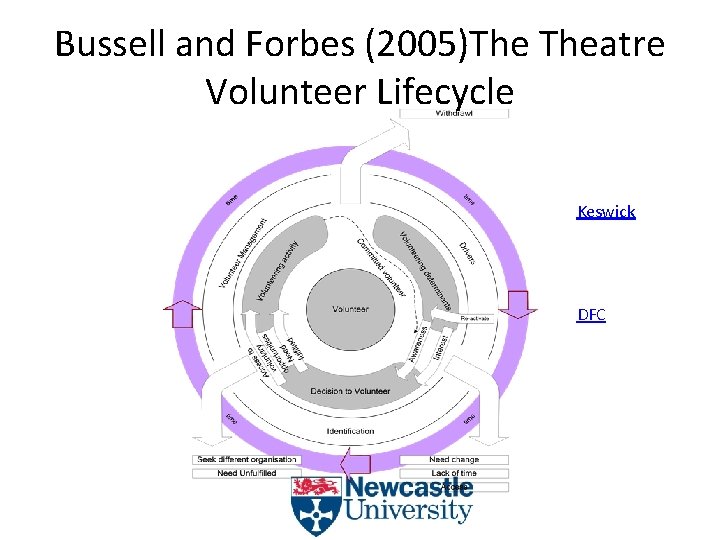
The Volunteer Lifecycle 1. Determinants of volunteering (corresponding to Gronroos’ initial stage) 2. The decision to volunteer (purchasing stage) 3. Volunteer activity (consumption process) 4. The committed volunteer (repeat purchase)
1. Determinants of volunteering • Raising awareness/ promote • AIDA – I go to supermarkets, health centres. I give talks to church groups. I put up posters, …visit leisure centres. . . I would say that the most successful is the leisure centre because people there have a lot of free time
HOW • • • word of mouth leaflets and other printed media using Volunteer Centre databases organising or speaking at events during Volunteer Week press / radio adverts online - on your own website and via volunteer recruitment websites. – Research shows that web users are incredibly fickle. Unless highly motivated, if they can't find what they want in a few seconds they will go elsewhere – Not everyone likes the word volunteering, but almost everyone knows what it means. If you are looking to recruit on your site and you don't have a link to volunteering in a prominent position then you are in danger of losing a sizeable number of potential volunteers
2. The decision to volunteer • Dialogue • Evaluation • Fit
3. Volunteer activity • • • Volunteer management Engagement ‘We don’t party enough’ ‘one size does not fit all’. Episodic volunteer – Episodic volunteering has been called “one of the fastest growing trends in the field of volunteerism” (Cnaan & Handy, 2005, p. 29). • Traditional volunteer
= The committed volunteer • Retention • Loyalty • Identification
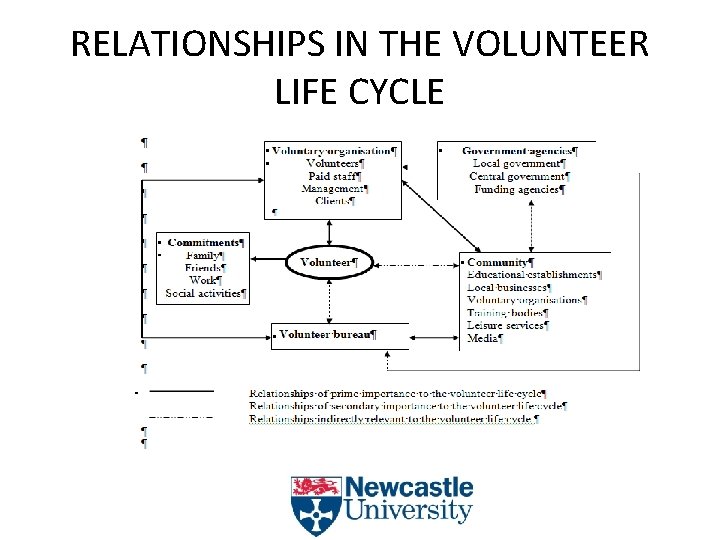
RELATIONSHIPS IN THE VOLUNTEER LIFE CYCLE
Bussell and Forbes (2005)The Theatre Volunteer Lifecycle Keswick DFC
Any Questions
Sources/ Additional Reading • • Bussell, H. , & Forbes, D. (2002). Understanding the volunteer market: The what, where, who and why of volunteering. International Journal of Nonprofit and Voluntary Sector Marketing, 7(3), pp. 244 -257. Bussell, H. & Forbes, D. (2003). The Volunteer Life Cycle: a marketing model for volunteering. Voluntary Action, 5(3), pp. 61– 79. Bussell, H. , & Forbes, D. (2006). Developing relationship marketing in the voluntary sector. Journal of Nonprofit & Public Sector Marketing, 15(1 -2), pp. 151 -174. Bussell, H. , & Forbes, D. (2007). Volunteer management in arts organizations: A case study and managerial implications. International Journal of Arts Management, 9(2), pp. 16 -28. Das, K. (2009). Relationship marketing research (1994 -2006): an academic literature review and classification. Marketing Intelligence & Planning, 27(3), pp. 326 -363. Grönroos, C. (1994) "From Marketing Mix to Relationship Marketing: Towards a Paradigm Shift in Marketing", Management Decision, Vol. 32 Iss: 2, pp. 4 – 20 Morgan, R. M. , & Hunt, S. D. (1994). The commitment-trust theory of relationship marketing. the journal of marketing, 20 -38. Berry, L. L. (1995). Relationship marketing of services—growing interest, emerging perspectives. Journal of the Academy of marketing science, 23(4), pp. 236 -245.