
Reinvent Performance Management Dr David Rock Director Neuro
- Slides: 38
Reinvent Performance Management Dr. David Rock, Director, Neuro. Leadership Institute Neuro. Leadership. Org Neuro. Leadership. Com
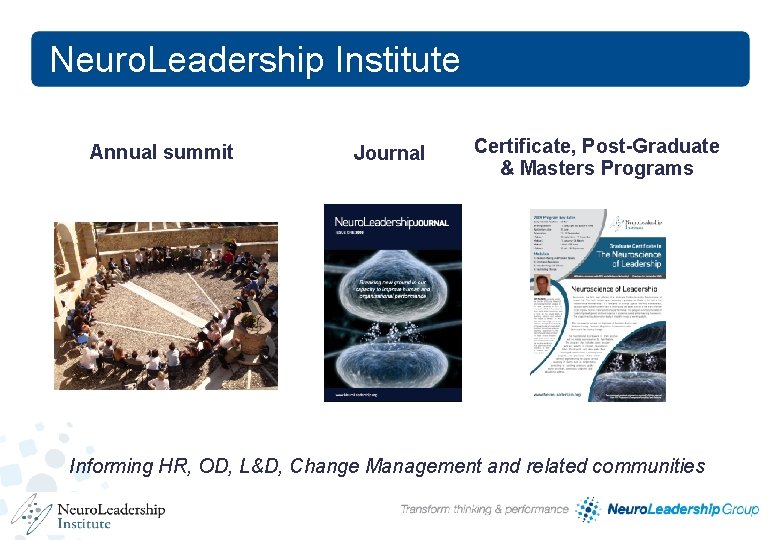
Neuro. Leadership Institute Annual summit Journal Certificate, Post-Graduate & Masters Programs Informing HR, OD, L&D, Change Management and related communities 2
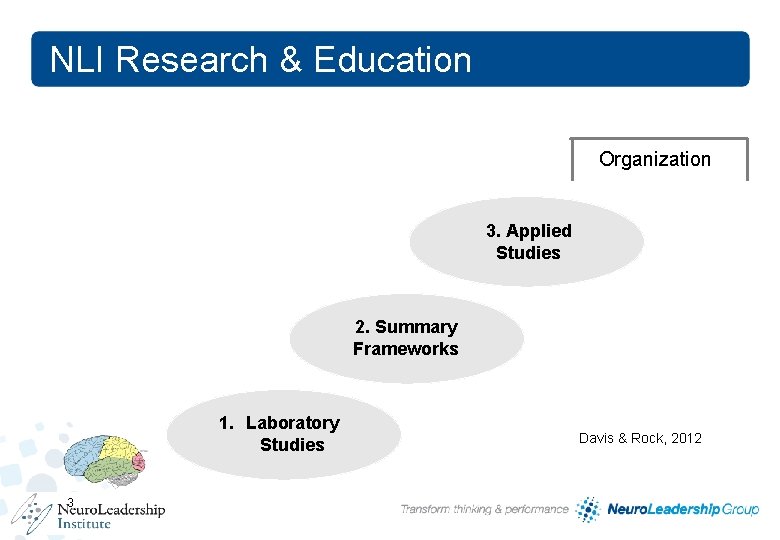
NLI Research & Education Organization 3. Applied Studies 2. Summary Frameworks 1. Laboratory Studies Davis & Rock, 2012 3
Why managing performance matters 1. Making money is getting harder 2. Growing talent is more urgent than ever 3. Growing talent is being pushed down to managers 4. There’s more change than ever 5. New generations like to learn and expect feedback 6. Performance doesn’t necessarily improve without focus 4
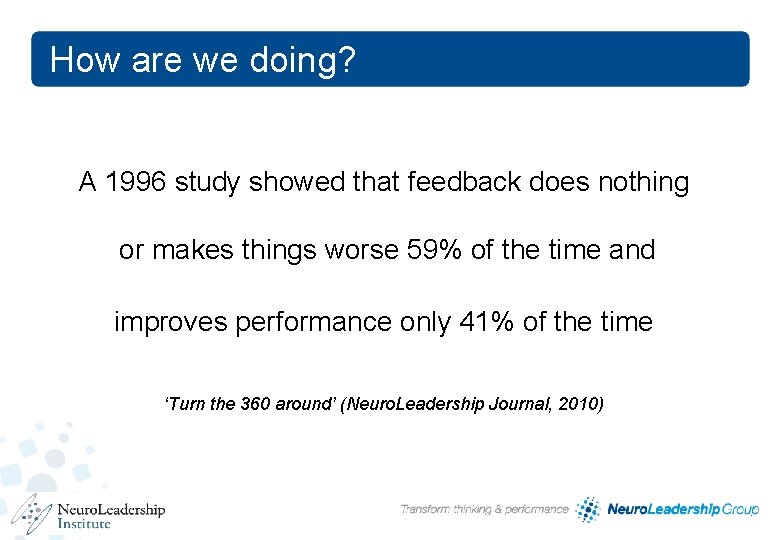
How are we doing? A 1996 study showed that feedback does nothing or makes things worse 59% of the time and improves performance only 41% of the time ‘Turn the 360 around’ (Neuro. Leadership Journal, 2010) 5
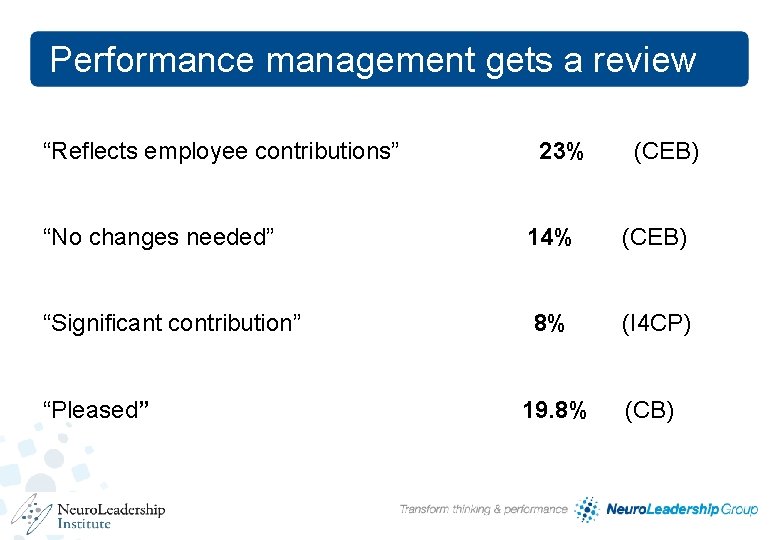
Performance management gets a review “Reflects employee contributions” 23% (CEB) “No changes needed” 14% (CEB) “Significant contribution” 8% (I 4 CP) “Pleased” 19. 8% (CB)
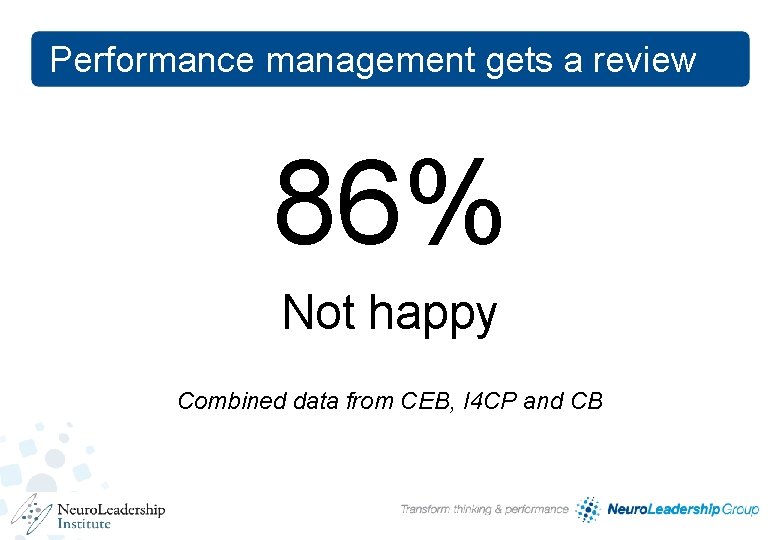
Performance management gets a review 86% Not happy Combined data from CEB, I 4 CP and CB
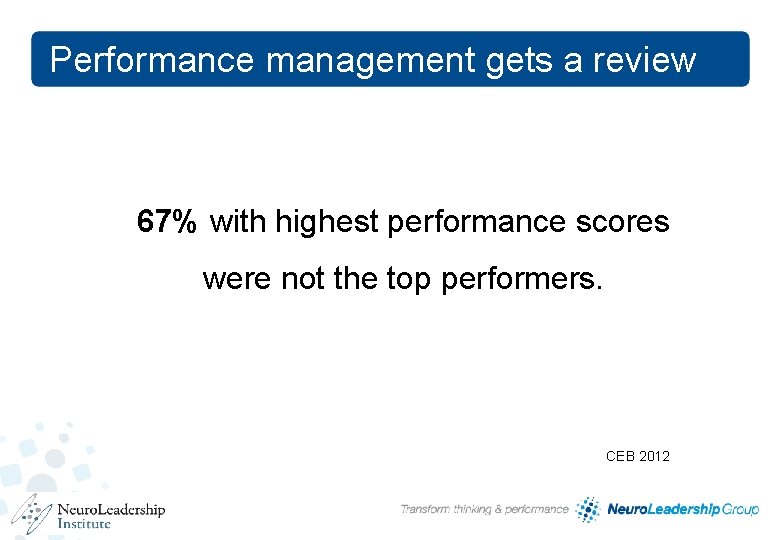
Performance management gets a review 67% with highest performance scores were not the top performers. CEB 2012
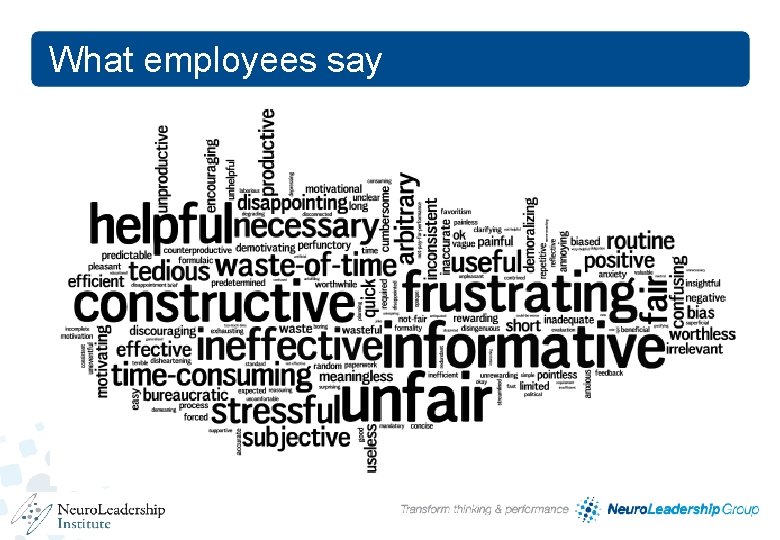
What employees say 9
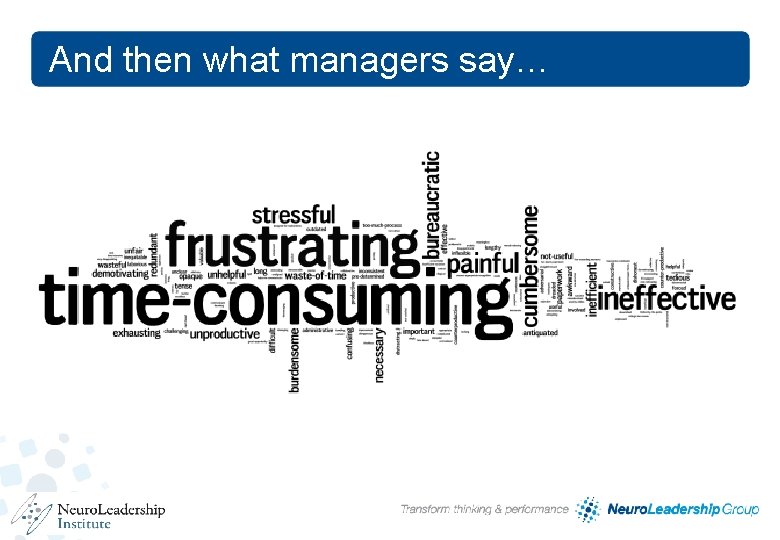
And then what managers say… 10
How we get performance management wrong 1. Not respecting how personal feedback is 11
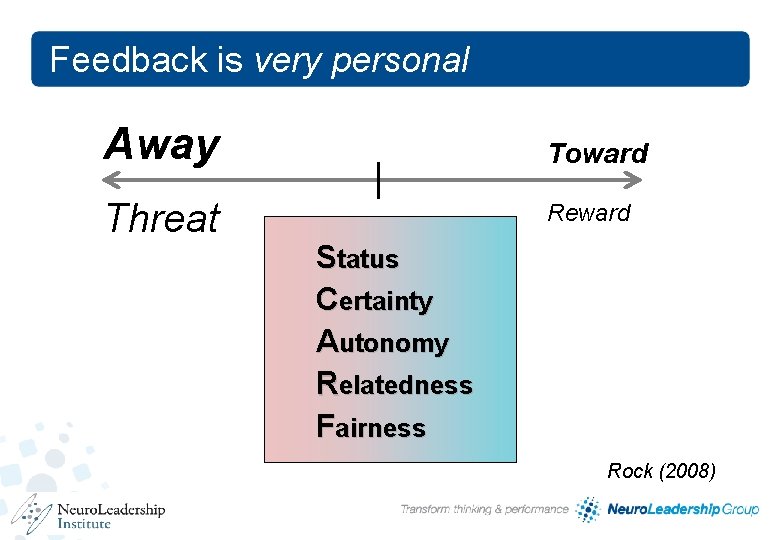
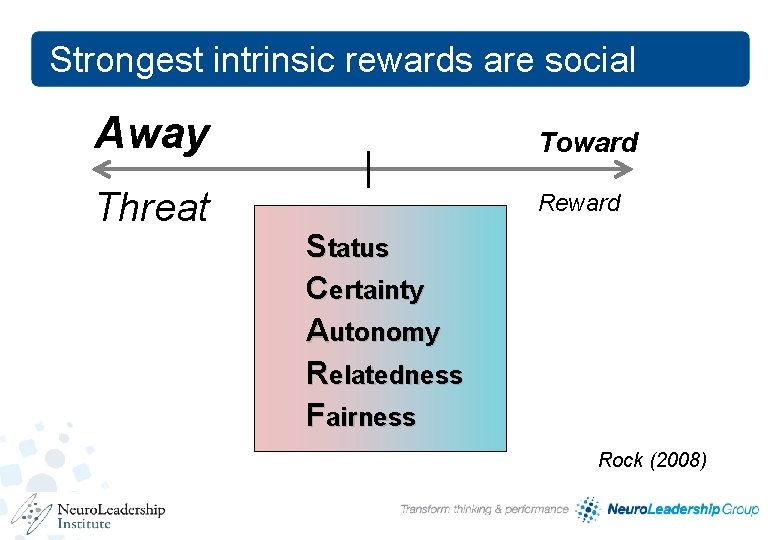
Feedback is very personal Away Toward Threat Reward Status Certainty Autonomy Relatedness Fairness Rock (2008) 12
How we get performance management wrong 1. Not respecting how personal feedback is 2. ‘Branding’ of performance management creates threat 13
Branding is part of the problem ‘Annual Performance Review’ ‘Performance Evaluations’ ‘Annual Reviews’ 14
How we get performance management wrong 1. Not respecting how personal feedback is 2. ‘Branding’ of performance management creates threat 3. Extrinsic rewards can be a big trap 15
The trap of extrinsic rewards Extrinsic rewards require novelty, beating expectations or increases in order to be actually rewarding. 16
Strongest intrinsic rewards are social Away Toward Threat Reward Status Certainty Autonomy Relatedness Fairness Rock (2008) 17
How we get performance management wrong 1. Not respecting how personal feedback is 2. ‘Branding’ of performance management creates threat 3. Extrinsic rewards can be a big trap 4. Use 360’s for development not reviews 18
Reserve 360’s for development 360’s can impact all 5 domains of SCARF negatively. Link them to growth, not underlying threat. 19
How we get performance management wrong 1. Not respecting how personal feedback is 2. ‘Branding’ of performance management creates threat 3. Extrinsic rewards can be a big trap 4. Use 360’s for development not reviews 5. Too much focus on the process instead of the conversation 20
Focus on the conversations Tweaking the system is easier than the hard work of training managers to have effective conversations. Managers accurately predict it is better not to give feedback. 21
How we get performance management wrong 1. Not respecting how personal feedback is 2. ‘Branding’ of performance management creates threat 3. Extrinsic rewards can be a big trap 4. Use 360’s for development not reviews 5. Too much focus on the process instead of the conversation 6. Am emphasis on the annual event not everyday development 22
Rethink performance management 1. Build the business case for change 2. Identify three clear objectives for the change 3. Define the new mindset 4. Rethink what to measure – linked to the objectives 5. Rethink how to measure – time scale, continuum, method 6. Make financial rewards less defined by the cycle review process 23
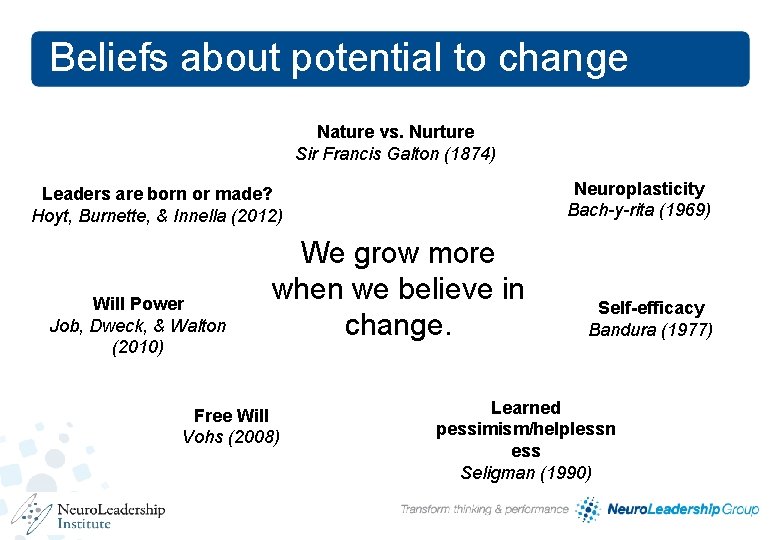
Beliefs about potential to change Nature vs. Nurture Sir Francis Galton (1874) Neuroplasticity Bach-y-rita (1969) Leaders are born or made? Hoyt, Burnette, & Innella (2012) Will Power Job, Dweck, & Walton (2010) We grow more when we believe in change. Free Will Vohs (2008) Self-efficacy Bandura (1977) Learned pessimism/helplessn ess Seligman (1990)
Philosophy Common unstated belief: “Talent is fixed, and we need to assess it. ”
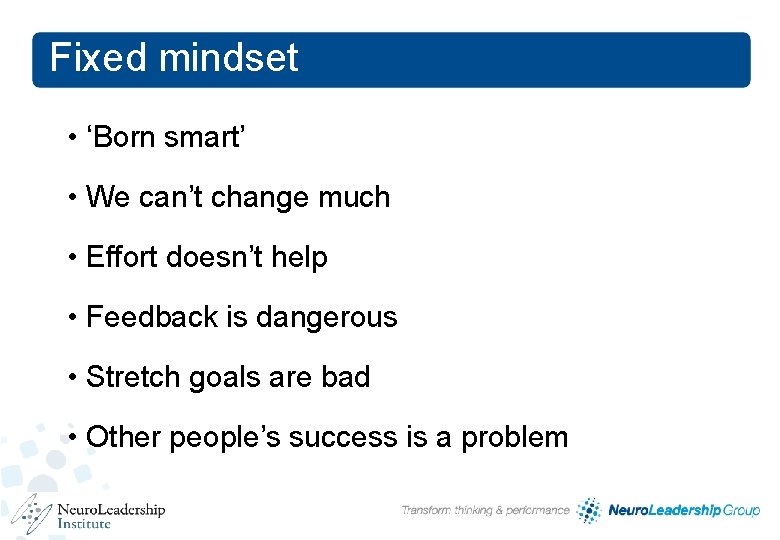
Fixed mindset • ‘Born smart’ • We can’t change much • Effort doesn’t help • Feedback is dangerous • Stretch goals are bad • Other people’s success is a problem
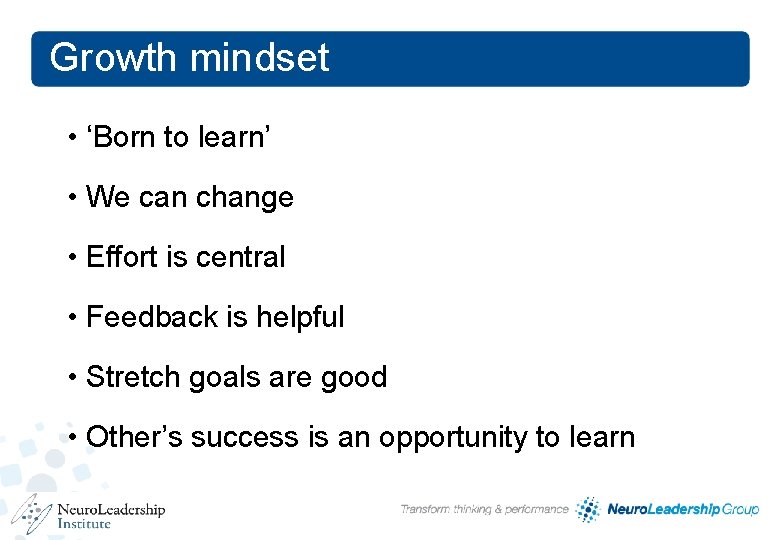
Growth mindset • ‘Born to learn’ • We can change • Effort is central • Feedback is helpful • Stretch goals are good • Other’s success is an opportunity to learn
We are easily primed Fixed Mindset In his talk at the American Psychological Association's annual convention held at Washington D. C. in August, Dr. George Medin argued that 'in most of us, by the age of ten, our character has set like plaster and will never soften again. ' He reported numerous large longitudinal studies which show that people 'age and develop, but they do so on the foundation of enduring dispositions. ' Chiu, Hwong, & Dweck (1997)
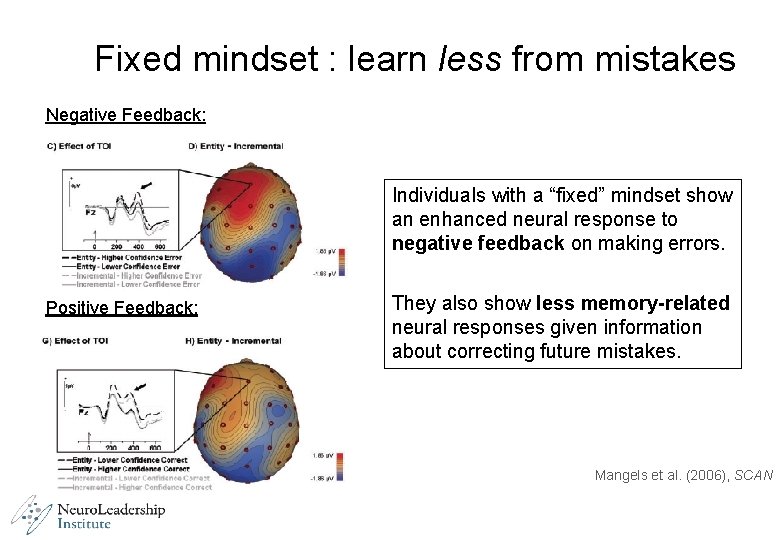
Fixed mindset : learn less from mistakes Negative Feedback: Individuals with a “fixed” mindset show an enhanced neural response to negative feedback on making errors. Positive Feedback: They also show less memory-related neural responses given information about correcting future mistakes. Mangels et al. (2006), SCAN
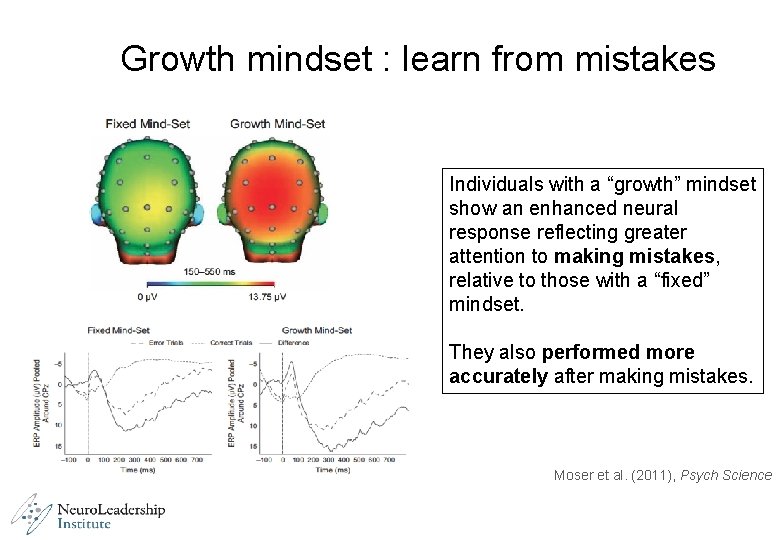
Growth mindset : learn from mistakes Individuals with a “growth” mindset show an enhanced neural response reflecting greater attention to making mistakes, relative to those with a “fixed” mindset. They also performed more accurately after making mistakes. Moser et al. (2011), Psych Science
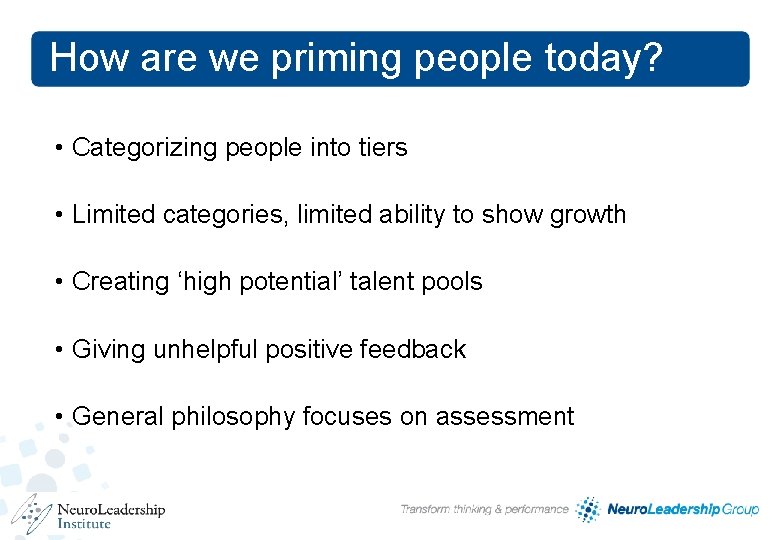
How are we priming people today? • Categorizing people into tiers • Limited categories, limited ability to show growth • Creating ‘high potential’ talent pools • Giving unhelpful positive feedback • General philosophy focuses on assessment
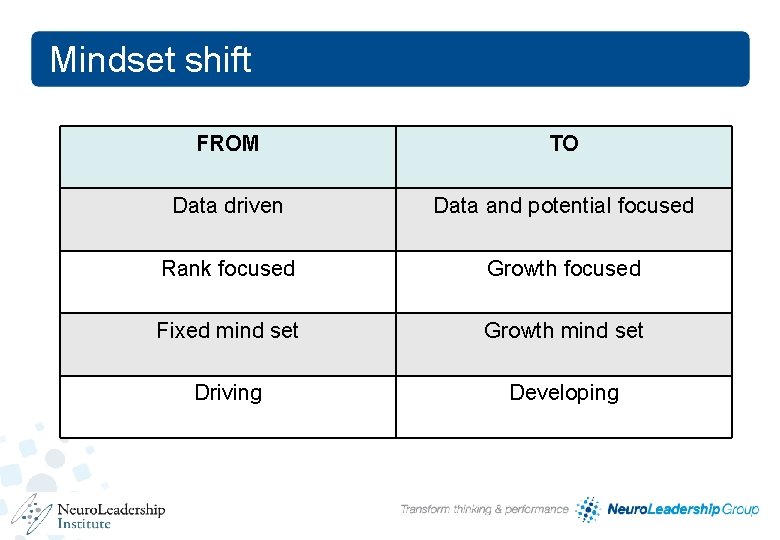
Mindset shift 32 FROM TO Data driven Data and potential focused Rank focused Growth focused Fixed mind set Growth mind set Driving Developing
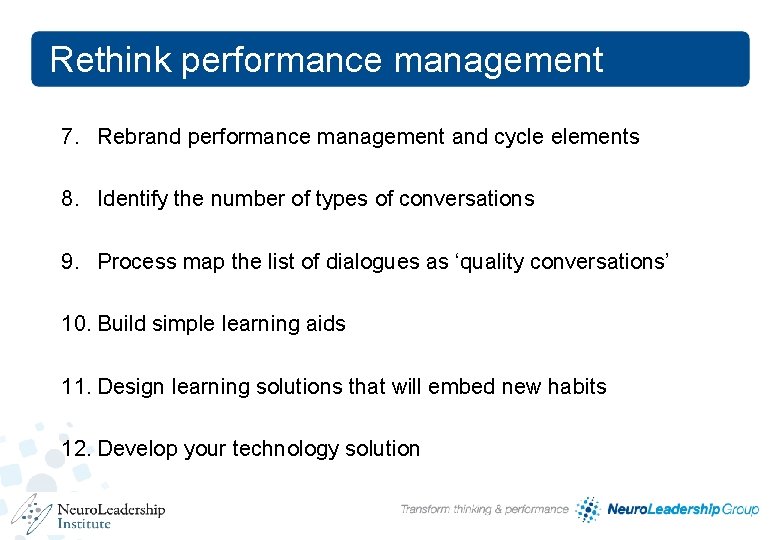
Rethink performance management 7. Rebrand performance management and cycle elements 8. Identify the number of types of conversations 9. Process map the list of dialogues as ‘quality conversations’ 10. Build simple learning aids 11. Design learning solutions that will embed new habits 12. Develop your technology solution 33
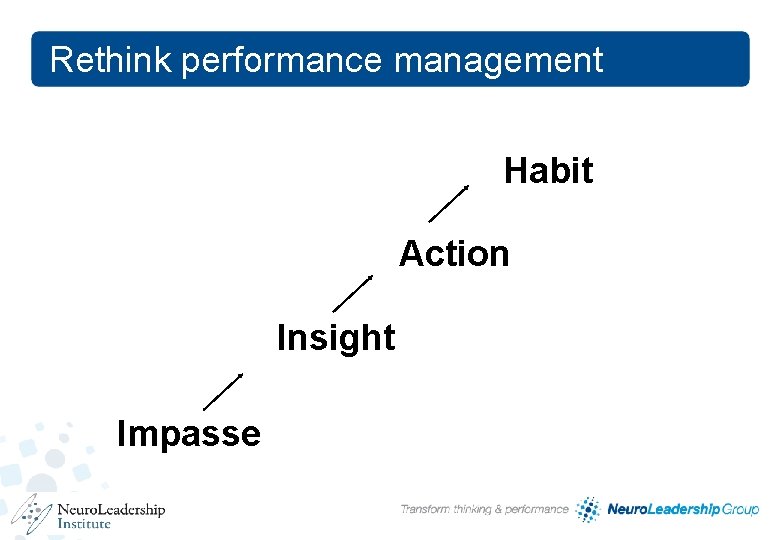
Rethink performance management Habit Action Insight Impasse 34
Insights and questions What would you like to understand further? 35
Further resources • Turn the 360 around. Neuro. Leadership Journal 2010 • The neuroscience of performance management – June 23, NYC • Quiet Leadership, Collins 2006 • Your Brain at Work, Harper. Business 2009 • Neuro. Leadership Summits in London, DC. • Neuro. Leadership Education programs 36
How to learn more Neuro. Leadership. org • Education up to Masters • Summits & Recordings • Journals Neuro. Leadership. com • Leadership development programs • Brain-Based Coach Certification Programs (ICF Accredited) 37
Connecting Books: Your Brain at Work Quiet Leadership Coaching with the Brain in Mind Twitter: davidrock 101 Contact: David@neuroleadership. org 38