
Rehabilitation Treatment 1 BOS Setting 2 Sensory Input
Rehabilitation Treatment 1
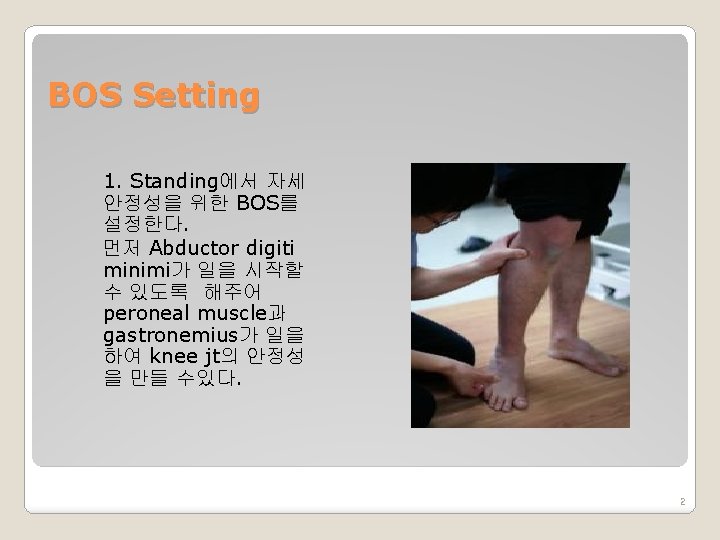
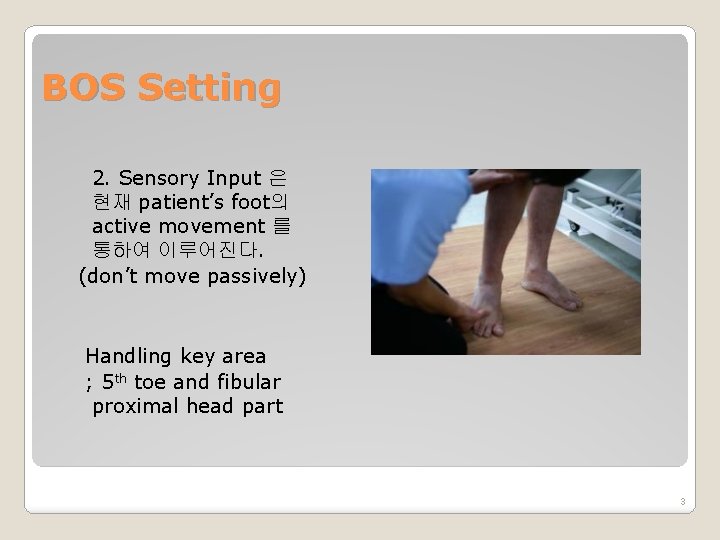
BOS Setting 2. Sensory Input 은 현재 patient’s foot의 active movement 를 통하여 이루어진다. (don’t move passively) Handling key area ; 5 th toe and fibular proximal head part 3
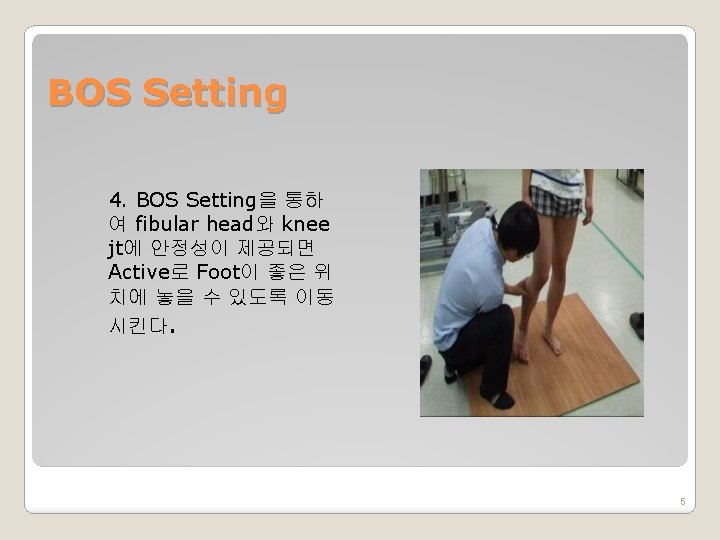
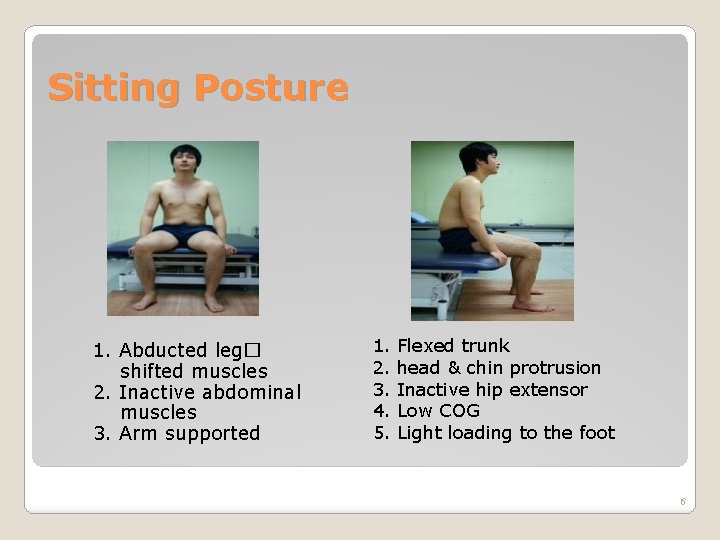
Sitting Posture 1. Abducted leg� shifted muscles 2. Inactive abdominal muscles 3. Arm supported 1. 2. 3. 4. 5. Flexed trunk head & chin protrusion Inactive hip extensor Low COG Light loading to the foot 6
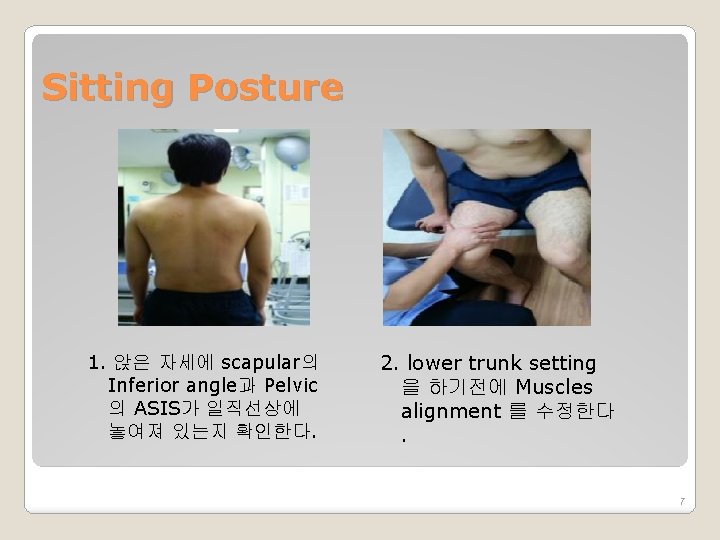
Sitting Posture 1. 앉은 자세에 scapular의 Inferior angle과 Pelvic 의 ASIS가 일직선상에 놓여져 있는지 확인한다. 2. lower trunk setting 을 하기전에 Muscles alignment 를 수정한다. 7
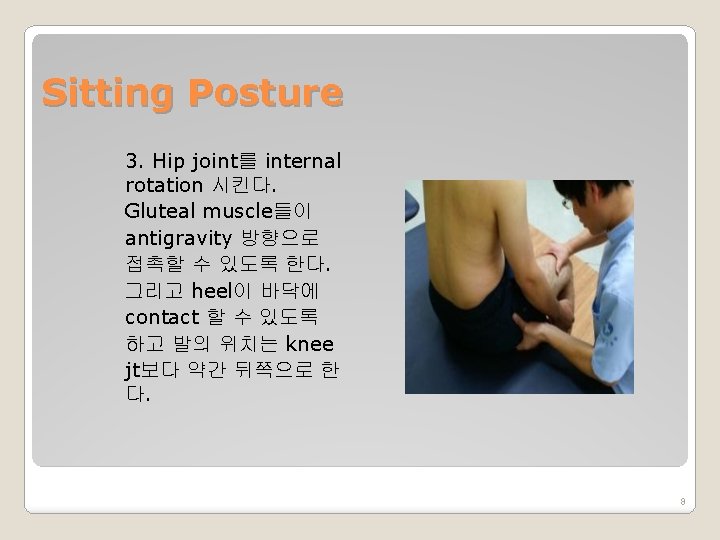
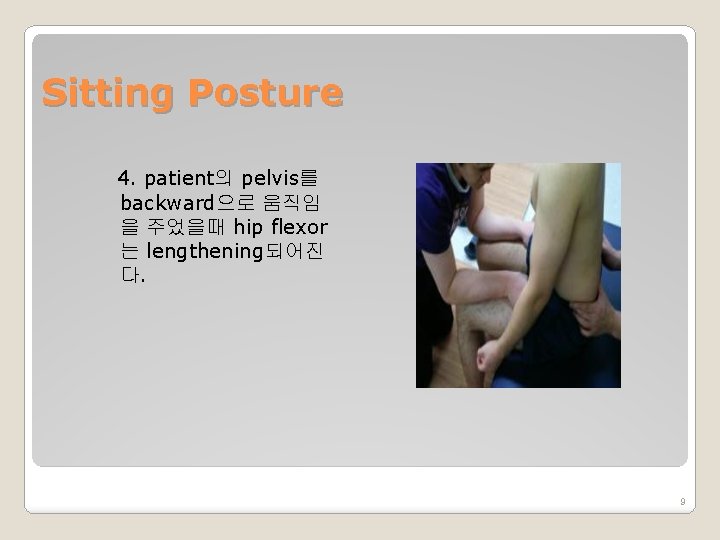
Sitting Posture 4. patient의 pelvis를 backward으로 움직임 을 주었을때 hip flexor 는 lengthening되어진 다. 9
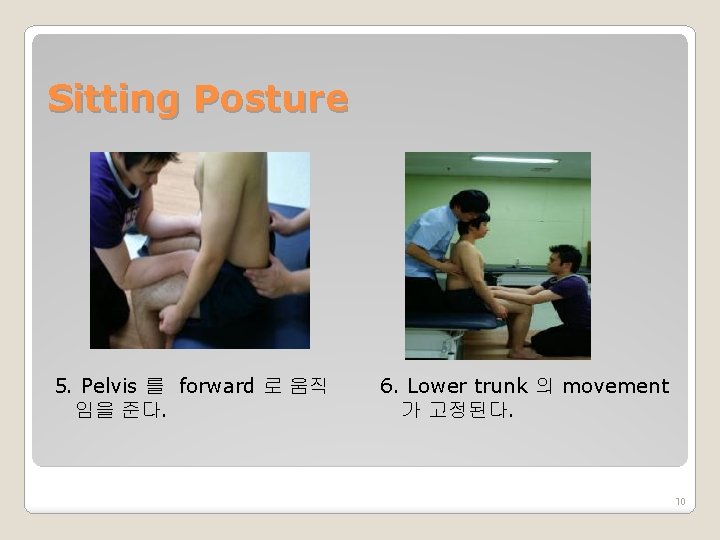
Sitting Posture 5. Pelvis 를 forward 로 움직 임을 준다. 6. Lower trunk 의 movement 가 고정된다. 10
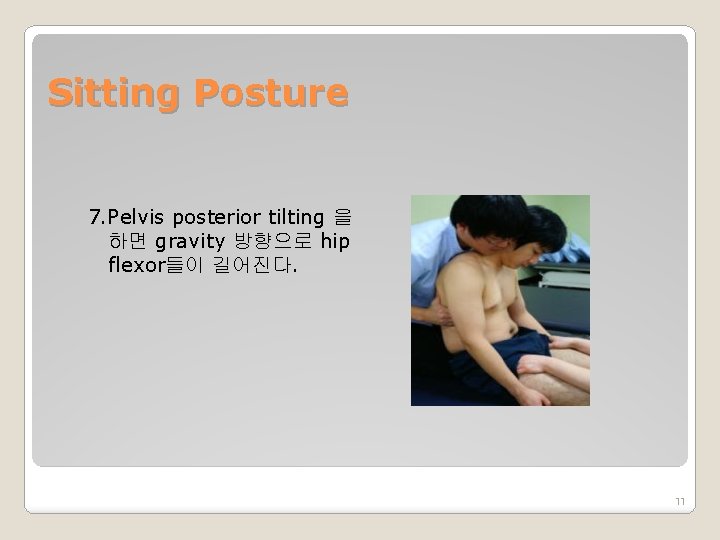
Sitting Posture 7. Pelvis posterior tilting 을 하면 gravity 방향으로 hip flexor들이 길어진다. 11
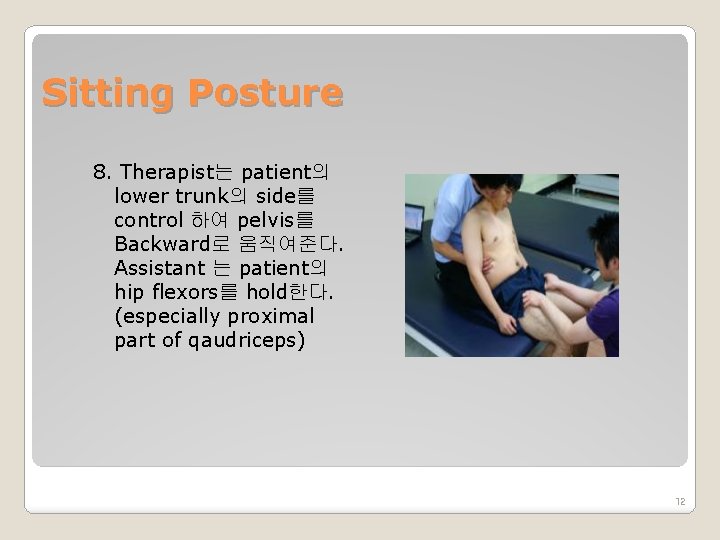
Sitting Posture 8. Therapist는 patient의 lower trunk의 side를 control 하여 pelvis를 Backward로 움직여준다. Assistant 는 patient의 hip flexors를 hold한다. (especially proximal part of qaudriceps) 12
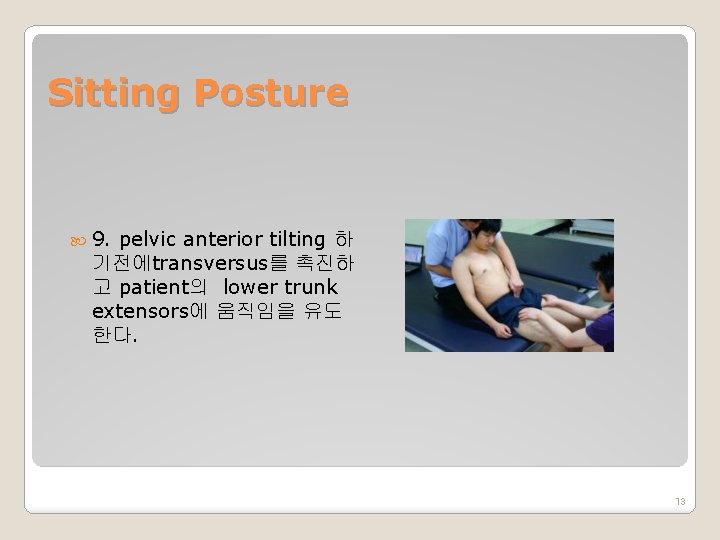
Sitting Posture 9. pelvic anterior tilting 하 기전에transversus를 촉진하 고 patient의 lower trunk extensors에 움직임을 유도 한다. 13
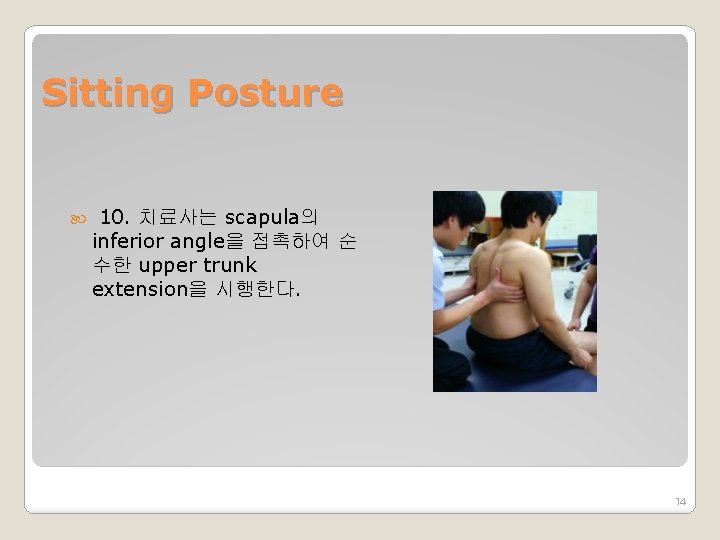
Sitting Posture 10. 치료사는 scapula의 inferior angle을 접촉하여 순 수한 upper trunk extension을 시행한다. 14
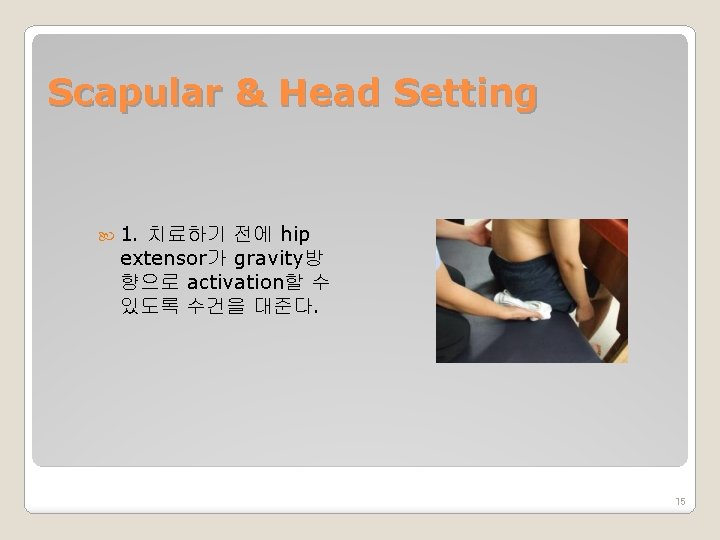
Scapular & Head Setting 1. 치료하기 전에 hip extensor가 gravity방 향으로 activation할 수 있도록 수건을 대준다. 15
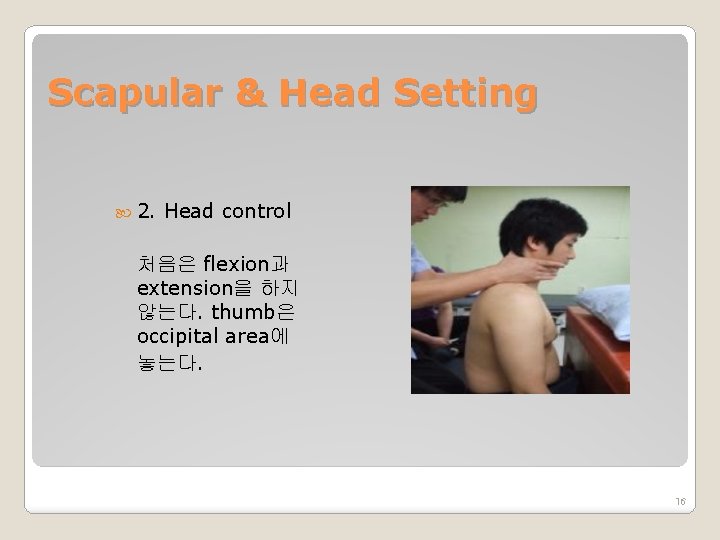
Scapular & Head Setting 2. Head control 처음은 flexion과 extension을 하지 않는다. thumb은 occipital area에 놓는다. 16
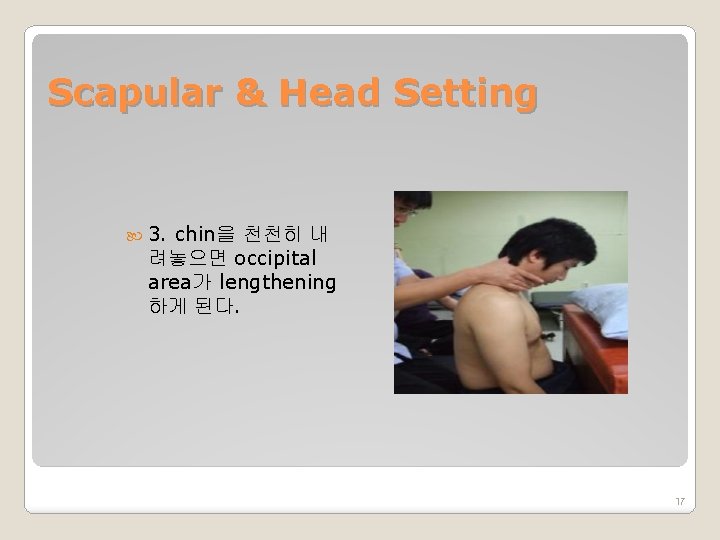
Scapular & Head Setting 3. chin을 천천히 내 려놓으면 occipital area가 lengthening 하게 된다. 17
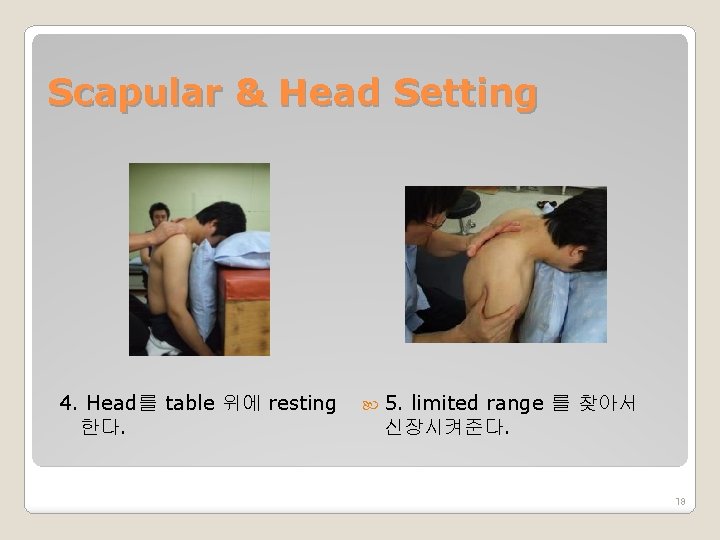
Scapular & Head Setting 4. Head를 table 위에 resting 한다. 5. limited range 를 찾아서 신장시켜준다. 18
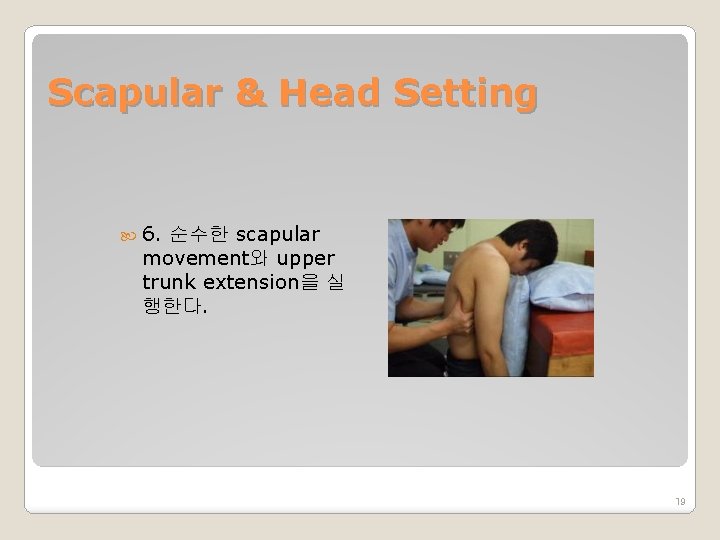
Scapular & Head Setting 6. 순수한 scapular movement와 upper trunk extension을 실 행한다. 19
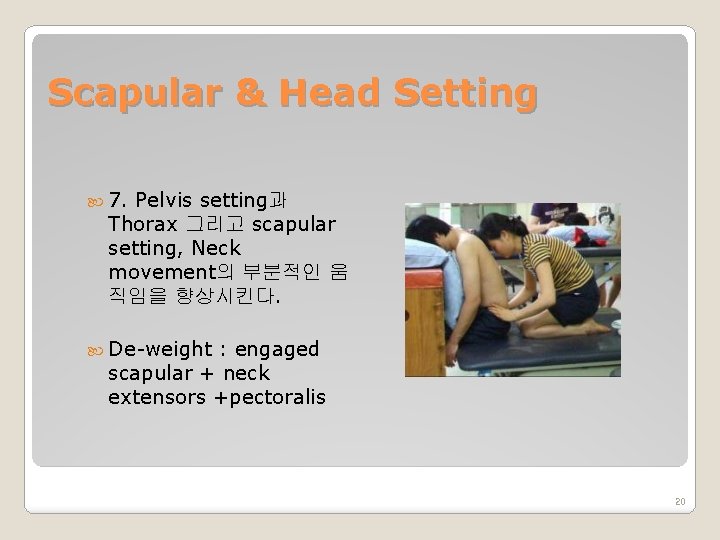
Scapular & Head Setting 7. Pelvis setting과 Thorax 그리고 scapular setting, Neck movement의 부분적인 움 직임을 향상시킨다. De-weight : engaged scapular + neck extensors +pectoralis 20
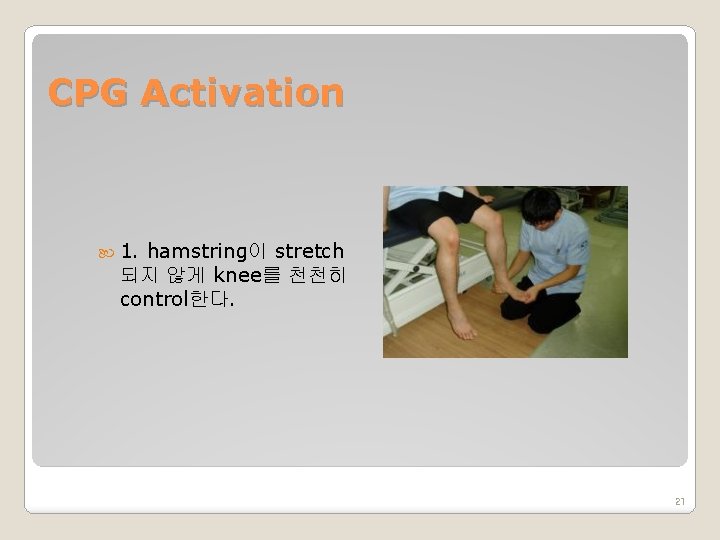
CPG Activation 1. hamstring이 stretch 되지 않게 knee를 천천히 control한다. 21
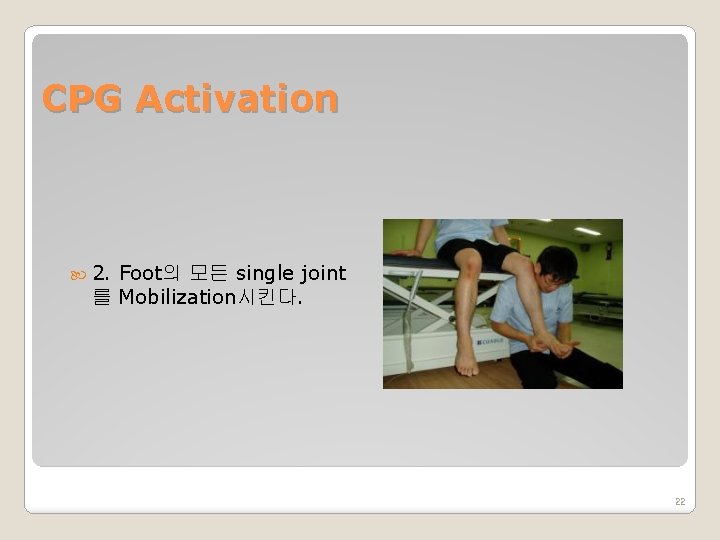
CPG Activation 2. Foot의 모든 single joint 를 Mobilization시킨다. 22
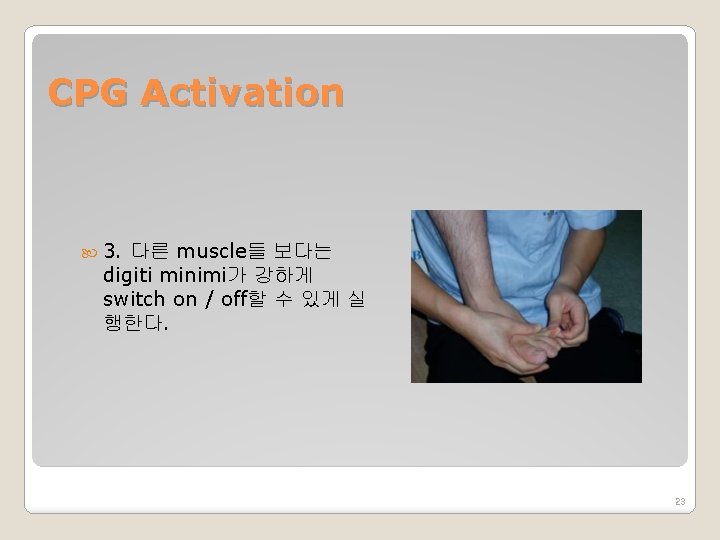
CPG Activation 3. 다른 muscle들 보다는 digiti minimi가 강하게 switch on / off할 수 있게 실 행한다. 23
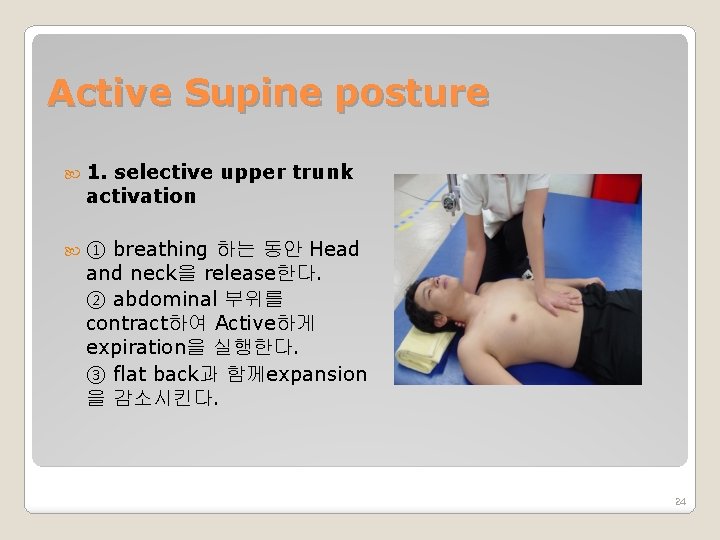
Active Supine posture 1. selective upper trunk activation ① breathing 하는 동안 Head and neck을 release한다. ② abdominal 부위를 contract하여 Active하게 expiration을 실행한다. ③ flat back과 함께expansion 을 감소시킨다. 24
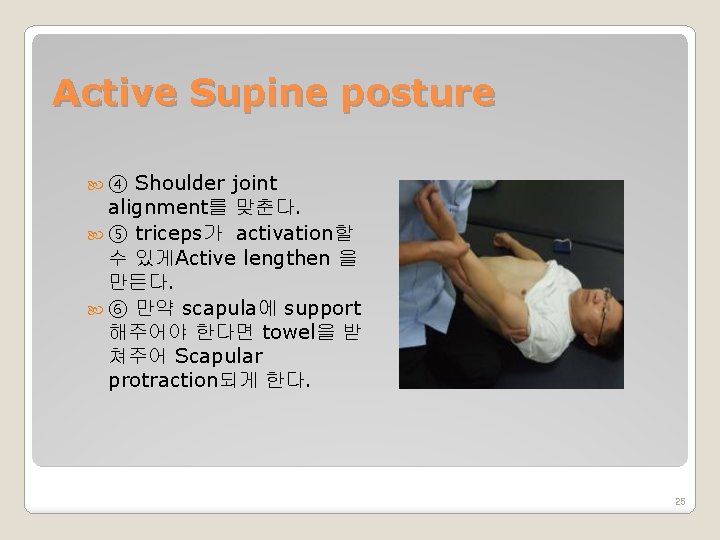
Active Supine posture ④ Shoulder joint alignment를 맞춘다. ⑤ triceps가 activation할 수 있게Active lengthen 을 만든다. ⑥ 만약 scapula에 support 해주어야 한다면 towel을 받 쳐주어 Scapular protraction되게 한다. 25
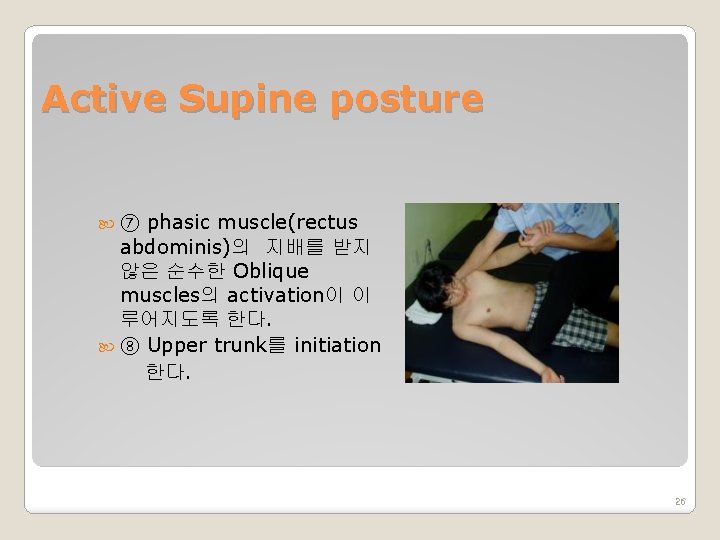
Active Supine posture ⑦ phasic muscle(rectus abdominis)의 지배를 받지 않은 순수한 Oblique muscles의 activation이 이 루어지도록 한다. ⑧ Upper trunk를 initiation 한다. 26
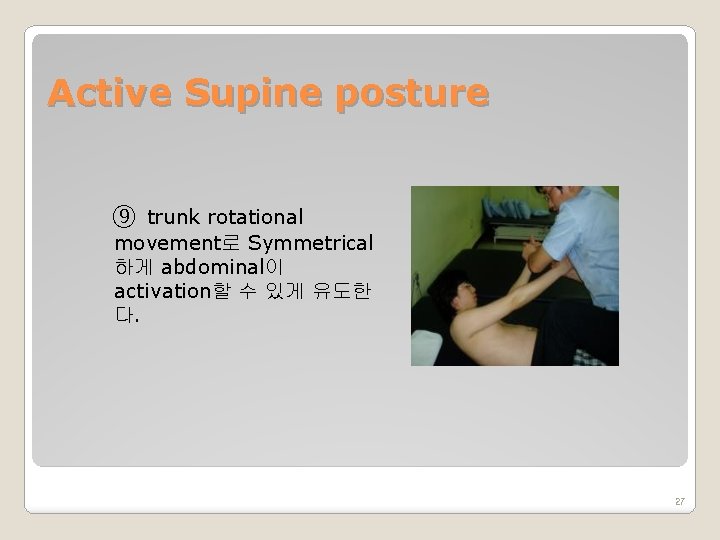
Active Supine posture ⑨ trunk rotational movement로 Symmetrical 하게 abdominal이 activation할 수 있게 유도한 다. 27
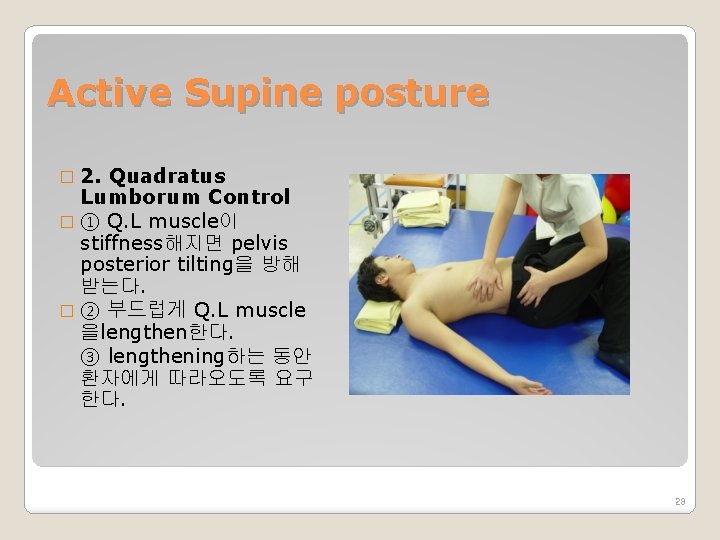
Active Supine posture � 2. Quadratus Lumborum Control � ① Q. L muscle이 stiffness해지면 pelvis posterior tilting을 방해 받는다. � ② 부드럽게 Q. L muscle 을lengthen한다. ③ lengthening하는 동안 환자에게 따라오도록 요구 한다. 28
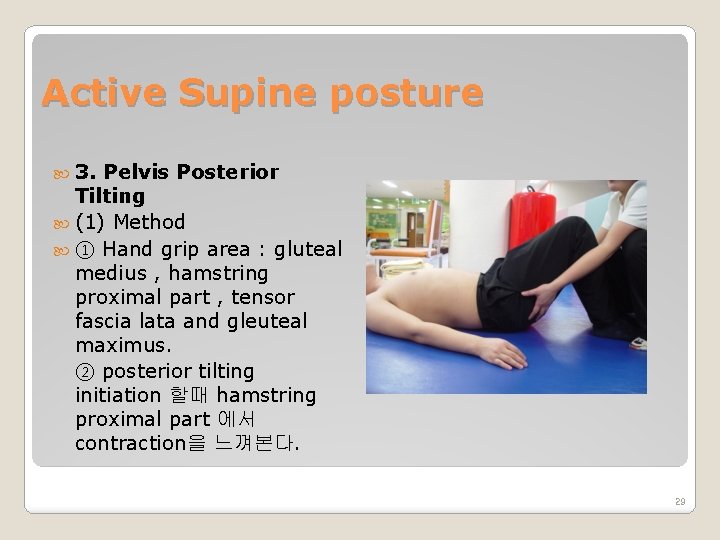
Active Supine posture 3. Pelvis Posterior Tilting (1) Method ① Hand grip area : gluteal medius , hamstring proximal part , tensor fascia lata and gleuteal maximus. ② posterior tilting initiation 할때 hamstring proximal part 에서 contraction을 느껴본다. 29
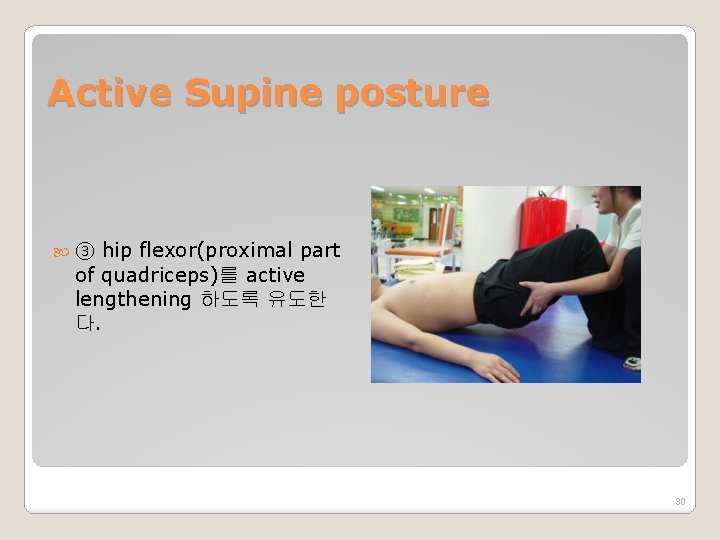
Active Supine posture ③ hip flexor(proximal part of quadriceps)를 active lengthening 하도록 유도한 다. 30
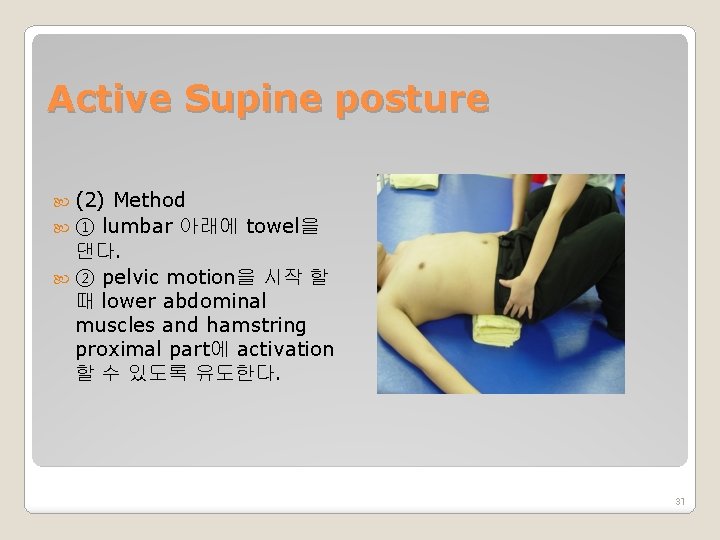
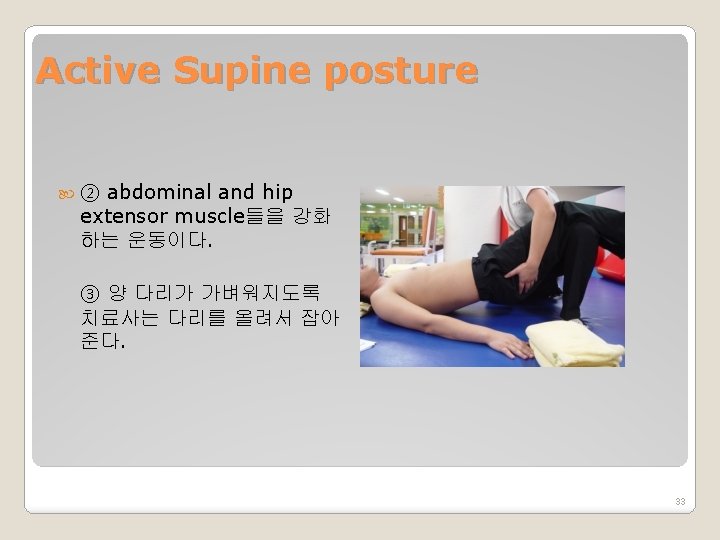
Active Supine posture (2) Method ① lumbar 아래에 towel을 댄다. ② pelvic motion을 시작 할 때 lower abdominal muscles and hamstring proximal part에 activation 할 수 있도록 유도한다. 31
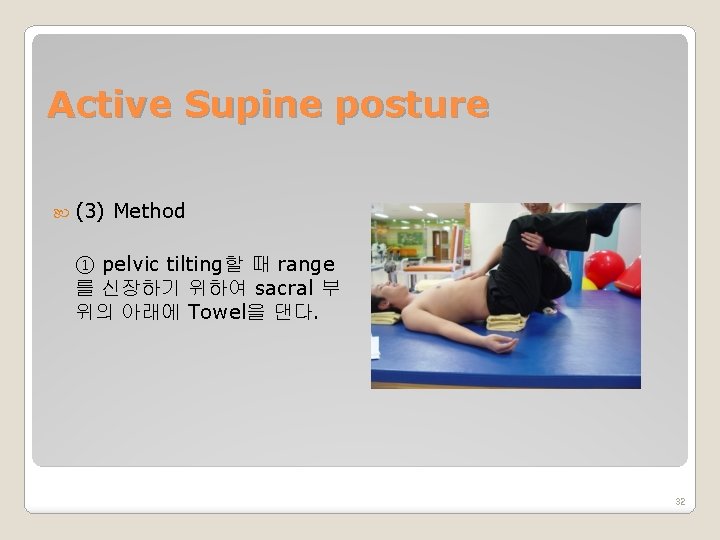
Active Supine posture (3) Method ① pelvic tilting할 때 range 를 신장하기 위하여 sacral 부 위의 아래에 Towel을 댄다. 32
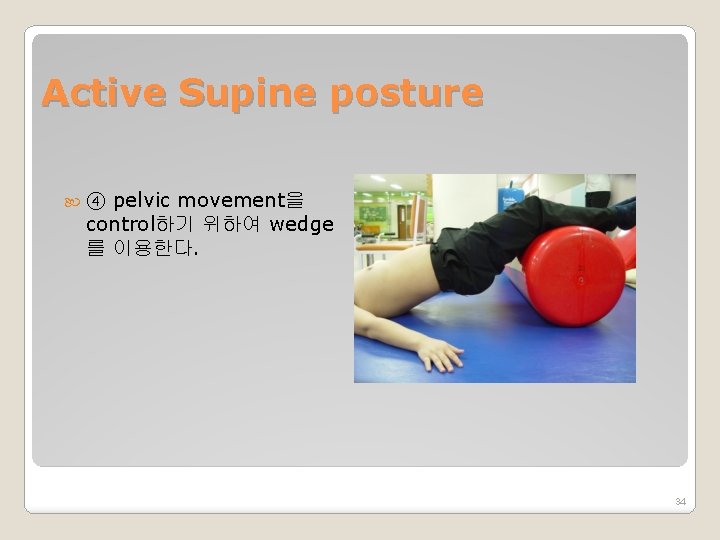
Active Supine posture ④ pelvic movement을 control하기 위하여 wedge 를 이용한다. 34
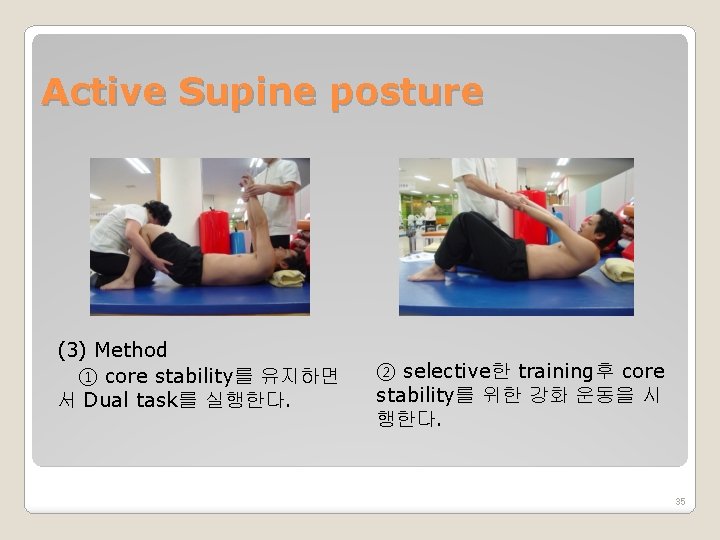
Active Supine posture (3) Method ① core stability를 유지하면 서 Dual task를 실행한다. ② selective한 training후 core stability를 위한 강화 운동을 시 행한다. 35
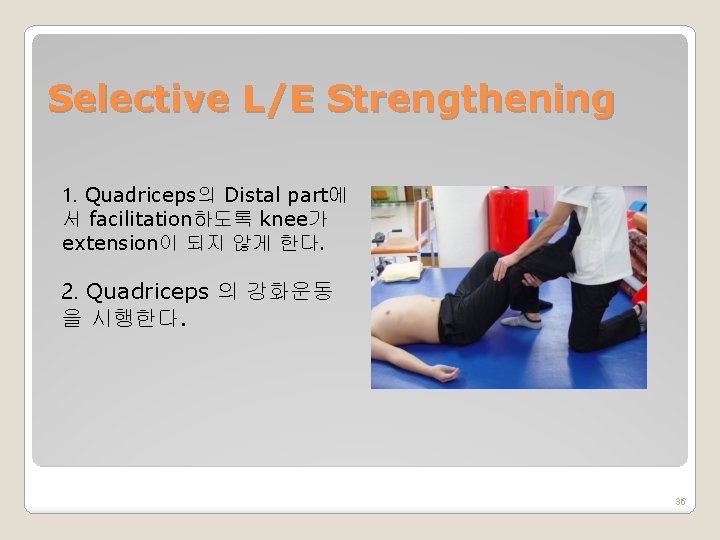
Selective L/E Strengthening 1. Quadriceps의 Distal part에 서 facilitation하도록 knee가 extension이 되지 않게 한다. 2. Quadriceps 의 강화운동 을 시행한다. 36
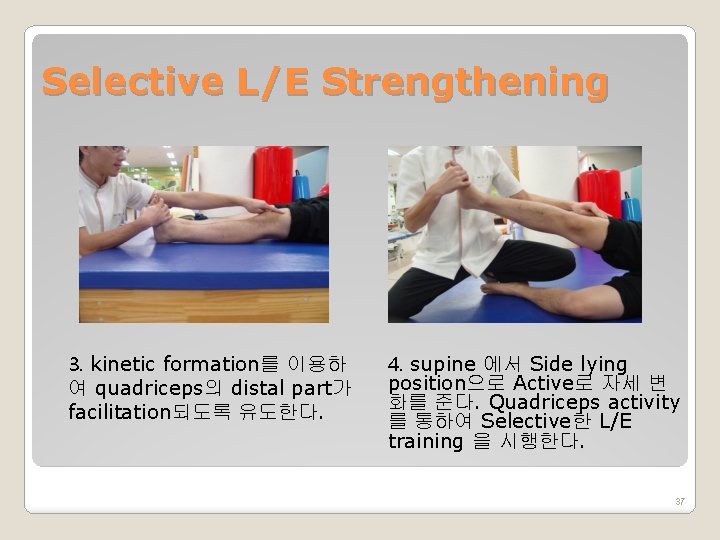
Selective L/E Strengthening 3. kinetic formation를 이용하 여 quadriceps의 distal part가 facilitation되도록 유도한다. 4. supine 에서 Side lying position으로 Active로 자세 변 화를 준다. Quadriceps activity 를 통하여 Selective한 L/E training 을 시행한다. 37
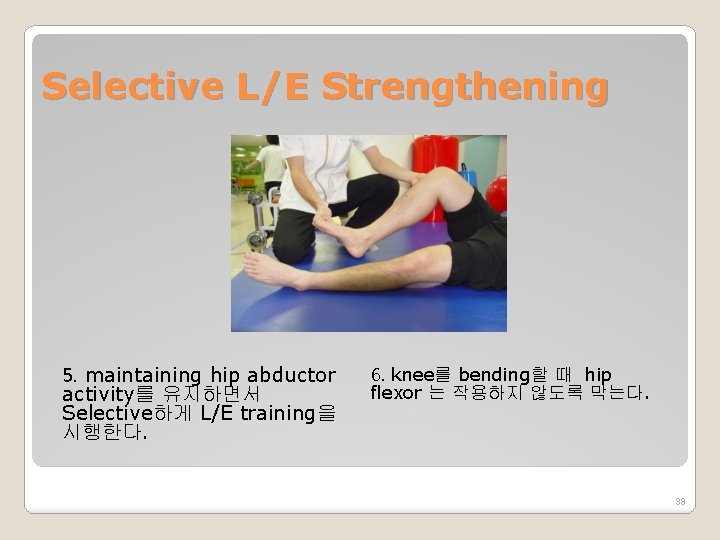
Selective L/E Strengthening 5. maintaining hip abductor activity를 유지하면서 Selective하게 L/E training을 시행한다. 6. knee를 bending할 때 hip flexor 는 작용하지 않도록 막는다. 38
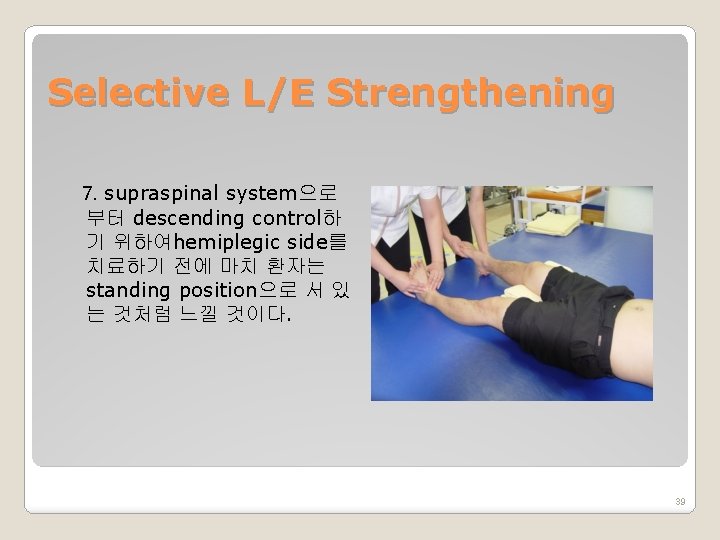
Selective L/E Strengthening 7. supraspinal system으로 부터 descending control하 기 위하여hemiplegic side를 치료하기 전에 마치 환자는 standing position으로 서 있 는 것처럼 느낄 것이다. 39
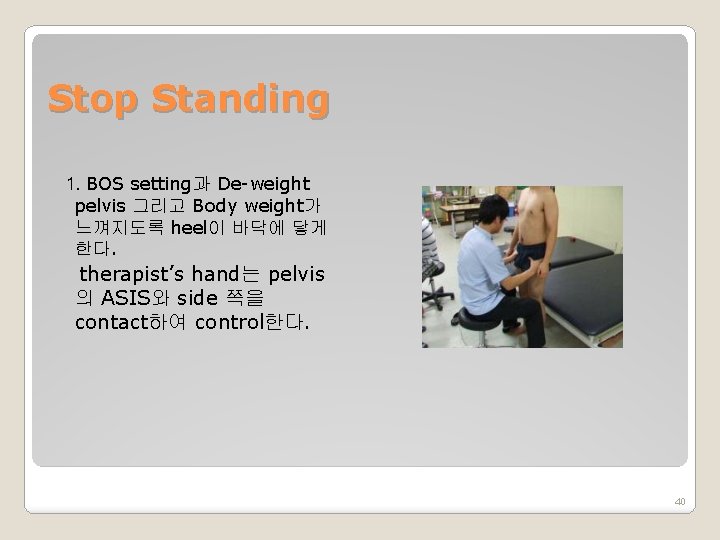
Stop Standing 1. BOS setting과 De-weight pelvis 그리고 Body weight가 느껴지도록 heel이 바닥에 닿게 한다. therapist’s hand는 pelvis 의 ASIS와 side 쪽을 contact하여 control한다. 40
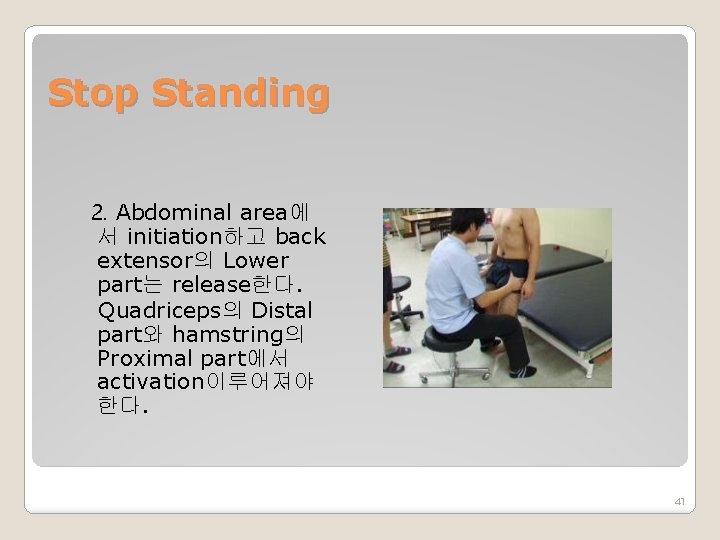
Stop Standing 2. Abdominal area에 서 initiation하고 back extensor의 Lower part는 release한다. Quadriceps의 Distal part와 hamstring의 Proximal part에서 activation이루어져야 한다. 41
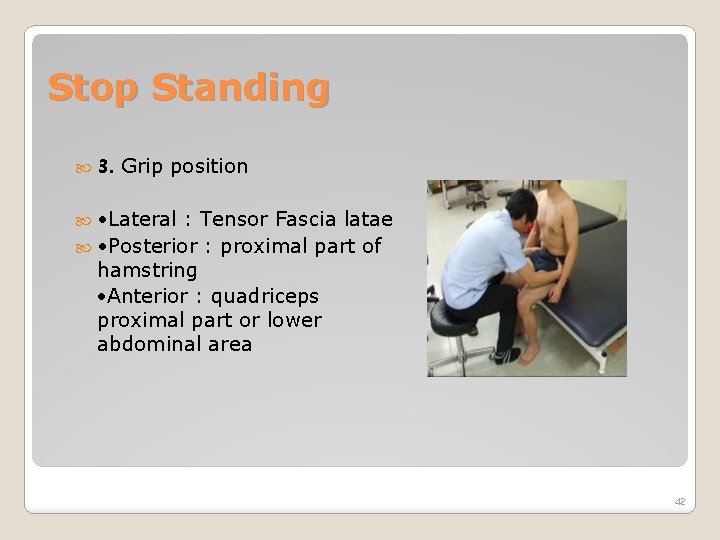
Stop Standing 3. Grip position • Lateral : Tensor Fascia latae • Posterior : proximal part of hamstring • Anterior : quadriceps proximal part or lower abdominal area 42
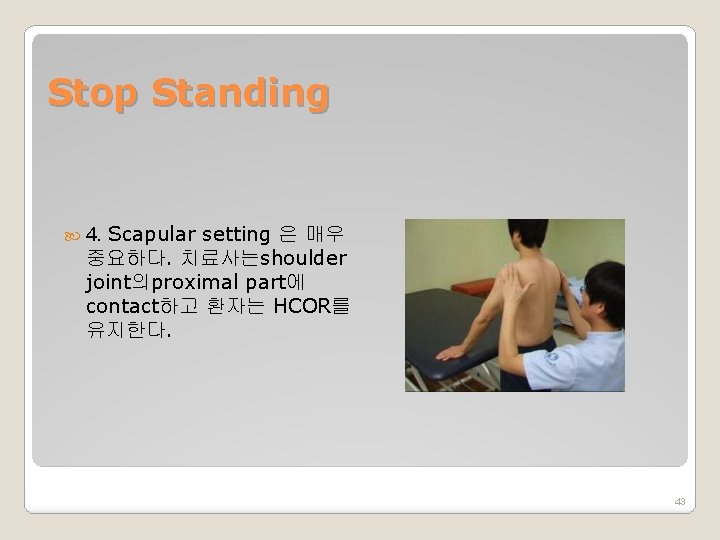
Stop Standing 4. Scapular setting 은 매우 중요하다. 치료사는shoulder joint의proximal part에 contact하고 환자는 HCOR를 유지한다. 43
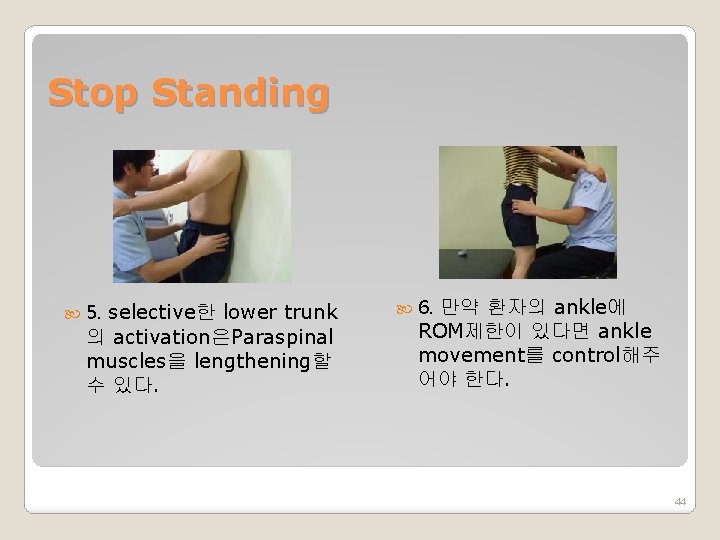
Stop Standing 5. selective한 lower trunk 의 activation은Paraspinal muscles을 lengthening할 수 있다. 6. 만약 환자의 ankle에 ROM제한이 있다면 ankle movement를 control해주 어야 한다. 44
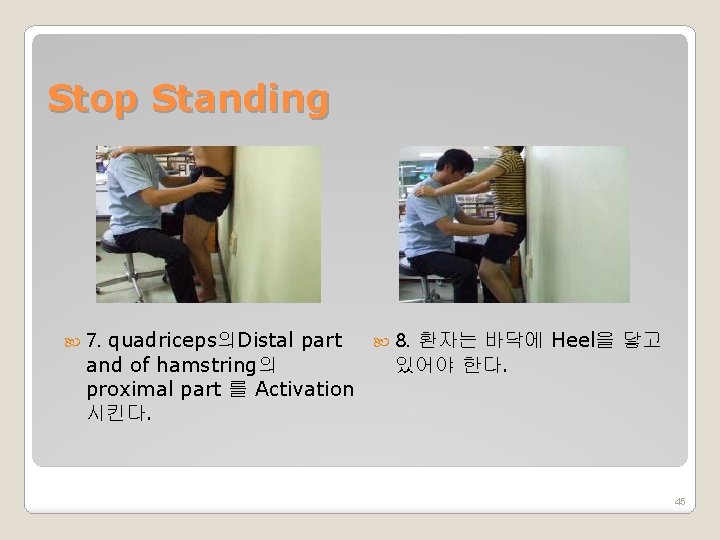
Stop Standing 7. quadriceps의Distal part and of hamstring의 proximal part 를 Activation 시킨다. 8. 환자는 바닥에 Heel을 닿고 있어야 한다. 45
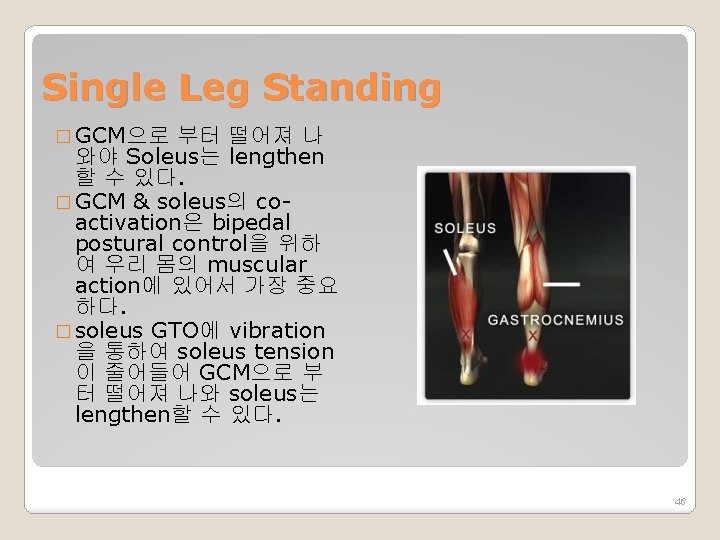
Single Leg Standing � GCM으로 부터 떨어져 나 와야 Soleus는 lengthen 할 수 있다. � GCM & soleus의 coactivation은 bipedal postural control을 위하 여 우리 몸의 muscular action에 있어서 가장 중요 하다. � soleus GTO에 vibration 을 통하여 soleus tension 이 줄어들어 GCM으로 부 터 떨어져 나와 soleus는 lengthen할 수 있다. 46
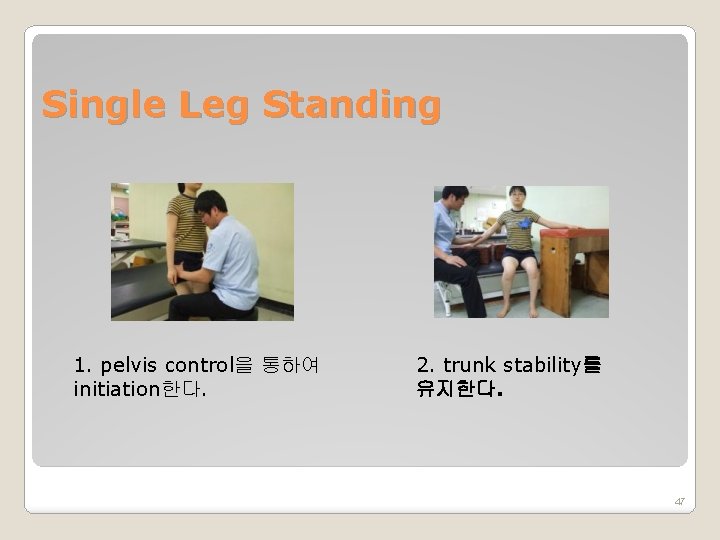
Single Leg Standing 1. pelvis control을 통하여 initiation한다. 2. trunk stability를 유지한다. 47
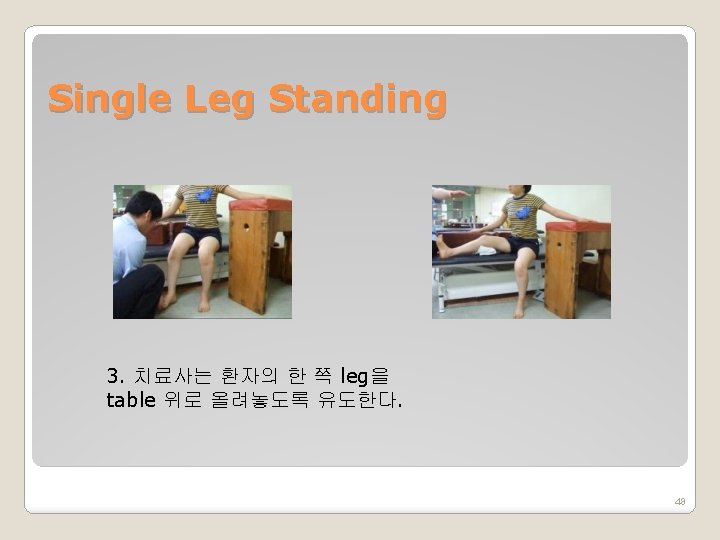
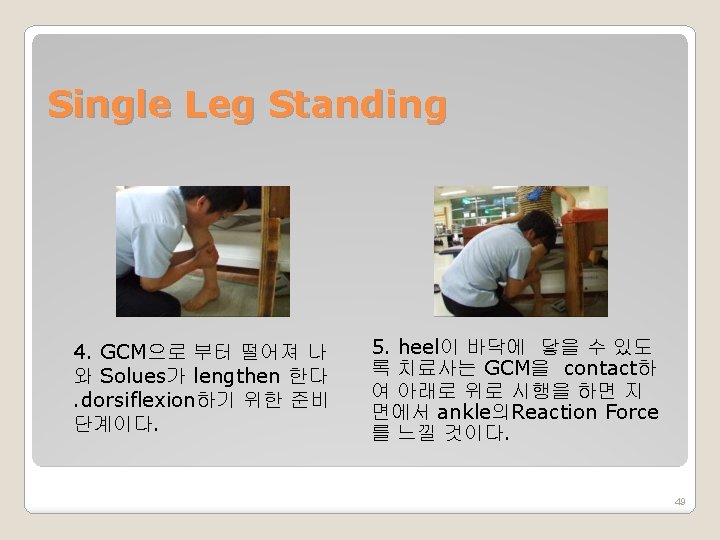
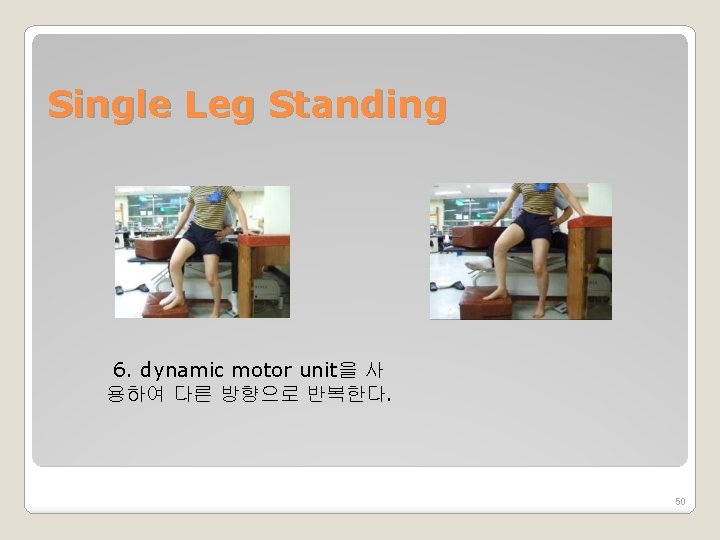
Single Leg Standing 6. dynamic motor unit을 사 용하여 다른 방향으로 반복한다. 50
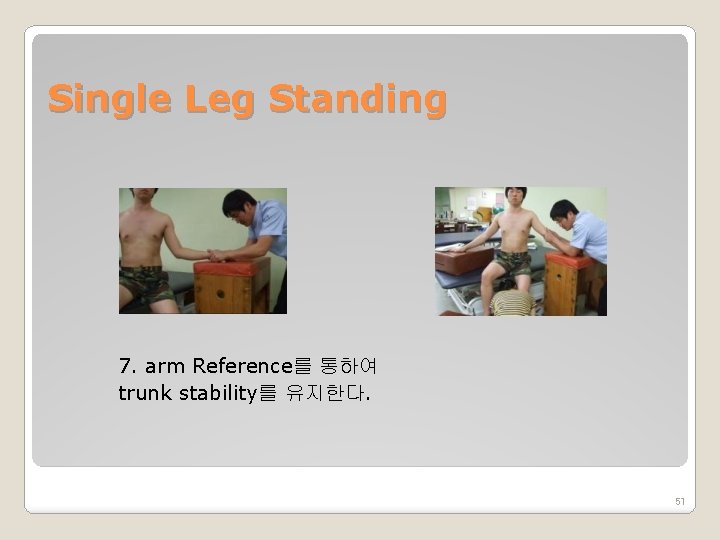
Single Leg Standing 7. arm Reference를 통하여 trunk stability를 유지한다. 51
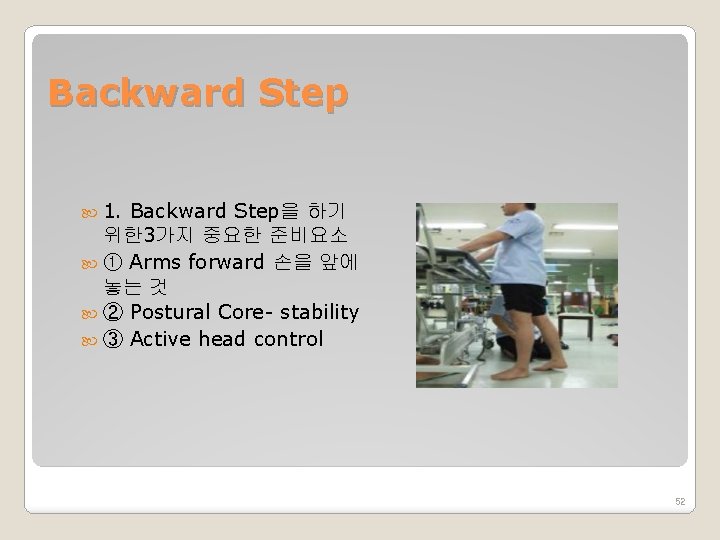
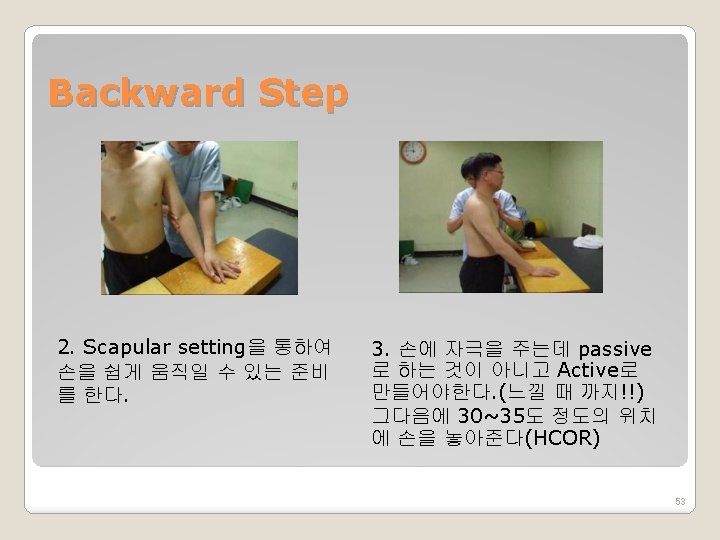
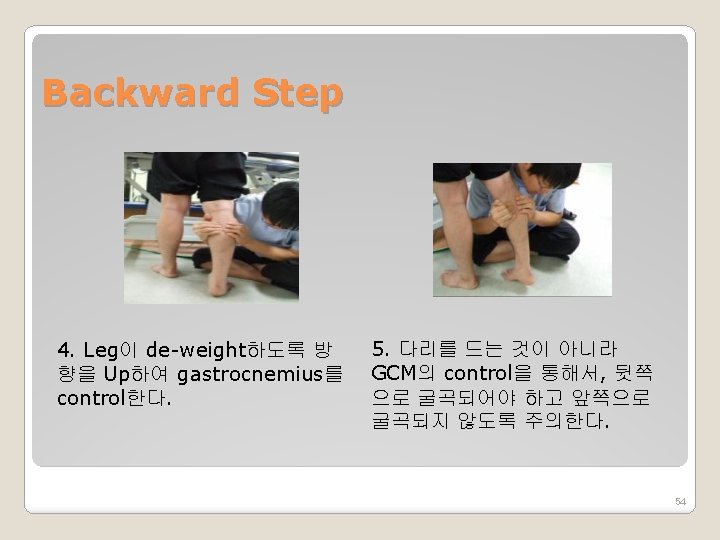
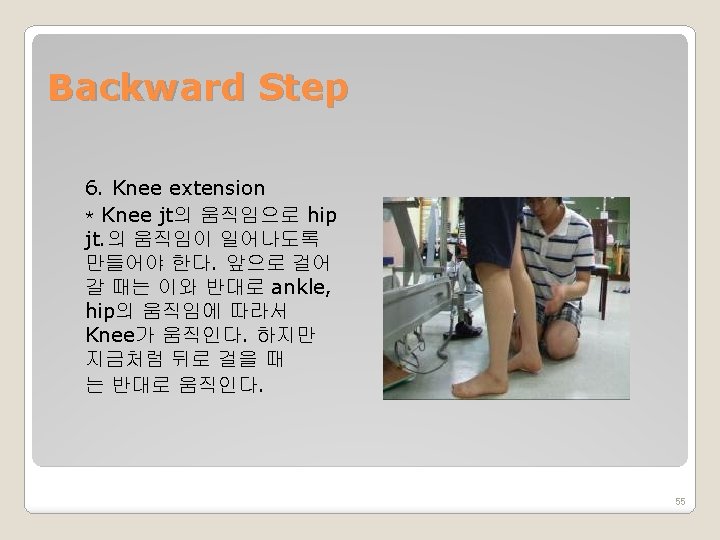
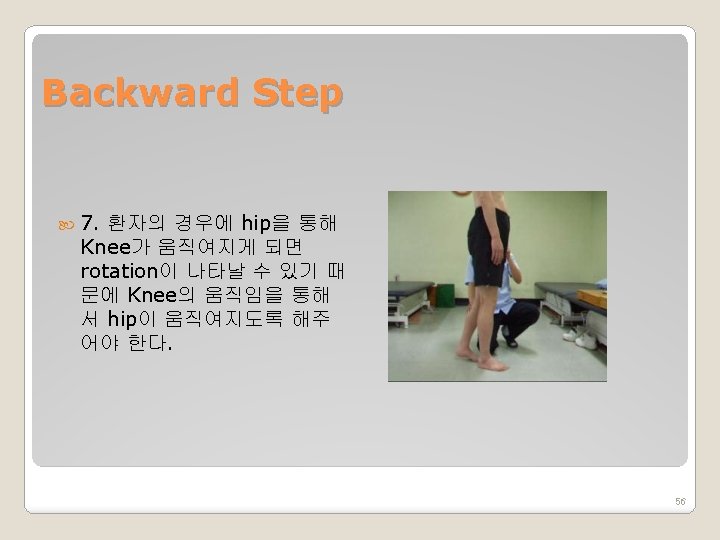
Backward Step 1. Backward Step을 하기 위한 3가지 중요한 준비요소 ① Arms forward 손을 앞에 놓는 것 ② Postural Core- stability ③ Active head control 52
- Slides: 56