
Rehabilitation of Wrist Hand Finger Injuries Chapter 19
Rehabilitation of Wrist, Hand, & Finger Injuries Chapter 19
Rehabilitation of the Forearm, Wrist, Hand Fingers • General Body Conditioning – Must maintain pre-injury level of conditioning – Cardiorespiratory, strength, flexibility and neuromuscular control – Many exercise options (particularly lower extremity) • Joint Mobilizations – Wrist and hand respond to traction and mobilization techniques
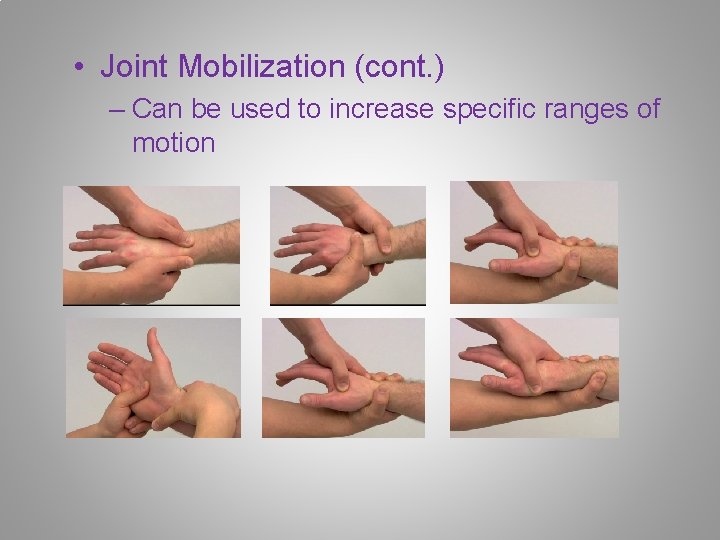
• Joint Mobilization (cont. ) – Can be used to increase specific ranges of motion

• Flexibility – Full pain free ROM is a major goal of rehabilitation – The program should include active assisted and active pain free stretching • Strength – Exercises should not aggravate condition or disrupt healing process – A variety of exercises are available for strength (wrist and hand)
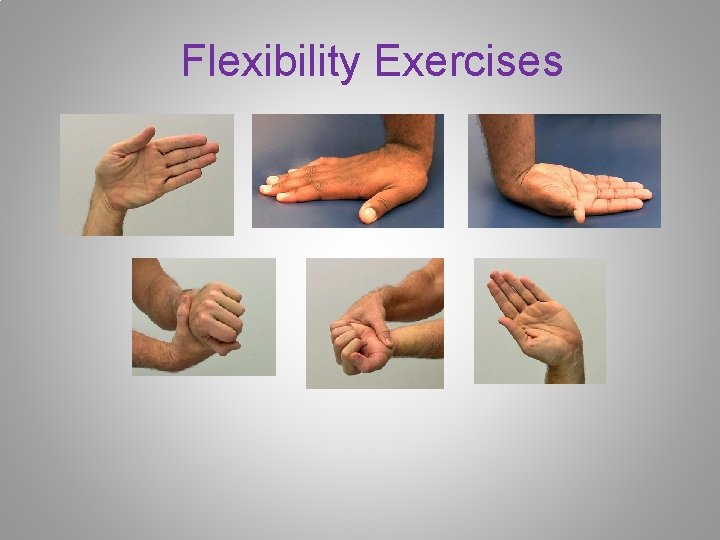
Flexibility Exercises
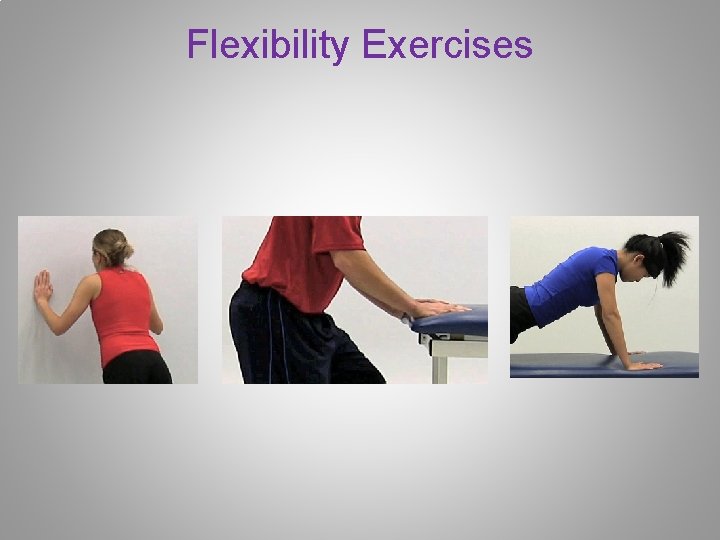
Flexibility Exercises
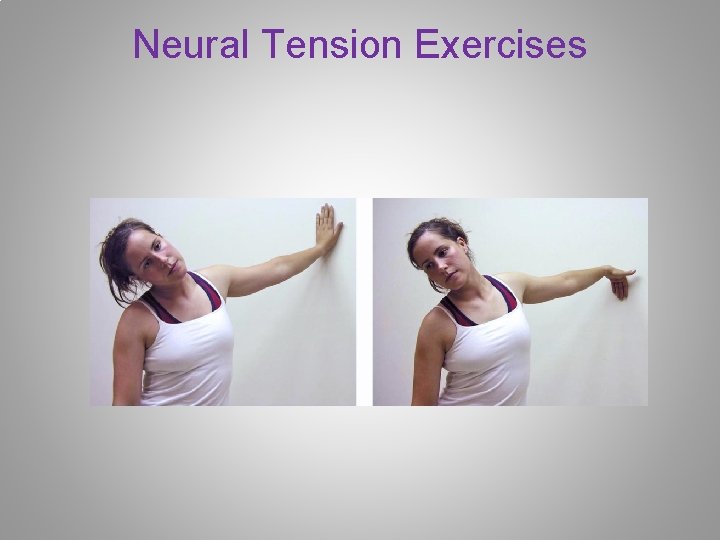
Neural Tension Exercises

Strengthening Exercises


• Neuromuscular Control – Hand fingers require restoration of dexterity • Pinching, fine motor activities (buttoning buttons, tying shoes, and picking up small objects) – It is important to incorporate functional activities designed to restore patient’s ability to perform daily activities
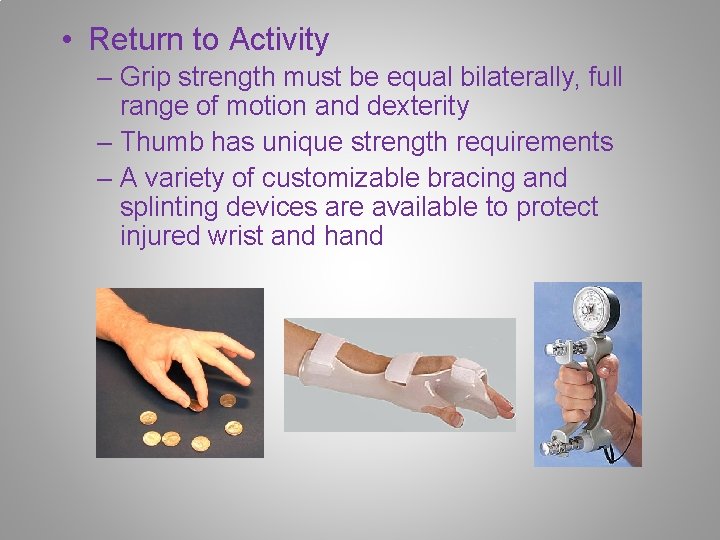
• Return to Activity – Grip strength must be equal bilaterally, full range of motion and dexterity – Thumb has unique strength requirements – A variety of customizable bracing and splinting devices are available to protect injured wrist and hand
- Slides: 11