
Rehabilitation of SCI in Lithuania Tomas Morkevicius Lithuanian
Rehabilitation of SCI in Lithuania Tomas Morkevicius Lithuanian Paraplegic Association Lithuanian University of Health Sciences Rehabilitation Clinic
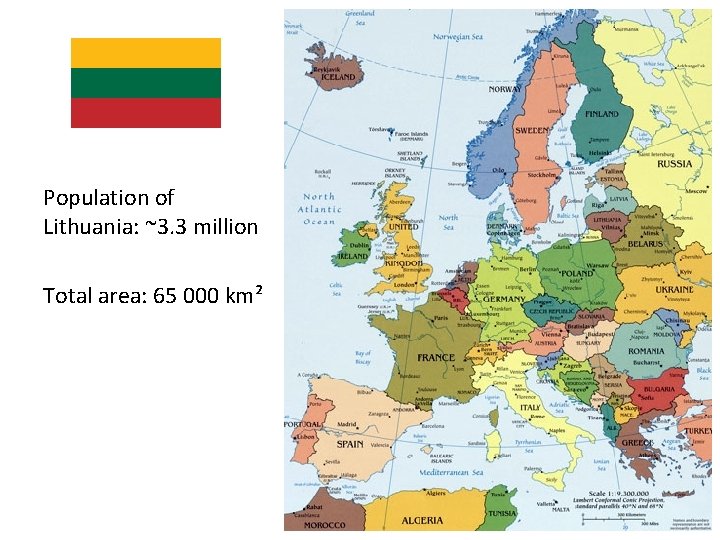
Population of Lithuania: ~3. 3 million Total area: 65 000 km²
• We have about 100 -120 new cases of SCI every year. • There are 3 rehabilitation centres for SCI:
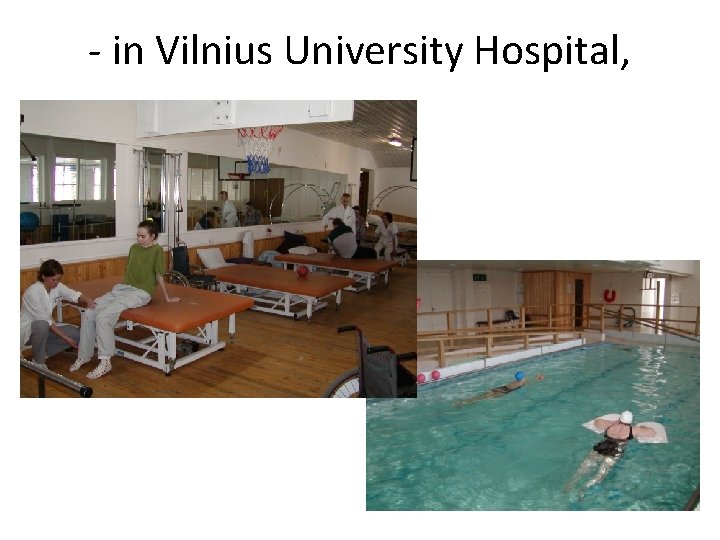
- in Vilnius University Hospital,
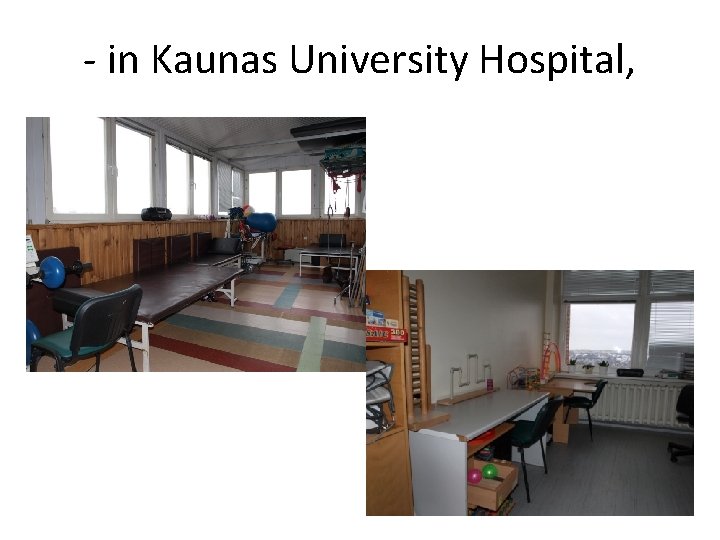
- in Kaunas University Hospital,
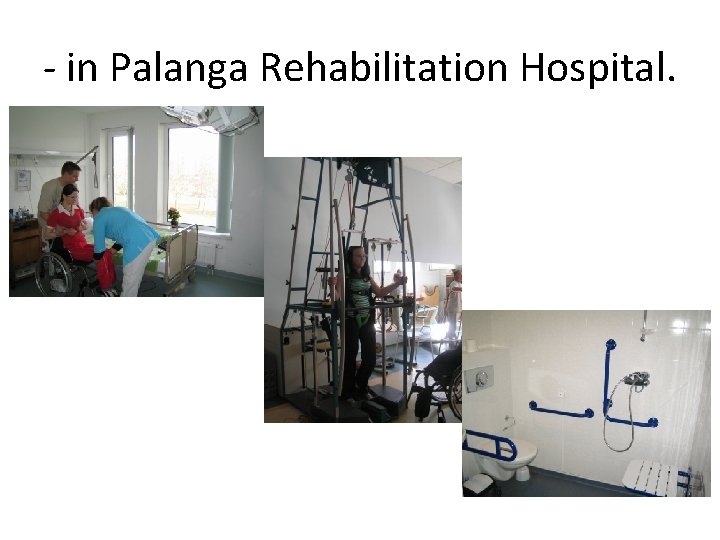
- in Palanga Rehabilitation Hospital.
• Primary rehabilitation span depends on the level and severity of injury: – 100 days for all ASIA A, B, C injuries, – 24 -70 days for ASIA D injuries.
• After the primary rehabilitation, if it is needed, rehabilitees can continue rehabilitation as outpatients up to 14 visits.
• The disabled after the primary rehabilitation, first three years after the injury can come every year to rehabilitation centre for repeated 24 day rehabilitation.
• In the fourth year after the injury and later, people can go every year to non specialized rehabilitation centers (19 places around the country) for 20 day “maintaining rehabilitation”.
• Tetraplegics with injuries at C 5 and above, and tracheostoma or artificial pulmonary ventilation can get specialized help at home 3 days a week.
• There is not national registry of SCI in Lithuania. • Also there is no organized life-long follow up of SCI.
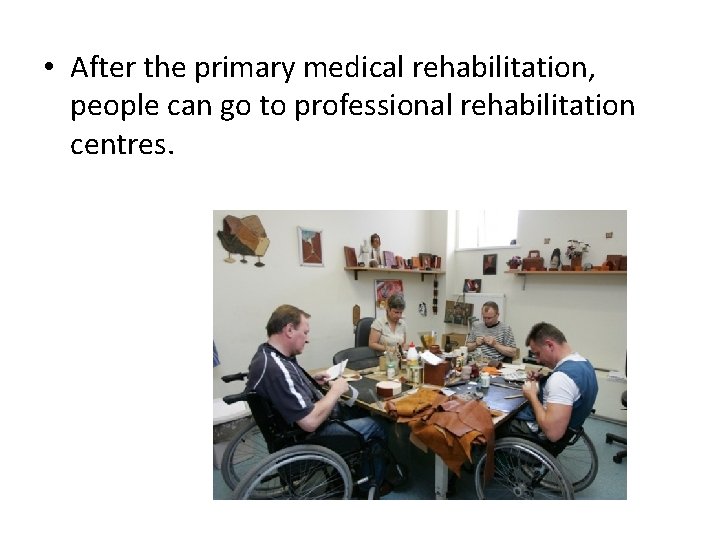
• After the primary medical rehabilitation, people can go to professional rehabilitation centres.
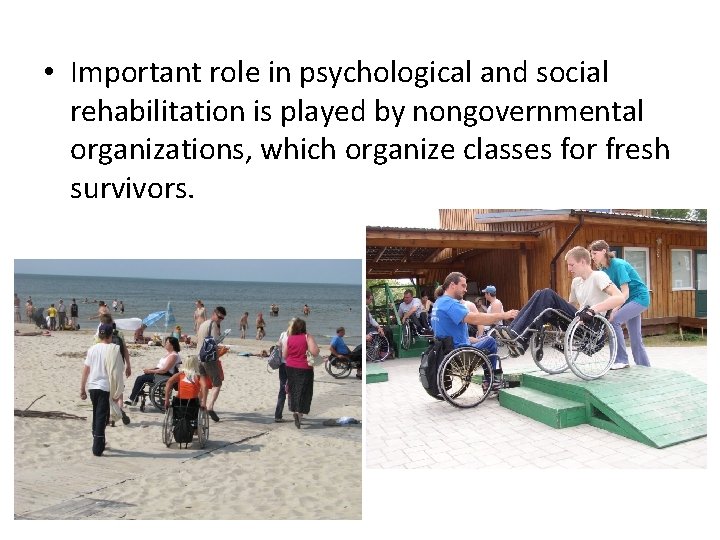
• Important role in psychological and social rehabilitation is played by nongovernmental organizations, which organize classes for fresh survivors.
My personal opinion on SCI rehabilitation in Lithuania • Strong side: – very good primary medical rehabilitation; – strong nongovernmental organizations, which help to re-integrate the disabled into society.
• Shortcomings: – Absence of life-long medical follow up of SCI; – Absence of the SCI registry; – Insufficient professional rehabilitation; – Lack of coordination between hospital social workers and the social workers caring for the disabled in the home setting.
- Slides: 16