
RegulatoryOffshore Issues Panel Connie Goers Arena Offshore Will
- Slides: 54
Regulatory/Offshore Issues Panel Connie Goers, Arena Offshore Will Pecue, Taylor Energy Greg Kusinski, Chevron
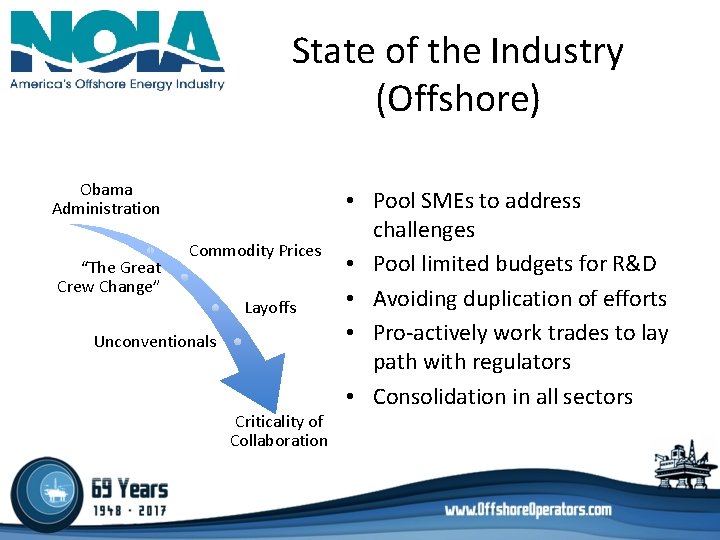
State of the Industry (Offshore) Obama Administration “The Great Crew Change” Commodity Prices Layoffs Unconventionals Criticality of Collaboration • Pool SMEs to address challenges • Pool limited budgets for R&D • Avoiding duplication of efforts • Pro-actively work trades to lay path with regulators • Consolidation in all sectors
NOIA – OOC MOU • Member resources – Staff reductions – Limited budgets • Collaboration – Critical issues we share – WCR, Air Rule, etc. • Leverage strengths – NOIA: Government – OOC: Technical
Connie Goers, Arena Offshore OOC Executive Subcommittee Chair
Current Administration • With the new administration there is a more diligent effort to recognize the need for collaboration among all stakeholders. This recognition is supported by the existing Congressional Review Act, and multiple Executive and Secretarial Orders issued by President Trump and his administration. • The intent of the Act and the Orders is to charge the agencies (includes BSEE, BOEM, USCG, EPA and others) and external stakeholders to work together on evaluating existing and proposed regulations to avoid duplication, and develop a more streamlined approach to the oil and gas regulations, processes and internal policies that govern our industry (inclusive exploration, development, production and ultimate decommissioning).
Current Administration • Federal agencies have published multiple Federal Register Notices seeking recommendations and comments from external stakeholders and the general public on the tasks as outlined in the Orders. • One of the initial changes implemented by an agency (BOEM) is the reduction of royalty relief on shallow water leases from 18. 75% to 12. 50% on the recent GOM Lease Sale No. 249
Industry Trades • Industry Trades have been working independently and jointly to work with their members on obtaining feedback and recommendations to respond to these Orders and subsequent Federal Register Notices • Efforts by the Industry Trades have evolved even more so to ensure there are joint efforts to rely on the strength and charter of each trade group and avoid duplication of efforts and concurrence on many topics.
Industry Trades • There are multiple trades within the industry that focus on representing their stakeholders; and bring multiple talents and information to work collaboratively on regulatory issues within our industry. • These same trades spend a multitude of hours to research, meet and work through these issues; most of which these subject matter experts who work for other entities, and their employers agreed to volunteer their time to work these issues.
Agencies/Joint Trades • The trades are actively working several topics from major to minor reviews of existing and proposed regulations; as well as internal policies and practices implemented by some agencies • Trade SME’s have held numerous meetings with agency headquarters and regional personnel on priority regulations which have the most impact on our industry; initiating discussions and options for streamlining the regulatory process; obtaining more transparency of these processes whereby both internal and external stakeholders have a better understanding of the reasoning; and all the while maintaining a goal of regulatory compliance and safe environments • It is important the stakeholders continue to collaborate on these priority regulations and policies which have an impact on our industry based on availability of equipment and processes, the time periods required to obtain permit approvals to move forward with exploration and development; and the financial impact to the economics of certain projects.
Priority Regulatory Issues • BOEM – Financial Risk Management • Sole vs Non-Sole Liability Ownerships • Proof of stability and financial capacity for decommissioning costs • BSEE Assessed Decommissioning Costs • Awaiting further detailed from DOI
Priority Regulatory Issues • BOEM – Plans (EP/DOCD) • Consistent and transparent internal review processes • Mandatory Regulatory Time Frames and internal process • Requirement for Revised Plans – Projected Air Emissions • Outcome of ongoing GOM Air Quality Modeling Study • Review of the proposed air quality regulations will have a significant impact on industry if issued as proposed final in 2016 • Consistency and transparency in interpretation of existing regulations and policies
Priority Regulatory Issues • BSEE – Well Control Rule • Wellbore Design • Equipment Design • Certification Requirements • Panelist discussion on BAST and HP/HT impacts – Production Safety Rule • Additional Facility Design Drawings (Topsides) • P. E. Certification Requirements • Safety Device Testing • Failure Reporting Requirements
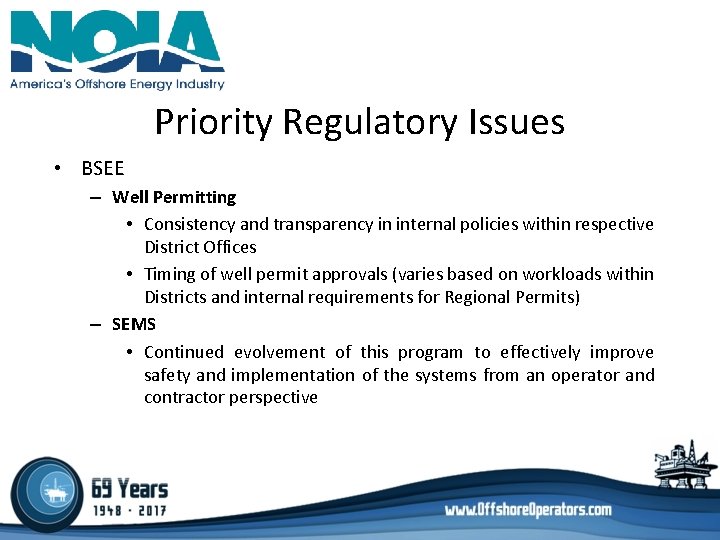
Priority Regulatory Issues • BSEE – Well Permitting • Consistency and transparency in internal policies within respective District Offices • Timing of well permit approvals (varies based on workloads within Districts and internal requirements for Regional Permits) – SEMS • Continued evolvement of this program to effectively improve safety and implementation of the systems from an operator and contractor perspective
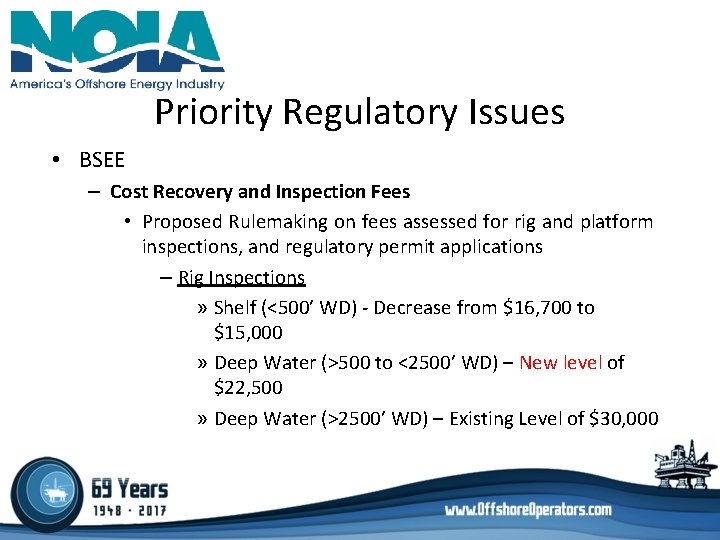
Priority Regulatory Issues • BSEE – Cost Recovery and Inspection Fees • Proposed Rulemaking on fees assessed for rig and platform inspections, and regulatory permit applications – Rig Inspections » Shelf (<500’ WD) - Decrease from $16, 700 to $15, 000 » Deep Water (>500 to <2500’ WD) – New level of $22, 500 » Deep Water (>2500’ WD) – Existing Level of $30, 000
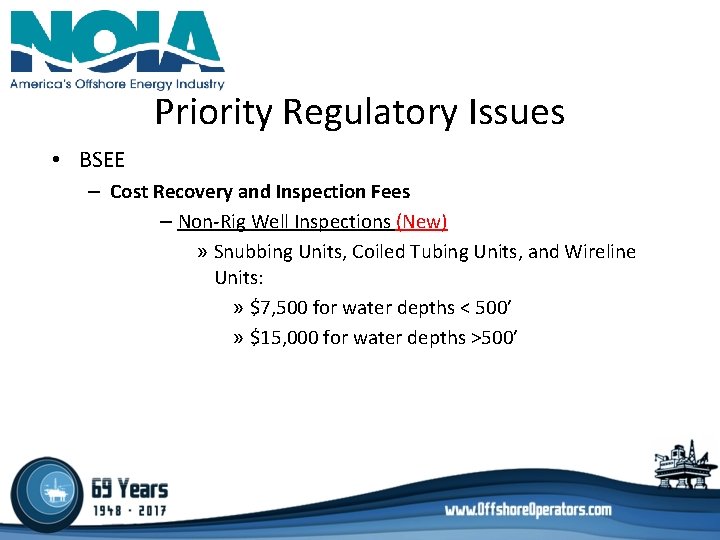
Priority Regulatory Issues • BSEE – Cost Recovery and Inspection Fees – Non-Rig Well Inspections (New) » Snubbing Units, Coiled Tubing Units, and Wireline Units: » $7, 500 for water depths < 500’ » $15, 000 for water depths >500’
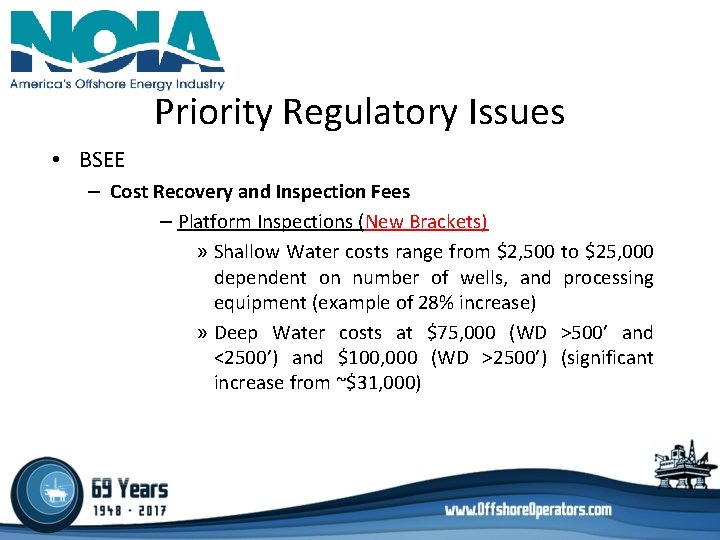
Priority Regulatory Issues • BSEE – Cost Recovery and Inspection Fees – Platform Inspections (New Brackets) » Shallow Water costs range from $2, 500 to $25, 000 dependent on number of wells, and processing equipment (example of 28% increase) » Deep Water costs at $75, 000 (WD >500’ and <2500’) and $100, 000 (WD >2500’) (significant increase from ~$31, 000)
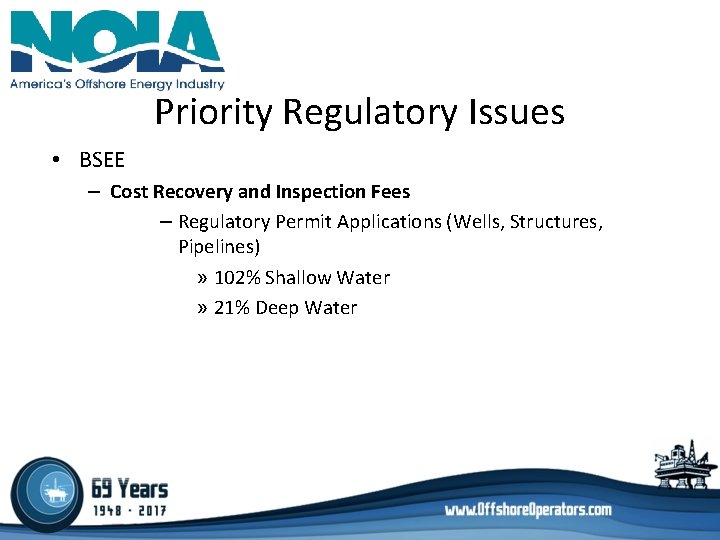
Priority Regulatory Issues • BSEE – Cost Recovery and Inspection Fees – Regulatory Permit Applications (Wells, Structures, Pipelines) » 102% Shallow Water » 21% Deep Water
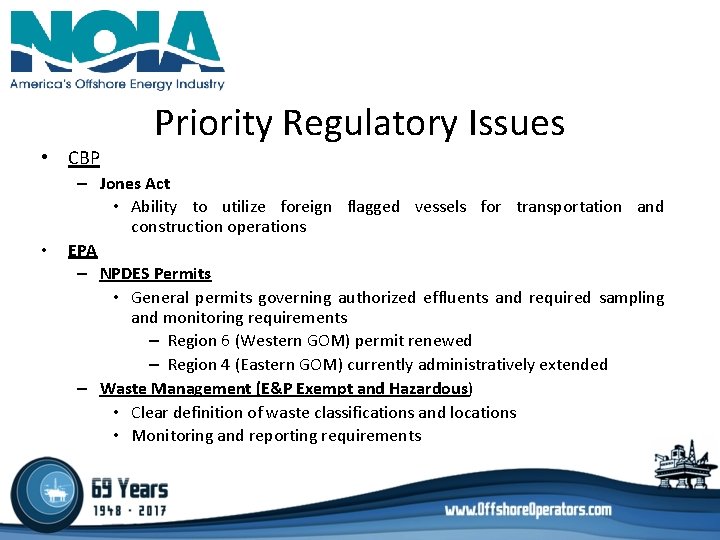
• CBP • Priority Regulatory Issues – Jones Act • Ability to utilize foreign flagged vessels for transportation and construction operations EPA – NPDES Permits • General permits governing authorized effluents and required sampling and monitoring requirements – Region 6 (Western GOM) permit renewed – Region 4 (Eastern GOM) currently administratively extended – Waste Management (E&P Exempt and Hazardous) • Clear definition of waste classifications and locations • Monitoring and reporting requirements
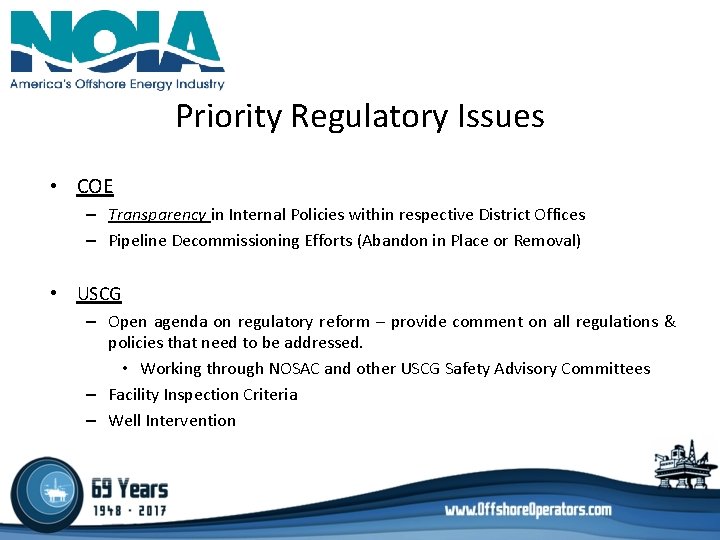
Priority Regulatory Issues • COE – Transparency in Internal Policies within respective District Offices – Pipeline Decommissioning Efforts (Abandon in Place or Removal) • USCG – Open agenda on regulatory reform – provide comment on all regulations & policies that need to be addressed. • Working through NOSAC and other USCG Safety Advisory Committees – Facility Inspection Criteria – Well Intervention
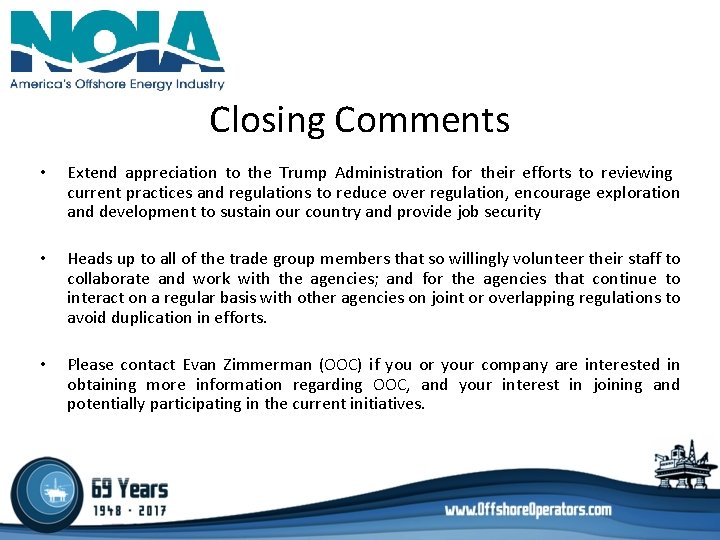
Closing Comments • Extend appreciation to the Trump Administration for their efforts to reviewing current practices and regulations to reduce over regulation, encourage exploration and development to sustain our country and provide job security • Heads up to all of the trade group members that so willingly volunteer their staff to collaborate and work with the agencies; and for the agencies that continue to interact on a regular basis with other agencies on joint or overlapping regulations to avoid duplication in efforts. • Please contact Evan Zimmerman (OOC) if you or your company are interested in obtaining more information regarding OOC, and your interest in joining and potentially participating in the current initiatives.
Will Pecue, Taylor Energy NOIA HSSE Chair
WCR & BAST And OESI as Lagniappe! (a little something extra)
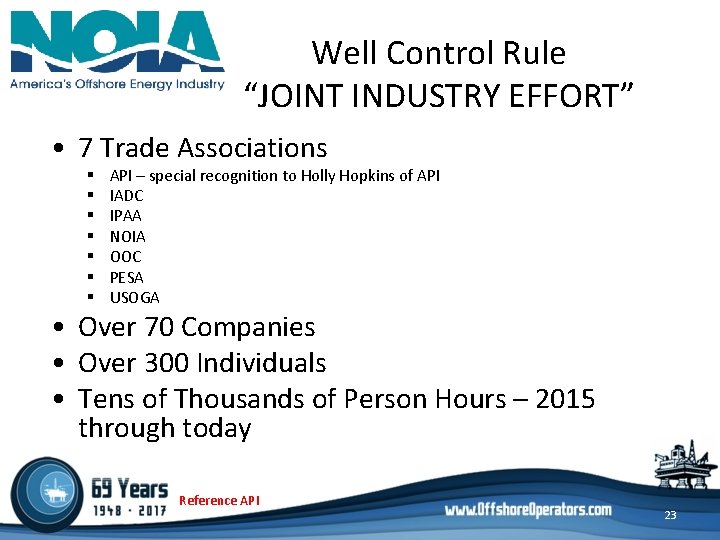
Well Control Rule “JOINT INDUSTRY EFFORT” • 7 Trade Associations § § § § API – special recognition to Holly Hopkins of API IADC IPAA NOIA OOC PESA USOGA • Over 70 Companies • Over 300 Individuals • Tens of Thousands of Person Hours – 2015 through today Reference API 23
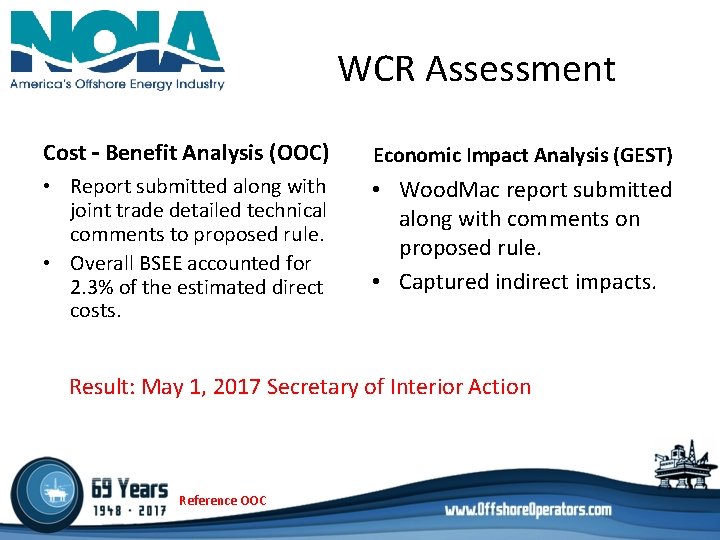
WCR Assessment Cost – Benefit Analysis (OOC) Economic Impact Analysis (GEST) • Report submitted along with joint trade detailed technical comments to proposed rule. • Overall BSEE accounted for 2. 3% of the estimated direct costs. • Wood. Mac report submitted along with comments on proposed rule. • Captured indirect impacts. Result: May 1, 2017 Secretary of Interior Action Reference OOC
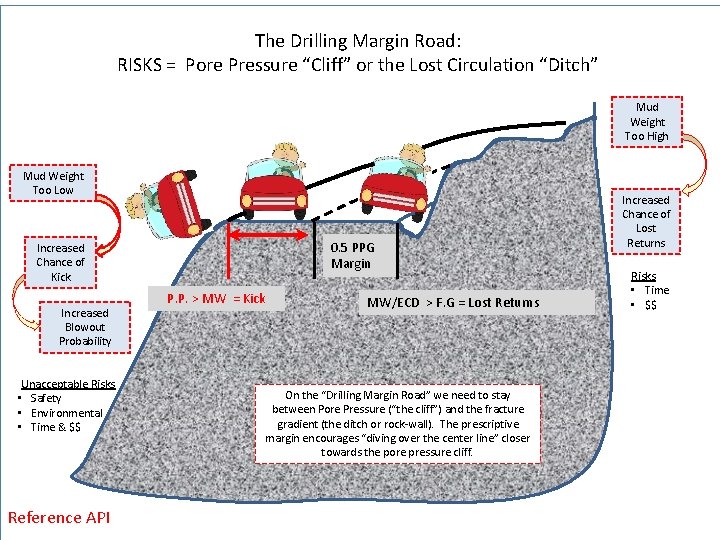
The Drilling Margin Road: RISKS = Pore Pressure “Cliff” or the Lost Circulation “Ditch” Mud Weight Too High Mud Weight Too Low 0. 5 PPG Margin Increased Chance of Kick Increased Blowout Probability Unacceptable Risks • Safety • Environmental • Time & $$ Reference API P. P. > MW = Kick MW/ECD > F. G = Lost Returns On the “Drilling Margin Road” we need to stay between Pore Pressure (“the cliff”) and the fracture gradient (the ditch or rock-wall). The prescriptive margin encourages “diving over the center line” closer towards the pore pressure cliff. Increased Chance of Lost Returns Risks • Time • $$
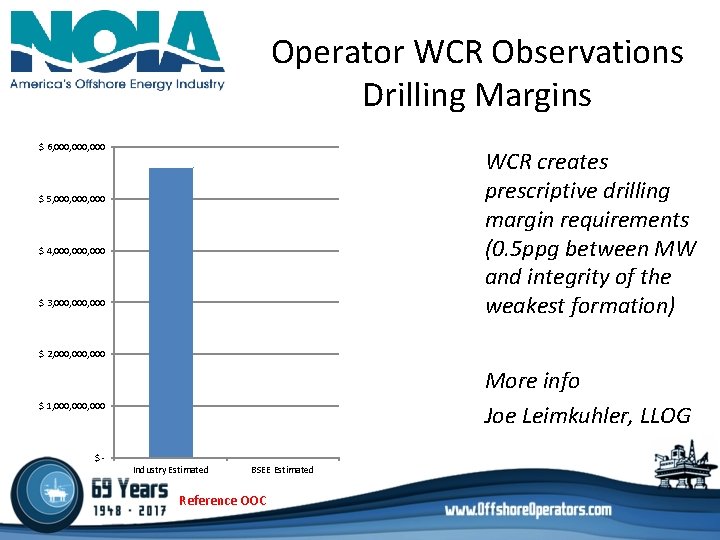
Operator WCR Observations Drilling Margins $ 6, 000, 000 WCR creates prescriptive drilling margin requirements (0. 5 ppg between MW and integrity of the weakest formation) $ 5, 000, 000 $ 4, 000, 000 $ 3, 000, 000 $ 2, 000, 000 More info Joe Leimkuhler, LLOG $ 1, 000, 000 $Industry Estimated BSEE Estimated Reference OOC
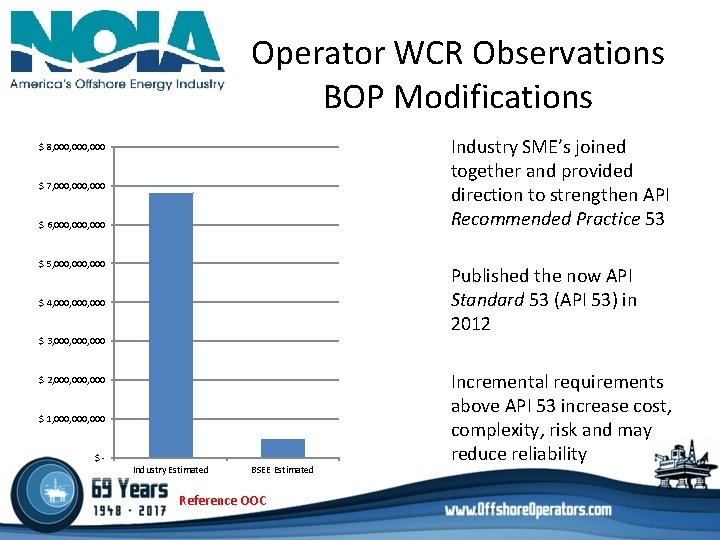
Operator WCR Observations BOP Modifications Industry SME’s joined together and provided direction to strengthen API Recommended Practice 53 $ 8, 000, 000 $ 7, 000, 000 $ 6, 000, 000 $ 5, 000, 000 Published the now API Standard 53 (API 53) in 2012 $ 4, 000, 000 $ 3, 000, 000 $ 2, 000, 000 $ 1, 000, 000 $Industry Estimated BSEE Estimated Reference OOC Incremental requirements above API 53 increase cost, complexity, risk and may reduce reliability
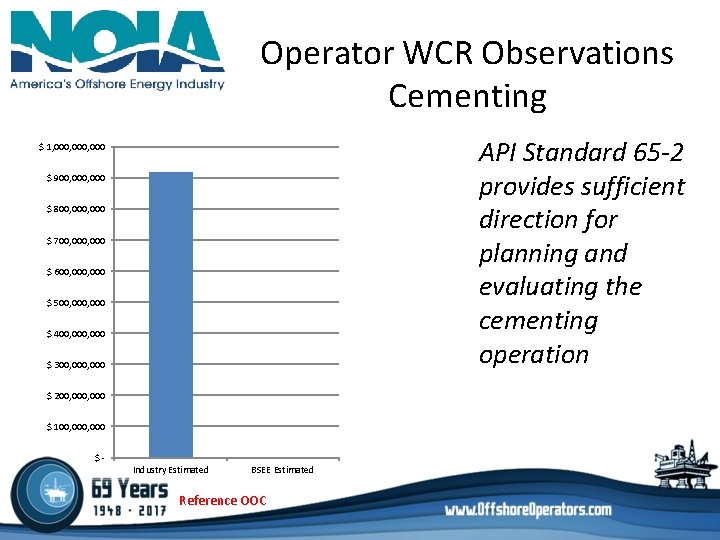
Operator WCR Observations Cementing API Standard 65 -2 provides sufficient direction for planning and evaluating the cementing operation $ 1, 000, 000 $ 900, 000 $ 800, 000 $ 700, 000 $ 600, 000 $ 500, 000 $ 400, 000 $ 300, 000 $ 200, 000 $ 100, 000 $Industry Estimated BSEE Estimated Reference OOC
Operator WCR Observations Other Incremental Cost components: - Required Shut Ins for Rig Move - Real Time Monitoring - BSEE Approved Verification Organizations - Increased Resources for WCR regulations
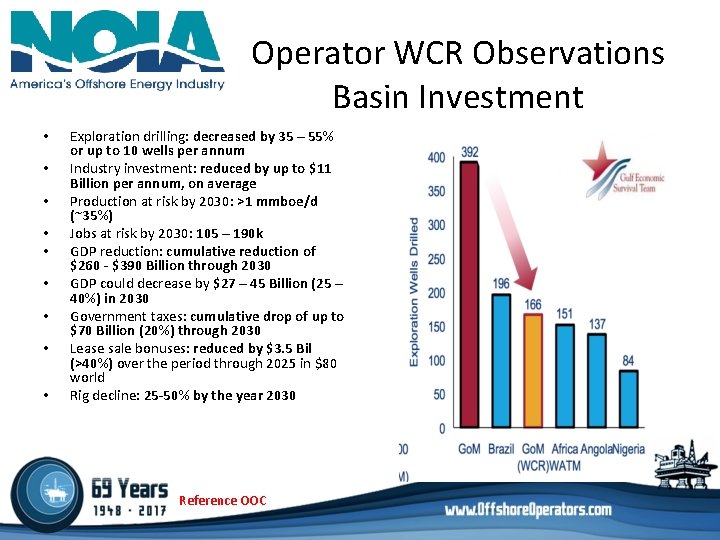
Operator WCR Observations Basin Investment • • • Exploration drilling: decreased by 35 – 55% or up to 10 wells per annum Industry investment: reduced by up to $11 Billion per annum, on average Production at risk by 2030: >1 mmboe/d (~35%) Jobs at risk by 2030: 105 – 190 k GDP reduction: cumulative reduction of $260 - $390 Billion through 2030 GDP could decrease by $27 – 45 Billion (25 – 40%) in 2030 Government taxes: cumulative drop of up to $70 Billion (20%) through 2030 Lease sale bonuses: reduced by $3. 5 Bil (>40%) over the period through 2025 in $80 world Rig decline: 25 -50% by the year 2030 Reference OOC
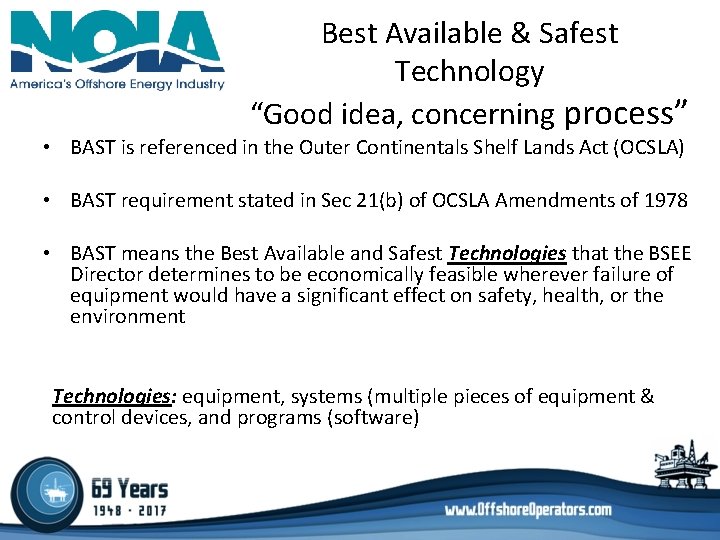
Best Available & Safest Technology “Good idea, concerning process” • BAST is referenced in the Outer Continentals Shelf Lands Act (OCSLA) • BAST requirement stated in Sec 21(b) of OCSLA Amendments of 1978 • BAST means the Best Available and Safest Technologies that the BSEE Director determines to be economically feasible wherever failure of equipment would have a significant effect on safety, health, or the environment Technologies: equipment, systems (multiple pieces of equipment & control devices, and programs (software)
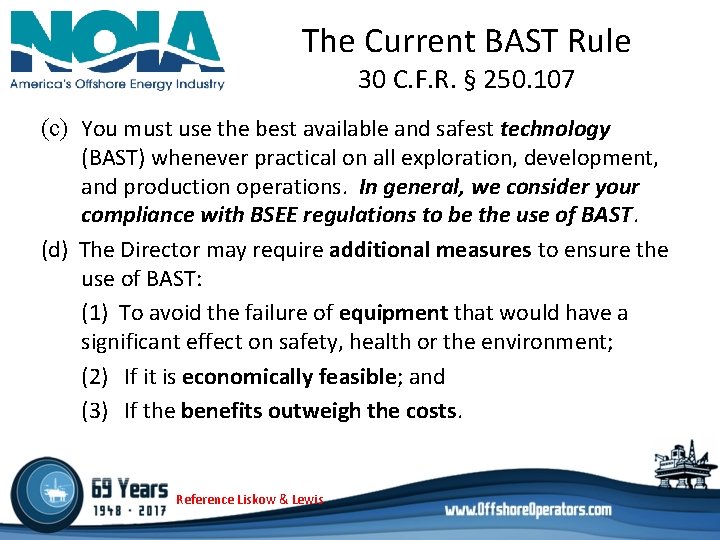
The Current BAST Rule 30 C. F. R. § 250. 107 (c) You must use the best available and safest technology (BAST) whenever practical on all exploration, development, and production operations. In general, we consider your compliance with BSEE regulations to be the use of BAST. (d) The Director may require additional measures to ensure the use of BAST: (1) To avoid the failure of equipment that would have a significant effect on safety, health or the environment; (2) If it is economically feasible; and (3) If the benefits outweigh the costs. Reference Liskow & Lewis
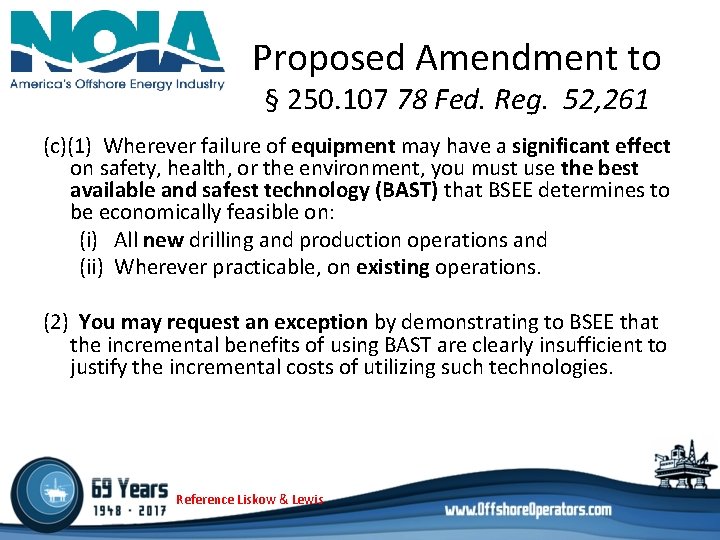
Proposed Amendment to § 250. 107 78 Fed. Reg. 52, 261 (c)(1) Wherever failure of equipment may have a significant effect on safety, health, or the environment, you must use the best available and safest technology (BAST) that BSEE determines to be economically feasible on: (i) All new drilling and production operations and (ii) Wherever practicable, on existing operations. (2) You may request an exception by demonstrating to BSEE that the incremental benefits of using BAST are clearly insufficient to justify the incremental costs of utilizing such technologies. Reference Liskow & Lewis
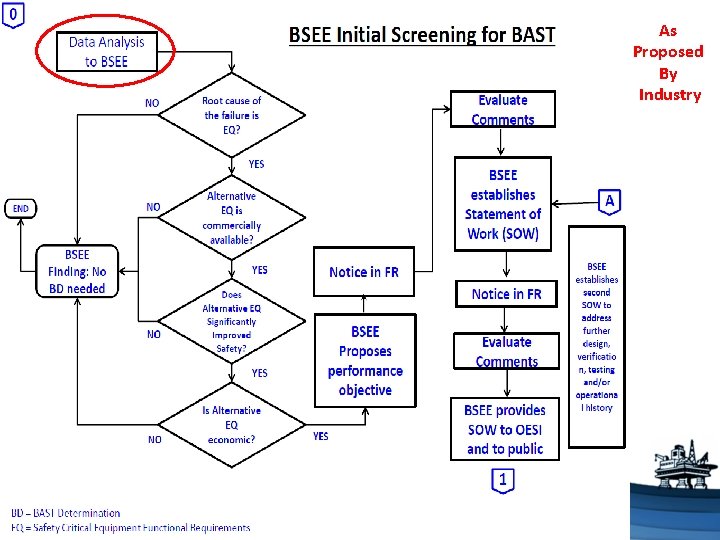
As Proposed By Industry
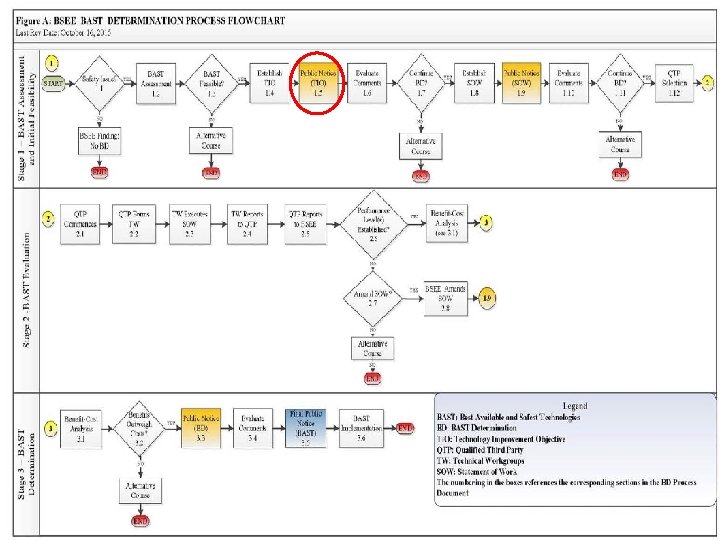
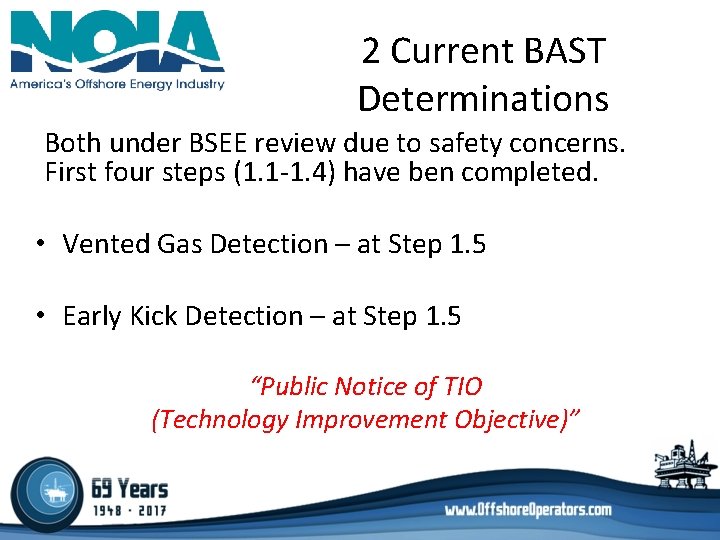
2 Current BAST Determinations Both under BSEE review due to safety concerns. First four steps (1. 1 -1. 4) have ben completed. • Vented Gas Detection – at Step 1. 5 • Early Kick Detection – at Step 1. 5 “Public Notice of TIO (Technology Improvement Objective)”
OESI Role • • • Offshore Energy Safety Institute Congressional Funding “Implied” Industry funding thereafter Self-Centered Focus Pay-to-Play Is your Company supporting this?
What has Industry Learned since 2010?
Greg Kusinski, Chevron NOIA Technical Policy Chair
Update 1. HPHT Approvals – CDWOP process – BSEE Guidelines: “Guidance on Submitting a Conceptual Plan and Deepwater Operations Plan to Obtain BSEE Approval to Implement a High Pressure and/or High Temperature Project” If we have time: 2. Go. M G&G Activities – brief update for Sarah Tsoflias
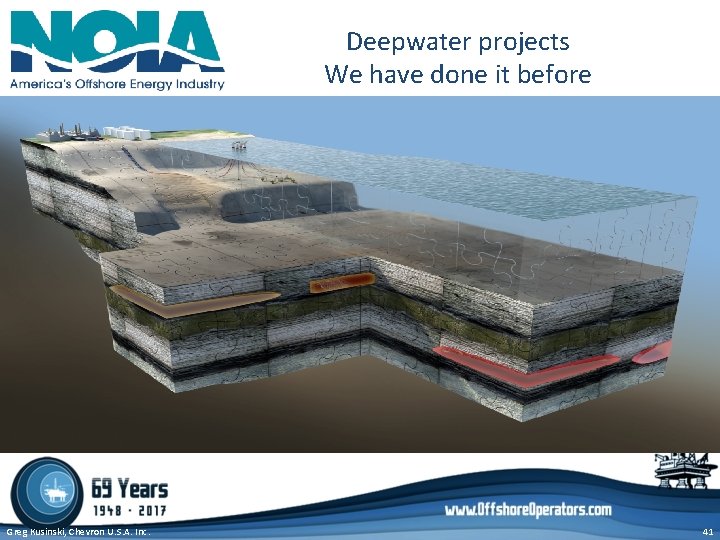
Deepwater projects We have done it before Greg Kusinski, Chevron U. S. A. Inc. 41
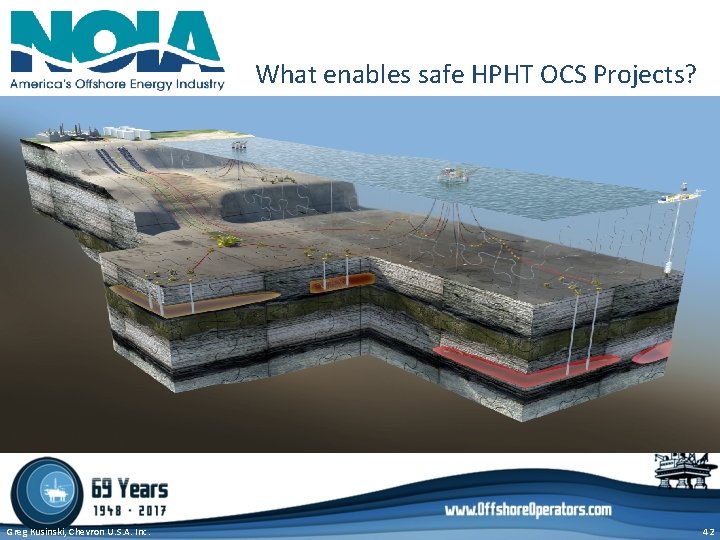
What enables safe HPHT OCS Projects? Greg Kusinski, Chevron U. S. A. Inc. 42
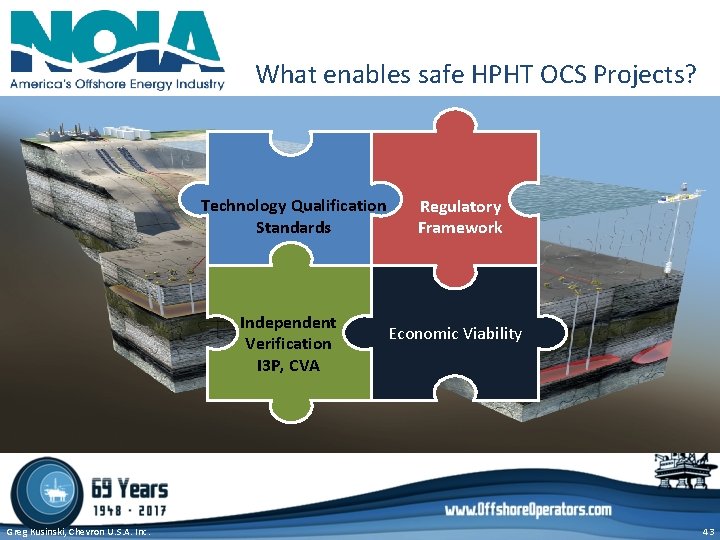
What enables safe HPHT OCS Projects? Technology Qualification Standards Independent Verification I 3 P, CVA Greg Kusinski, Chevron U. S. A. Inc. Regulatory Framework Economic Viability 43
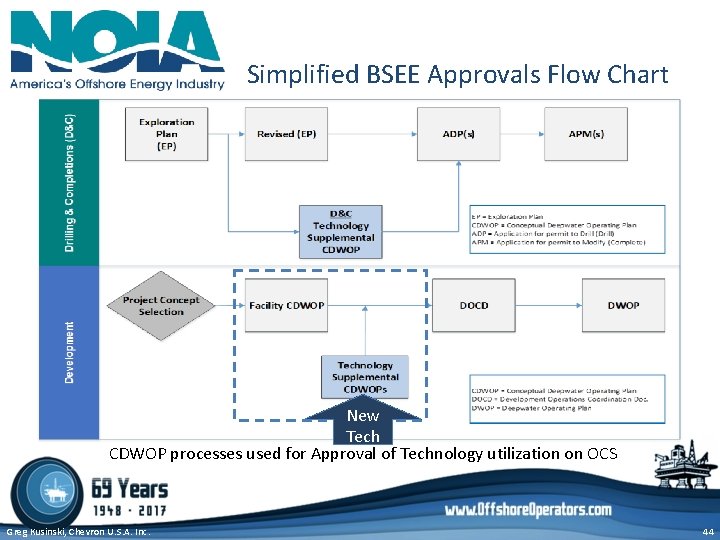
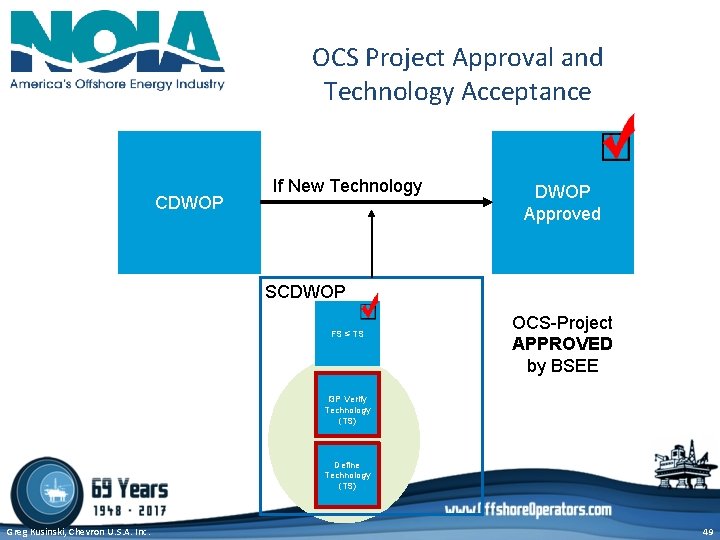
Simplified BSEE Approvals Flow Chart New Tech CDWOP processes used for Approval of Technology utilization on OCS Greg Kusinski, Chevron U. S. A. Inc. 44
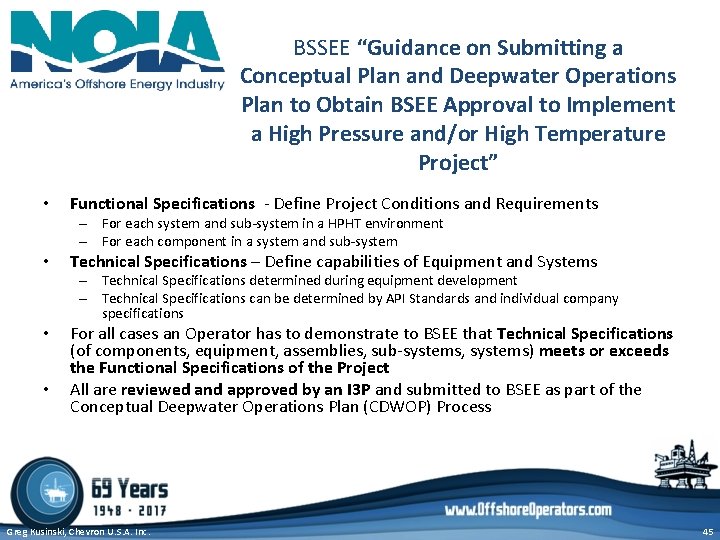
BSSEE “Guidance on Submitting a Conceptual Plan and Deepwater Operations Plan to Obtain BSEE Approval to Implement a High Pressure and/or High Temperature Project” • Functional Specifications - Define Project Conditions and Requirements – For each system and sub-system in a HPHT environment – For each component in a system and sub-system • Technical Specifications – Define capabilities of Equipment and Systems – Technical Specifications determined during equipment development – Technical Specifications can be determined by API Standards and individual company specifications • • For all cases an Operator has to demonstrate to BSEE that Technical Specifications (of components, equipment, assemblies, sub-systems, systems) meets or exceeds the Functional Specifications of the Project All are reviewed and approved by an I 3 P and submitted to BSEE as part of the Conceptual Deepwater Operations Plan (CDWOP) Process Greg Kusinski, Chevron U. S. A. Inc. 45
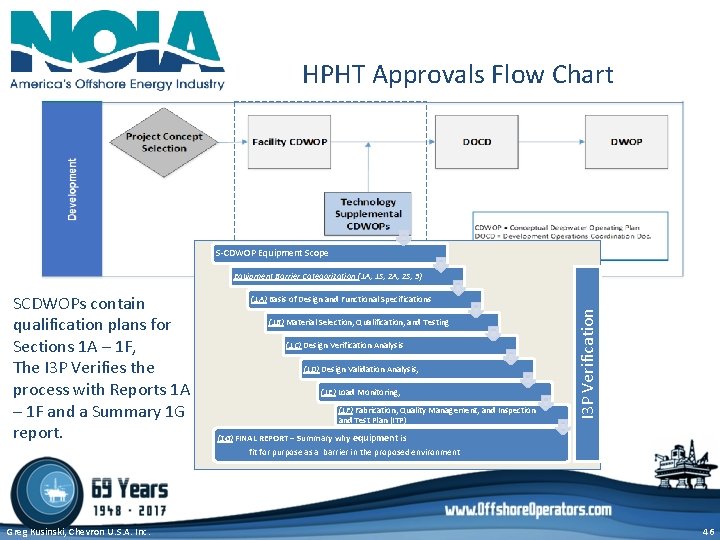
HPHT Approvals Flow Chart S-CDWOP Equipment Scope Equipment Barrier Categorization (1 A, 1 S, 2 A, 2 S, 3) (1 A) Basis of Design and Functional Specifications (1 B) Material Selection, Qualification, and Testing (1 C) Design Verification Analysis (1 D) Design Validation Analysis, (1 E) Load Monitoring, (1 F) Fabrication, Quality Management, and Inspection and Test Plan (ITP) I 3 P Verification SCDWOPs contain qualification plans for Sections 1 A – 1 F, The I 3 P Verifies the process with Reports 1 A – 1 F and a Summary 1 G report. (1 G) FINAL REPORT – Summary why equipment is fit for purpose as a barrier in the proposed environment Greg Kusinski, Chevron U. S. A. Inc. 46
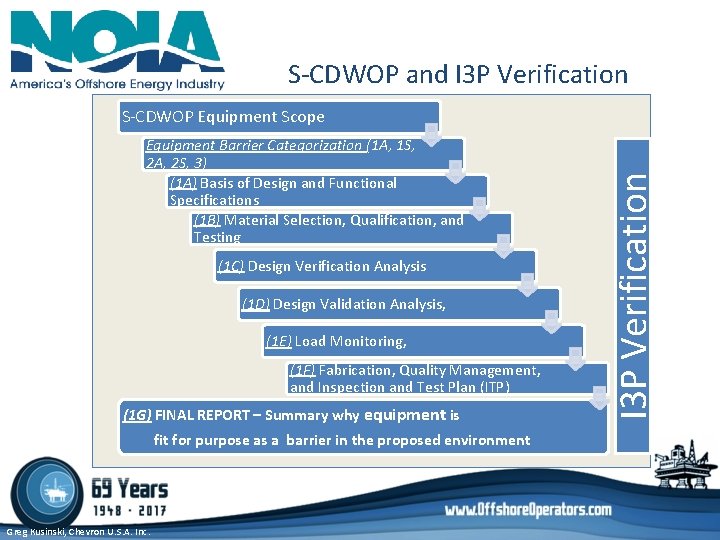
S-CDWOP and I 3 P Verification Equipment Barrier Categorization (1 A, 1 S, 2 A, 2 S, 3) (1 A) Basis of Design and Functional Specifications (1 B) Material Selection, Qualification, and Testing (1 C) Design Verification Analysis (1 D) Design Validation Analysis, (1 E) Load Monitoring, (1 F) Fabrication, Quality Management, and Inspection and Test Plan (ITP) (1 G) FINAL REPORT – Summary why equipment is fit for purpose as a barrier in the proposed environment Greg Kusinski, Chevron U. S. A. Inc. I 3 P Verification S-CDWOP Equipment Scope
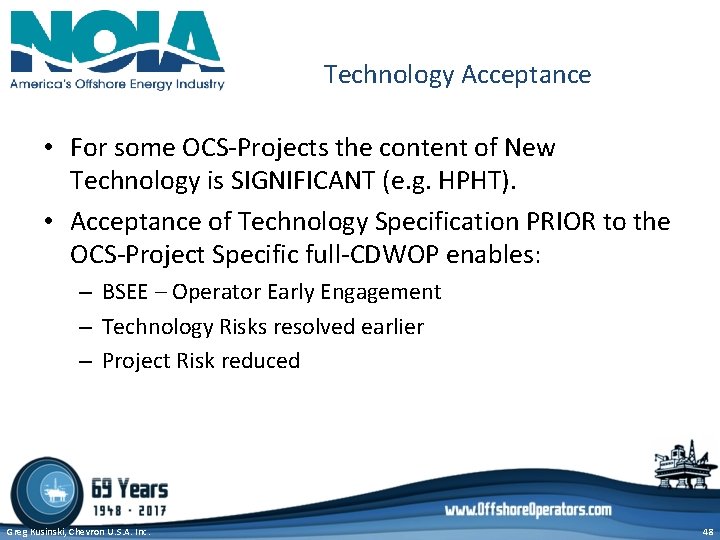
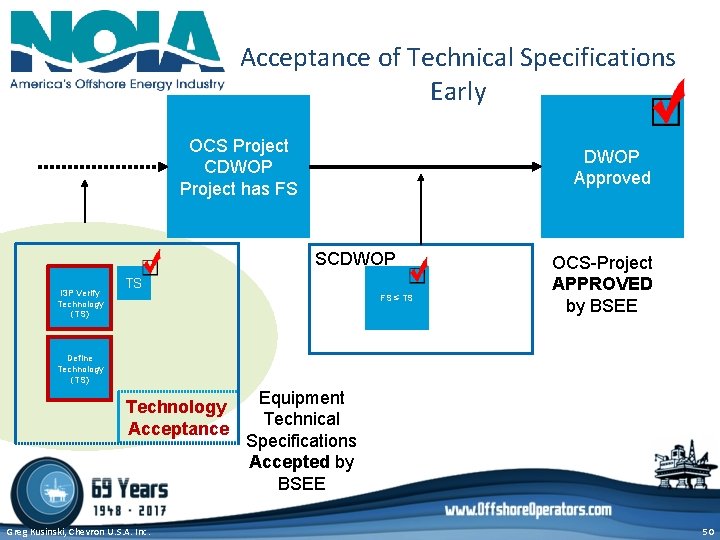
Technology Acceptance • For some OCS-Projects the content of New Technology is SIGNIFICANT (e. g. HPHT). • Acceptance of Technology Specification PRIOR to the OCS-Project Specific full-CDWOP enables: – BSEE – Operator Early Engagement – Technology Risks resolved earlier – Project Risk reduced Greg Kusinski, Chevron U. S. A. Inc. 48
OCS Project Approval and Technology Acceptance CDWOP If New Technology DWOP Approved SCDWOP FS ≤ TS OCS-Project APPROVED by BSEE I 3 P Verify Technology (TS) Define Technology (TS) Greg Kusinski, Chevron U. S. A. Inc. 49
Acceptance of Technical Specifications Early OCS Project CDWOP Project has FS DWOP Approved SCDWOP I 3 P Verify Technology (TS) TS FS ≤ TS OCS-Project APPROVED by BSEE Define Technology (TS) Technology Acceptance Greg Kusinski, Chevron U. S. A. Inc. Equipment Technical Specifications Accepted by BSEE 50
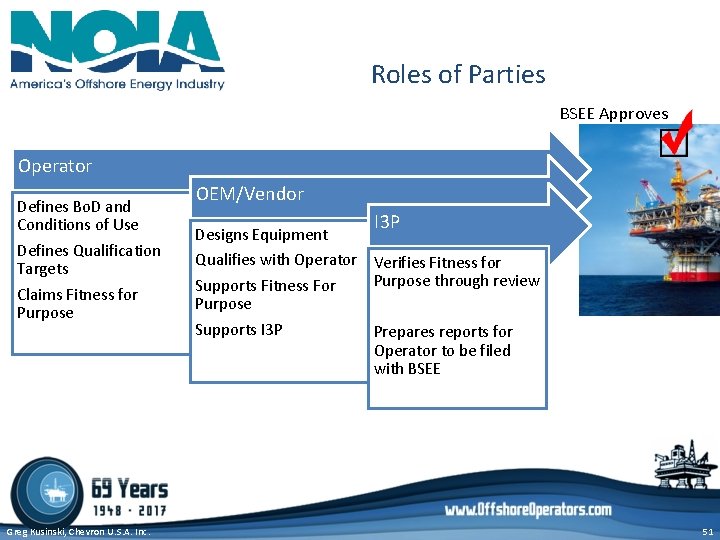
Roles of Parties BSEE Approves Operator Defines Bo. D and Conditions of Use Defines Qualification Targets Claims Fitness for Purpose Greg Kusinski, Chevron U. S. A. Inc. OEM/Vendor I 3 P Designs Equipment Qualifies with Operator Verifies Fitness for Purpose through review Supports Fitness For Purpose Supports I 3 P Prepares reports for Operator to be filed with BSEE 51
Go. M G&G Activities Greg Kusinski, Chevron U. S. A. Inc.
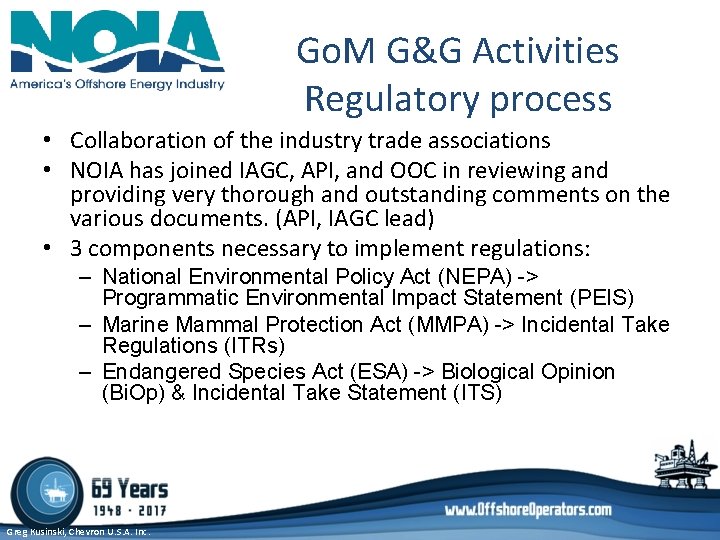
Go. M G&G Activities Regulatory process • Collaboration of the industry trade associations • NOIA has joined IAGC, API, and OOC in reviewing and providing very thorough and outstanding comments on the various documents. (API, IAGC lead) • 3 components necessary to implement regulations: – National Environmental Policy Act (NEPA) -> Programmatic Environmental Impact Statement (PEIS) – Marine Mammal Protection Act (MMPA) -> Incidental Take Regulations (ITRs) – Endangered Species Act (ESA) -> Biological Opinion (Bi. Op) & Incidental Take Statement (ITS) Greg Kusinski, Chevron U. S. A. Inc.
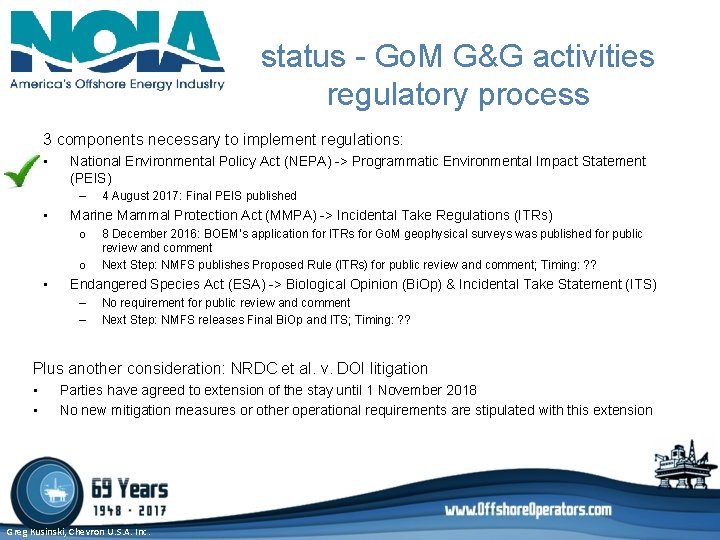
status - Go. M G&G activities regulatory process 3 components necessary to implement regulations: • National Environmental Policy Act (NEPA) -> Programmatic Environmental Impact Statement (PEIS) – • Marine Mammal Protection Act (MMPA) -> Incidental Take Regulations (ITRs) o o • 4 August 2017: Final PEIS published 8 December 2016: BOEM’s application for ITRs for Go. M geophysical surveys was published for public review and comment Next Step: NMFS publishes Proposed Rule (ITRs) for public review and comment; Timing: ? ? Endangered Species Act (ESA) -> Biological Opinion (Bi. Op) & Incidental Take Statement (ITS) – – No requirement for public review and comment Next Step: NMFS releases Final Bi. Op and ITS; Timing: ? ? Plus another consideration: NRDC et al. v. DOI litigation • • Parties have agreed to extension of the stay until 1 November 2018 No new mitigation measures or other operational requirements are stipulated with this extension Greg Kusinski, Chevron U. S. A. Inc.