
Regulatory barriers for the circular economy Case study
Regulatory barriers for the circular economy Case study: Nutrient recovery and manure derived products Author/presenter: Joost van Barneveld, Technopolis Group
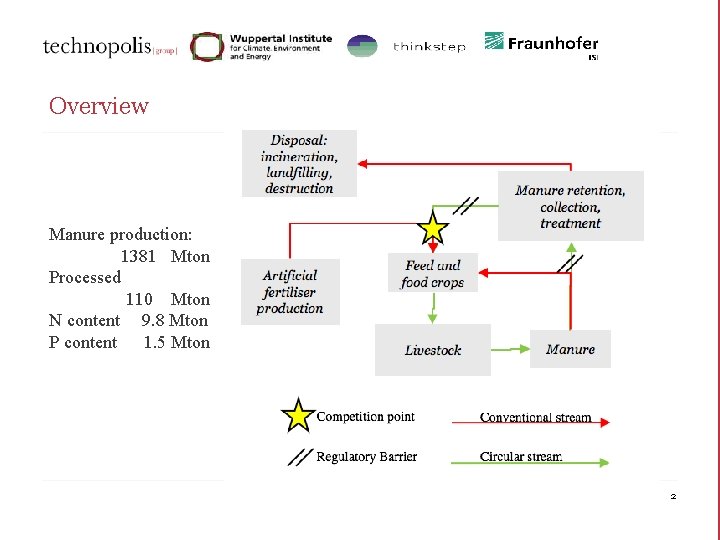
Overview Manure production: 1381 Mton Processed 110 Mton N content 9. 8 Mton P content 1. 5 Mton 2
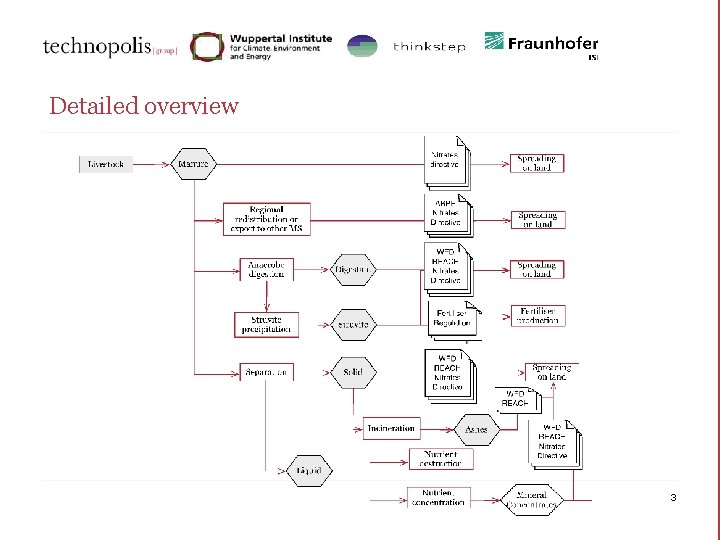
Detailed overview 3
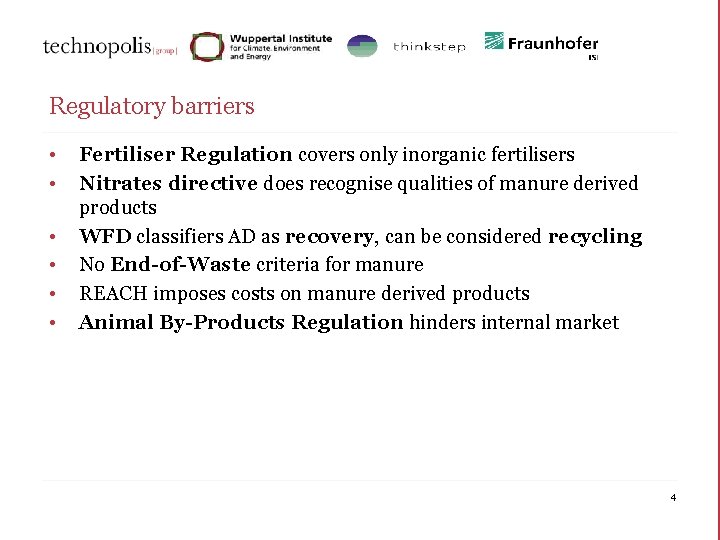
Regulatory barriers • • • Fertiliser Regulation covers only inorganic fertilisers Nitrates directive does recognise qualities of manure derived products WFD classifiers AD as recovery, can be considered recycling No End-of-Waste criteria for manure REACH imposes costs on manure derived products Animal By-Products Regulation hinders internal market 4
Effects of regulatory barrier • Economic effects: • The market for manure derived products is seriously hindered; only 8% of manure is processed in some way • ABPR and WFD classifications drive demand for smallscale installations to circumvent trade and transport • Value contained in manure as fertiliser over € 11 b. • Each percent of nutrients wasted amounts to ±€ 100 m • Manure treatment is labour intensive expensive but generates local employment • Environmental effects • Processing manure significantly reduces emissions of GHG and nutrients to the environment • Nitrogen destruction associated with <=70 kg CO 2 / kg N 2 5
Observations on removal of regulatory barrier • • Manure derived products can still be pathogenic; ABPR needs to find a delicate balance Behaviour of manure-derived products in soil not fully known; difficult to set the right targets in the Nitrates Directive Processing manure with other bio-waste complicates waste stream, implications for Eo. W criteria and REACH Fertiliser Regulation is very specific on composition of inorganic fertilisers; the required level of certainty may not be achievable for organic fertilisers or manure derived products 6
Amsterdam | Brighton | Brussels | Frankfurt/Main | Paris | Stockholm | Tallinn | Vienna 7
- Slides: 7