
Regulation of Glycolysis and pentose phosphate pathway Introduction
- Slides: 22
Regulation of Glycolysis and pentose phosphate pathway
Introduction Every living organism present on the earth required food for nourishment, development and obtaining energy for regulating various metabolic processes. The food enter in cell where it breakdown in cytoplasm and in mitochondria in number of pathways. In cytoplasm the glucose (food) breakdown into pyruvic acid by glycolysis process which enter in Krebs's cycle takes place in matrix of mitochondria and release CO 2, H 2 O and ATP (Energy). Another alternate pathway for glucose breakdown is pentose phosphate pathway takes place in cytoplasm.
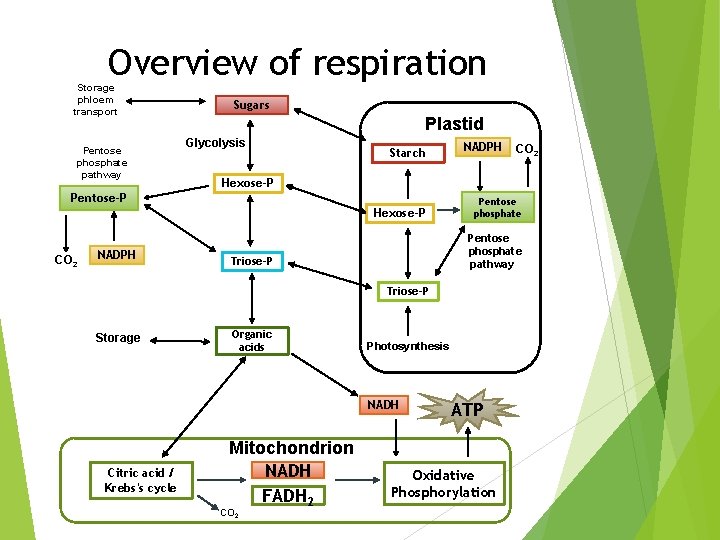
Overview of respiration Storage phloem transport Pentose phosphate pathway Sugars Plastid Glycolysis Starch Hexose-P NADPH Pentose phosphate pathway Triose-P Storage Organic acids Photosynthesis NADH Citric acid / Krebs's cycle CO 2 Hexose-P Pentose-P CO 2 NADPH Mitochondrion NADH FADH 2 CO 2 ATP Oxidative Phosphorylation
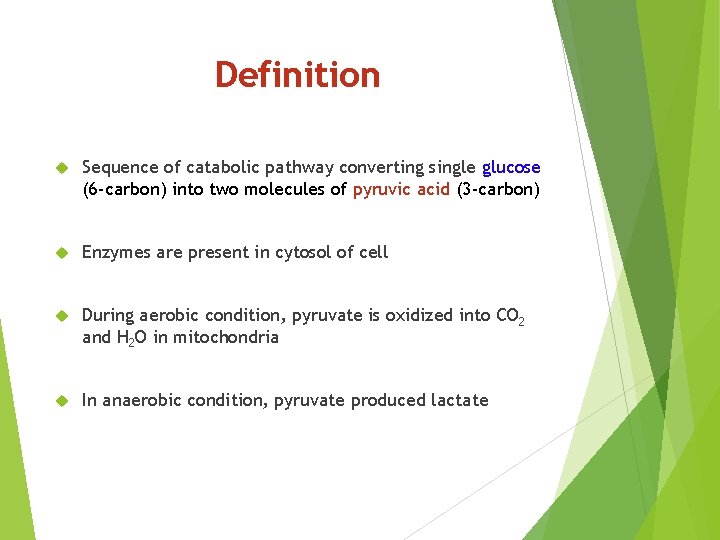
Glycolysis Also called Embden-Meyerhof pathway First metabolic sequence to be studied Takes place in almost all cell cytoplasm (cytosol) Breakdown of glucose into two molecules of pyruvic acid 9 steps process Yield ATP and NADH Works in both aerobic and anaerobic respiration No oxygen is required
Definition Sequence of catabolic pathway converting single glucose (6 -carbon) into two molecules of pyruvic acid (3 -carbon) Enzymes are present in cytosol of cell During aerobic condition, pyruvate is oxidized into CO 2 and H 2 O in mitochondria In anaerobic condition, pyruvate produced lactate
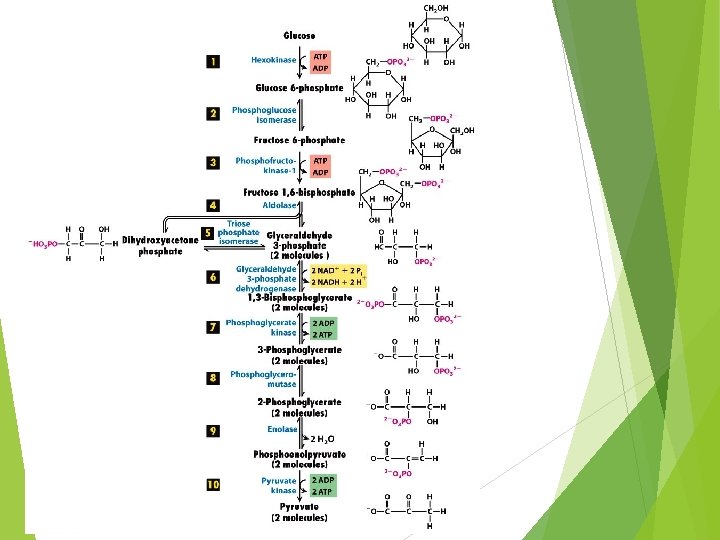
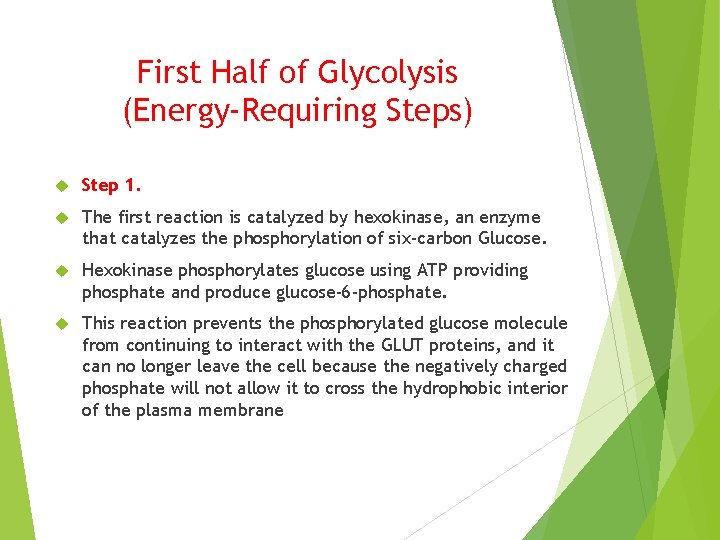
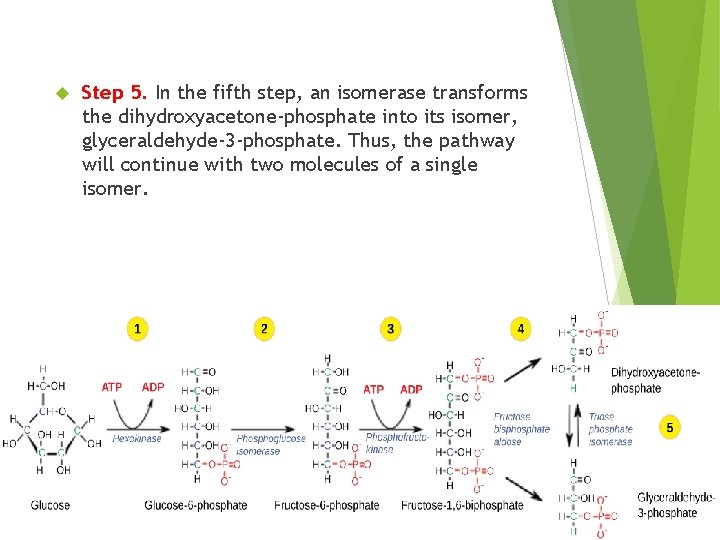
First Half of Glycolysis (Energy-Requiring Steps) Step 1. The first reaction is catalyzed by hexokinase, an enzyme that catalyzes the phosphorylation of six-carbon Glucose. Hexokinase phosphorylates glucose using ATP providing phosphate and produce glucose-6 -phosphate. This reaction prevents the phosphorylated glucose molecule from continuing to interact with the GLUT proteins, and it can no longer leave the cell because the negatively charged phosphate will not allow it to cross the hydrophobic interior of the plasma membrane
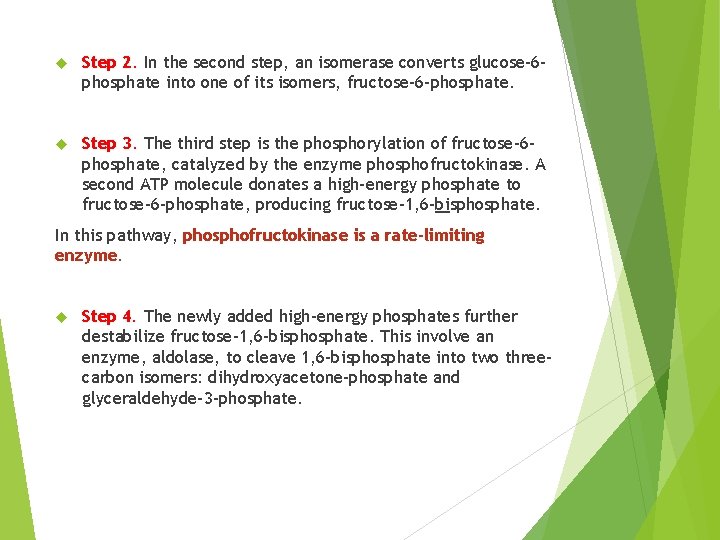
Step 2. In the second step, an isomerase converts glucose-6 phosphate into one of its isomers, fructose-6 -phosphate. Step 3. The third step is the phosphorylation of fructose-6 phosphate, catalyzed by the enzyme phosphofructokinase. A second ATP molecule donates a high-energy phosphate to fructose-6 -phosphate, producing fructose-1, 6 -bisphosphate. In this pathway, phosphofructokinase is a rate-limiting enzyme. Step 4. The newly added high-energy phosphates further destabilize fructose-1, 6 -bisphosphate. This involve an enzyme, aldolase, to cleave 1, 6 -bisphosphate into two threecarbon isomers: dihydroxyacetone-phosphate and glyceraldehyde-3 -phosphate.
Step 5. In the fifth step, an isomerase transforms the dihydroxyacetone-phosphate into its isomer, glyceraldehyde-3 -phosphate. Thus, the pathway will continue with two molecules of a single isomer.
Second Half of Glycolysis (Energy-Releasing Steps) So far, glycolysis has cost the cell two ATP molecules and produced two small, three-carbon sugar molecules. Now, these molecules will proceed in the second half of the glycolysis pathway, and sufficient energy will be extracted to pay back as: 2 ATP molecules used as an initial investment and produce a profit for the cell of two additional ATP molecules 2 higher-energy NADH molecules.
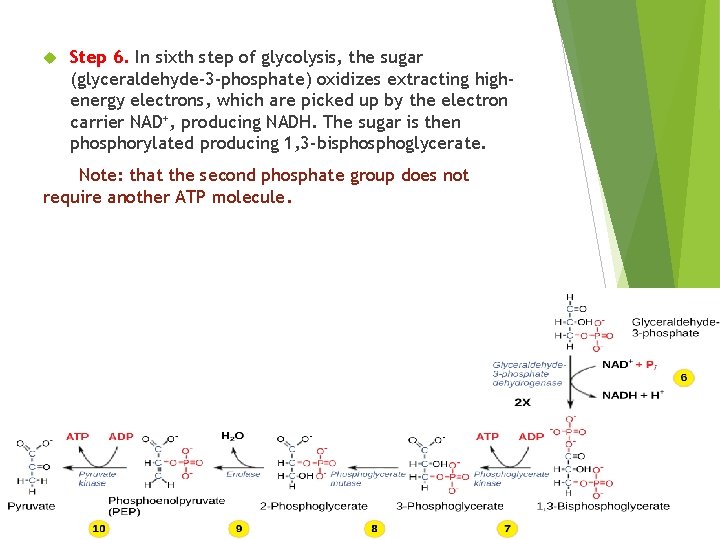
Step 6. In sixth step of glycolysis, the sugar (glyceraldehyde-3 -phosphate) oxidizes extracting highenergy electrons, which are picked up by the electron carrier NAD+, producing NADH. The sugar is then phosphorylated producing 1, 3 -bisphoglycerate. Note: that the second phosphate group does not require another ATP molecule.
Step 7. In the seventh step, catalyzed by phosphoglycerate kinase (an enzyme named for the reverse reaction), 1, 3 -bisphoglycerate donates a high-energy phosphate to ADP, forming one molecule of ATP. The 1, 3 -bisphoglycerate is oxidized to a 3 phosphoglycerate is formed. (This is an example of substrate-level phosphorylation) Step 8. In the eighth step, the remaining phosphate group in 3 -phosphoglycerate moves from the third carbon to the second carbon, producing 2 phosphoglycerate (an isomer of 3 -phosphoglycerate) by mutase (isomerase). s
Step 9. Enolase catalyzes the ninth step. This enzyme causes 2 -phosphoglycerate to lose water from its structure produces phosphoenolpyruvate (PEP). Step 10. The last step in glycolysis is catalyzed by the enzyme pyruvate kinase (the enzyme in this case is named for the reverse reaction of pyruvate’s conversion into PEP) and results in the production of a second ATP molecule by substrate-level phosphorylation and the compound pyruvic acid (or its salt form, pyruvate.
Regulation of glycolysis Three regulatory enzymes: Hexokinase Phosphofructokinase Pyruvate kinase Enzymes which perform irreversible reactions regulate glycolysis.
Hexokinase It is inhibited by glucose 6 - phosphate. This enzyme prevents the accumulation of glucose 6 -phosphate due to product inhibition.
Phosphofructokinase (PFK) is the most important regulatory enzyme in glycolysis PFK an allosteric enzyme controlled by allosteric effectors ATP, citrate, H+ ions (low p. H) are some of the important allosteric inhibitors Some of the activators are Fructose 2, 6 bisphosphate, ADP, AMP and phosphate.
Pyruvate kinase (PK) inhibited by ATP and activated by Fructose 1, 6 bisphosphate PK becomes active in dephosphorylated state and inactive in phosphorylated state. Inactivation of pyruvate kinase is brought about by c. AMP- dependent protein kinase.
Energy yield from glycolysis During aerobic respiration: Utilize 2 ATP and 2 NAD+ Produce 4 ATP and 2 NADH = (10 ATP) Net gain of ATP = 10 ATP – 2 ATP = 8 ATP 2 NADH molecules formed in glyceraldehyde 3 - phosphate dehydrogenase reaction which enter in Electron transport system. NADH = 3 ATP
Energy yield from glycolysis During anaerobic respiration: Utilize 2 ATP in 1 & 3 steps Produce Hence, 4 ATP in 6 and 9 step net gain of ATP = 4 ATP – 2 ATP = 2 ATP
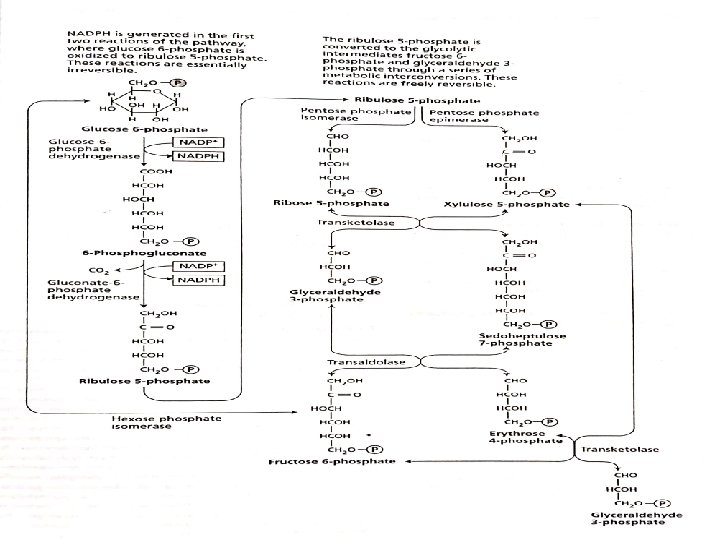
Pentose phosphate pathway or Hexose mono-phosphate shunt It is the alternative pathway of glycolysis Takes place in cytosol and in plastids (mostly occur) First two reactions are oxidative reaction converting glucose 6 -phosphate (six carbon molecule) into ribulose 5 -phosphate (five carbon molecule) releasing CO 2 and form two molecules of NADPH. The ribulose 5 -phosphate convert into glycolytic intermediates like glyceraldehyde 3 -phosphate and fructose 6 -phospohate which enter in glycolysis and form pyruvate.
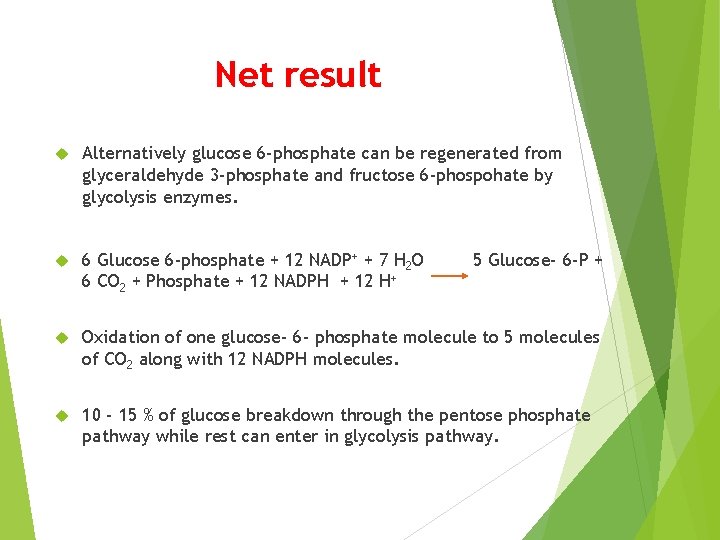
Net result Alternatively glucose 6 -phosphate can be regenerated from glyceraldehyde 3 -phosphate and fructose 6 -phospohate by glycolysis enzymes. 6 Glucose 6 -phosphate + 12 NADP+ + 7 H 2 O 6 CO 2 + Phosphate + 12 NADPH + 12 H+ Oxidation of one glucose- 6 - phosphate molecule to 5 molecules of CO 2 along with 12 NADPH molecules. 10 - 15 % of glucose breakdown through the pentose phosphate pathway while rest can enter in glycolysis pathway. 5 Glucose- 6 -P +