
Regulation of gene expression in prokaryotes Katalin Kiss
- Slides: 15
Regulation of gene expression in prokaryotes Katalin Kiss Dept. of Medical Biology 12. 11. 2007.
Gene expression in prokaryotes • • Types of expression: – Constitutive expression (eg. genes of glucose utilizing enzymes) – Regulated expression • induction (eg. genes of catabolic enzymes) • repression (eg. genes of biosynthetic enzymes) Significance of regulation: adaption to changes in enviroment (eg. nutrient supply), „feedback” Level of regulation during gene expression: mostly transcription (activity of RNA polymerase) is regulated Mechanism of regulation: operon model
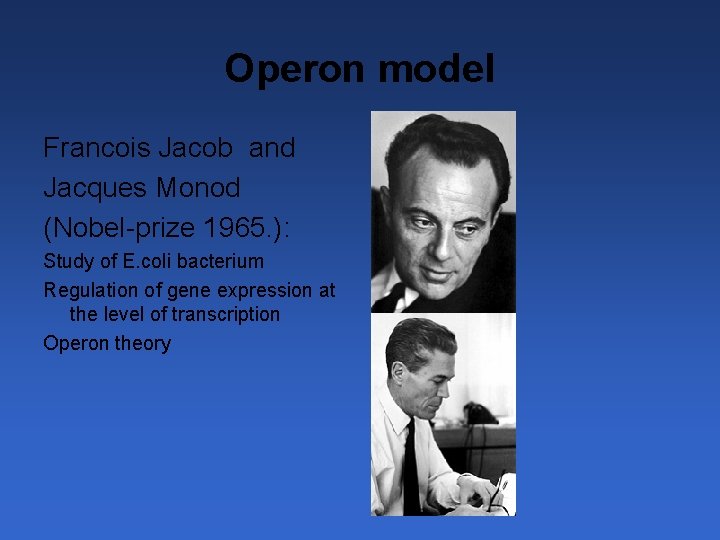
Operon model Francois Jacob and Jacques Monod (Nobel-prize 1965. ): Study of E. coli bacterium Regulation of gene expression at the level of transcription Operon theory
Operon Components: – Regulated genes = structural genes (transcribed as a polycystronic m. RNA) – Promoter – Operator Types: – Inducible – Repressible
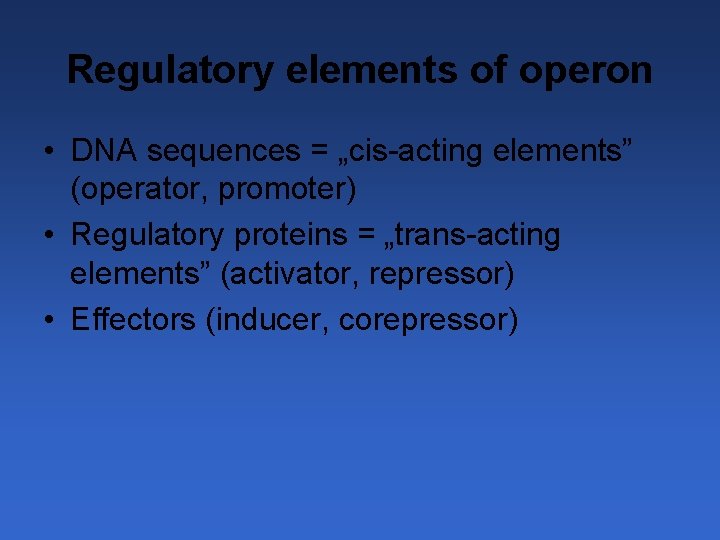
Regulatory elements of operon • DNA sequences = „cis-acting elements” (operator, promoter) • Regulatory proteins = „trans-acting elements” (activator, repressor) • Effectors (inducer, corepressor)
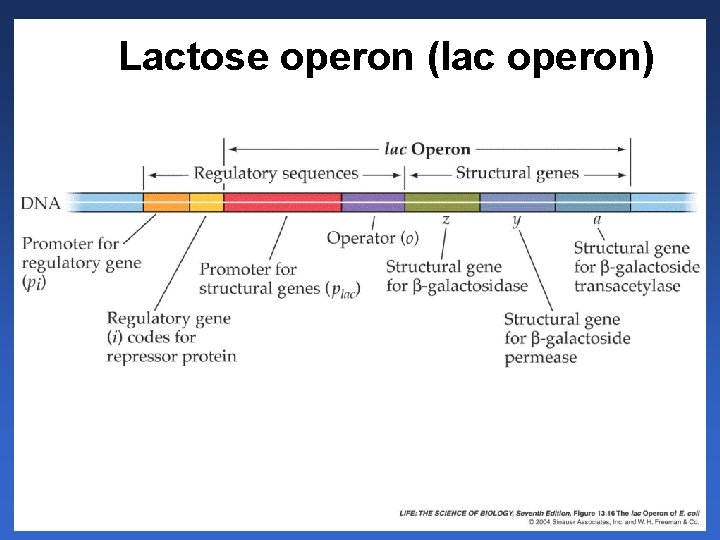
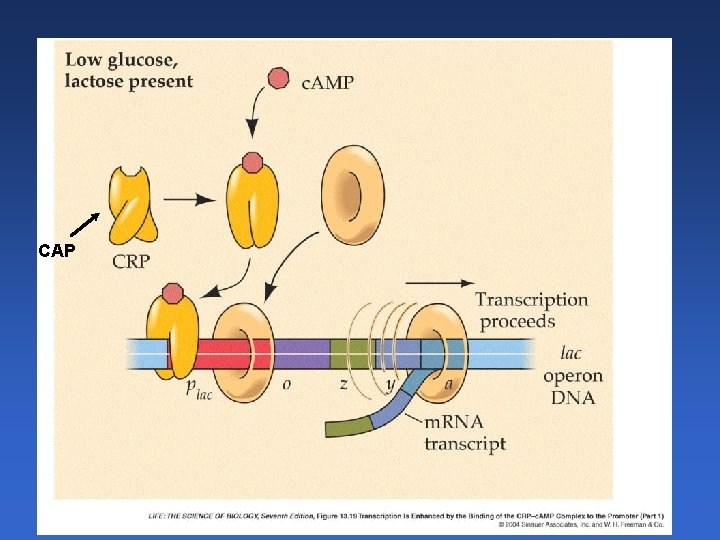
Lactose operon (lac operon)
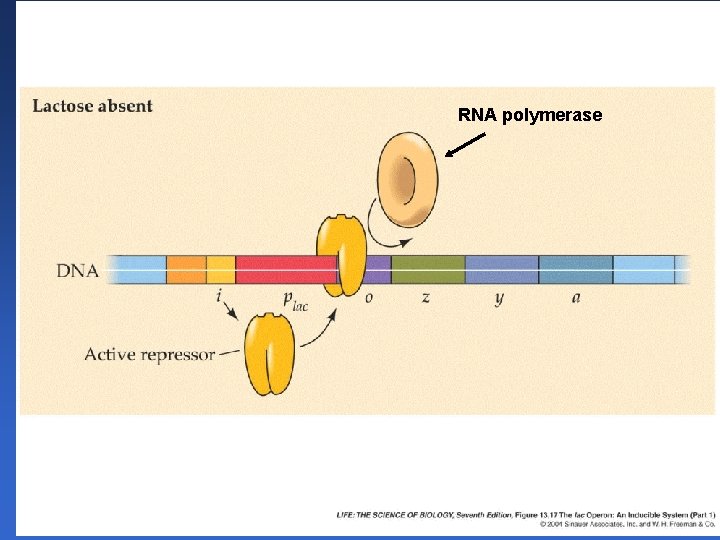
RNA polymerase
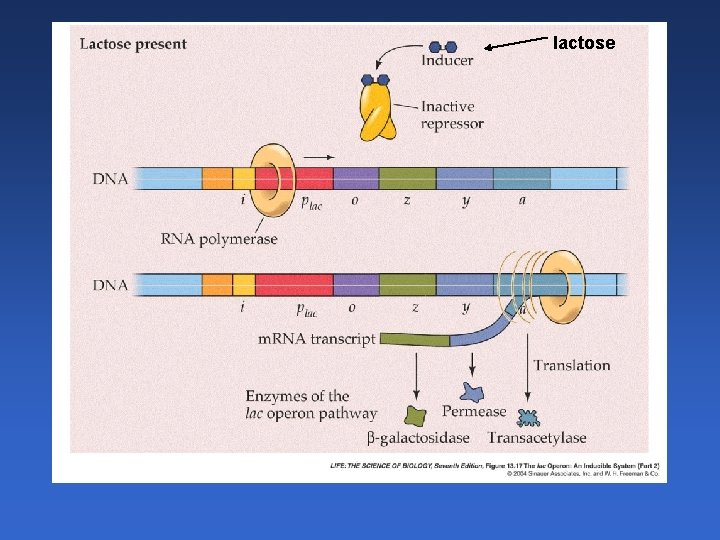
lactose
CAP
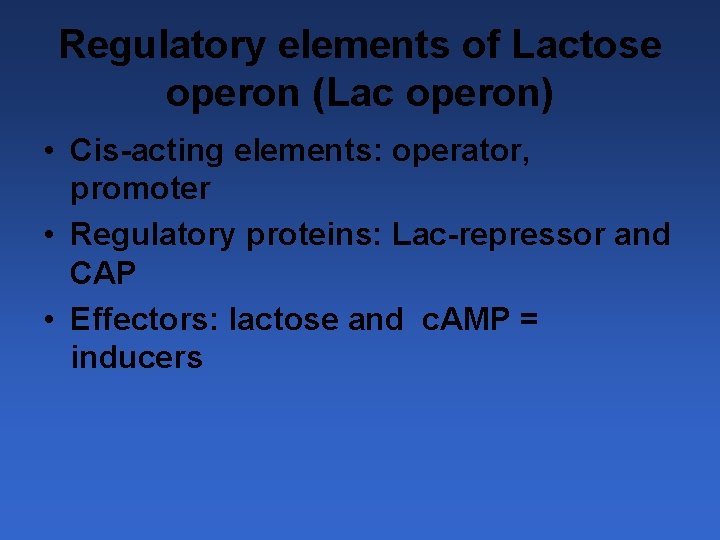
Regulatory elements of Lactose operon (Lac operon) • Cis-acting elements: operator, promoter • Regulatory proteins: Lac-repressor and CAP • Effectors: lactose and c. AMP = inducers
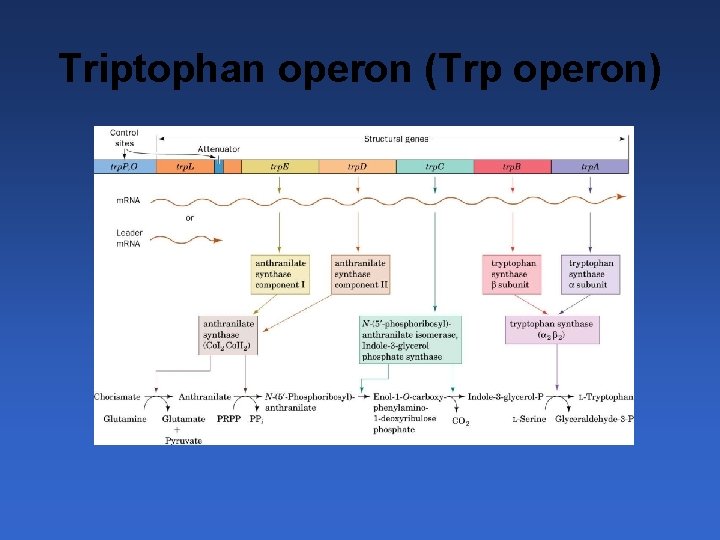
Triptophan operon (Trp operon)
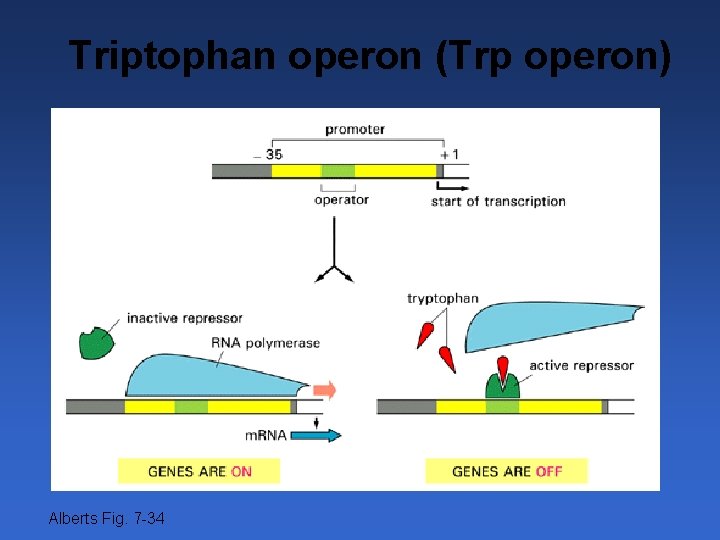
Triptophan operon (Trp operon) Alberts Fig. 7 -34
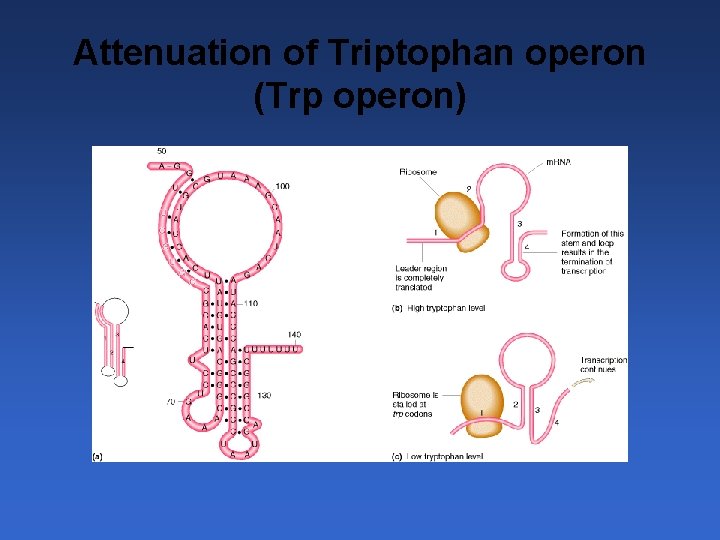
Attenuation of Triptophan operon (Trp operon)
Regulatory elements of Tryptophan operon (Trp operon) • Cis-acting elements: operator, promoter, attenuator • Regulatory proteins: Trp-repressor • Effectors: trp= korepresszor
Animations of Lac operon and Trp operon on the web • http: //highered. mcgrawhill. com/olc/dl/120080/bio 27. swf • http: //www. dnatube. com/view_video. php? v iewkey=712 c 49 d 51 a 18 a 32 b 39 f 0