
Regulation of Gene expression Gene Regulation Learning Goals
- Slides: 28
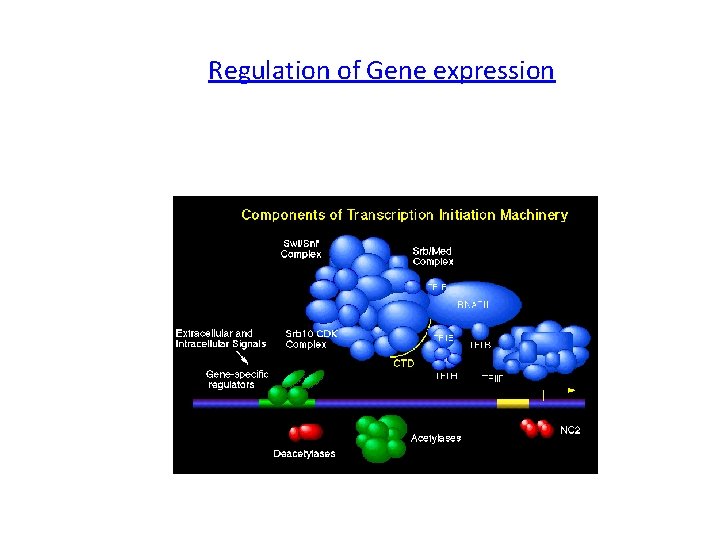
Regulation of Gene expression
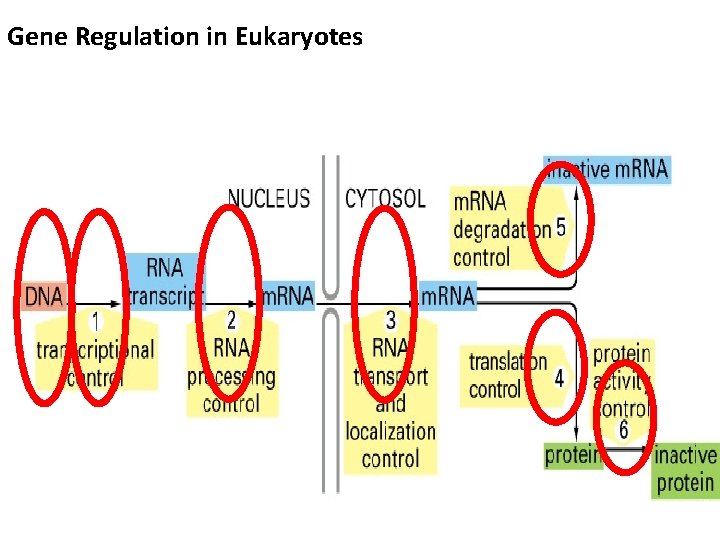
Gene Regulation Learning Goals: To know and explain: Ö Constitutive ( house keeping) vs. Controllable genes ÖOPERON structure and its role in gene regulation ÖRegulation of Eukaryotic Gene Expression at different levels: DNA methylation Histone modifications(Chromatin Remodeling) Increasing the number of gene copies (gene amplification) Changing the rate of initiation of transcription Alternate splicing m. RNA stability Changing the rate of initiation of translation Protein stability Hormonal regulation • 11 -Regulation by protein stability
Gene Regulation What makes one cell different from another cell? • Regulation not only involves which genes are active or inactive, but also determines the level of activity and the amount of protein that is available in a cell. • Genes which are always active are called constitutive genes, or housekeeping genes.
Control Mechanisms Over 20, 000 human genes – but not all are needed as proteins at the same time • It would be energy inefficient to synthesize all of them all the time! • Thus, gene regulation: – The turning on or off of specific genes as required by an organism • But there are still housekeeping genes: – Genes that are continually transcribed and translated because they are vital to the organism’s life functions • And to help, there are transcription factors: – Proteins that bind to DNA that needs to be transcribed to help RNA polymerase bind and transcribe more easily
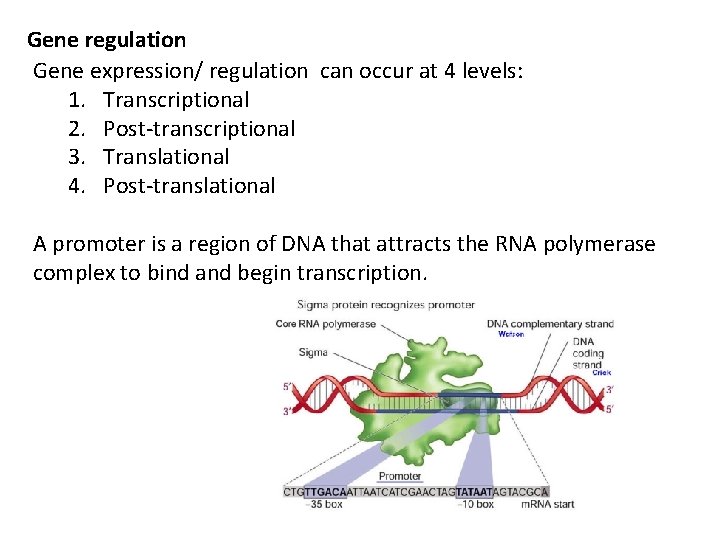
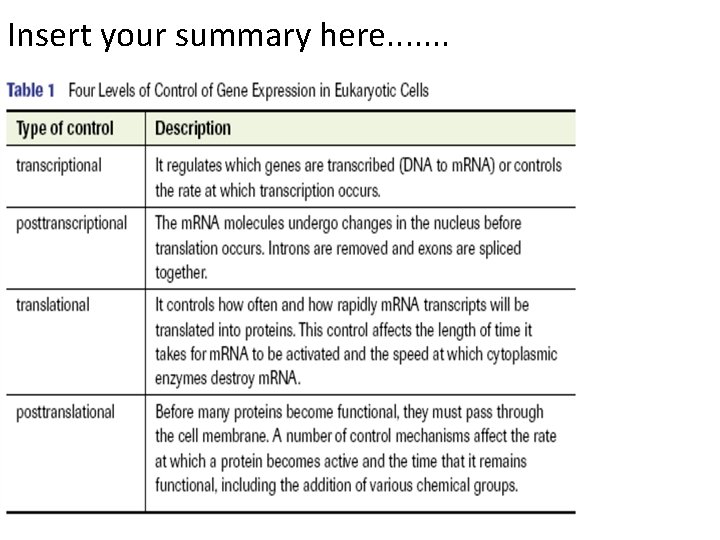
Gene regulation Gene expression/ regulation can occur at 4 levels: 1. Transcriptional 2. Post-transcriptional 3. Translational 4. Post-translational A promoter is a region of DNA that attracts the RNA polymerase complex to bind and begin transcription.
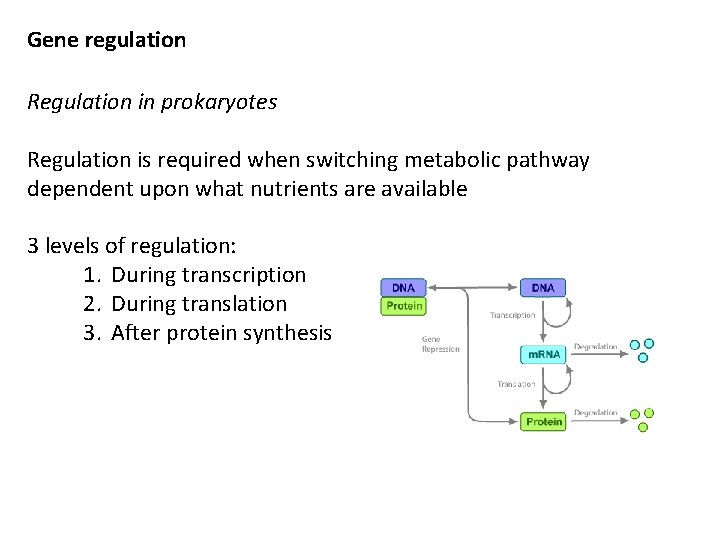
Gene regulation Regulation in prokaryotes Regulation is required when switching metabolic pathway dependent upon what nutrients are available 3 levels of regulation: 1. During transcription 2. During translation 3. After protein synthesis
Gene regulation OPERON: In prokaryotes, an area that includes a promoter and many genes clustered together under control of a single promoter Genes involved in the same metabolic pathway are often found in the same operon. Genes can be expressed in a single m. RNA strand called polycistronic m. RNA. **Polycistronic – multiple gene products on the same piece of DNA.
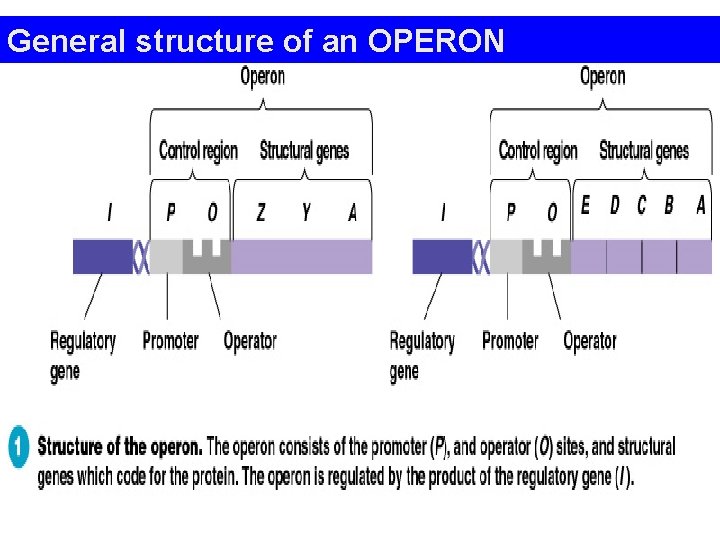
OPERON in gene regulation of prokaryotes Definition: a few genes that are controlled collectively by one promoter Its structure: Each Operon is consisted of few structural genes( cistrons) and some cis-acting element such as promoter (P) and operator (O). Its regulation: There are one or more regulatory gene outside of the Operon that produce trans-acting factors such as repressor or activators. Classification: 1 - Catabolic (inducible) such as Lac OPERON 2 - Anabolic (repressible) such as ara OPERON 3 - Other types An operator is a DNA segment that turns the gene "on" or "off. " It interacts with proteins that increase the rate of transcription or block transcription from occurring.
General structure of an OPERON
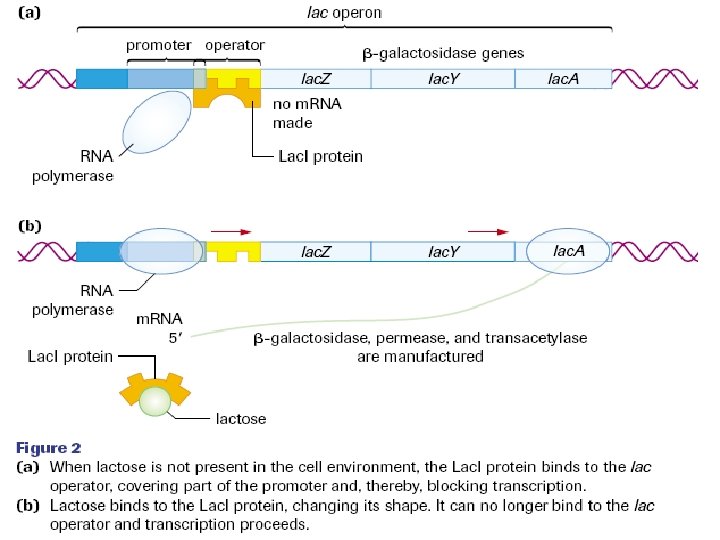
The lac Operon E. Coli can adjust gene expression according to the sugar is available. Genes that encode the enzymes for are needed to break down lactose are found in the lac operon. The lac operon consists of a coding region and a regulatory region Also contains: • Promoter • Operator- a DNA sequence to which a protein binds to inhibit transcription initiation (repressor) The CAP is a DNA sequence to which a specific protein also binds. The binding of CAP increases the rate of transcription of a gene or genes.
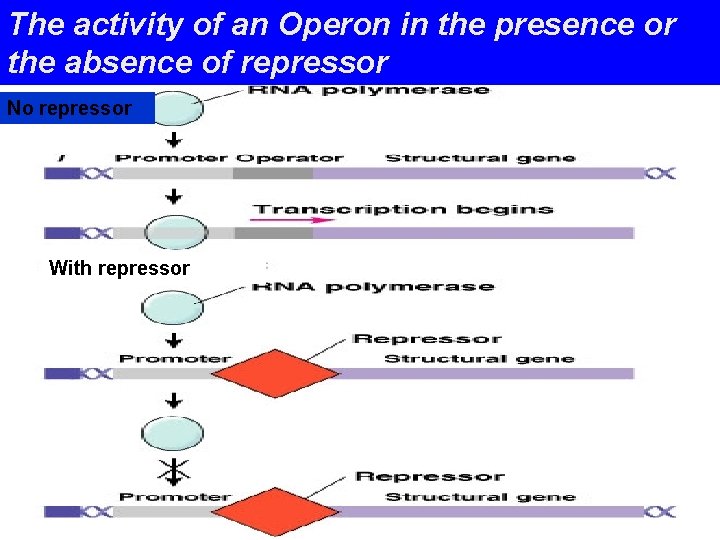
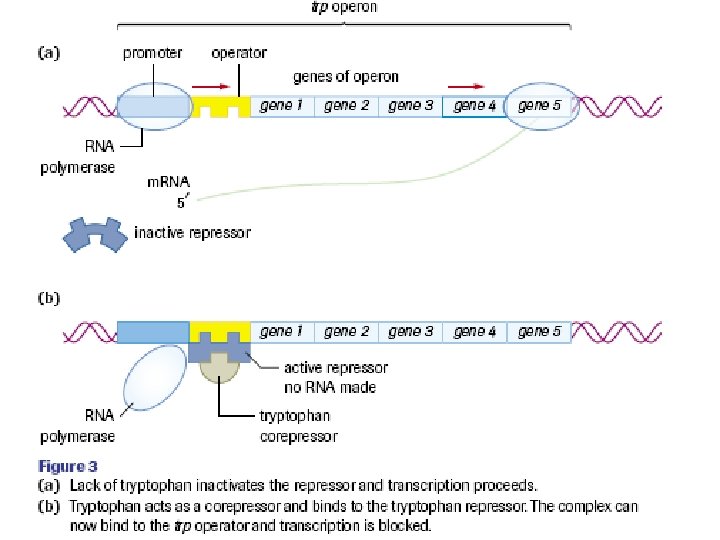
The activity of an Operon in the presence or the absence of repressor No repressor With repressor Figure 8. 13
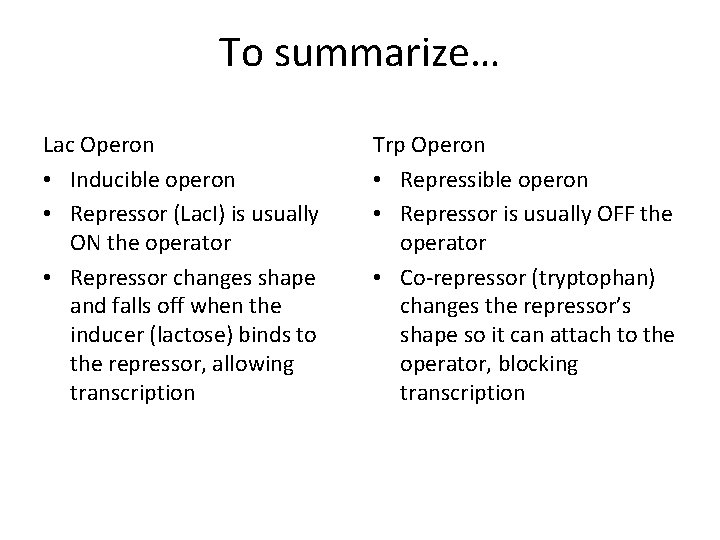
To summarize… Lac Operon • Inducible operon • Repressor (Lac. I) is usually ON the operator • Repressor changes shape and falls off when the inducer (lactose) binds to the repressor, allowing transcription Trp Operon • Repressible operon • Repressor is usually OFF the operator • Co-repressor (tryptophan) changes the repressor’s shape so it can attach to the operator, blocking transcription
Gene Regulation in Eukaryotes
Gene Regulation in Eukaryotes Regulation is much more complex: • • • Pre-transcriptional Transcriptional Post-transcriptional Translational Post translational
1 - Control at DNA level by DNA methylation – Heterochromatin is the most tightly packaged form of DNA. transcriptionally silent, different from cell to cell – Methylation is related to the Heterochromatin formation • Small percentages of newly synthesized DNAs (~3% in mammals) are chemically modified by methylation. • Methylation occurs most often in symmetrical CG sequences. • Transcriptionally active genes possess significantly lower levels of methylated DNA than inactive genes. • Methylation results in a human disease called fragile X syndrome; FMR-1 gene is silenced by methylation.
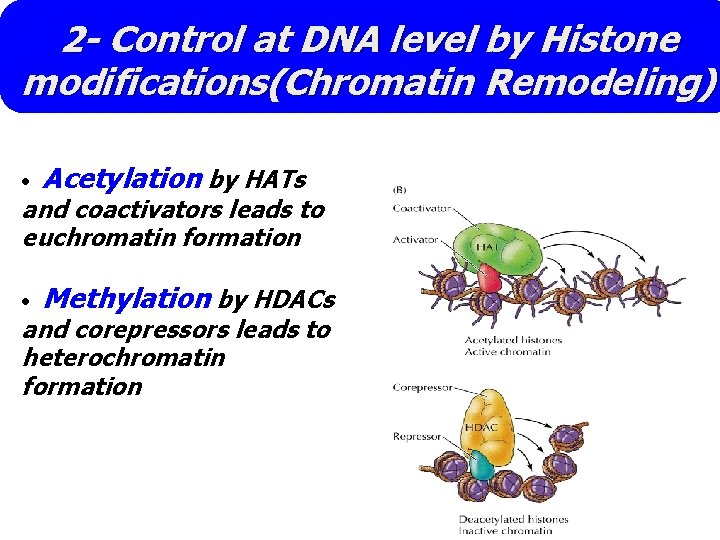
2 - Control at DNA level by Histone modifications(Chromatin Remodeling) • Acetylation by HATs • Methylation by HDACs and coactivators leads to euchromatin formation and corepressors leads to heterochromatin formation
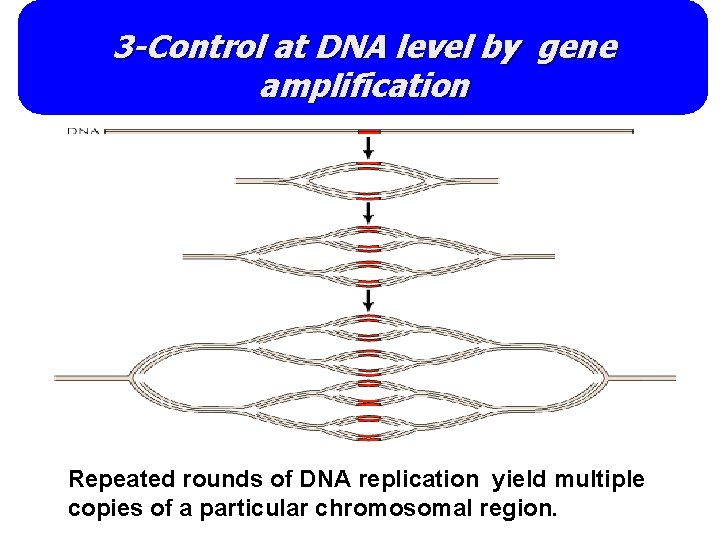
3 -Control at DNA level by gene amplification Repeated rounds of DNA replication yield multiple copies of a particular chromosomal region.
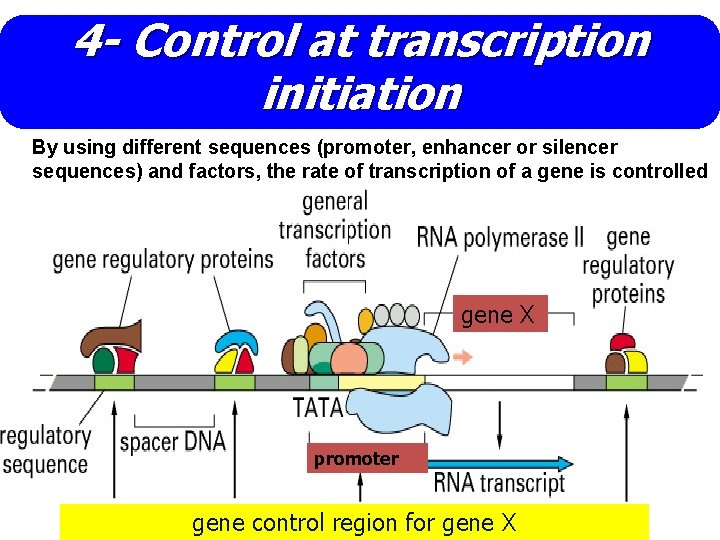
4 - Control at transcription initiation By using different sequences (promoter, enhancer or silencer sequences) and factors, the rate of transcription of a gene is controlled gene X promoter gene control region for gene X
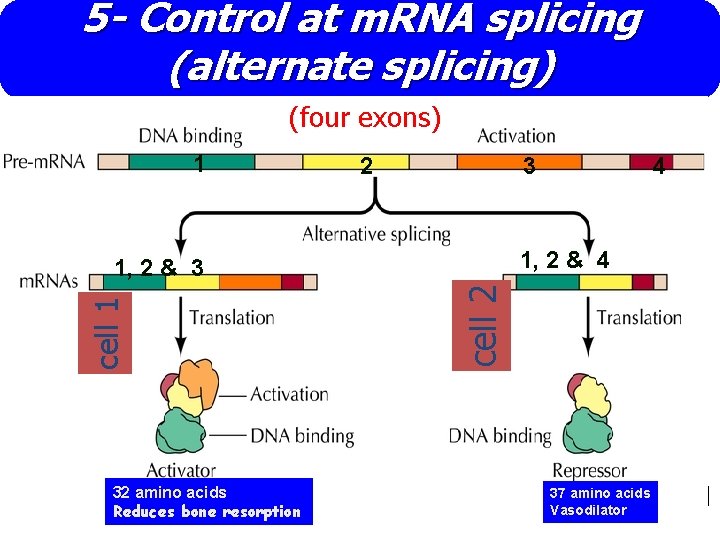
5 - Control at m. RNA splicing (alternate splicing) (four exons) 1 2 1, 2 & 4 cell 2 1, 2 & 3 cell 1 4 3 Calcitonin gene -related peptide 32 amino acids Reduces bone resorption 37 amino acids Vasodilator 61
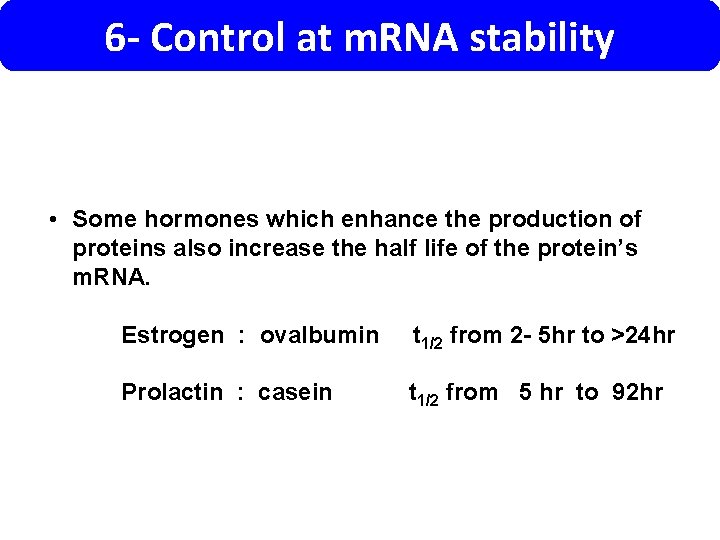
6 - Control at m. RNA stability • Some hormones which enhance the production of proteins also increase the half life of the protein’s m. RNA. Estrogen : ovalbumin t 1/2 from 2 - 5 hr to >24 hr Prolactin : casein t 1/2 from 5 hr to 92 hr
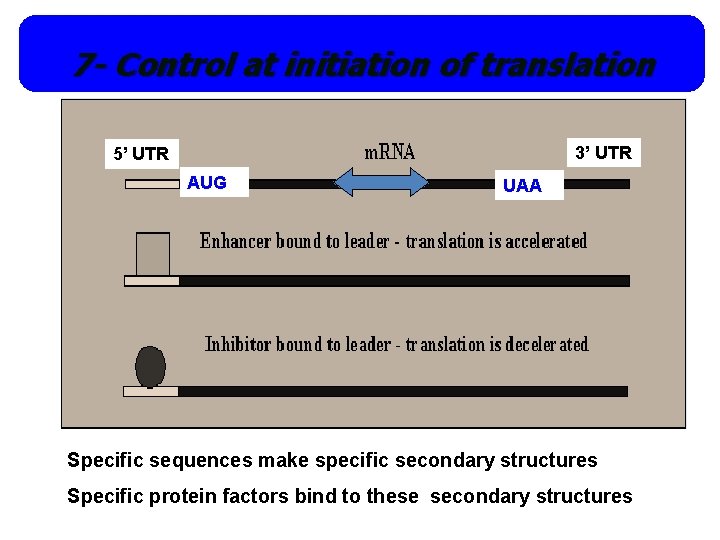
7 - Control at initiation of translation 3’ UTR 5’ UTR AUG UAA Specific sequences make specific secondary structures Specific protein factors bind to these secondary structures
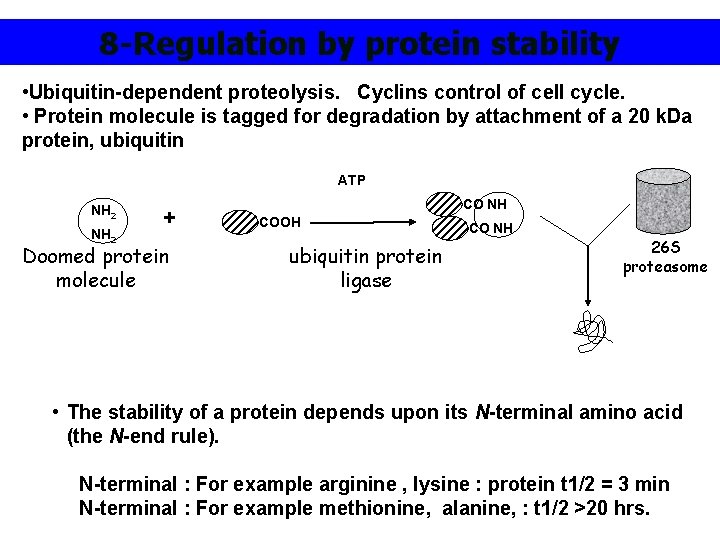
8 -Regulation by protein stability • Ubiquitin-dependent proteolysis. Cyclins control of cell cycle. • Protein molecule is tagged for degradation by attachment of a 20 k. Da protein, ubiquitin ATP NH 2 + Doomed protein molecule CO NH COOH ubiquitin protein ligase CO NH 26 S proteasome • The stability of a protein depends upon its N-terminal amino acid (the N-end rule). N-terminal : For example arginine , lysine : protein t 1/2 = 3 min N-terminal : For example methionine, alanine, : t 1/2 >20 hrs.
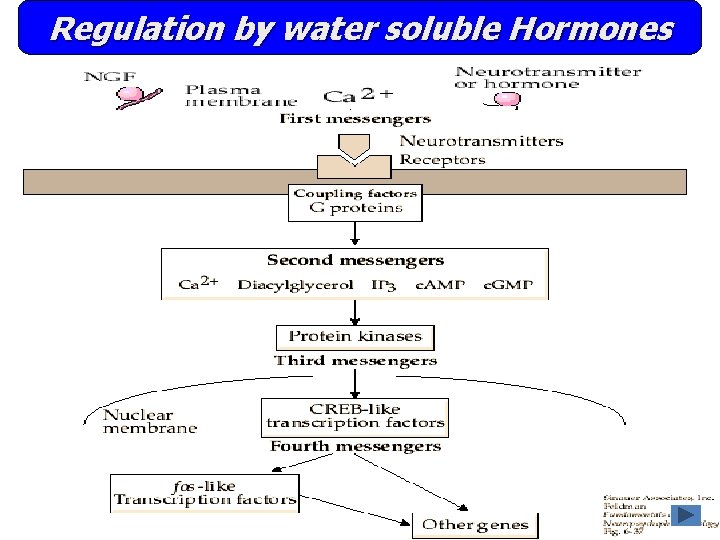
Regulation by water soluble Hormones
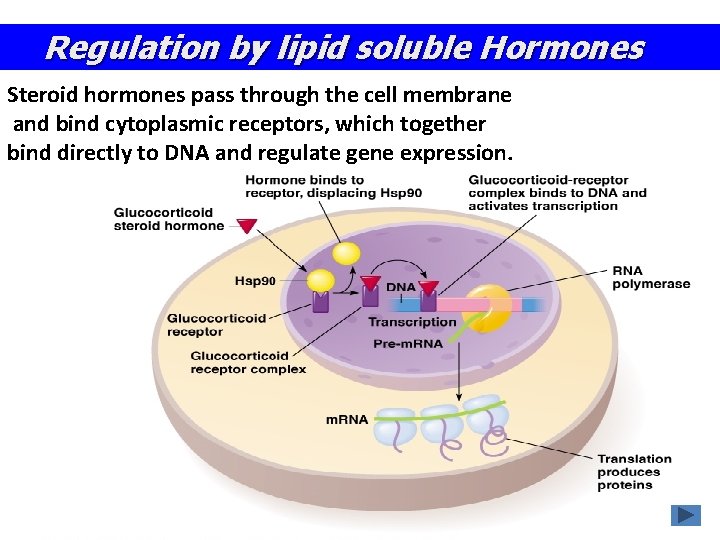
Regulation by lipid soluble Hormones Steroid hormones pass through the cell membrane and bind cytoplasmic receptors, which together bind directly to DNA and regulate gene expression.
Insert your summary here. . . .