
Regulation of Cell Division Ch 12 Coordination of


- Slides: 28
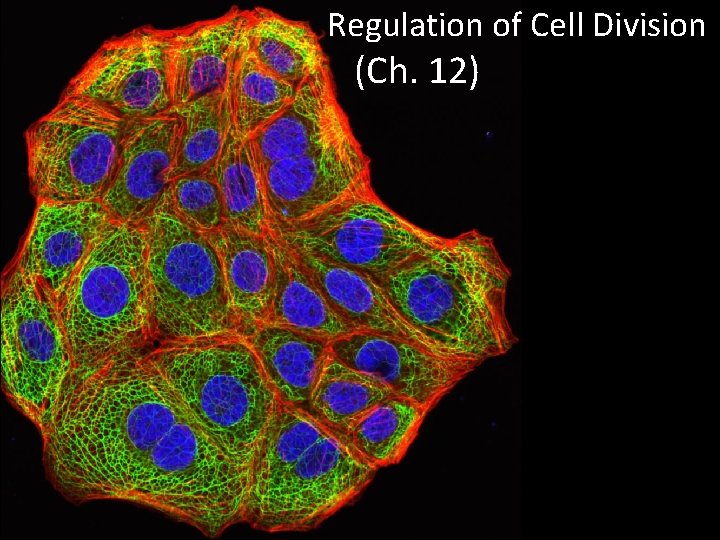
Regulation of Cell Division (Ch. 12)
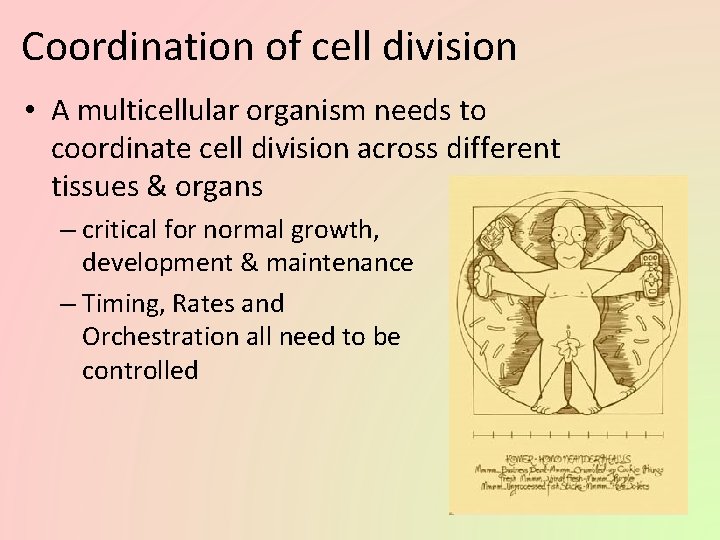
Coordination of cell division • A multicellular organism needs to coordinate cell division across different tissues & organs – critical for normal growth, development & maintenance – Timing, Rates and Orchestration all need to be controlled
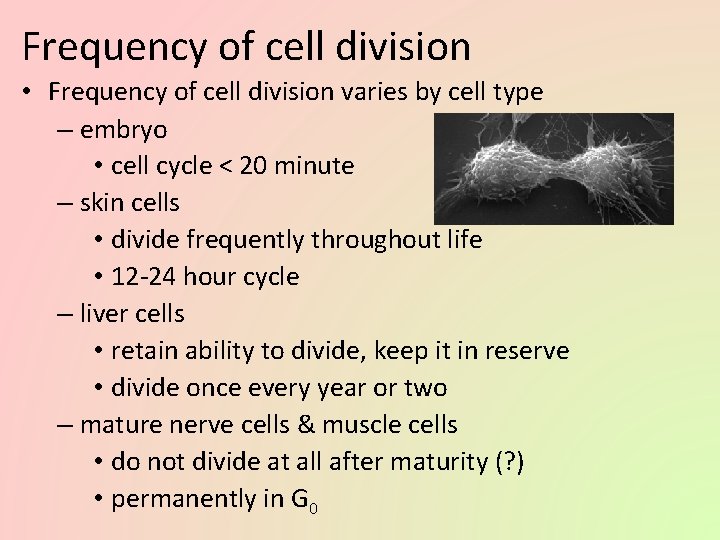
Frequency of cell division • Frequency of cell division varies by cell type – embryo • cell cycle < 20 minute – skin cells • divide frequently throughout life • 12 -24 hour cycle – liver cells • retain ability to divide, keep it in reserve • divide once every year or two – mature nerve cells & muscle cells • do not divide at all after maturity (? ) • permanently in G 0
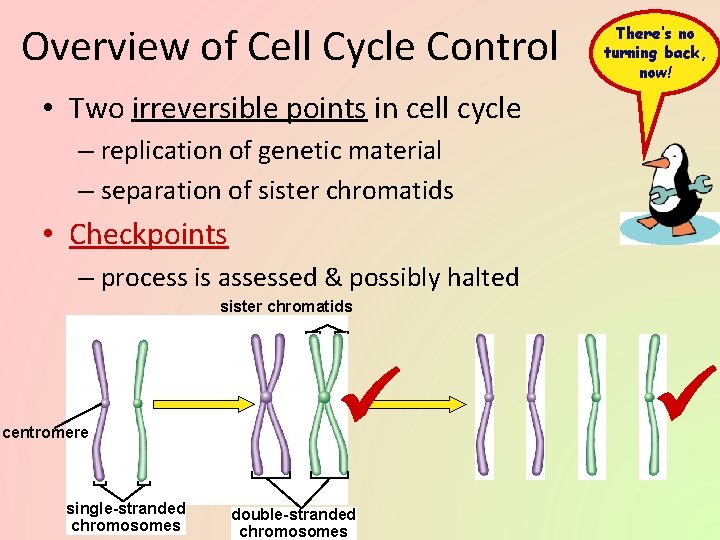
Overview of Cell Cycle Control There’s no turning back, now! • Two irreversible points in cell cycle – replication of genetic material – separation of sister chromatids • Checkpoints – process is assessed & possibly halted sister chromatids centromere single-stranded chromosomes double-stranded chromosomes
Checkpoint control system • Checkpoints – cell cycle controlled by STOP & GO chemical signals at critical points – signals indicate if key cellular processes have been completed correctly
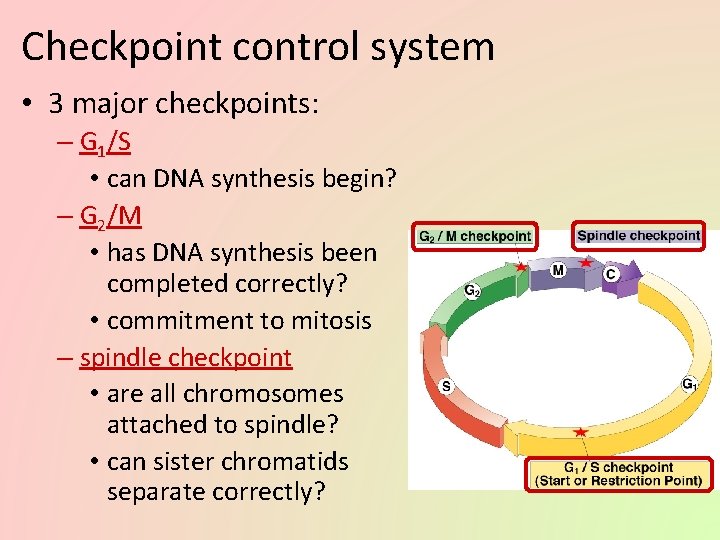
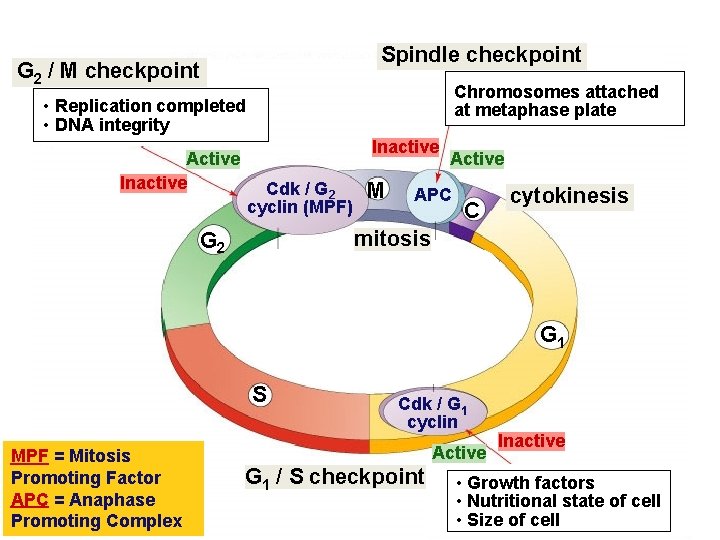
Checkpoint control system • 3 major checkpoints: – G 1/S • can DNA synthesis begin? – G 2/M • has DNA synthesis been completed correctly? • commitment to mitosis – spindle checkpoint • are all chromosomes attached to spindle? • can sister chromatids separate correctly?
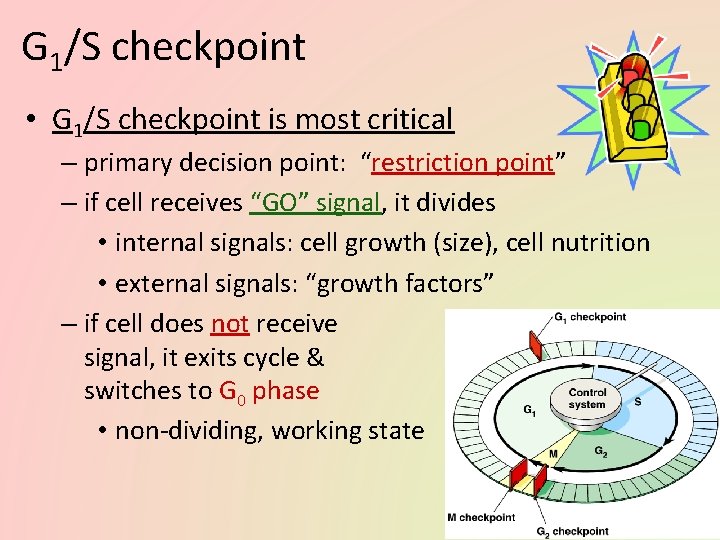
G 1/S checkpoint • G 1/S checkpoint is most critical – primary decision point: “restriction point” – if cell receives “GO” signal, it divides • internal signals: cell growth (size), cell nutrition • external signals: “growth factors” – if cell does not receive signal, it exits cycle & switches to G 0 phase • non-dividing, working state
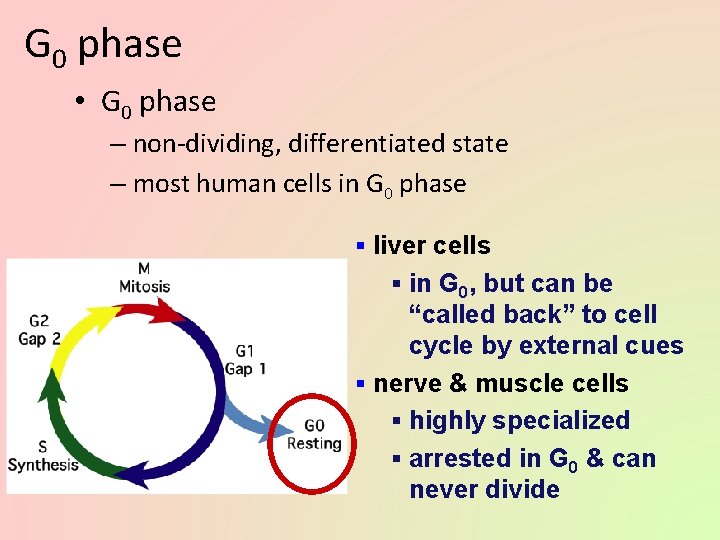
G 0 phase • G 0 phase – non-dividing, differentiated state – most human cells in G 0 phase § liver cells § in G 0, but can be “called back” to cell cycle by external cues § nerve & muscle cells § highly specialized § arrested in G 0 & can never divide
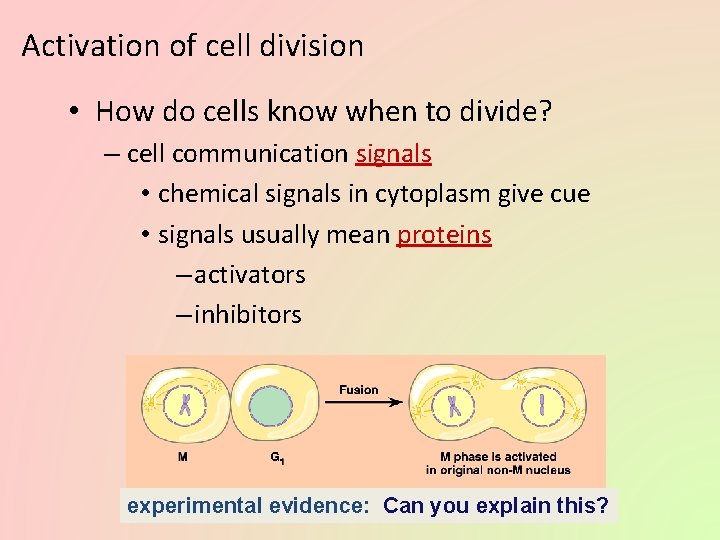
Activation of cell division • How do cells know when to divide? – cell communication signals • chemical signals in cytoplasm give cue • signals usually mean proteins – activators – inhibitors experimental evidence: Can you explain this?
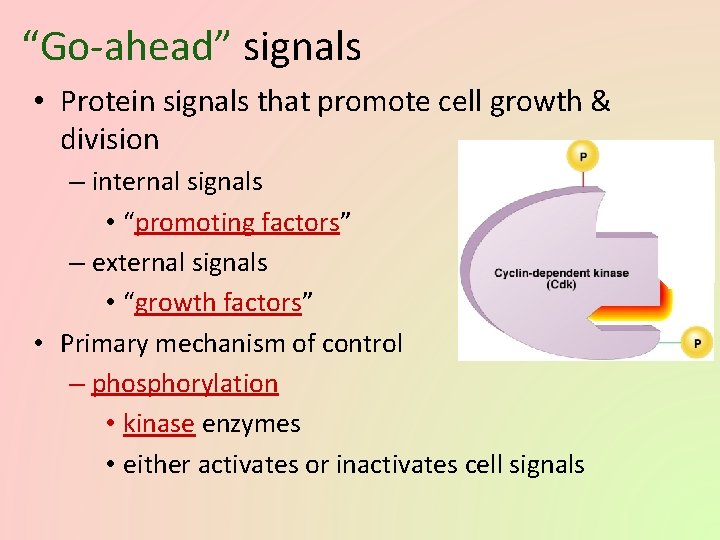
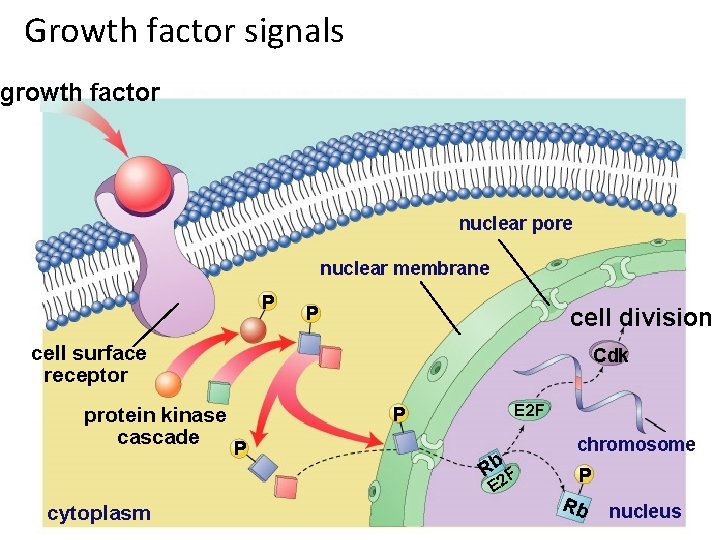
“Go-ahead” signals • Protein signals that promote cell growth & division – internal signals • “promoting factors” – external signals • “growth factors” • Primary mechanism of control – phosphorylation • kinase enzymes • either activates or inactivates cell signals
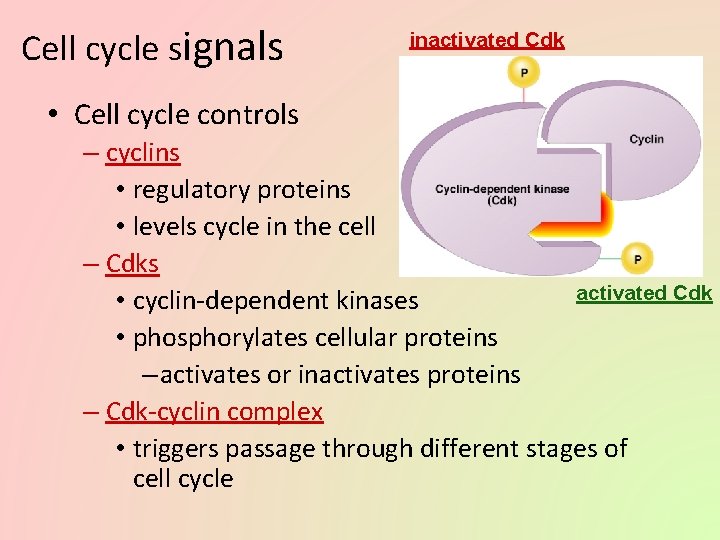
Cell cycle signals inactivated Cdk • Cell cycle controls – cyclins • regulatory proteins • levels cycle in the cell – Cdks activated Cdk • cyclin-dependent kinases • phosphorylates cellular proteins – activates or inactivates proteins – Cdk-cyclin complex • triggers passage through different stages of cell cycle
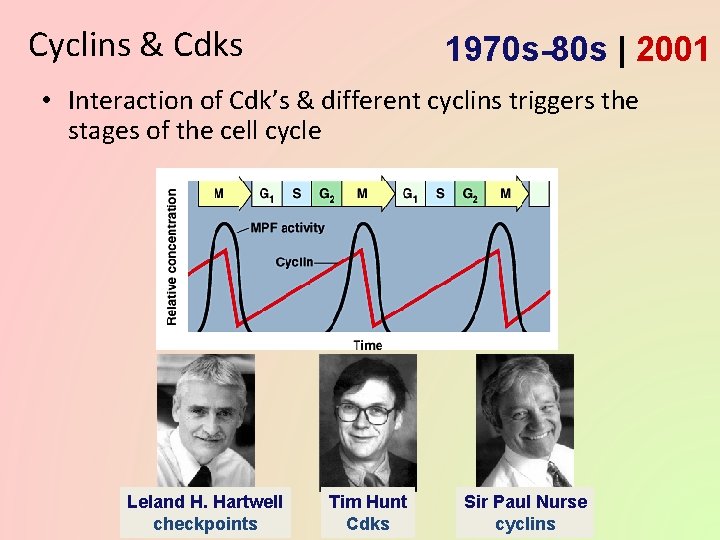
Cyclins & Cdks 1970 s-80 s | 2001 • Interaction of Cdk’s & different cyclins triggers the stages of the cell cycle Leland H. Hartwell checkpoints Tim Hunt Cdks Sir Paul Nurse cyclins
Spindle checkpoint G 2 / M checkpoint Chromosomes attached at metaphase plate • Replication completed • DNA integrity Active Inactive Cdk / G 2 cyclin (MPF) M Active APC C cytokinesis mitosis G 2 G 1 S MPF = Mitosis Promoting Factor APC = Anaphase Promoting Complex Cdk / G 1 cyclin Active G 1 / S checkpoint Inactive • Growth factors • Nutritional state of cell • Size of cell
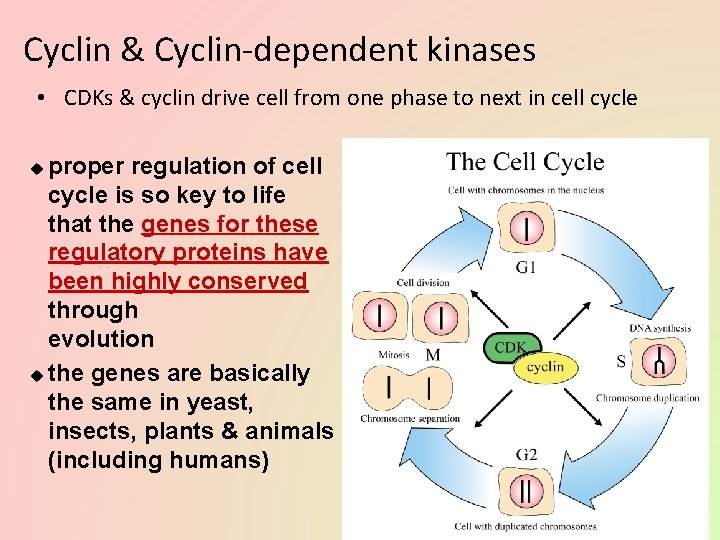
Cyclin & Cyclin-dependent kinases • CDKs & cyclin drive cell from one phase to next in cell cycle proper regulation of cell cycle is so key to life that the genes for these regulatory proteins have been highly conserved through evolution u the genes are basically the same in yeast, insects, plants & animals (including humans) u
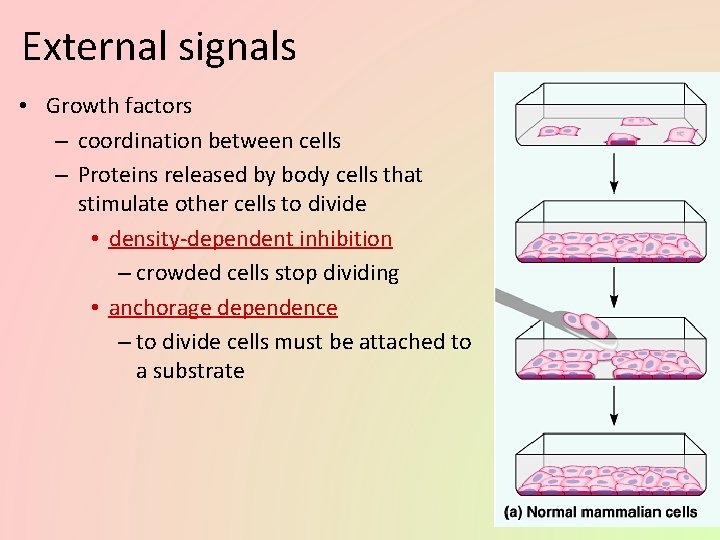
External signals • Growth factors – coordination between cells – Proteins released by body cells that stimulate other cells to divide • density-dependent inhibition – crowded cells stop dividing • anchorage dependence – to divide cells must be attached to a substrate
Growth factor signals growth factor nuclear pore nuclear membrane P P cell division cell surface receptor protein kinase cascade Cdk E 2 F P P Rb F E 2 cytoplasm chromosome P Rb nucleus
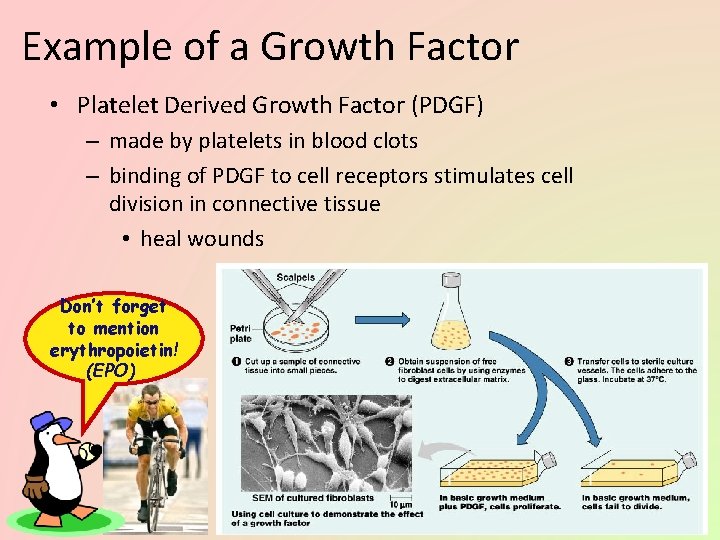
Example of a Growth Factor • Platelet Derived Growth Factor (PDGF) – made by platelets in blood clots – binding of PDGF to cell receptors stimulates cell division in connective tissue • heal wounds Don’t forget to mention erythropoietin! (EPO)
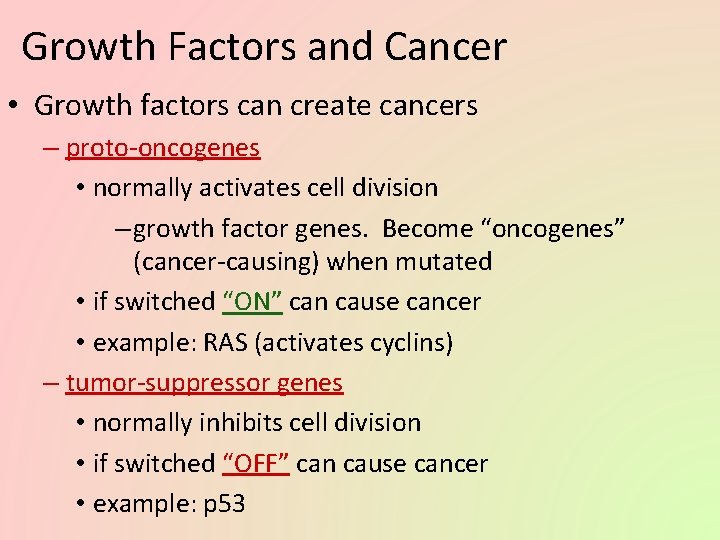
Growth Factors and Cancer • Growth factors can create cancers – proto-oncogenes • normally activates cell division – growth factor genes. Become “oncogenes” (cancer-causing) when mutated • if switched “ON” can cause cancer • example: RAS (activates cyclins) – tumor-suppressor genes • normally inhibits cell division • if switched “OFF” can cause cancer • example: p 53
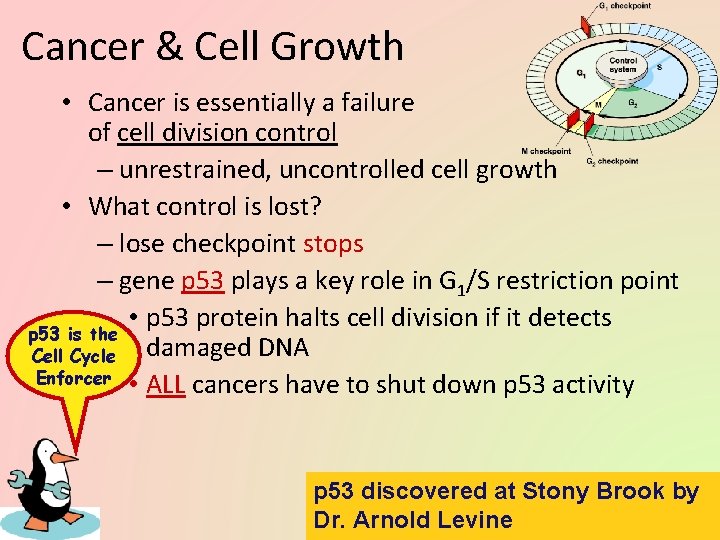
Cancer & Cell Growth • Cancer is essentially a failure of cell division control – unrestrained, uncontrolled cell growth • What control is lost? – lose checkpoint stops – gene p 53 plays a key role in G 1/S restriction point • p 53 protein halts cell division if it detects p 53 is the damaged DNA Cell Cycle Enforcer • ALL cancers have to shut down p 53 activity p 53 discovered at Stony Brook by Dr. Arnold Levine
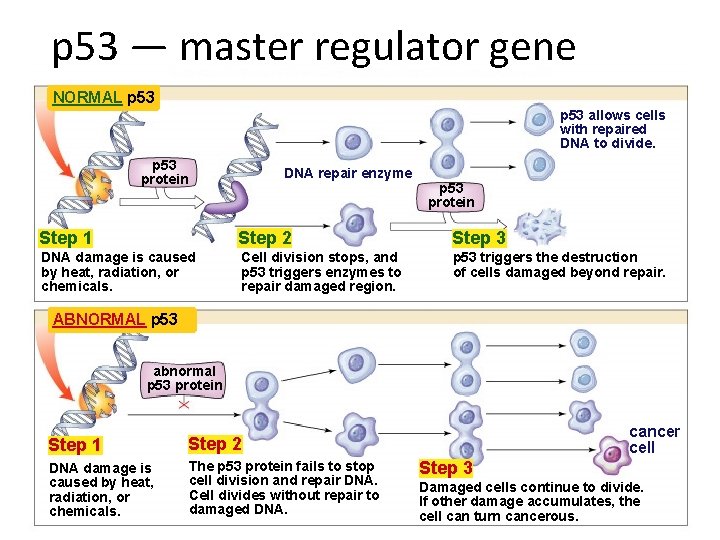
p 53 — master regulator gene NORMAL p 53 allows cells with repaired DNA to divide. p 53 protein DNA repair enzyme p 53 protein Step 1 Step 2 Step 3 DNA damage is caused by heat, radiation, or chemicals. Cell division stops, and p 53 triggers enzymes to repair damaged region. p 53 triggers the destruction of cells damaged beyond repair. ABNORMAL p 53 abnormal p 53 protein Step 1 Step 2 DNA damage is caused by heat, radiation, or chemicals. The p 53 protein fails to stop cell division and repair DNA. Cell divides without repair to damaged DNA. cancer cell Step 3 Damaged cells continue to divide. If other damage accumulates, the cell can turn cancerous.
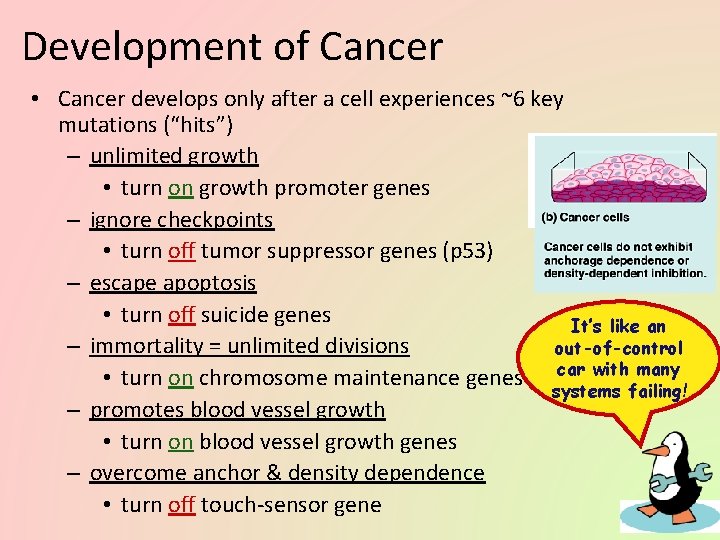
Development of Cancer • Cancer develops only after a cell experiences ~6 key mutations (“hits”) – unlimited growth • turn on growth promoter genes – ignore checkpoints • turn off tumor suppressor genes (p 53) – escape apoptosis • turn off suicide genes It’s like an – immortality = unlimited divisions out-of-control car with many • turn on chromosome maintenance genes systems failing! – promotes blood vessel growth • turn on blood vessel growth genes – overcome anchor & density dependence • turn off touch-sensor gene
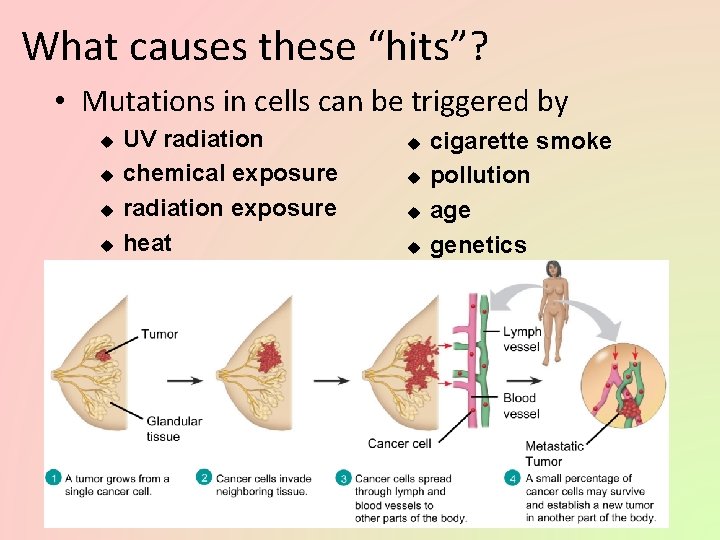
What causes these “hits”? • Mutations in cells can be triggered by u u UV radiation chemical exposure radiation exposure heat u u cigarette smoke pollution age genetics
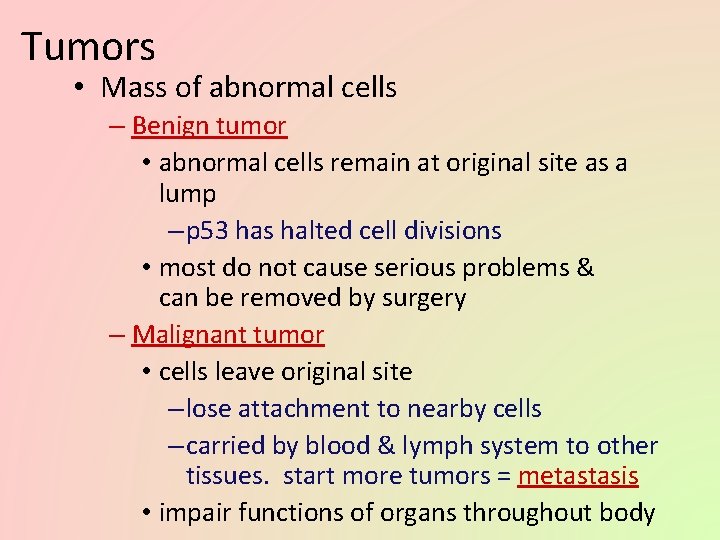
Tumors • Mass of abnormal cells – Benign tumor • abnormal cells remain at original site as a lump – p 53 has halted cell divisions • most do not cause serious problems & can be removed by surgery – Malignant tumor • cells leave original site – lose attachment to nearby cells – carried by blood & lymph system to other tissues. start more tumors = metastasis • impair functions of organs throughout body
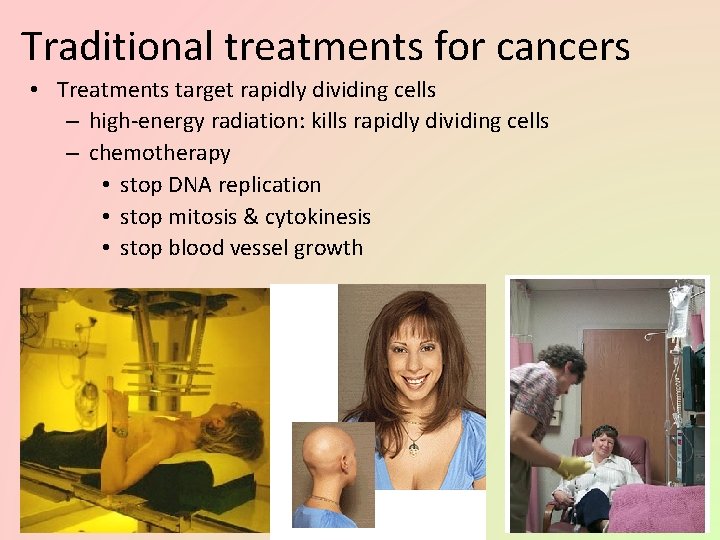
Traditional treatments for cancers • Treatments target rapidly dividing cells – high-energy radiation: kills rapidly dividing cells – chemotherapy • stop DNA replication • stop mitosis & cytokinesis • stop blood vessel growth
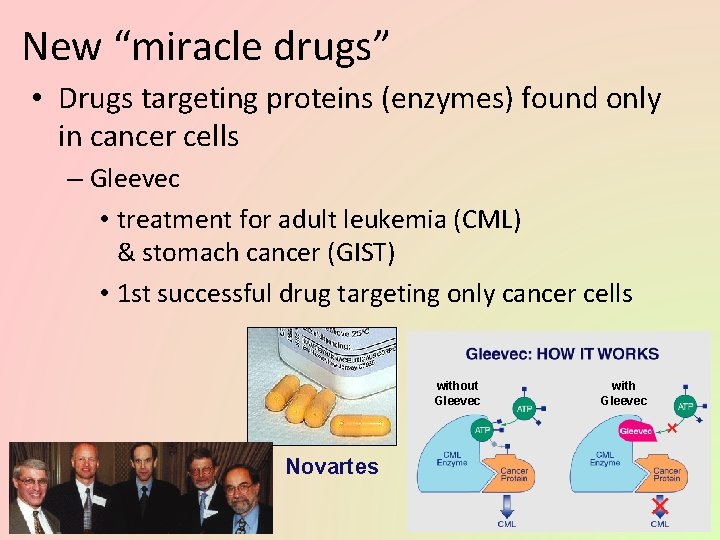
New “miracle drugs” • Drugs targeting proteins (enzymes) found only in cancer cells – Gleevec • treatment for adult leukemia (CML) & stomach cancer (GIST) • 1 st successful drug targeting only cancer cells without Gleevec Novartes with Gleevec
You would maybe like to see this?
Any Questions? ?
H. The rhythmic changes in cyclin concentration in a cell cycle are due to 1. its increased production once the restriction point is passed. 2. the cascade of increased production once its enzyme is phosphorylated by MPF. 3. its degradation, which is initiated by active MPF. 4. the correlation of its production with the production of Cdk. 5. the binding of the growth factor PDGF.