
Regulation of Calcium Ion Level in the Blood
Regulation of Calcium Ion Level in the Blood
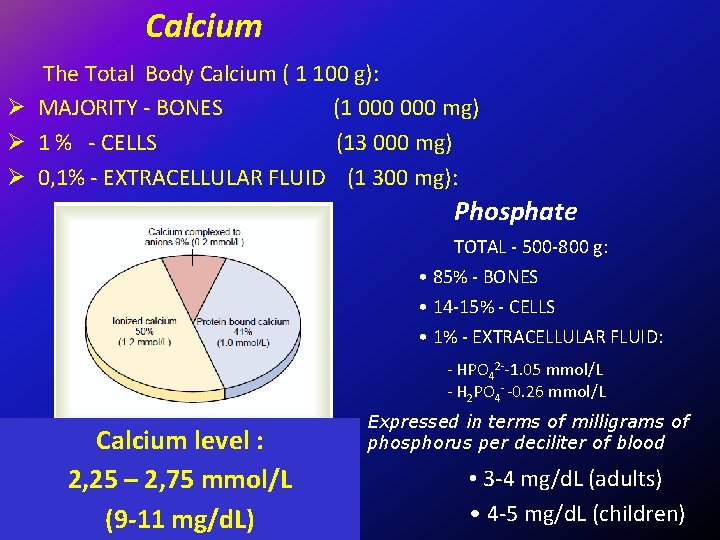
Calcium The Total Body Calcium ( 1 100 g): Ø MAJORITY - BONES (1 000 mg) Ø 1 % - CELLS (13 000 mg) Ø 0, 1% - EXTRACELLULAR FLUID (1 300 mg): Phosphate TOTAL - 500 -800 g: • 85% - BONES • 14 -15% - CELLS • 1% - EXTRACELLULAR FLUID: - HPO 42 --1. 05 mmol/L - H 2 PO 4 - -0. 26 mmol/L Calcium level : 2, 25 – 2, 75 mmol/L (9 -11 mg/d. L) Expressed in terms of milligrams of phosphorus per deciliter of blood • 3 -4 mg/d. L (adults) • 4 -5 mg/d. L (children)
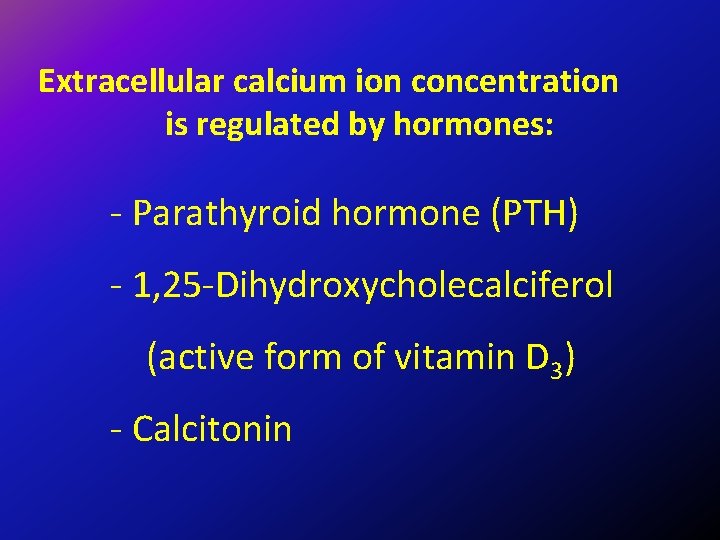
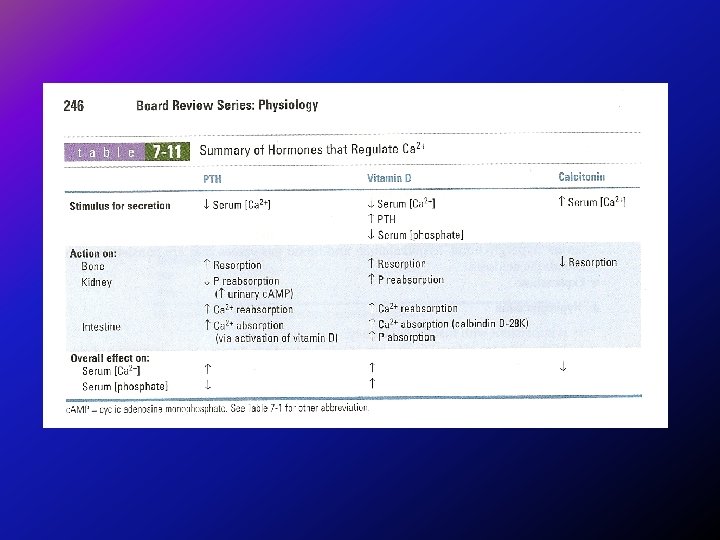
Extracellular calcium ion concentration is regulated by hormones: - Parathyroid hormone (PTH) - 1, 25 -Dihydroxycholecalciferol (active form of vitamin D 3) - Calcitonin
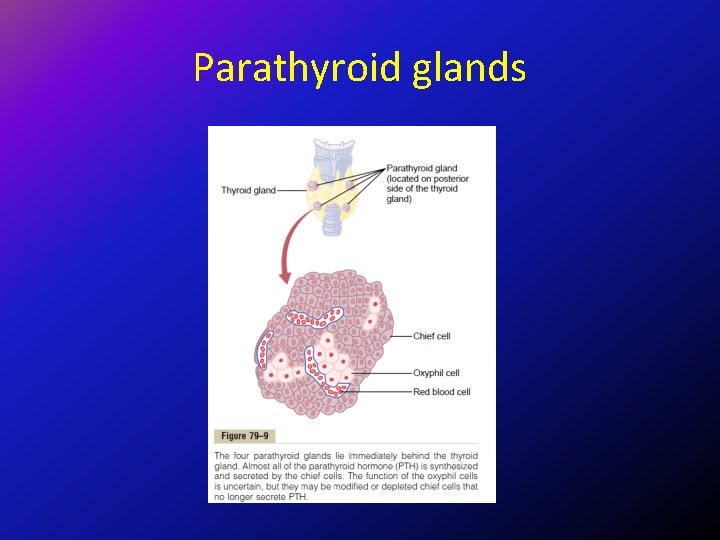
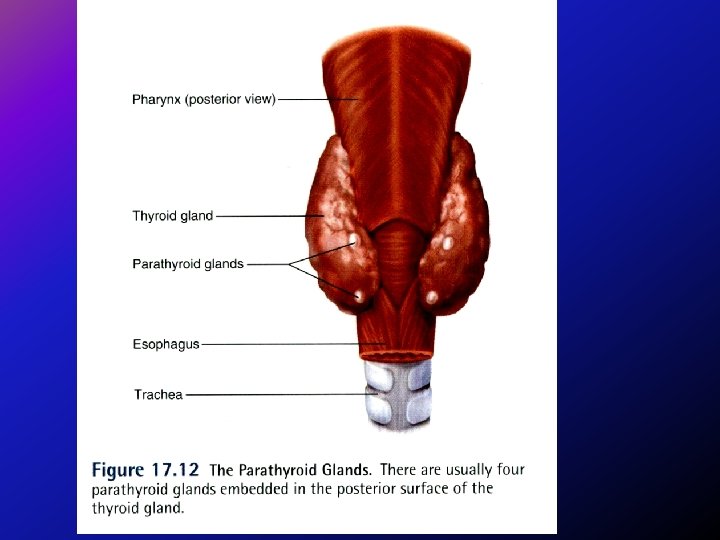
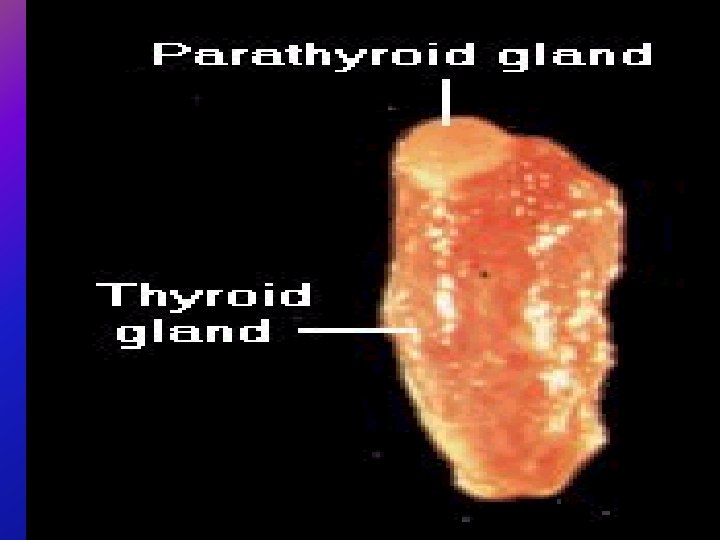
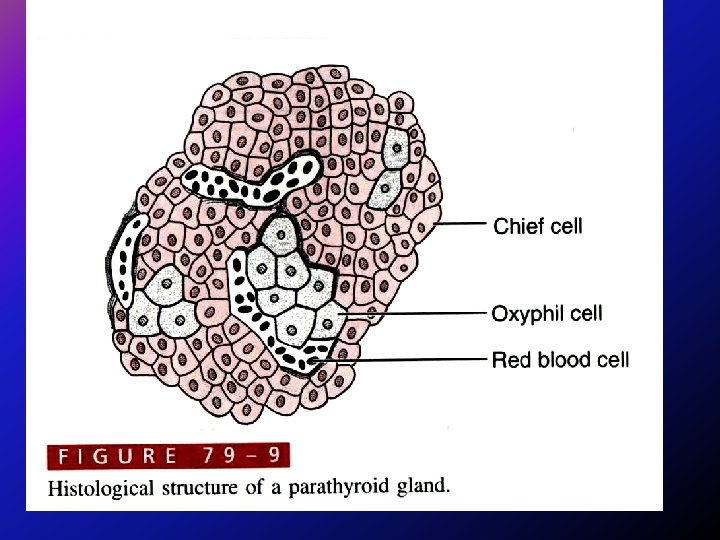
Parathyroid glands
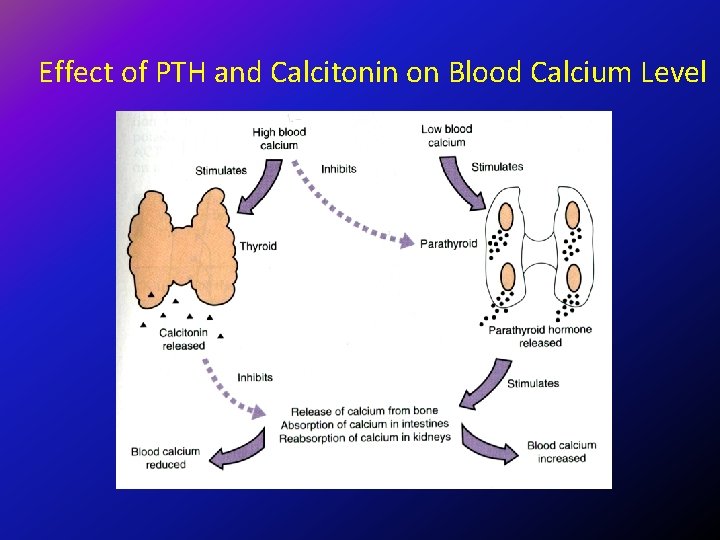
Effect of PTH and Calcitonin on Blood Calcium Level
![Actions of PTH are coordinated to produce Ø an increase in serum [Ca 2+]](http://slidetodoc.com/presentation_image/c619b648d325ad73dcc26ac61cbb38c7/image-9.jpg "Actions of PTH are coordinated to produce Ø an increase in serum [Ca 2+]")
Actions of PTH are coordinated to produce Ø an increase in serum [Ca 2+] Ø a decrease in serum [phosphate]
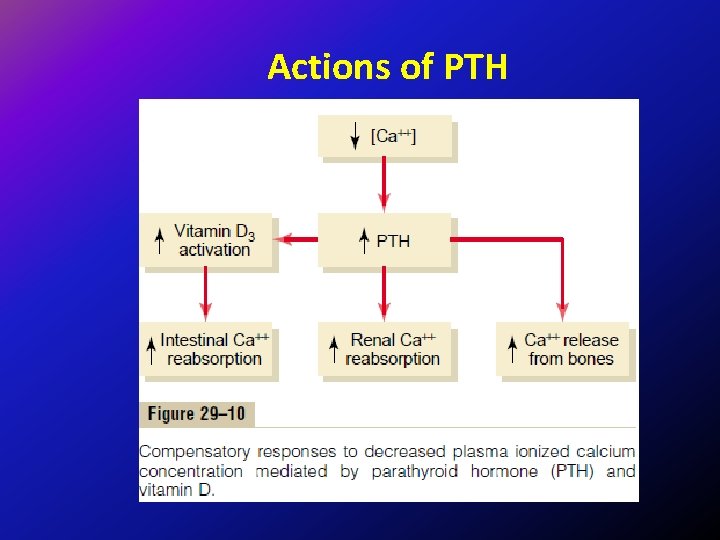
Actions of PTH
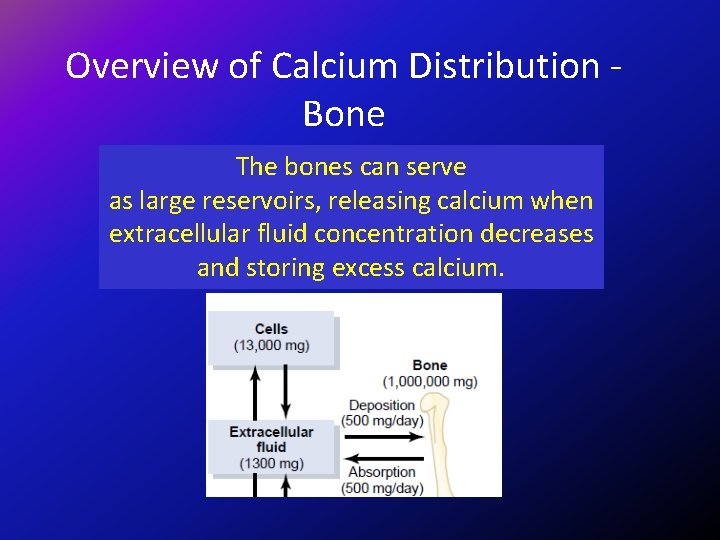
Overview of Calcium Distribution Bone The bones can serve as large reservoirs, releasing calcium when extracellular fluid concentration decreases and storing excess calcium.
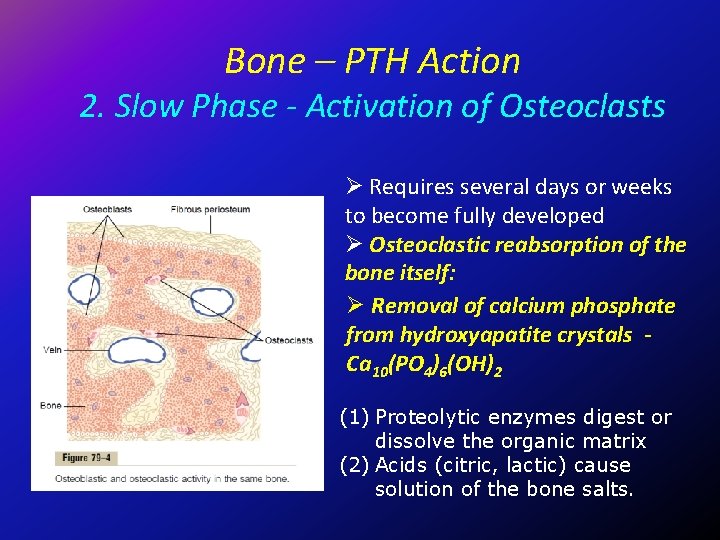
Bone – PTH Action 2. Slow Phase - Activation of Osteoclasts Ø Requires several days or weeks to become fully developed Ø Osteoclastic reabsorption of the bone itself: Ø Removal of calcium phosphate from hydroxyapatite crystals Ca 10(PO 4)6(OH)2 (1) Proteolytic enzymes digest or dissolve the organic matrix (2) Acids (citric, lactic) cause solution of the bone salts.
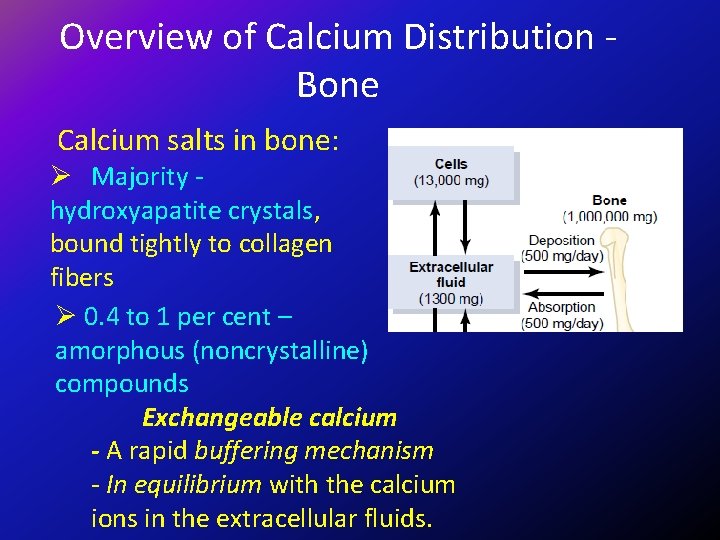
Overview of Calcium Distribution Bone Calcium salts in bone: Ø Majority hydroxyapatite crystals, bound tightly to collagen fibers Ø 0. 4 to 1 per cent – amorphous (noncrystalline) compounds Exchangeable calcium - A rapid buffering mechanism - In equilibrium with the calcium ions in the extracellular fluids.
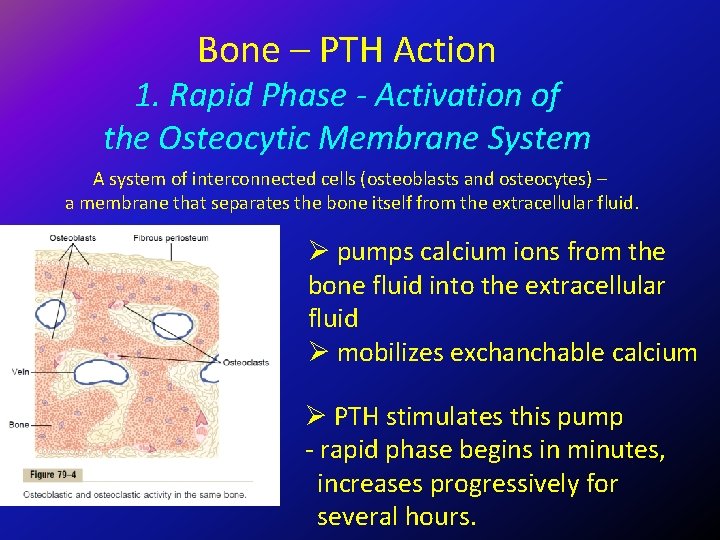
Bone – PTH Action 1. Rapid Phase - Activation of the Osteocytic Membrane System A system of interconnected cells (osteoblasts and osteocytes) – a membrane that separates the bone itself from the extracellular fluid. Ø pumps calcium ions from the bone fluid into the extracellular fluid Ø mobilizes exchanchable calcium Ø PTH stimulates this pump - rapid phase begins in minutes, increases progressively for several hours.
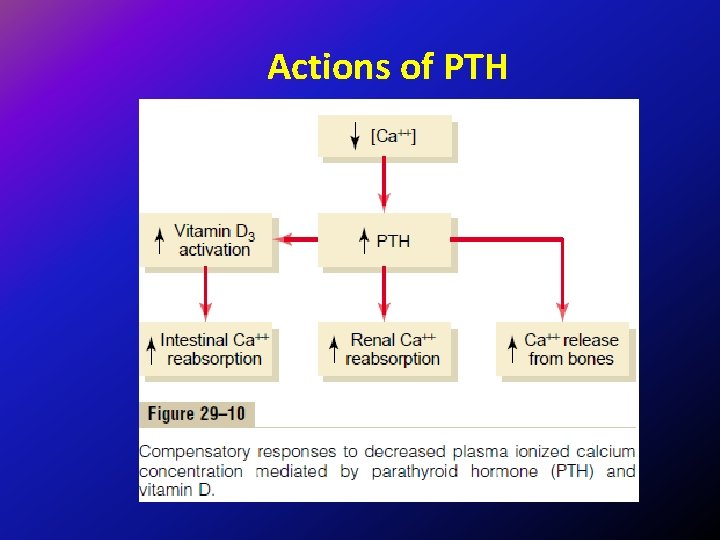
Actions of PTH
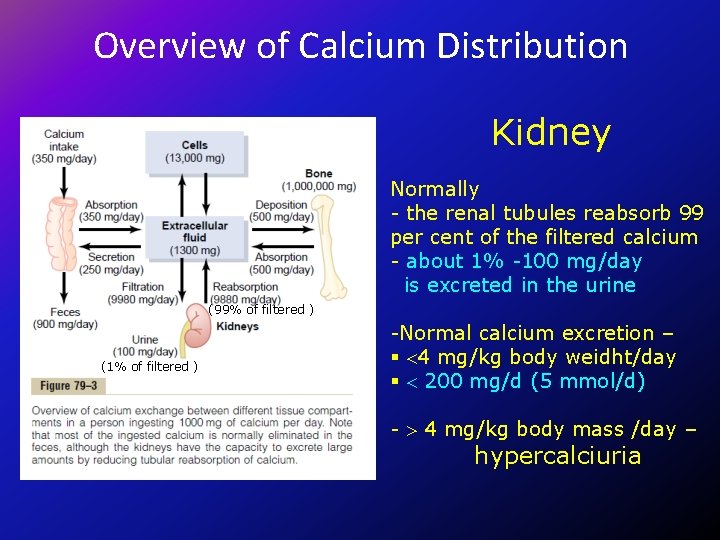
Overview of Calcium Distribution Kidney Normally - the renal tubules reabsorb 99 per cent of the filtered calcium - about 1% -100 mg/day is excreted in the urine (99% of filtered ) (1% of filtered ) -Normal calcium excretion – § 4 mg/kg body weidht/day § 200 mg/d (5 mmol/d) - 4 mg/kg body mass /day – hypercalciuria
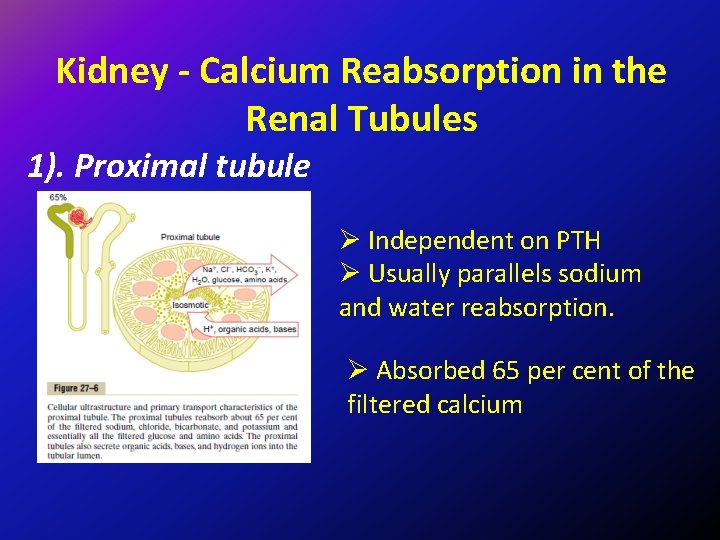
Kidney - Calcium Reabsorption in the Renal Tubules 1). Proximal tubule Ø Independent on PTH Ø Usually parallels sodium and water reabsorption. Ø Absorbed 65 per cent of the filtered calcium
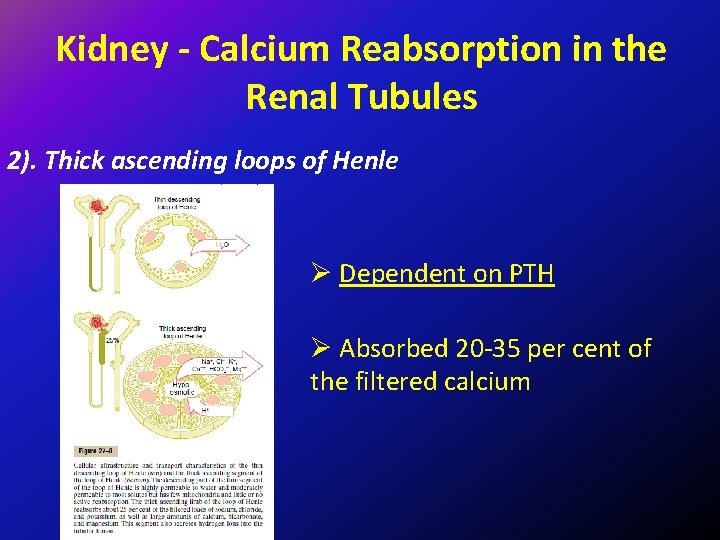
Kidney - Calcium Reabsorption in the Renal Tubules 2). Thick ascending loops of Henle Ø Dependent on PTH Ø Absorbed 20 -35 per cent of the filtered calcium
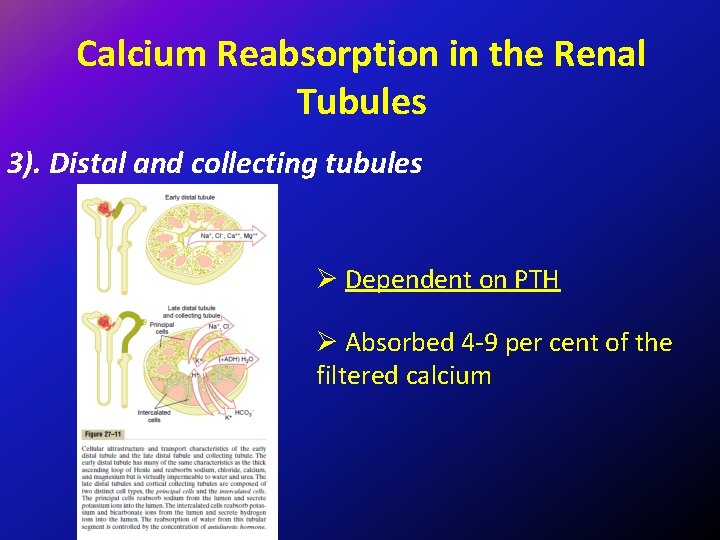
Calcium Reabsorption in the Renal Tubules 3). Distal and collecting tubules Ø Dependent on PTH Ø Absorbed 4 -9 per cent of the filtered calcium
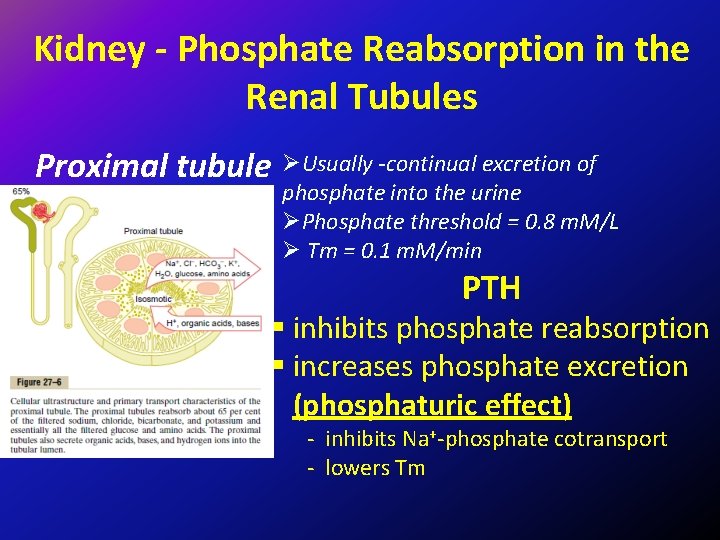
Kidney - Phosphate Reabsorption in the Renal Tubules Proximal tubule ØUsually -continual excretion of phosphate into the urine ØPhosphate threshold = 0. 8 m. M/L Ø Tm = 0. 1 m. M/min PTH § inhibits phosphate reabsorption § increases phosphate excretion (phosphaturic effect) - inhibits Na+-phosphate cotransport - lowers Tm
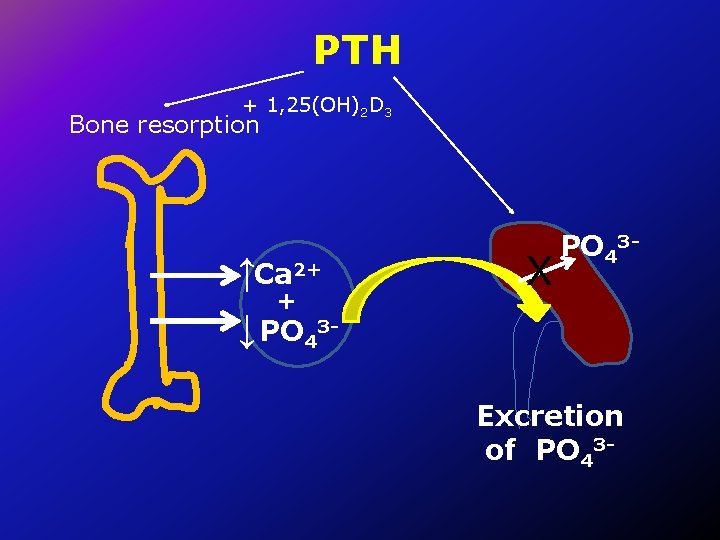
PTH + 1, 25(OH)2 D 3 Bone resorption ↑Ca 2+ + ↓ PO 43 - X PO 43 - Excretion of PO 43 -
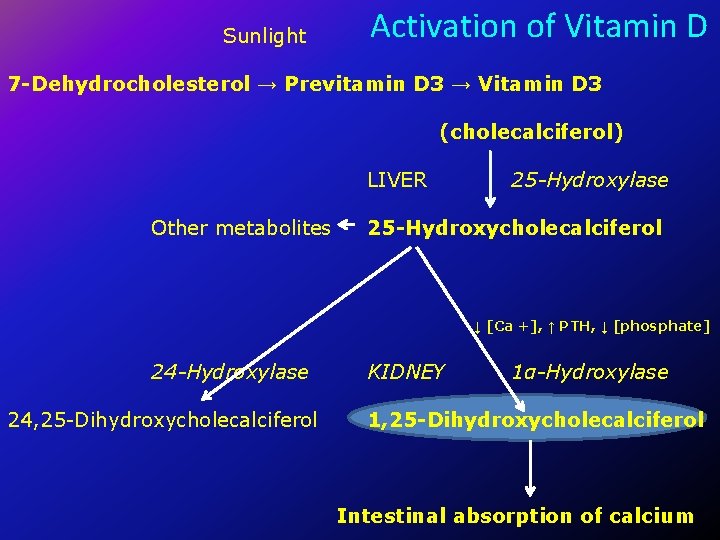
Sunlight Activation of Vitamin D 7 -Dehydrocholesterol → Previtamin D 3 → Vitamin D 3 (cholecalciferol) LIVER Other metabolites 25 -Hydroxylase 25 -Hydroxycholecalciferol ↓ [Ca +], ↑ PTH, ↓ [phosphate] 24 -Hydroxylase 24, 25 -Dihydroxycholecalciferol KIDNEY 1α-Hydroxylase 1, 25 -Dihydroxycholecalciferol Intestinal absorption of calcium
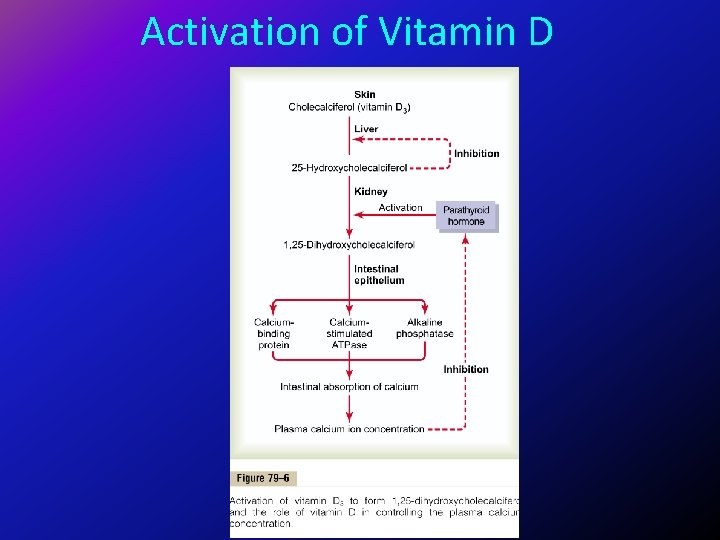
Activation of Vitamin D


Thank you
- Slides: 27