
Regulation control and coordination of life functions and
- Slides: 21
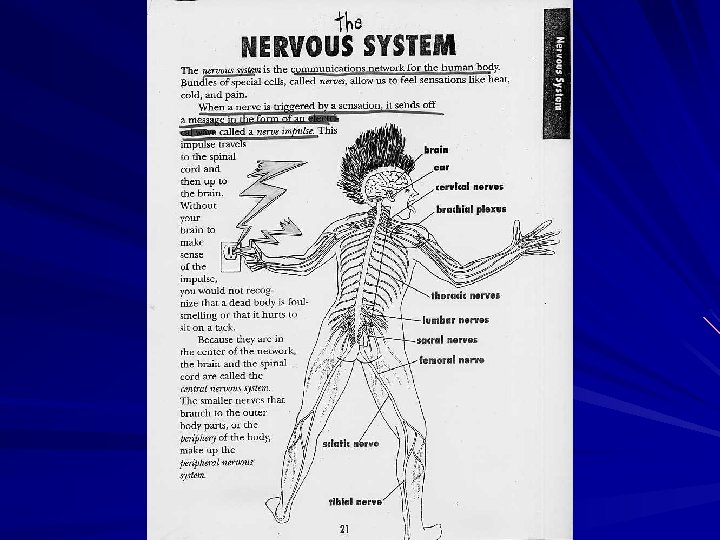
Regulation §control and coordination of life functions and activities § 2 systems involved: 1. nervous- electrical system, brain, spine and nerves found in multicellular organisms 2. endocrine- chemical system, hormones found in all organisms Nervous System: definitions: a. stimulusb. impulse- change in the internal or external environment that triggers an impulse which ends in a response “message”; electrochemical charge sent along a nerve cell (neuron)
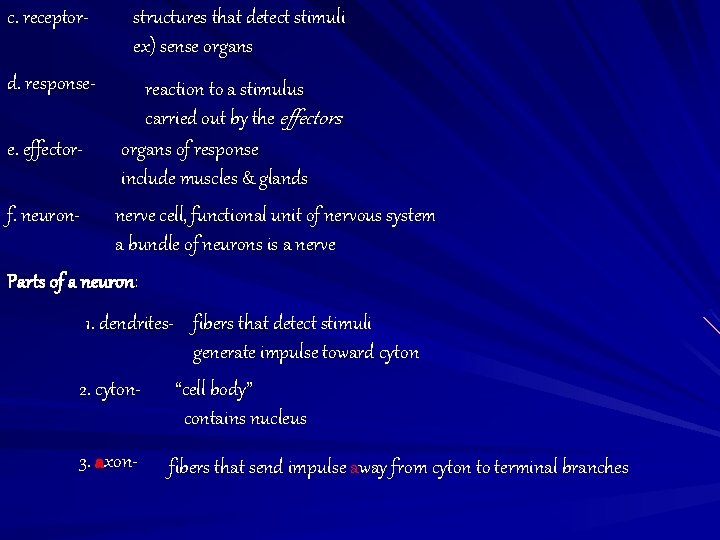
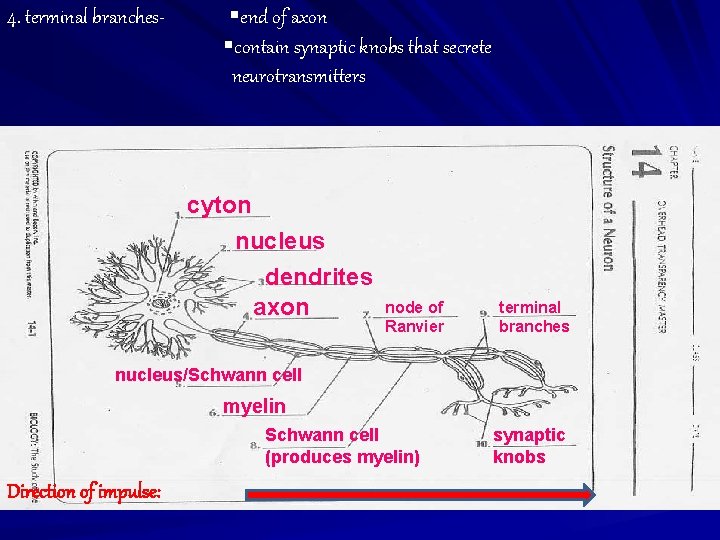
c. receptor- structures that detect stimuli ex) sense organs d. response- reaction to a stimulus carried out by the effectors organs of response include muscles & glands e. effectorf. neuron- nerve cell, functional unit of nervous system a bundle of neurons is a nerve Parts of a neuron: 1. dendrites- fibers that detect stimuli generate impulse toward cyton 2. cyton- “cell body” contains nucleus 3. axon- fibers that send impulse away from cyton to terminal branches
4. terminal branches- §end of axon §contain synaptic knobs that secrete neurotransmitters cyton nucleus dendrites axon node of Ranvier terminal branches nucleus/Schwann cell myelin Schwann cell (produces myelin) Direction of impulse: synaptic knobs
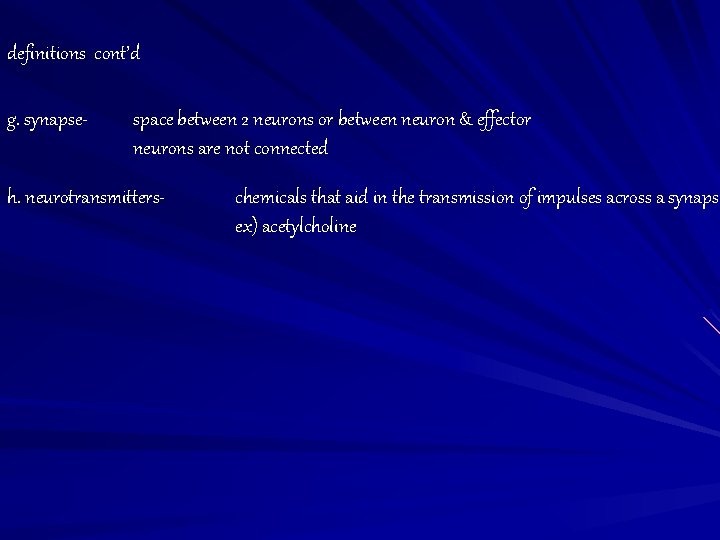
definitions cont’d g. synapse- space between 2 neurons or between neuron & effector neurons are not connected h. neurotransmitters- chemicals that aid in the transmission of impulses across a synapse ex) acetylcholine
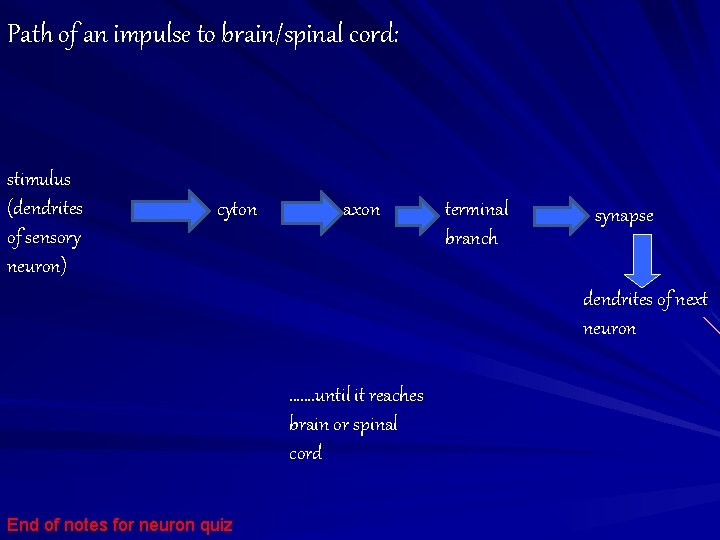
Path of an impulse to brain/spinal cord: stimulus (dendrites of sensory neuron) cyton axon terminal branch synapse dendrites of next neuron ……. until it reaches brain or spinal cord End of notes for neuron quiz
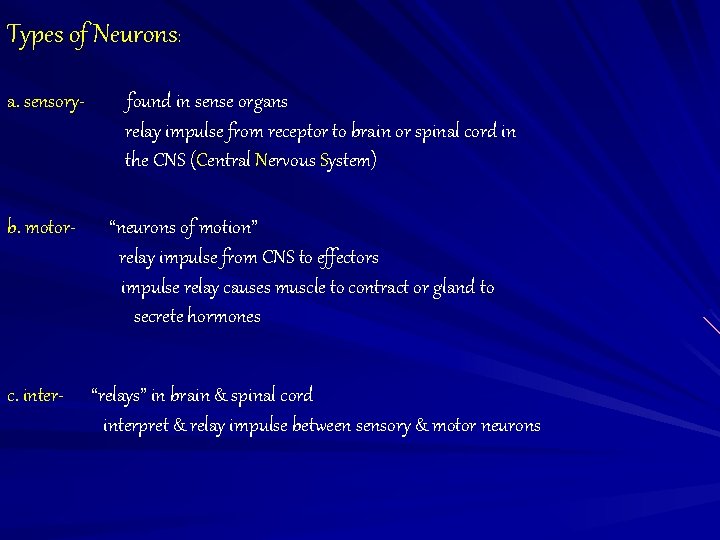
Types of Neurons: a. sensory- b. motor- c. inter- found in sense organs relay impulse from receptor to brain or spinal cord in the CNS (Central Nervous System) “neurons of motion” relay impulse from CNS to effectors impulse relay causes muscle to contract or gland to secrete hormones “relays” in brain & spinal cord interpret & relay impulse between sensory & motor neurons
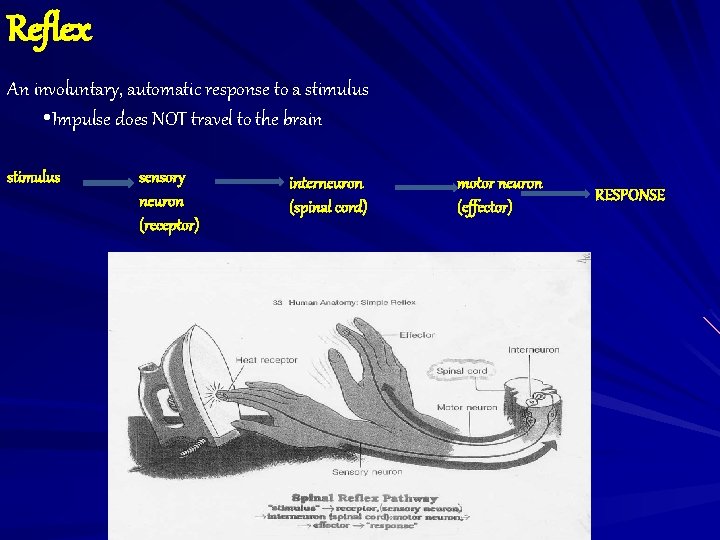
Reflex An involuntary, automatic response to a stimulus • Impulse does NOT travel to the brain stimulus sensory neuron (receptor) interneuron (spinal cord) motor neuron (effector) RESPONSE
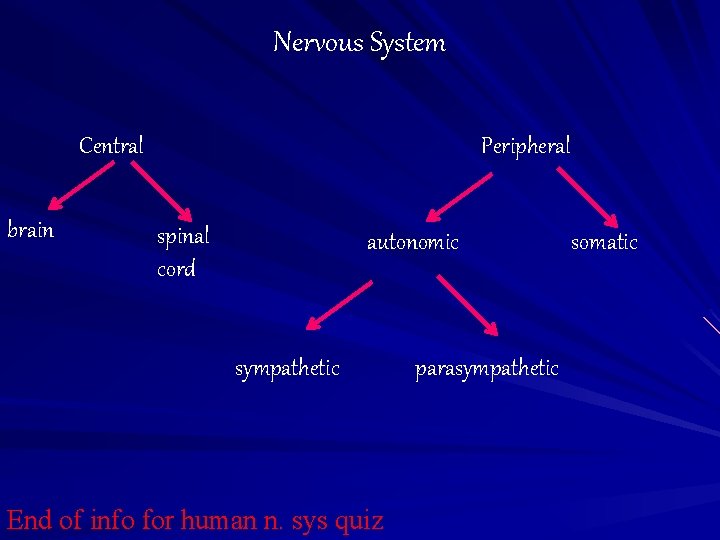
See Awesome Adaptations sheet Human Nervous System Functional Organization: • Central Nervous System (CNS) brain, spinal cord, interneurons • Peripheral Nervous System (PNS) nerves outside of the CNS; sensory and motor neurons
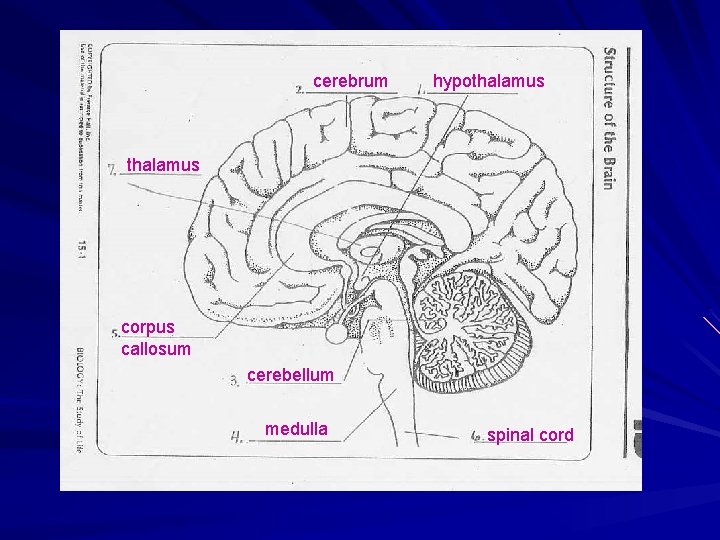
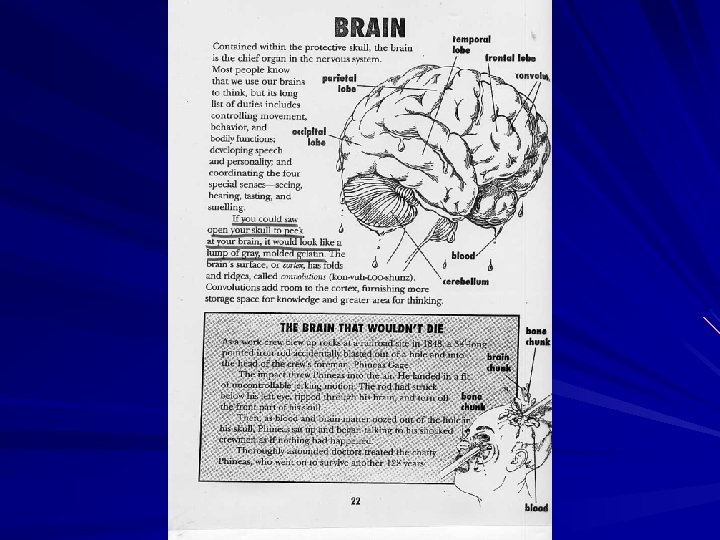
A. Central Nervous System 1. Brain § 3 lb. organ, uses 20% of body’s oxygen § 100 billion neurons §protected by skull, meninges (tough membrane) and cerebrospinal fluid (CSF) §Composed of 2 sides called hemispheres § 3 major parts: a. cerebrum • largest part • right hemisphere controls the left side of the body & vice-versa • the 2 hemispheres communicate via the nerves of the corpus callossum • is convoluted (folded) to increase surface area for information storage
functions: 1. sensory impulses are interpreted 2. voluntary motor activity (movement) is initiated 3. responsible for thinking, learning & memory b. cerebellum • located beneath the rear of cerebrum • coordinates motor activities, maintains balance • affected by alcohol and if damaged can cause loss of balance or tremors c. medulla oblongata- (brainstem) • connects brain & spinal cord • controls involuntary actions (heart, digestion, breathing)
cerebrum hypothalamus corpus callosum cerebellum medulla spinal cord
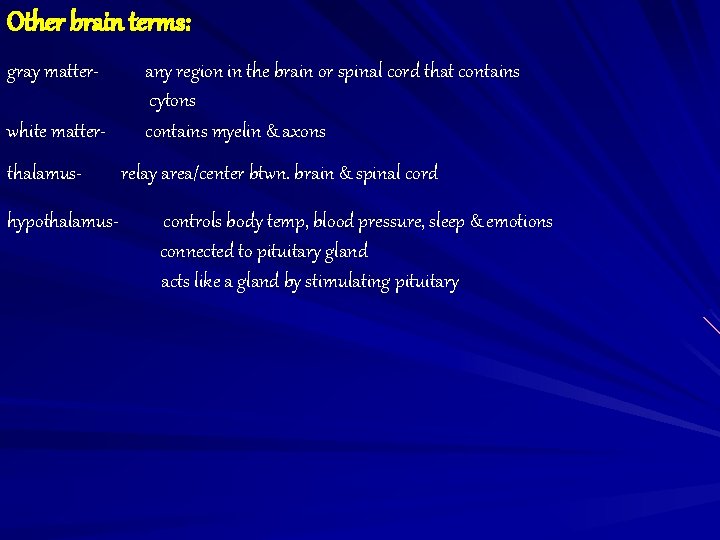
Other brain terms: gray matterwhite matterthalamushypothalamus- any region in the brain or spinal cord that contains cytons contains myelin & axons relay area/center btwn. brain & spinal cord controls body temp, blood pressure, sleep & emotions connected to pituitary gland acts like a gland by stimulating pituitary
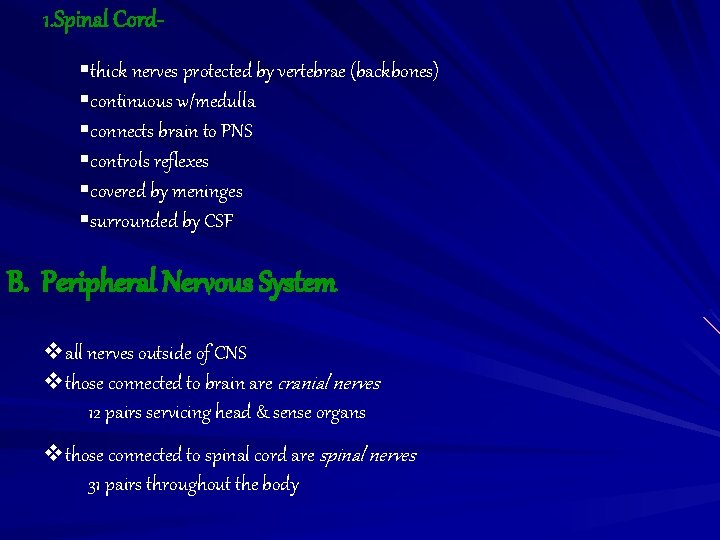
1. Spinal Cord§thick nerves protected by vertebrae (backbones) §continuous w/medulla §connects brain to PNS §controls reflexes §covered by meninges §surrounded by CSF B. Peripheral Nervous System vall nerves outside of CNS vthose connected to brain are cranial nerves 12 pairs servicing head & sense organs vthose connected to spinal cord are spinal nerves 31 pairs throughout the body
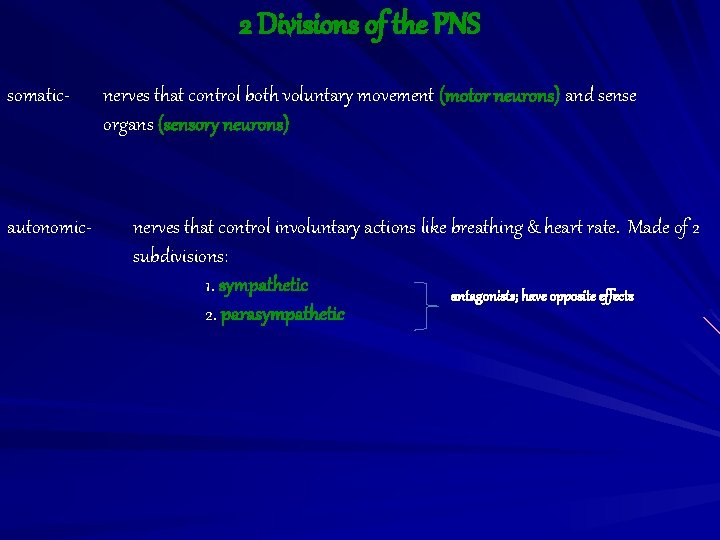
2 Divisions of the PNS somatic- autonomic- nerves that control both voluntary movement (motor neurons) and sense organs (sensory neurons) nerves that control involuntary actions like breathing & heart rate. Made of 2 subdivisions: 1. sympathetic antagonists; have opposite effects 2. parasympathetic
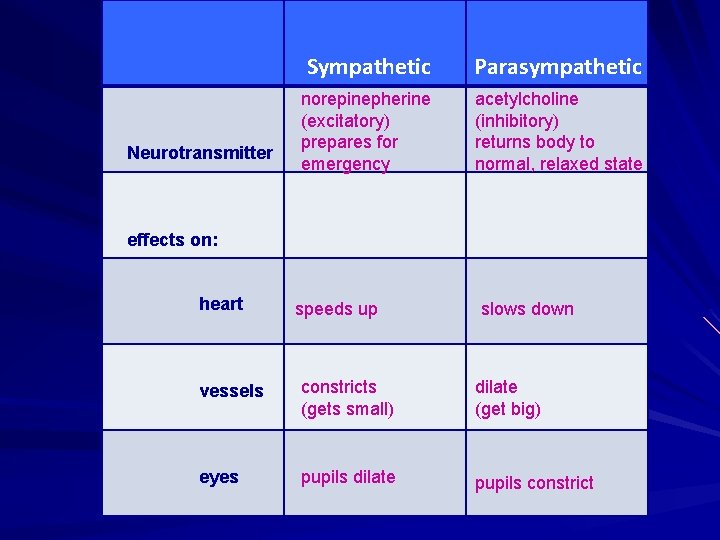
Neurotransmitter Sympathetic Parasympathetic norepinepherine (excitatory) prepares for emergency acetylcholine (inhibitory) returns body to normal, relaxed state effects on: heart speeds up slows down vessels constricts (gets small) dilate (get big) eyes pupils dilate pupils constrict
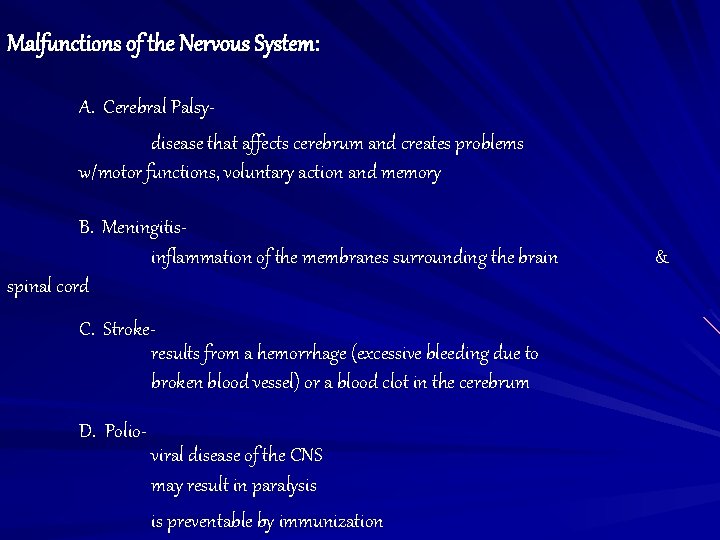
Malfunctions of the Nervous System: A. Cerebral Palsydisease that affects cerebrum and creates problems w/motor functions, voluntary action and memory B. Meningitisinflammation of the membranes surrounding the brain spinal cord C. Strokeresults from a hemorrhage (excessive bleeding due to broken blood vessel) or a blood clot in the cerebrum D. Polioviral disease of the CNS may result in paralysis is preventable by immunization &
Nervous System Central brain Peripheral spinal cord autonomic sympathetic End of info for human n. sys quiz parasympathetic somatic