
REGULATING the CELL CYCLE Slide show by Kelly
REGULATING the CELL CYCLE Slide show by Kelly Riedell/Brookings Biology http: //www. travel-net. com/~andrews/images/animations/traffic. gif
CELL DIVISION GENES Some cells divide frequently (some human skin cells divide once/hour) Some cells divide occasionally (liver cells divide about once/year) Some cells don’t divide once they form (nerve cells)
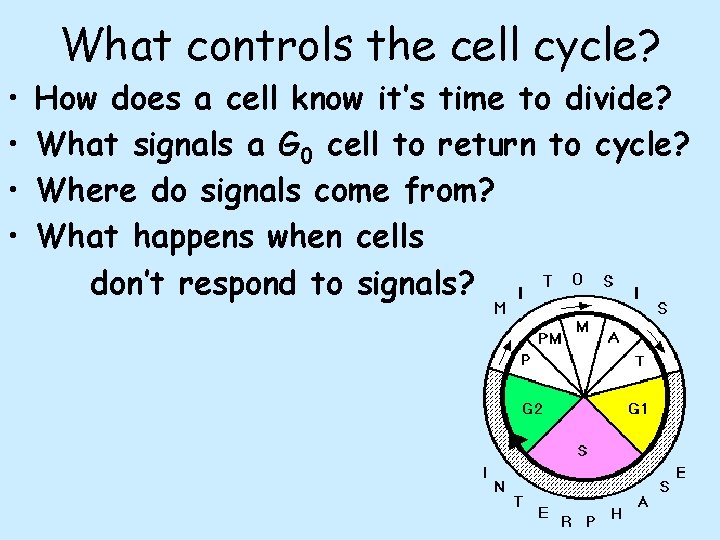
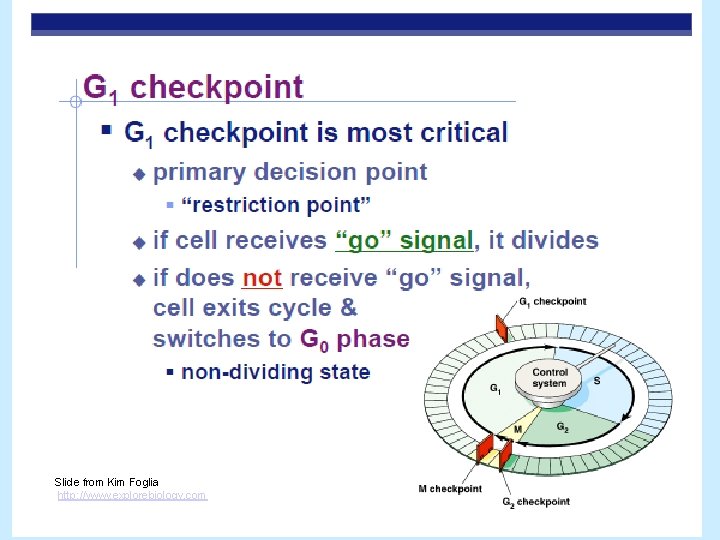
What controls the cell cycle? • • How does a cell know it’s time to divide? What signals a G 0 cell to return to cycle? Where do signals come from? What happens when cells don’t respond to signals?
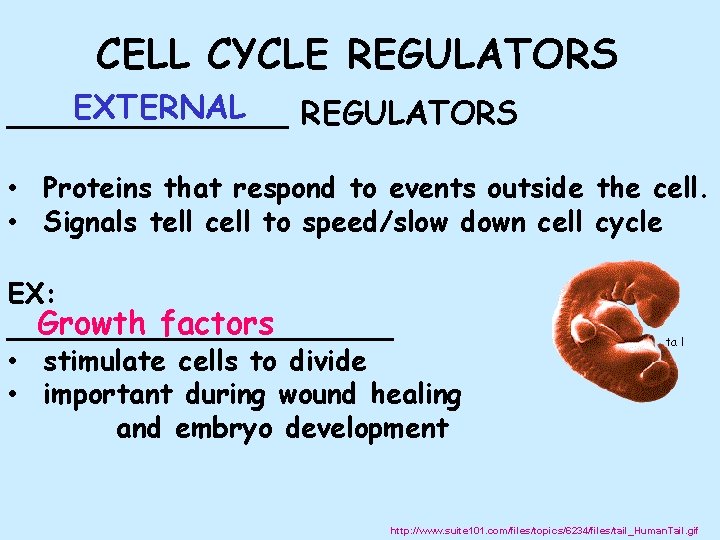
CELL CYCLE REGULATORS EXTERNAL _______ REGULATORS • Proteins that respond to events outside the cell. • Signals tell cell to speed/slow down cell cycle EX: Growth factors ___________ • stimulate cells to divide • important during wound healing and embryo development http: //www. suite 101. com/files/topics/6234/files/tail_Human. Tail. gif
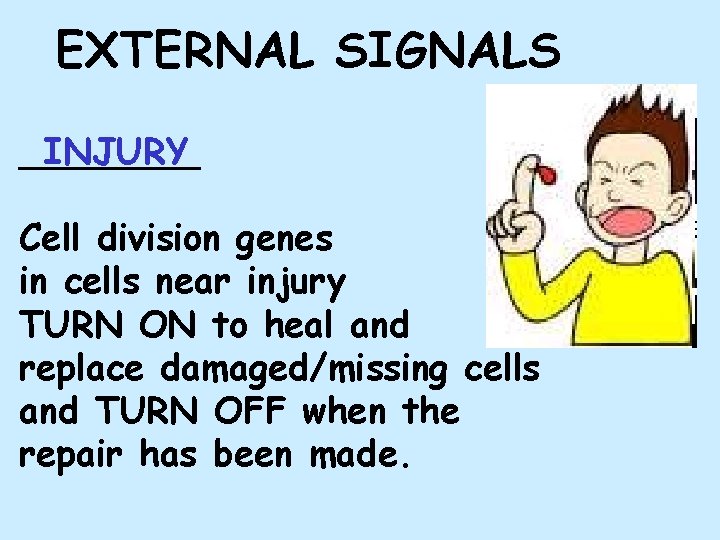
EXTERNAL SIGNALS ____ INJURY Cell division genes in cells near injury TURN ON to heal and replace damaged/missing cells and TURN OFF when the repair has been made.
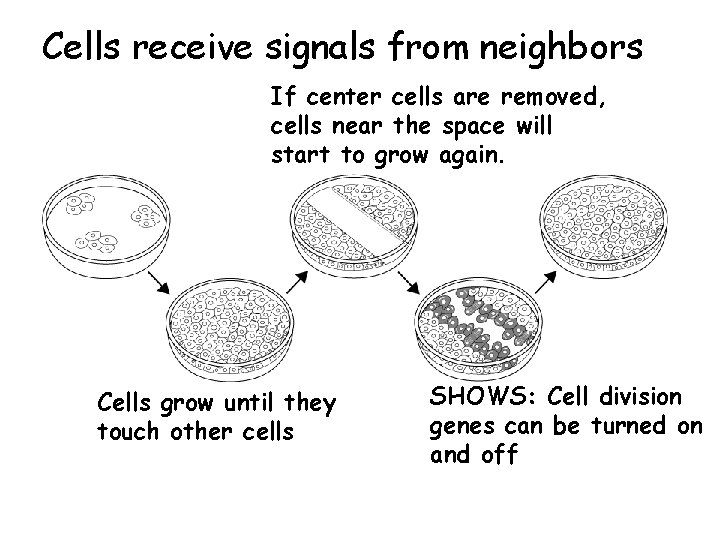
Control of Cell Division Cells receive signals from neighbors Section 10 -3 If center cells are removed, cells near the space will start to grow again. Cells grow until they touch other cells SHOWS: Cell division genes can be turned on and off
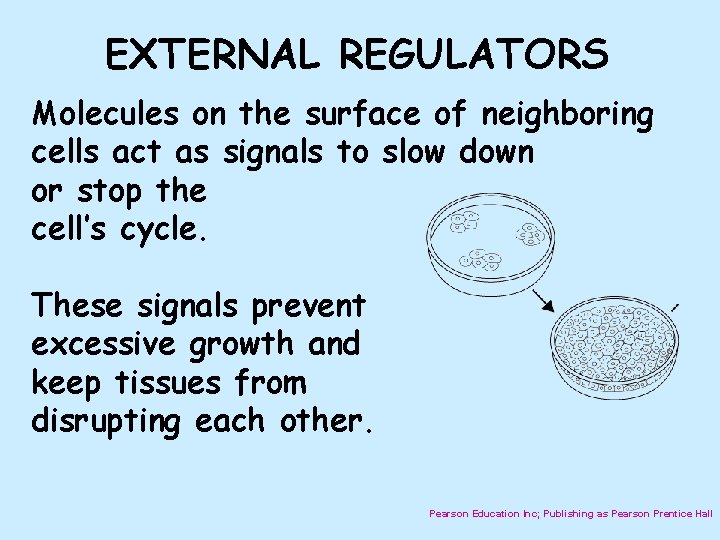
EXTERNAL REGULATORS Molecules on the surface of neighboring cells act as signals to slow down or stop the cell’s cycle. These signals prevent excessive growth and keep tissues from disrupting each other. Pearson Education Inc; Publishing as Pearson Prentice Hall
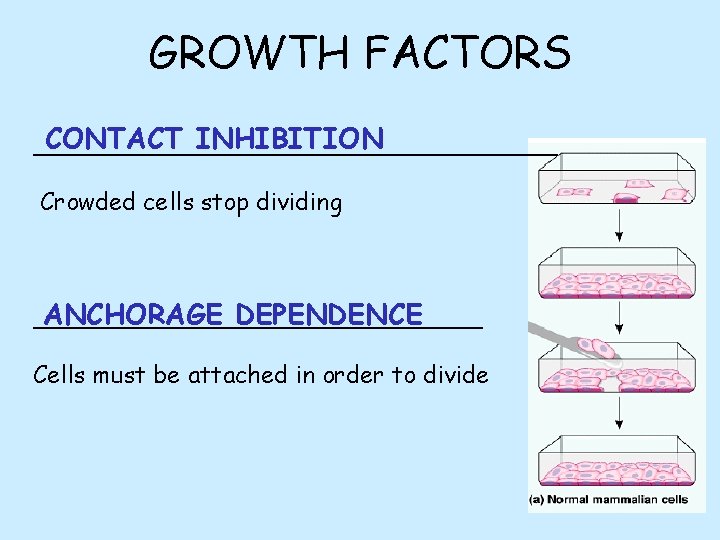
GROWTH FACTORS CONTACT INHIBITION __________________ Crowded cells stop dividing ANCHORAGE DEPENDENCE _______________ Cells must be attached in order to divide
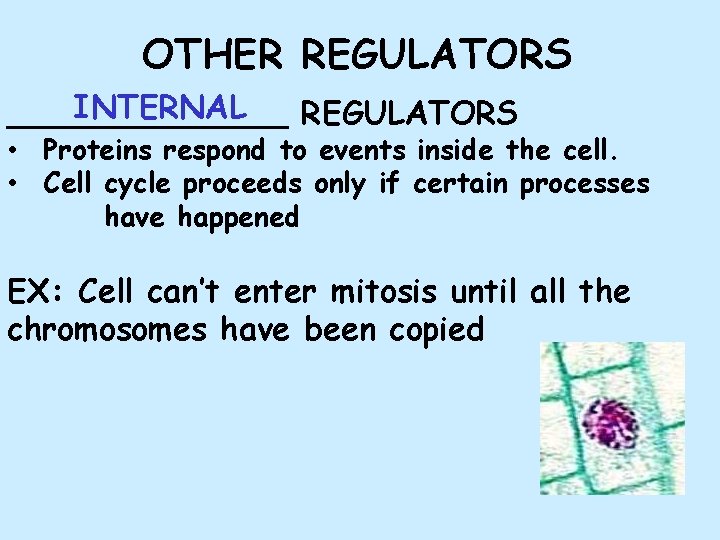
OTHER REGULATORS INTERNAL _______ REGULATORS • Proteins respond to events inside the cell. • Cell cycle proceeds only if certain processes have happened EX: Cell can’t enter mitosis until all the chromosomes have been copied
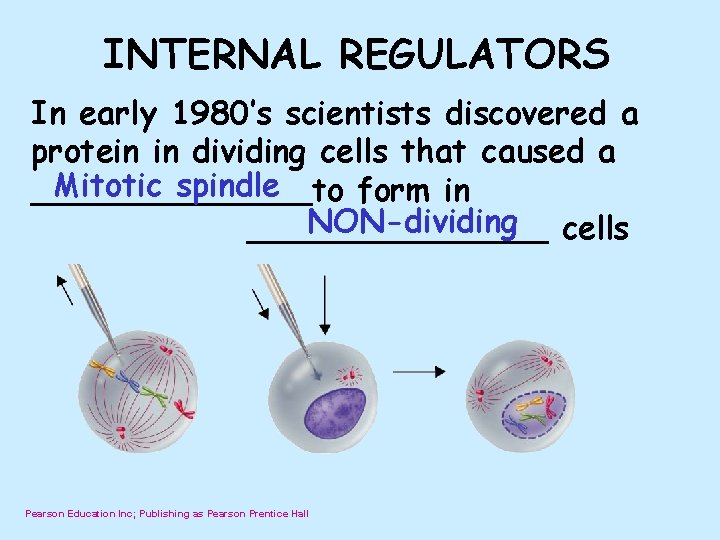
INTERNAL REGULATORS In early 1980’s scientists discovered a protein in dividing cells that caused a Mitotic spindle _______to form in NON-dividing cells ________ Pearson Education Inc; Publishing as Pearson Prentice Hall
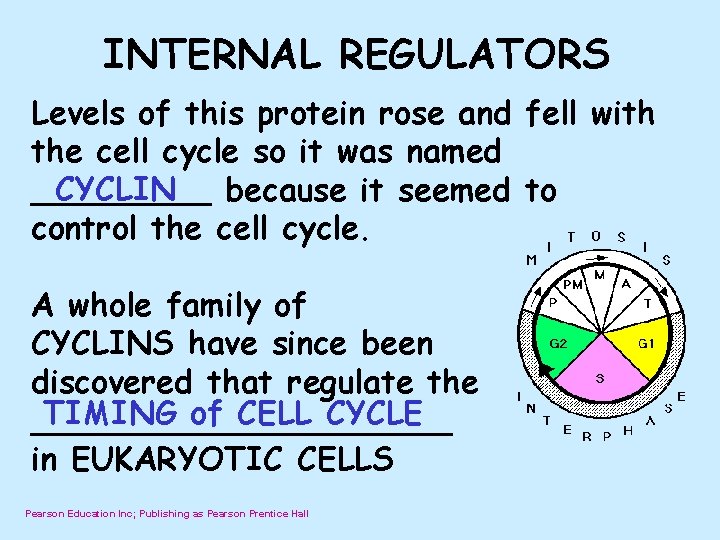
INTERNAL REGULATORS Levels of this protein rose and fell with the cell cycle so it was named CYCLIN _____ because it seemed to control the cell cycle. A whole family of CYCLINS have since been discovered that regulate the TIMING of CELL CYCLE ___________ in EUKARYOTIC CELLS Pearson Education Inc; Publishing as Pearson Prentice Hall
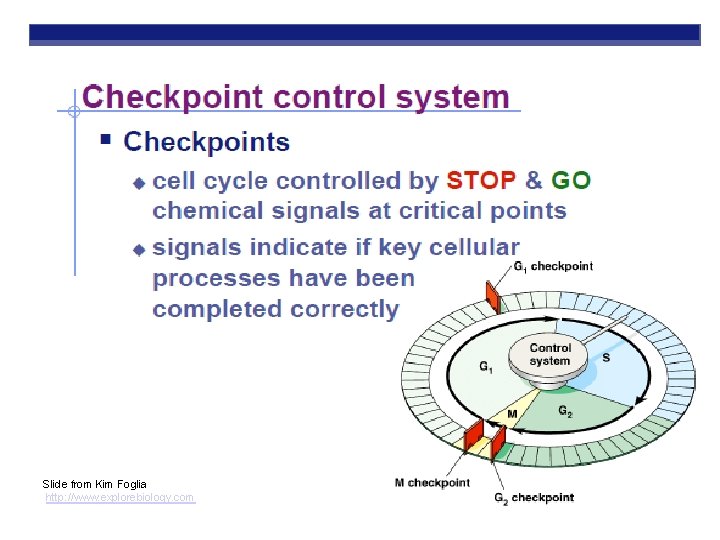
Slide from Kim Foglia http: //www. explorebiology. com
Slide from Kim Foglia http: //www. explorebiology. com
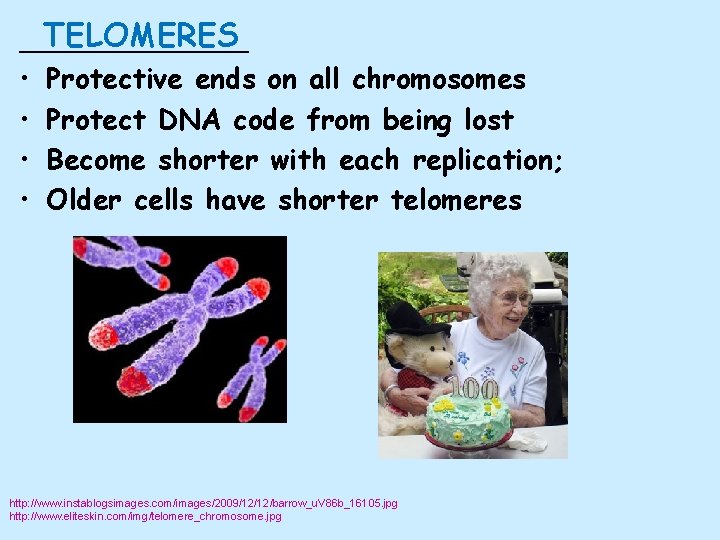
TELOMERES _______ • Protective ends on all chromosomes • Protect DNA code from being lost • Become shorter with each replication; • Older cells have shorter telomeres http: //www. instablogsimages. com/images/2009/12/12/barrow_u. V 86 b_16105. jpg http: //www. eliteskin. com/img/telomere_chromosome. jpg
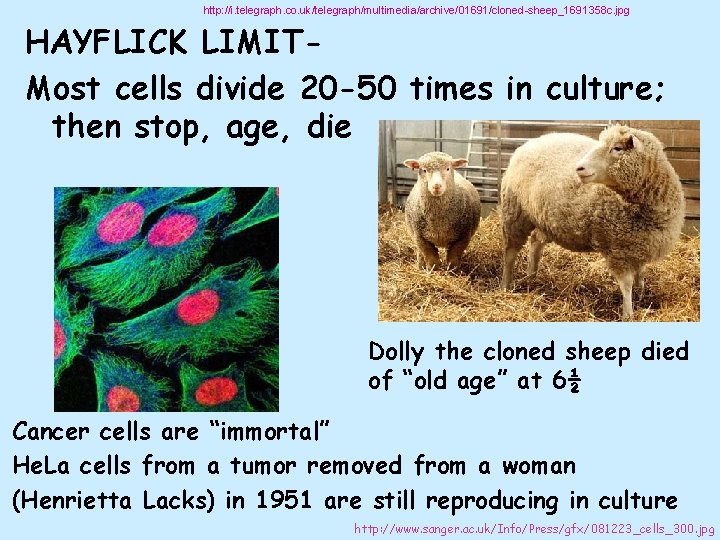
http: //i. telegraph. co. uk/telegraph/multimedia/archive/01691/cloned-sheep_1691358 c. jpg HAYFLICK LIMITMost cells divide 20 -50 times in culture; then stop, age, die Dolly the cloned sheep died of “old age” at 6½ Cancer cells are “immortal” He. La cells from a tumor removed from a woman (Henrietta Lacks) in 1951 are still reproducing in culture http: //www. sanger. ac. uk/Info/Press/gfx/081223_cells_300. jpg
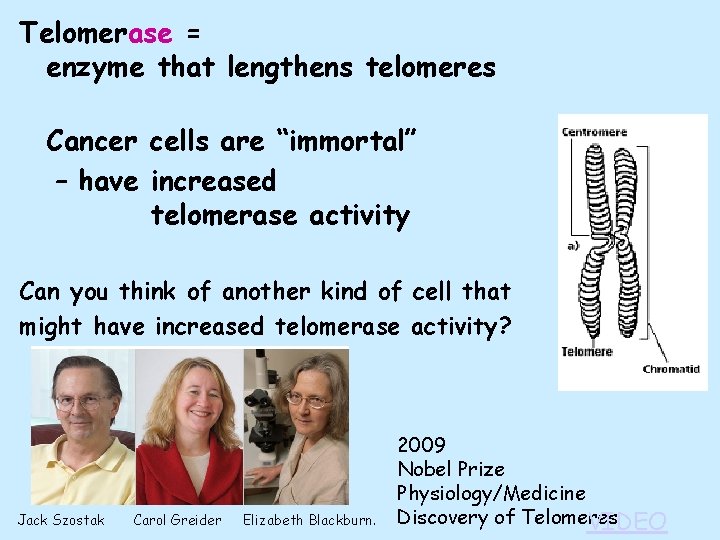
Telomerase = enzyme that lengthens telomeres Cancer cells are “immortal” – have increased telomerase activity Can you think of another kind of cell that might have increased telomerase activity? Jack Szostak Carol Greider Elizabeth Blackburn. 2009 Nobel Prize Physiology/Medicine Discovery of Telomeres VIDEO
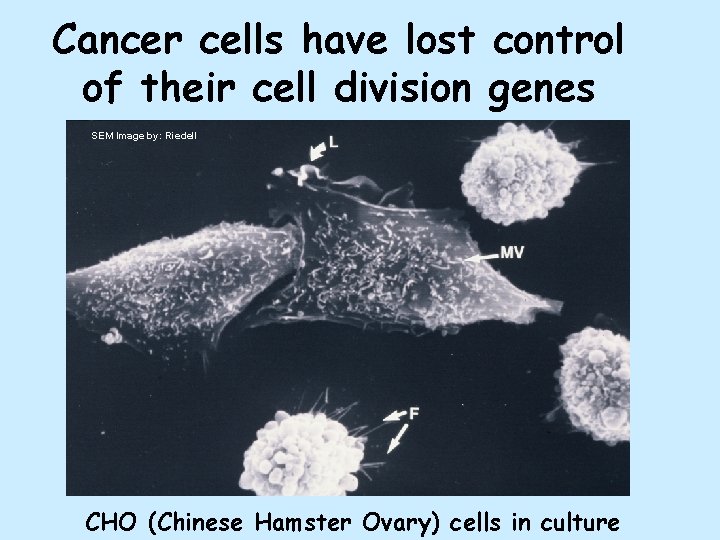
Cancer cells have lost control of their cell division genes SEM Image by: Riedell CHO (Chinese Hamster Ovary) cells in culture
Cancer cells Cancer is complicated and can have many causes, but all cancers have one thing in common they have lost control over their CELL CYCLE _______. Many cancers cells have a damaged or defective p 53. tumor suppressor gene called ____ – Signals DNA repair enzymes – Holds cell at G 1 checkpoint – Starts apoptosis of damaged cells
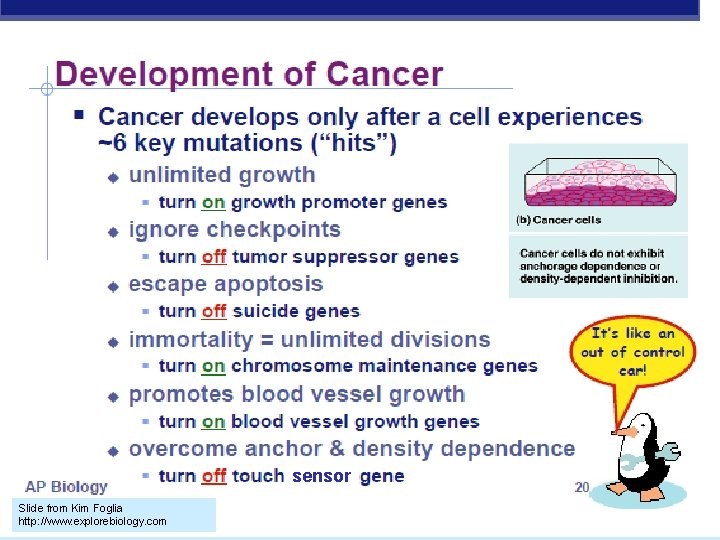
sensor Slide from Kim Foglia http: //www. explorebiology. com
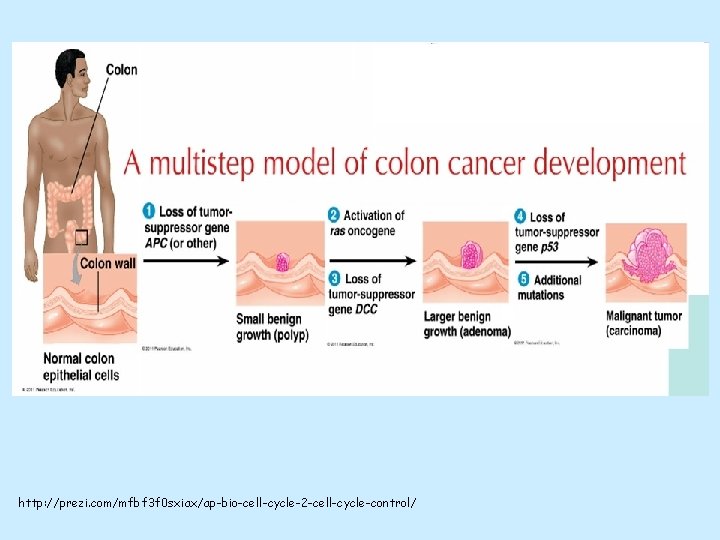
http: //prezi. com/mfbf 3 f 0 sxiax/ap-bio-cell-cycle-2 -cell-cycle-control/
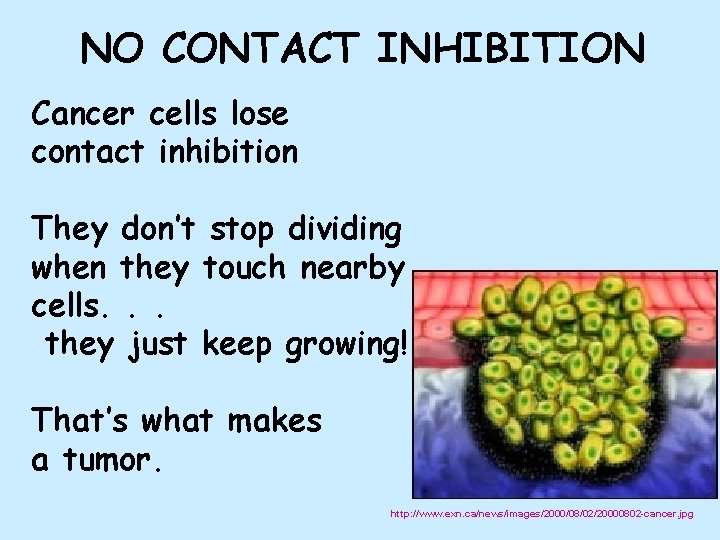
NO CONTACT INHIBITION Cancer cells lose contact inhibition They don’t stop dividing when they touch nearby cells. . . they just keep growing! That’s what makes a tumor. http: //www. exn. ca/news/images/2000/08/02/20000802 -cancer. jpg
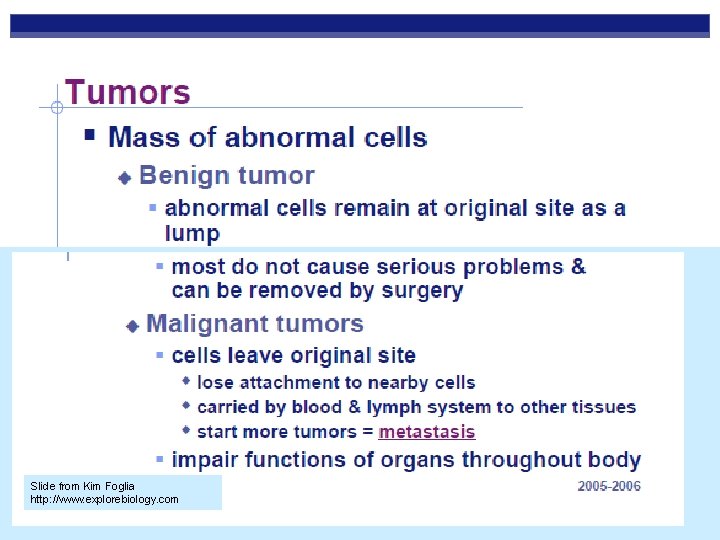
Slide from Kim Foglia http: //www. explorebiology. com
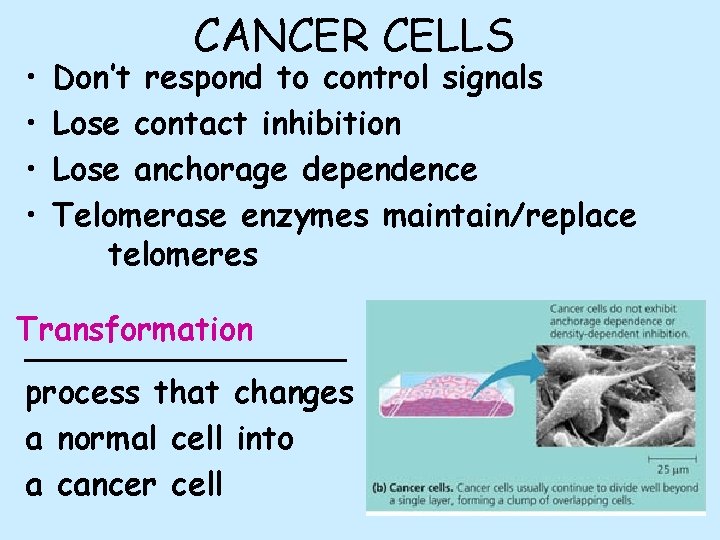
• • CANCER CELLS Don’t respond to control signals Lose contact inhibition Lose anchorage dependence Telomerase enzymes maintain/replace telomeres Transformation ________ process that changes a normal cell into a cancer cell
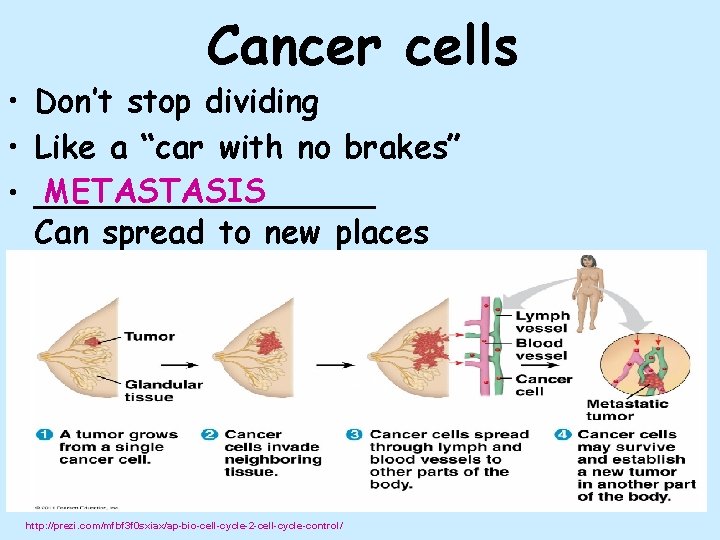
• • • Cancer cells Don’t stop dividing Like a “car with no brakes” METASTASIS _________ Can spread to new places http: //prezi. com/mfbf 3 f 0 sxiax/ap-bio-cell-cycle-2 -cell-cycle-control/
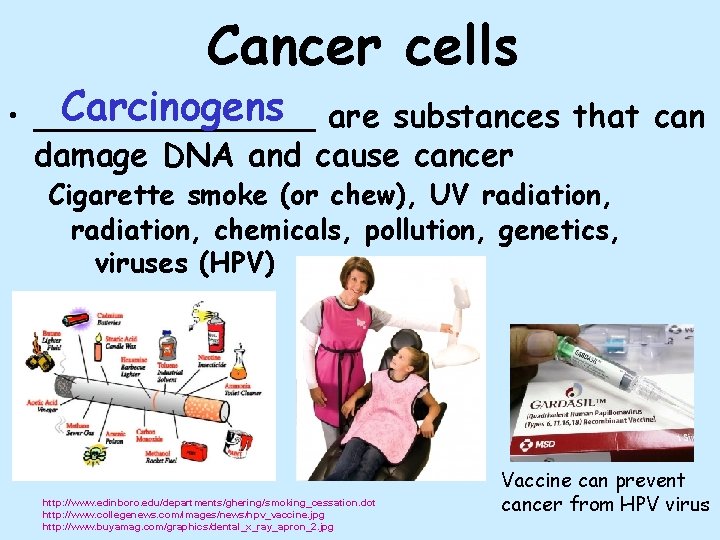
Cancer cells Carcinogens are substances that can • _______ damage DNA and cause cancer Cigarette smoke (or chew), UV radiation, chemicals, pollution, genetics, viruses (HPV) http: //www. edinboro. edu/departments/ghering/smoking_cessation. dot http: //www. collegenews. com/images/news/hpv_vaccine. jpg http: //www. buyamag. com/graphics/dental_x_ray_apron_2. jpg Vaccine can prevent cancer from HPV virus
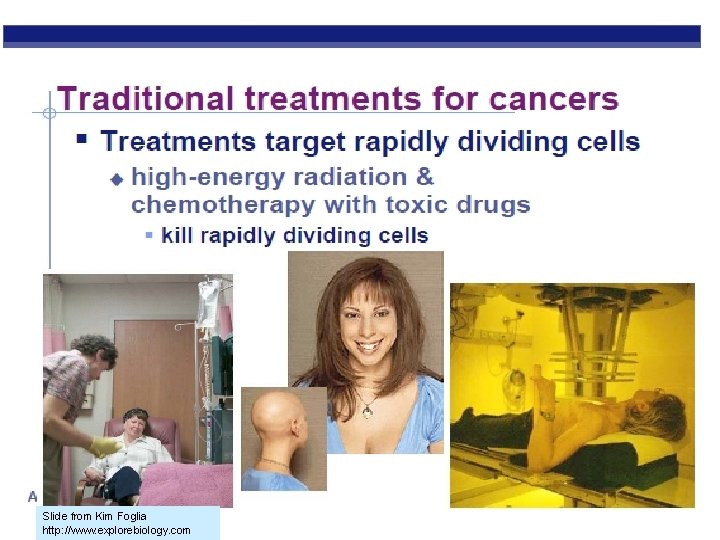
Slide from Kim Foglia http: //www. explorebiology. com
ANTI-SMOKING commercial

SOUTH DAKOTA CORE SCIENCE STANDARDS LIFE SCIENCE: Indicator 1: Understand the fundamental structures, functions, classifications, and mechanisms found in living things 9 -12. L. 1. 1. Students are able to relate cellular functions and processes to specialized structures within cells. – Cell life cycles (ANALYSIS) Examples: somatic cells (mitosis)
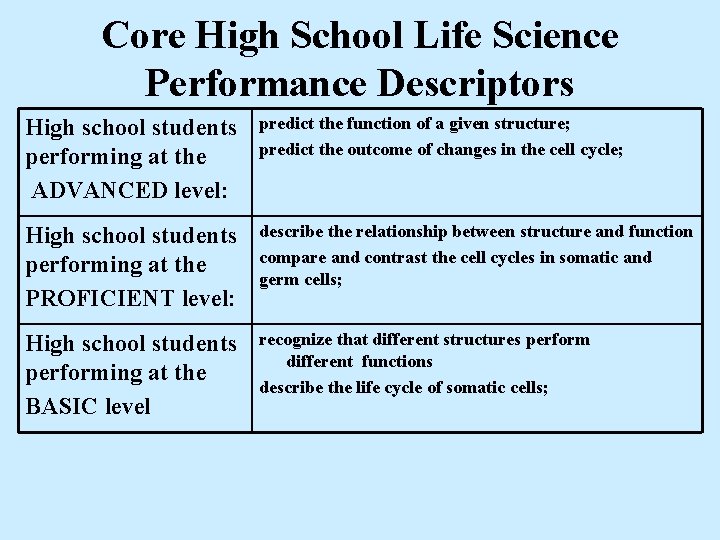
Core High School Life Science Performance Descriptors High school students performing at the ADVANCED level: predict the function of a given structure; predict the outcome of changes in the cell cycle; High school students performing at the PROFICIENT level: describe the relationship between structure and function compare and contrast the cell cycles in somatic and germ cells; High school students performing at the BASIC level recognize that different structures perform different functions describe the life cycle of somatic cells;
- Slides: 30