
Regulating Eukaryotic Gene Expression Fig 15 1 Why
- Slides: 36
Regulating Eukaryotic Gene Expression
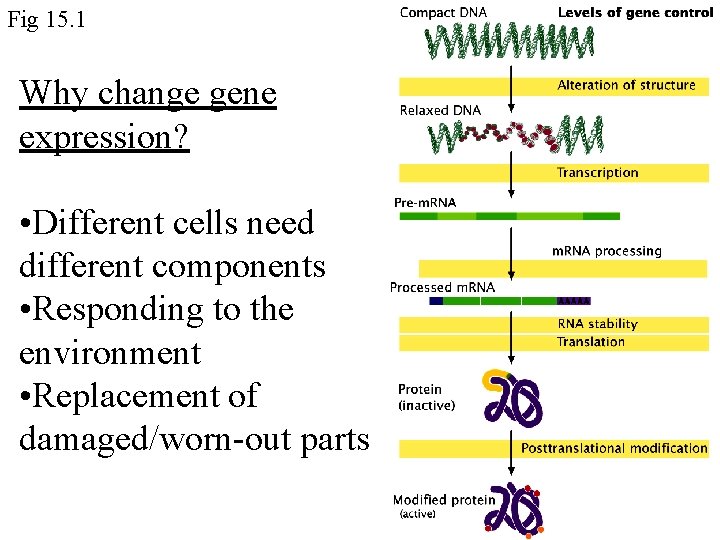
Fig 15. 1 Why change gene expression? • Different cells need different components • Responding to the environment • Replacement of damaged/worn-out parts
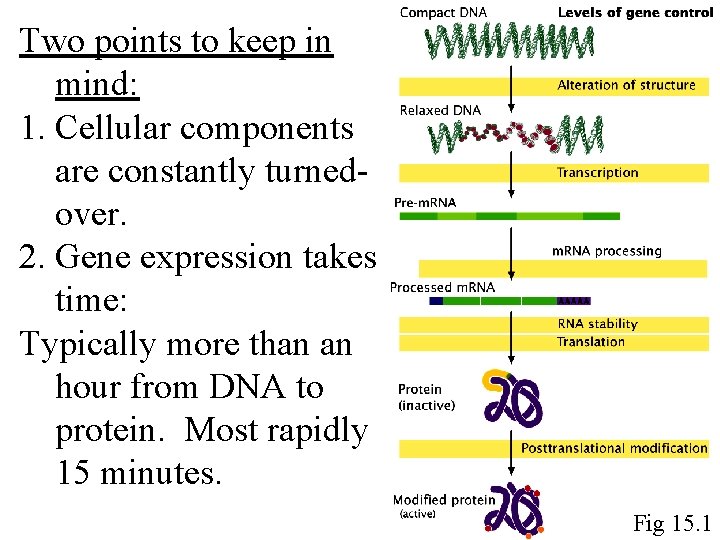
Two points to keep in mind: 1. Cellular components are constantly turnedover. 2. Gene expression takes time: Typically more than an hour from DNA to protein. Most rapidly 15 minutes. Fig 15. 1
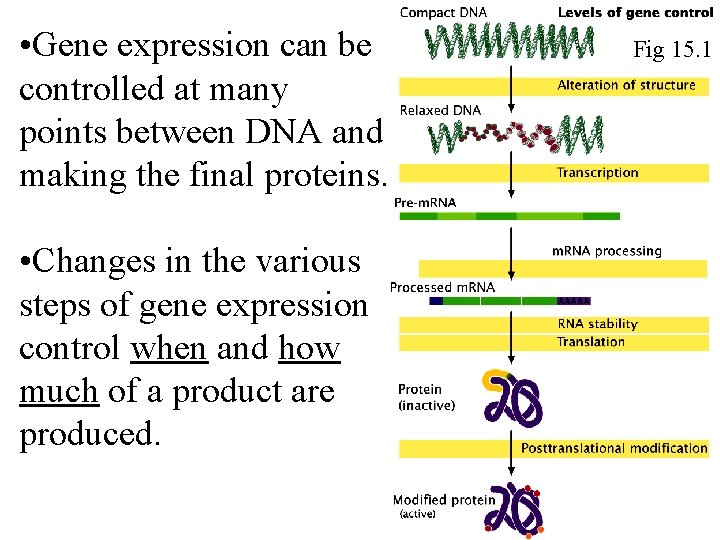
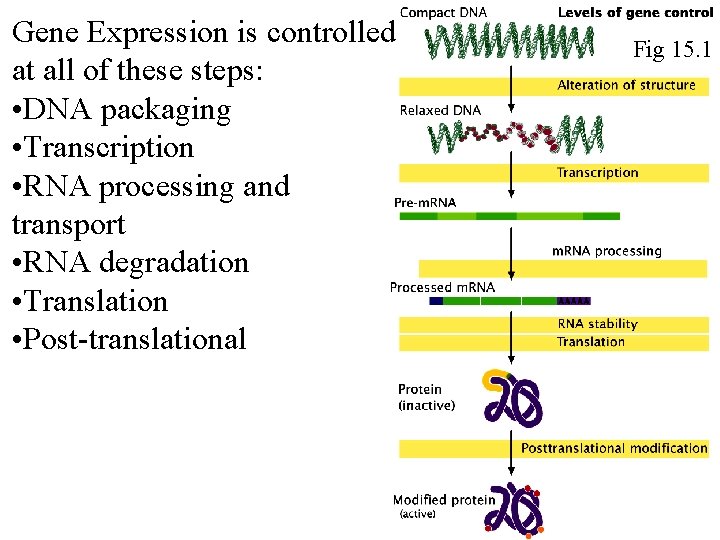
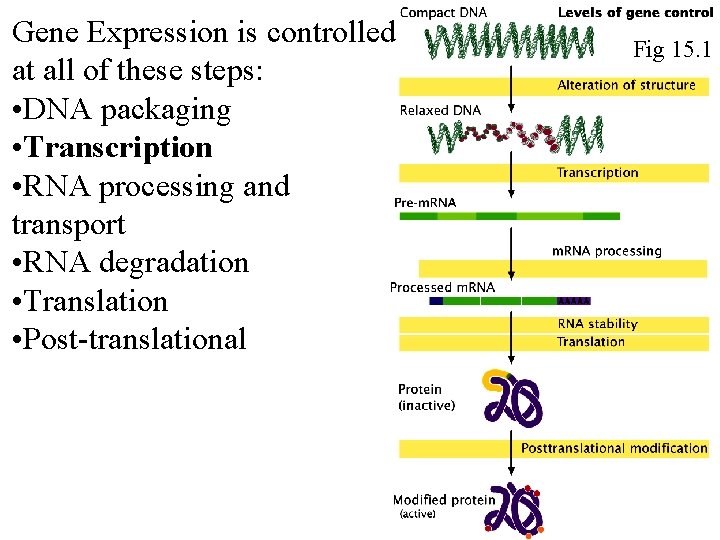
• Gene expression can be controlled at many points between DNA and making the final proteins. • Changes in the various steps of gene expression control when and how much of a product are produced. Fig 15. 1
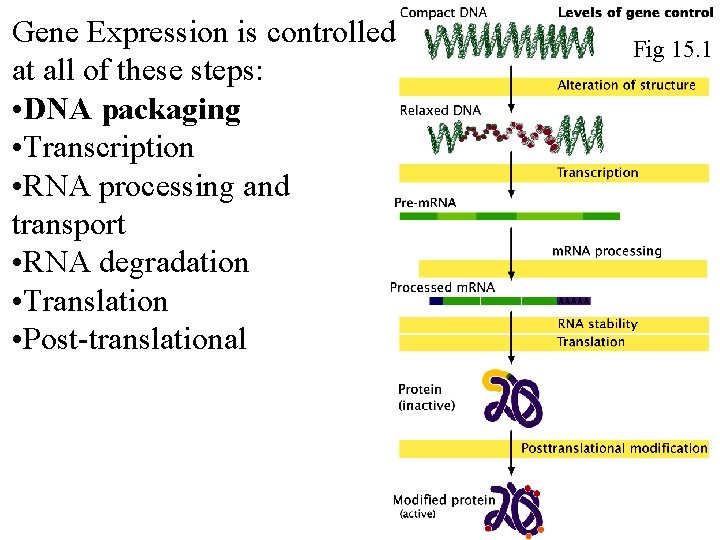
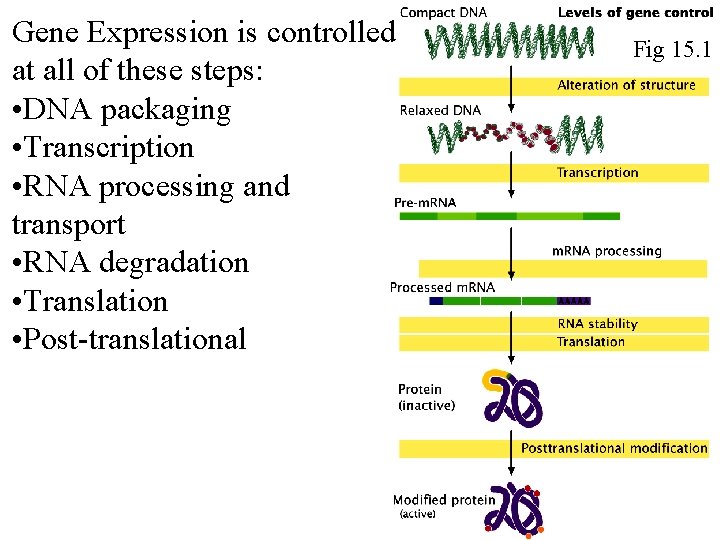
Gene Expression is controlled at all of these steps: • DNA packaging • Transcription • RNA processing and transport • RNA degradation • Translation • Post-translational Fig 15. 1 Fig 16. 1
Gene Expression is controlled at all of these steps: • DNA packaging • Transcription • RNA processing and transport • RNA degradation • Translation • Post-translational Fig 15. 1 Fig 16. 1
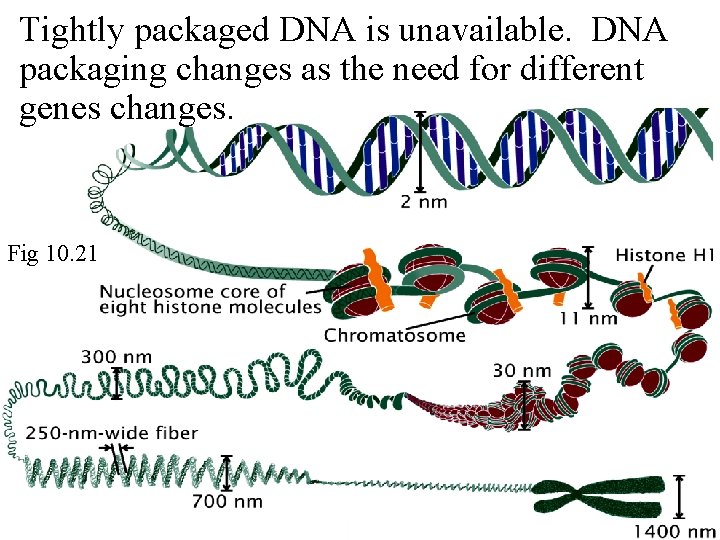
Tightly packaged DNA is unavailable. DNA packaging changes as the need for different genes changes. Fig 10. 21
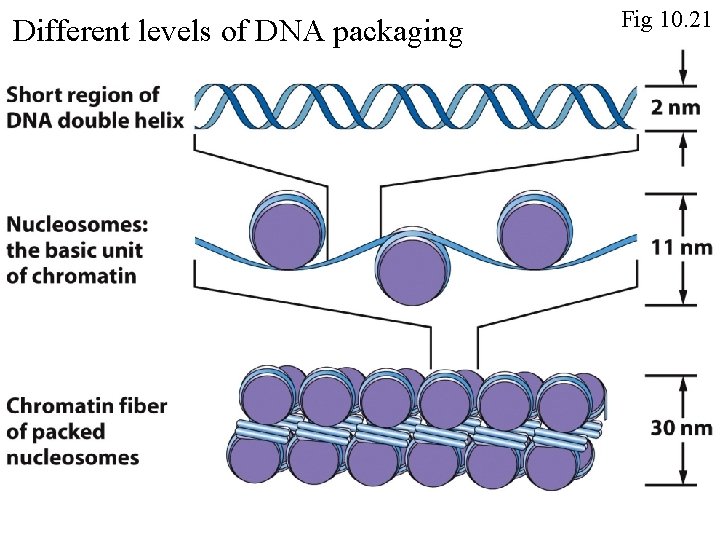
Different levels of DNA packaging Fig 10. 21
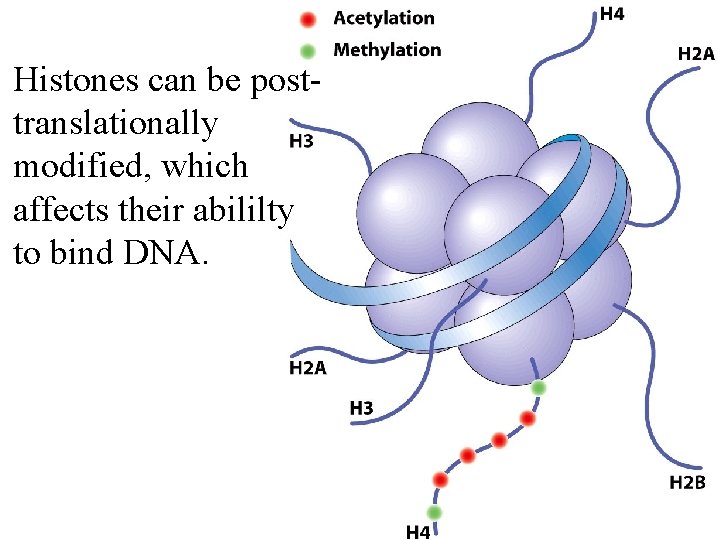
Histones can be posttranslationally modified, which affects their abililty to bind DNA.
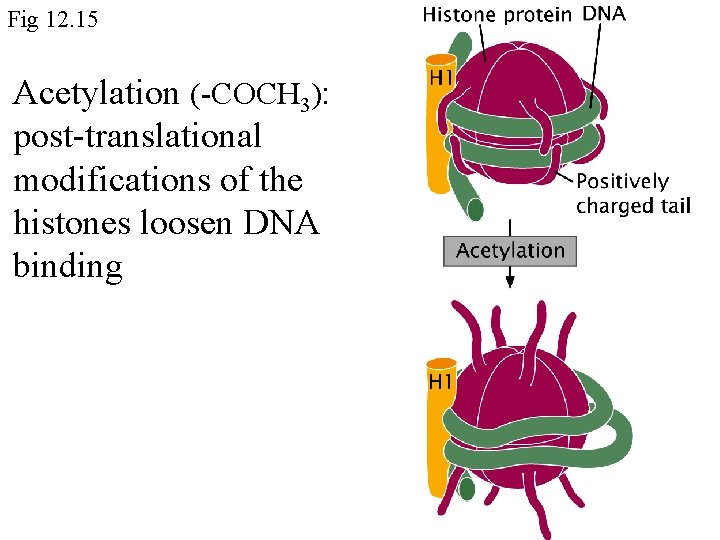
Fig 12. 15 Acetylation (-COCH 3): post-translational modifications of the histones loosen DNA binding
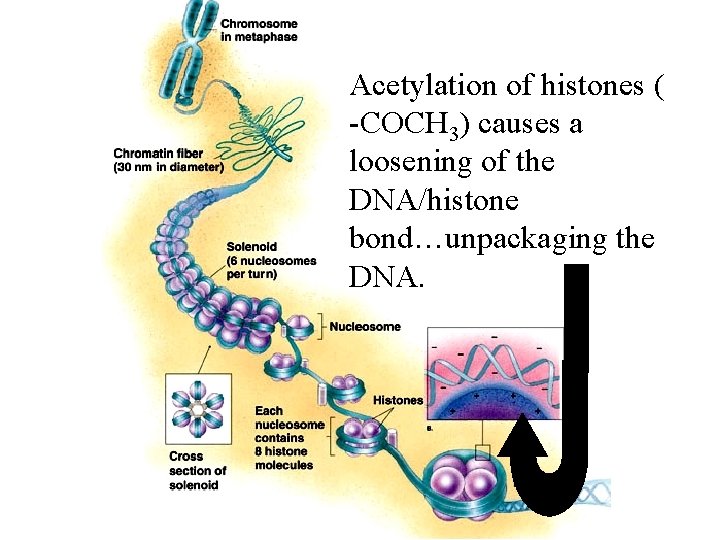
Acetylation of histones ( -COCH 3) causes a loosening of the DNA/histone bond…unpackaging the DNA.
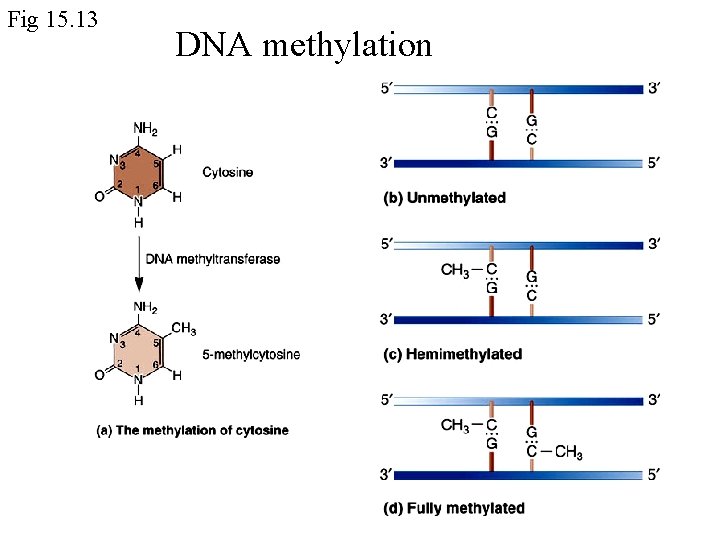
Fig 15. 13 DNA methylation
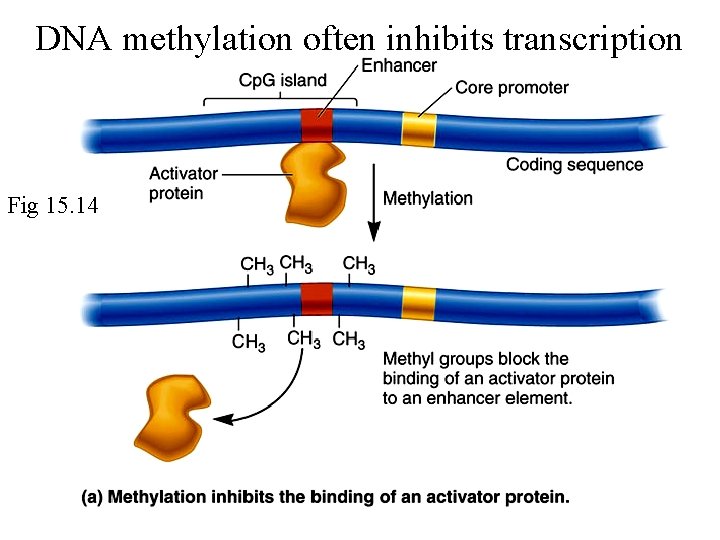
DNA methylation often inhibits transcription Fig 15. 14
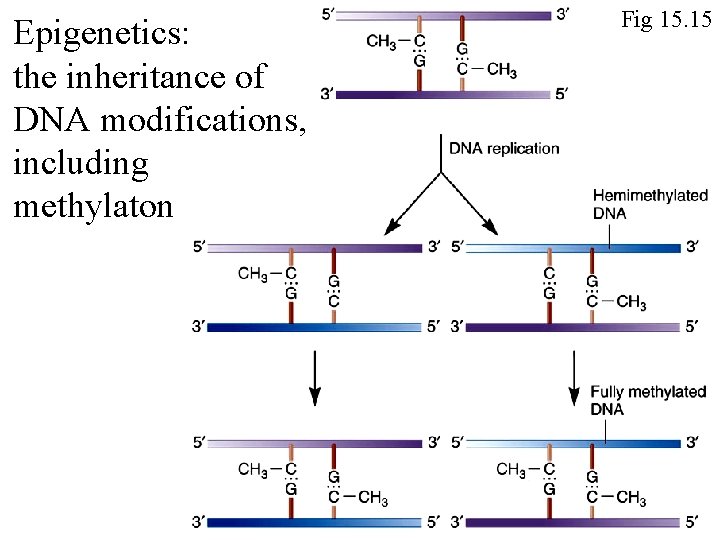
Epigenetics: the inheritance of DNA modifications, including methylaton Fig 15. 15
Gene Expression is controlled at all of these steps: • DNA packaging • Transcription • RNA processing and transport • RNA degradation • Translation • Post-translational Fig 15. 1 Fig 16. 1
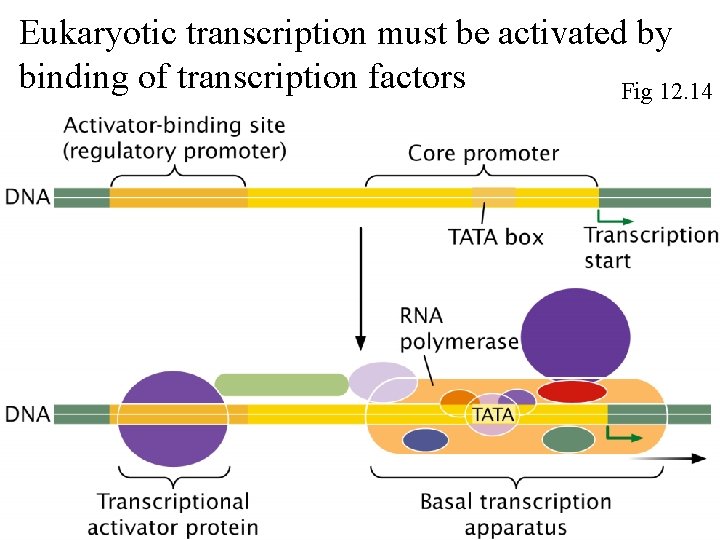
Eukaryotic transcription must be activated by binding of transcription factors Fig 12. 14
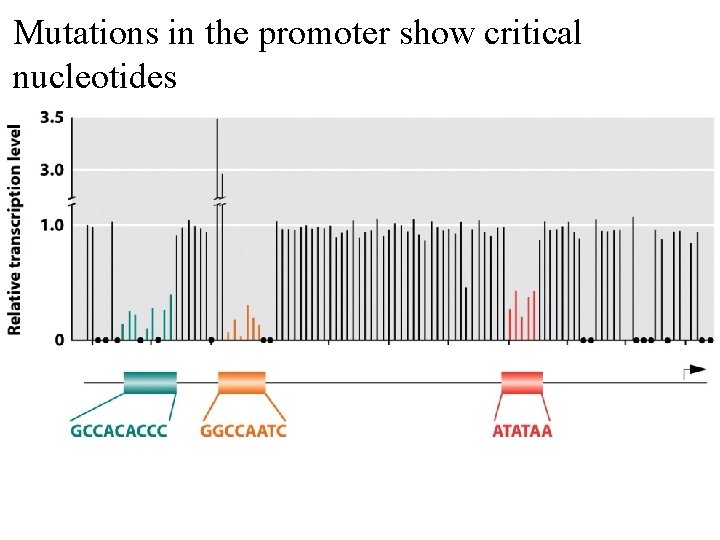
Mutations in the promoter show critical nucleotides
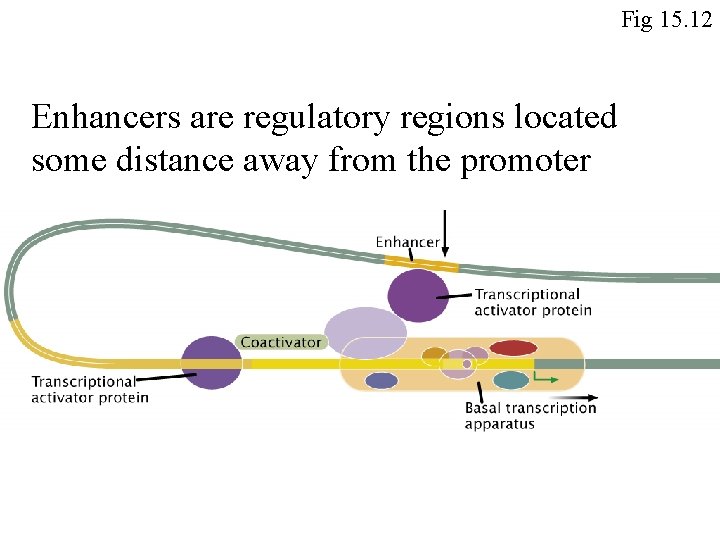
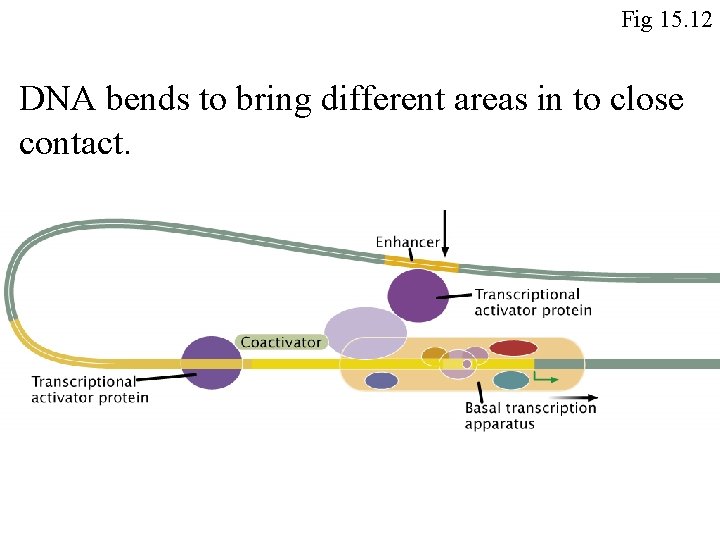
Fig 15. 12 Enhancers are regulatory regions located some distance away from the promoter
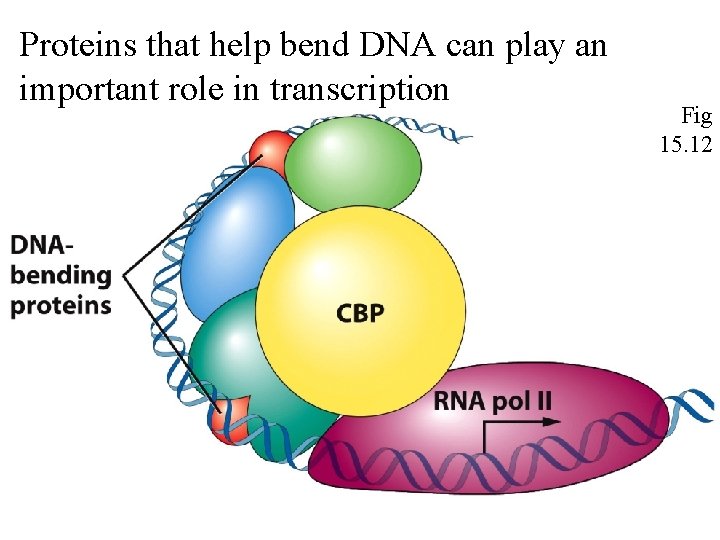
Proteins that help bend DNA can play an important role in transcription Fig 15. 12
Fig 15. 12 DNA bends to bring different areas in to close contact.
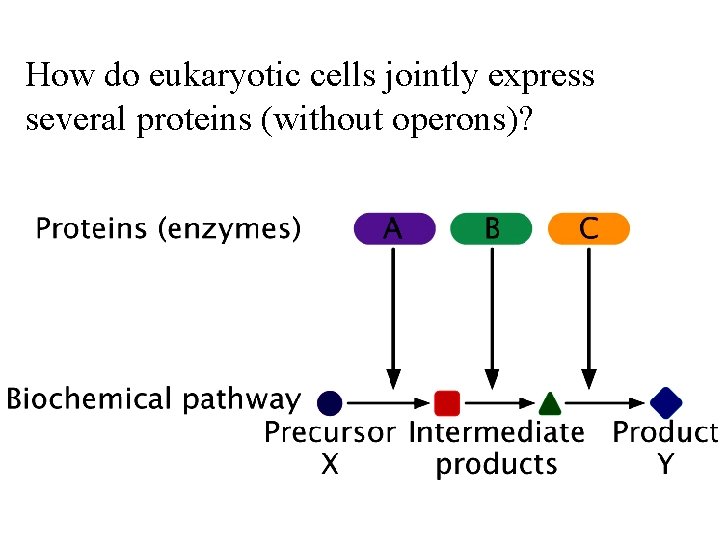
How do eukaryotic cells jointly express several proteins (without operons)?
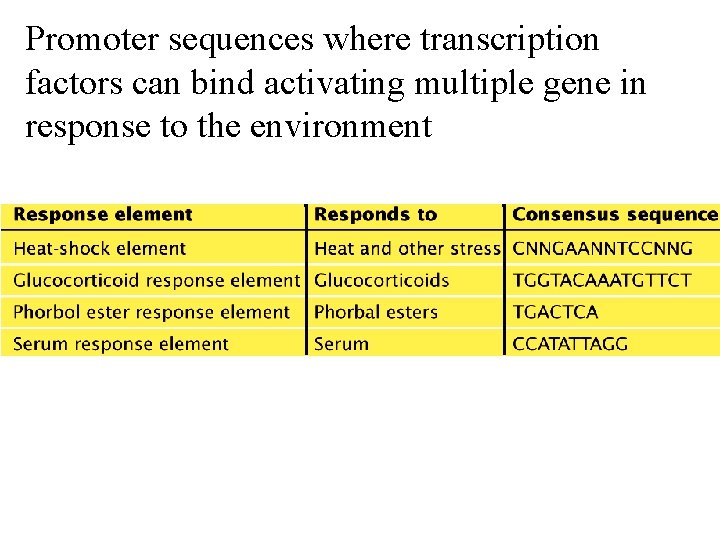
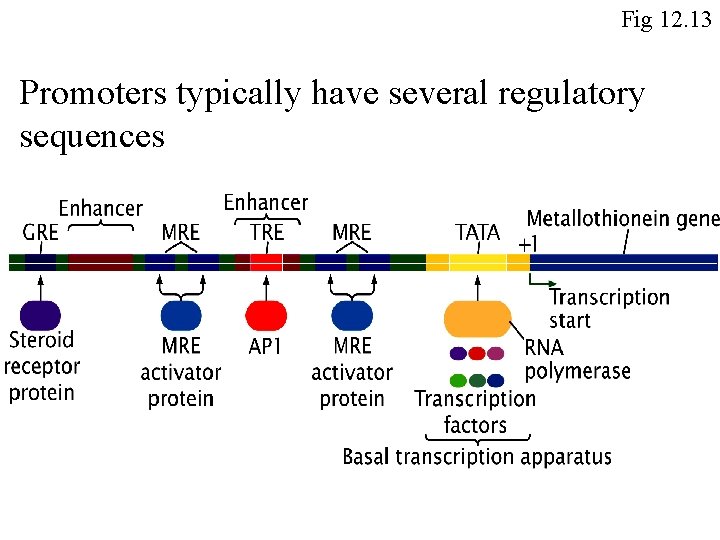
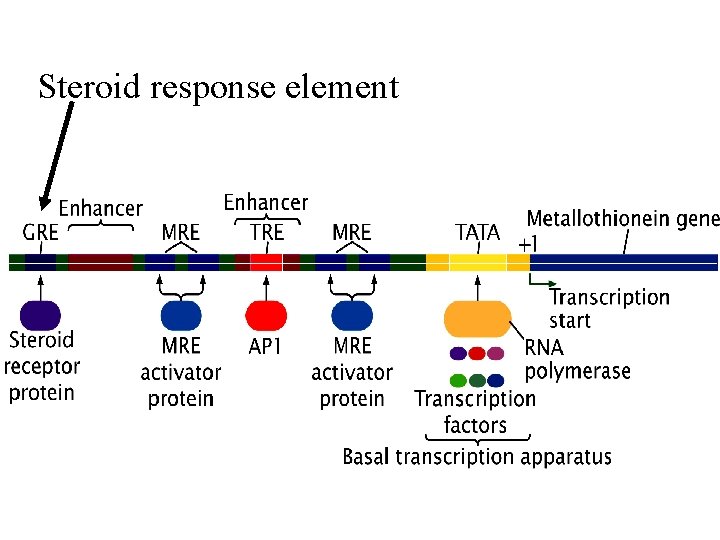
Promoter sequences where transcription factors can bind activating multiple gene in response to the environment
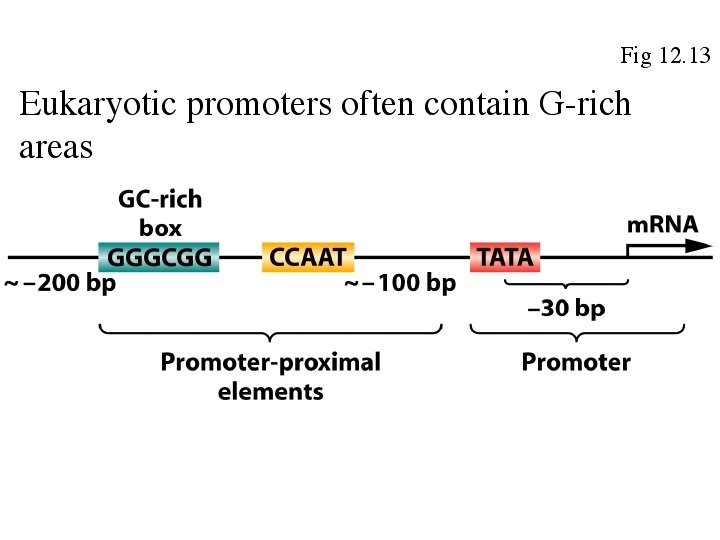
Fig 12. 13 Promoters typically have several regulatory sequences
Steroid response element
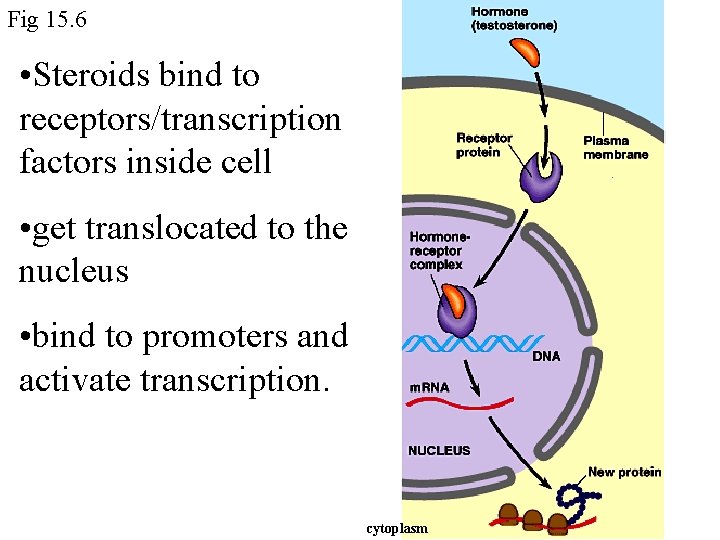
Fig 15. 6 • Steroids bind to receptors/transcription factors inside cell • get translocated to the nucleus • bind to promoters and activate transcription. cytoplasm
Gene Expression is controlled at all of these steps: • DNA packaging • Transcription • RNA processing and transport • RNA degradation • Translation • Post-translational Fig 15. 1 Fig 16. 1