
Regular er verbs Identify these infinitives danser To
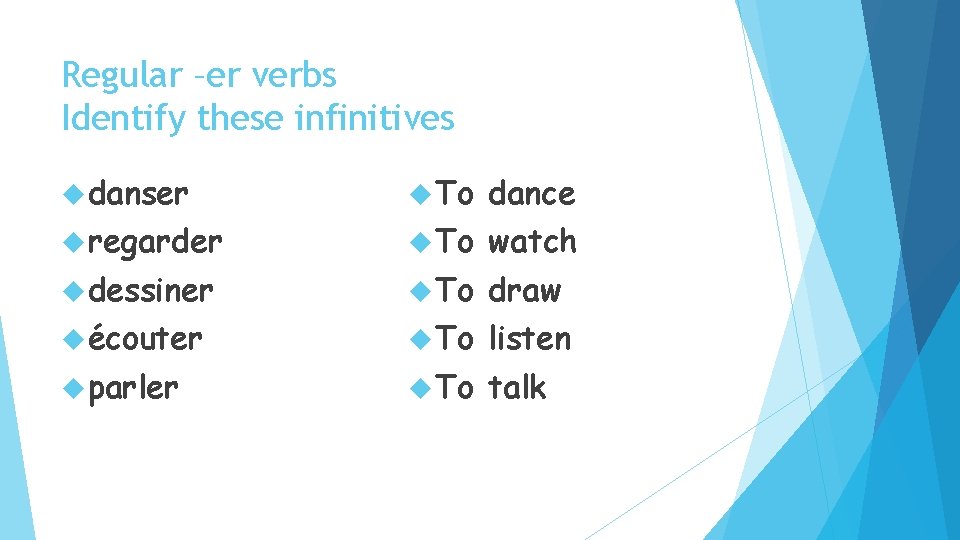
Regular –er verbs Identify these infinitives danser To dance regarder To watch dessiner To draw écouter To listen parler To talk

travailler To work surfer To surf envoyer To send visiter To visit (places) manger To eat

étudier To study nager To swim dîner To have dinner habiter To live jouer To play
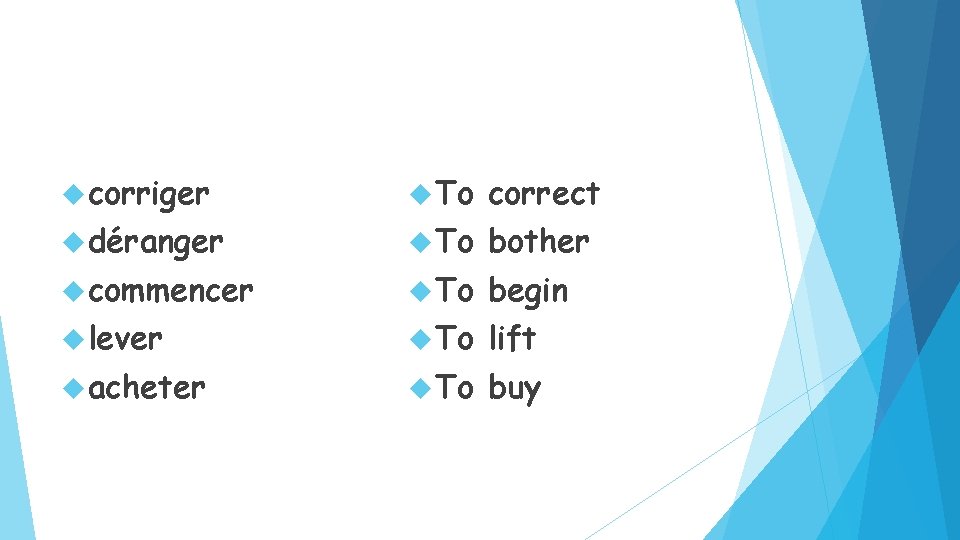
corriger To correct déranger To bother commencer To begin lever To lift acheter To buy

Passé Composé To discuss completed actions in the past, you will use the passé composé. The passé composé is a compound tense. You will use a form of avoir as the auxiliary verb. You will use the past participle of the verb that states the action.

Past participles of –er verbs cherché nager nagé regarder regardé manger mangé danser dansé chanter chanté
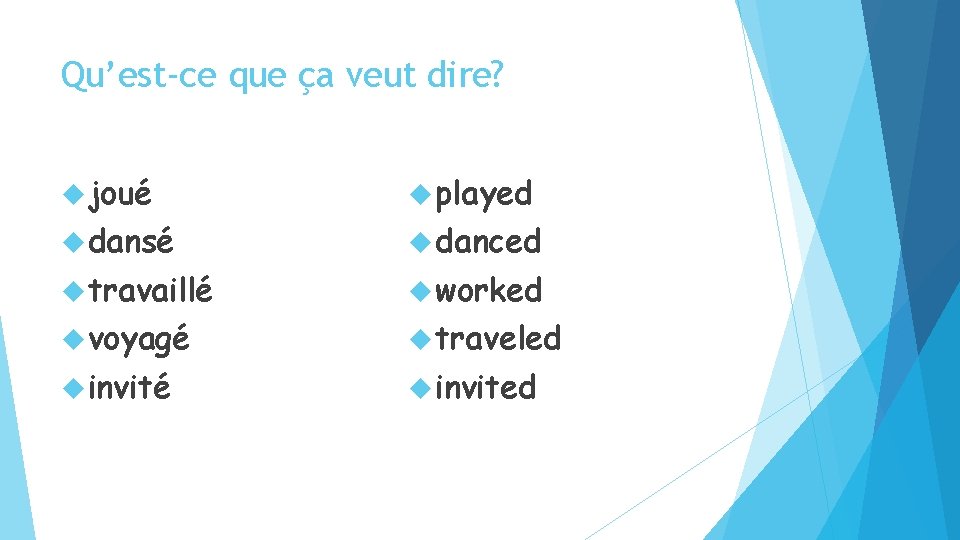
Qu’est-ce que ça veut dire? joué played dansé danced travaillé worked voyagé traveled invité invited
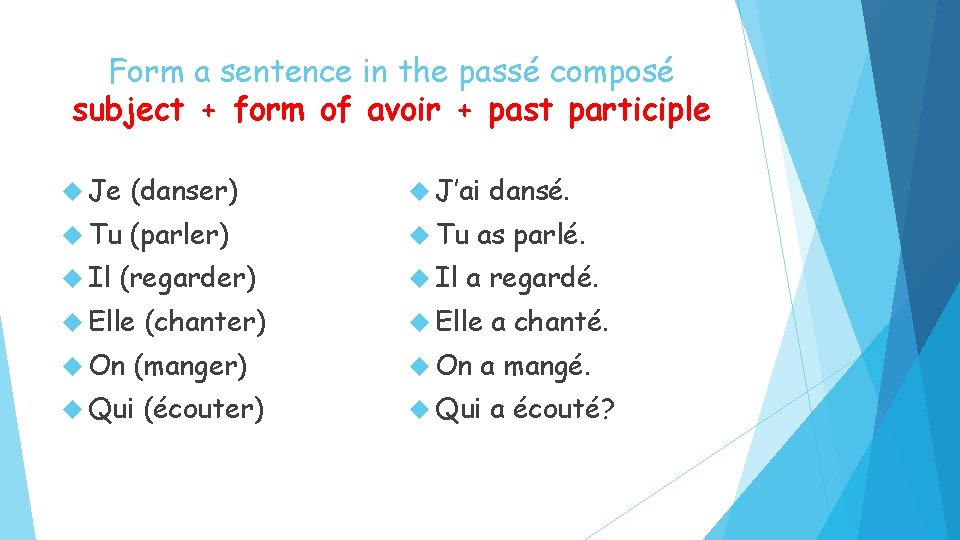
Form a sentence in the passé composé subject + form of avoir + past participle Je (danser) J’ai Tu (parler) Tu Il (regarder) Elle On (chanter) (manger) Qui (écouter) Il dansé. as parlé. a regardé. Elle On a chanté. a mangé. Qui a écouté?
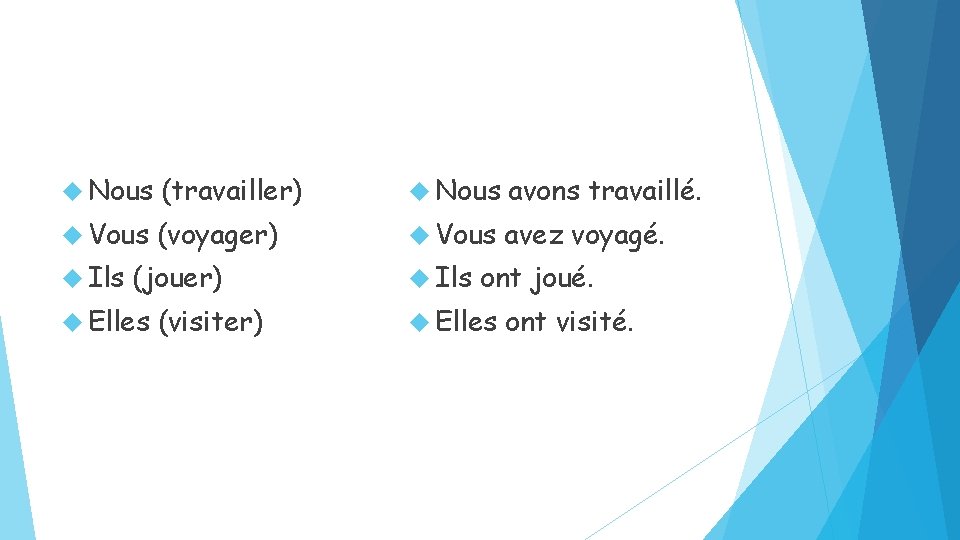
Nous (travailler) Nous avons travaillé. Vous (voyager) Vous avez voyagé. Ils (jouer) Elles (visiter) Ils ont joué. Elles ont visité.
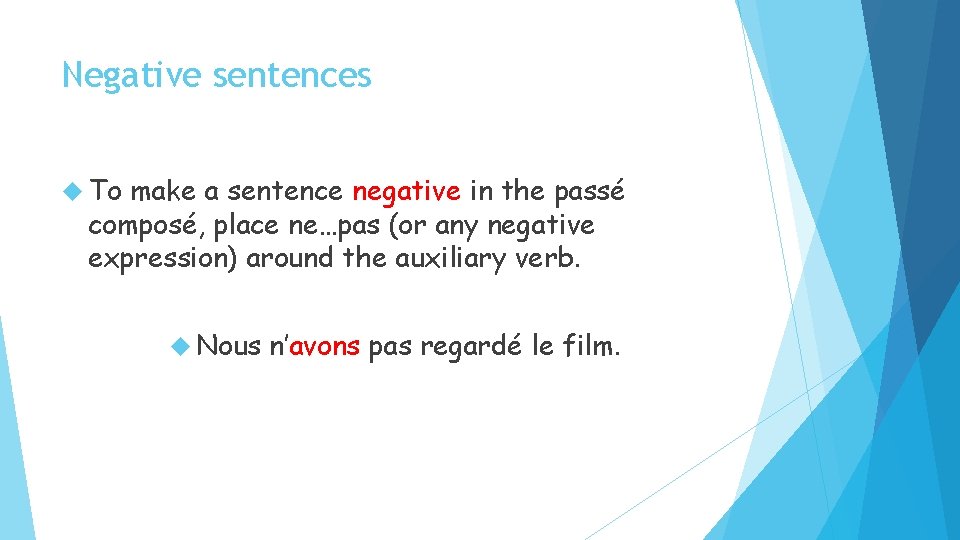
Negative sentences To make a sentence negative in the passé composé, place ne…pas (or any negative expression) around the auxiliary verb. Nous n’avons pas regardé le film.
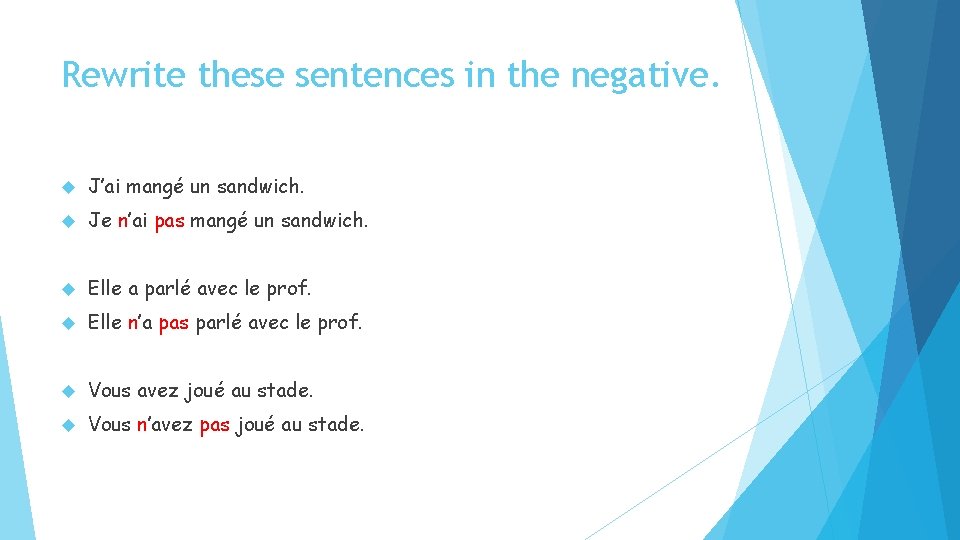
Rewrite these sentences in the negative. J’ai mangé un sandwich. Je n’ai pas mangé un sandwich. Elle a parlé avec le prof. Elle n’a pas parlé avec le prof. Vous avez joué au stade. Vous n’avez pas joué au stade.
CD 7 Track 5 Decide if Zoé is speaking in the present tense or in the past tense (passé composé). There are 5 situations. (a) present (b) past
- Slides: 12