
Regolith M Kppers Contents What is regolith and
- Slides: 41
Regolith M. Küppers Contents: • What is regolith and why do we care ? • Creation of regolith: Large impacts • Modification of regolith: Small impacts • Microproperties of regolith: Space weathering • Issues in planetary science connected to regolith q. Craters and impactors Laboratory experiments and crater size scaling
What is regolith? “Superficial layer or blanket of loose particulate rock material found on planet earth or any other hard celestial object” (R. W. Fairbridge, in Encyclopedia of Astronomy and Astrophysics). Therefore virtually every surface in the solar system consists of regolith.
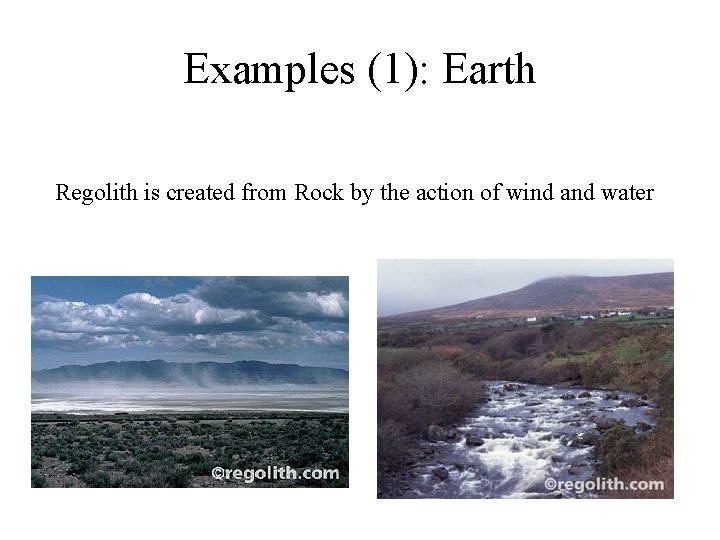
Examples (1): Earth Regolith is created from Rock by the action of wind and water
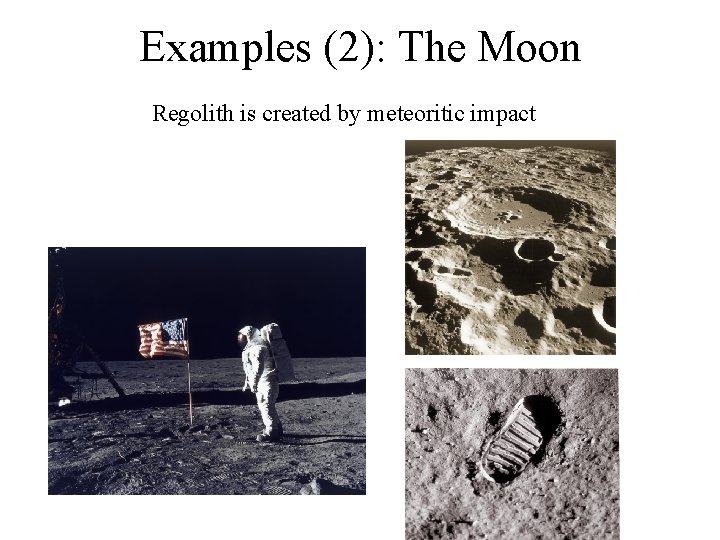
Examples (2): The Moon Regolith is created by meteoritic impact
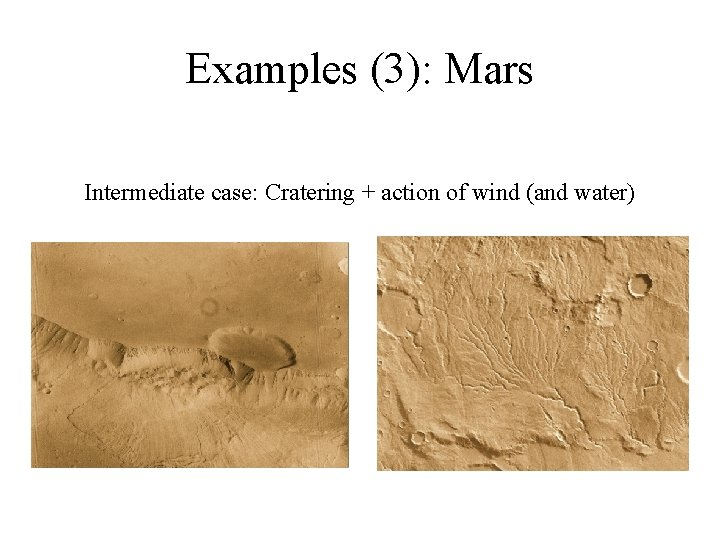
Examples (3): Mars Intermediate case: Cratering + action of wind (and water)
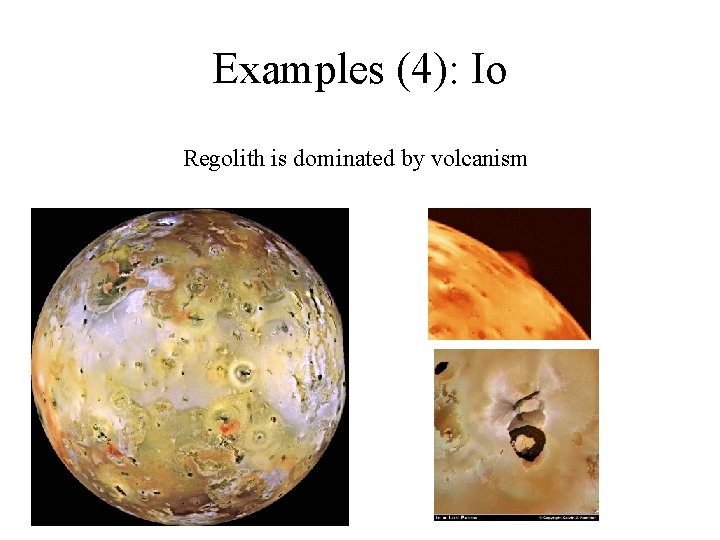
Examples (4): Io Regolith is dominated by volcanism
Regolith and remote sensing • Most investigation of planetary or asteroidal surfaces study the regolith – Remote sensing: Depth of µm to meters – Landers: Digging into the regolith • Interpretation of observations requires understanding of formation and evolution of regolith • Lecture restricted to the case without atmosphere – Dominated by impacts – Applies to most bodies in the solar system (The Moon, Mercury, satellites of Mars, most satellites of the outer planets, all asteroids)
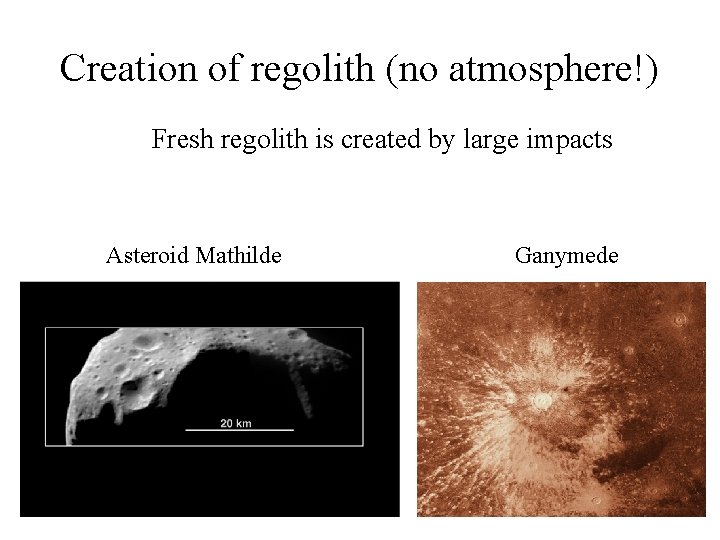
Creation of regolith (no atmosphere!) Fresh regolith is created by large impacts Asteroid Mathilde Ganymede
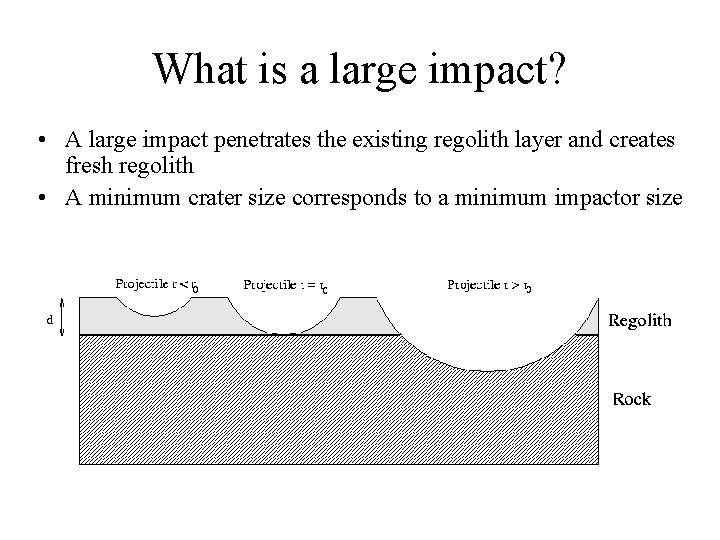
What is a large impact? • A large impact penetrates the existing regolith layer and creates fresh regolith • A minimum crater size corresponds to a minimum impactor size
Accumulation rate of regolith • Accumulation rate was much higher at the beginning – More impacts at early times – Small layer thickness allows smaller projectiles to penetrate (self-shielding of regolith) • Current rate on the moon about 1 mm /106 years • Loss of crater ejecta – Negligible for the Moon – Important for small asteroids (only)
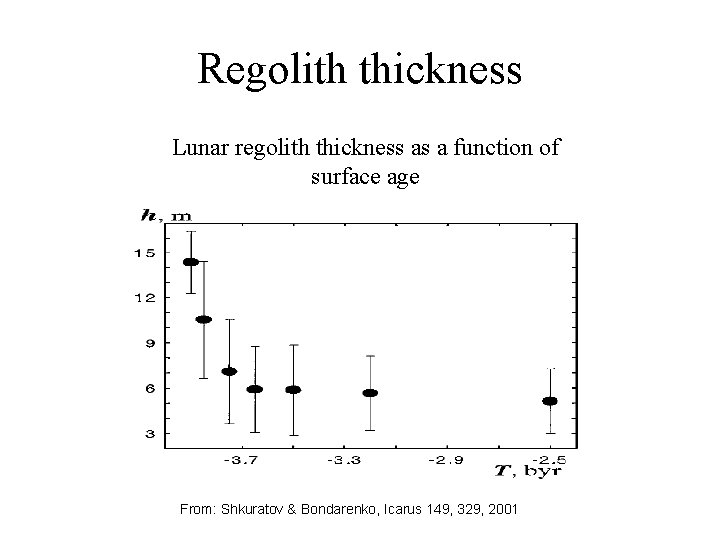
Regolith thickness Lunar regolith thickness as a function of surface age From: Shkuratov & Bondarenko, Icarus 149, 329, 2001
Regolith thickness (2) • Regolith coverage is almost complete – Moon – Mercury – Asteroid Eros • Bedrock exposure rare – Crater slopes most promising • Lunar regolith thickness is much lower than the total volume of all craters! – Ejecta from large basins are physically different from regolith (rock fragments vs. rubble) – They are called megaregolith
Regolith thickness (3): Other bodies • No direct measurements for bodies other than the Moon • Mercury: Conditions similar to the moon – Similar regolith thickness expected • Asteroid Eros: 10 s of meters of regolith coverage – Indirect evidence from NEAR mission – Is this regolith or megaregolith?
Small impacts: Modification of regolith • Small impacts do not create new regolith • Existing regolith is modified – Comminution – Modification • Melting, formation of glasses • Agglutination • Size sorting – Transport (horizontally and vertically)
Components of the lunar regolith • Rocks and grains – Size limit ~1 cm • Crystalline and reprocessed components – Crystalline components are fragments without further modification – Reprocessed rocks are called breccia – Reprocessed soils are agglutinates or glasses • Reprocessed components complicate remote determination of surface properties
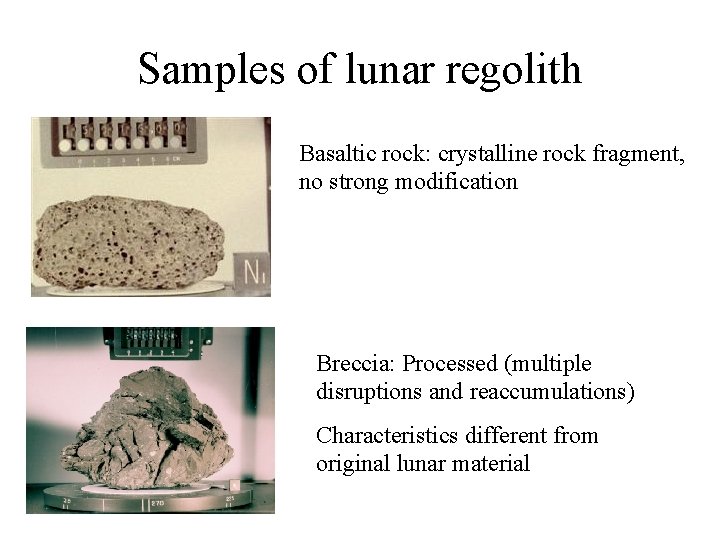
Samples of lunar regolith Basaltic rock: crystalline rock fragment, no strong modification Breccia: Processed (multiple disruptions and reaccumulations) Characteristics different from original lunar material
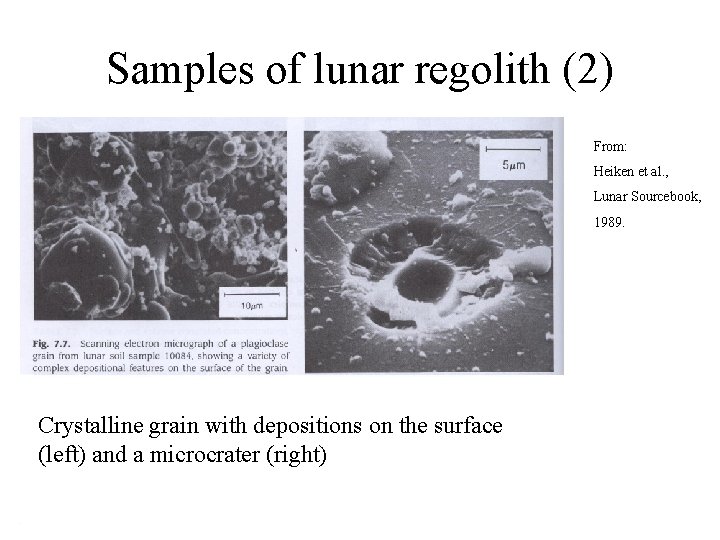
Samples of lunar regolith (2) From: Heiken et al. , Lunar Sourcebook, 1989. Crystalline grain with depositions on the surface (left) and a microcrater (right)
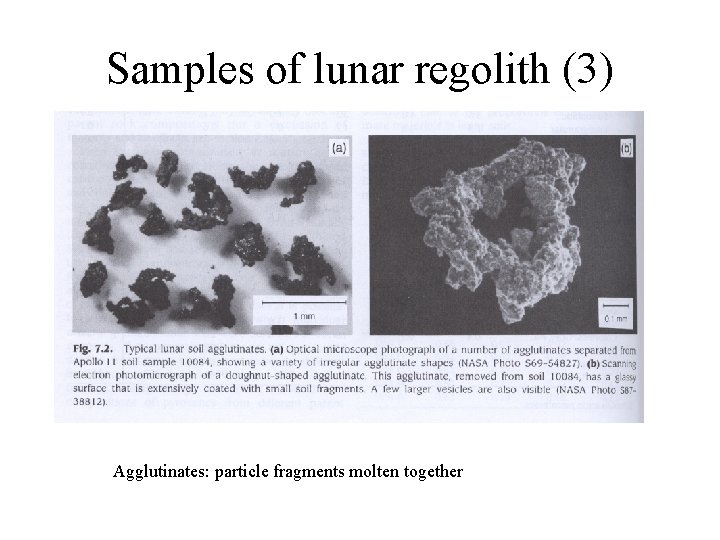
Samples of lunar regolith (3) Agglutinates: particle fragments molten together
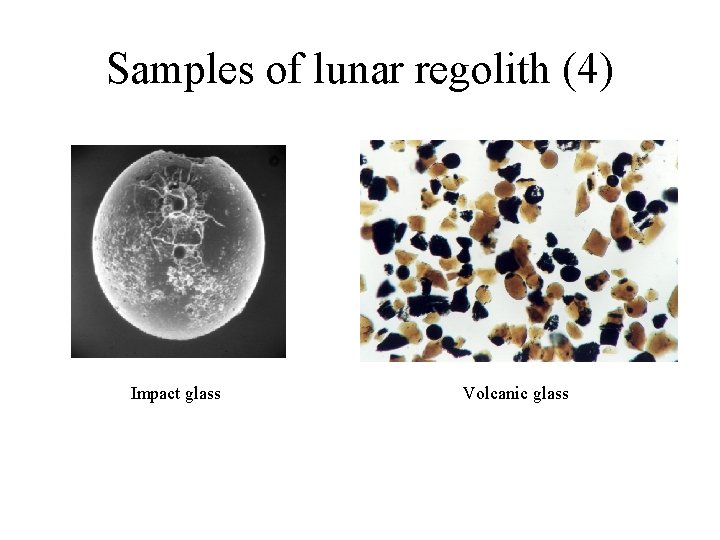
Samples of lunar regolith (4) Impact glass Volcanic glass
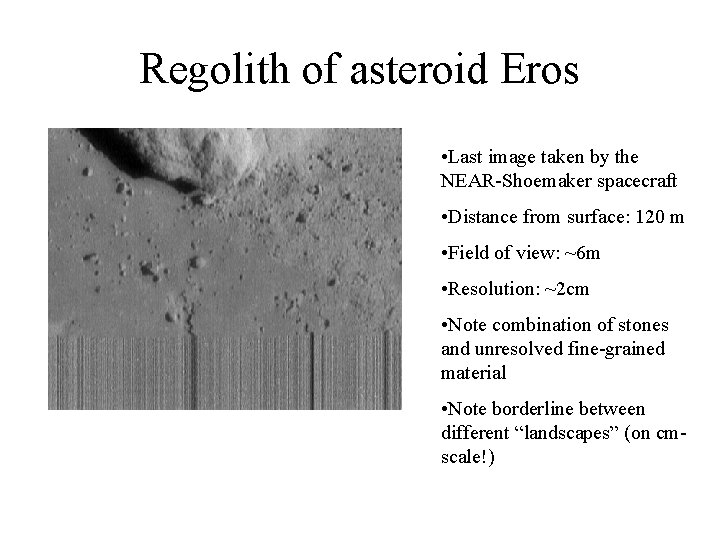
Regolith of asteroid Eros • Last image taken by the NEAR-Shoemaker spacecraft • Distance from surface: 120 m • Field of view: ~6 m • Resolution: ~2 cm • Note combination of stones and unresolved fine-grained material • Note borderline between different “landscapes” (on cmscale!)
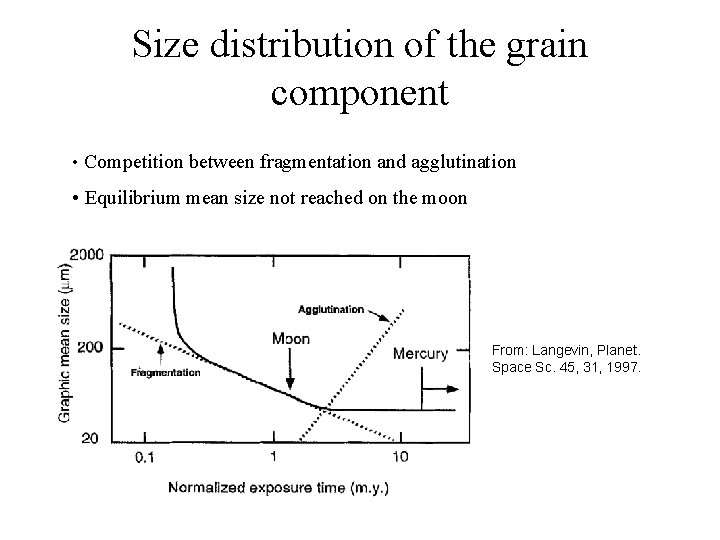
Size distribution of the grain component • Competition between fragmentation and agglutination • Equilibrium mean size not reached on the moon From: Langevin, Planet. Space Sc. 45, 31, 1997.
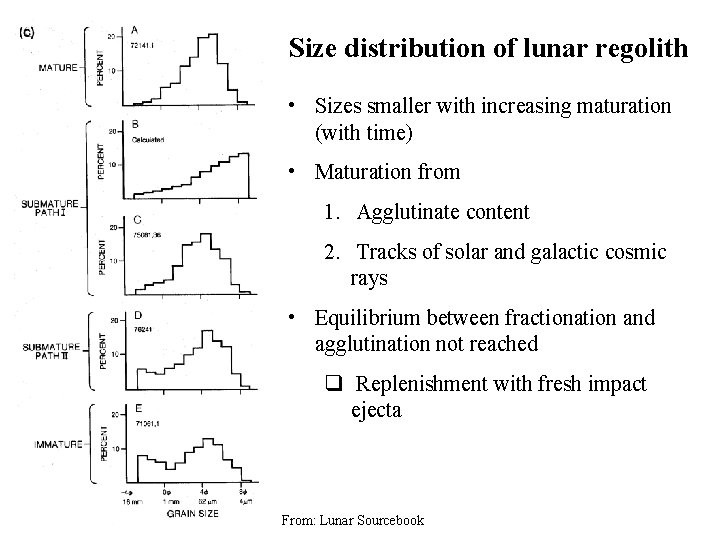
Size distribution of lunar regolith • Sizes smaller with increasing maturation (with time) • Maturation from 1. Agglutinate content 2. Tracks of solar and galactic cosmic rays • Equilibrium between fractionation and agglutination not reached q Replenishment with fresh impact ejecta From: Lunar Sourcebook
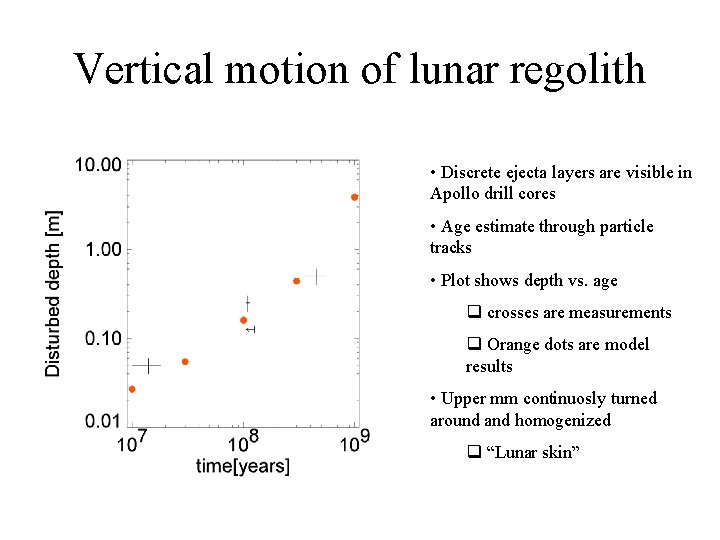
Vertical motion of lunar regolith • Discrete ejecta layers are visible in Apollo drill cores • Age estimate through particle tracks • Plot shows depth vs. age q crosses are measurements q Orange dots are model results • Upper mm continuosly turned around and homogenized q “Lunar skin”
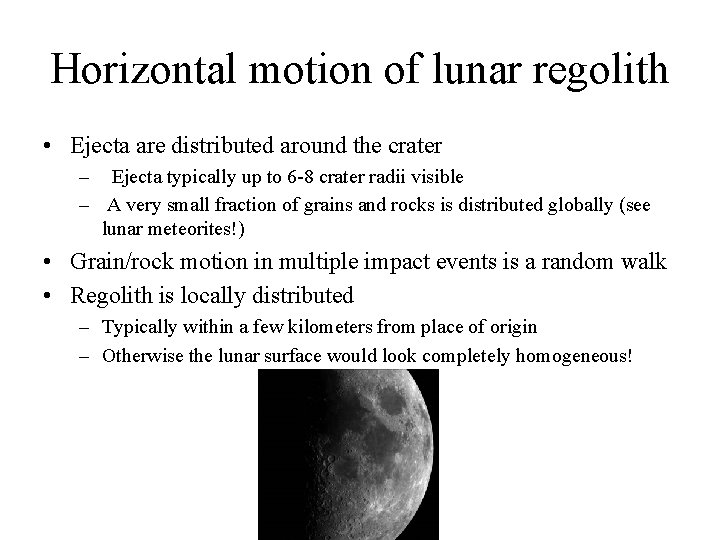
Horizontal motion of lunar regolith • Ejecta are distributed around the crater – Ejecta typically up to 6 -8 crater radii visible – A very small fraction of grains and rocks is distributed globally (see lunar meteorites!) • Grain/rock motion in multiple impact events is a random walk • Regolith is locally distributed – Typically within a few kilometers from place of origin – Otherwise the lunar surface would look completely homogeneous!
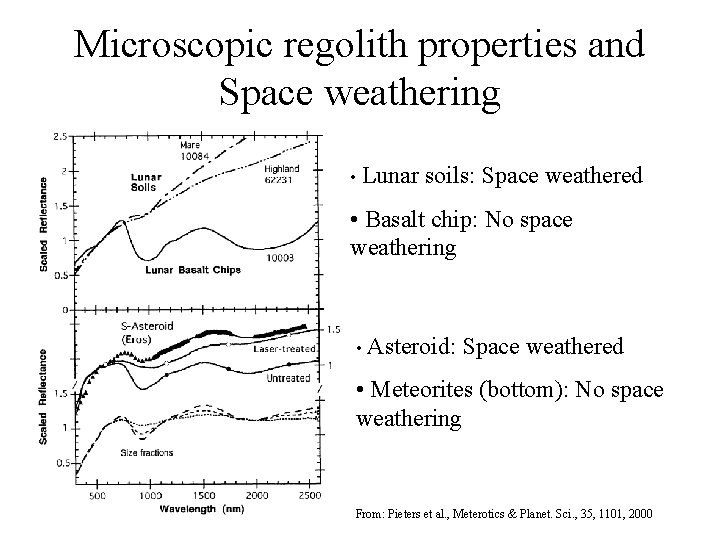
Microscopic regolith properties and Space weathering • Lunar soils: Space weathered • Basalt chip: No space weathering • Asteroid: Space weathered • Meteorites (bottom): No space weathering From: Pieters et al. , Meterotics & Planet. Sci. , 35, 1101, 2000
Effects of space weathering • Suppression of absorption lines – Critical issue for composition studies from absorption spectroscopy • Reddening of the spectrum – Critical for connection between asteroids and meteorids • Reduction of overall albedo (darkening) • Study of space weathering effects of known surface provides surface exposure age (in principal)
Cause of space weathering • Immediate cause: Impact of micrometeorides and solar and interstellar radiation (cosmic rays) • Process: Reduction of iron (Fe. O Fe + O) and deposition of submicron iron particles on the surface during impact or sputtering process • Reduction of iron happens either in the liquid or in the vapour phase
Quantitative studies: An example • Crater scaling: Size of the crater produced by a projectile • Needed for – Derivation of impactor population from crater counts Asteroid and comet populations in the solar system – Amount of “foreign” (asteroidal or cometary) material in a regolith
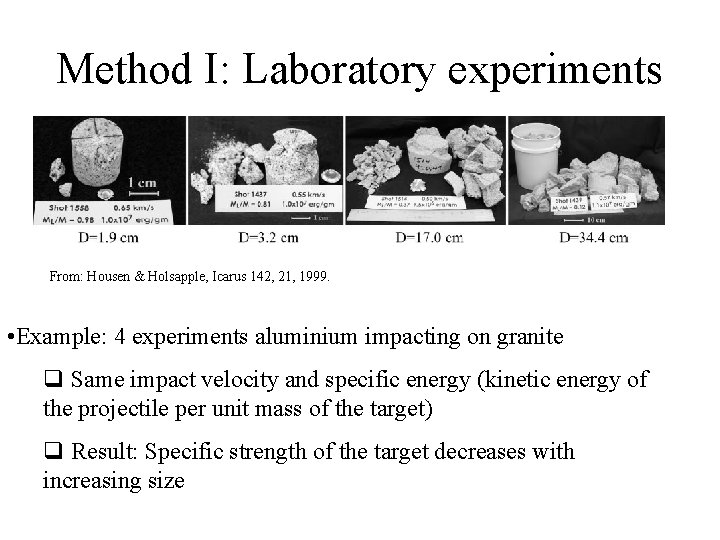
Method I: Laboratory experiments From: Housen & Holsapple, Icarus 142, 21, 1999. • Example: 4 experiments aluminium impacting on granite q Same impact velocity and specific energy (kinetic energy of the projectile per unit mass of the target) q Result: Specific strength of the target decreases with increasing size
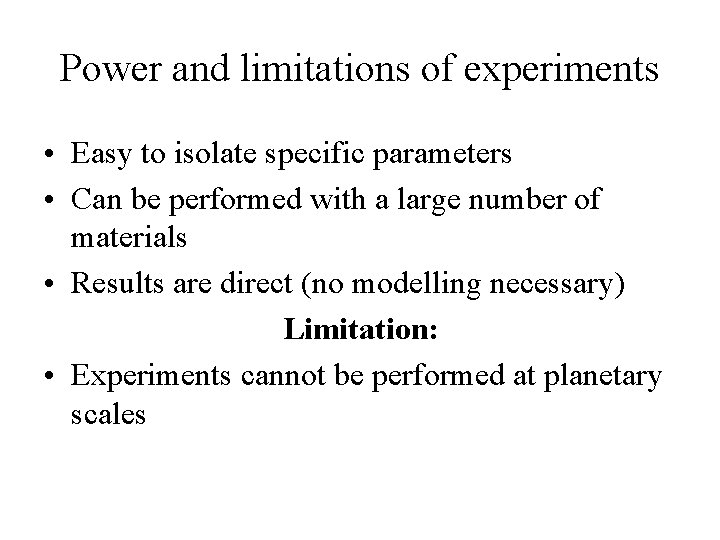
Power and limitations of experiments • Easy to isolate specific parameters • Can be performed with a large number of materials • Results are direct (no modelling necessary) Limitation: • Experiments cannot be performed at planetary scales
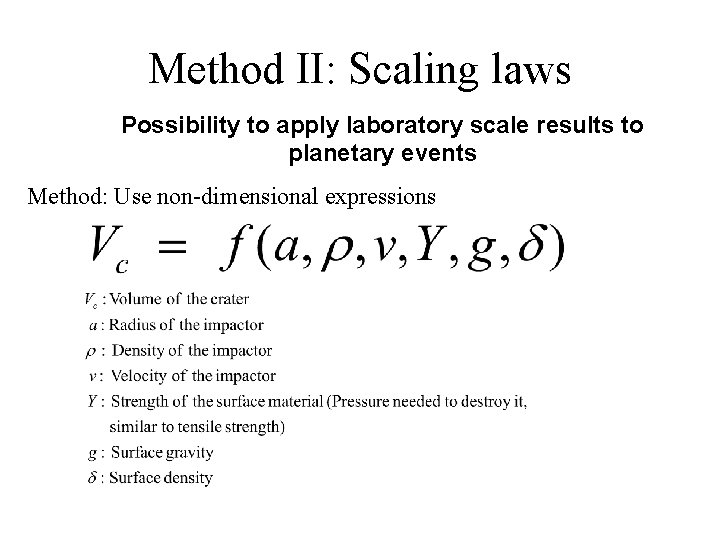
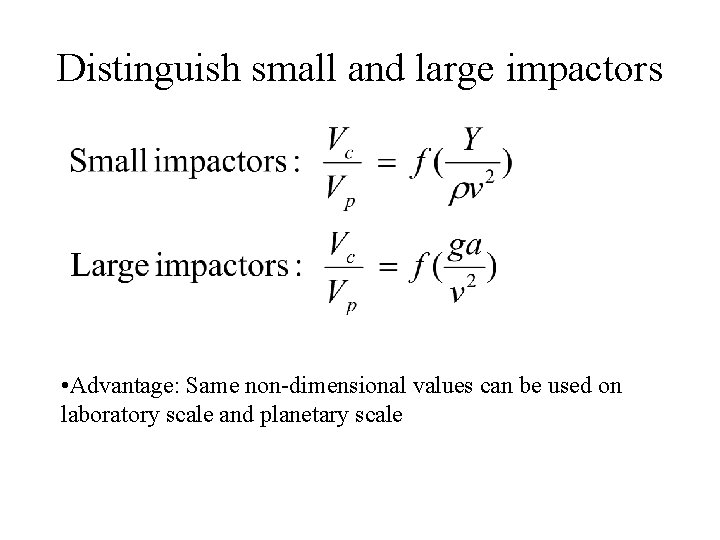
Method II: Scaling laws Possibility to apply laboratory scale results to planetary events Method: Use non-dimensional expressions
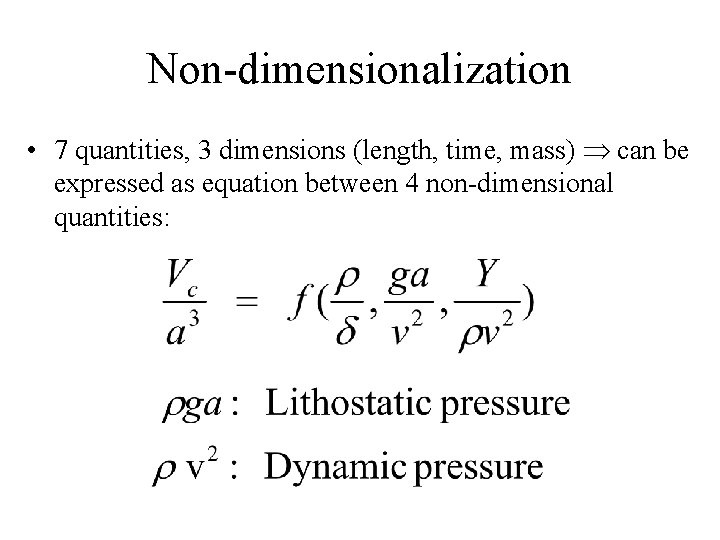
Non-dimensionalization • 7 quantities, 3 dimensions (length, time, mass) can be expressed as equation between 4 non-dimensional quantities:
Distinguish small and large impactors • Advantage: Same non-dimensional values can be used on laboratory scale and planetary scale
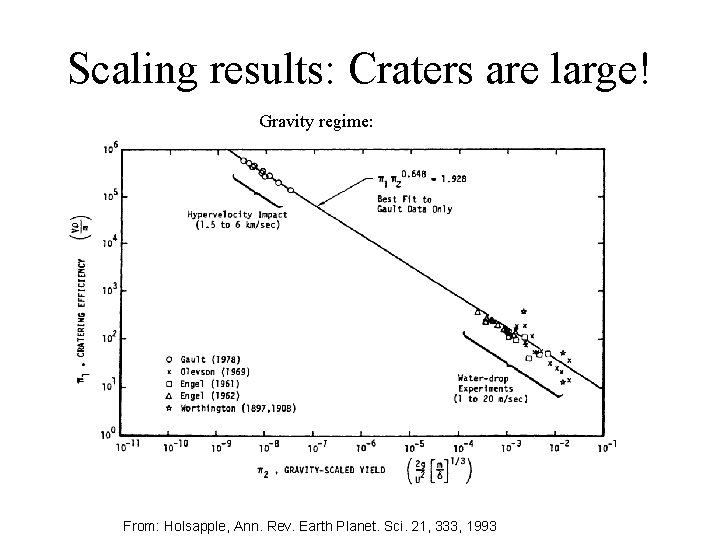
Scaling results: Craters are large! Gravity regime: From: Holsapple, Ann. Rev. Earth Planet. Sci. 21, 333, 1993
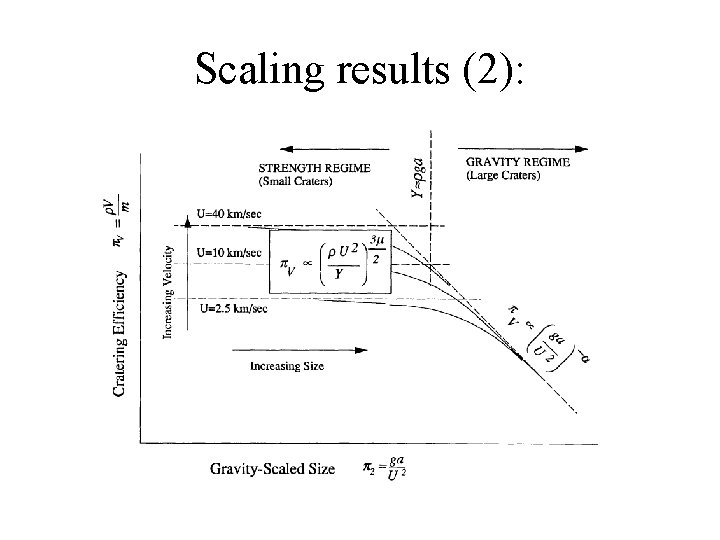
Scaling results (2):
Power and limitations of scaling laws: • Connect laboratory scale experiments with planetary scale events • Computationally inexpensive Limitations • Need experiments to establish functional form – Not a major concern (can be done easily) • What exactly is Y?
Method III: Numerical modelling • Numerically model the stress and pressure waves in the target material caused by the impactor • Directly model disruption and ejection of target material • Provides not only crater size but also ejecta sizes (and velocities)
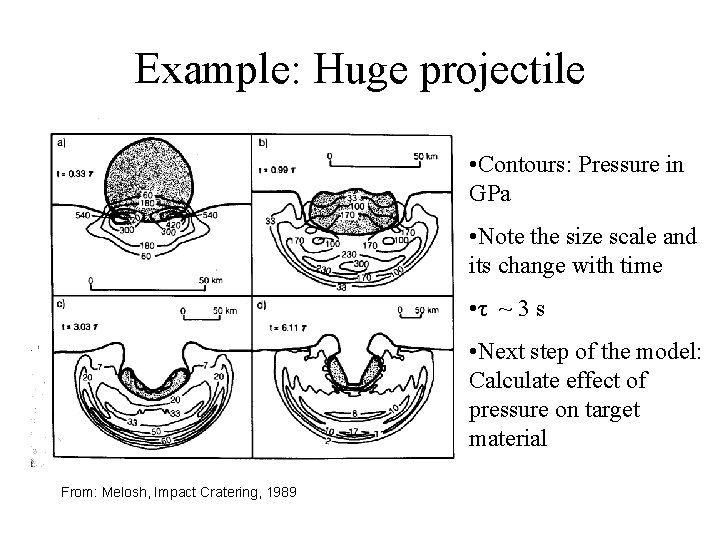
Example: Huge projectile • Contours: Pressure in GPa • Note the size scale and its change with time • τ ~ 3 s • Next step of the model: Calculate effect of pressure on target material From: Melosh, Impact Cratering, 1989
Power and limitations of numerical modelling • Only method which treats the physical processes involved • Provides many different parameters in a single model Limitations: • Parametrization of material properties difficult • Computationally expensive
Foreign material in the regolith • Crater scaling: Crater volume ~ 1000 x projectile volume • Modification due to small impacts – Add foreign material to the regolith • In practical situation at most a few % of foreign material – Not important for most studies of planetary surfaces – Exception: High accuracy composition investigations
Literature • Lunar Regolith – Lunar Sourcebook, Heiken et al. , eds. , Cambridge Univ. Press, 1991 • Impact Cratering – Impact Cratering, Melosh, Oxford Univ. Press, 1989 (2 nd ed. 1996) • Impact scaling – The Scaling of Impact Processes in Planetary Science, Ann. Rev. Earth Planet. Sc. 21, 333, 1993