
Registries 101 An Introduction to the System of
- Slides: 37
Registries 101 An Introduction to the System of Registries (So. R) Larry Fitzwater OEI/OIC Data Standards Branch 1
Overview § § § So. R Description So. R Function, Context, and Relationships Integration of Registries So. R Partnering Successes RISCS Success Story 2
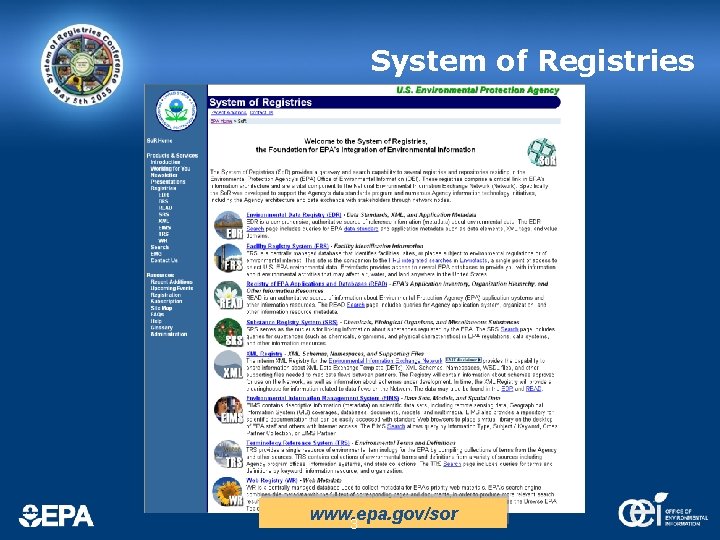
System of Registries www. epa. gov/sor 3
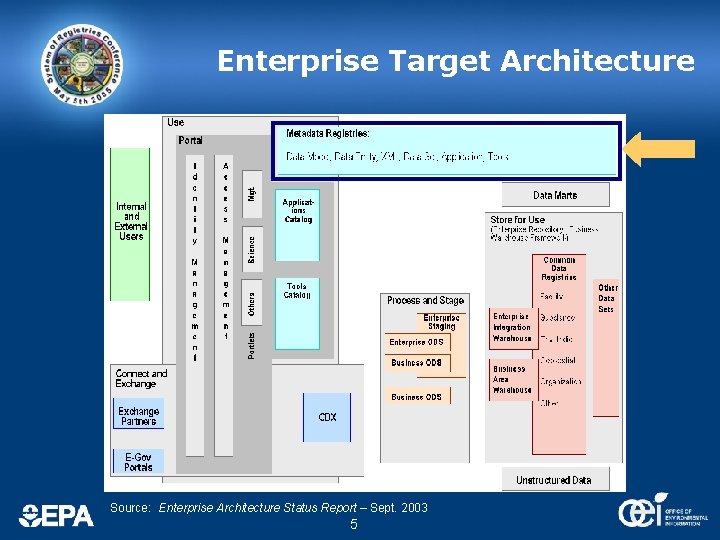
So. R Agency Context § § Enterprise Architecture Integration Initiatives Metadata Policy Exchange Network 4
Enterprise Target Architecture Source: Enterprise Architecture Status Report – Sept. 2003 5
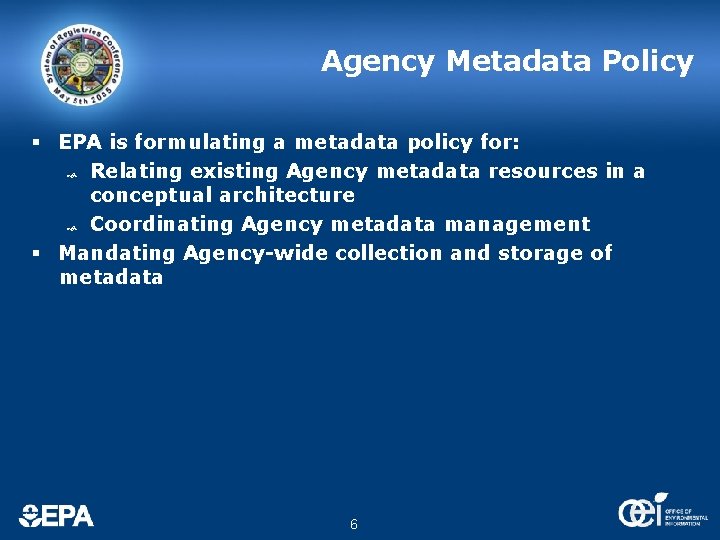
Agency Metadata Policy § EPA is formulating a metadata policy for: Relating existing Agency metadata resources in a conceptual architecture Coordinating Agency metadata management § Mandating Agency-wide collection and storage of metadata 6
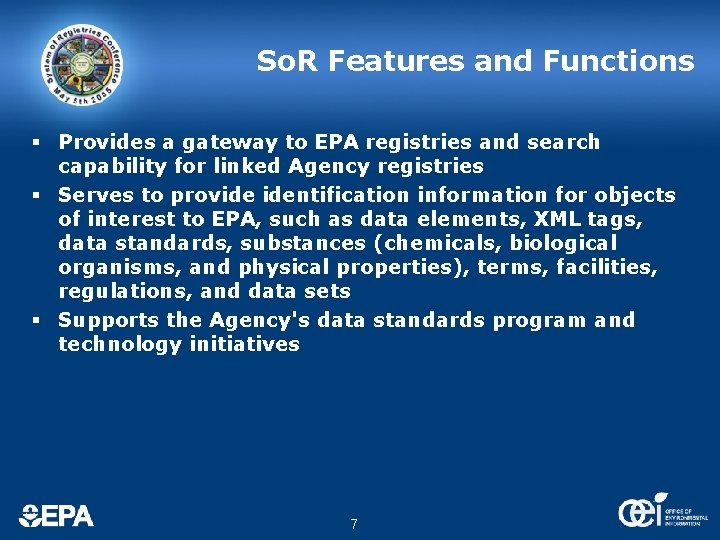
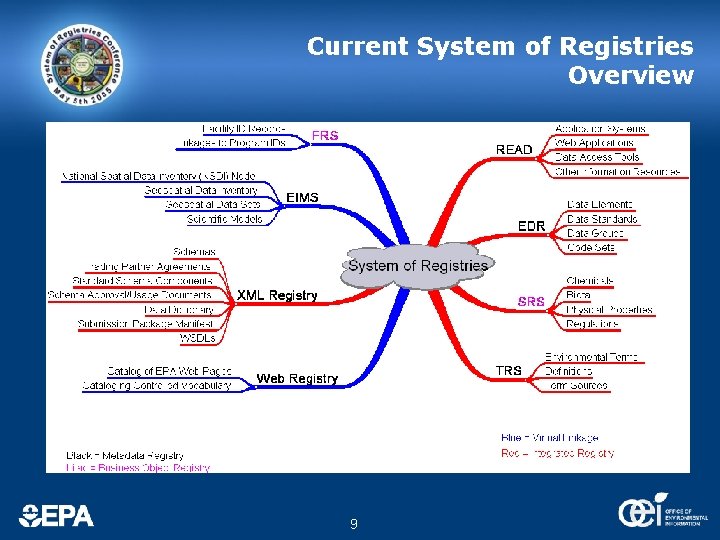
So. R Features and Functions § Provides a gateway to EPA registries and search capability for linked Agency registries § Serves to provide identification information for objects of interest to EPA, such as data elements, XML tags, data standards, substances (chemicals, biological organisms, and physical properties), terms, facilities, regulations, and data sets § Supports the Agency's data standards program and technology initiatives 7
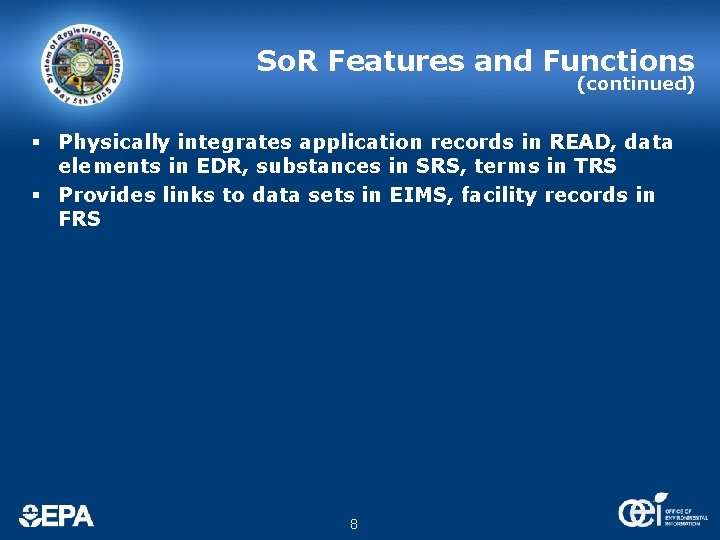
So. R Features and Functions (continued) § Physically integrates application records in READ, data elements in EDR, substances in SRS, terms in TRS § Provides links to data sets in EIMS, facility records in FRS 8
Current System of Registries Overview 9
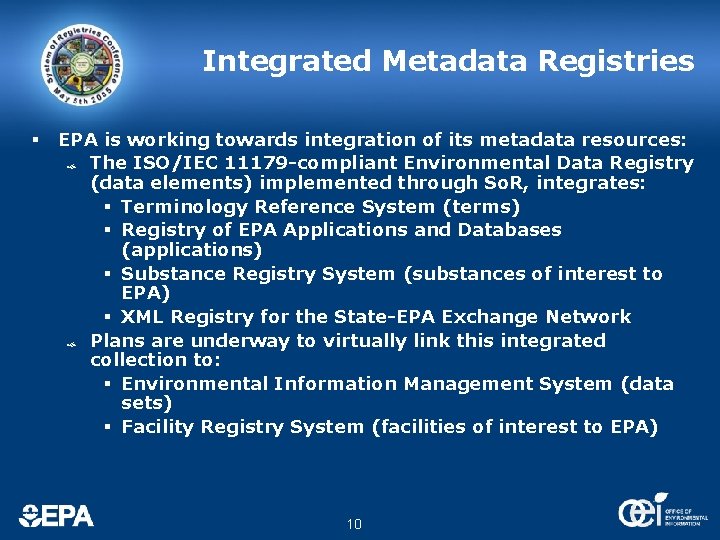
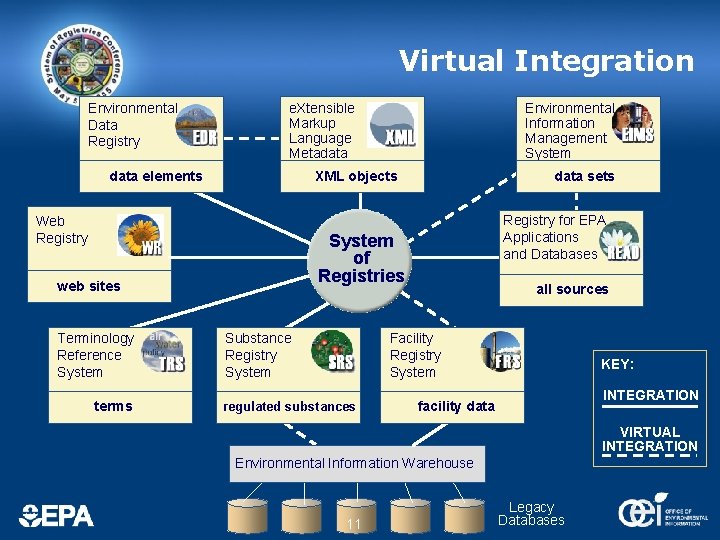
Integrated Metadata Registries § EPA is working towards integration of its metadata resources: The ISO/IEC 11179 -compliant Environmental Data Registry (data elements) implemented through So. R, integrates: § Terminology Reference System (terms) § Registry of EPA Applications and Databases (applications) § Substance Registry System (substances of interest to EPA) § XML Registry for the State-EPA Exchange Network Plans are underway to virtually link this integrated collection to: § Environmental Information Management System (data sets) § Facility Registry System (facilities of interest to EPA) 10
Virtual Integration Environmental Data Registry e. Xtensible Markup Language Metadata elements XML objects Web Registry terms data sets Registry for EPA Applications and Databases System of Registries web sites Terminology Reference System Environmental Information Management System Substance Registry System all sources Facility Registry System regulated substances KEY: INTEGRATION facility data VIRTUAL INTEGRATION Environmental Information Warehouse 11 Legacy Databases
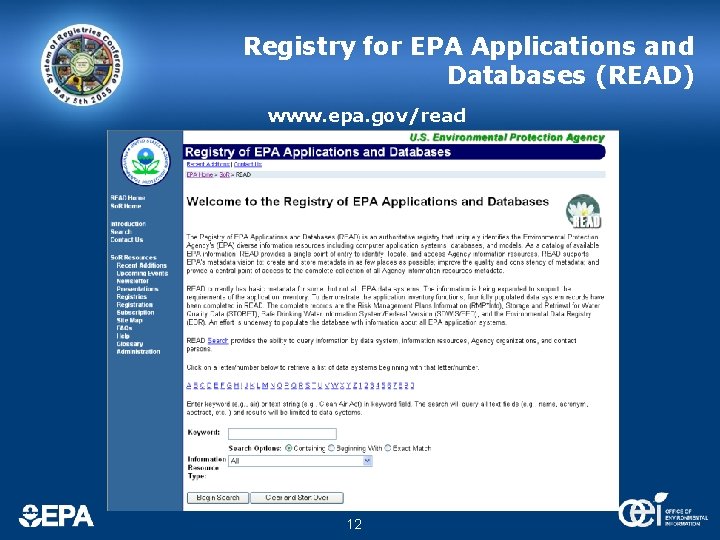
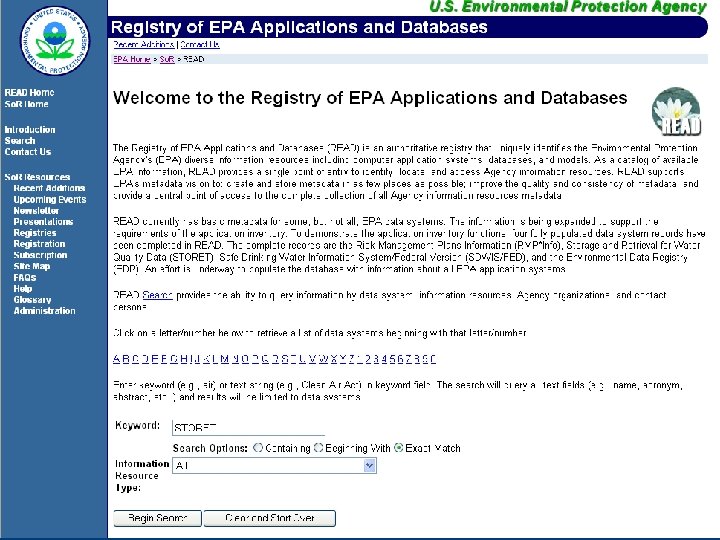
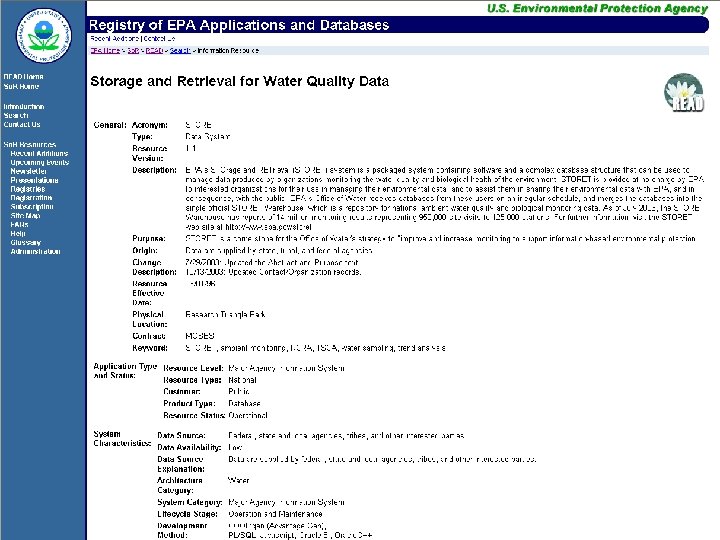
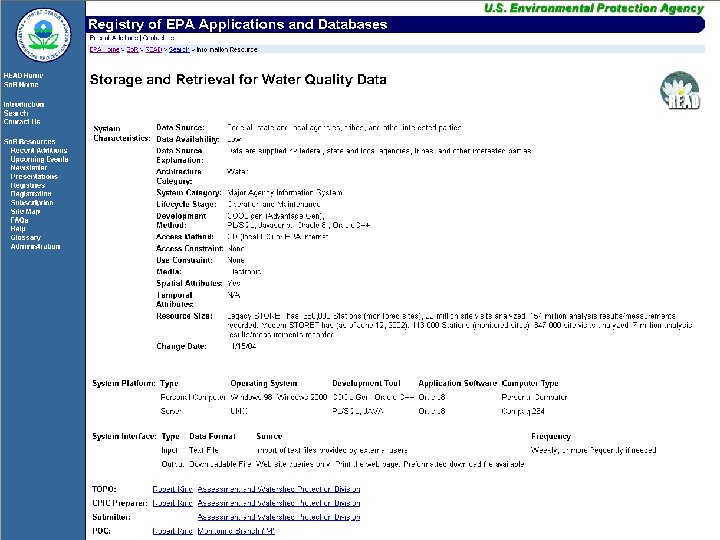
Registry for EPA Applications and Databases (READ) www. epa. gov/read 12
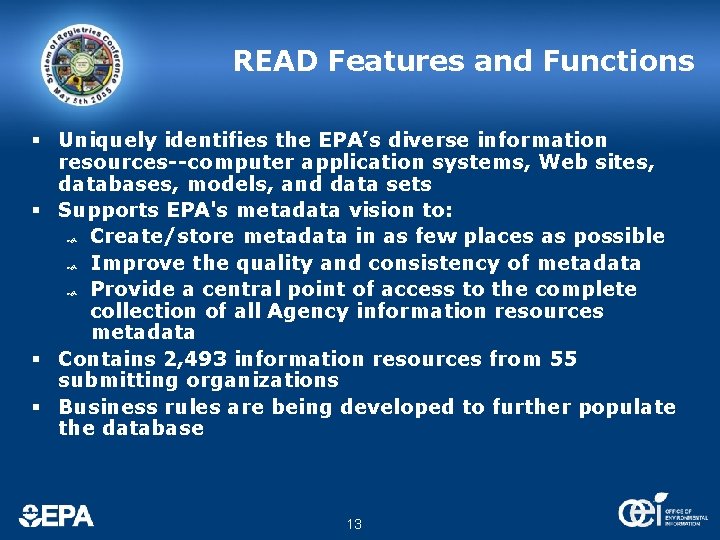
READ Features and Functions § Uniquely identifies the EPA’s diverse information resources--computer application systems, Web sites, databases, models, and data sets § Supports EPA's metadata vision to: Create/store metadata in as few places as possible Improve the quality and consistency of metadata Provide a central point of access to the complete collection of all Agency information resources metadata § Contains 2, 493 information resources from 55 submitting organizations § Business rules are being developed to further populate the database 13
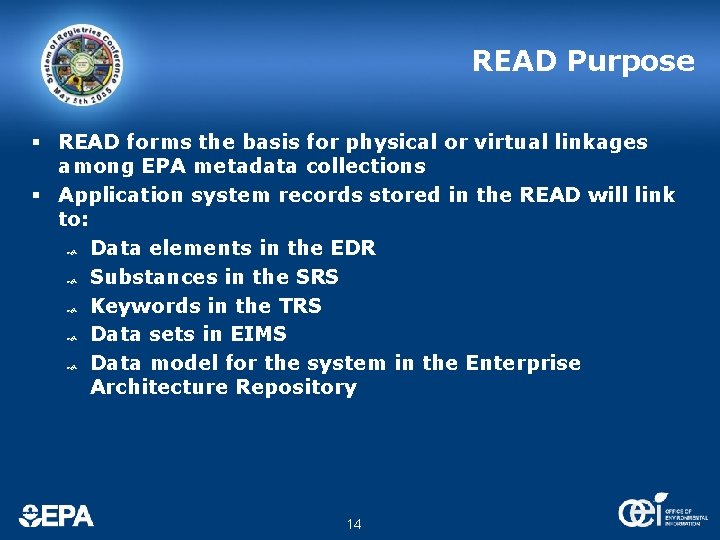
READ Purpose § READ forms the basis for physical or virtual linkages among EPA metadata collections § Application system records stored in the READ will link to: Data elements in the EDR Substances in the SRS Keywords in the TRS Data sets in EIMS Data model for the system in the Enterprise Architecture Repository 14
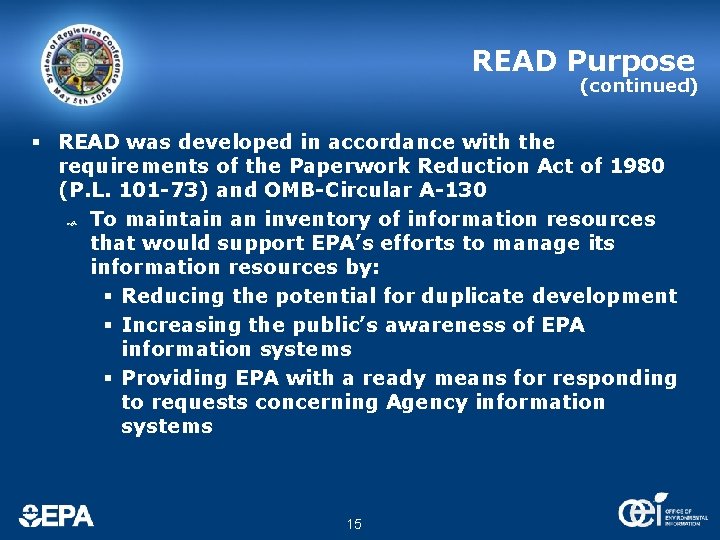
READ Purpose (continued) § READ was developed in accordance with the requirements of the Paperwork Reduction Act of 1980 (P. L. 101 -73) and OMB-Circular A-130 To maintain an inventory of information resources that would support EPA’s efforts to manage its information resources by: § Reducing the potential for duplicate development § Increasing the public’s awareness of EPA information systems § Providing EPA with a ready means for responding to requests concerning Agency information systems 15
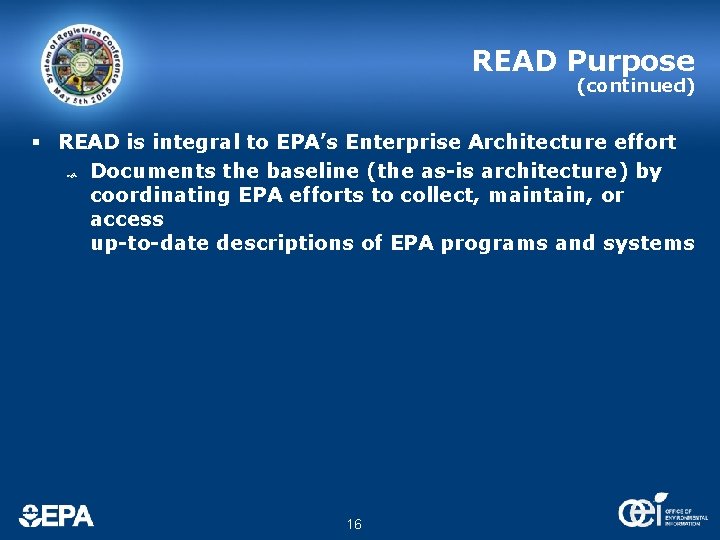
READ Purpose (continued) § READ is integral to EPA’s Enterprise Architecture effort Documents the baseline (the as-is architecture) by coordinating EPA efforts to collect, maintain, or access up-to-date descriptions of EPA programs and systems 16
17
18
19
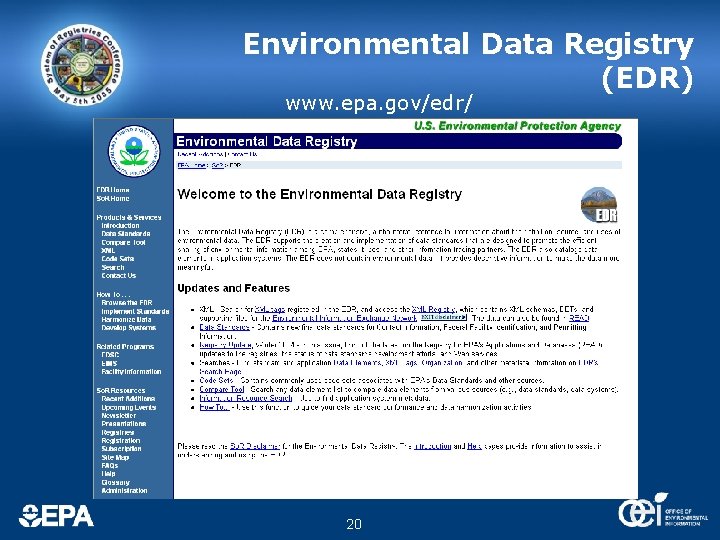
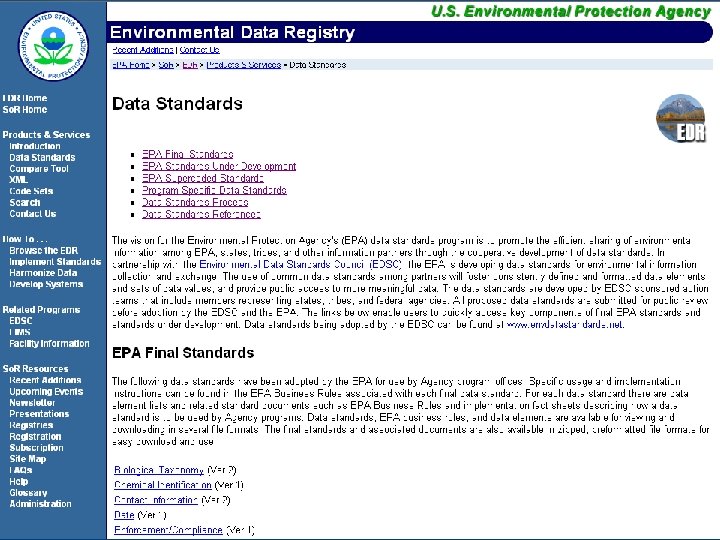
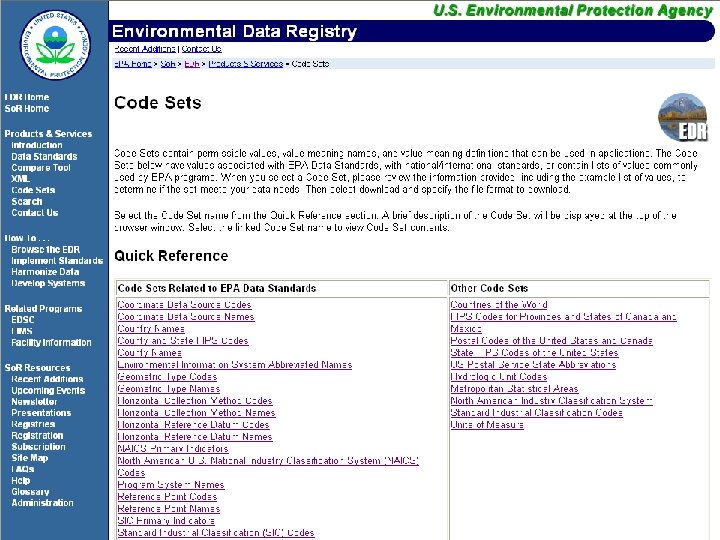
Environmental Data Registry (EDR) www. epa. gov/edr/ 20
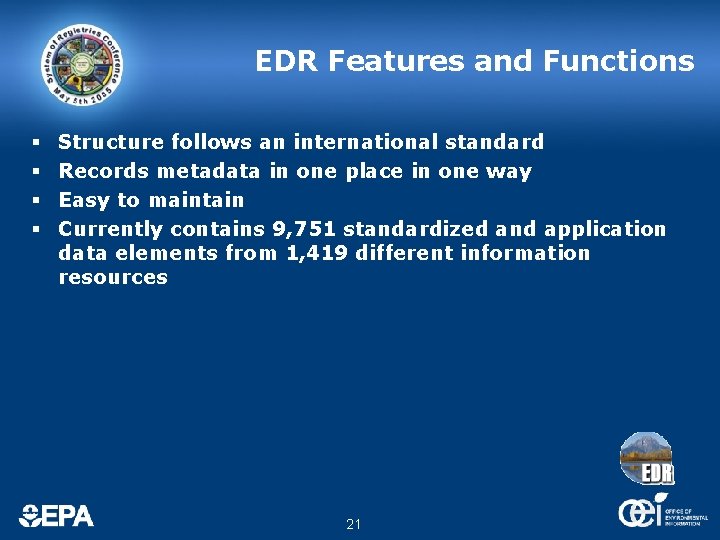
EDR Features and Functions § § Structure follows an international standard Records metadata in one place in one way Easy to maintain Currently contains 9, 751 standardized and application data elements from 1, 419 different information resources 21
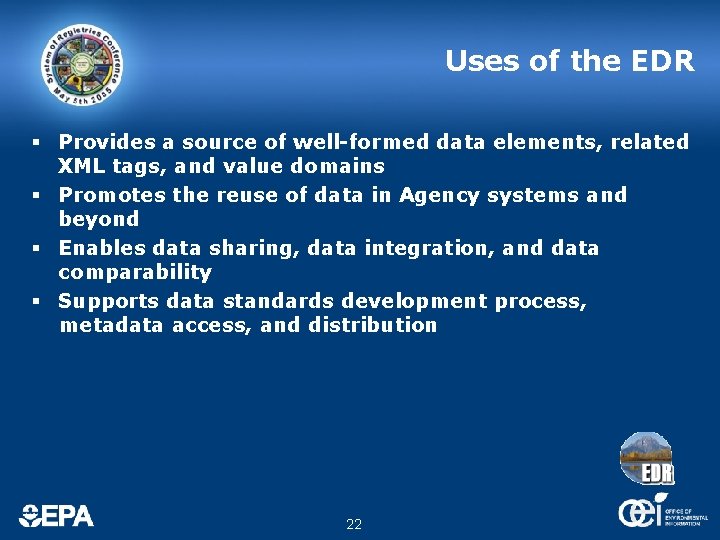
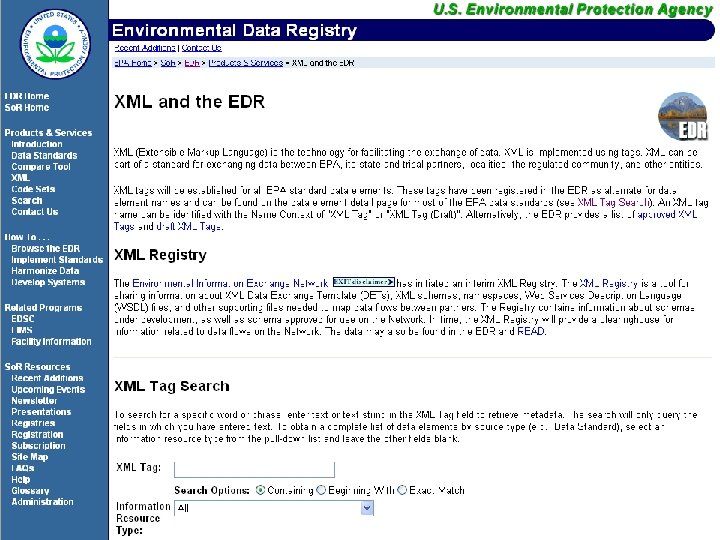
Uses of the EDR § Provides a source of well-formed data elements, related XML tags, and value domains § Promotes the reuse of data in Agency systems and beyond § Enables data sharing, data integration, and data comparability § Supports data standards development process, metadata access, and distribution 22
23
24
25
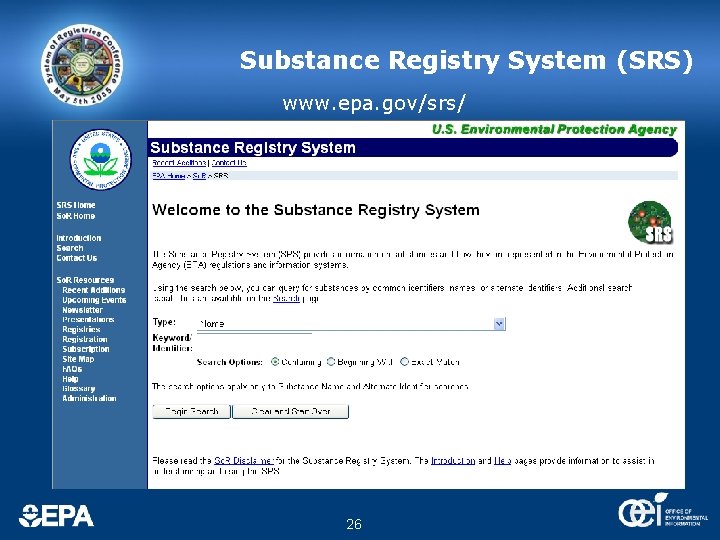
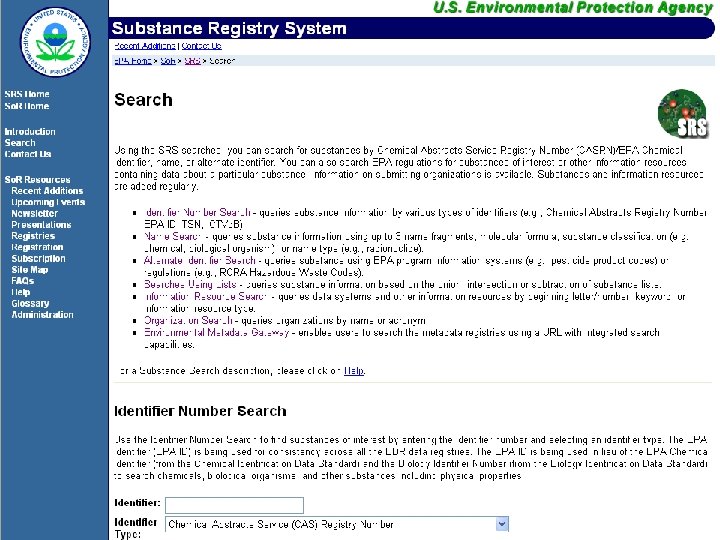
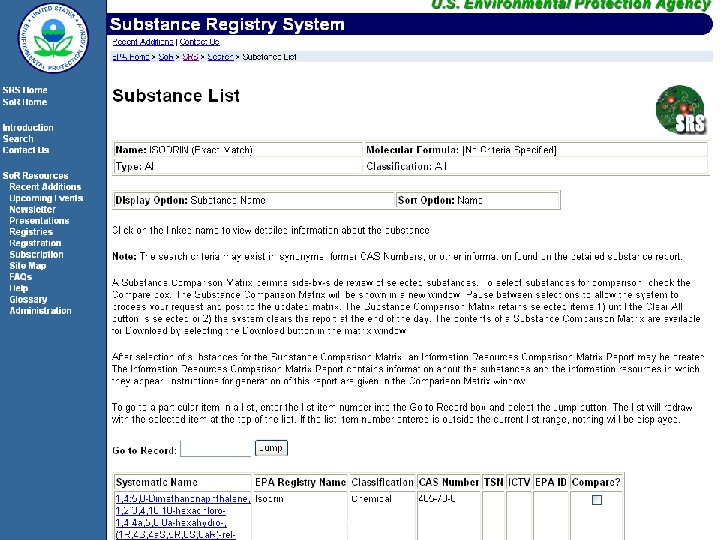
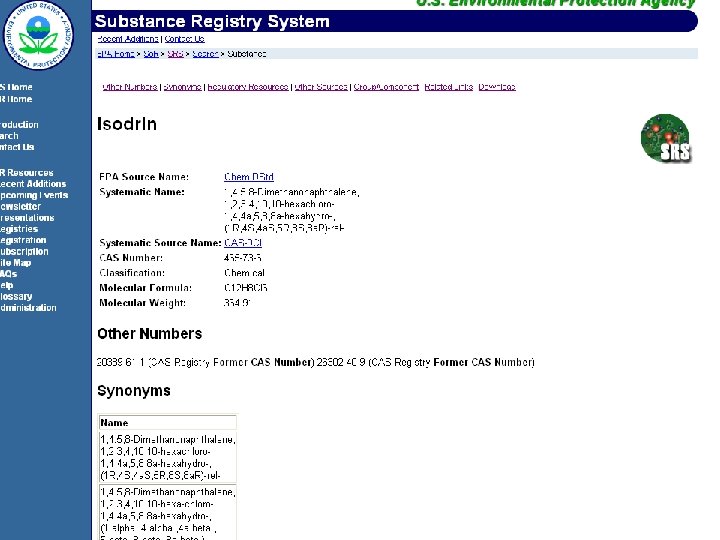
Substance Registry System (SRS) www. epa. gov/srs/ 26
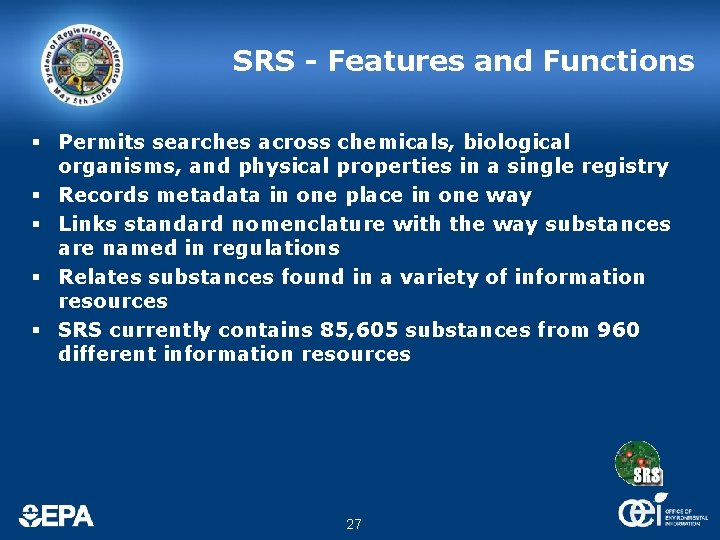
SRS - Features and Functions § Permits searches across chemicals, biological organisms, and physical properties in a single registry § Records metadata in one place in one way § Links standard nomenclature with the way substances are named in regulations § Relates substances found in a variety of information resources § SRS currently contains 85, 605 substances from 960 different information resources 27
28
29
30
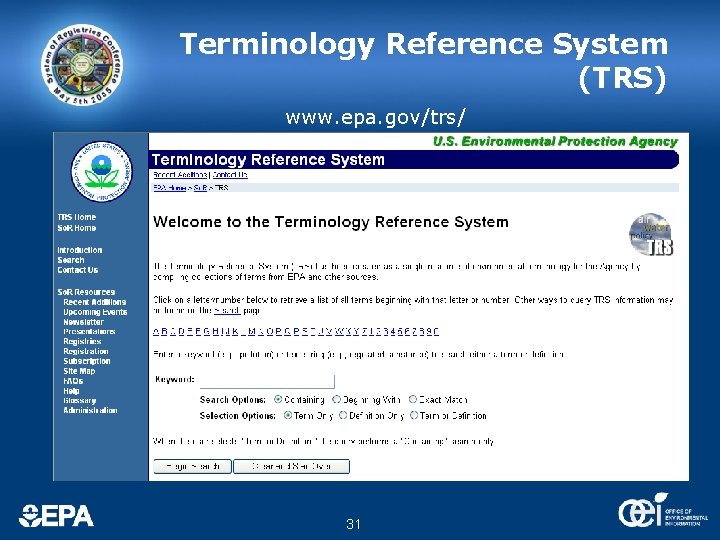
Terminology Reference System (TRS) www. epa. gov/trs/ 31
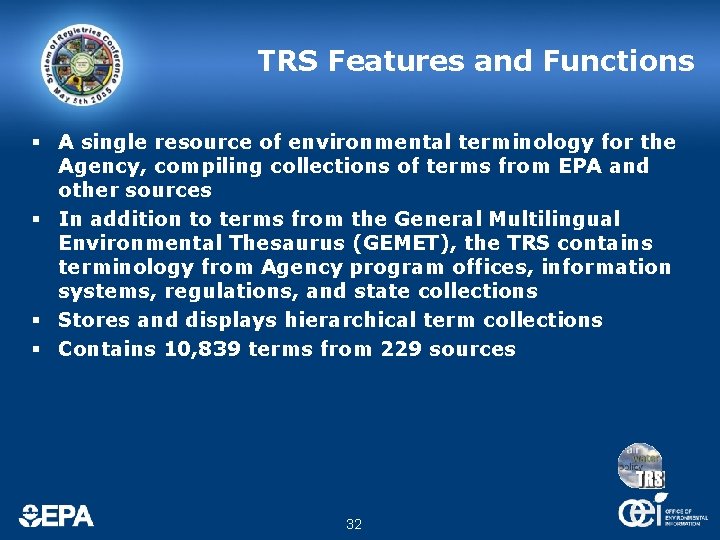
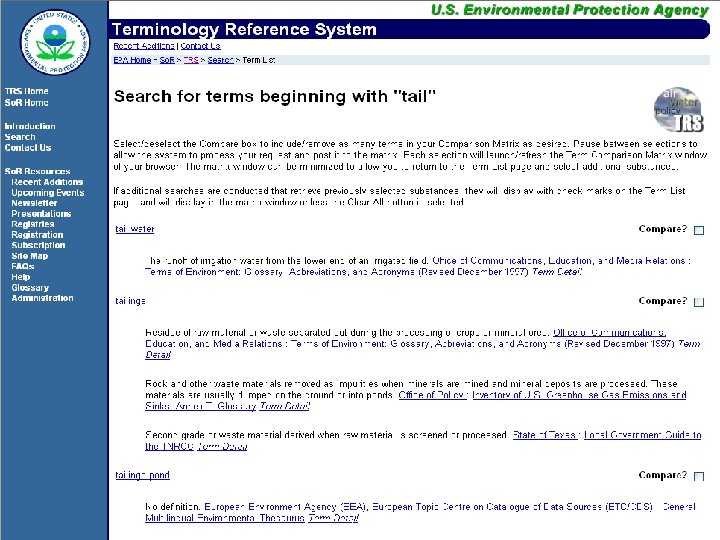
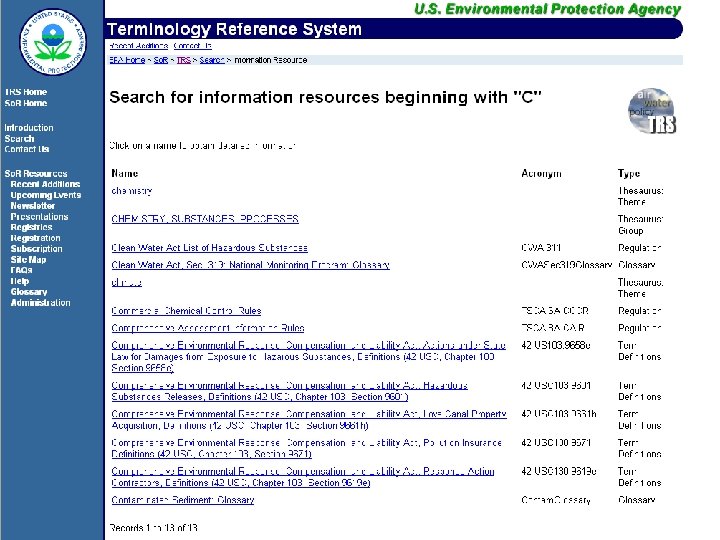
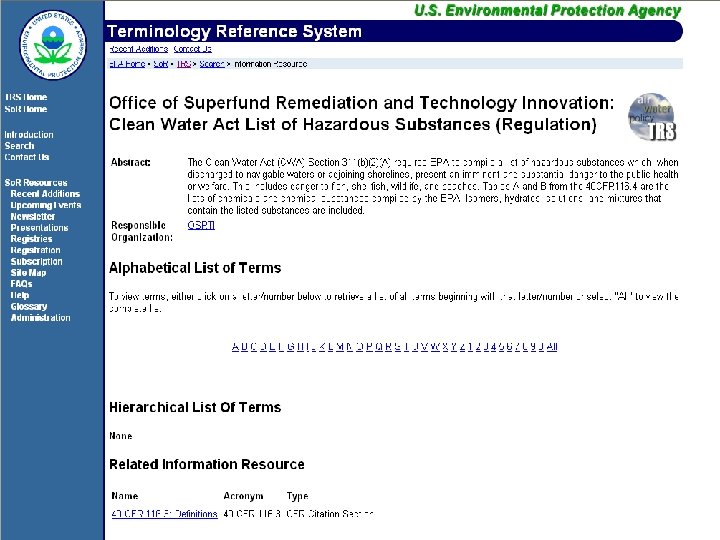
TRS Features and Functions § A single resource of environmental terminology for the Agency, compiling collections of terms from EPA and other sources § In addition to terms from the General Multilingual Environmental Thesaurus (GEMET), the TRS contains terminology from Agency program offices, information systems, regulations, and state collections § Stores and displays hierarchical term collections § Contains 10, 839 terms from 229 sources 32
33
34
35
Partner Successes § Office of Water/Concentrated Animal Feeding Operations (CAFO) activities § Office of Water standards activities § Radiation Information System for Cleanup Sites (RISCS) § Environmental Data Standards Council § Exchange Network Registry § Veteran’s Health Administration (VHA) 36
Contacts Larry Fitzwater EPA OEI/OIC Data Standards Branch Fitzwater. larry@epa. gov (202) 566 -1653 37