
Registered Reports Chris Chambers Cardiff University Brain Research
Registered Reports Chris Chambers Cardiff University Brain Research Imaging Centre (CUBRIC) School of Psychology, Cardiff University Email: chambersc 1@cardiff. ac. uk Twitter: @chrisdc 77 These slides: https: //osf. io/mvdyq/ Google “Chris Chambers OSF talks” for full archive
UK Reproducibility Network • Peer-led, academic consortium @UKRepro • § § • • • Objectives: www. ukrn. org Understand factors that contribute to poor research reproducibility Provide training and disseminate best practice Support and test interventions to improve reproducibility UKRN Steering group Ensure coordination with stakeholders UKRN officially launched in March 2019 Local network leads at >40 UK institutions Supported by a range of stakeholders § Funders, Publishers, Institutes, Learned Societies Marcus Munafò Laura Fortunato Malcolm Mac. Leod Bristol Oxford Edinburgh Imperial Cardiff Alex Collins Chris Chambers
UK Reproducibility Network Key Initiatives • • Open Research Working Groups at UK universities: https: //osf. io/vgt 3 x/ Reproducibili. Tea https: //osf. io/3 qrj 6/wiki/home/ Open Research and Reproducibility Short Course Hiring Policies Certification Scheme: https: //osf. io/qb 7 zm/ Laboratory Efficiency Assessment Framework (LEAF) Consortium-Based Student Projects Primers on Open Research Practices Ensuring teaching curricula include training in reproducibility and transparency Registered Reports: a format of research article currently offered by >190 academic journals in which study protocols are peer reviewed and the completed research accepted in advance of the results (see https: //cos. io/rr/). Registered Reports Funding: a form of research funding in which funders and journals coordinate to review and accept detailed Registered Reports protocols (see For Funders at https: //cos. io/rr/). Accountable Replication Policies: an initiative whereby journals commit to publishing any close and valid replication of any study published in the same journal (see https: //blogs. royalsociety. org/publishing/reproducibilitymeets-accountability/). Editors 4 Better. Research: an initiative in which journal editors publicly state their degree of commitment to upholding a variety of practices in support of open and reproducible research (see https: //osf. io/u 8 rks/). ECR Fellowship Track Programme: an initiative to create a dedicated and fully supported career trajectory 3 for early career researchers who seek to embed open research practices in their work (see https: //osf. io/gr 2 n 8/).
UK Reproducibility Network Key Initiatives • • Open Research Working Groups at UK universities: https: //osf. io/vgt 3 x/ Reproducibili. Tea Open Research and Reproducibility Short Course Hiring Policies Certification Scheme: https: //osf. io/qb 7 zm/ Laboratory Efficiency Assessment Framework (LEAF) Consortium-Based Student Projects Primers on Open Research Practices Ensuring teaching curricula include training in reproducibility and transparency Registered Reports: a format of research article currently offered by >190 academic journals in which study protocols are peer reviewed and the completed research accepted in advance of the results (see https: //cos. io/rr/). Registered Reports Funding: a form of research funding in which funders and journals coordinate to review and accept detailed Registered Reports protocols (see For Funders at https: //cos. io/rr/). Accountable Replication Policies: an initiative whereby journals commit to publishing any close and valid replication of any study published in the same journal (see https: //blogs. royalsociety. org/publishing/reproducibilitymeets-accountability/). Editors 4 Better. Research: an initiative in which journal editors publicly state their degree of commitment to upholding a variety of practices in support of open and reproducible research (see https: //osf. io/u 8 rks/). ECR Fellowship Track Programme: an initiative to create a dedicated and fully supported career trajectory for early career researchers who seek to embed open research practices in their work (see https: //osf. io/gr 2 n 8/).
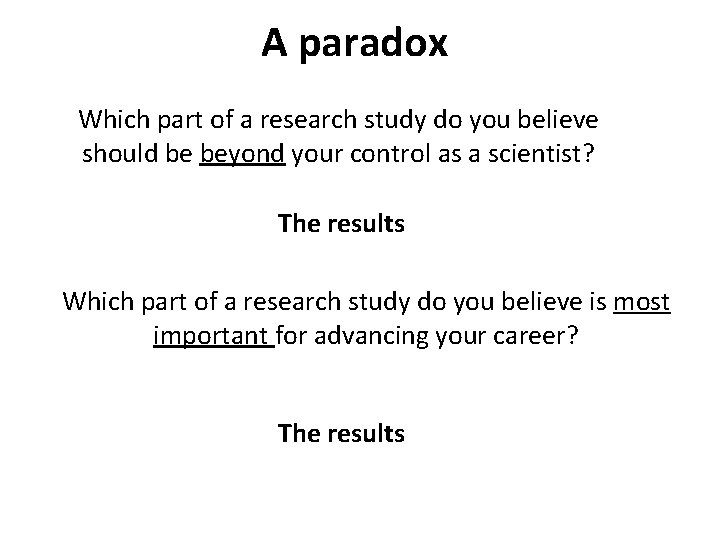
A paradox Which part of a research study do you believe should be beyond your control as a scientist? The results Which part of a research study do you believe is most important for advancing your career? The results
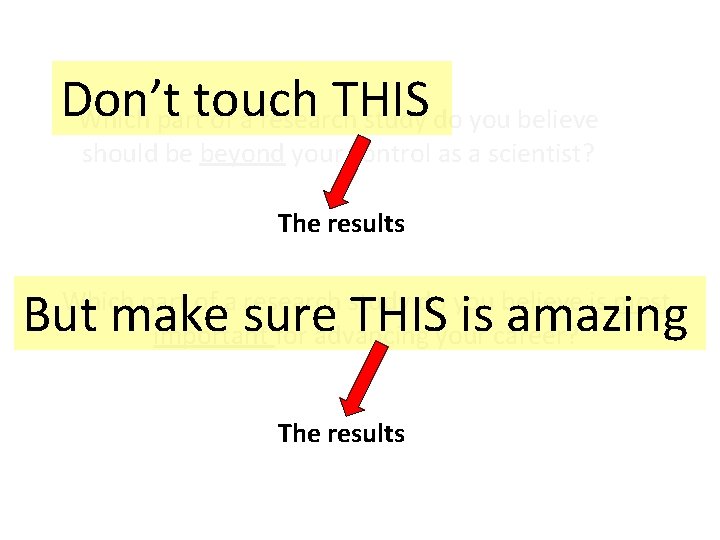
Don’t touch THIS Which part of a research study do you believe should be beyond your control as a scientist? The results But make sure THIS is amazing Which part of a research study do you believe is most important for advancing your career? The results
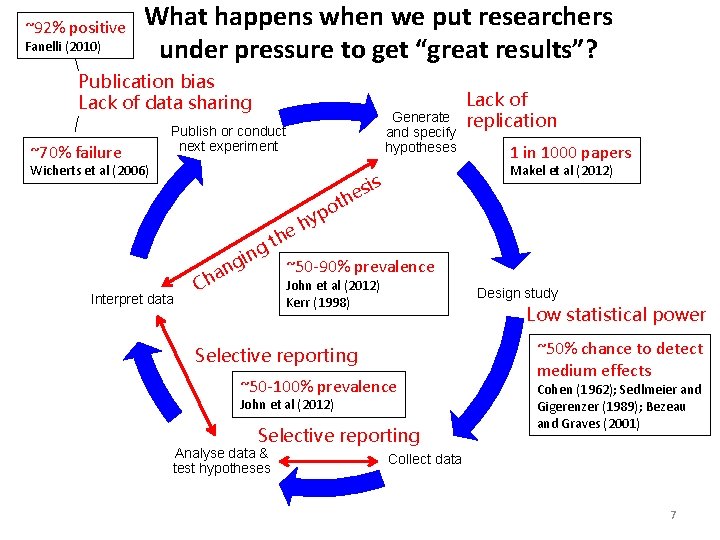
~92% positive Fanelli (2010) What happens when we put researchers under pressure to get “great results”? Publication bias Lack of data sharing ~70% failure Generate and specify hypotheses Publish or conduct next experiment Wicherts et al (2006) o p hy Lack of replication 1 in 1000 papers Makel et al (2012) sis e th he t ing ~50 -90% prevalence g an Interpret data Ch John et al (2012) Kerr (1998) Design study Low statistical power Selective reporting ~50 -100% prevalence John et al (2012) Selective reporting Analyse data & test hypotheses ~50% chance to detect medium effects Cohen (1962); Sedlmeier and Gigerenzer (1989); Bezeau and Graves (2001) Collect data 7
Solution: make results a dead currency in quality evaluation 8
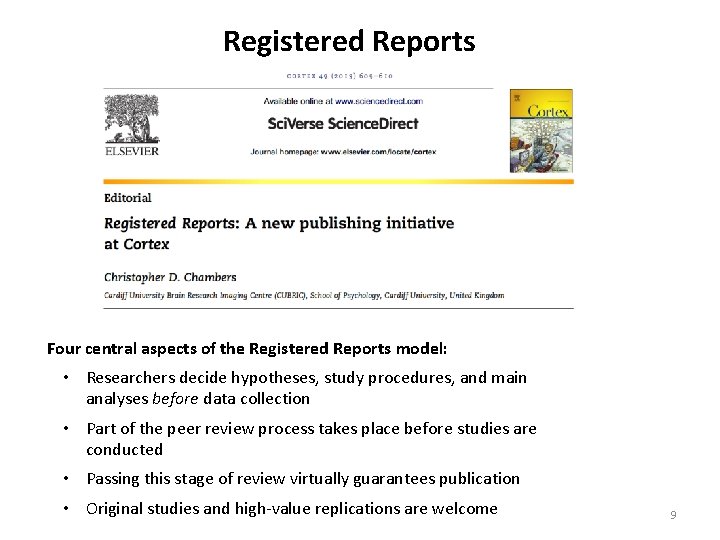
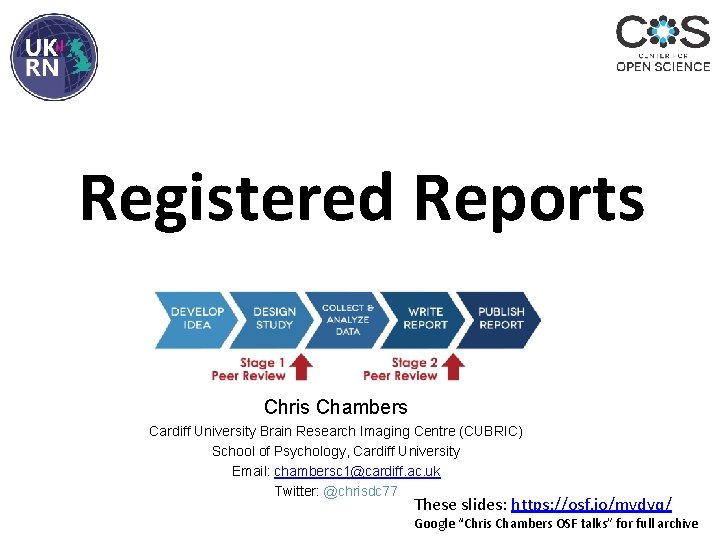
Registered Reports Four central aspects of the Registered Reports model: • Researchers decide hypotheses, study procedures, and main analyses before data collection • Part of the peer review process takes place before studies are conducted • Passing this stage of review virtually guarantees publication • Original studies and high-value replications are welcome 9
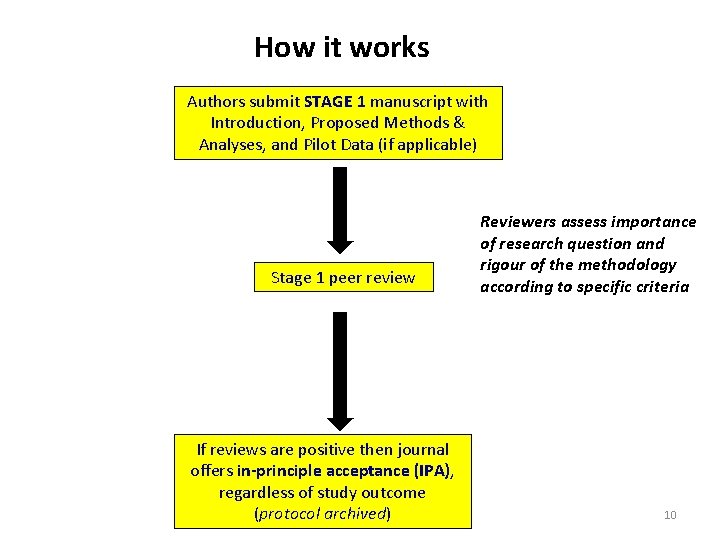
How it works Authors submit STAGE 1 manuscript with Introduction, Proposed Methods & Analyses, and Pilot Data (if applicable) Stage 1 peer review If reviews are positive then journal offers in-principle acceptance (IPA), regardless of study outcome (protocol archived) Reviewers assess importance of research question and rigour of the methodology according to specific criteria 10
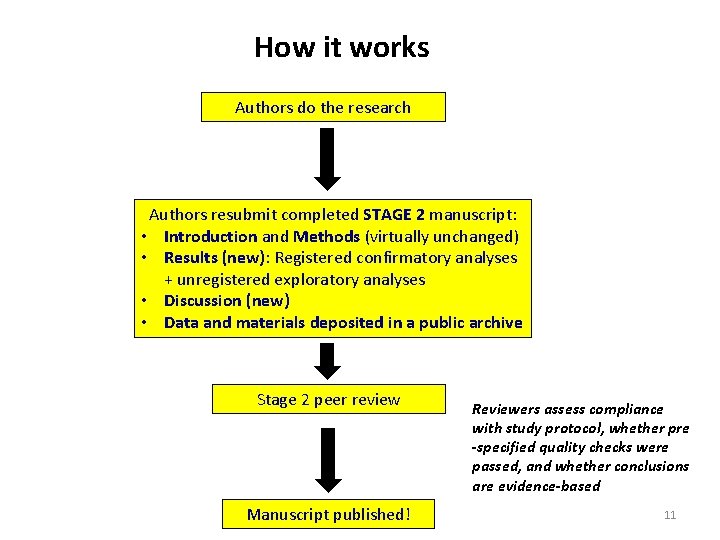
How it works Authors do the research Authors resubmit completed STAGE 2 manuscript: • Introduction and Methods (virtually unchanged) • Results (new): Registered confirmatory analyses + unregistered exploratory analyses • Discussion (new) • Data and materials deposited in a public archive Stage 2 peer review Manuscript published! Reviewers assess compliance with study protocol, whether pre -specified quality checks were passed, and whether conclusions are evidence-based 11
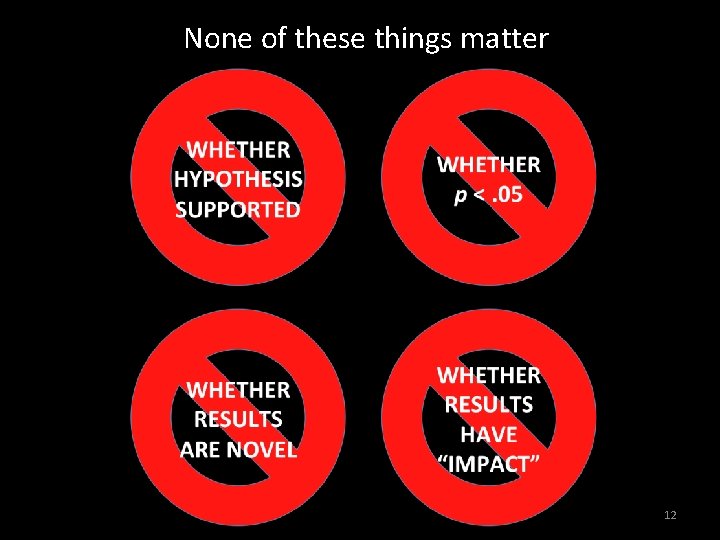
None of these things matter 12
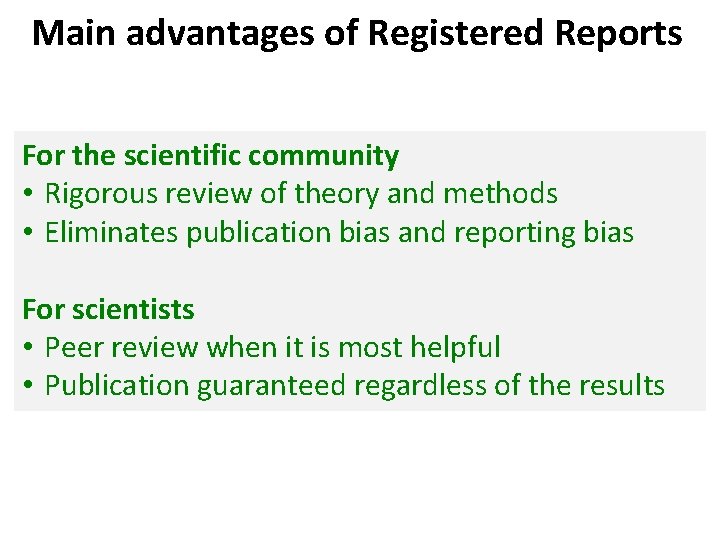
Main advantages of Registered Reports For the scientific community • Rigorous review of theory and methods • Eliminates publication bias and reporting bias For scientists • Peer review when it is most helpful • Publication guaranteed regardless of the results

Six years later… 14
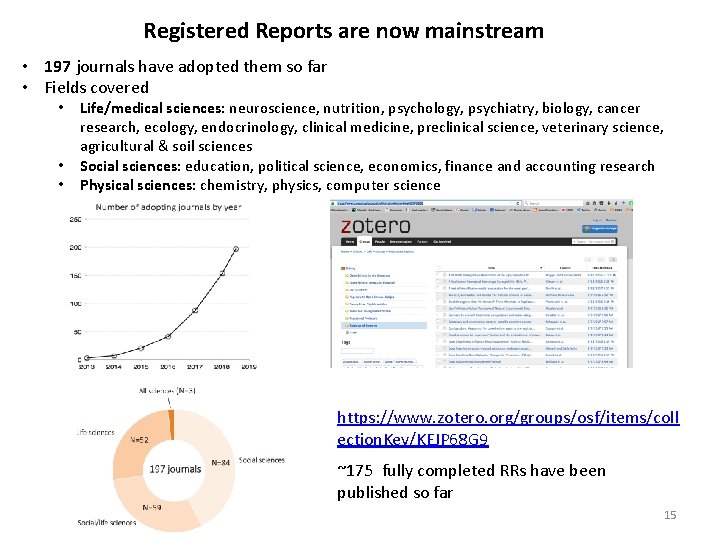
Registered Reports are now mainstream • 197 journals have adopted them so far • Fields covered • • • Life/medical sciences: neuroscience, nutrition, psychology, psychiatry, biology, cancer research, ecology, endocrinology, clinical medicine, preclinical science, veterinary science, agricultural & soil sciences Social sciences: education, political science, economics, finance and accounting research Physical sciences: chemistry, physics, computer science https: //www. zotero. org/groups/osf/items/coll ection. Key/KEJP 68 G 9 ~175 fully completed RRs have been published so far 15
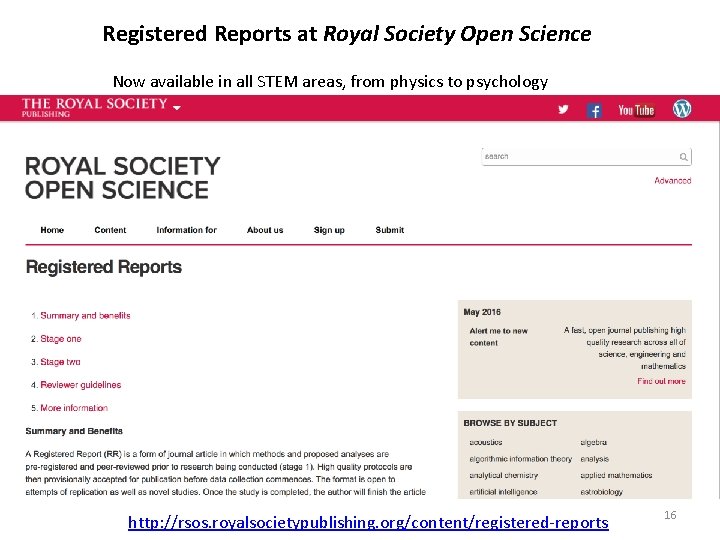
Registered Reports at Royal Society Open Science Now available in all STEM areas, from physics to psychology http: //rsos. royalsocietypublishing. org/content/registered-reports 16
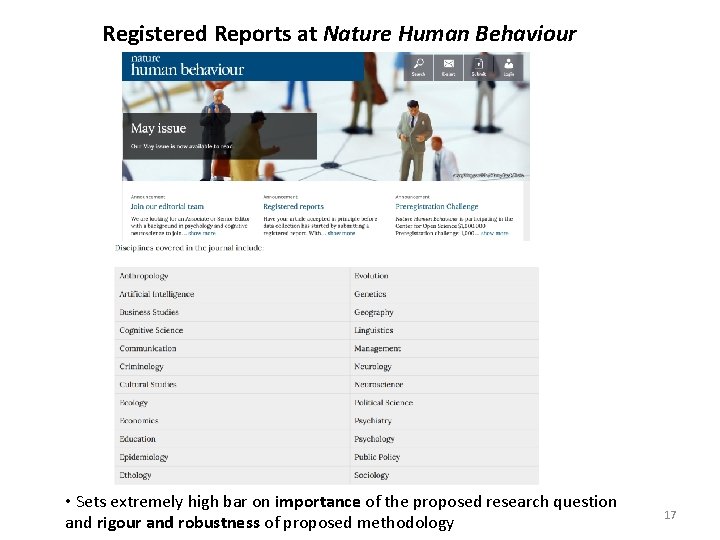
Registered Reports at Nature Human Behaviour • Sets extremely high bar on importance of the proposed research question and rigour and robustness of proposed methodology 17
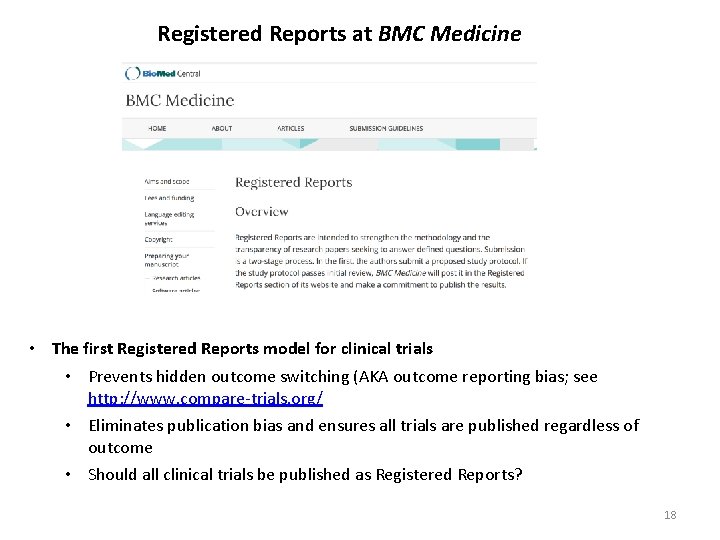
Registered Reports at BMC Medicine • The first Registered Reports model for clinical trials • Prevents hidden outcome switching (AKA outcome reporting bias; see http: //www. compare-trials. org/ • Eliminates publication bias and ensures all trials are published regardless of outcome • Should all clinical trials be published as Registered Reports? 18
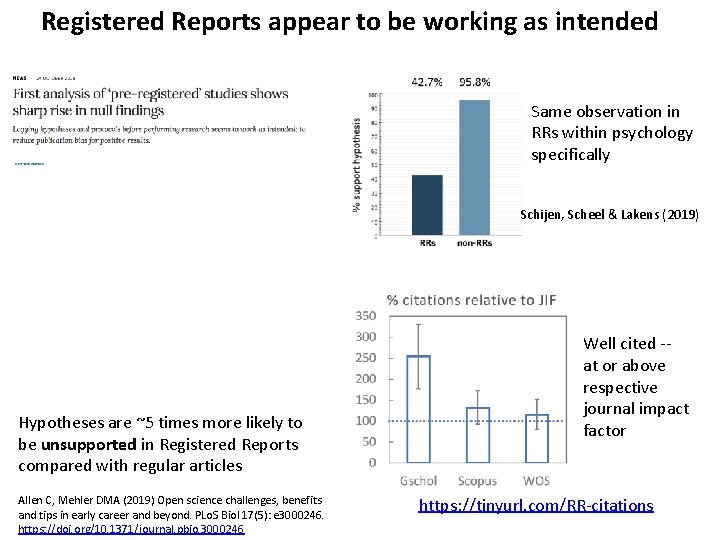
Registered Reports appear to be working as intended Same observation in RRs within psychology specifically Schijen, Scheel & Lakens (2019) Hypotheses are ~5 times more likely to be unsupported in Registered Reports compared with regular articles Allen C, Mehler DMA (2019) Open science challenges, benefits and tips in early career and beyond. PLo. S Biol 17(5): e 3000246. https: //doi. org/10. 1371/journal. pbio. 3000246 Well cited -- at or above respective journal impact factor https: //tinyurl. com/RR-citations
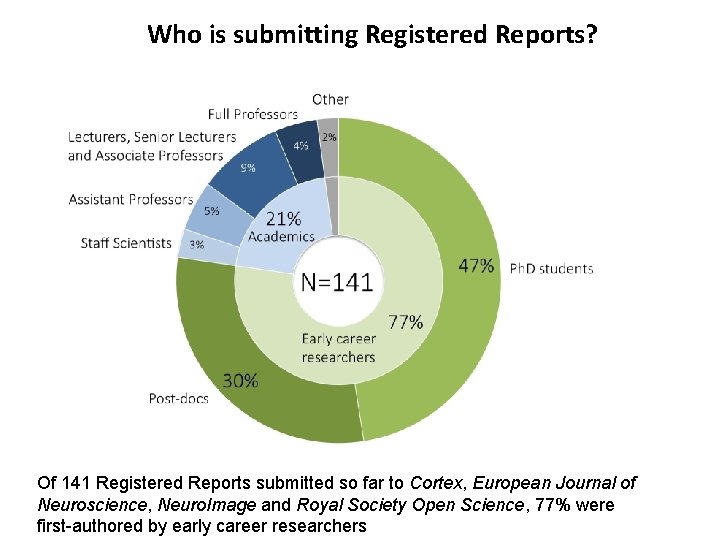
Who is submitting Registered Reports? Of 141 Registered Reports submitted so far to Cortex, European Journal of Neuroscience, Neuro. Image and Royal Society Open Science, 77% were first-authored by early career researchers
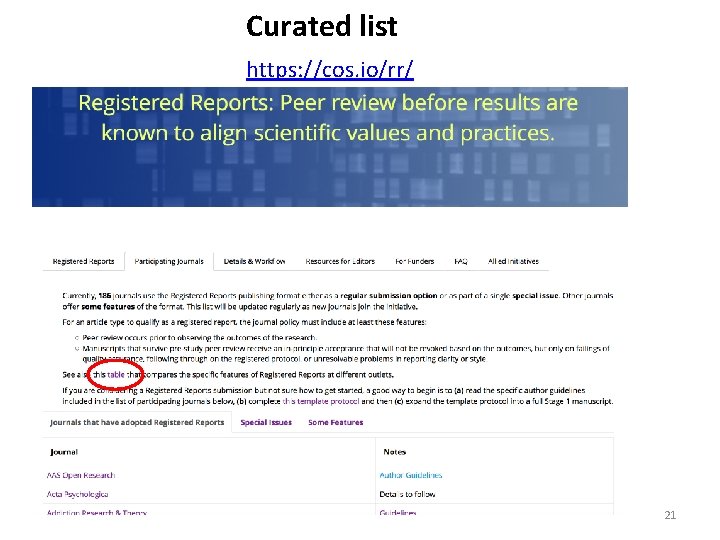
Curated list https: //cos. io/rr/ 21
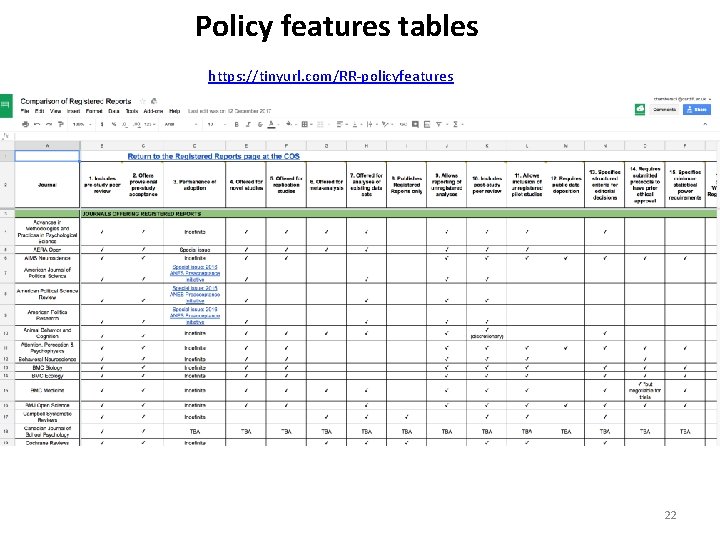
Policy features tables https: //tinyurl. com/RR-policyfeatures 22
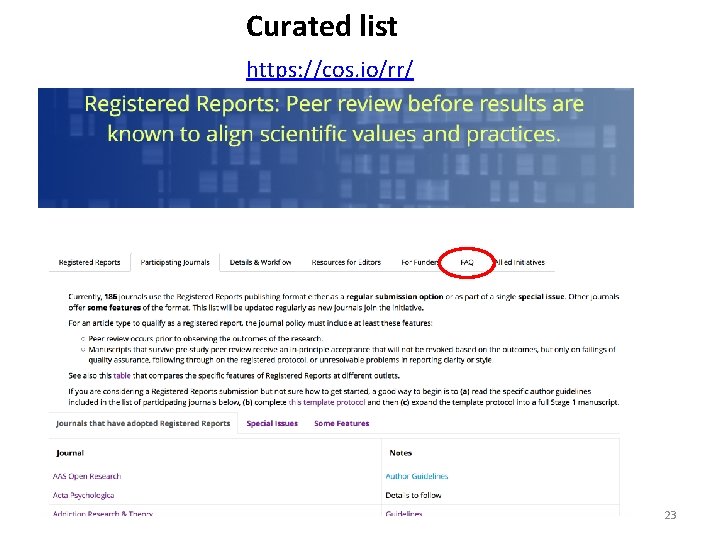
Curated list https: //cos. io/rr/ 23
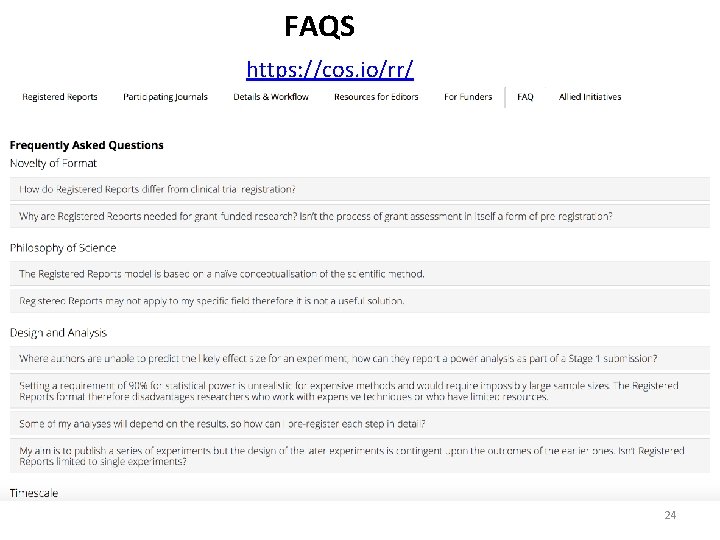
FAQS https: //cos. io/rr/ 24
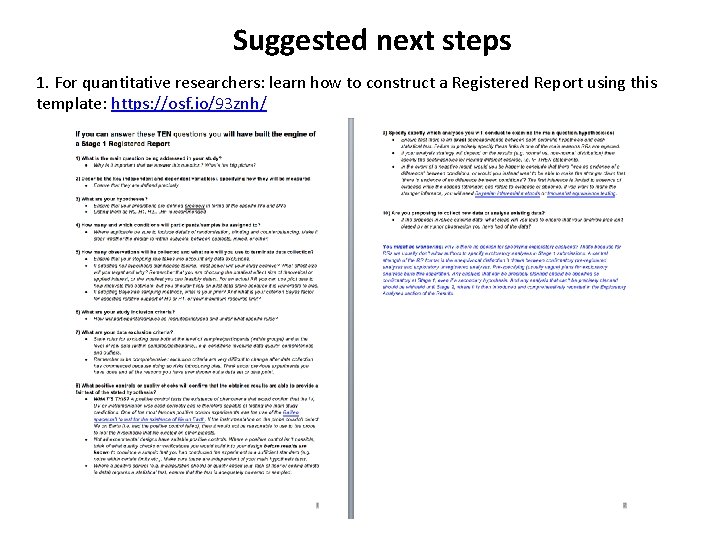
Suggested next steps 1. For quantitative researchers: learn how to construct a Registered Report using this template: https: //osf. io/93 znh/
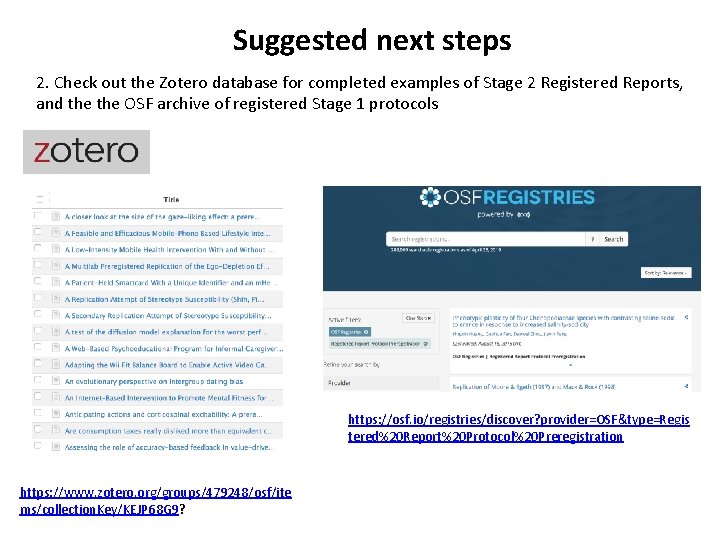
Suggested next steps 2. Check out the Zotero database for completed examples of Stage 2 Registered Reports, and the OSF archive of registered Stage 1 protocols https: //osf. io/registries/discover? provider=OSF&type=Regis tered%20 Report%20 Protocol%20 Preregistration https: //www. zotero. org/groups/479248/osf/ite ms/collection. Key/KEJP 68 G 9?
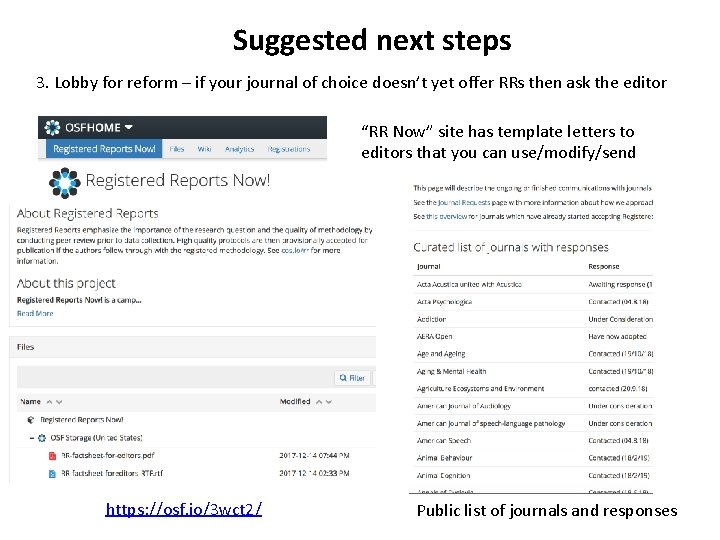
Suggested next steps 3. Lobby for reform – if your journal of choice doesn’t yet offer RRs then ask the editor “RR Now” site has template letters to editors that you can use/modify/send https: //osf. io/3 wct 2/ Public list of journals and responses
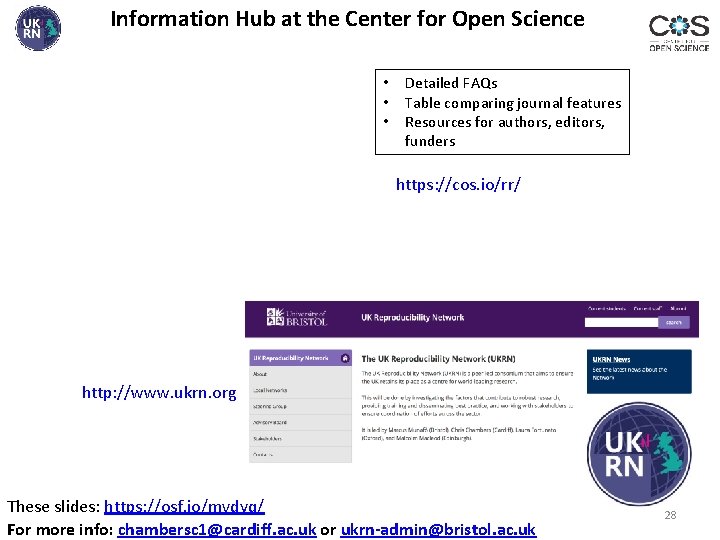
Information Hub at the Center for Open Science • • • Detailed FAQs Table comparing journal features Resources for authors, editors, funders https: //cos. io/rr/ http: //www. ukrn. org These slides: https: //osf. io/mvdyq/ For more info: chambersc 1@cardiff. ac. uk or ukrn-admin@bristol. ac. uk 28
- Slides: 28