
Regions of the United States of America Northeast
- Slides: 13
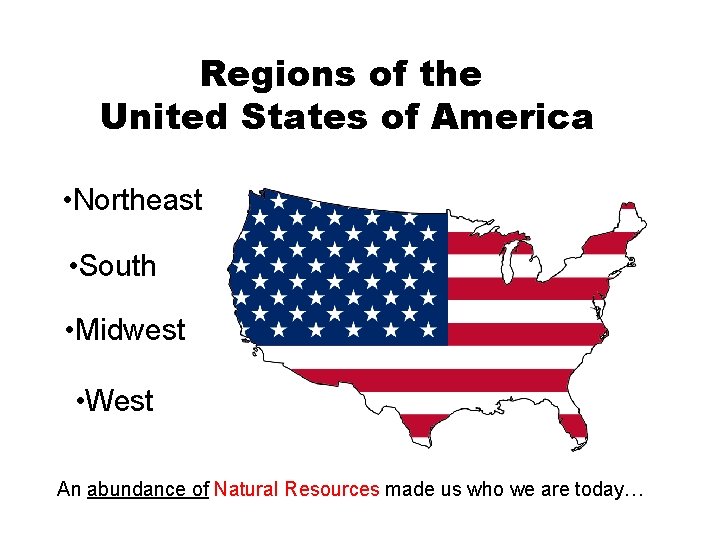
Regions of the United States of America • Northeast • South • Midwest • West An abundance of Natural Resources made us who we are today…
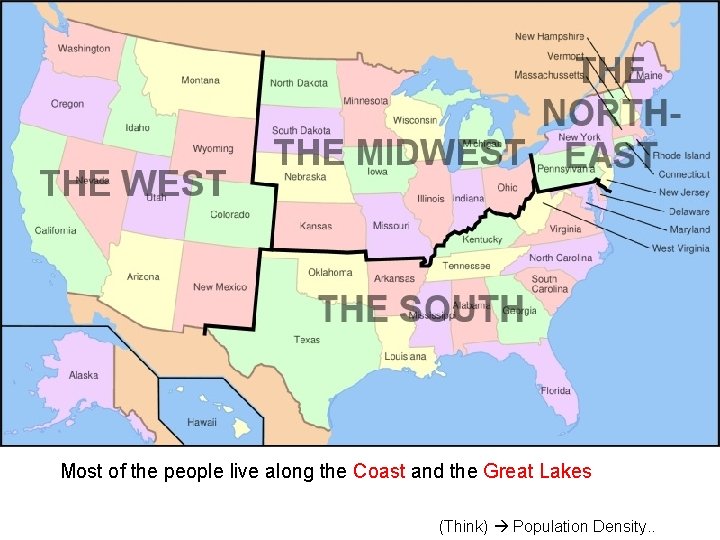
1 Most of the people live along the Coast and the Great Lakes (Think) Population Density. .
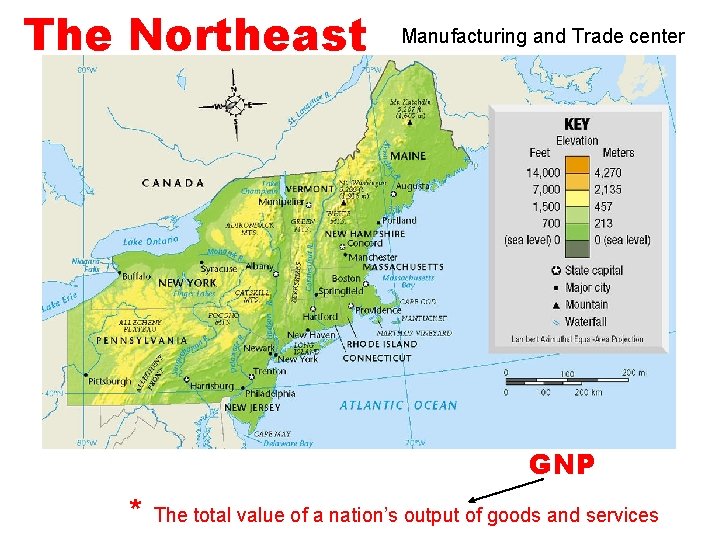
The Northeast 1 Manufacturing and Trade center GROSS NATONAL PRODUCT - GNP * The total value of a nation’s output of goods and services
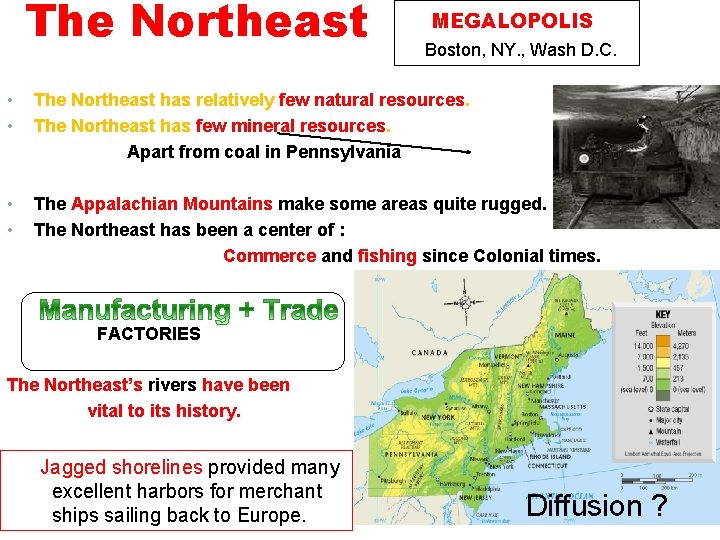
The Northeast 1 MEGALOPOLIS Boston, NY. , Wash D. C. • • The Northeast has relatively few natural resources. The Northeast has few mineral resources. Apart from coal in Pennsylvania • • The Appalachian Mountains make some areas quite rugged. The Northeast has been a center of : Commerce and fishing since Colonial times. FACTORIES The Northeast’s rivers have been vital to its history. Jagged shorelines provided many excellent harbors for merchant ships sailing back to Europe. Diffusion ?
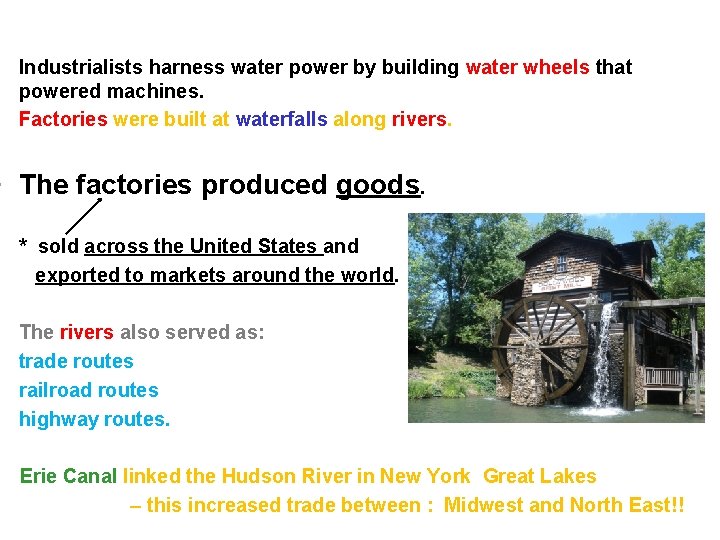
1 A Leader in Industry Industrialists harness water power by building water wheels that powered machines. Factories were built at waterfalls along rivers. • The factories produced goods. * sold across the United States and exported to markets around the world. The rivers also served as: trade routes railroad routes highway routes. Erie Canal linked the Hudson River in New York Great Lakes – this increased trade between : Midwest and North East!!
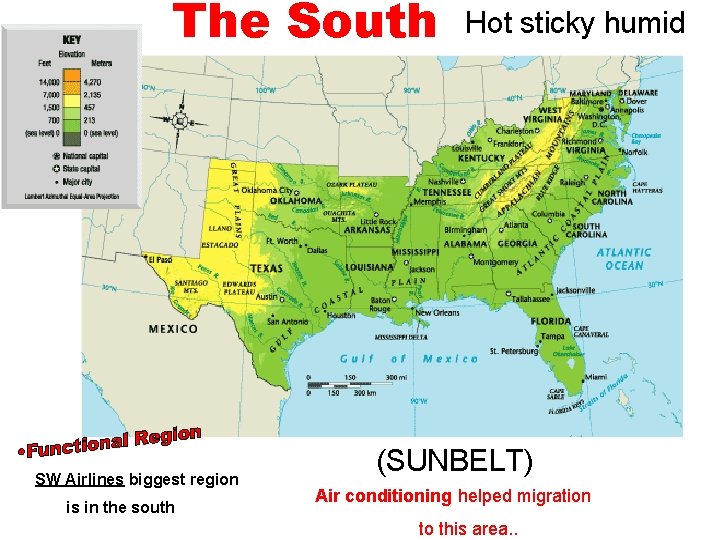
2 The South Hot sticky humid Climate, Vegetation SW Airlines biggest region is in the south (SUNBELT) Air conditioning helped migration to this area. .
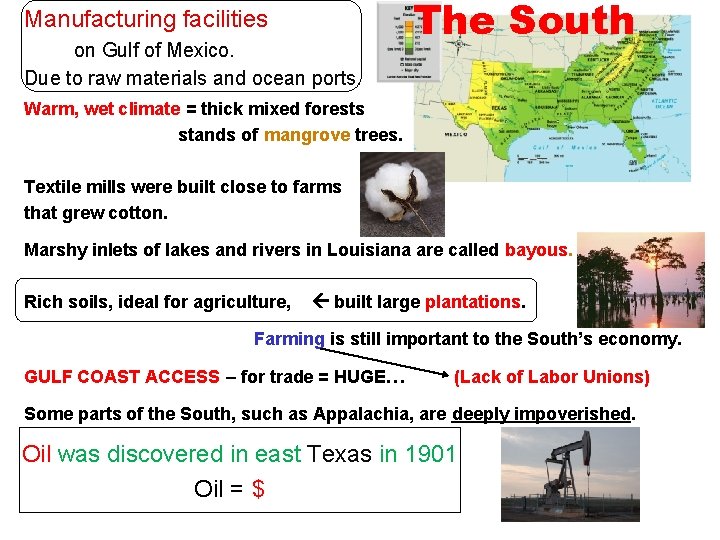
2 Manufacturing facilities on Gulf of Mexico. Due to raw materials and ocean ports. The South Warm, wet climate = thick mixed forests stands of mangrove trees. Textile mills were built close to farms that grew cotton. Climate, Vegetation Marshy inlets of lakes and rivers in Louisiana are called bayous. Rich soils, ideal for agriculture, built large plantations. Farming is still important to the South’s economy. GULF COAST ACCESS – for trade = HUGE… (Lack of Labor Unions) Some parts of the South, such as Appalachia, are deeply impoverished. Oil was discovered in east Texas in 1901 Oil = $
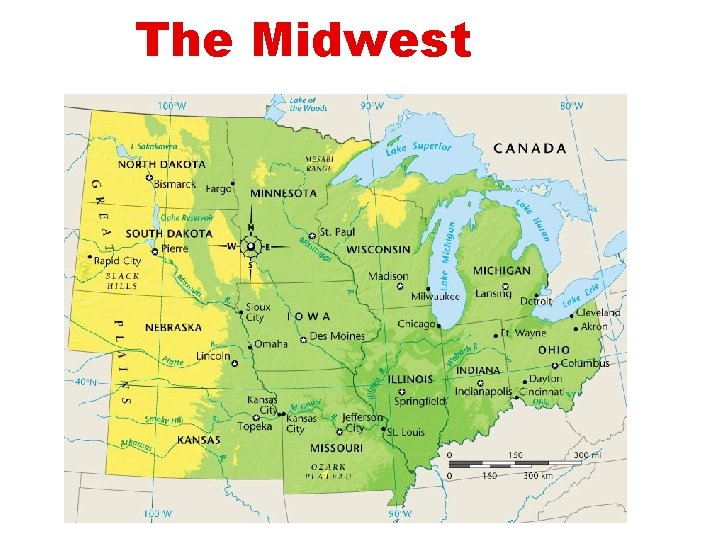
3 The Midwest
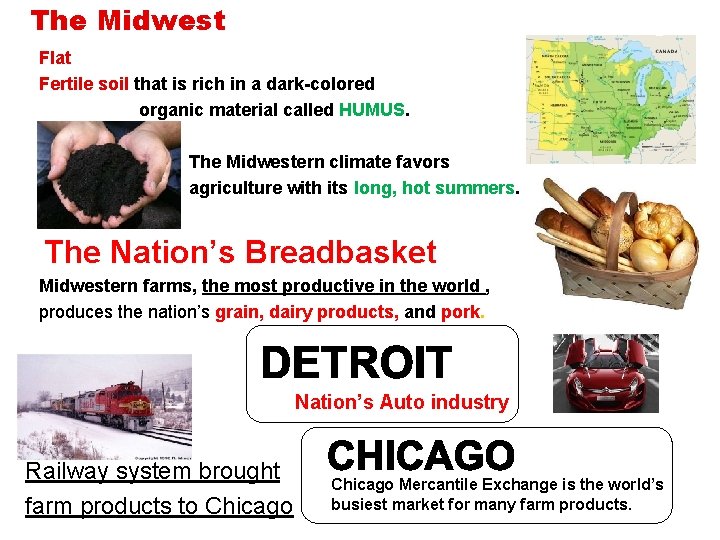
3 The Midwest An Agricultural Economy Flat Fertile soil that is rich in a dark-colored organic material called HUMUS. The Midwestern climate favors agriculture with its long, hot summers. The Nation’s Breadbasket Midwestern farms, the most productive in the world , produces the nation’s grain, dairy products, and pork. Nation’s Auto industry Railway system brought farm products to Chicago Mercantile Exchange is the world’s busiest market for many farm products.
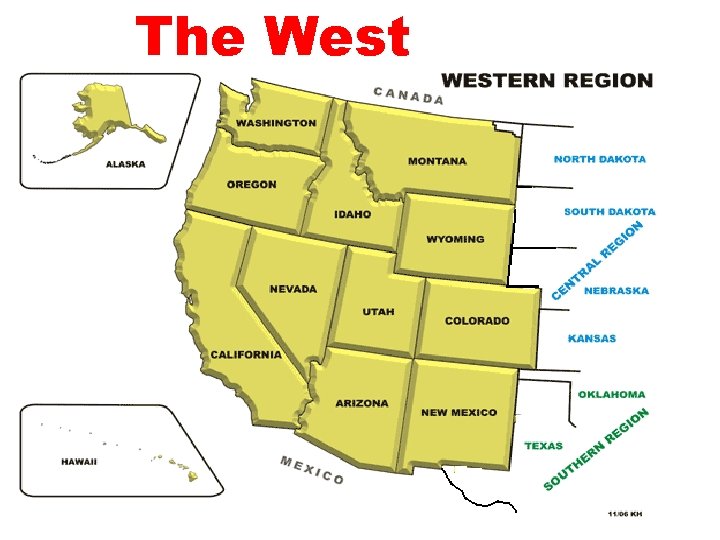
4 The West
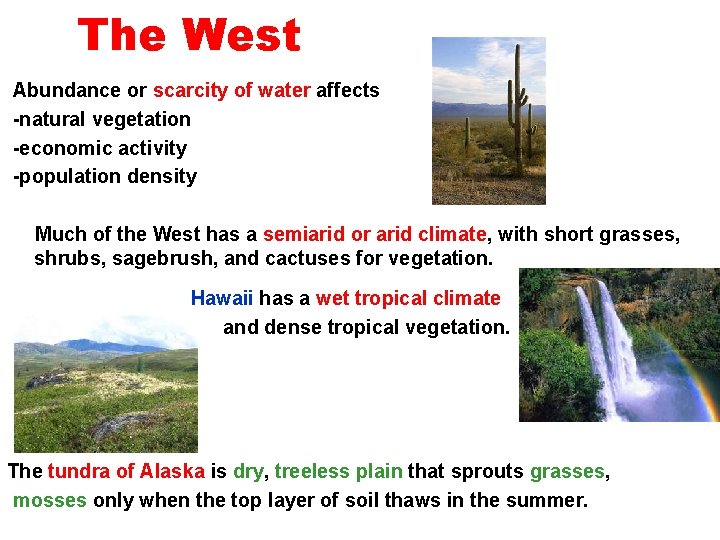
The West 4 Abundance or scarcity of water affects -natural vegetation -economic activity -population density Much of the West has a semiarid or arid climate, with short grasses, shrubs, sagebrush, and cactuses for vegetation. Hawaii has a wet tropical climate and dense tropical vegetation. The tundra of Alaska is dry, treeless plain that sprouts grasses, mosses only when the top layer of soil thaws in the summer.
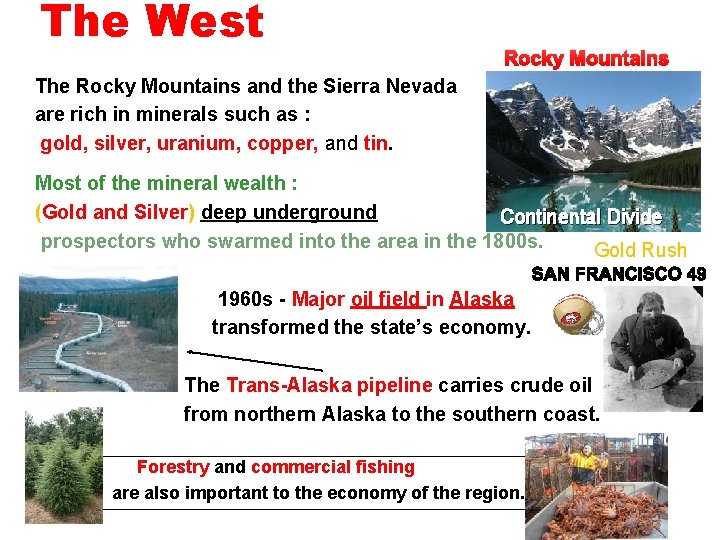
The West 4 Natural Resources and the Economy Rocky Mountains The Rocky Mountains and the Sierra Nevada are rich in minerals such as : gold, silver, uranium, copper, and tin. Most of the mineral wealth : (Gold and Silver) deep underground Continental Divide prospectors who swarmed into the area in the 1800 s. Gold Rush 1960 s - Major oil field in Alaska transformed the state’s economy. The Trans-Alaska pipeline carries crude oil from northern Alaska to the southern coast. Forestry and commercial fishing are also important to the economy of the region. ers
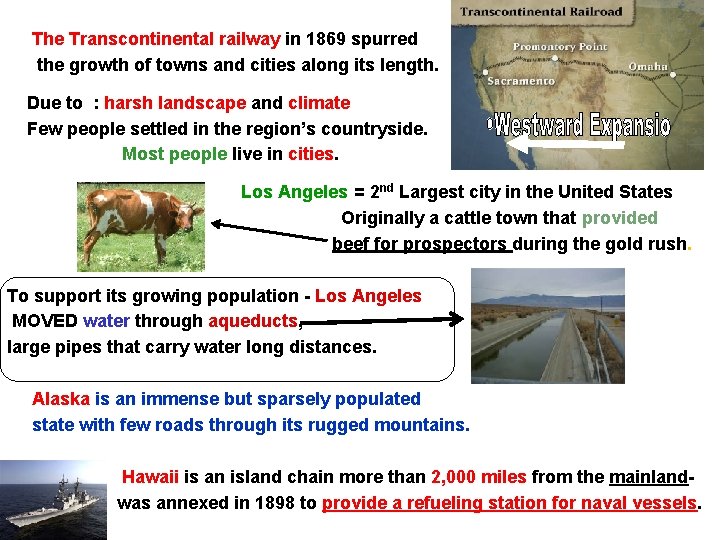
4 The Transcontinental railway in 1869 spurred the growth of towns and cities along its length. Due to : harsh landscape and climate Few people settled in the region’s countryside. Most people live in cities. Los Angeles = 2 nd Largest city in the United States Originally a cattle town that provided beef for prospectors during the gold rush. To support its growing population - Los Angeles MOVED water through aqueducts, large pipes that carry water long distances. Alaska is an immense but sparsely populated state with few roads through its rugged mountains. Hawaii is an island chain more than 2, 000 miles from the mainlandwas annexed in 1898 to provide a refueling station for naval vessels.