
Regions of Texas Essential Question How do physical
- Slides: 18
Regions of Texas Essential Question: How do physical and human characteristics distinguish the four regions of Texas?
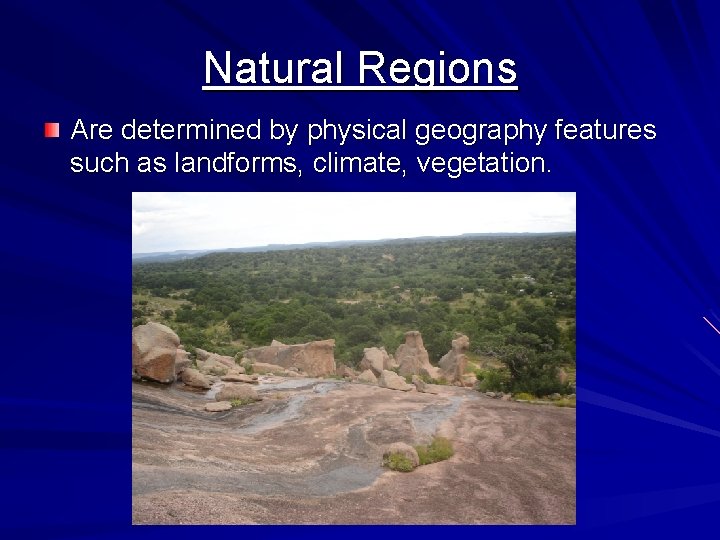
Natural Regions Are determined by physical geography features such as landforms, climate, vegetation.
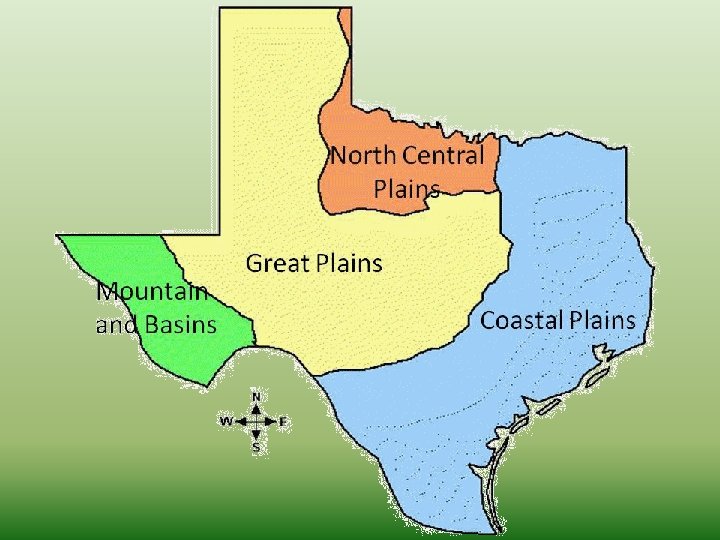
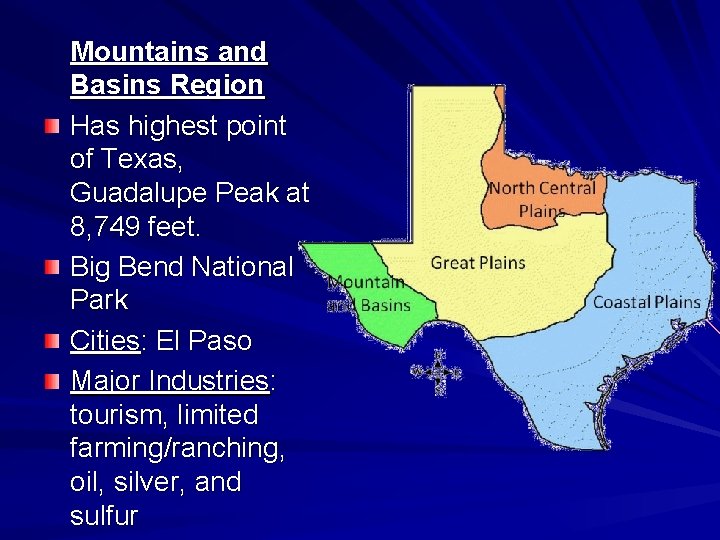
The 4 natural regions of Texas are: North Central Plains -Just to the west of Dallas, includes Ft. Worth Coastal Plains – This region is along the Gulf of Mexico Great Plains – Mostly the northern part of the state or the Panhandle Mountains and Basins – West Texas where the Mountains are.
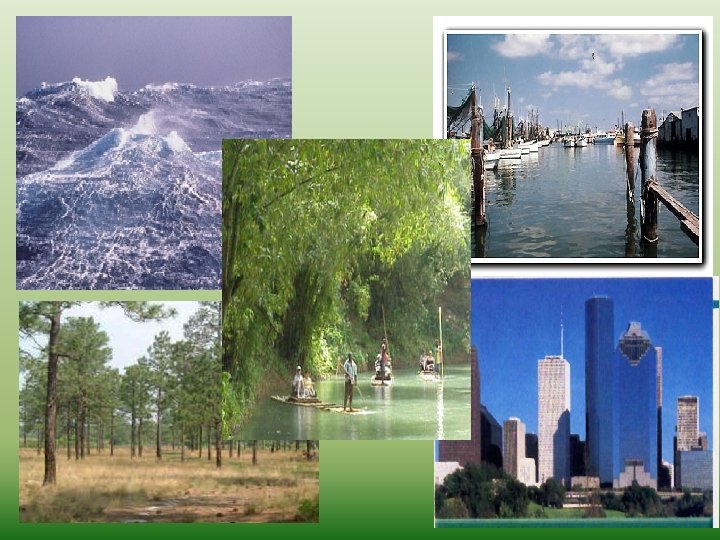
Coastal Plains Region The largest of all the four regions. Makes up nearly 1/3 of Texas 2/3 rds of all Texans live in the Coastal Plains Industries include oil, natural gas, and seafood. Cities in the Coastal Plains: – Dallas – Houston – San Antonio
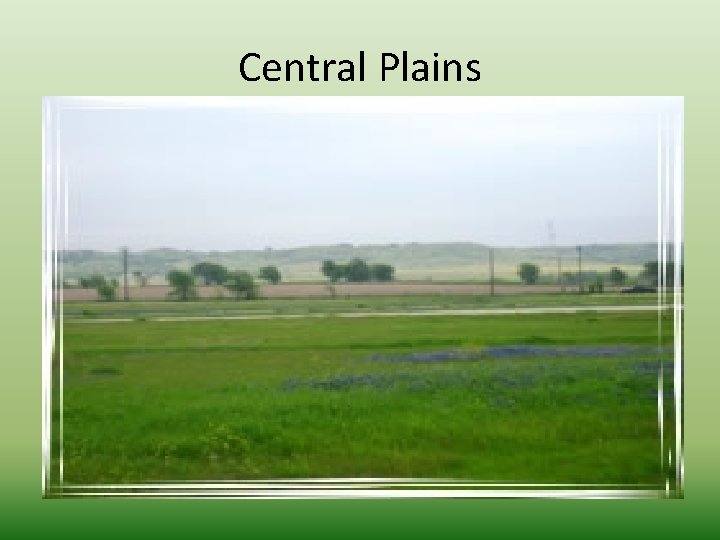
Central Plains
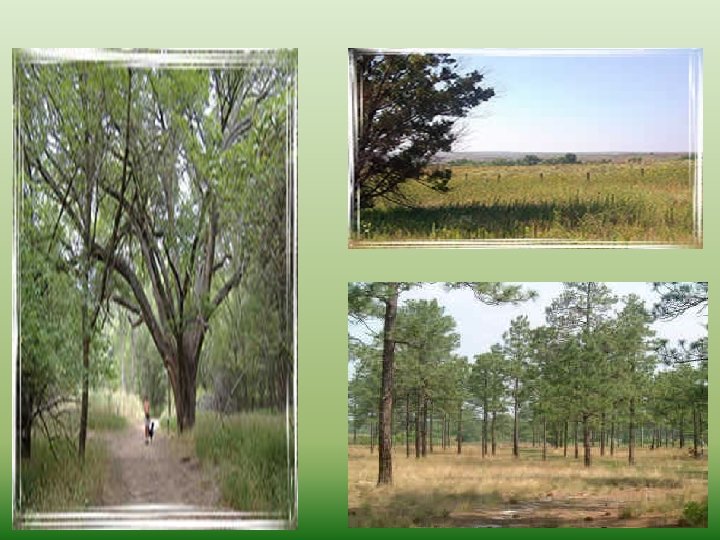
North Central Plains The North Central Plains is an area of plains covered by small oak trees, brush, and scattered grasses. The Region gets higher in elevation and dryer the farther the west you go Cities: -Ft. Worth -Abilene -Wichita Falls
North Central Plains Major Industries – Transportation Center, agriculture, livestock, meat and dairy processing centers
Great Plains The Great Plains lies in the northern and central part of the state. It includes the Panhandle and the Hill Country (near Austin) Major Industries – Oil, natural gas, farming and ranching
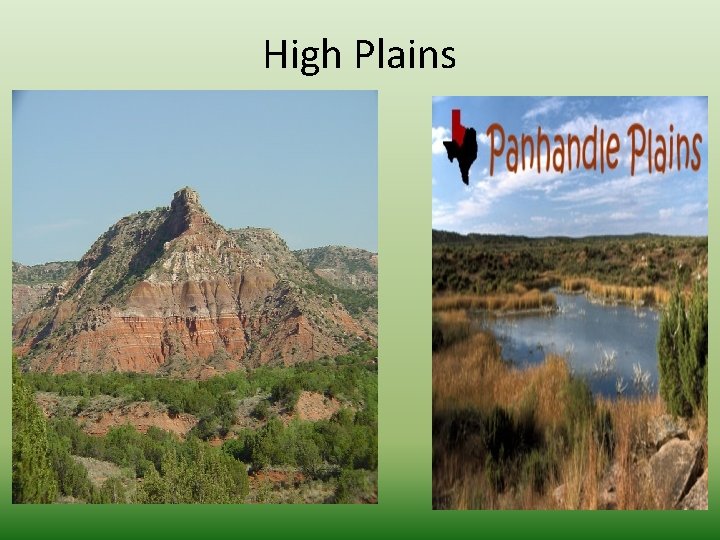
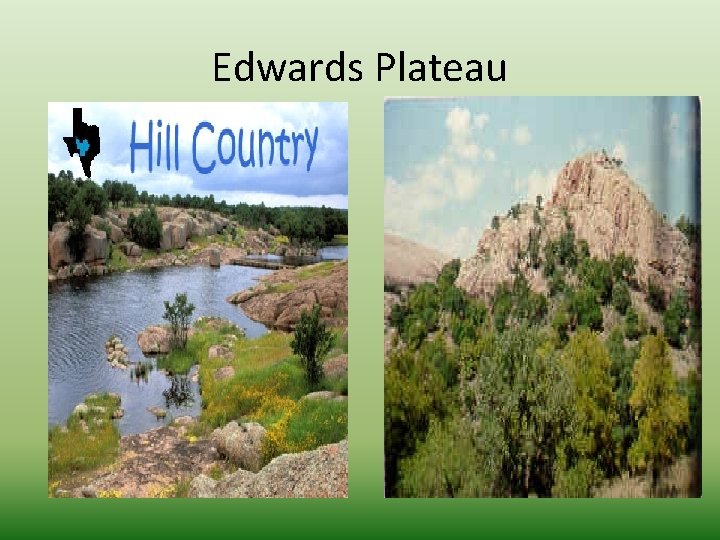
Great Plains High Plains – (Lubbock, Amarillo, Odessa and Midland) – Flat, open prairie – Little rainfall in High Plains, farmers pump water from Ogallala Aquifer to irrigate Edwards Plateau – (Austin) – hilly area (rocky landscape)
High Plains
Edwards Plateau
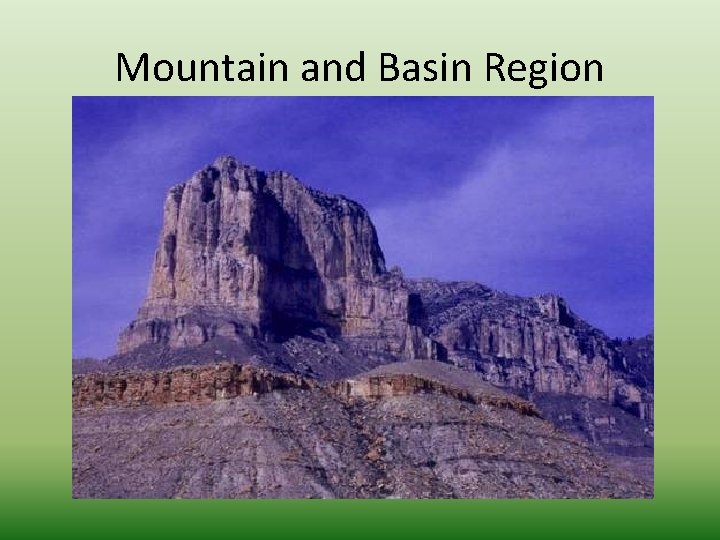
Mountain and Basin Region
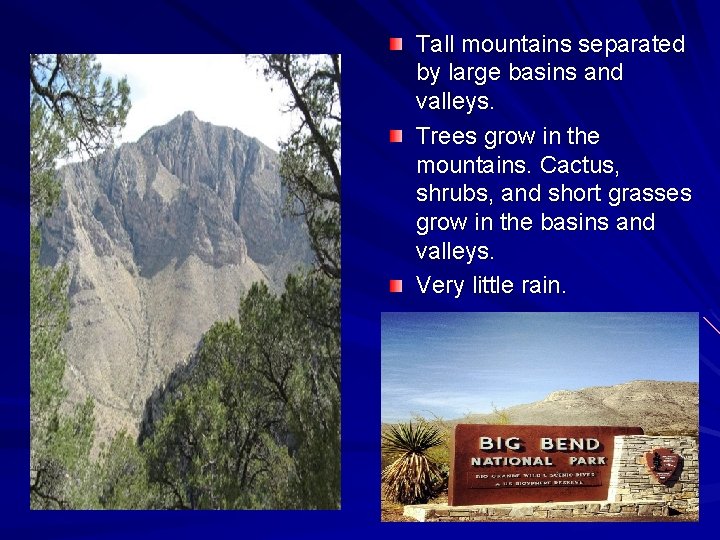
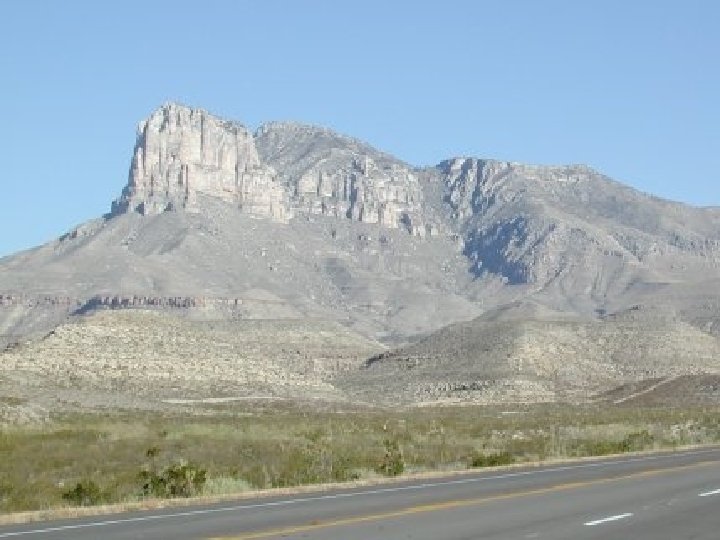
Mountains and Basins Region Has highest point of Texas, Guadalupe Peak at 8, 749 feet. Big Bend National Park Cities: El Paso Major Industries: tourism, limited farming/ranching, oil, silver, and sulfur
Tall mountains separated by large basins and valleys. Trees grow in the mountains. Cactus, shrubs, and short grasses grow in the basins and valleys. Very little rain.