
Regions in World History How do you think
- Slides: 23
Regions in World History
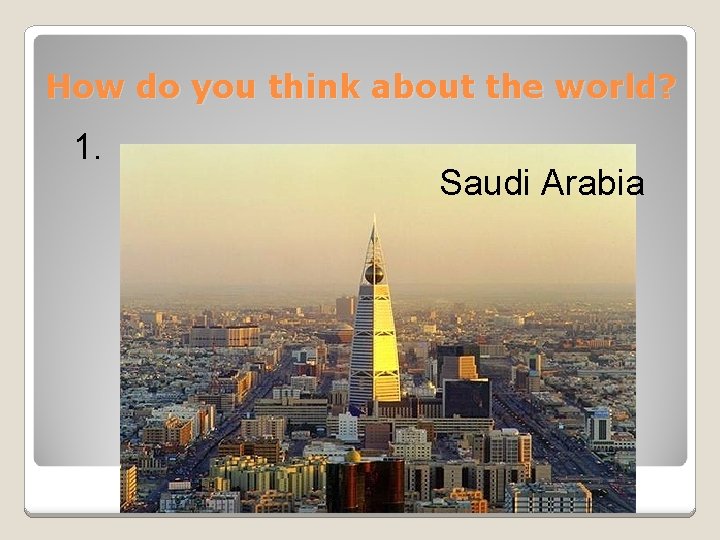
How do you think about the world? 1. Saudi Arabia
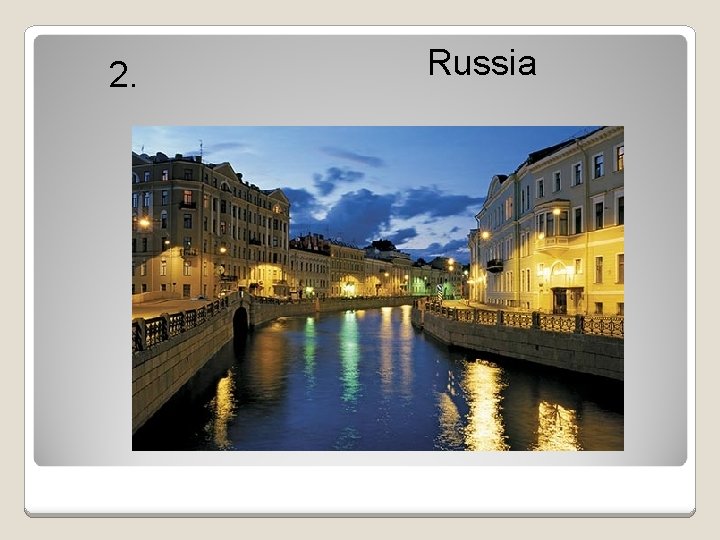
2. Russia
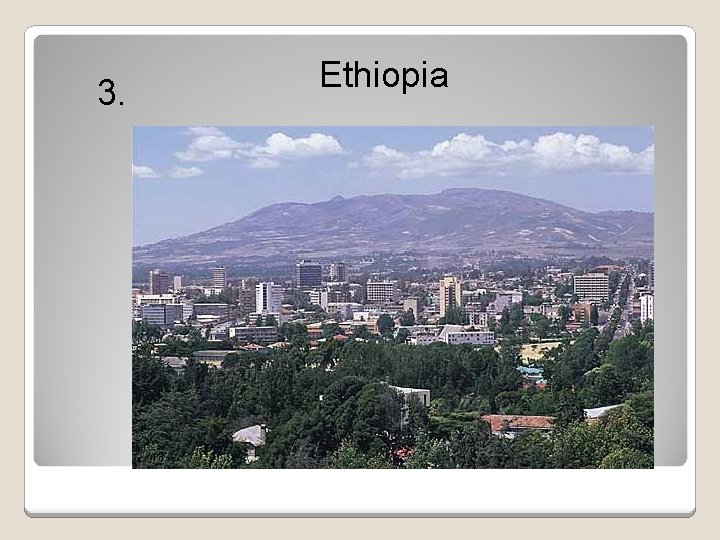
3. Ethiopia
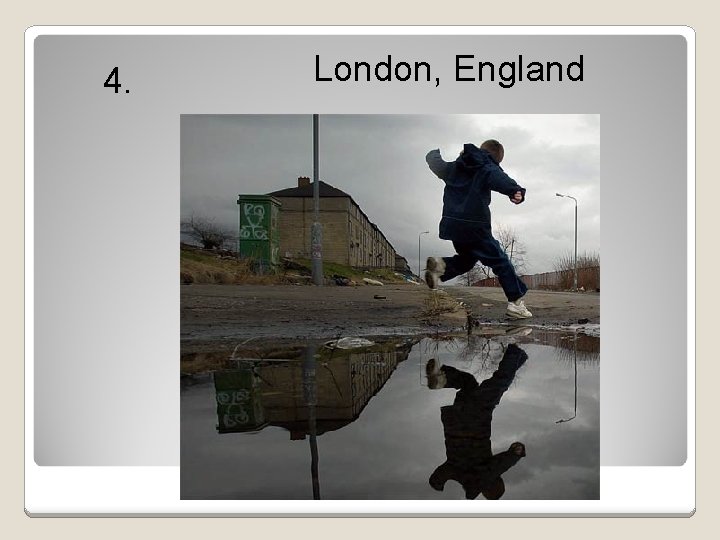
4. London, England
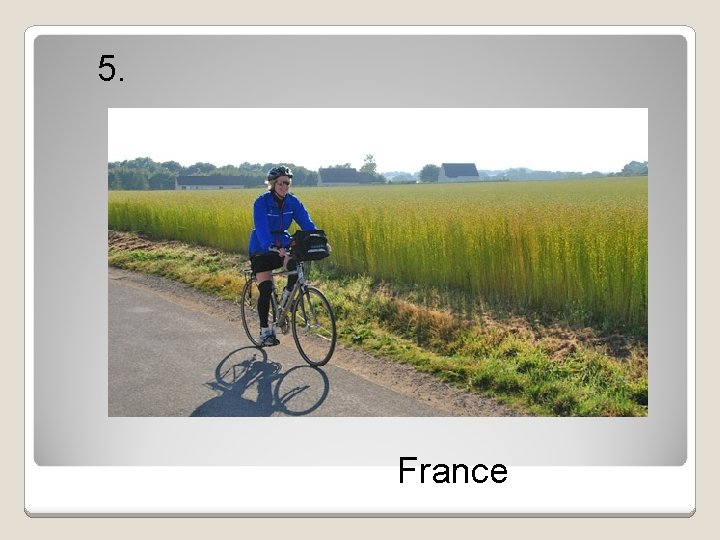
5. France
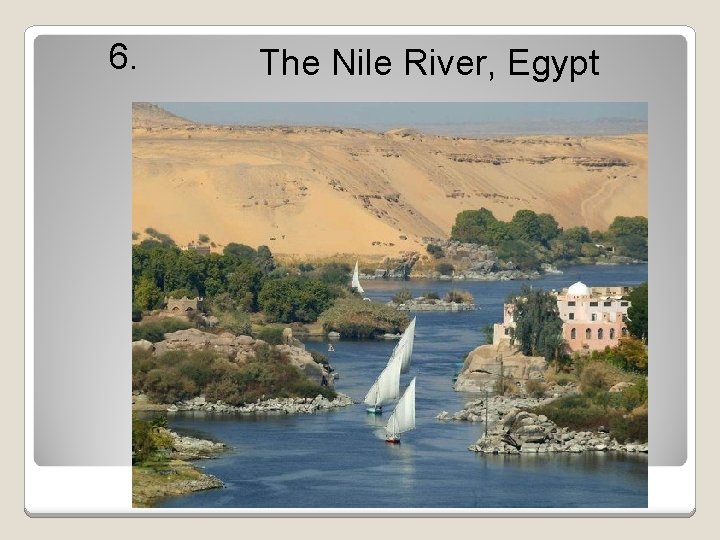
6. The Nile River, Egypt
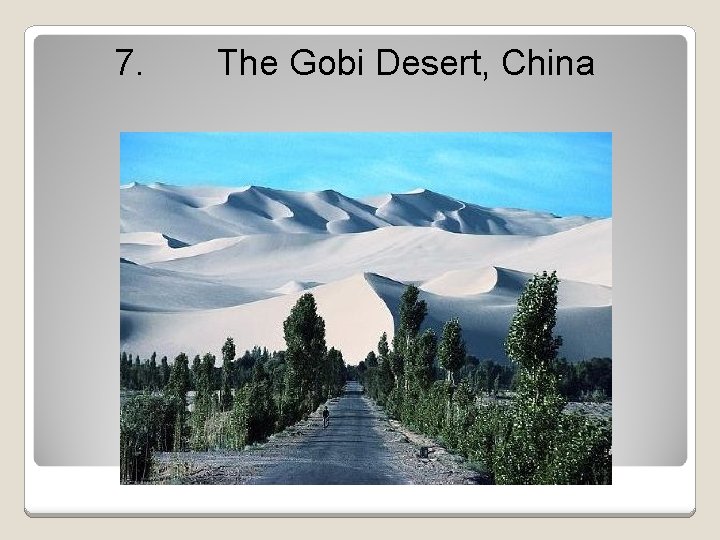
7. The Gobi Desert, China
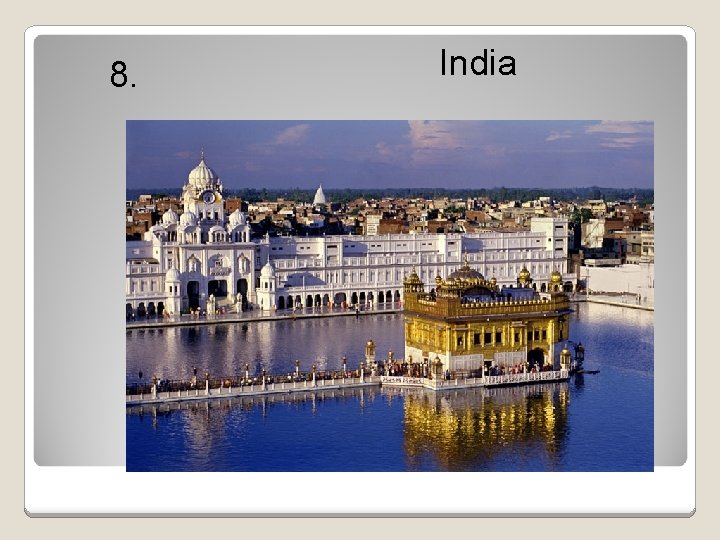
8. India
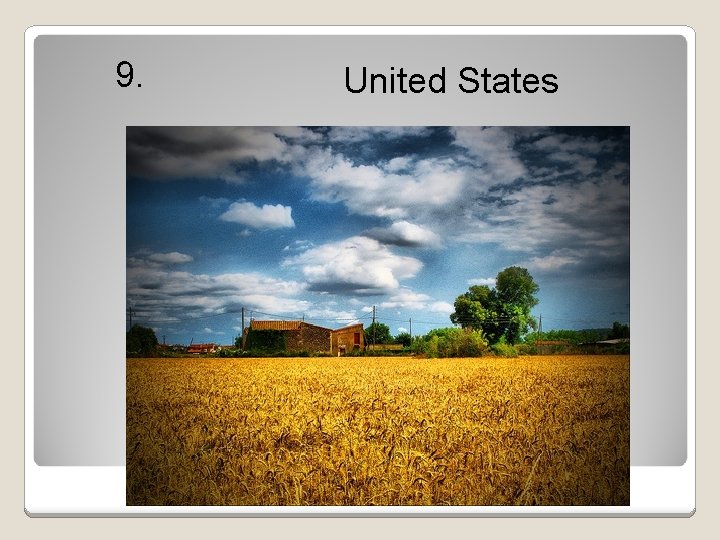
9. United States
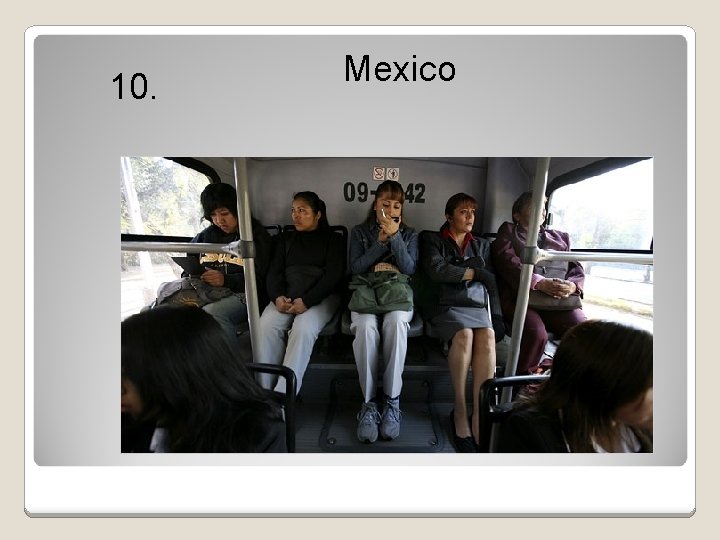
10. Mexico
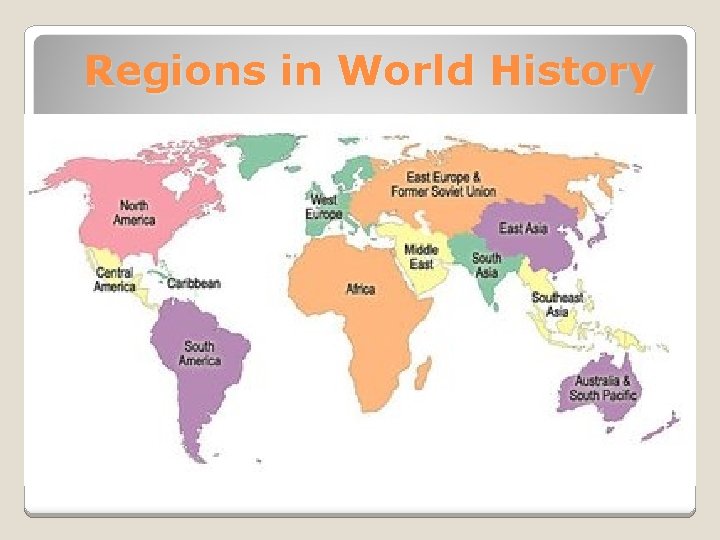
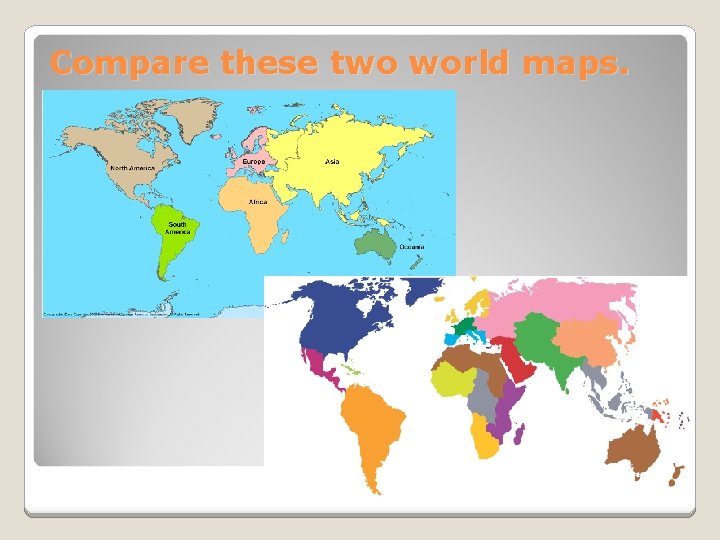
How do “Regions” play a part in AP World History �Regions divide the world into groups. �These groups help us think about how different places interacted and changed. �Whatever we study, you always want to be aware of which regions are involved in the event. �One of the most important things you will study is how regions changed over time.
What is a Region? �A region is most often unified according to: ◦ Geography �Example… ◦ History �Example… ◦ Culture �Example… ◦ Religion �Example… ◦ Ethnicity �Example…
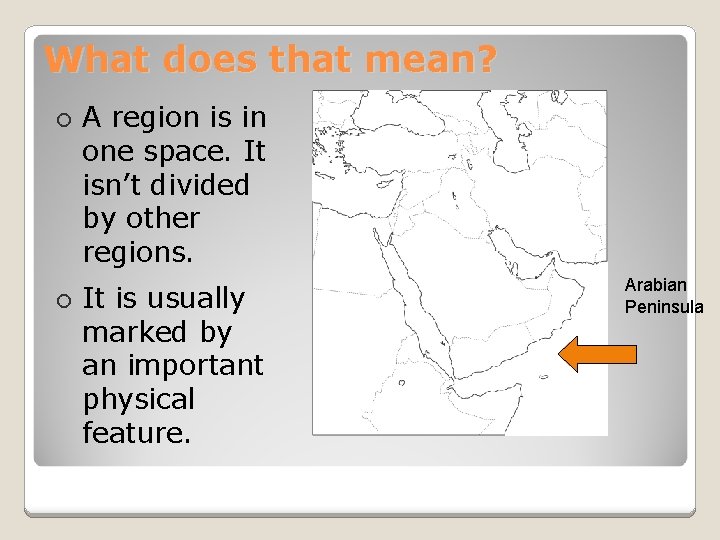
What does that mean? ¡ ¡ A region is in one space. It isn’t divided by other regions. It is usually marked by an important physical feature. Arabian Peninsula
Meaning of “Region” (cont. ) �Regions often share a lot of history. ◦ It’s been controlled by one empire, gone through the same conflicts, influenced by the same events, etc. �Culturally, Religiously, & Ethnically: ◦ A region shares a common feature, but that does NOT mean that everyone fits that exactly.
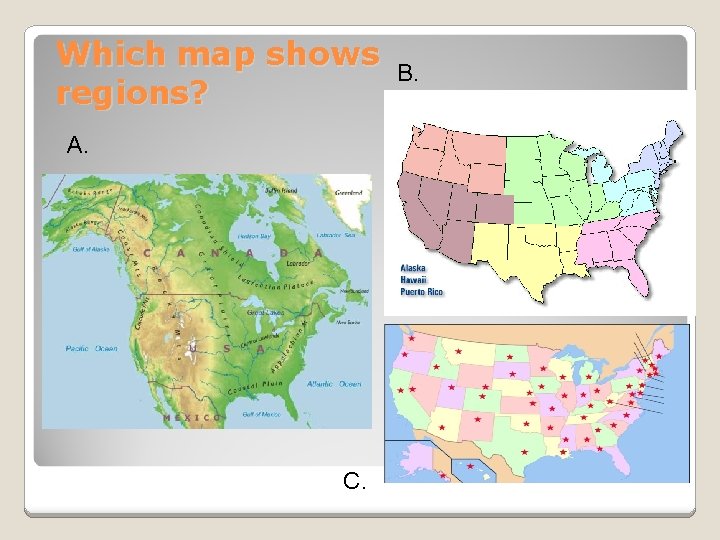
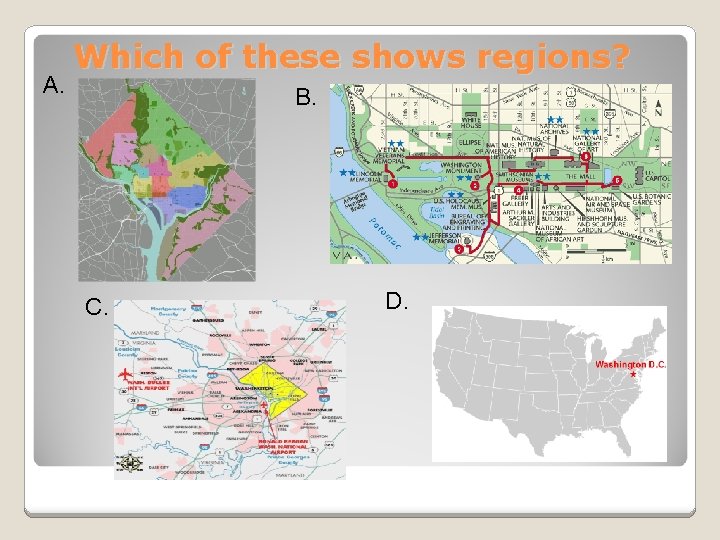
Which map shows regions? A. C. B.
A. Which of these shows regions? B. C. D.
Compare these two world maps.
Southwest Asia (aka Middle East) Shared history: � ◦ ◦ ◦ Human civilization began here in Mesopotamia Many major religions began here: Judaism, Christianity, and Islam Area was often ruled by one empire Religion: Islam � Economy: Depends on exporting oil � Ethnicity: Mostly Arab, but includes many minorities and ethnic warfare has been a problem �
South Asia � Shared history: ◦ ◦ ◦ One of the earliest civilizations—Indus River Hearth of two religions: Hinduism and Buddhism Colonized by Britain Religion: Hindu since 2000 BCE. Now large number of Muslims. � Economy: Growing middle-class with a rapidly developing modern economy � Population: Second largest population in the world �
East Asia � Shared history: ◦ ◦ ◦ Early civilization—China built strong empires and controlled/influenced the rest of the region Ideas of Confucianism spread around the region Religion: Confucianism, Buddhism � Economy: Wealthy; center of world trade and manufacturing � Population: Largest population in the world �
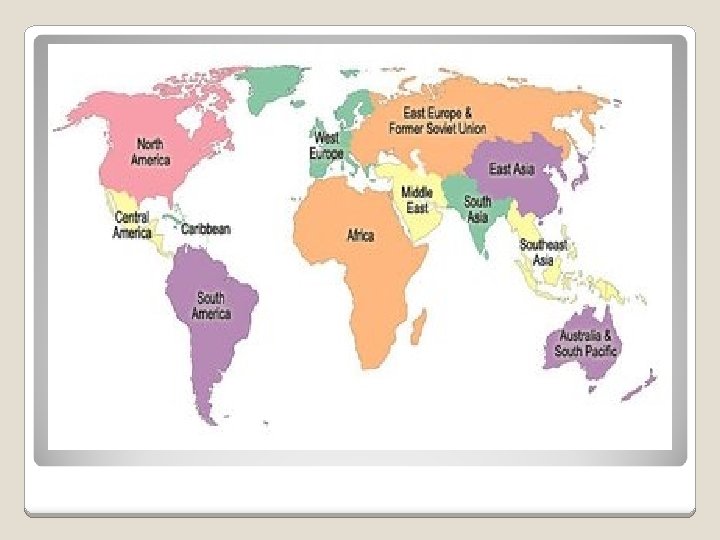
AP World Regional Map �Study the AP World Regional map and complete the regional question worksheet. �We will share and check answers when you finish. �If you finish early, raise your hand ask for tonight’s homework.