
REGIONS Care update AProf Anna Ranta Lead Investigator



- Slides: 22
REGIONS Care – update A/Prof Anna Ranta – Lead Investigator Stephanie Thompson – Study Coordinator
Outline of REGIONS Care Observational study monitoring stroke care in NZ public hospitals Objectives: Impact of DHB size and location on stroke service access & stroke and related health outcomes Impact of ethnicity on stroke service access and stroke and related health outcomes
What have we done to date? 28 hospitals Data cleaning underway – missing data Data analysis Present results at Rehab Quality Day – June 6 th 2548 entries – duplicates, nonstroke diagnosis 1086 consented for extended follow-up
What have we done so far? 955 calls completed Attempted to contact 1078 participants North and South Island locations 4 -6 participants per group Online surveys
Study Coordinator role
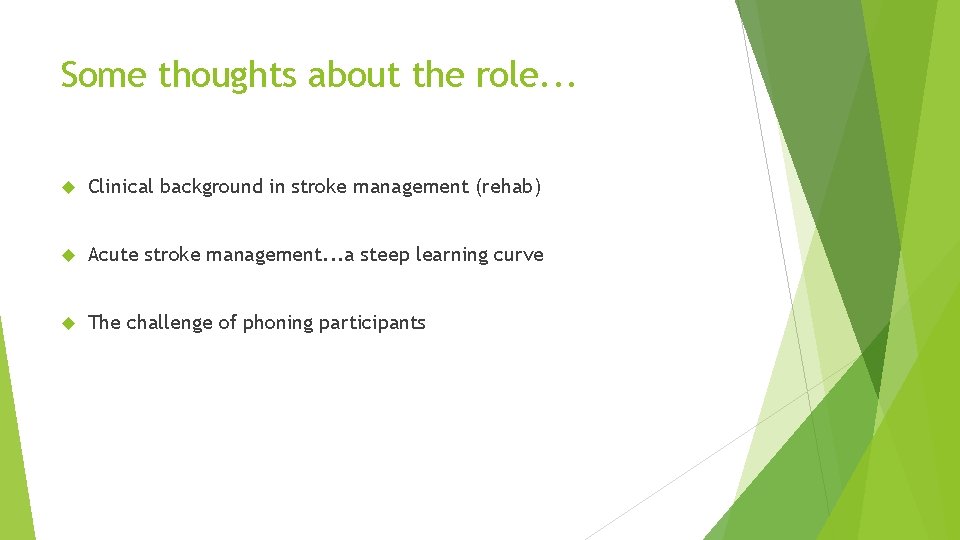
Some thoughts about the role. . . Clinical background in stroke management (rehab) Acute stroke management. . . a steep learning curve The challenge of phoning participants
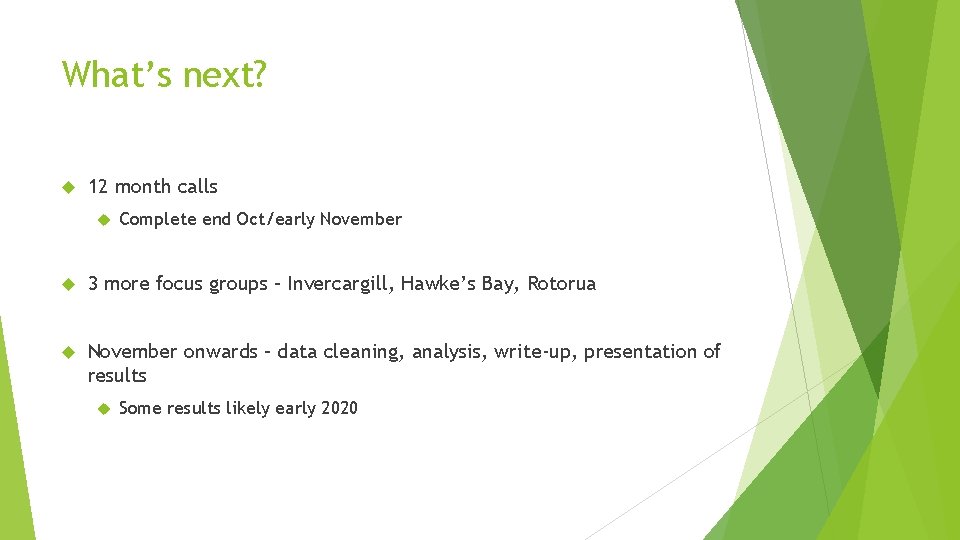
What’s next? 12 month calls Complete end Oct/early November 3 more focus groups – Invercargill, Hawke’s Bay, Rotorua November onwards – data cleaning, analysis, write-up, presentation of results Some results likely early 2020
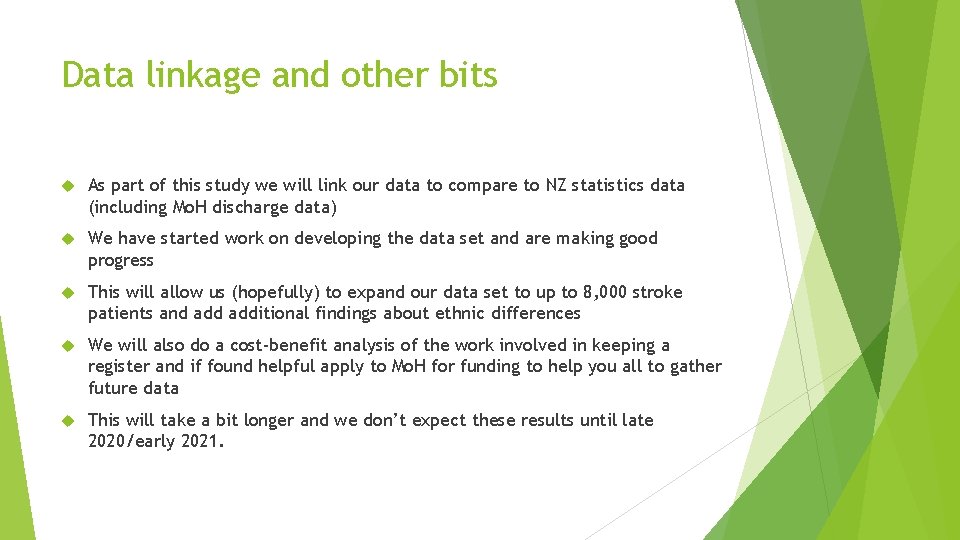
Data linkage and other bits As part of this study we will link our data to compare to NZ statistics data (including Mo. H discharge data) We have started work on developing the data set and are making good progress This will allow us (hopefully) to expand our data set to up to 8, 000 stroke patients and additional findings about ethnic differences We will also do a cost-benefit analysis of the work involved in keeping a register and if found helpful apply to Mo. H for funding to help you all to gather future data This will take a bit longer and we don’t expect these results until late 2020/early 2021.
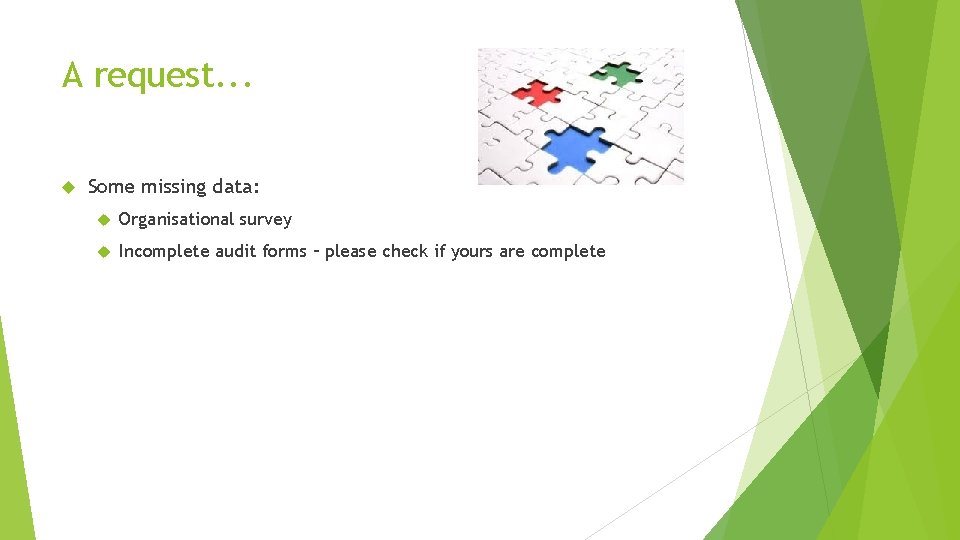
A request. . . Some missing data: Organisational survey Incomplete audit forms – please check if yours are complete
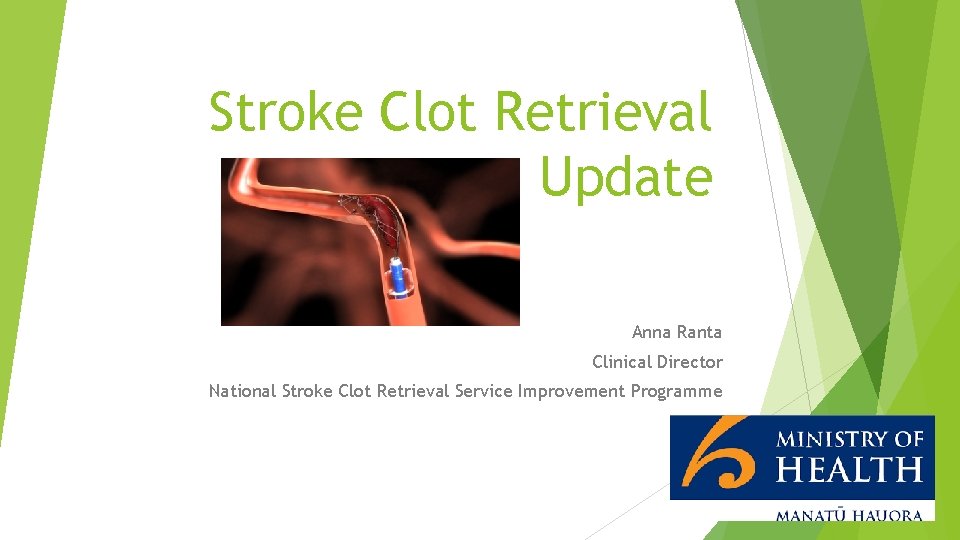
Stroke Clot Retrieval Update Anna Ranta Clinical Director National Stroke Clot Retrieval Service Improvement Programme
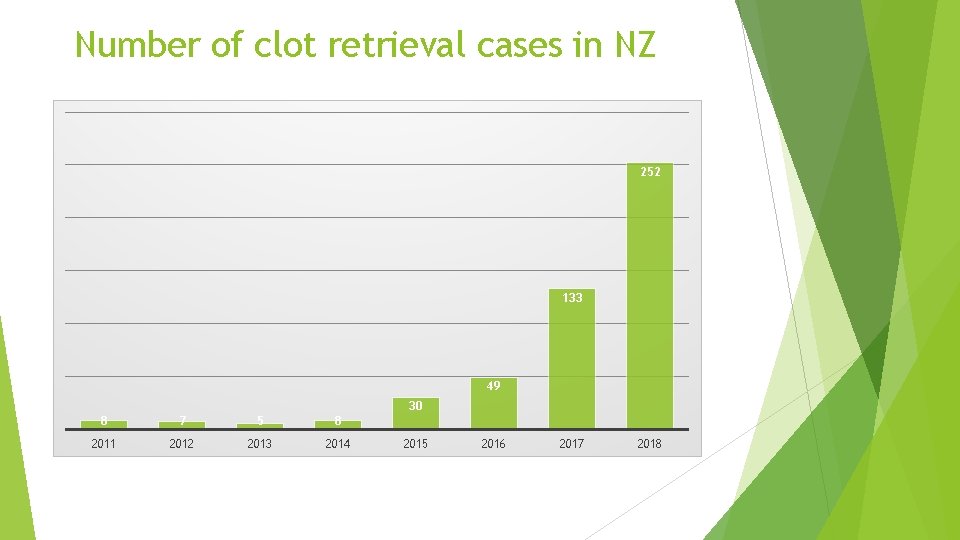
Number of clot retrieval cases in NZ 252 133 49 30 8 7 5 8 2011 2012 2013 2014 2015 2016 2017 2018
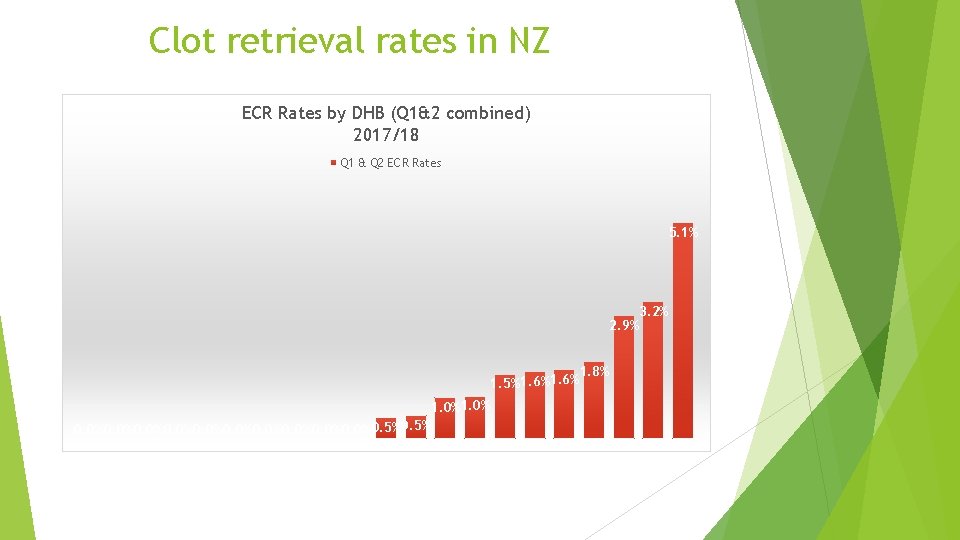
Clot retrieval rates in NZ ECR Rates by DHB (Q 1&2 combined) 2017/18 Q 1 & Q 2 ECR Rates 5. 1% 2. 9% 1. 5%1. 6% 1. 0% 0. 0%0. 5% 1. 8% 3. 2%
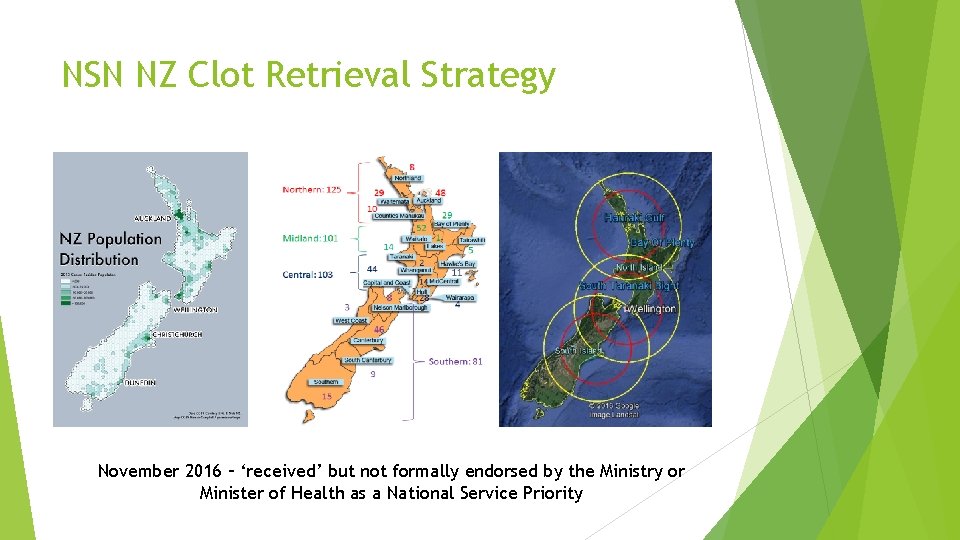
NSN NZ Clot Retrieval Strategy November 2016 – ‘received’ but not formally endorsed by the Ministry or Minister of Health as a National Service Priority
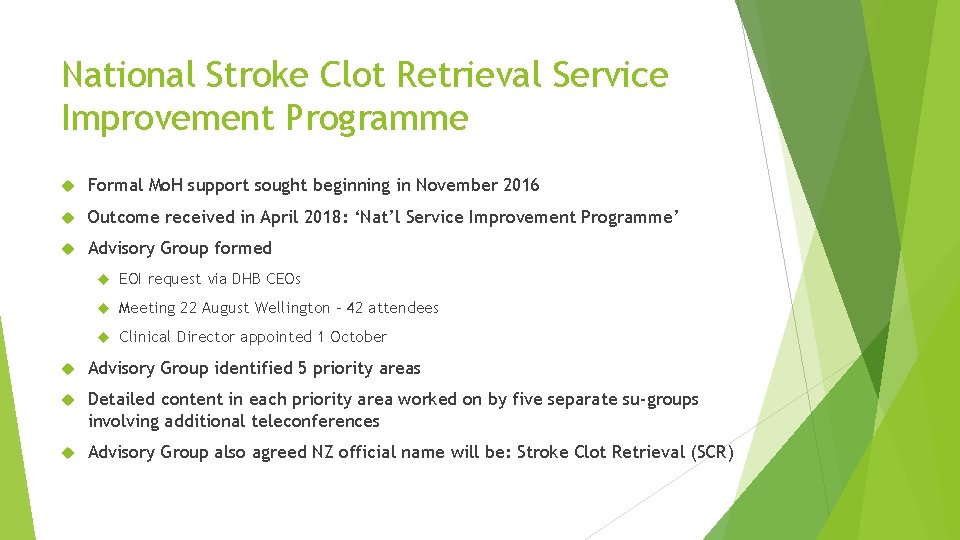
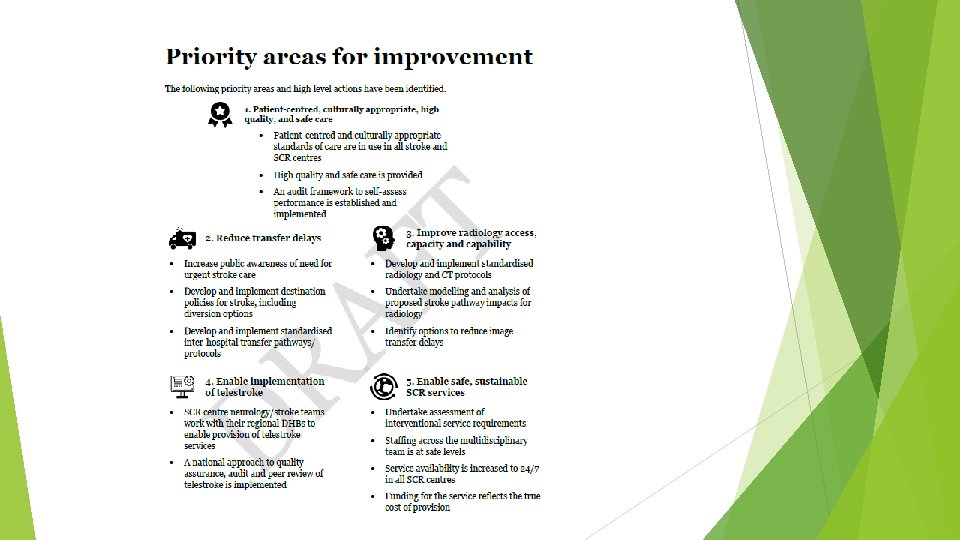
National Stroke Clot Retrieval Service Improvement Programme Formal Mo. H support sought beginning in November 2016 Outcome received in April 2018: ‘Nat’l Service Improvement Programme’ Advisory Group formed EOI request via DHB CEOs Meeting 22 August Wellington – 42 attendees Clinical Director appointed 1 October Advisory Group identified 5 priority areas Detailed content in each priority area worked on by five separate su-groups involving additional teleconferences Advisory Group also agreed NZ official name will be: Stroke Clot Retrieval (SCR)
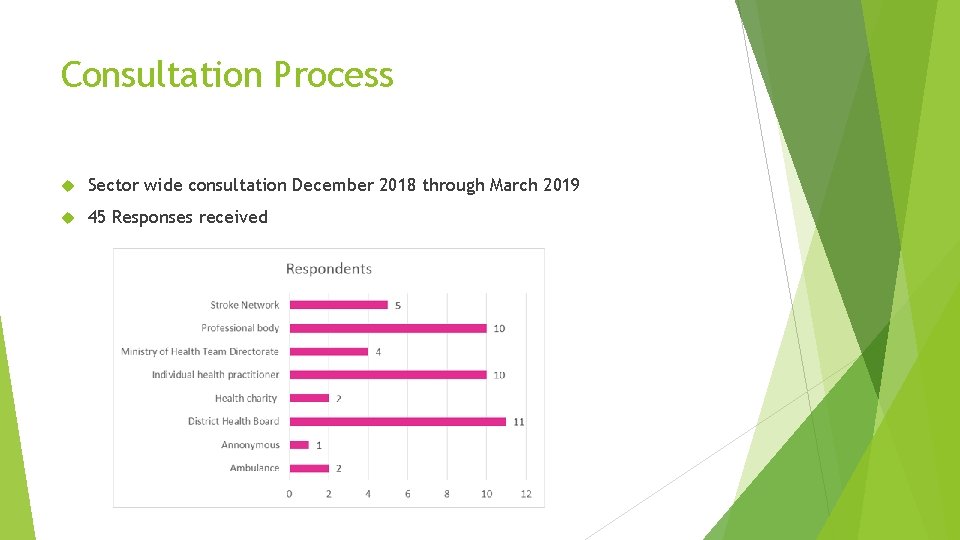
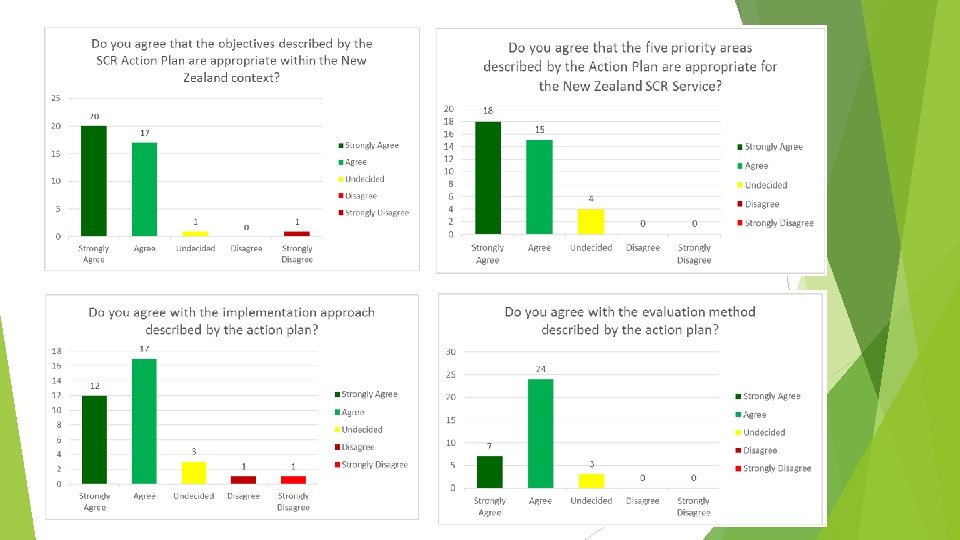
Consultation Process Sector wide consultation December 2018 through March 2019 45 Responses received
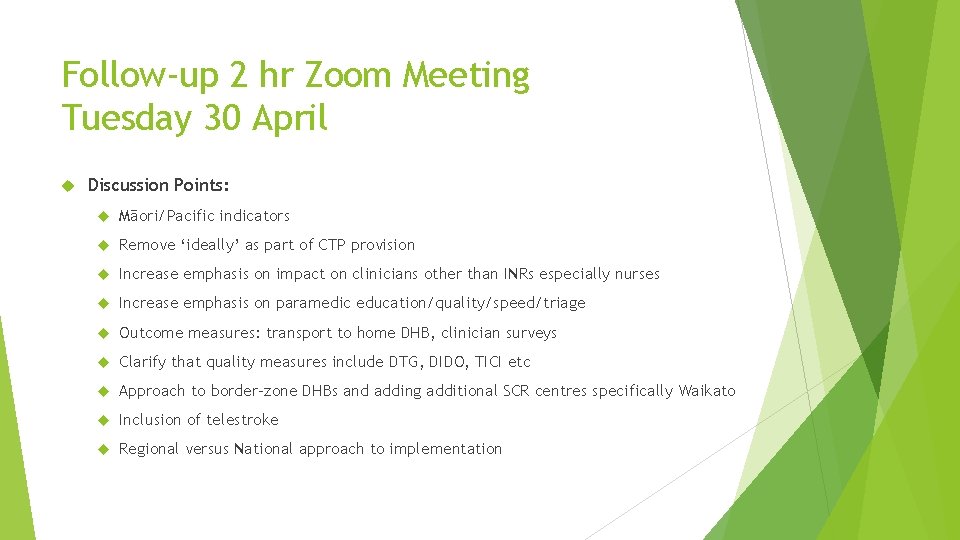
Follow-up 2 hr Zoom Meeting Tuesday 30 April Discussion Points: Māori/Pacific indicators Remove ‘ideally’ as part of CTP provision Increase emphasis on impact on clinicians other than INRs especially nurses Increase emphasis on paramedic education/quality/speed/triage Outcome measures: transport to home DHB, clinician surveys Clarify that quality measures include DTG, DIDO, TICI etc Approach to border-zone DHBs and adding additional SCR centres specifically Waikato Inclusion of telestroke Regional versus National approach to implementation
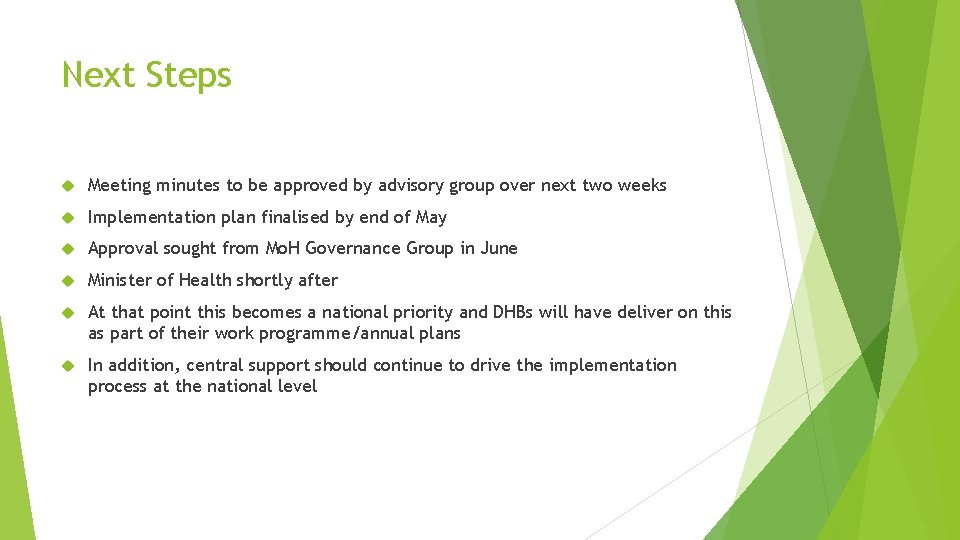
Next Steps Meeting minutes to be approved by advisory group over next two weeks Implementation plan finalised by end of May Approval sought from Mo. H Governance Group in June Minister of Health shortly after At that point this becomes a national priority and DHBs will have deliver on this as part of their work programme/annual plans In addition, central support should continue to drive the implementation process at the national level
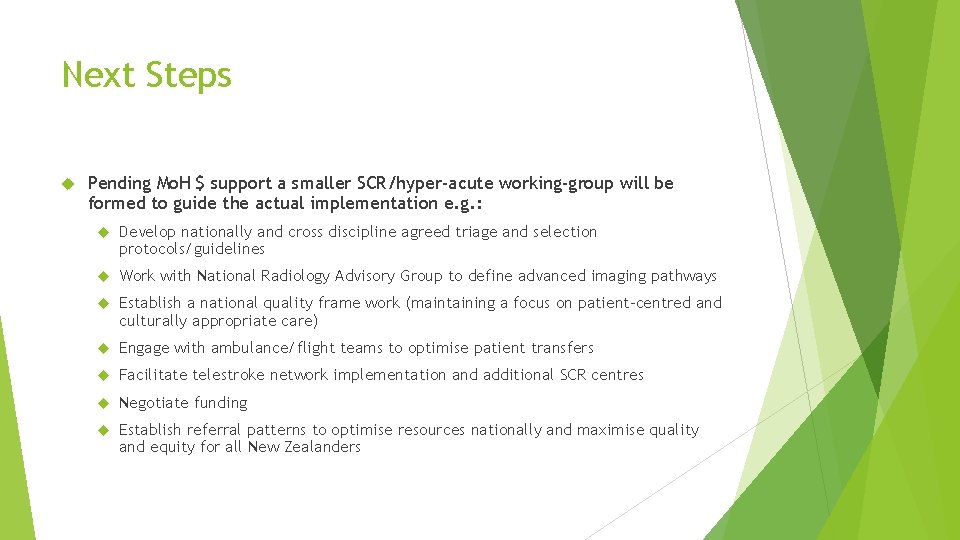
Next Steps Pending Mo. H $ support a smaller SCR/hyper-acute working-group will be formed to guide the actual implementation e. g. : Develop nationally and cross discipline agreed triage and selection protocols/guidelines Work with National Radiology Advisory Group to define advanced imaging pathways Establish a national quality frame work (maintaining a focus on patient-centred and culturally appropriate care) Engage with ambulance/flight teams to optimise patient transfers Facilitate telestroke network implementation and additional SCR centres Negotiate funding Establish referral patterns to optimise resources nationally and maximise quality and equity for all New Zealanders
Any Questions?