
REGIONAL PLANNING Lesson Introduction 1 a DO NOW
- Slides: 21
REGIONAL PLANNING Lesson: Introduction 1 a
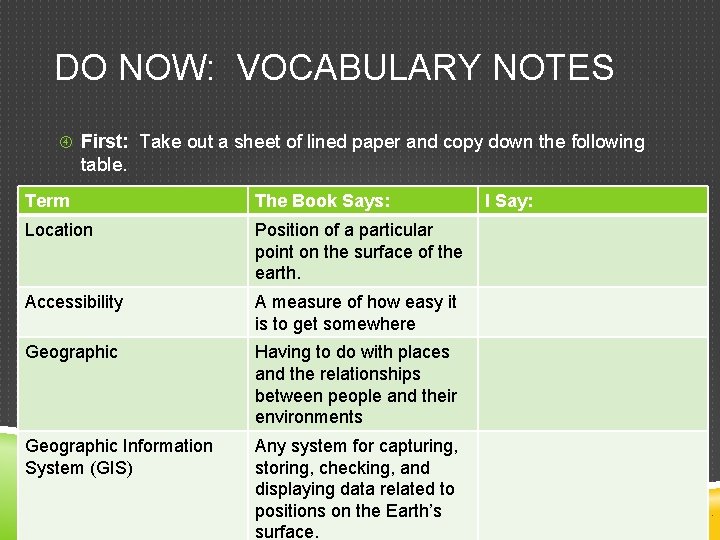
DO NOW: VOCABULARY NOTES First: Take out a sheet of lined paper and copy down the following table. Second: Then complete the “I Says: say” box Term The Book Location Position of a particular point on the surface of the earth. Accessibility A measure of how easy it is to get somewhere Geographic Having to do with places and the relationships between people and their environments Geographic Information System (GIS) Any system for capturing, storing, checking, and displaying data related to positions on the Earth’s surface. I Say:
UNIT ESSENTIAL QUESTION How can mapped data be used to identify and analyze geographic patterns?
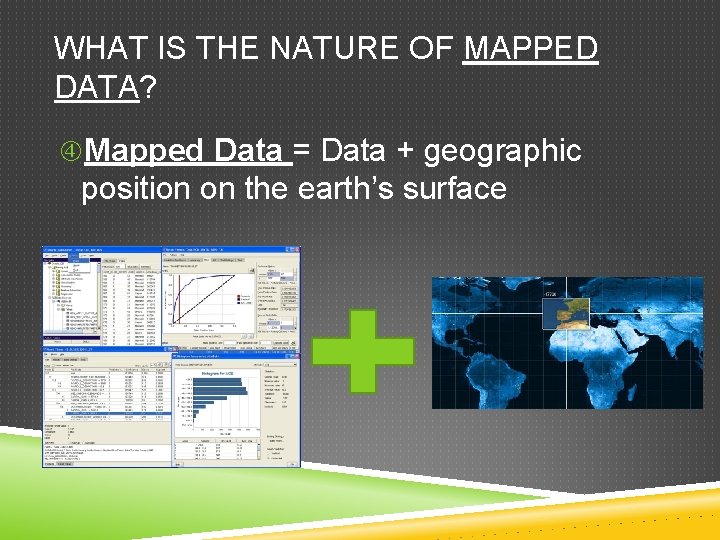
WHAT IS THE NATURE OF MAPPED DATA? Mapped Data = Data + geographic position on the earth’s surface
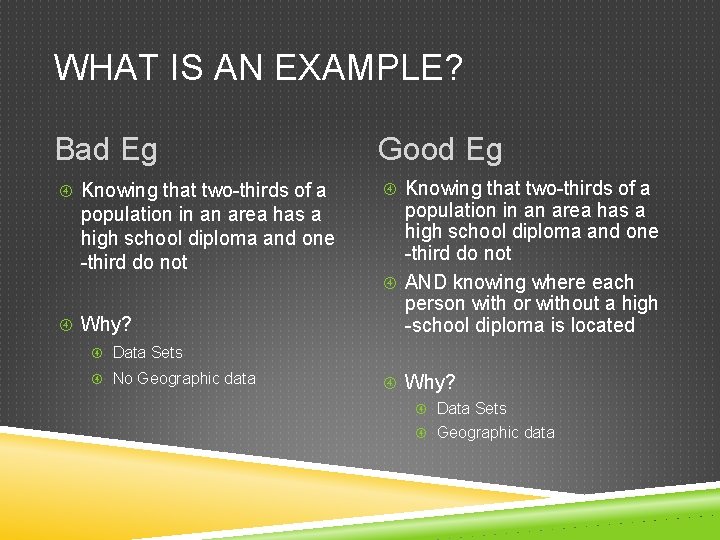
WHAT IS AN EXAMPLE? Bad Eg Knowing that two-thirds of a population in an area has a high school diploma and one -third do not Why? Good Eg Knowing that two-thirds of a population in an area has a high school diploma and one -third do not AND knowing where each person with or without a high -school diploma is located Data Sets No Geographic data Why? Data Sets Geographic data
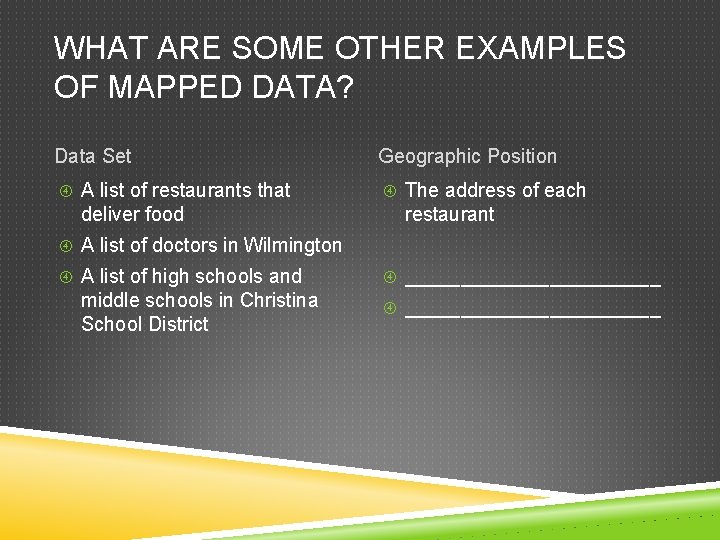
WHAT ARE SOME OTHER EXAMPLES OF MAPPED DATA? Data Set A list of restaurants that deliver food Geographic Position The address of each restaurant A list of doctors in Wilmington A list of high schools and middle schools in Christina School District _______________________
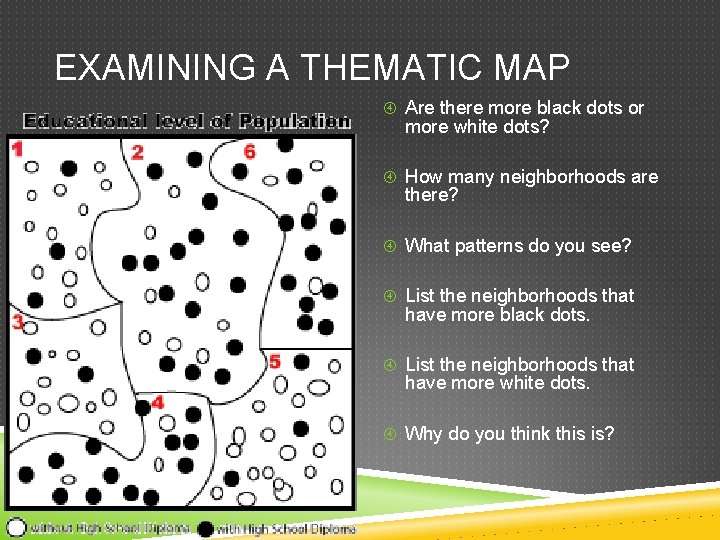
EXAMINING A THEMATIC MAP Are there more black dots or more white dots? How many neighborhoods are there? What patterns do you see? List the neighborhoods that have more black dots. List the neighborhoods that have more white dots. Why do you think this is?
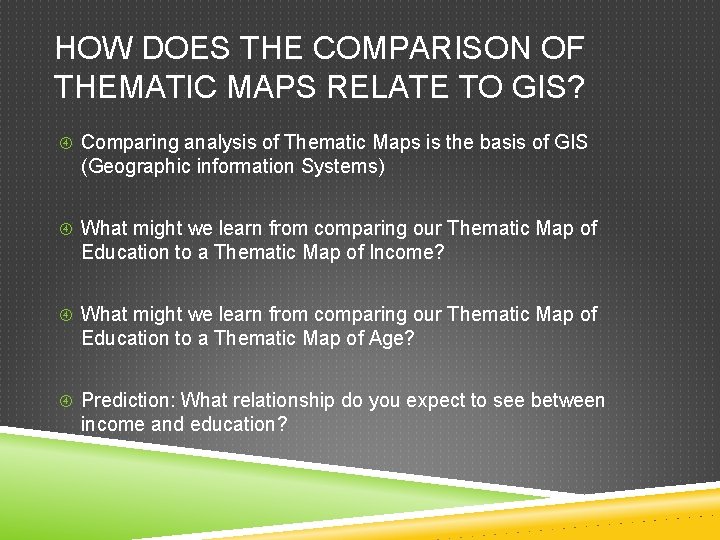
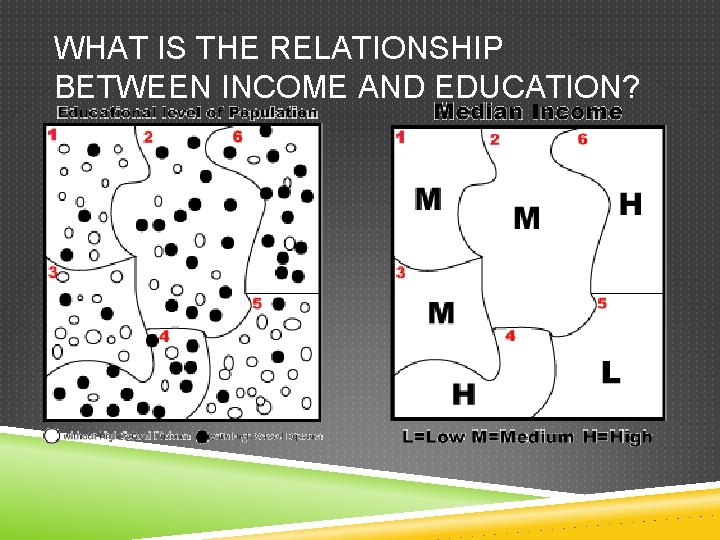
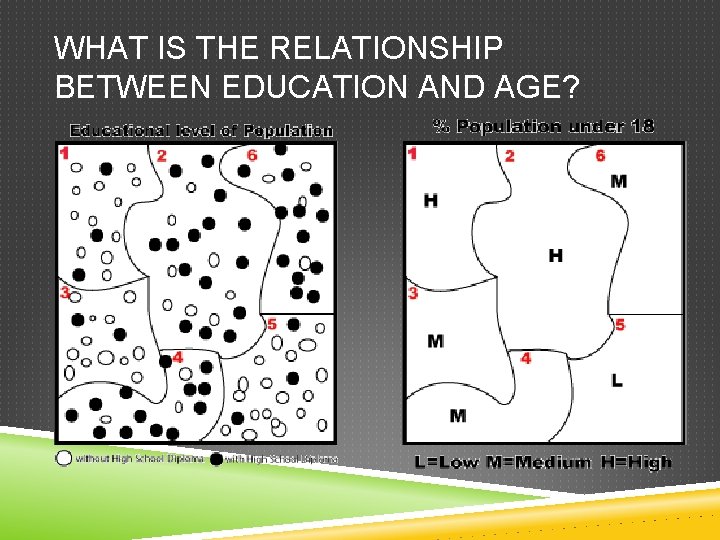
HOW DOES THE COMPARISON OF THEMATIC MAPS RELATE TO GIS? Comparing analysis of Thematic Maps is the basis of GIS (Geographic information Systems) What might we learn from comparing our Thematic Map of Education to a Thematic Map of Income? What might we learn from comparing our Thematic Map of Education to a Thematic Map of Age? Prediction: What relationship do you expect to see between income and education?
WHAT IS THE RELATIONSHIP BETWEEN INCOME AND EDUCATION?
WHAT IS THE RELATIONSHIP BETWEEN EDUCATION AND AGE?
ASSIGNMENT OBJECTIVES SWBAT to organize data into categories and then use those data categories to produce a thematic map. SWBAT analyze a thematic map.
DATA TO MAPS: WE NEED A DOCTOR! Lesson 1 Assignment
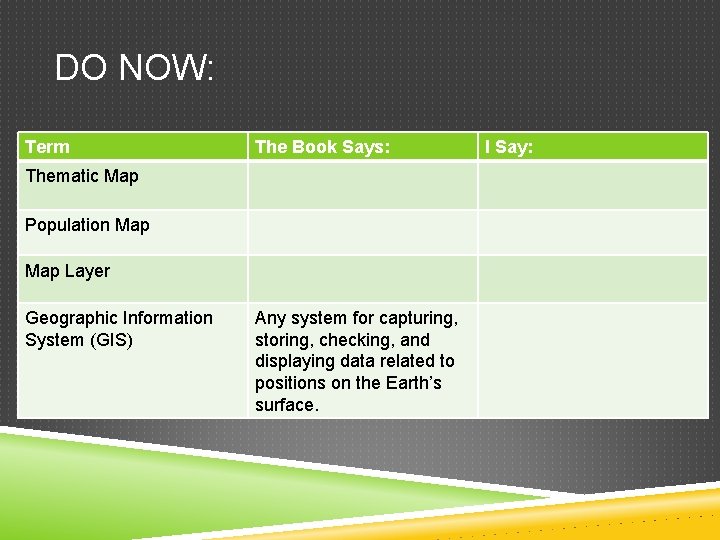
DO NOW: Term The Book Says: Thematic Map Population Map Layer Geographic Information System (GIS) Any system for capturing, storing, checking, and displaying data related to positions on the Earth’s surface. I Say:
JUNE BUGS Read article “June Bugs – Looking for Summer Fun” and answer the following questions in your notes: 1. Who are the main characters? 2. Which characters get sick? 3. What is the problem that Alex and Chris must solve?
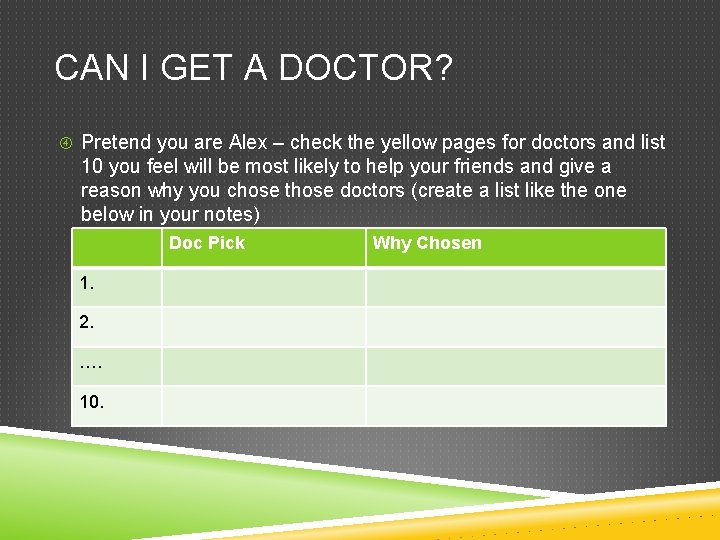
CAN I GET A DOCTOR? Pretend you are Alex – check the yellow pages for doctors and list 10 you feel will be most likely to help your friends and give a reason why you chose those doctors (create a list like the one below in your notes) Doc Pick 1. 2. …. 10. Why Chosen
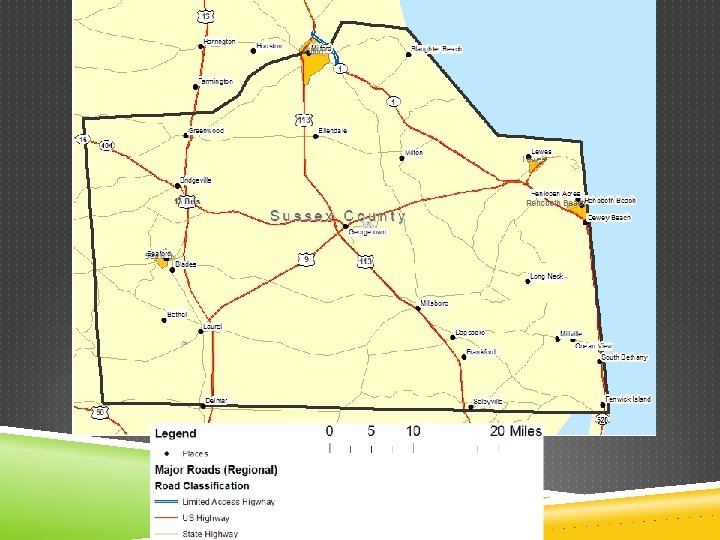
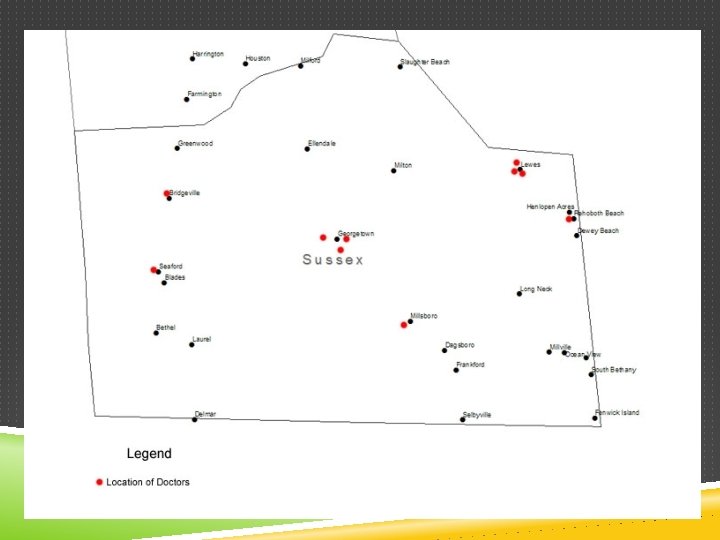
CAN I GET A DOCTOR? Read “June Bugs – Looking for the Way” Highlight the ones you had in common Which doctor is their best choice? Based on type of doctor, put them in priority order Plot the location on the map Create a new priority list and this time put the doctors in geographic order Take into consideration roads, congestion, transportation available, etc. Be sure to provide an EXPLANATION of why you put them in that order
CAN I GET A DOCTOR? Look at your two lists of doctors Priority based on type of doctor Priority based on location/accessibility Create a final list of doctors Chris should contact in priority order, with reasons why
MAPPING DATA Read the handout “FYE Mapping Data” List data that cannot be mapped List data that can be mapped Looking at your first list, what information would you need to make it “mapable”?
COMPLEMENTARITY Complementarity – the mutual exchange of people or goods among places usually occurs over the shortest possible distance