
REGIONAL INJURIES DEPT OF FM TOXICOLOGY SKHMC KULASEKHARAM

- Slides: 48
REGIONAL INJURIES DEPT: OF FM & TOXICOLOGY SKHMC; KULASEKHARAM
l Mechanical Injuries can assume varying significance depending upon the location & structure of organ involved l Let us discuss some common injuries in a region wise manner
HEAD Mechanical force can injureØ Scalp Ø Skull Ø Meninges Ø Brain Ø Or related vessels à Separately or in combination l
SCALP l l l Abrasions -Relatively uncommon due to the presence of hair Incised wounds-Bleed profusely but healing is rapid Lacerated wounds-Incised looking wounds-bleed profusely Contusions Punctured wounds
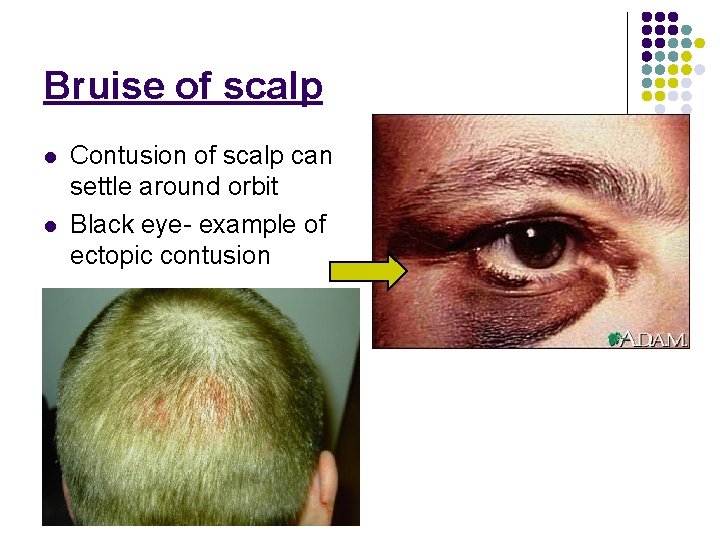
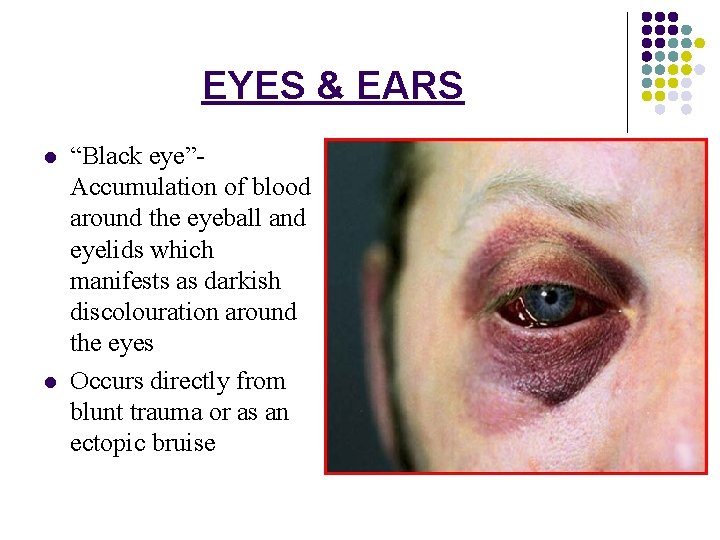
Bruise of scalp l l Contusion of scalp can settle around orbit Black eye- example of ectopic contusion
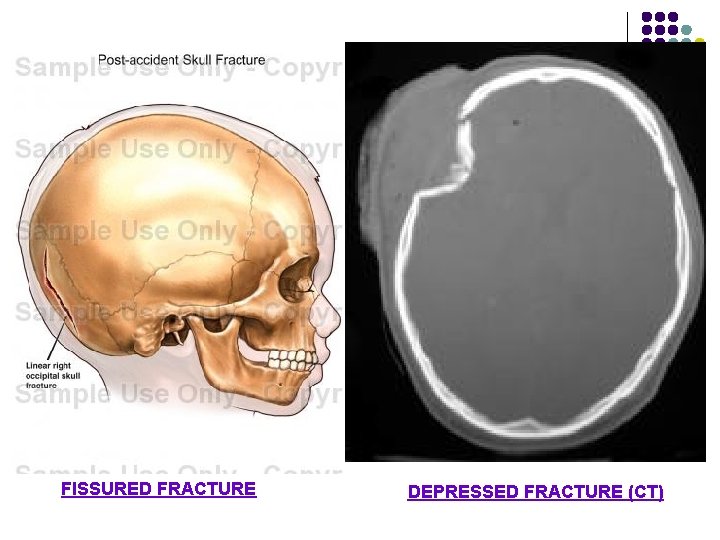
SKULL Due to v Direct impact v Indirect impact q If the impact is more than the elasticity of skull –Fracture results v Force of 5 foot pounds can fracture the skull v Also depends on relative thickness & strength of the bone in different regions l
Classification-Skull Fractures l l l l Fissured Ring Comminuted-With or without depression Gutter Pond Diastatic (sutural) Cut Perforating
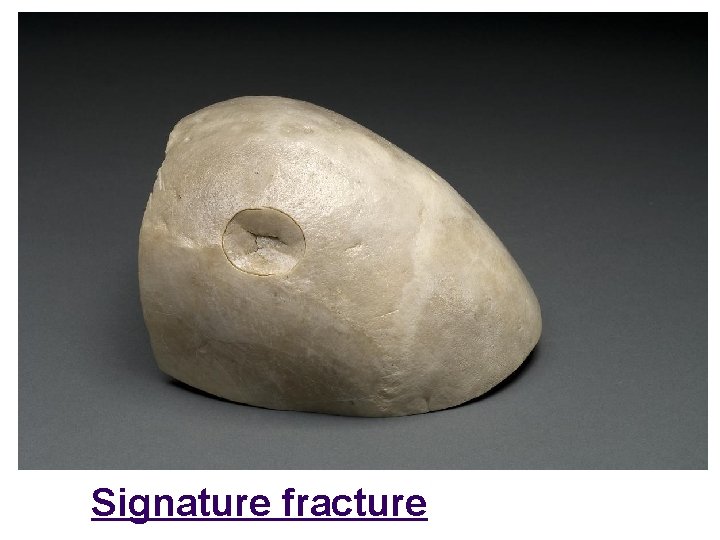
Signature fracture
FISSURED FRACTURE DEPRESSED FRACTURE (CT)
MENINGES l Any of the three meninges can be torn by edges of fragmented pieces of skull or by penetrating objects l Pia & arachnoid can also be ruptured due to accumulation of blood from beneath
FACE l Injuries of face which causes permanent disfiguration represent grievous hurt l Permanent disfiguration may be due to scar or keloid formation or due to derangement or loss of tissues
MOUTH AND NOSE Abrasions & contusions in or around mouth suggests forceful opening or forceful closure Superficial lacerations of lips Blunt impact Occasionally the lips may be cut off or bitten off as a revengeful act
l Blunt trauma as in the case of fall or blow can cause injuries to the bone & teeth l Injuries causing fracture of jaw bones or nasal bones or fracture/dislocation of teeth constitute grievous hurt l If the cribriform plate of ethmoid bone is fractured it causes anosmia l Partial detachment of nasal mucous membrane leading to nasal bleedingcan occur after blunt trauma to head even without direct involvement of nose
EYES & EARS l l “Black eye”Accumulation of blood around the eyeball and eyelids which manifests as darkish discolouration around the eyes Occurs directly from blunt trauma or as an ectopic bruise
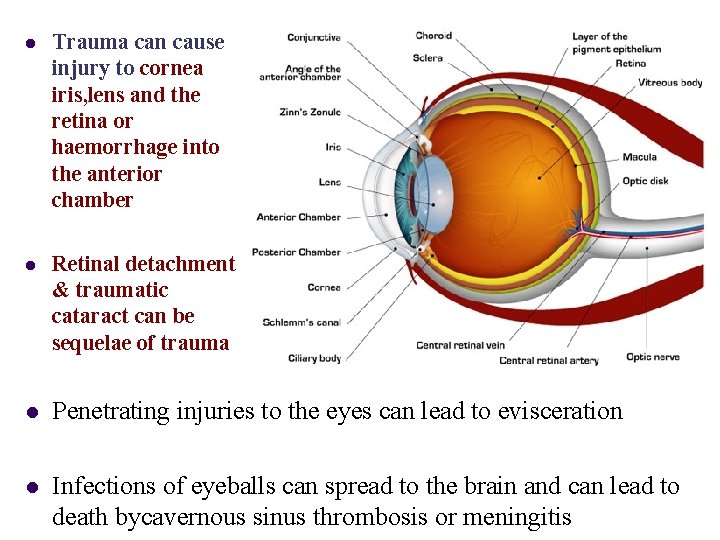
l Trauma can cause injury to cornea iris, lens and the retina or haemorrhage into the anterior chamber l Retinal detachment & traumatic cataract can be sequelae of trauma l Penetrating injuries to the eyes can lead to evisceration l Infections of eyeballs can spread to the brain and can lead to death bycavernous sinus thrombosis or meningitis
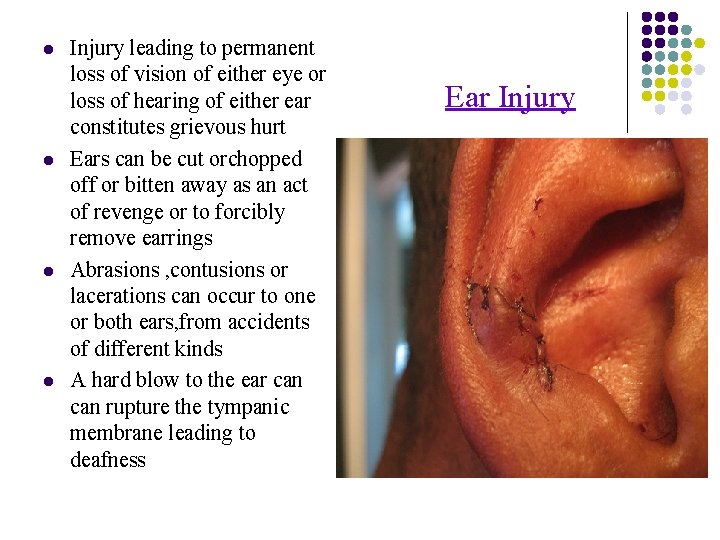
l l Injury leading to permanent loss of vision of either eye or loss of hearing of either ear constitutes grievous hurt Ears can be cut orchopped off or bitten away as an act of revenge or to forcibly remove earrings Abrasions , contusions or lacerations can occur to one or both ears, from accidents of different kinds A hard blow to the ear can rupture the tympanic membrane leading to deafness Ear Injury
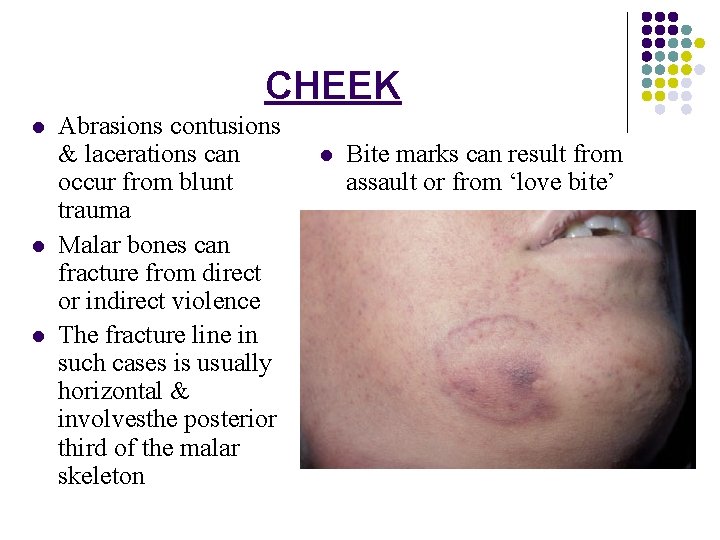
CHEEK l l l Abrasions contusions & lacerations can occur from blunt trauma Malar bones can fracture from direct or indirect violence The fracture line in such cases is usually horizontal & involvesthe posterior third of the malar skeleton l Bite marks can result from assault or from ‘love bite’
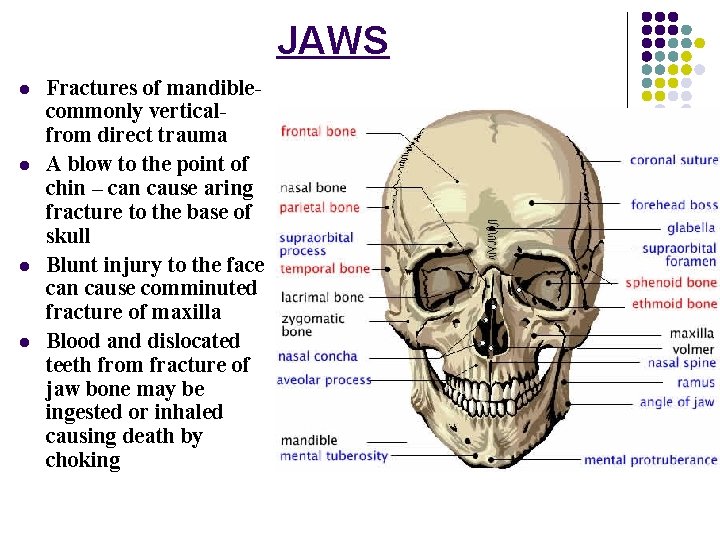
JAWS l l Fractures of mandiblecommonly verticalfrom direct trauma A blow to the point of chin – can cause aring fracture to the base of skull Blunt injury to the face can cause comminuted fracture of maxilla Blood and dislocated teeth from fracture of jaw bone may be ingested or inhaled causing death by choking
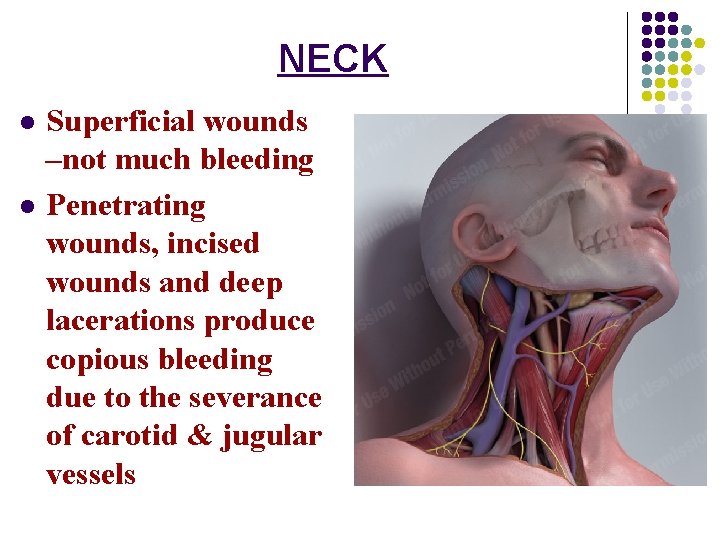
NECK l l Superficial wounds –not much bleeding Penetrating wounds, incised wounds and deep lacerations produce copious bleeding due to the severance of carotid & jugular vessels
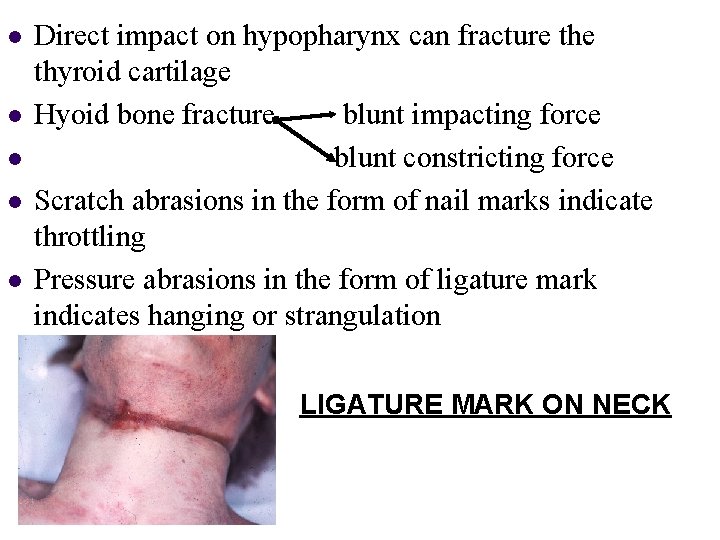
l l l Direct impact on hypopharynx can fracture thyroid cartilage Hyoid bone fracture blunt impacting force blunt constricting force Scratch abrasions in the form of nail marks indicate throttling Pressure abrasions in the form of ligature mark indicates hanging or strangulation LIGATURE MARK ON NECK
A blow on the front of neck can precipitate vagal inhibition which can result in sudden unconsciousness or death l Injuries on larynx & trachea can cause choking due to the blood l Laryngeal oedema is another complication of trauma l Incised wounds (Cut throat wounds) can be suicidal , homicidal or accidental l Air embolism can cause sudden death in cut throat wounds
v v v Air from wounded respiratory passages enters into the subcutaneous space resulting in subcutaneous emphysema which may dissect down to the mediastinum leading to mediastinal emphysema and subsequent respiratory obstruction The dome of pleura if penetrated through the neck can cause pneumothorax Aphonia & hoarseness results if recurrent laryngeal nerve gets involved Injury to brachial plexus can cause loss of function of the arm or hand Speech is impossible in cases of open wounds of larynx & trachea below the level of vocal cords
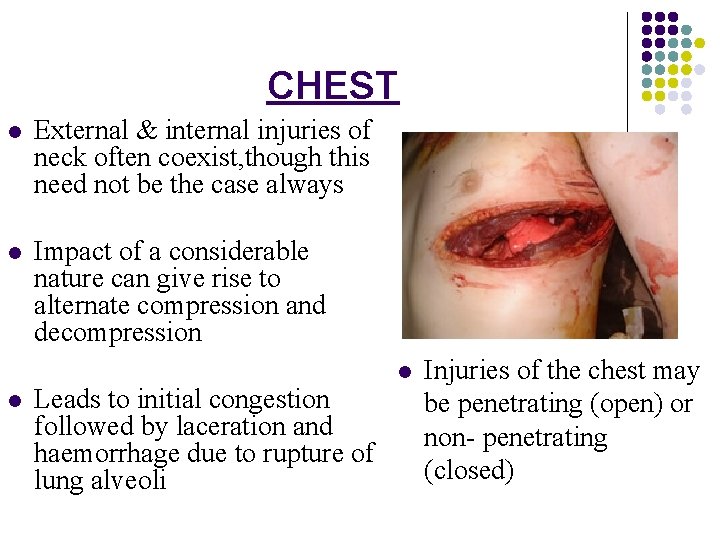
CHEST l External & internal injuries of neck often coexist, though this need not be the case always l Impact of a considerable nature can give rise to alternate compression and decompression l l Leads to initial congestion followed by laceration and haemorrhage due to rupture of lung alveoli Injuries of the chest may be penetrating (open) or non- penetrating (closed)
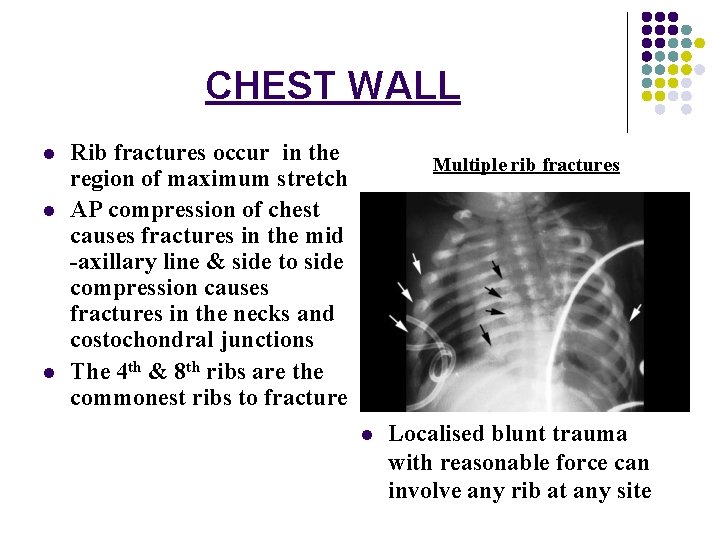
CHEST WALL l l l Rib fractures occur in the region of maximum stretch AP compression of chest causes fractures in the mid -axillary line & side to side compression causes fractures in the necks and costochondral junctions The 4 th & 8 th ribs are the commonest ribs to fracture Multiple rib fractures l Localised blunt trauma with reasonable force can involve any rib at any site
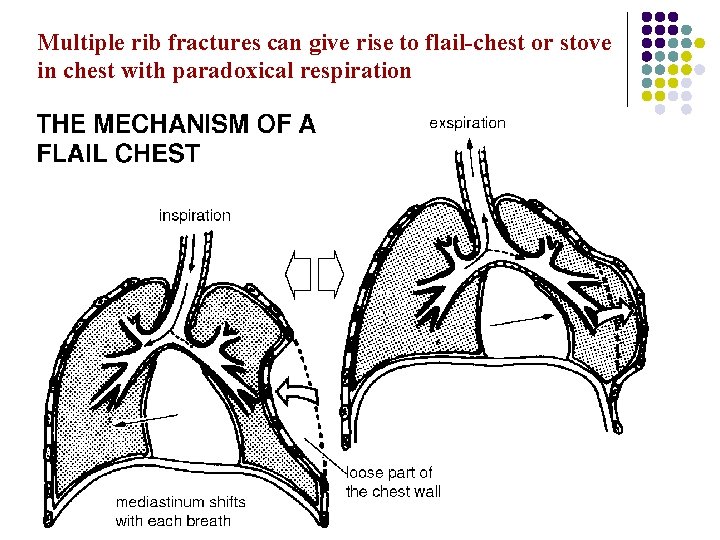
Multiple rib fractures can give rise to flail-chest or stove in chest with paradoxical respiration
l l l Fractured ends of ribs sometimes project outwards or inwards causing injuries to the overlying or underlying membranes tissues muscles or organs Lacerated wounds involving chest wall & parietal pleura can lead to open pneumothorax Osteoporosis , osteomalacia and secondary malignancy are associated with fragility and easy fracture of ribs 3 rd to 5 th ribs of left side are often involved in external cardiac massage They usually occur at costochondral junctions
l l l Sternum does not fracture easily It can fracture from direct local force as in the case of an impact with the steering wheel of a vehicle in a collision accident Usually near the manubrio-sternal junction Usually the fractures are transverse Severe blows on the chest wall may produce concussion of the chest , shock and even deatheven in the absence of structural damage to viscera Breasts are common sites for wounds originating from a sexual act eg nail marks
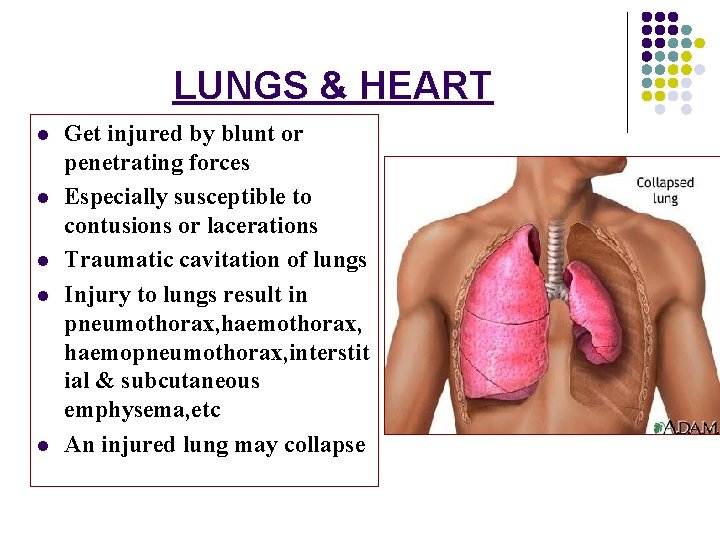
LUNGS & HEART l l l Get injured by blunt or penetrating forces Especially susceptible to contusions or lacerations Traumatic cavitation of lungs Injury to lungs result in pneumothorax, haemopneumothorax, interstit ial & subcutaneous emphysema, etc An injured lung may collapse
Heart l The right ventricle is more prone to injuries, since it forms major part of the anterior surface of the heart l l If the injury is obliquely placed bleeding is less l l l Penetrating injuries lead to haemopericardium and subsequent haemothorax l Blunt injuries cause the pericardium to remain intact but the heart may rupture leading to development of haemopericardium Rupture of the heart is more common in young individuals Rapid accumulation of 250350 cc of blood can lead to cardiac tamponade Right atrium is cmmonly involved in traumatic rupture
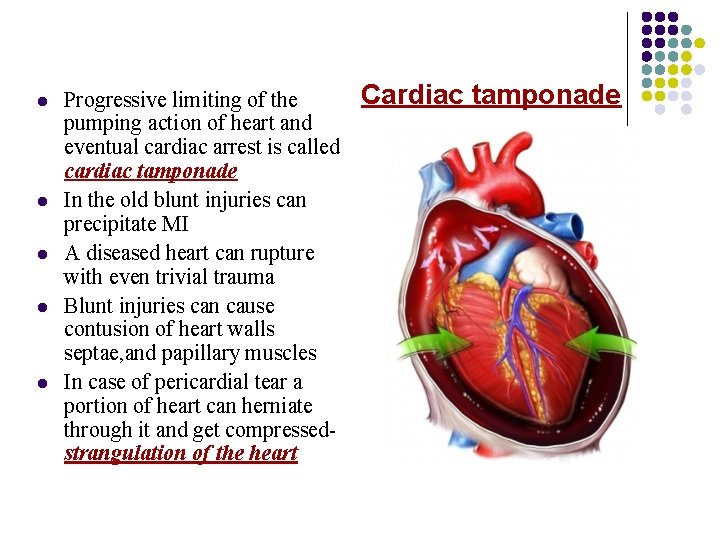
l l l Progressive limiting of the pumping action of heart and eventual cardiac arrest is called cardiac tamponade In the old blunt injuries can precipitate MI A diseased heart can rupture with even trivial trauma Blunt injuries can cause contusion of heart walls septae, and papillary muscles In case of pericardial tear a portion of heart can herniate through it and get compressedstrangulation of the heart Cardiac tamponade
l l l Oesophagus, trachea , bronchioles aorta, venacavae, and pulmonary arteries can be injured by blunt or penetrating trauma Rupture of aorta usually occurs at the junction of the arch with the descending part Ruptures of oesophagus usually occur in the form of longitudinal splits The most common site of rupture of diaphragm due to blunt trauma is at or around the central tendon of the left side Herniation of abdominal viscera into the chest can occur
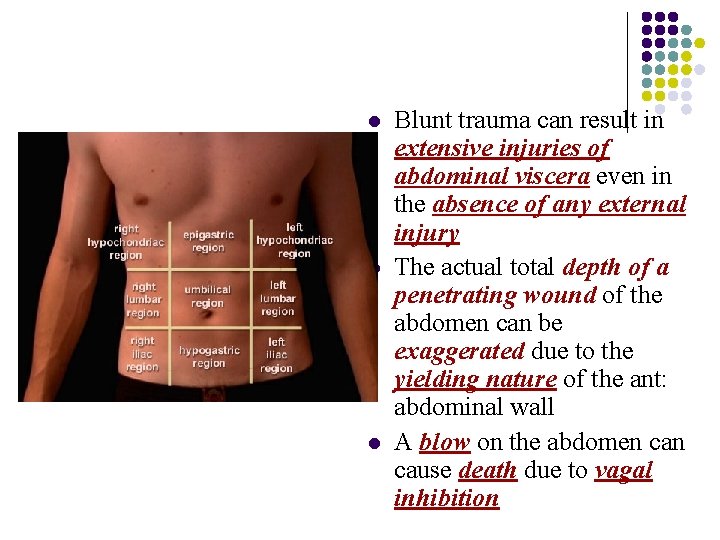
ABDOMEN & PELVIS l The ant: abdominal wall easily yields to pressure, and hence usually escapes unscathed from blunt trauma l Contusion of anterior abdominal wall is very rare, except in run over injuries from vehicles l Abrasions occur quite commonly over the ant: abdominal wall
l l l Blunt trauma can result in extensive injuries of abdominal viscera even in the absence of any external injury The actual total depth of a penetrating wound of the abdomen can be exaggerated due to the yielding nature of the ant: abdominal wall A blow on the abdomen cause death due to vagal inhibition
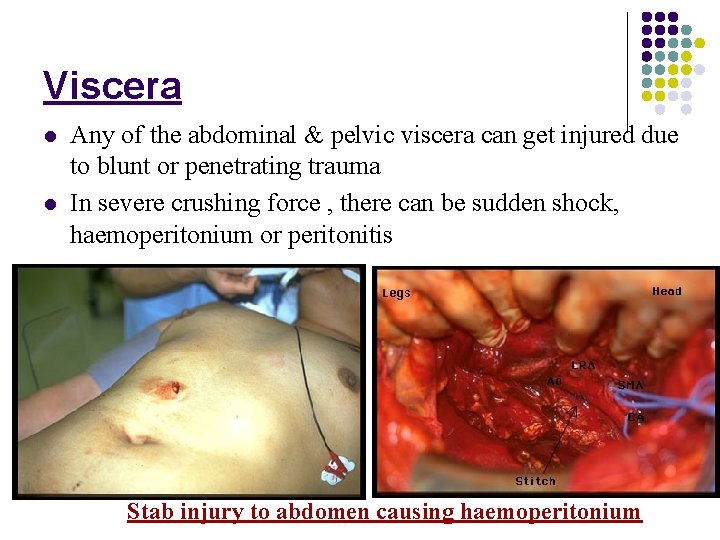
Viscera l l Any of the abdominal & pelvic viscera can get injured due to blunt or penetrating trauma In severe crushing force , there can be sudden shock, haemoperitonium or peritonitis Stab injury to abdomen causing haemoperitonium
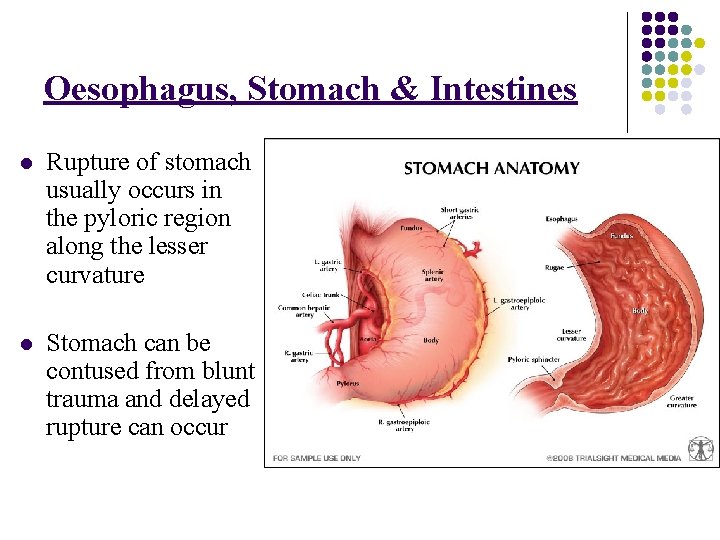
Oesophagus, Stomach & Intestines l Rupture of stomach usually occurs in the pyloric region along the lesser curvature l Stomach can be contused from blunt trauma and delayed rupture can occur
l l l Oesophagomalacia & gastric malacia may take place in some persons hours or days after sustaining cerebral trauma This is believed to be brought about by neurogenic stimuli arising from the parasympatholytic centre of the diencephalon Intestines can rupture from blunt force either at the point of impact, or some distance away The former shows clean edges, while the latter has a ragged appearance Transverse rupture of mesentery can lead to gangrene of a segment of intestine by transecting the supplying artery
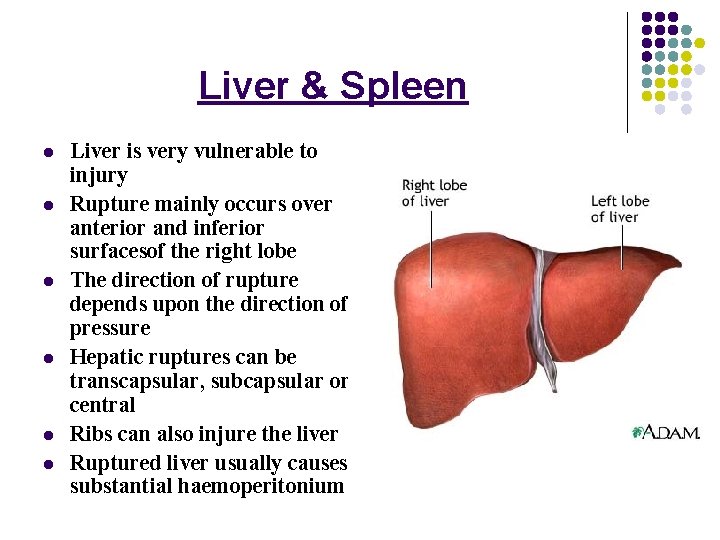
Liver & Spleen l l l Liver is very vulnerable to injury Rupture mainly occurs over anterior and inferior surfacesof the right lobe The direction of rupture depends upon the direction of pressure Hepatic ruptures can be transcapsular, subcapsular or central Ribs can also injure the liver Ruptured liver usually causes substantial haemoperitonium
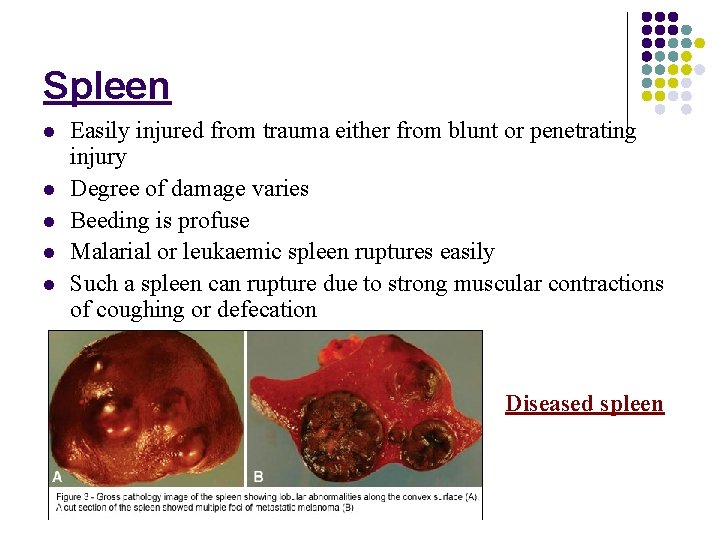
Spleen l l l Easily injured from trauma either from blunt or penetrating injury Degree of damage varies Beeding is profuse Malarial or leukaemic spleen ruptures easily Such a spleen can rupture due to strong muscular contractions of coughing or defecation Diseased spleen
URINARY TRACT l l l Rupture of bladder often accompanies pelvic fractures Shock , bleeding, peritonitis & UTI are common complications Urethra ruptures usually at the membraneous part due to pelvic fracture or application of blunt force Female urethra may rupture during a violent act of rape Falling astride a projecting object is a frequent cause for rupture of male urethra Lacerations of the kidney can be transcapsular, subcapsular or transrenal
LIMBS l l l Any type of wound can occur Direct & indirect trauma can cause different types of injury to muscles Tetanus , gas gangrene, and renal failure may follow Muscles may sustain severe injuries although the skin looks intact Thighs with intact skin can accommodate even upto 1 litre of blood , which is fatal resulting from rupture of vessels due to a crushing force Blunt injury to the limbs is extremely common, especially in traffic accidents l l Even multiple superficial soft tissue injury due to blows or kicks can cause death, though the bones may be intact Fracture of the femur or the bones of lower leg from the impact of a vehicle against a pedestrian is called ‘Bumper fracture’ Ligaments can undergo avulsion Defence wounds
GENITALIA l l External genitalia can suffer different types of injuries especially related to violent sexual act or sexual jealousy Squeezing of testicles can be fatal due to reflex cardiac inhibition Criminal amputation of male genitalia can cause death due to bleeding Attempted criminal abortion can lead to injuries of female genitalia
VERTEBRAL COLUMN l Injuries to the vertebral column can be due to direct or indirect trauma which may or may not involve the spinal cord l Commonest site of traumatic damage is the lumbar vertebra l Spinal cord is rarely injured without associated fractures of the vertebral column
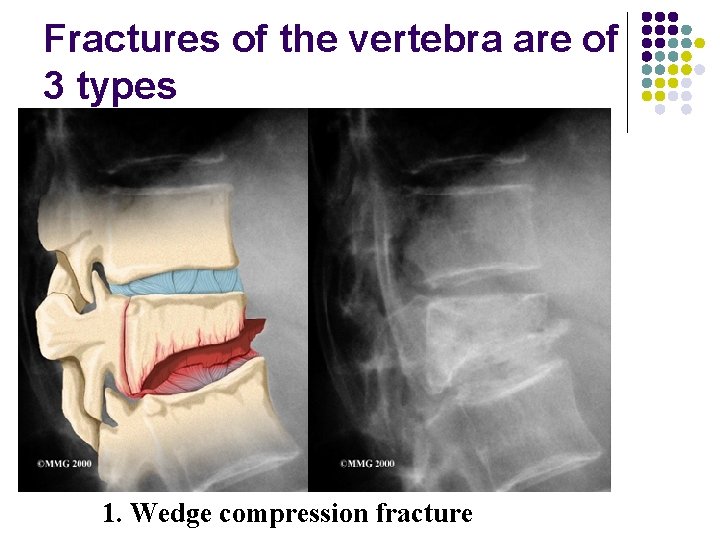
Fractures of the vertebra are of 3 types 1. Wedge compression fracture
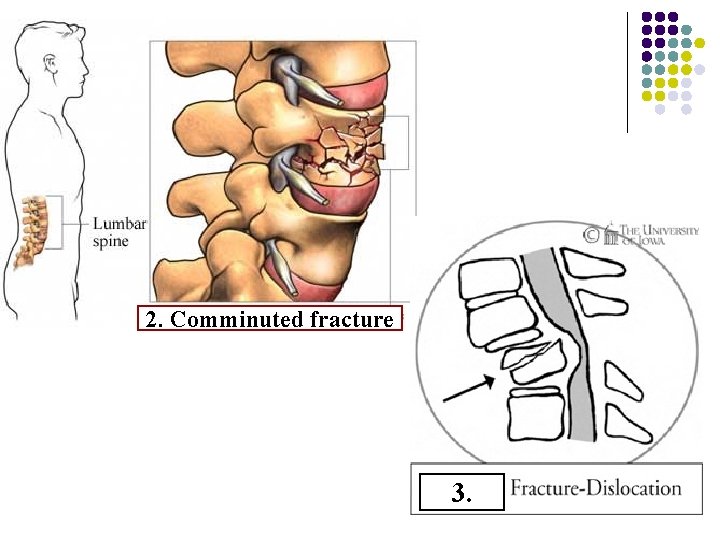
2. Comminuted fracture 3.
Whiplash Injury l l l Hyperflexion or hyperextension of neck can result in cervical vertebral column injury and is called ‘whiplash injury’ The symptoms may appear immediately or after several weeks Common symptoms are dizziness, headaches, stiffness of neck, jaw, shoulder or arm , nausea, diminished ability to bend, vomiting, blurred vision, ringing in ears, lack of concentration, memory loss, tiredness sleeplessness and irritability
l l l Fatal contusion or laceration of the spinal cord can occur in whiplash injuries in the absence of any fracture to the vertebral column Involvement of the cord above the level of 5 th cervical vertebra can be fatal due to damage to phrenic nerve Lower level involvement can cause quadriplegia Quadriplegia, paraplegia and respiratory and urinary infections invariably follow vertebral column and spinal cord injuries Sacral segment involvement can cause impotence in males
Railway spine l l Blunt force over vertebral column can lead to concussion of spinal cord without visible injury to the vertebrae This is called Railway spine due to its frequent occurrence in railway accidents Commonest region affected is the lumbo-sacral spine resulting in paraplegia, bladder disturbances and impotence Such concussion is spontaneously reversible, these abnormalities are only temporary