
Regional Differences Among the British Colonies The Economies
Regional Differences Among the British Colonies
The Economies of the Colonies ■ The British colonies produced a variety of profitable materials & were populated by a variety of diverse peoples ■ By the 1700 s, the differences among the “Southern” & “Northern” colonies led to long-term differences among these societies
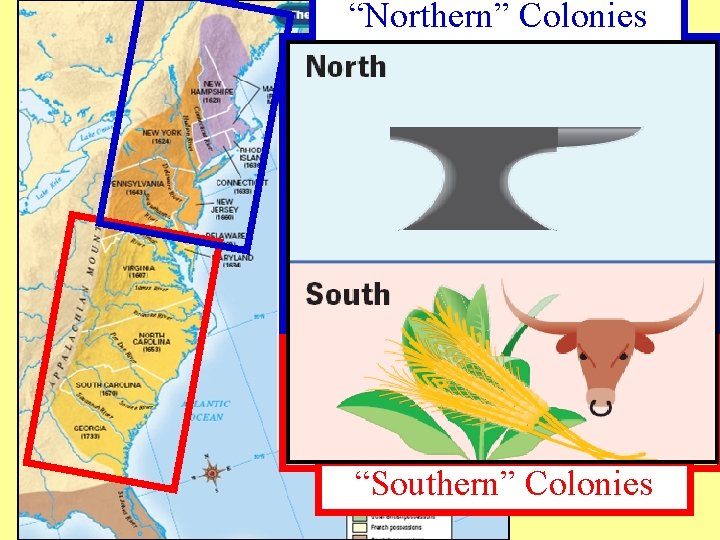
“Northern” Colonies “Southern” Colonies
Life in the “Southern” Colonies ■ The Southern economies were dominated by cash-crop agriculture –Tobacco in VA, MD, & NC –Rice & indigo in SC & GA ■ As a result, Southern society centered on: –Plantations rather than cities –Gaps between the rich & poor –Forced labor (slaves & servants)
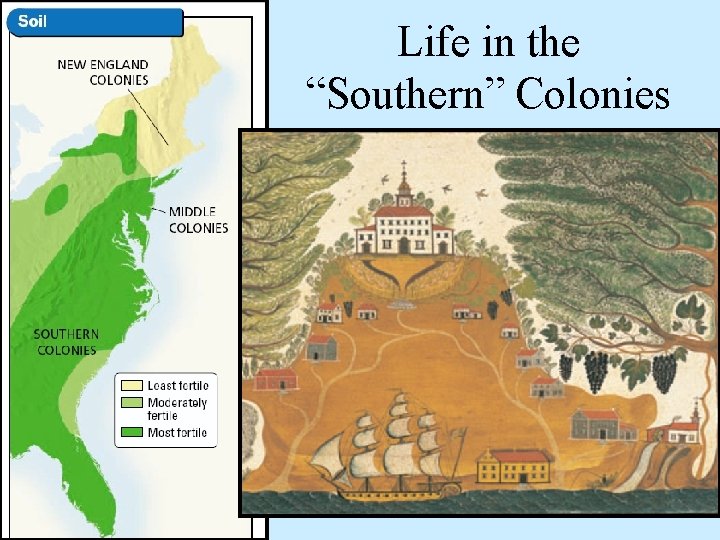
Life in the “Southern” Colonies
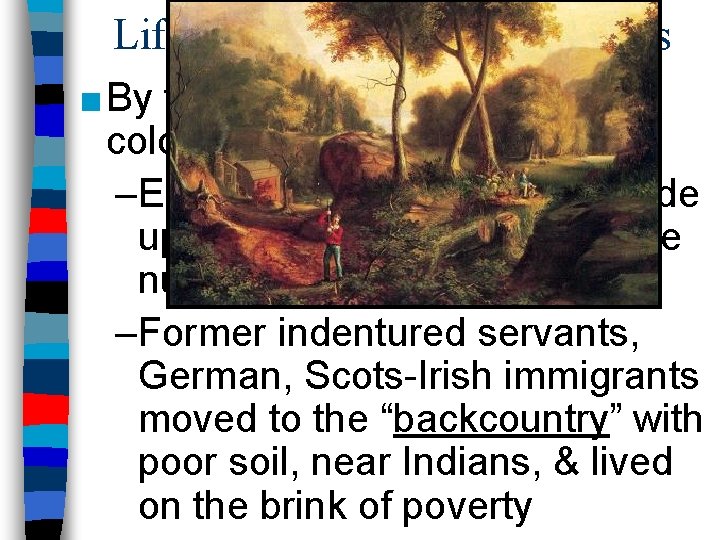
Life in the “Southern” Colonies ■ By the 1700 s, the Southern colonies became more diverse: –English colonists typically made up the plantation owners in the nutrient-rich lands in the east –Former indentured servants, German, Scots-Irish immigrants moved to the “backcountry” with poor soil, near Indians, & lived on the brink of poverty
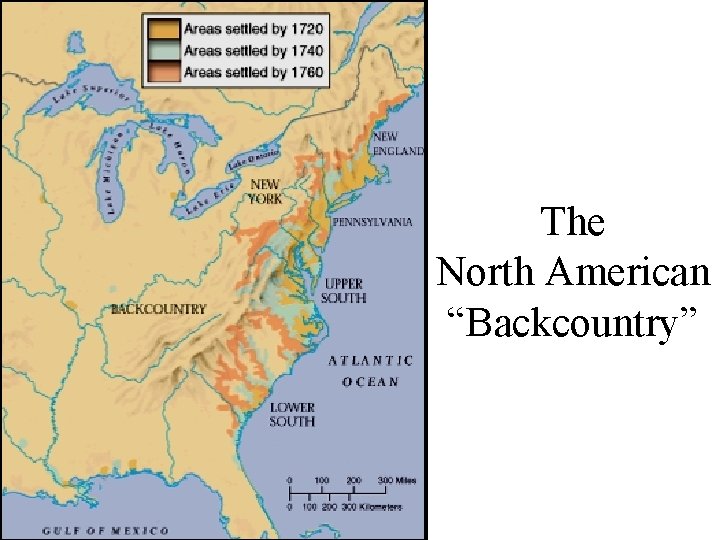
Distribution of European & African The Immigrants North American in British “Backcountry” North America by 1770
Women in the “Southern” Colonies ■ Women in Southern society found their lives dominated by men: –Women were not eligible to vote, divorce, own or sell property –“Common” women were responsible for assisting in the field in addition to cleaning, cooking, & childrearing chores –Upper-class women had slaves or servants, but had few rights
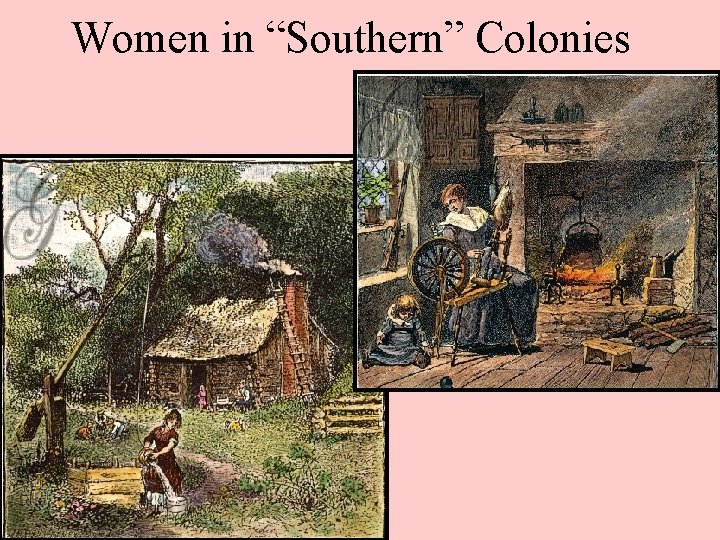
Women in “Southern” Colonies
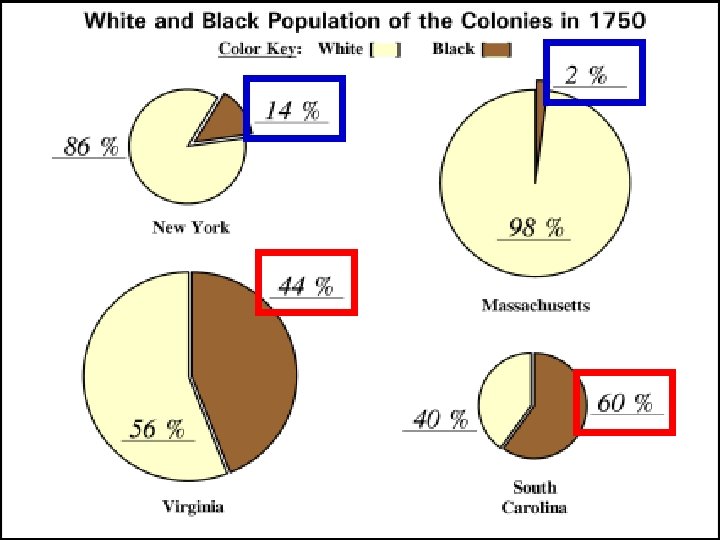
Slavery in the “Southern” Colonies ■ Slavery in the Southern colonies was far more common than in the Northern colonies: –Cash-crop agriculture, like tobacco & rice, required workers –By 1660, fewer indentured servants were coming to America – 80 -90% of Southern slaves were field workers, most on plantations
Slavery in the “Southern” Colonies ■ Slave culture in the South: –Slaves came from a variety of places in West Africa & had a variety of languages & cultures –Music & dance were used to maintain their African culture –Families were common, but marriage was not recognized –Slave religion often blended African rituals with Christianity
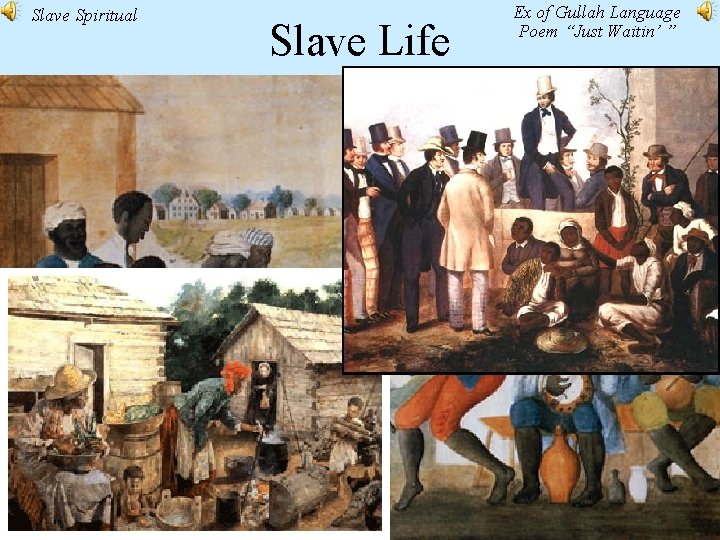
Slave Spiritual Slave Life Ex of Gullah Language Poem “Just Waitin’ ”
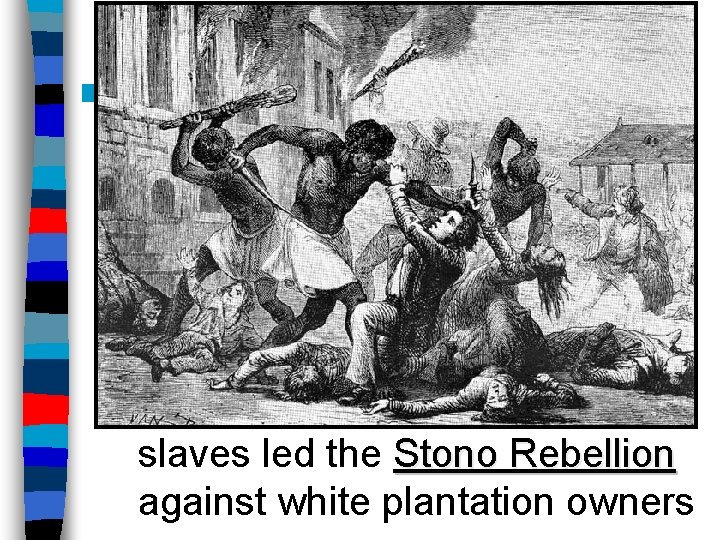
The Slave Population ■ Slavery led to resistance: –Runaway slaves were common –Sabotaging of field tools & intentionally slowing down the work were common techniques of slave resistance –In 1739, in South Carolina 150 slaves led the Stono Rebellion against white plantation owners
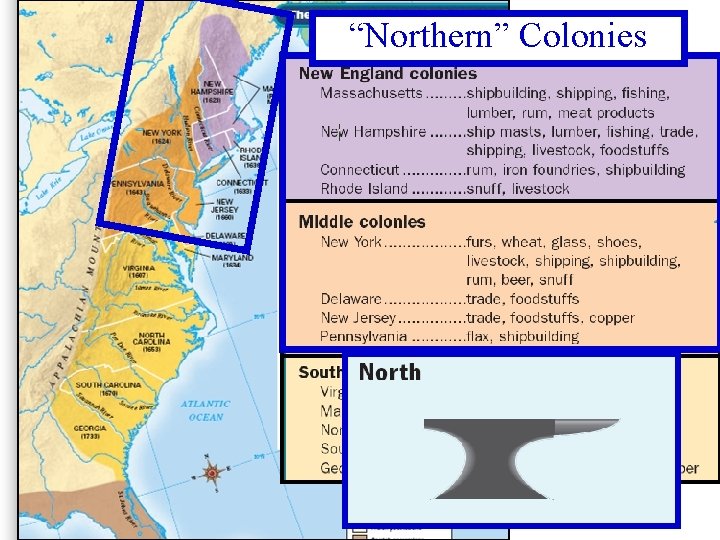
“Northern” Colonies
Life in the “Northern” Colonies ■ Northern economies were much more diverse than in the South: –Were restricted to much smaller farms that grew multiple crops –Included wheat, corn, livestock, lumber, shipbuilding, fishing, iron –Boston, Philadelphia, New York were important port cities that allowed for international trade
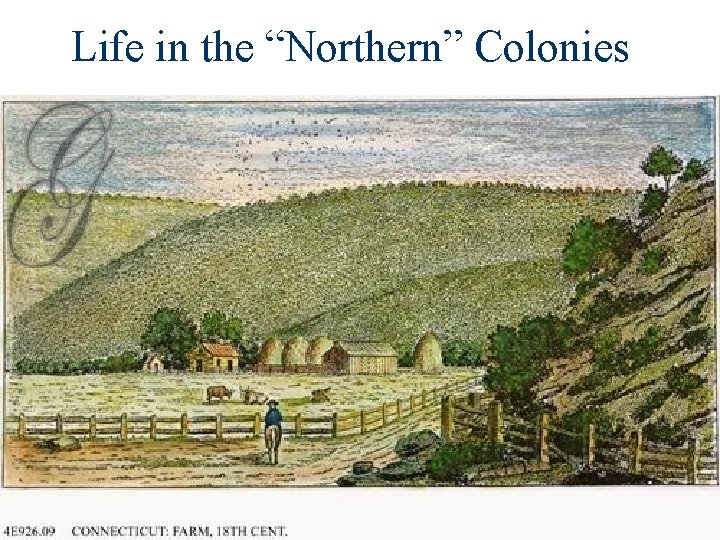
Life in the “Northern” Colonies
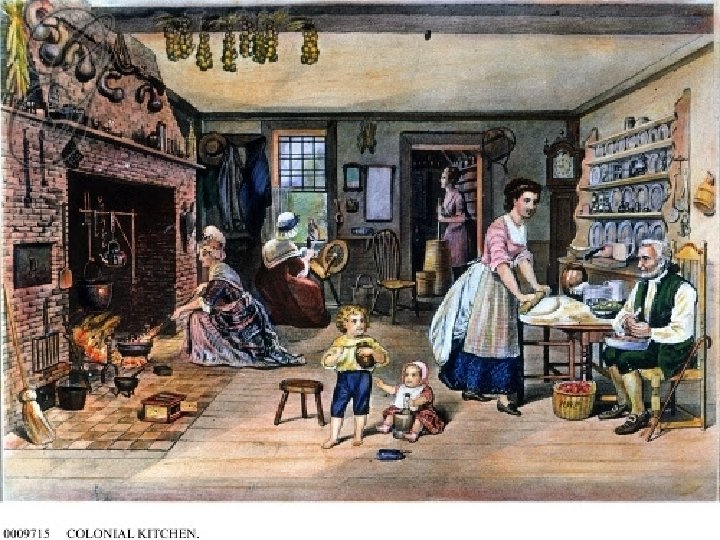
Life in the “Northern” Colonies ■ Like the Southern colonies, English, Germans, & Scots-Irish were the major immigrant groups & most moved to the backcountry as small-scale farmers ■ Slaves worked on small-scale farms or as domestic servants ■ Northern women could not vote or own property & were to serve & obey their husbands
Distribution of European & African Immigrants in British North America by 1770
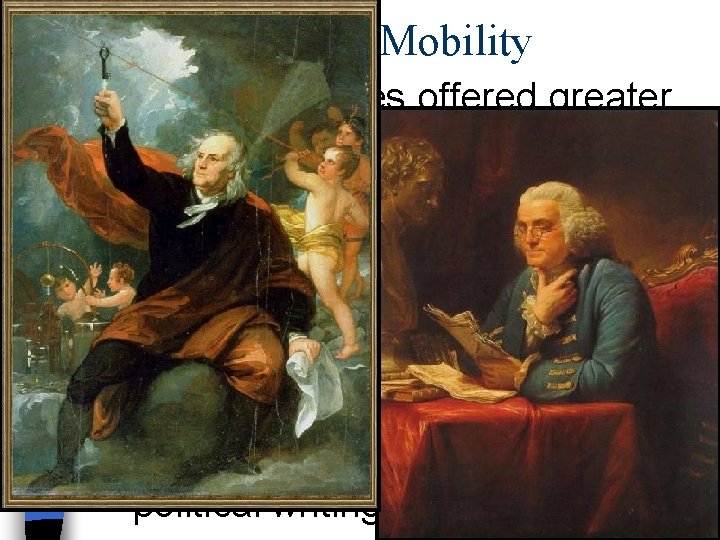
Social Mobility ■ Northern colonies offered greater social mobility than the South: –Social status was less dependent upon ownership of land –Numerous professional & trade professions in cities –Benjamin Franklin represented opportunities in colonial society; He used scientific innovation & political writing to gain world fame

The Great Awakening
Decline in Religious Devotion ■ By the 1700 s, American colonists saw a decline in religious devotion: –Church sermons were seen by many as “cold” & impersonal ■ In the 1730 s & 1740 s, the Great Awakening was a series of revivals in which of people experienced religious conversion in response to gifted preaching
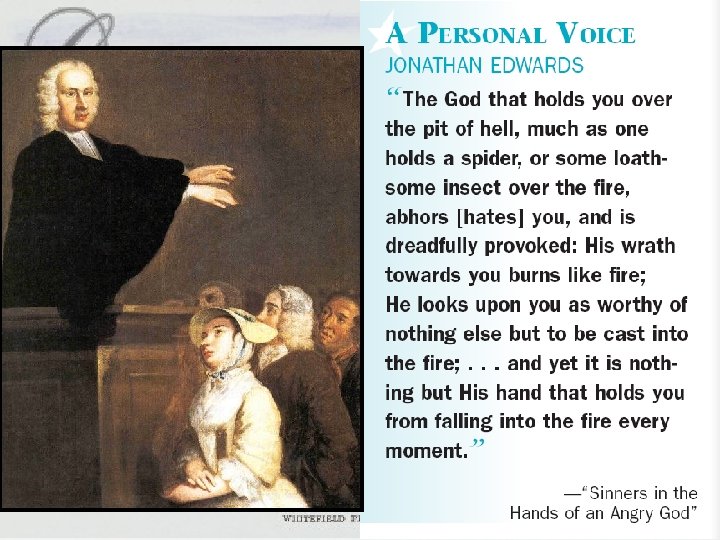
The Great Awakening ■ Preachers like Jonathan Edwards & George Whitefield were the most popular evangelists: –Used “fire & passion” to encourage people to examine their eternal destiny (“New Light”) –Preached sermons to 1, 000 s in large “camp revivals” –Encouraged questioning of established churches
The Great Awakening Brown, Awakening Rutgers, & Princeton ■ The Great impacted all the colonists & led to: –New universities were formed to educate “New Light” preachers –Contact among scattered colonists in different regions (1 st “national” American event) –Decline in Puritan & Anglican faiths & rise of Methodists, Baptists, & other denominations
- Slides: 25