
Region Detection Defining regions of an image Introduction



- Slides: 38
Region Detection Defining regions of an image
Introduction n All pixels belong to a region n n Object Part of object Background Find region n n Constituent pixels Boundary
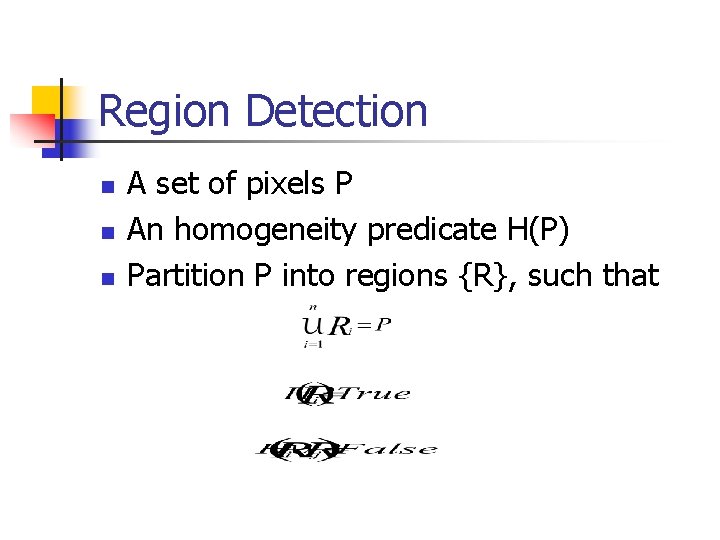
Region Detection n A set of pixels P An homogeneity predicate H(P) Partition P into regions {R}, such that
Point based methods – thresholding n If n n Regions are different brightness or colour Then n Can be differentiated using this
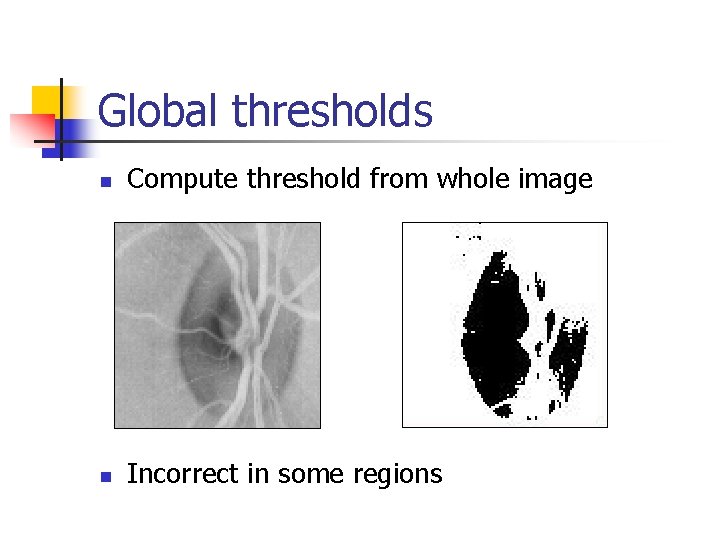
Global thresholds n Compute threshold from whole image n Incorrect in some regions
Local thresholds n n n Divide image into regions Compute threshold per region Merge thresholds across region boundaries
Region Growing n n n All pixels belong to a region Select a pixel Grow the surrounding region
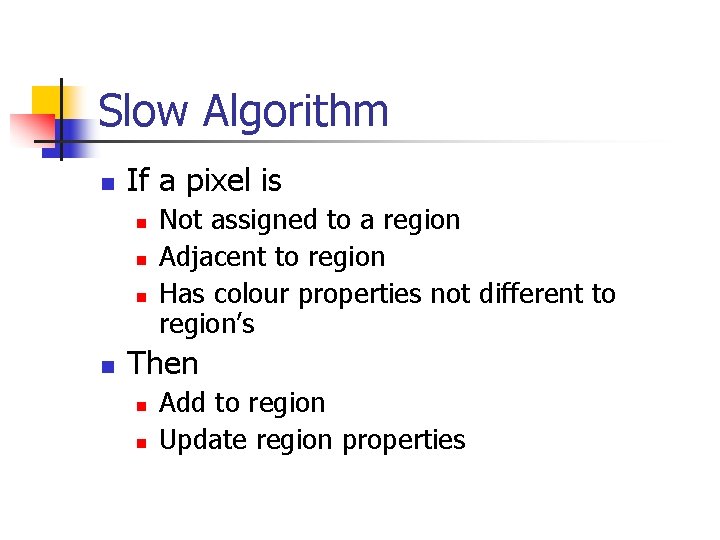
Slow Algorithm n If a pixel is n n Not assigned to a region Adjacent to region Has colour properties not different to region’s Then n n Add to region Update region properties
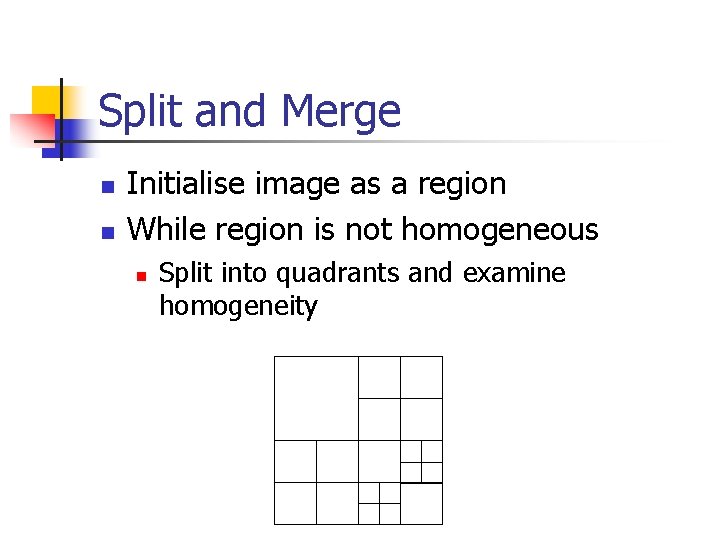
Split and Merge n n Initialise image as a region While region is not homogeneous n Split into quadrants and examine homogeneity
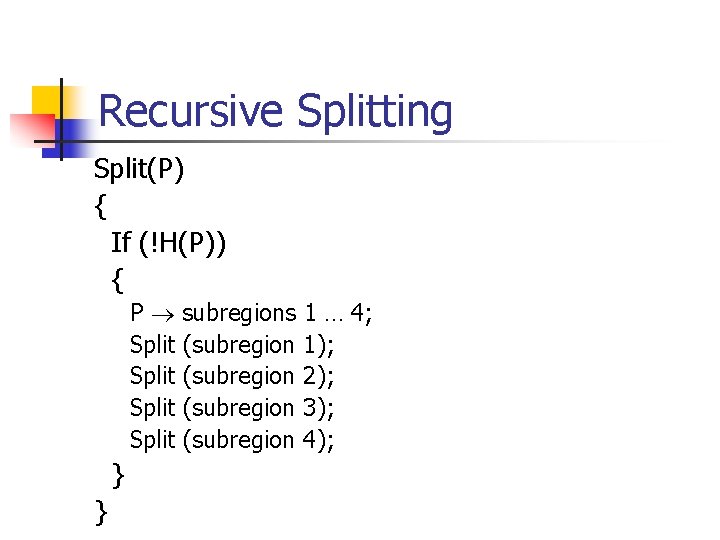
Recursive Splitting Split(P) { If (!H(P)) { P subregions Split (subregion } } 1 … 4; 1); 2); 3); 4);
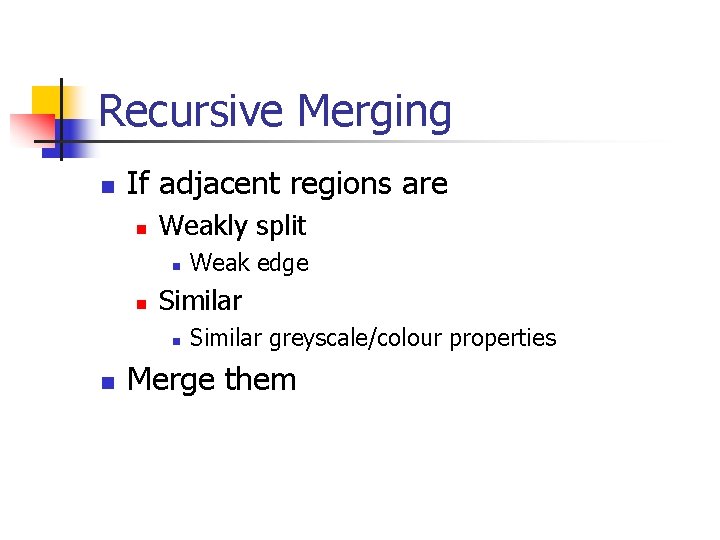
Recursive Merging n If adjacent regions are n Weakly split n n Similar n n Weak edge Similar greyscale/colour properties Merge them
Edge Following n Detection n n Finds candidate edge pixels Following n Links candidates to form boundaries
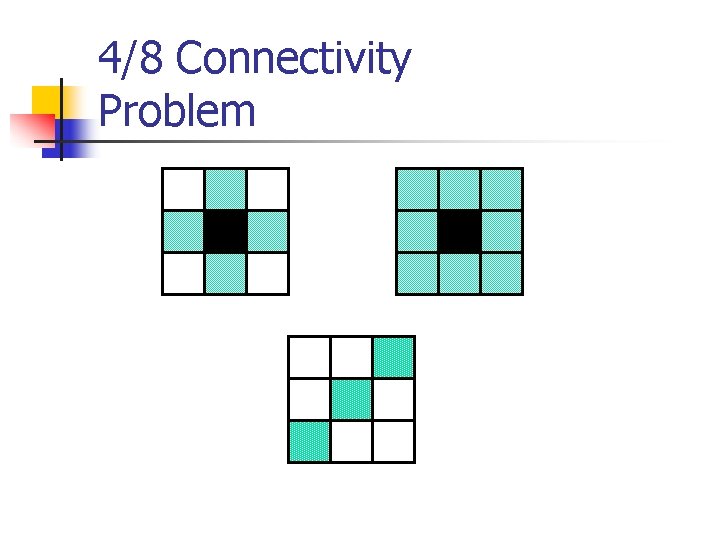
4/8 Connectivity Problem
Contour Tracking n n Scan image to find first edge point Track along edge points n n n Spurs? Endpoints? Join edge segments
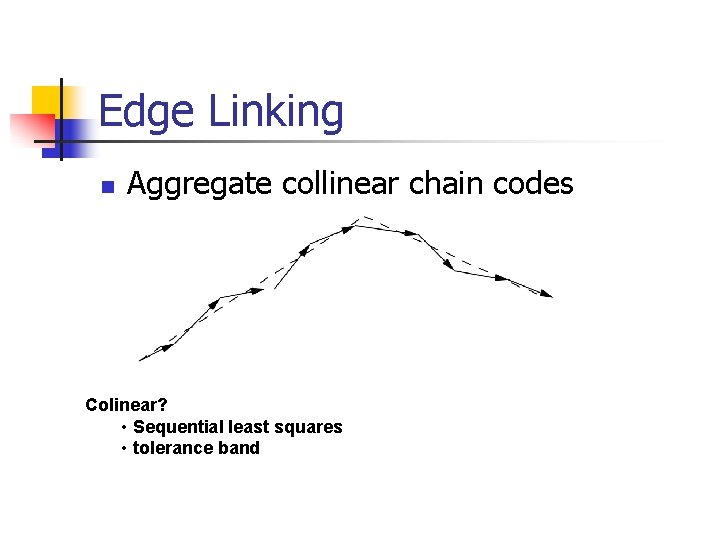
Edge Linking n Aggregate collinear chain codes Colinear? • Sequential least squares • tolerance band
n Sequential Least Squares n n n Accumulate best fitting line to segments and error When error exceeds a threshold, finish segment Tolerance Band n n Accumulate best fitting line to segments If new point lies more than from line, finish segment
Hop Along Algorithm
Examples n n An example would show an edge detected image There would be a record of the edge points constituting each edge segment
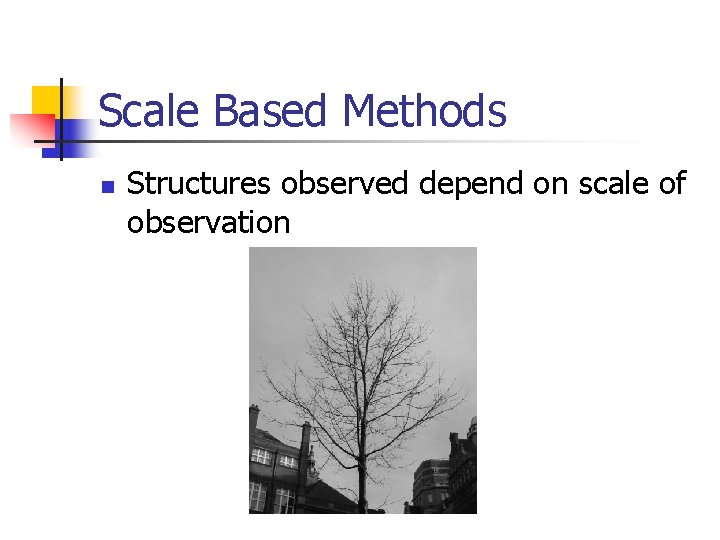
Scale Based Methods n Structures observed depend on scale of observation
Analysis n Processing of an image should be at a level of detail appropriate to structures being sought n n Image pyramid Wavelet transform
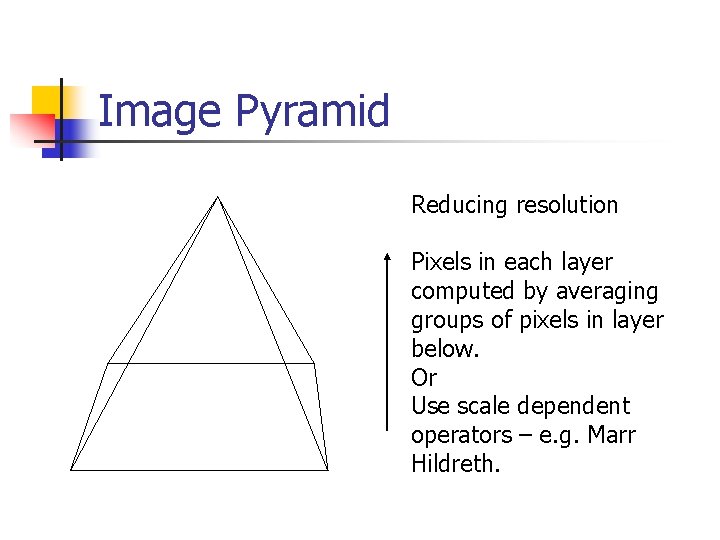
Image Pyramid Reducing resolution Pixels in each layer computed by averaging groups of pixels in layer below. Or Use scale dependent operators – e. g. Marr Hildreth.
Wavelet Transform n n n Transform image data Select coefficients Reverse transform
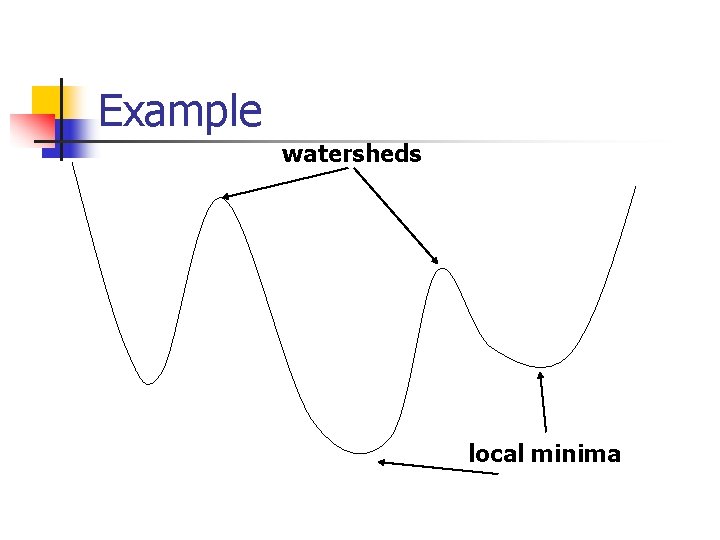
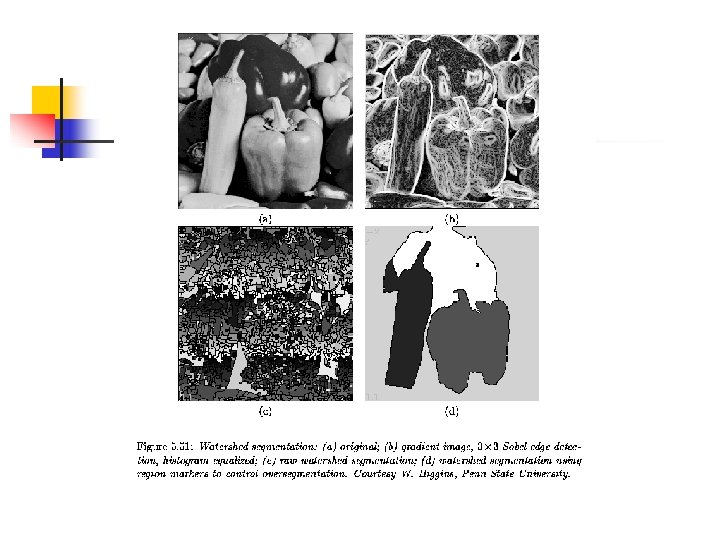
Watersheds of Gradient Magnitude n Compare geographical watersheds n n Divide landscape into catchment basins Edges correspond to watersheds
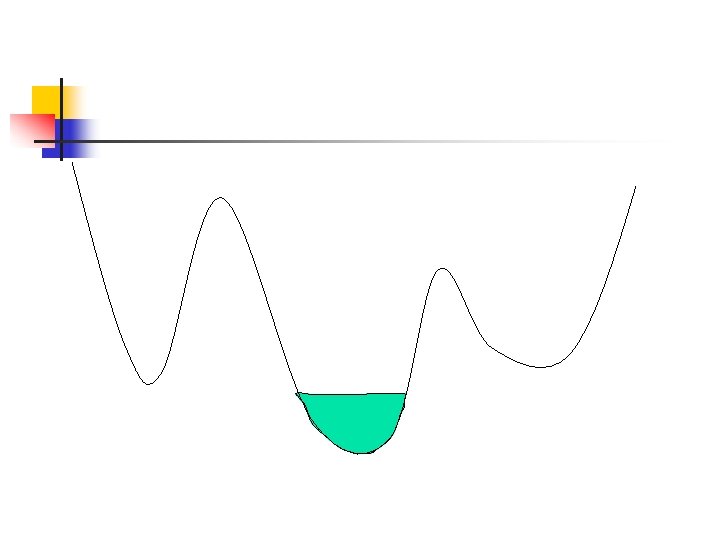
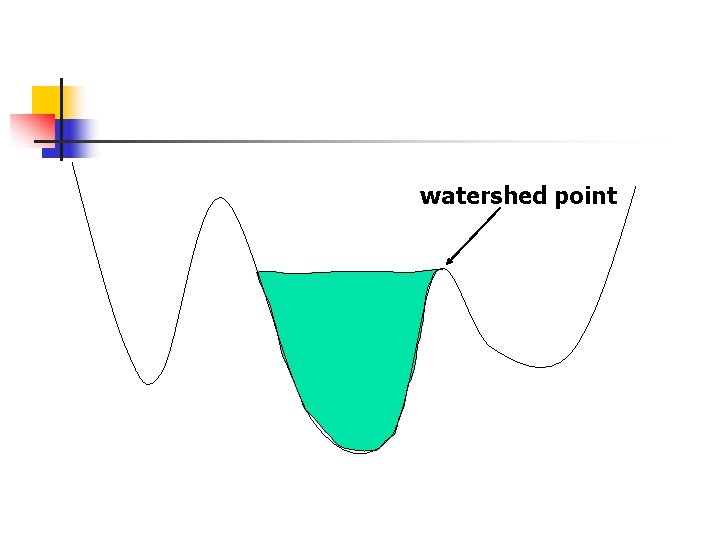
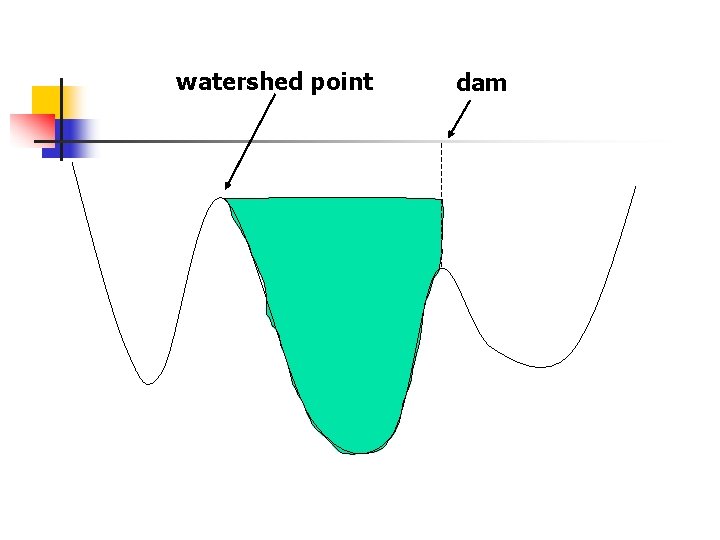
Algorithm n n n Locate local minima Flood image from these points When two floods meet n n n Identify a watershed pixel Build a dam Continue flooding
Example watersheds local minima
watershed point
watershed point dam
Representing Regions n n Constituent pixels Boundary pixels
Region map n As an array of region labels Pixel value = region label
Summary n Region detection n Growing Edge following Watersheds
I think there is a world market for maybe five computers Thomas J Watson, chairman IBM, 1943