
Region 3 Where is AWOP in 5 years




- Slides: 36
Region 3 Where is AWOP in 5 years?
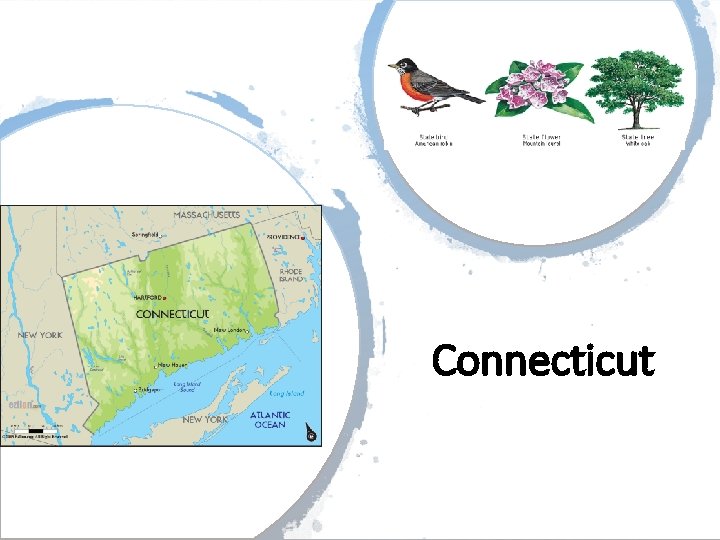
Connecticut
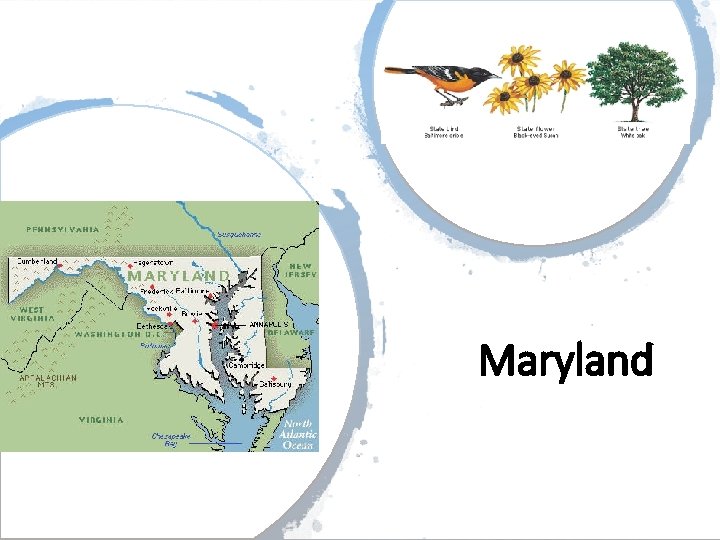
Maryland
Maryland AWOP National Meeting August 6 -7, 2019
General Update • Continued to incorporate optimization section in sanitary surveys at surface water treatment systems • Summer intern is working on data entry for annual turbidity graphs and status component • Chlorine residual mapping activity with water system having difficulty meeting DBP rule compliance – Coordinating follow-up mapping activity for the summer
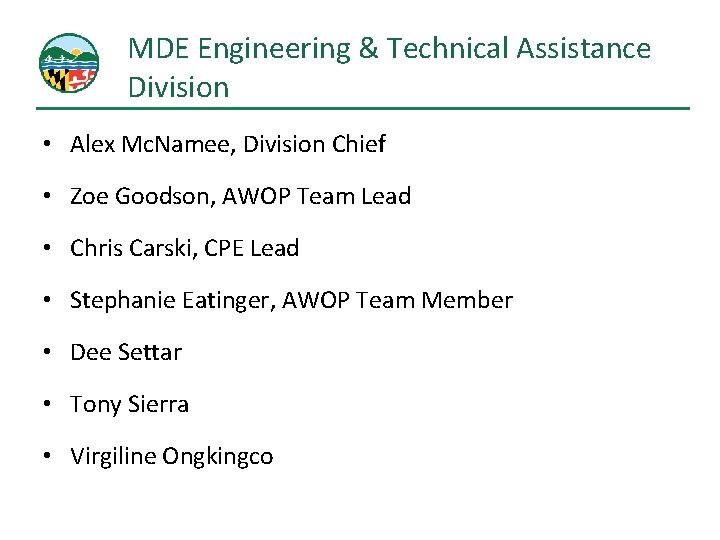
MDE Engineering & Technical Assistance Division • Alex Mc. Namee, Division Chief • Zoe Goodson, AWOP Team Lead • Chris Carski, CPE Lead • Stephanie Eatinger, AWOP Team Member • Dee Settar • Tony Sierra • Virgiline Ongkingco
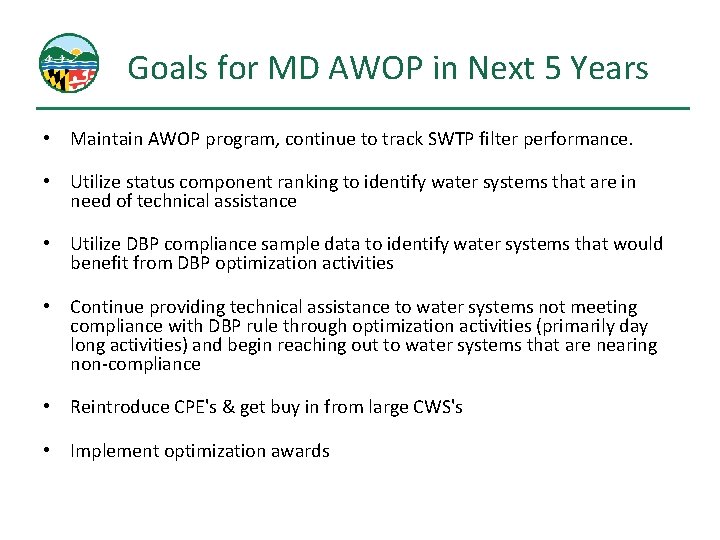
Goals for MD AWOP in Next 5 Years • Maintain AWOP program, continue to track SWTP filter performance. • Utilize status component ranking to identify water systems that are in need of technical assistance • Utilize DBP compliance sample data to identify water systems that would benefit from DBP optimization activities • Continue providing technical assistance to water systems not meeting compliance with DBP rule through optimization activities (primarily day long activities) and begin reaching out to water systems that are nearing non-compliance • Reintroduce CPE's & get buy in from large CWS's • Implement optimization awards
Michigan
MICHIGAN AWOP Mike Bolf Drinking Water – Engineering Unit 906 -630 -4107| bolfm@michigan. gov 9
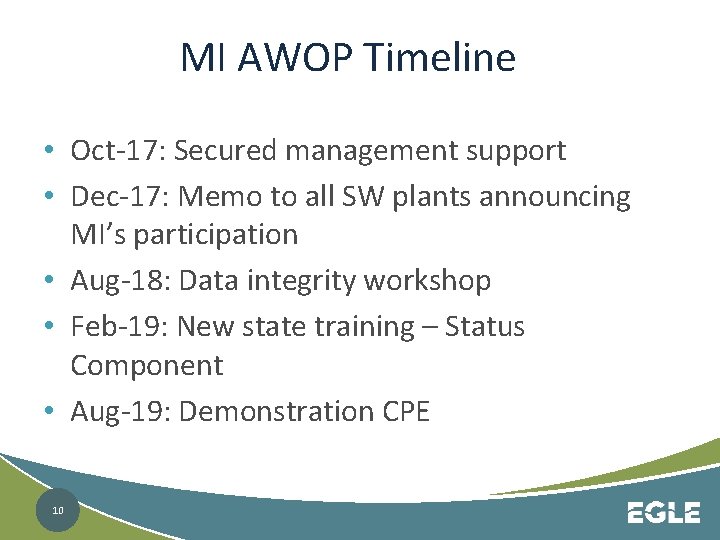
MI AWOP Timeline • Oct-17: Secured management support • Dec-17: Memo to all SW plants announcing MI’s participation • Aug-18: Data integrity workshop • Feb-19: New state training – Status Component • Aug-19: Demonstration CPE 10
Goals for MI AWOP in next 5 years: 1. Maintain necessary resources! 2. Disseminate AWOP concepts and seek PWS buy-in 3. Populate OAS software for SW plants 4. Establish priority ranking 5. Develop and introduce awards program 11
Desired Outcomes • Improve public health protection • Increase optimization awareness • Enhance customer confidence in EGLE – Water customers – PWSs – Third Parties • Empower WTPs to troubleshoot and problem solve • Build/maintain regional and national networks • Promote participation in Region 5 (states & EPA) 12
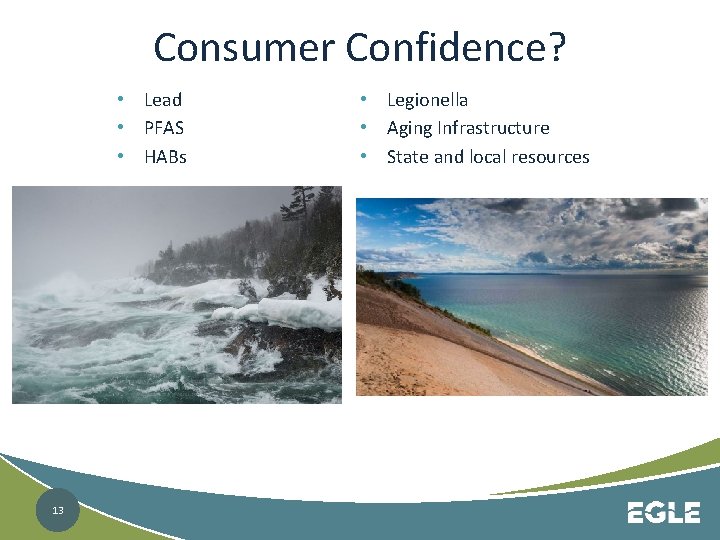
Consumer Confidence? • Lead • PFAS • HABs 13 • Legionella • Aging Infrastructure • State and local resources
Michigan Department of Environment, Great Lakes, and Energy 800 -662 -9278 Michigan. gov/EGLE Follow us at: Michigan. gov/EGLEConnect 14
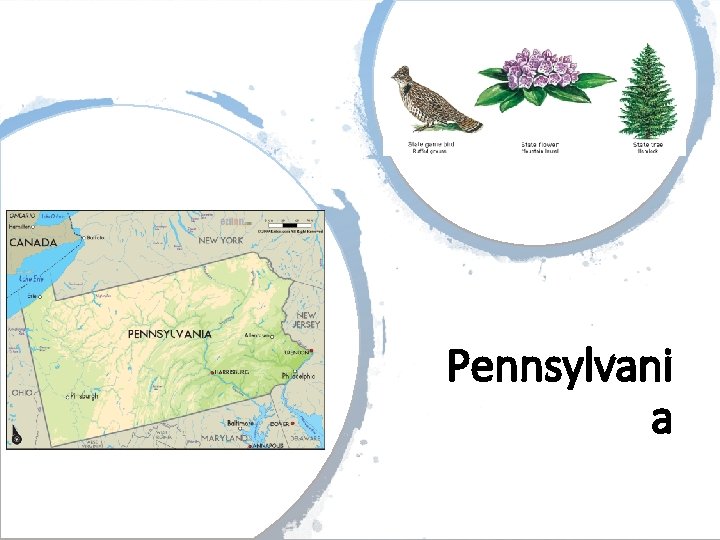
Pennsylvani a
Pennsylvania’s AWOP in 5 Years National AWOP Meeting August 6 -7, 2019 Tom Wolf, Governor Patrick Mc. Donnell, Secretary
Pennsylvania Optimization Staff • Kevin Anderson- Technical Assistance Section • Justin Blashaw- Distribution • Kurt Smith- Filter Plants • Stephanie Stoner- Distribution and Filter Plants 17
Disinfection Requirements Rule • Minimum Distribution Residual • 0. 2 mg/L • Report individual sample sites and residual data • Calculate and Report CTs Daily • Nitrification Control Plans • Speciated DBP Reporting 18
General Update-Filtration • Automated Alarm and Shutdown • Continuous IFE and CFE Turbidity Monitoring • Filter Bed Evaluation Program • F-t-W Requirements • Membrane Treatment Technique 19
AWOP in 5 Years • Availability of Performance Data • Better awareness • Process control • Early detection • Prioritize technical assistance and training • More Stringent Requirements • New incentive to improve water quality • Increased demand for AWOP assistance 20
National AWOP Meeting Kevin Anderson keanderson@pa. gov 717 -783 -9764
Virginia
Virginia Optimization Program Beginnings, Current, Path Forward August 6, 2019 Dixon Tucker, PE, VOPC Chair 23
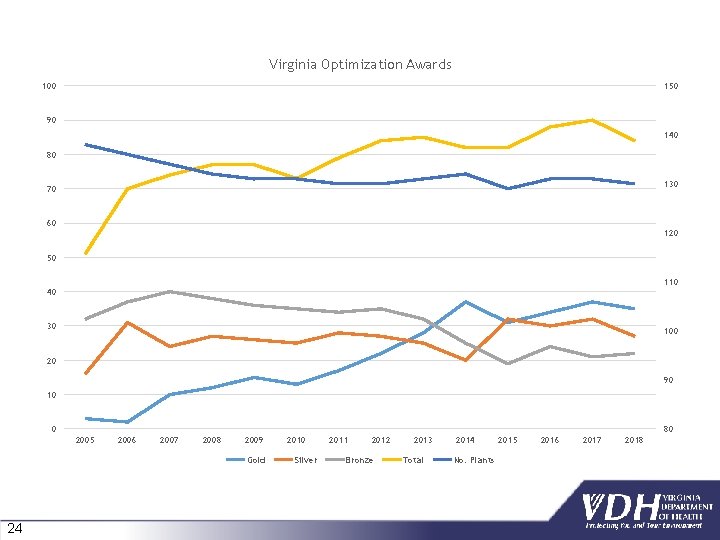
Virginia Optimization Awards 100 150 90 140 80 130 70 60 120 50 110 40 30 100 20 90 10 0 80 2005 2006 2007 2008 2009 Gold 24 2010 Silver 2011 2012 Bronze 2013 Total 2014 No. Plants 2015 2016 2017 2018
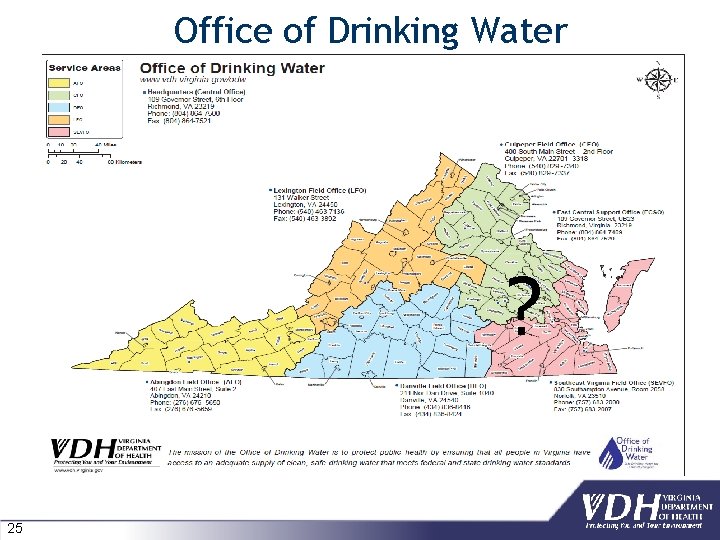
Office of Drinking Water ? 25
Currently • VOP Committee composed of representatives from six field offices and the Central Office • David Dawson, PE– Abingdon Field Office* • Thomas Thompson, PE – Lexington Field Office • Dixon Tucker, PE – Southeast Virginia Field Office • Nyibe Smith – East Central Support Office* • Bernard Proctor – Danville Field Office* • James Keating– Culpeper Field Office* • Susan Miner, Cap. Dev – Central Office* • Aaron Moses, PE, Central Office • Robert Edelman, PE, Central Office 26
THE PROGRAM • Core Team Structure and Capacity – • One VOPC chair (turned over four times in 16 years) • One VOPC team member from each of six offices • Three CO representatives • Team turnover by attrition – five offices have changed team members • Team is responsible for implementation at each of six offices. 27
Looking Forward • Targeted technical assistance via Sanitary Surveys and other meetings with WTPs. • Annual VOP data review letter to WTPs, OR • Notify WTPs of rank in sanitary surveys. • Targeted technical assistance or intervention at lowperforming WTPs. 28
Looking Forward • DBP PBT – Disinfection By-Products, Performance Based Training – looking to have more of these. • Distribution System Optimization will be doing these to address DBP issues. • Continue quarterly AWOP meetings with EPA Region 3 • Continue sharing lessons learned 29
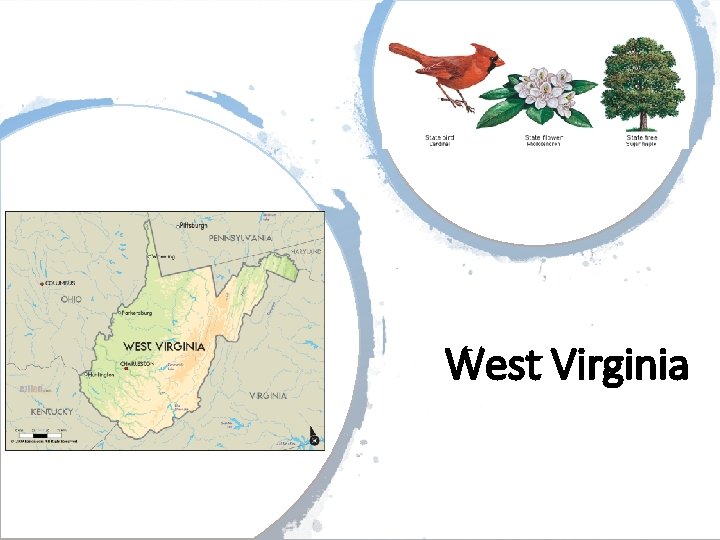
West Virginia
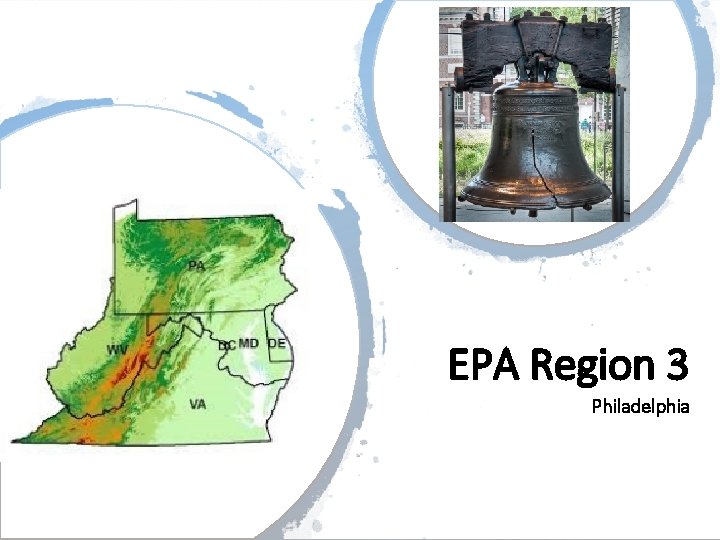
EPA Region 3 Philadelphia
EPA Region 3 AWOP Program Administered by the Drinking Water Section Two Objectives: facilitation and direct implementation Member States: CT, MD, MI, PA, VA, WV Consideration states: NJ, MA Successful example of cooperative federalism EPA working collaboratively with states and local governments to benefit the public
5 Year Forecast: Maintaining the Region 3 Program Regional Facilitation • AWOP program responsibilities Direct Implementation (DC) Regional Facilitation Goals • Champion continued participation by veteran states • Encourage and support new members, and continue engagement with interested states • Increase responsibility for meeting preparation and execution to reduce burden on EPA-TSC
EPA Region 3 AWOP Program DC Direct Implementation • 6 public water systems – 1 wholesaler (2 SW treatment plants) – 5 consecutives • 4 military bases – No treatment, no storage • 1 hotel – Chloramine treatment (hot and cold)
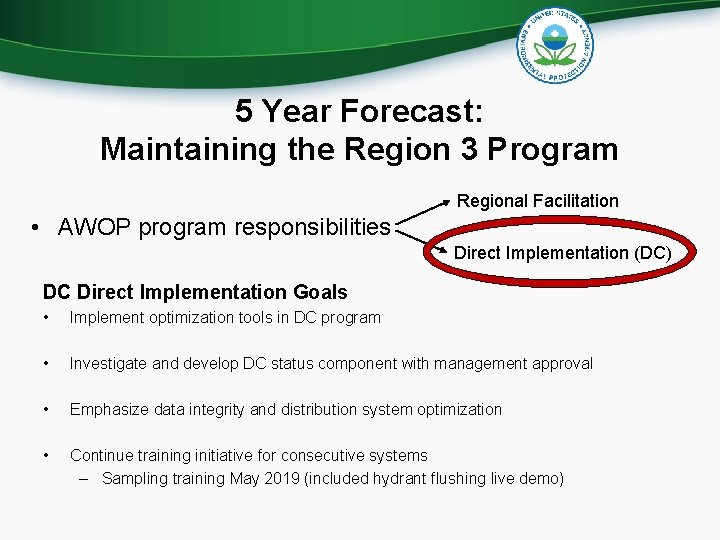
5 Year Forecast: Maintaining the Region 3 Program Regional Facilitation • AWOP program responsibilities Direct Implementation (DC) DC Direct Implementation Goals • Implement optimization tools in DC program • Investigate and develop DC status component with management approval • Emphasize data integrity and distribution system optimization • Continue training initiative for consecutive systems – Sampling training May 2019 (included hydrant flushing live demo)
EPA Region 3 AWOP Program Alysa Zirilli EPA Region 3 Alysa. Zirilli@epa. gov (215) 814 -5733