
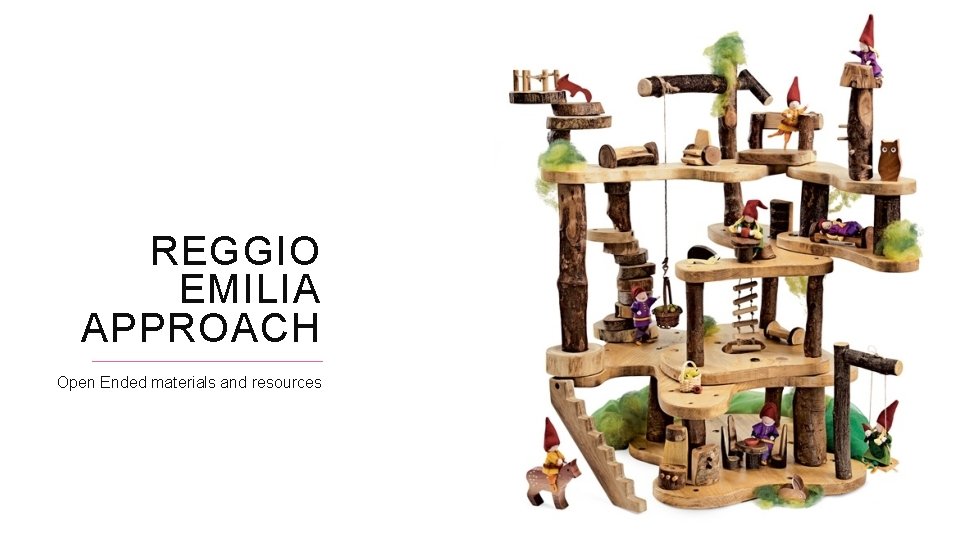
REGGIO EMILIA APPROACH Open Ended materials and resources
- Slides: 22
REGGIO EMILIA APPROACH Open Ended materials and resources
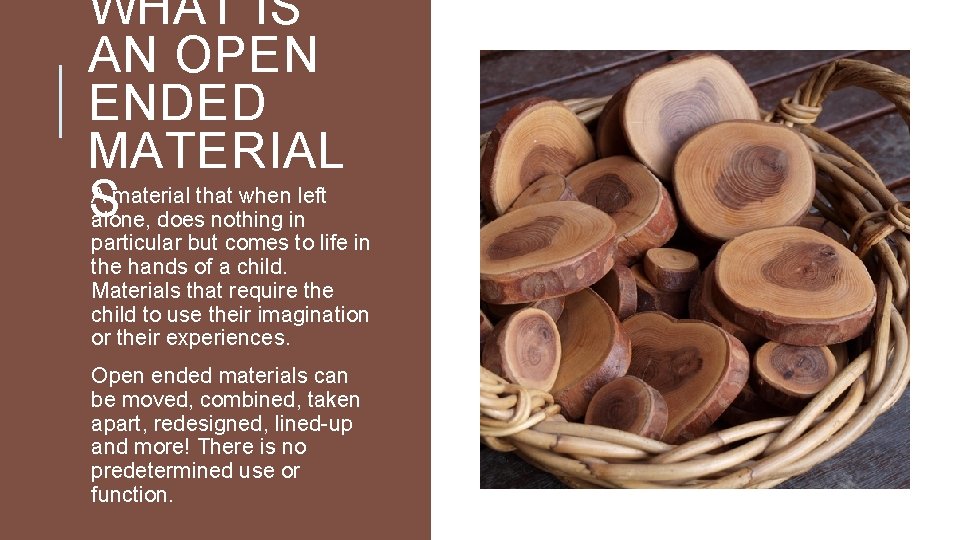
WHAT IS AN OPEN ENDED MATERIAL A material that when left S alone, does nothing in particular but comes to life in the hands of a child. Materials that require the child to use their imagination or their experiences. Open ended materials can be moved, combined, taken apart, redesigned, lined-up and more! There is no predetermined use or function.
WHAT IS AN OPEN ENDED MATERIALS Open-ended materials are things that children can use in a variety of different ways. Openended materials are about the process of exploration and can inspire creativity. While children may use open-ended materials to create some type of product, these products would all look different and reflect their individual ideas and exploration.
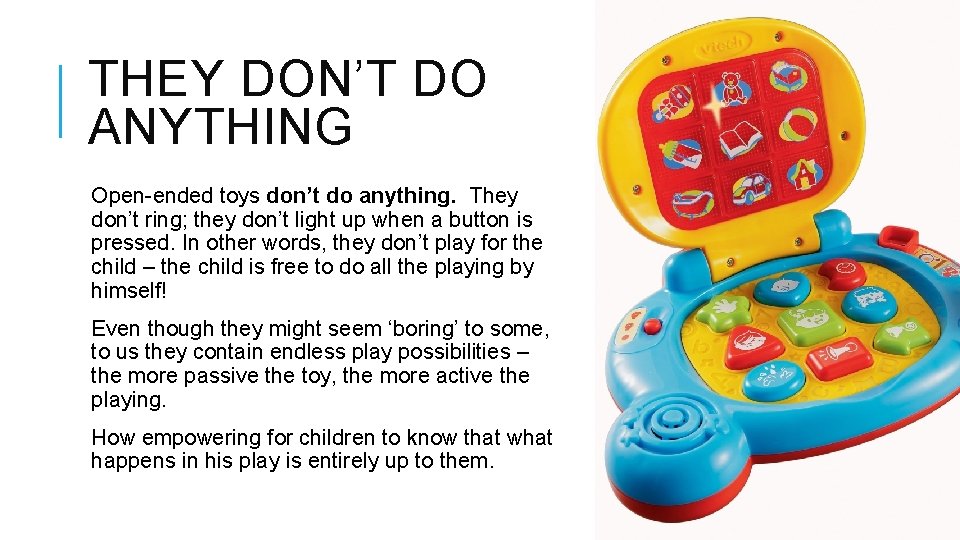
THEY DON’T DO ANYTHING Open-ended toys don’t do anything. They don’t ring; they don’t light up when a button is pressed. In other words, they don’t play for the child – the child is free to do all the playing by himself! Even though they might seem ‘boring’ to some, to us they contain endless play possibilities – the more passive the toy, the more active the playing. How empowering for children to know that what happens in his play is entirely up to them.
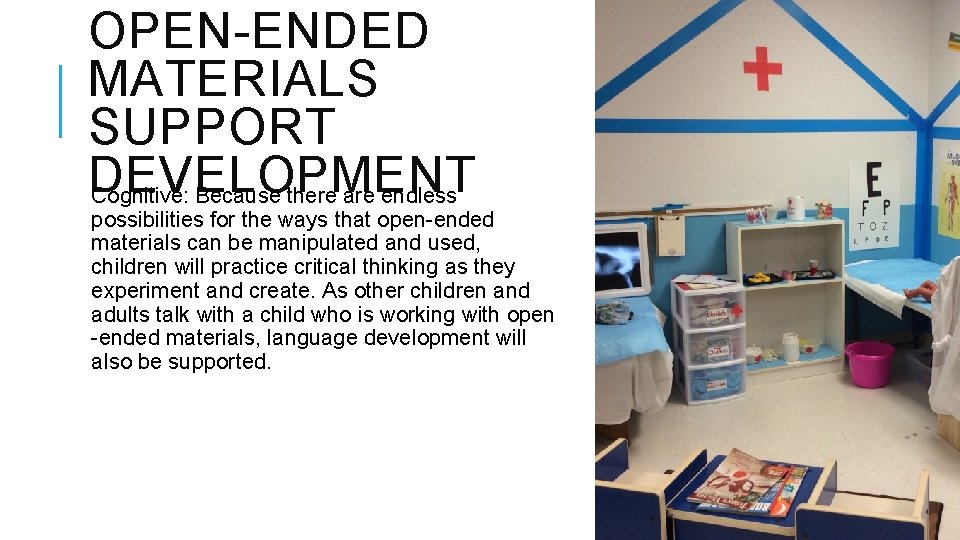
OPEN-ENDED MATERIALS SUPPORT DEVELOPMENT Cognitive: Because there are endless possibilities for the ways that open-ended materials can be manipulated and used, children will practice critical thinking as they experiment and create. As other children and adults talk with a child who is working with open -ended materials, language development will also be supported.
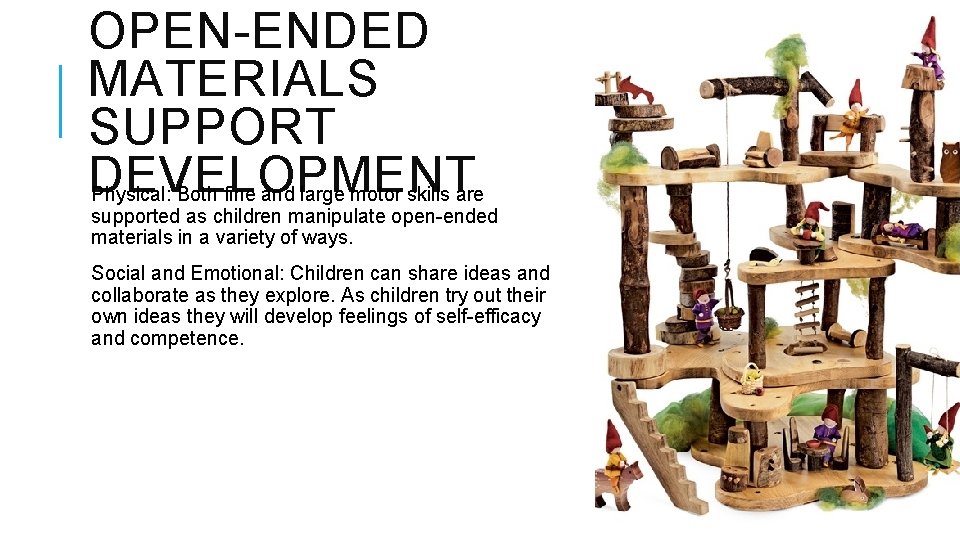
OPEN-ENDED MATERIALS SUPPORT DEVELOPMENT Physical: Both fine and large motor skills are supported as children manipulate open-ended materials in a variety of ways. Social and Emotional: Children can share ideas and collaborate as they explore. As children try out their own ideas they will develop feelings of self-efficacy and competence.
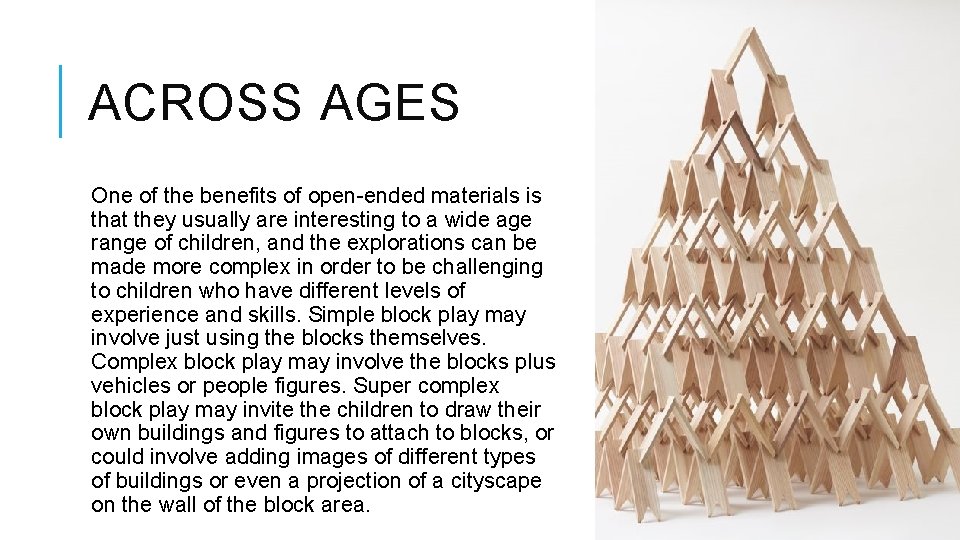
ACROSS AGES One of the benefits of open-ended materials is that they usually are interesting to a wide age range of children, and the explorations can be made more complex in order to be challenging to children who have different levels of experience and skills. Simple block play may involve just using the blocks themselves. Complex block play may involve the blocks plus vehicles or people figures. Super complex block play may invite the children to draw their own buildings and figures to attach to blocks, or could involve adding images of different types of buildings or even a projection of a cityscape on the wall of the block area.
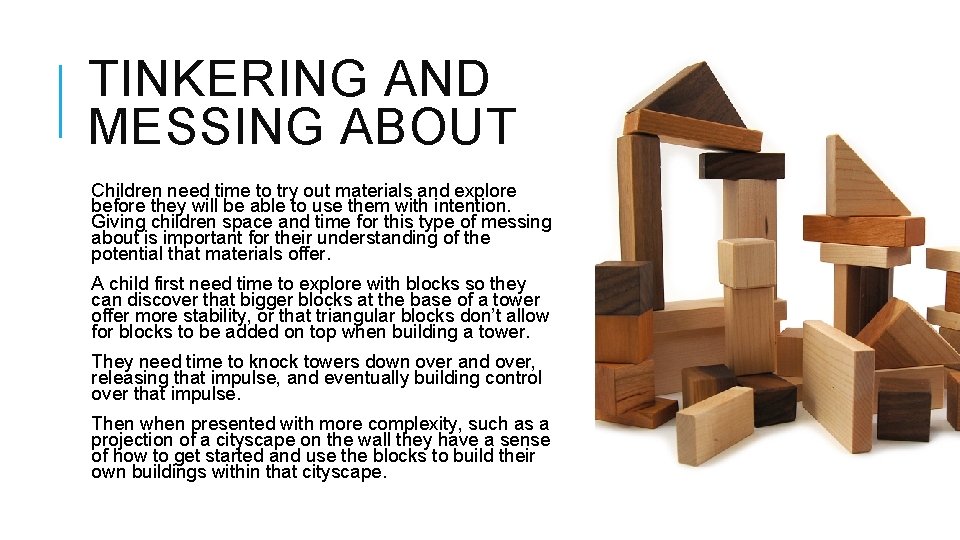
TINKERING AND MESSING ABOUT Children need time to try out materials and explore before they will be able to use them with intention. Giving children space and time for this type of messing about is important for their understanding of the potential that materials offer. A child first need time to explore with blocks so they can discover that bigger blocks at the base of a tower offer more stability, or that triangular blocks don’t allow for blocks to be added on top when building a tower. They need time to knock towers down over and over, releasing that impulse, and eventually building control over that impulse. Then when presented with more complexity, such as a projection of a cityscape on the wall they have a sense of how to get started and use the blocks to build their own buildings within that cityscape.
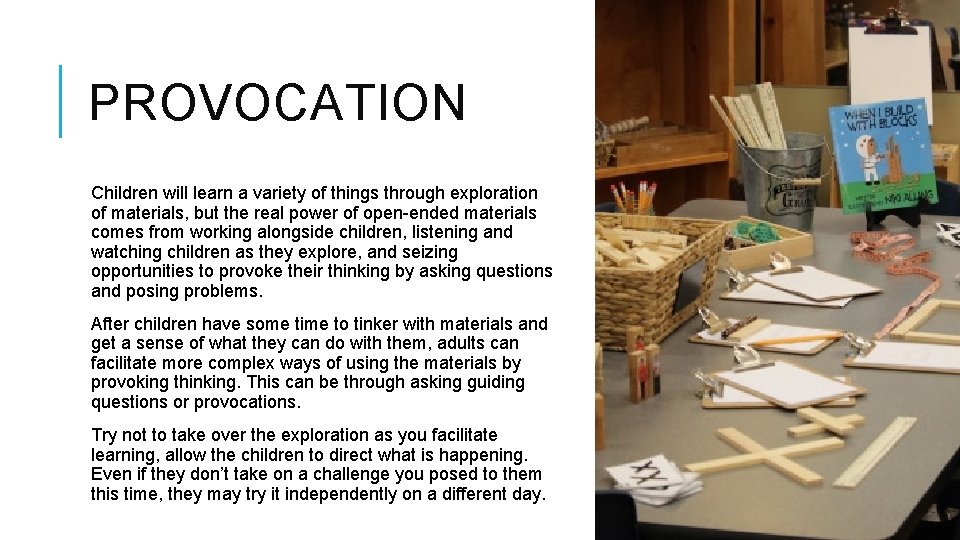
PROVOCATION Children will learn a variety of things through exploration of materials, but the real power of open-ended materials comes from working alongside children, listening and watching children as they explore, and seizing opportunities to provoke their thinking by asking questions and posing problems. After children have some time to tinker with materials and get a sense of what they can do with them, adults can facilitate more complex ways of using the materials by provoking thinking. This can be through asking guiding questions or provocations. Try not to take over the exploration as you facilitate learning, allow the children to direct what is happening. Even if they don’t take on a challenge you posed to them this time, they may try it independently on a different day.
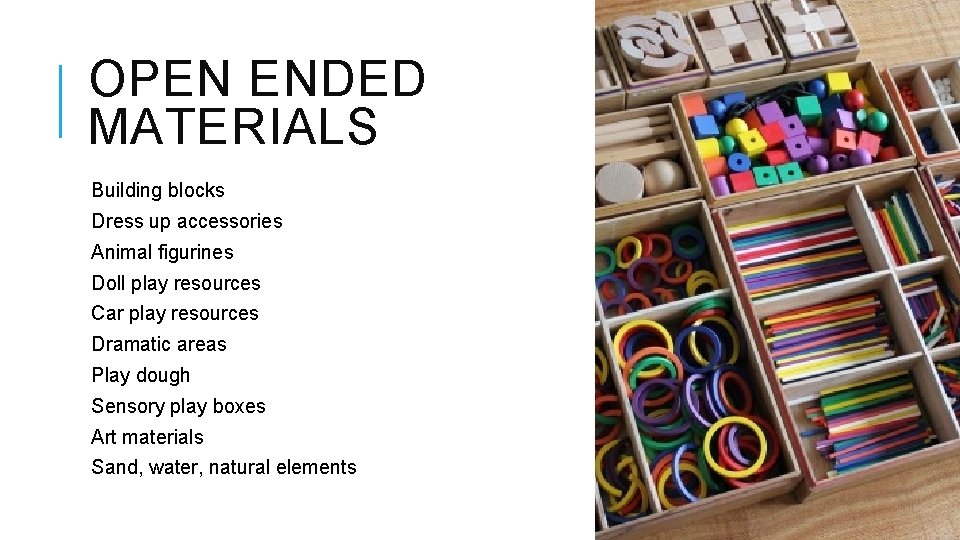
OPEN ENDED MATERIALS Building blocks Dress up accessories Animal figurines Doll play resources Car play resources Dramatic areas Play dough Sensory play boxes Art materials Sand, water, natural elements
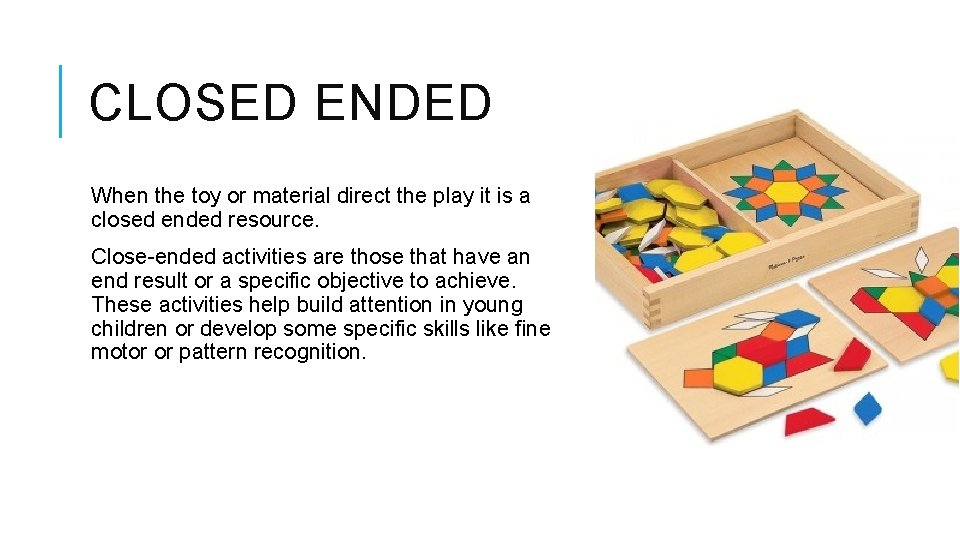
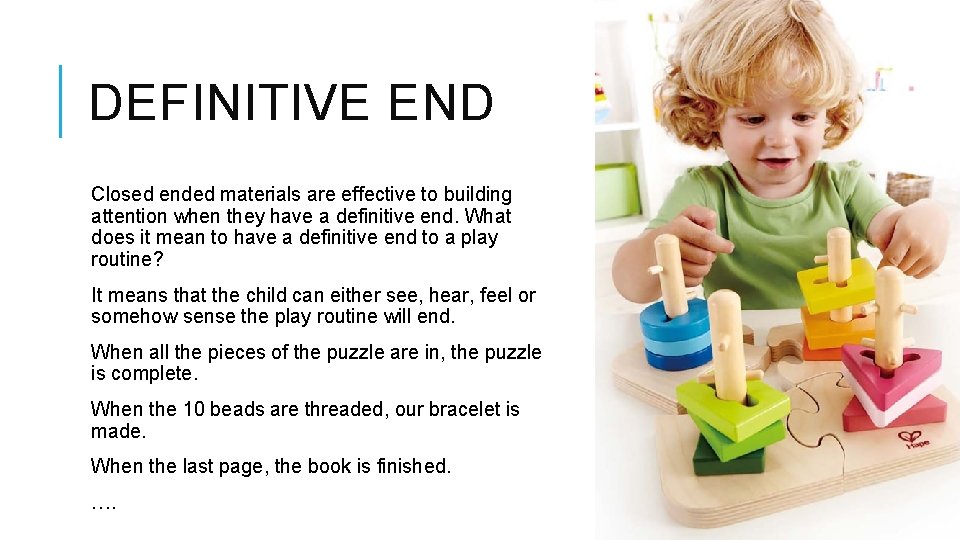
CLOSED ENDED When the toy or material direct the play it is a closed ended resource. Close-ended activities are those that have an end result or a specific objective to achieve. These activities help build attention in young children or develop some specific skills like fine motor or pattern recognition.
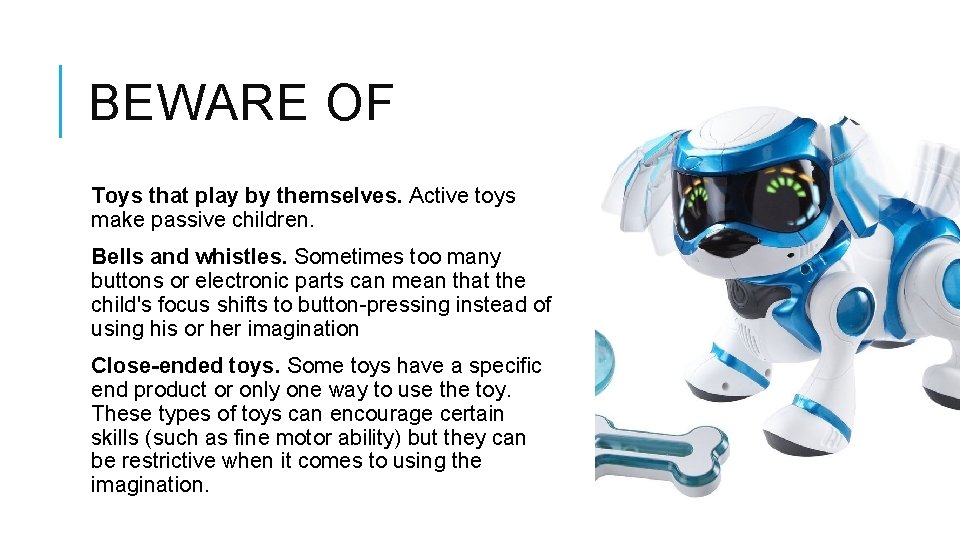
BEWARE OF Toys that play by themselves. Active toys make passive children. Bells and whistles. Sometimes too many buttons or electronic parts can mean that the child's focus shifts to button-pressing instead of using his or her imagination Close-ended toys. Some toys have a specific end product or only one way to use the toy. These types of toys can encourage certain skills (such as fine motor ability) but they can be restrictive when it comes to using the imagination.
DEFINITIVE END Closed ended materials are effective to building attention when they have a definitive end. What does it mean to have a definitive end to a play routine? It means that the child can either see, hear, feel or somehow sense the play routine will end. When all the pieces of the puzzle are in, the puzzle is complete. When the 10 beads are threaded, our bracelet is made. When the last page, the book is finished. ….
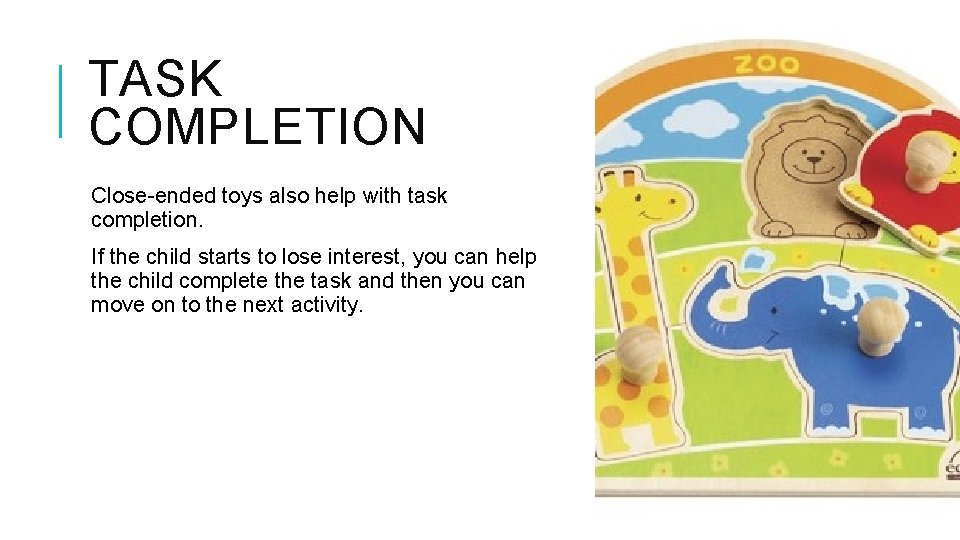
TASK COMPLETION Close-ended toys also help with task completion. If the child starts to lose interest, you can help the child complete the task and then you can move on to the next activity.
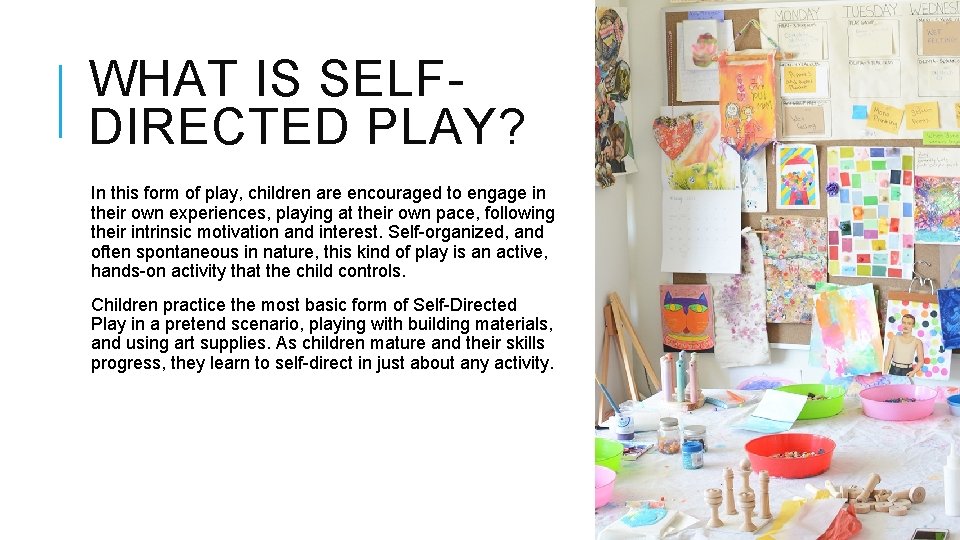
WHAT IS SELFDIRECTED PLAY? In this form of play, children are encouraged to engage in their own experiences, playing at their own pace, following their intrinsic motivation and interest. Self-organized, and often spontaneous in nature, this kind of play is an active, hands-on activity that the child controls. Children practice the most basic form of Self-Directed Play in a pretend scenario, playing with building materials, and using art supplies. As children mature and their skills progress, they learn to self-direct in just about any activity.
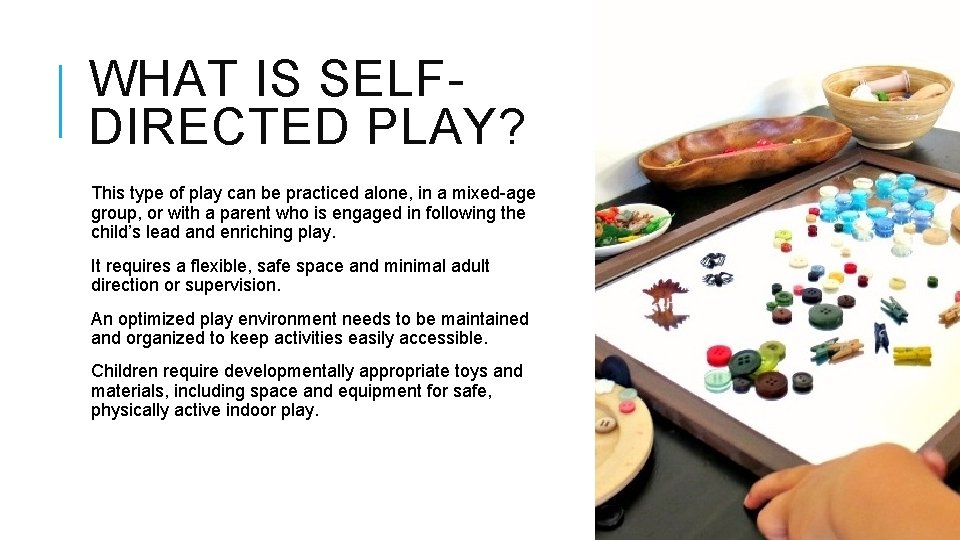
WHAT IS SELFDIRECTED PLAY? This type of play can be practiced alone, in a mixed-age group, or with a parent who is engaged in following the child’s lead and enriching play. It requires a flexible, safe space and minimal adult direction or supervision. An optimized play environment needs to be maintained and organized to keep activities easily accessible. Children require developmentally appropriate toys and materials, including space and equipment for safe, physically active indoor play.
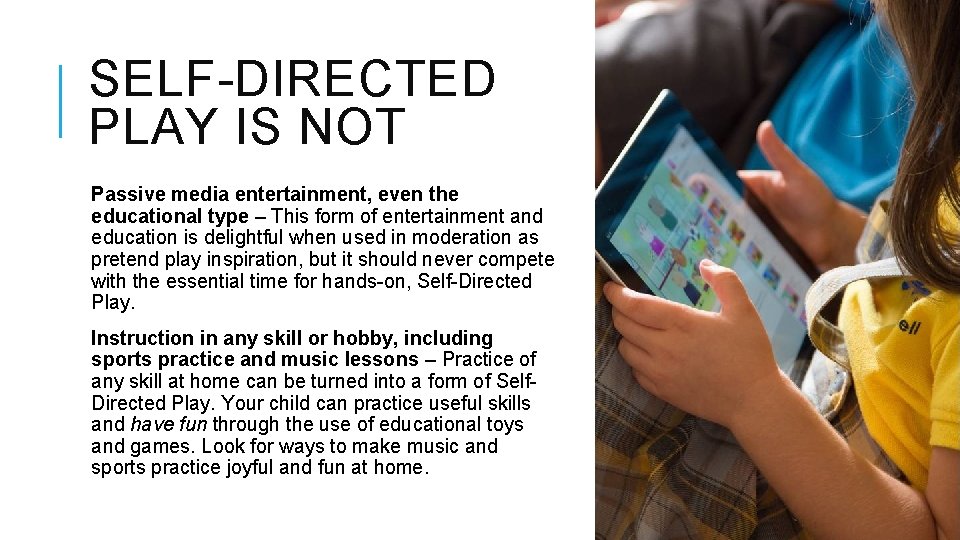
SELF-DIRECTED PLAY IS NOT Passive media entertainment, even the educational type – This form of entertainment and education is delightful when used in moderation as pretend play inspiration, but it should never compete with the essential time for hands-on, Self-Directed Play. Instruction in any skill or hobby, including sports practice and music lessons – Practice of any skill at home can be turned into a form of Self. Directed Play. Your child can practice useful skills and have fun through the use of educational toys and games. Look for ways to make music and sports practice joyful and fun at home.
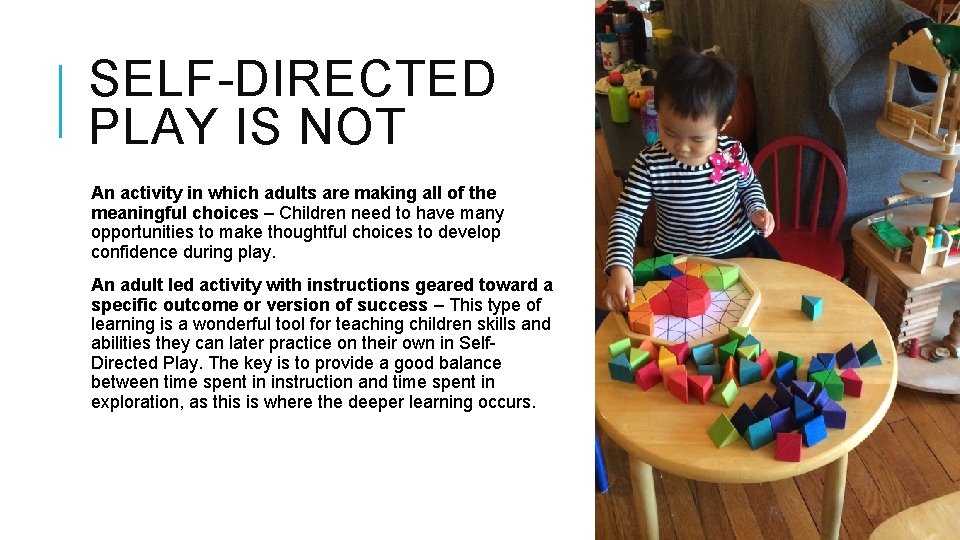
SELF-DIRECTED PLAY IS NOT An activity in which adults are making all of the meaningful choices – Children need to have many opportunities to make thoughtful choices to develop confidence during play. An adult led activity with instructions geared toward a specific outcome or version of success – This type of learning is a wonderful tool for teaching children skills and abilities they can later practice on their own in Self. Directed Play. The key is to provide a good balance between time spent in instruction and time spent in exploration, as this is where the deeper learning occurs.
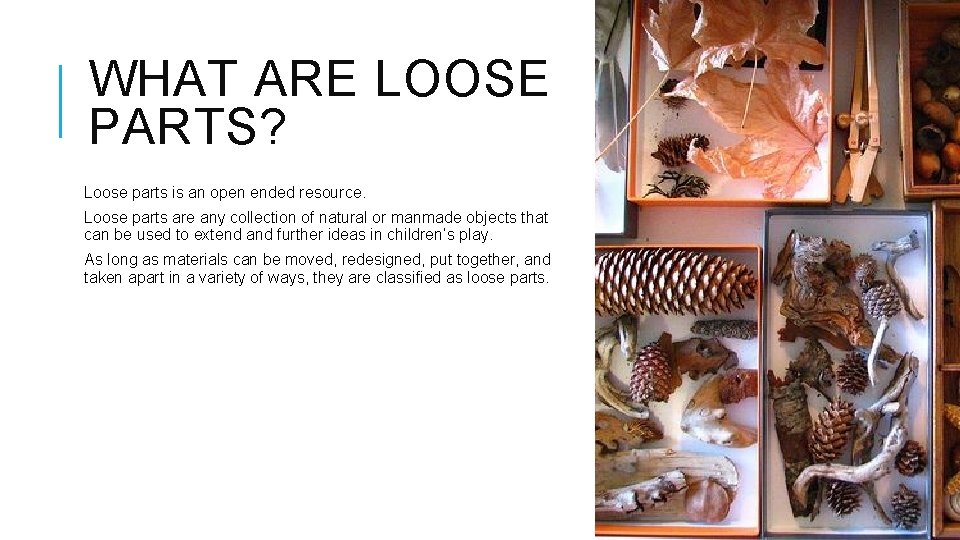
WHAT ARE LOOSE PARTS? Loose parts is an open ended resource. Loose parts are any collection of natural or manmade objects that can be used to extend and further ideas in children’s play. As long as materials can be moved, redesigned, put together, and taken apart in a variety of ways, they are classified as loose parts.
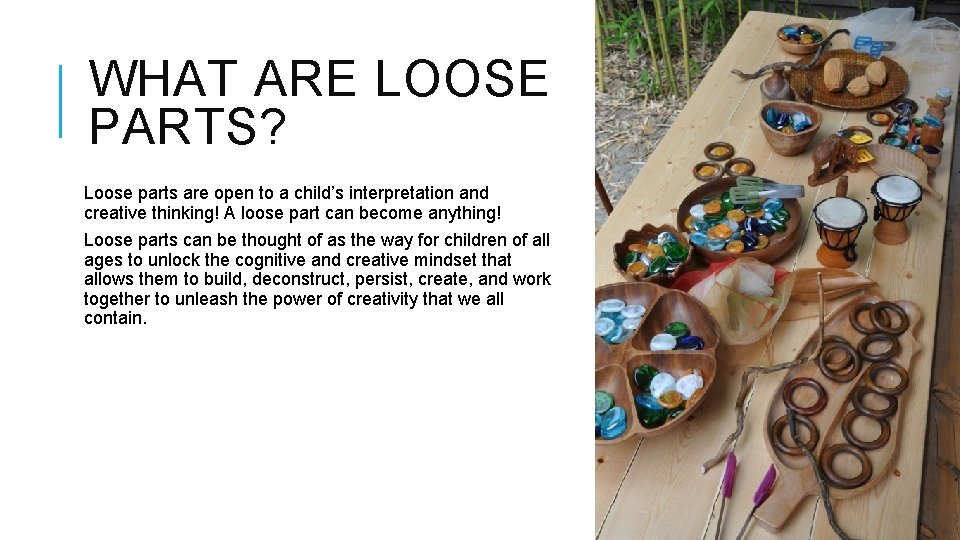
WHAT ARE LOOSE PARTS? Loose parts are open to a child’s interpretation and creative thinking! A loose part can become anything! Loose parts can be thought of as the way for children of all ages to unlock the cognitive and creative mindset that allows them to build, deconstruct, persist, create, and work together to unleash the power of creativity that we all contain.
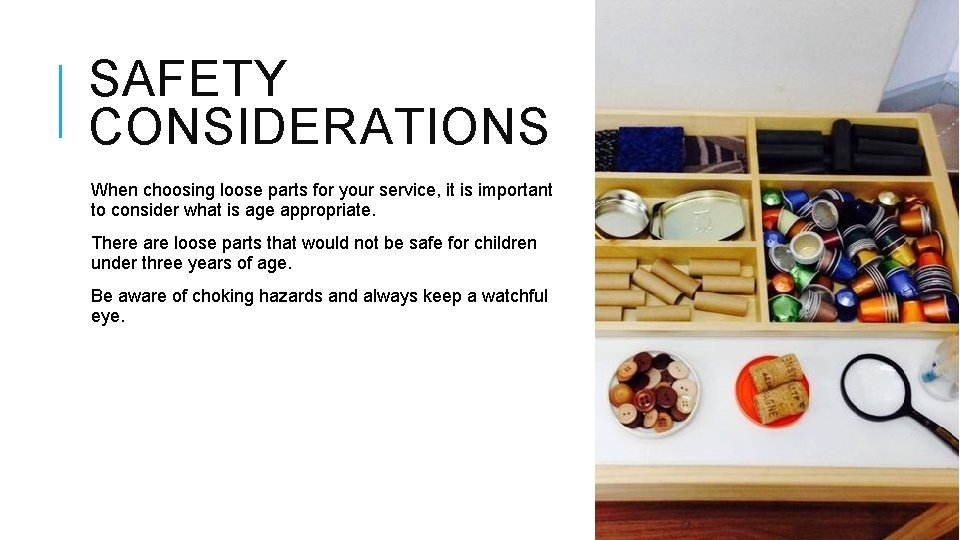
SAFETY CONSIDERATIONS When choosing loose parts for your service, it is important to consider what is age appropriate. There are loose parts that would not be safe for children under three years of age. Be aware of choking hazards and always keep a watchful eye.
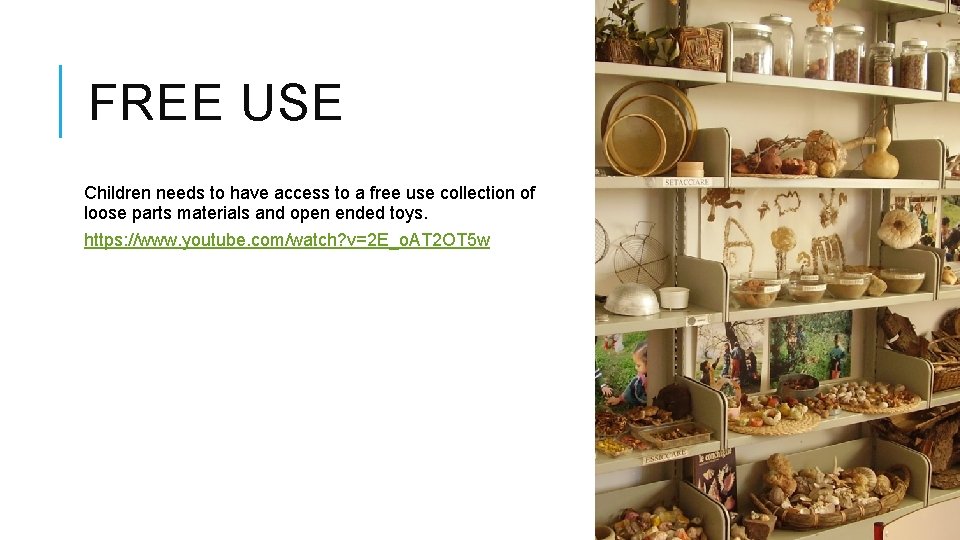
FREE USE Children needs to have access to a free use collection of loose parts materials and open ended toys. https: //www. youtube. com/watch? v=2 E_o. AT 2 OT 5 w