
Regents Review Scientific Method Graphing The Goals of
- Slides: 19
Regents Review Scientific Method & Graphing
The Goals of Science… Goals of Science: Understand, Predict, Explain…
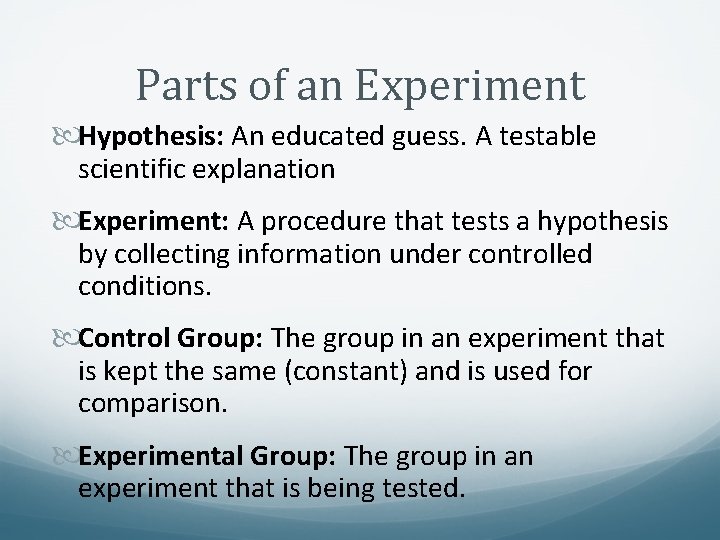
Parts of an Experiment Hypothesis: An educated guess. A testable scientific explanation Experiment: A procedure that tests a hypothesis by collecting information under controlled conditions. Control Group: The group in an experiment that is kept the same (constant) and is used for comparison. Experimental Group: The group in an experiment that is being tested.
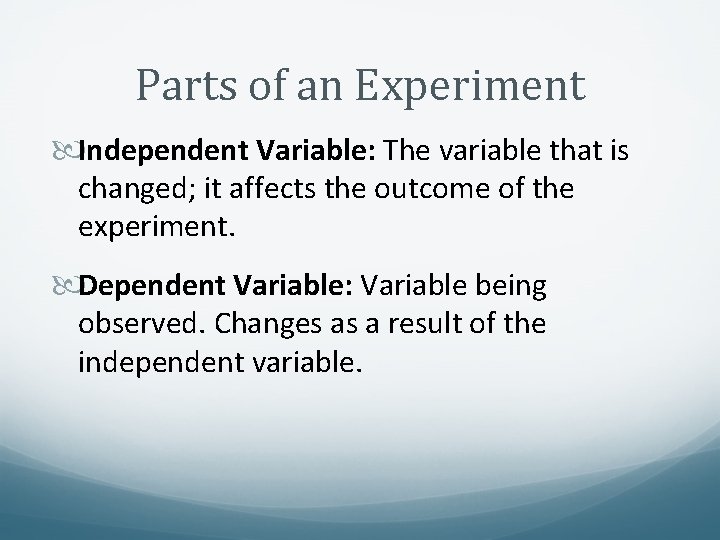
Parts of an Experiment Independent Variable: The variable that is changed; it affects the outcome of the experiment. Dependent Variable: Variable being observed. Changes as a result of the independent variable.
Parts of an Experiment Data: Information gathered from experiments; the results. Quantitative: numerical data (graphs & charts) Qualitative: observational data (color, shape, texture) Theory: A well-tested explanation that unifies a broad range of observations. Cell Theory, Theory of Evolution…
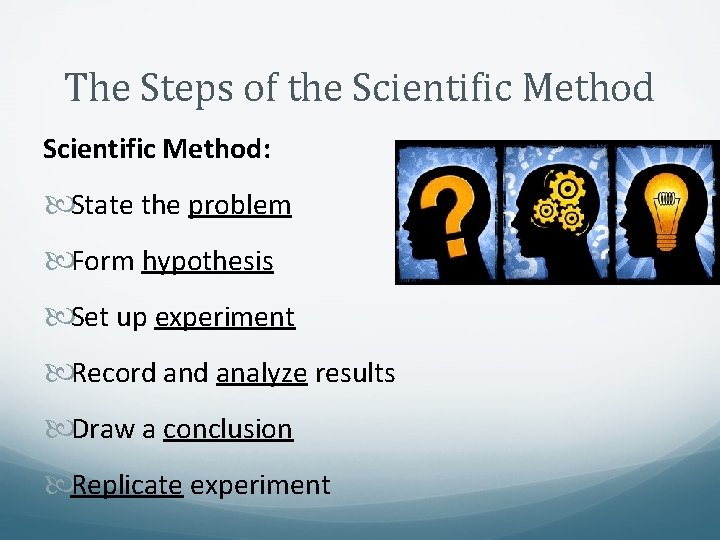
The Steps of the Scientific Method: State the problem Form hypothesis Set up experiment Record analyze results Draw a conclusion Replicate experiment
Reliable Data Results from your experiments are reliable/valid if: 1. A large sample size was used 2. Many trials were performed
Graphing ALWAYS GRAPH IN PENCIL!
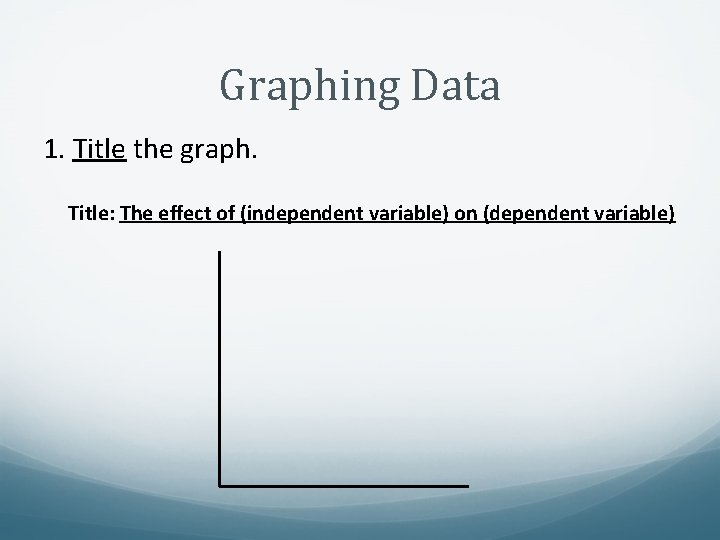
Graphing Data 1. Title the graph. Title: The effect of (independent variable) on (dependent variable)
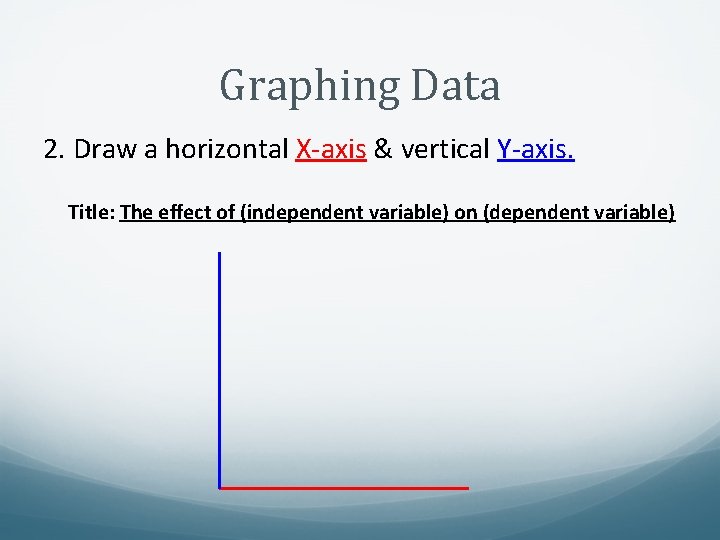
Graphing Data 2. Draw a horizontal X-axis & vertical Y-axis. Title: The effect of (independent variable) on (dependent variable)
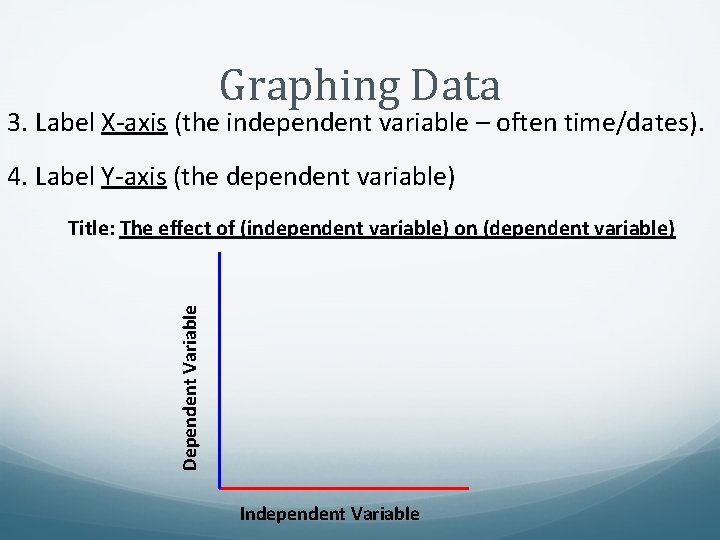
Graphing Data 3. Label X-axis (the independent variable – often time/dates). 4. Label Y-axis (the dependent variable) Dependent Variable Title: The effect of (independent variable) on (dependent variable) Independent Variable
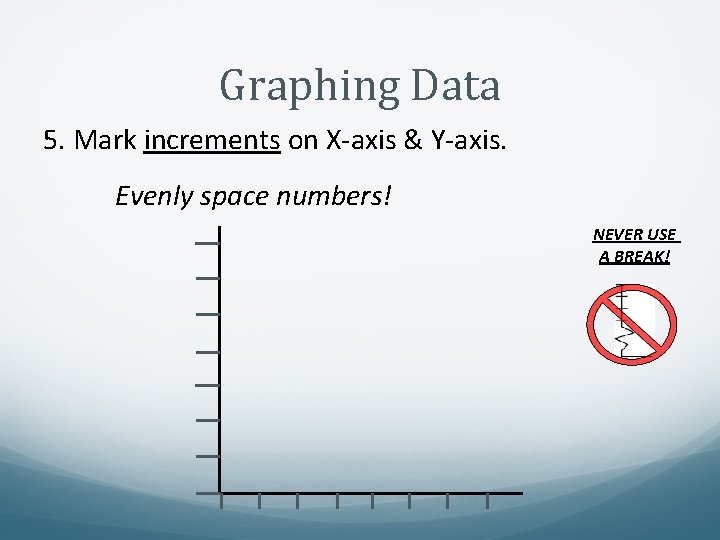
Graphing Data 5. Mark increments on X-axis & Y-axis. Evenly space numbers! NEVER USE A BREAK!
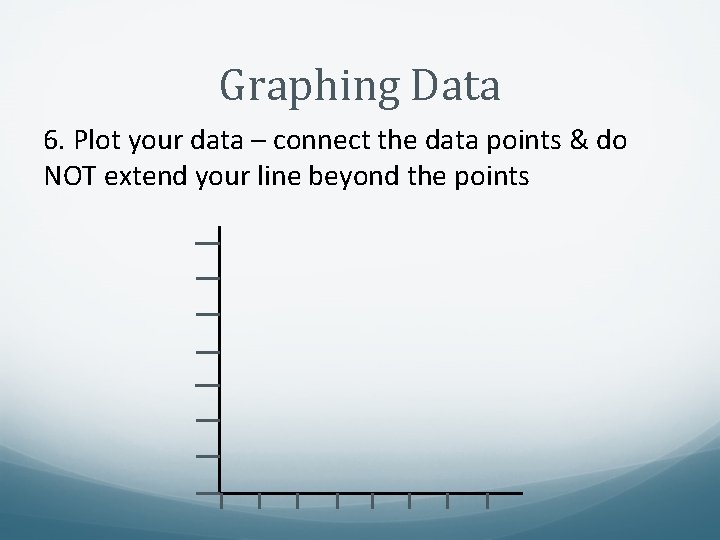
Graphing Data 6. Plot your data – connect the data points & do NOT extend your line beyond the points
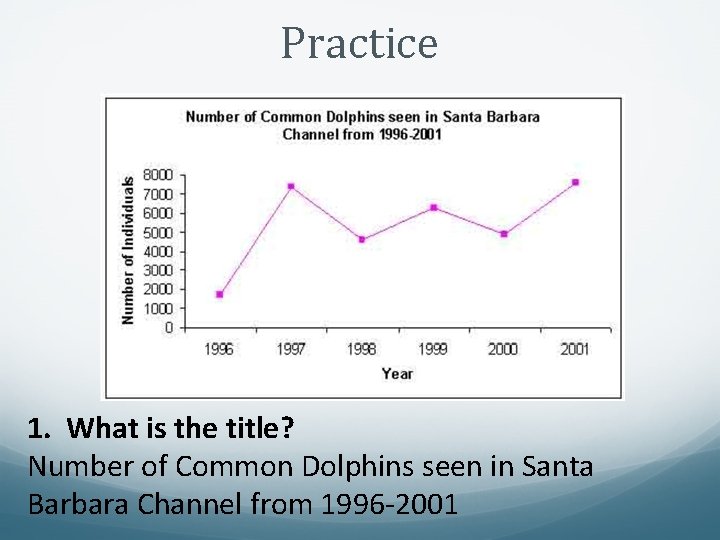
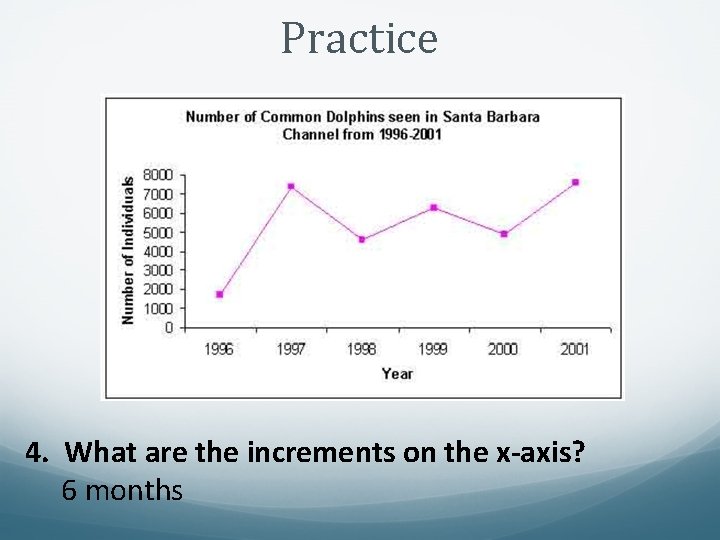
Practice 1. What is the title? Number of Common Dolphins seen in Santa Barbara Channel from 1996 -2001
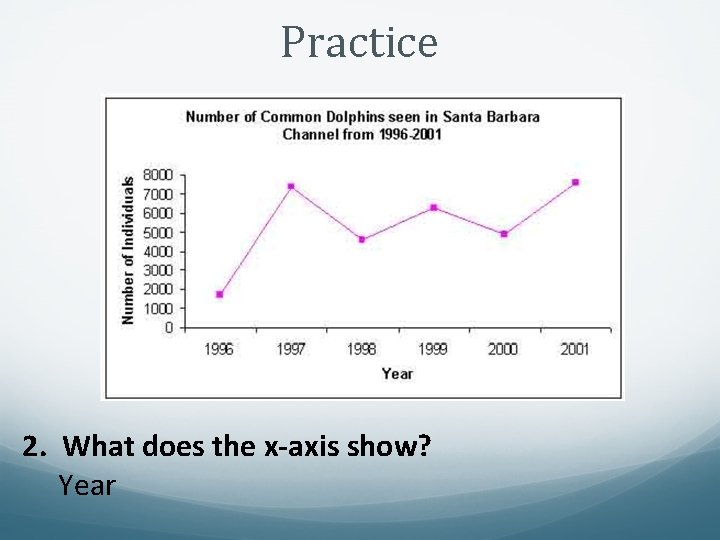
Practice 2. What does the x-axis show? Year
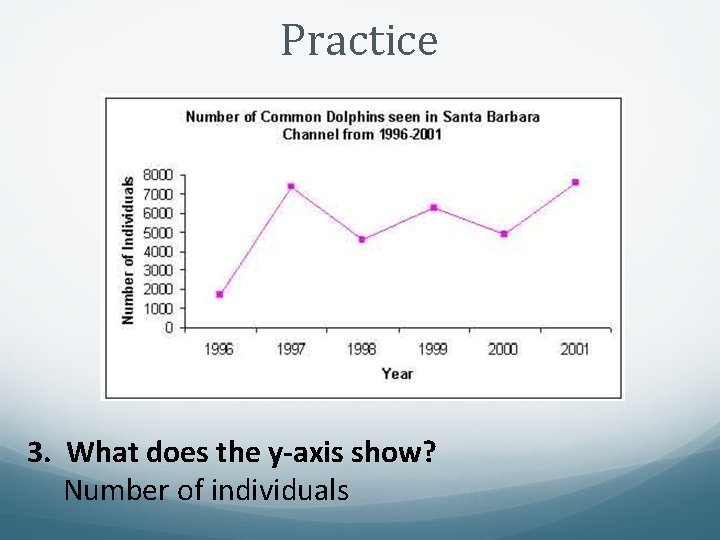
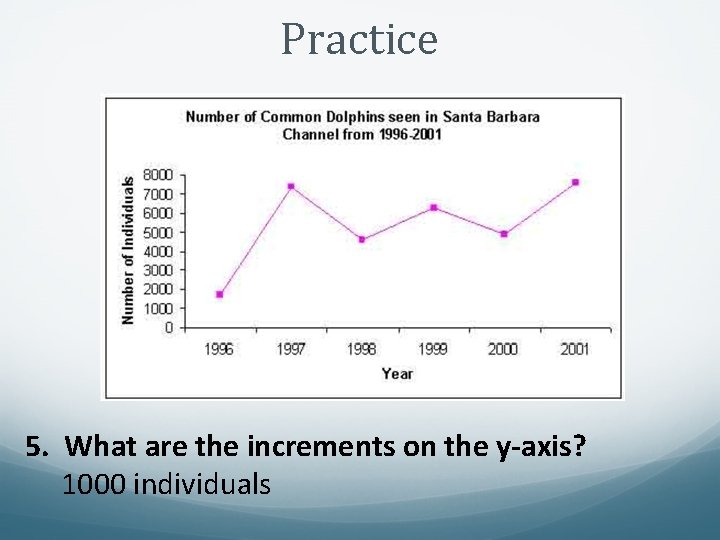
Practice 3. What does the y-axis show? Number of individuals
Practice 4. What are the increments on the x-axis? 6 months
Practice 5. What are the increments on the y-axis? 1000 individuals
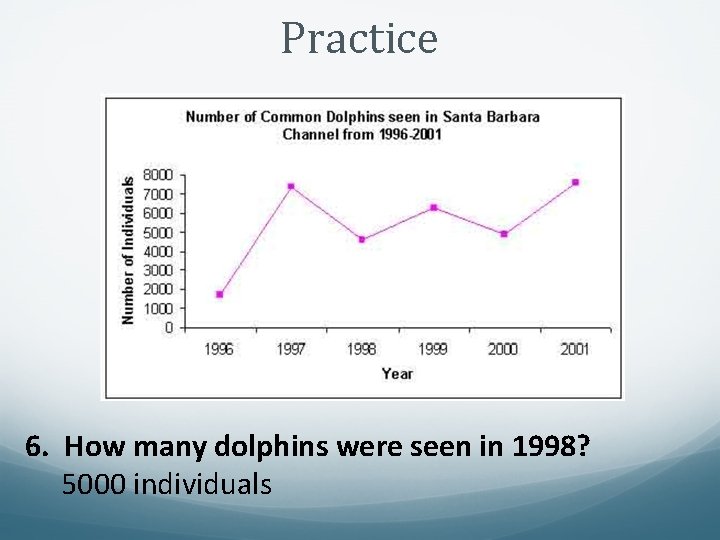
Practice 6. How many dolphins were seen in 1998? 5000 individuals