
Regents Interactive Flash Cards Regents Vocabulary How to
Regents Interactive Flash Cards Regents Vocabulary
How to Use Interactive Flashcards • It’s simple- click on the vocabulary word to see its definition. • Click the return button to go back to the term page • Repeat!
Vocabulary Set I: Major Global Concepts Page 1: 1 Absolutism-Nationalism Page 2: 2 Revolutions-Westernization
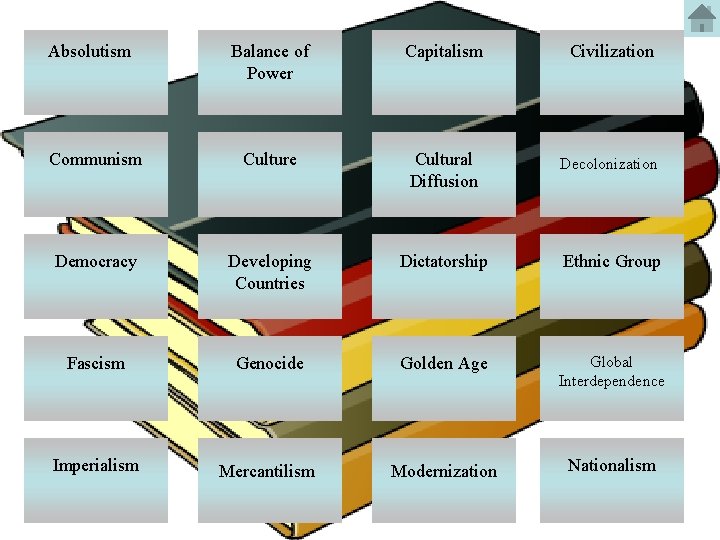
Absolutism Balance of Power Capitalism Civilization Communism Culture Cultural Diffusion Decolonization Democracy Developing Countries Dictatorship Ethnic Group Fascism Genocide Golden Age Global Interdependence Imperialism Mercantilism Modernization Nationalism
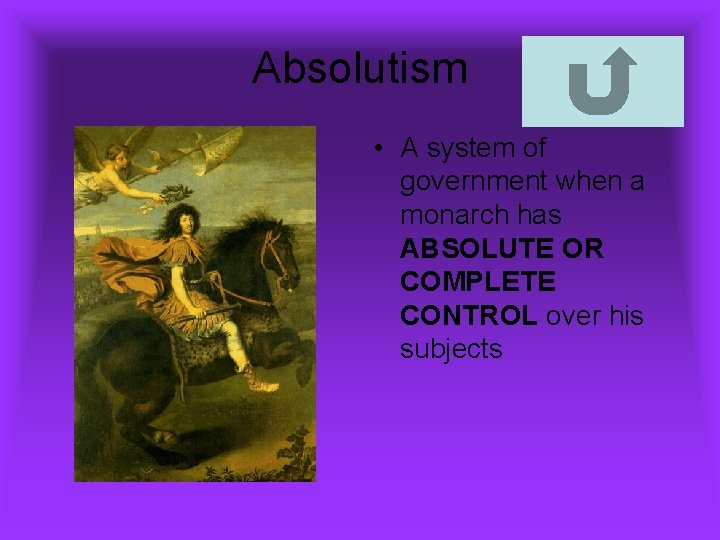
Absolutism • A system of government when a monarch has ABSOLUTE OR COMPLETE CONTROL over his subjects
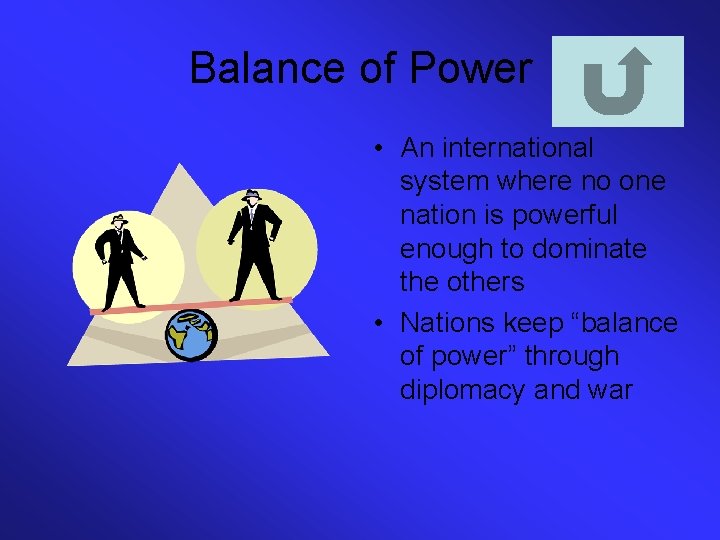
Balance of Power • An international system where no one nation is powerful enough to dominate the others • Nations keep “balance of power” through diplomacy and war
Capitalism • An economic system based on private ownership of property and wealth • People are free to buy or not buy what is produced • People invest their wealth (capital) to make more money
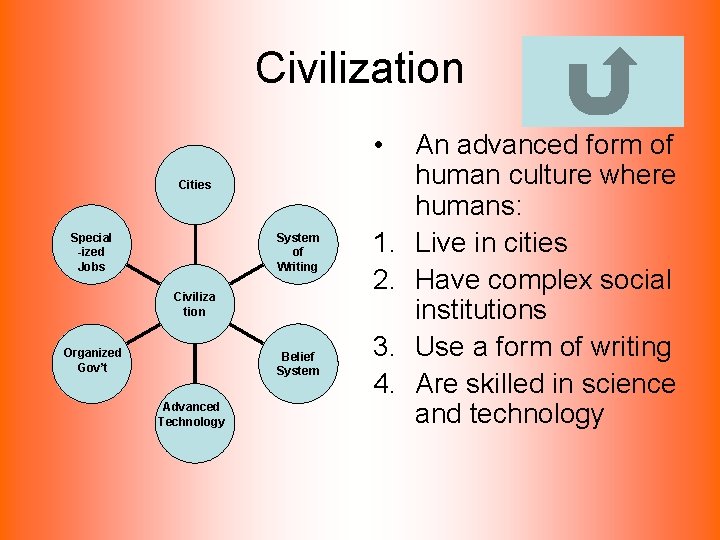
Civilization • Cities System of Writing Special -ized Jobs Civiliza tion Organized Gov’t Belief System Advanced Technology 1. 2. 3. 4. An advanced form of human culture where humans: Live in cities Have complex social institutions Use a form of writing Are skilled in science and technology
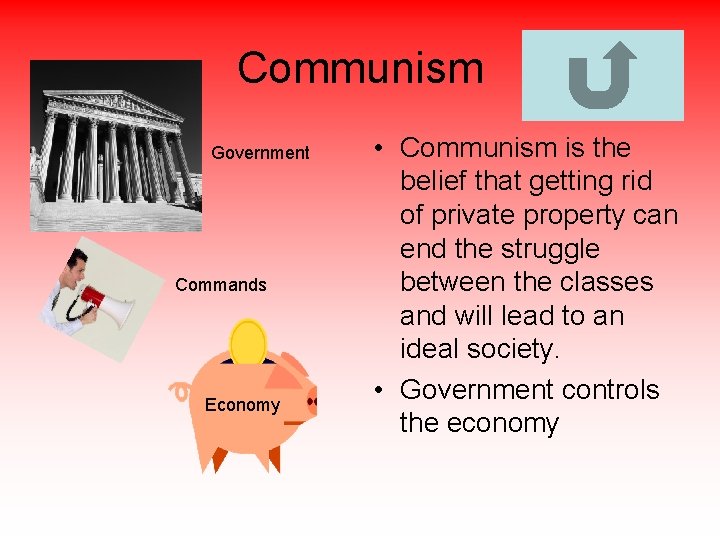
Communism Government Commands Economy • Communism is the belief that getting rid of private property can end the struggle between the classes and will lead to an ideal society. • Government controls the economy
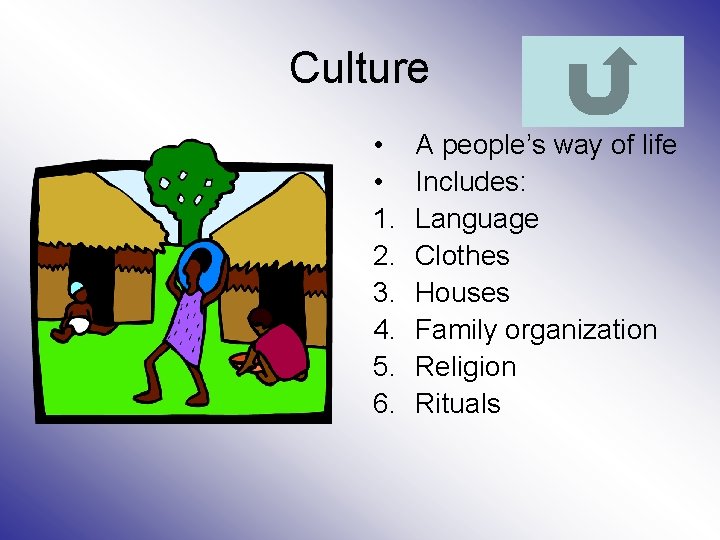
Culture • • 1. 2. 3. 4. 5. 6. A people’s way of life Includes: Language Clothes Houses Family organization Religion Rituals
Cultural Diffusion • The spread of ideas and products from one culture to another. • Happens through trade and war OF CULTURE
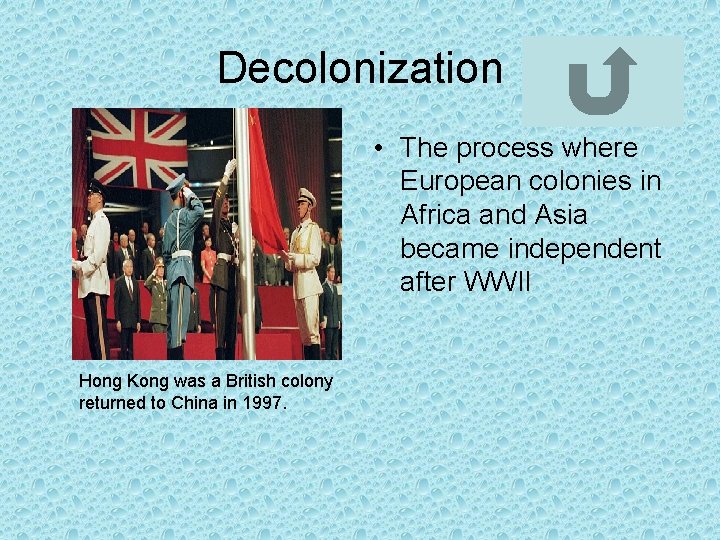
Decolonization • The process where European colonies in Africa and Asia became independent after WWII Hong Kong was a British colony returned to China in 1997.
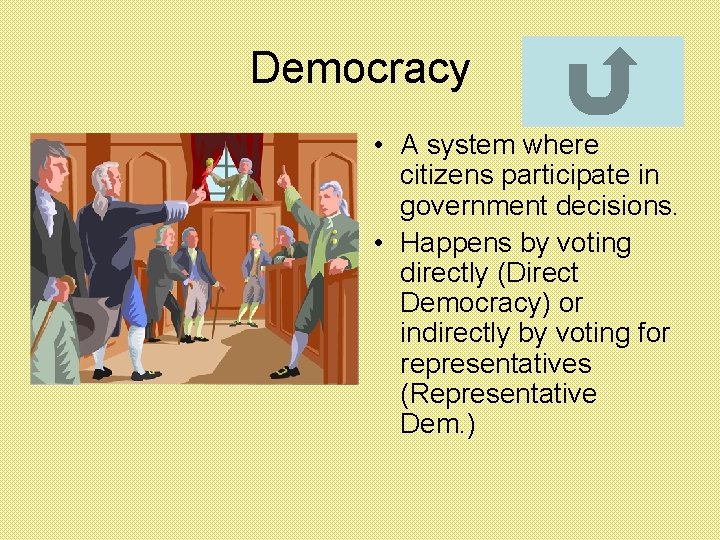
Democracy • A system where citizens participate in government decisions. • Happens by voting directly (Direct Democracy) or indirectly by voting for representatives (Representative Dem. )
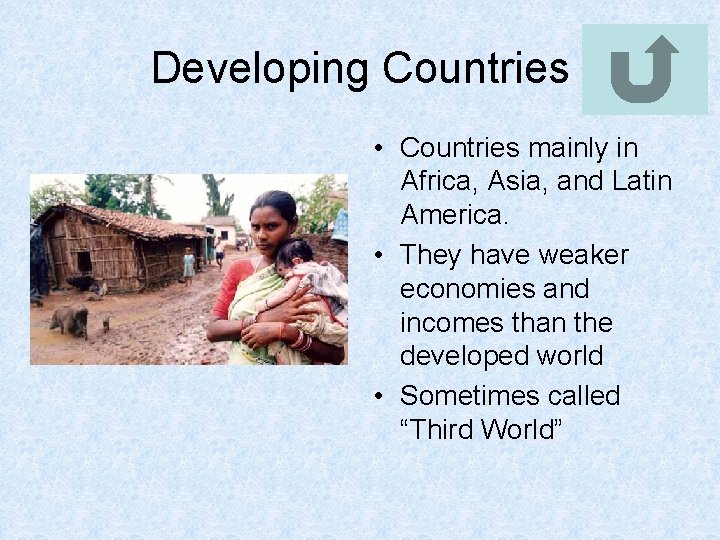
Developing Countries • Countries mainly in Africa, Asia, and Latin America. • They have weaker economies and incomes than the developed world • Sometimes called “Third World”
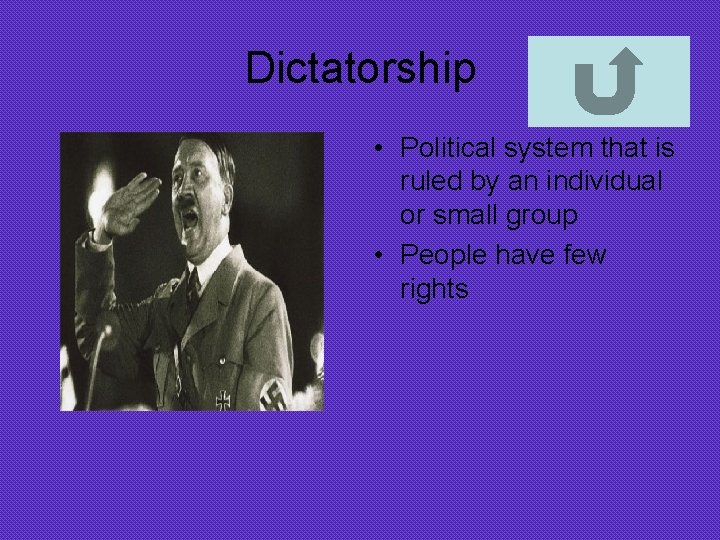
Dictatorship • Political system that is ruled by an individual or small group • People have few rights
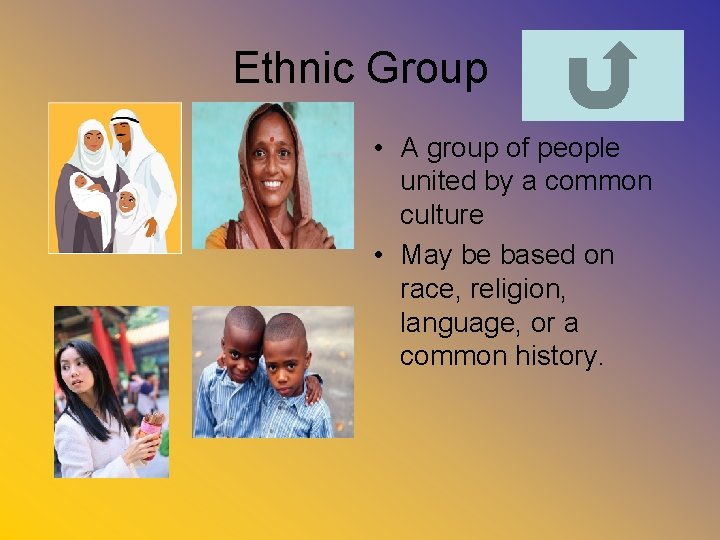
Ethnic Group • A group of people united by a common culture • May be based on race, religion, language, or a common history.
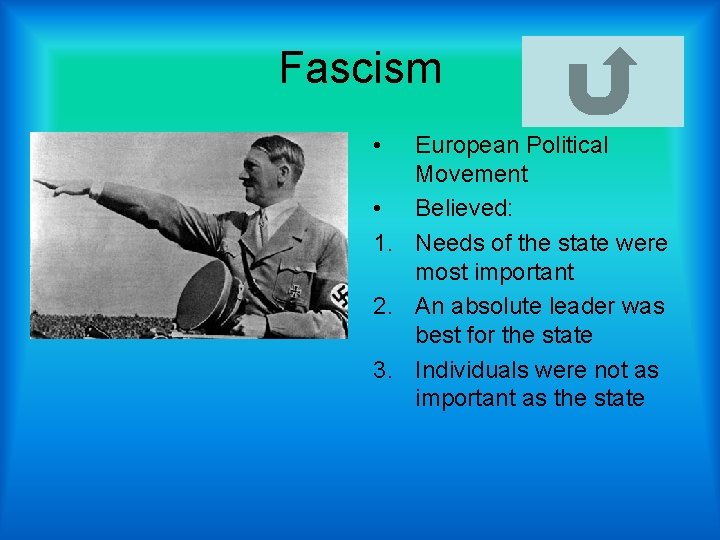
Fascism • European Political Movement • Believed: 1. Needs of the state were most important 2. An absolute leader was best for the state 3. Individuals were not as important as the state
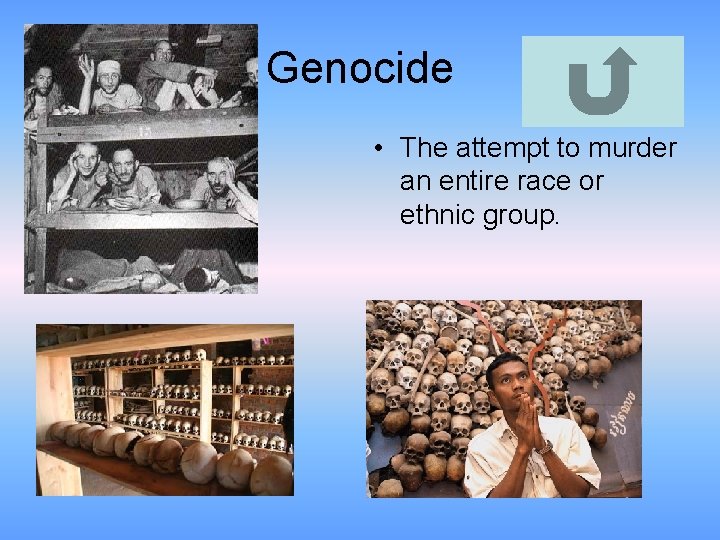
Genocide • The attempt to murder an entire race or ethnic group.
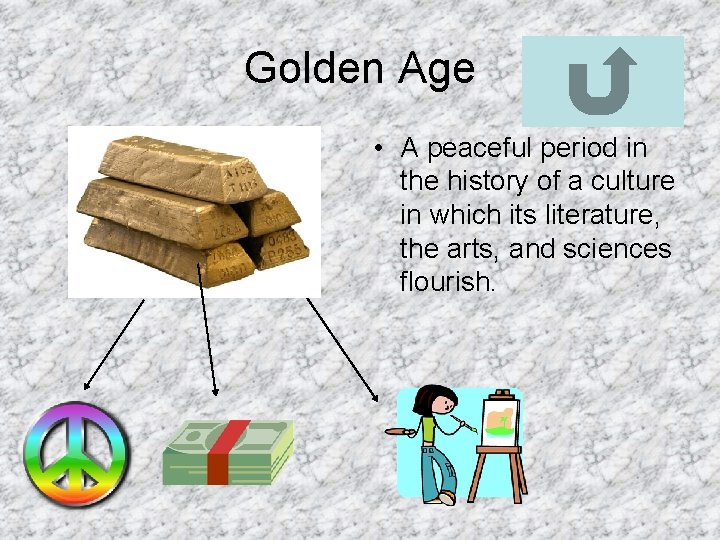
Golden Age • A peaceful period in the history of a culture in which its literature, the arts, and sciences flourish.
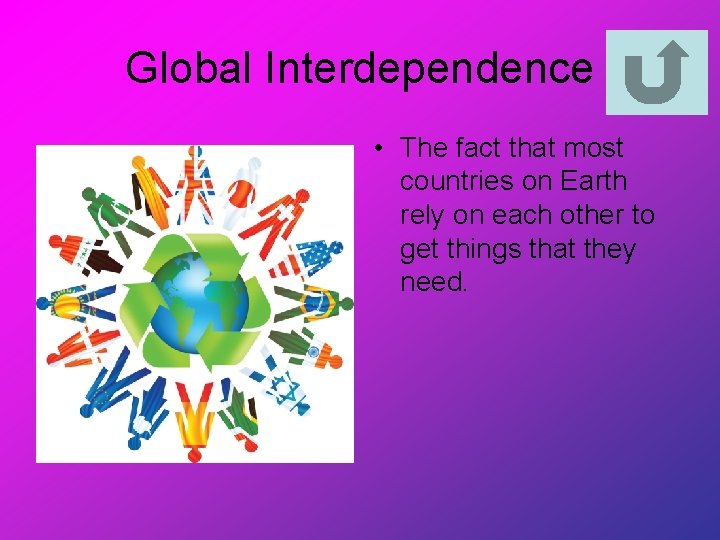
Global Interdependence • The fact that most countries on Earth rely on each other to get things that they need.
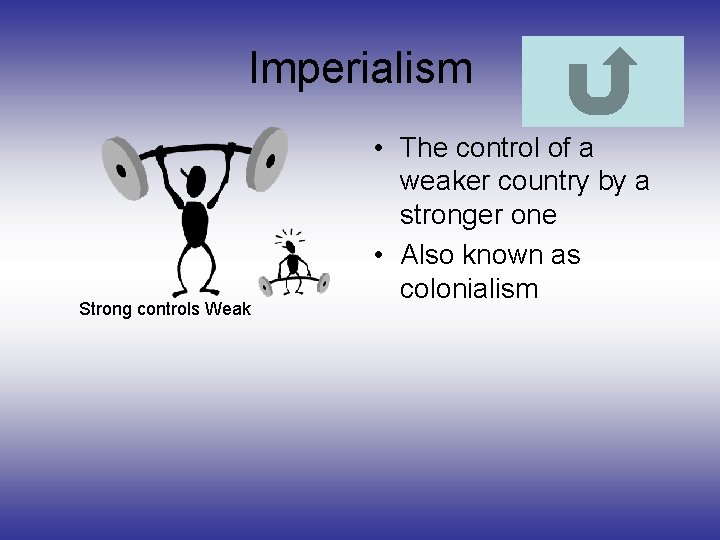
Imperialism Strong controls Weak • The control of a weaker country by a stronger one • Also known as colonialism
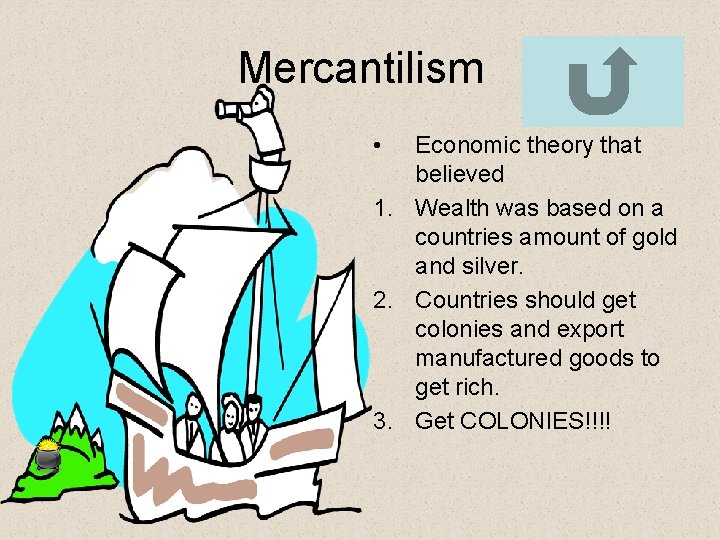
Mercantilism • Economic theory that believed 1. Wealth was based on a countries amount of gold and silver. 2. Countries should get colonies and export manufactured goods to get rich. 3. Get COLONIES!!!!
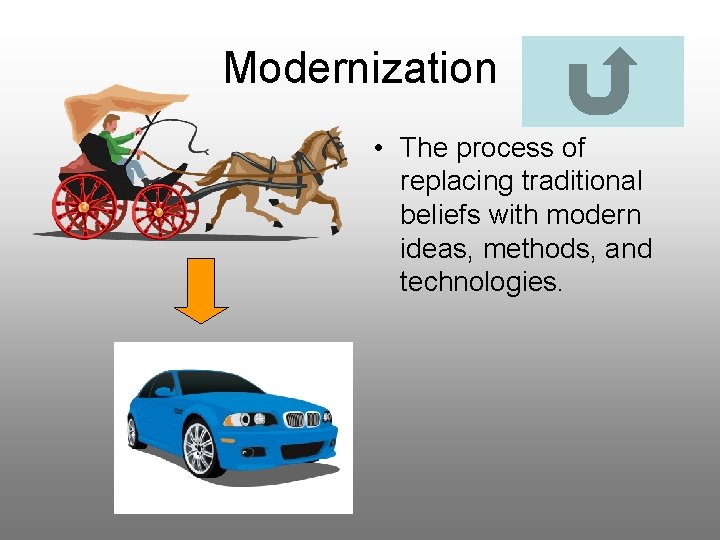
Modernization • The process of replacing traditional beliefs with modern ideas, methods, and technologies.
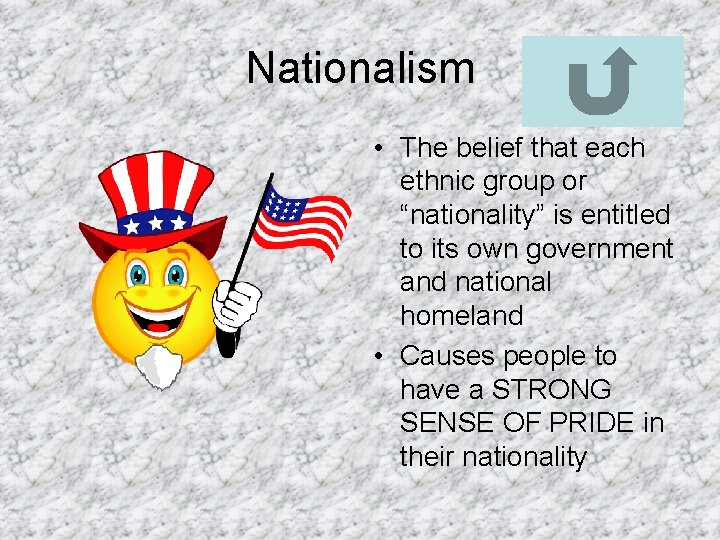
Nationalism • The belief that each ethnic group or “nationality” is entitled to its own government and national homeland • Causes people to have a STRONG SENSE OF PRIDE in their nationality
Revolutions Scientific Method Totalitarianism Westernization Urbanization
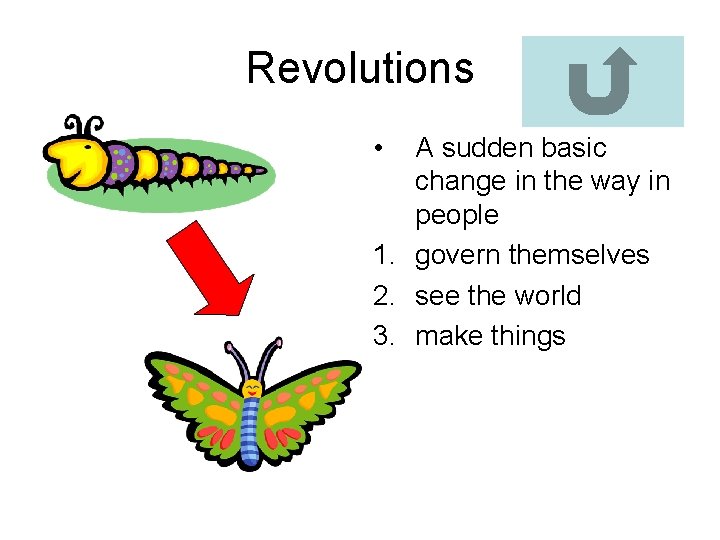
Revolutions • A sudden basic change in the way in people 1. govern themselves 2. see the world 3. make things
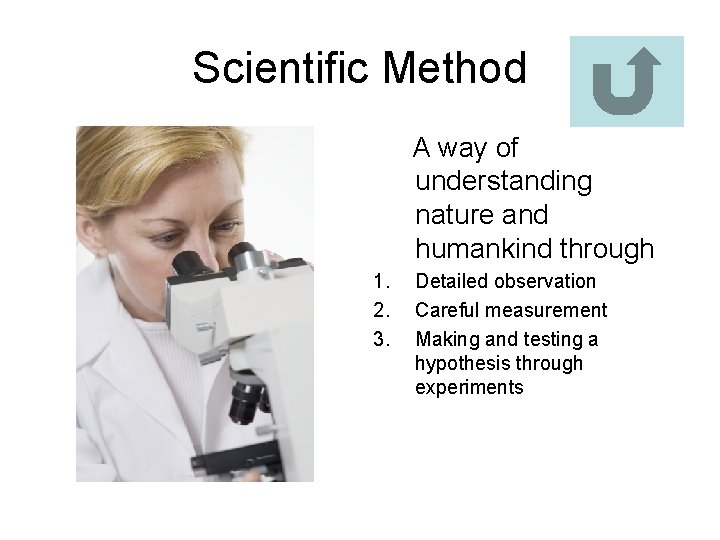
Scientific Method A way of understanding nature and humankind through 1. 2. 3. Detailed observation Careful measurement Making and testing a hypothesis through experiments
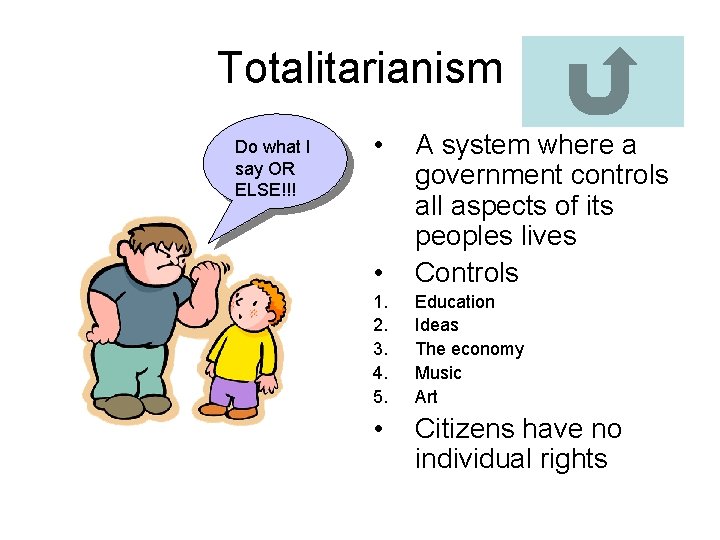
Totalitarianism Do what I say OR ELSE!!! • • A system where a government controls all aspects of its peoples lives Controls 1. 2. 3. 4. 5. Education Ideas The economy Music Art • Citizens have no individual rights
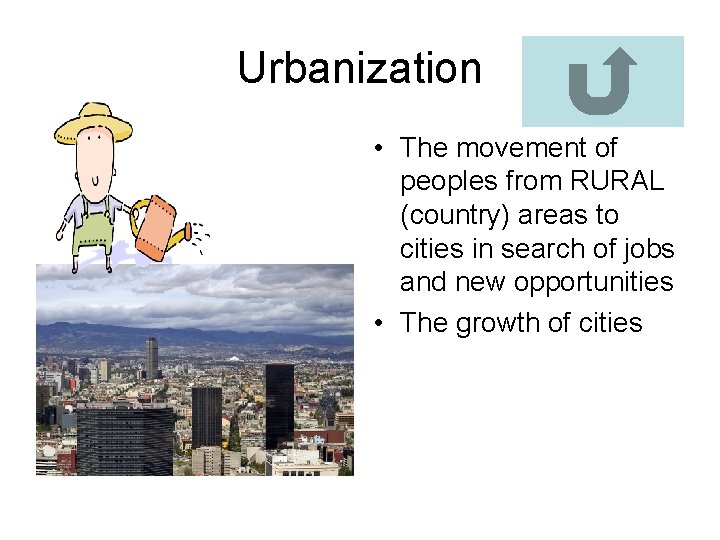
Urbanization • The movement of peoples from RURAL (country) areas to cities in search of jobs and new opportunities • The growth of cities
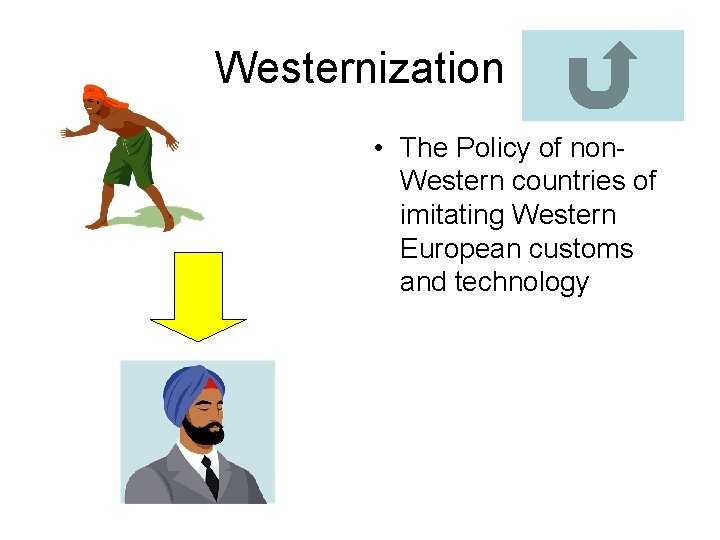
Westernization • The Policy of non. Western countries of imitating Western European customs and technology
- Slides: 30