
Refugees Refugee Claimants and Access to Care Dr
- Slides: 31
Refugees, Refugee Claimants and Access to Care Dr. Gillian Morantz Pediatrician, MCH MUHC Health Equity Symposium
Outline • • Immigration categories Challenges in accessing healthcare Health issues Proposed solutions
IMMIGRATION CATEGORIES
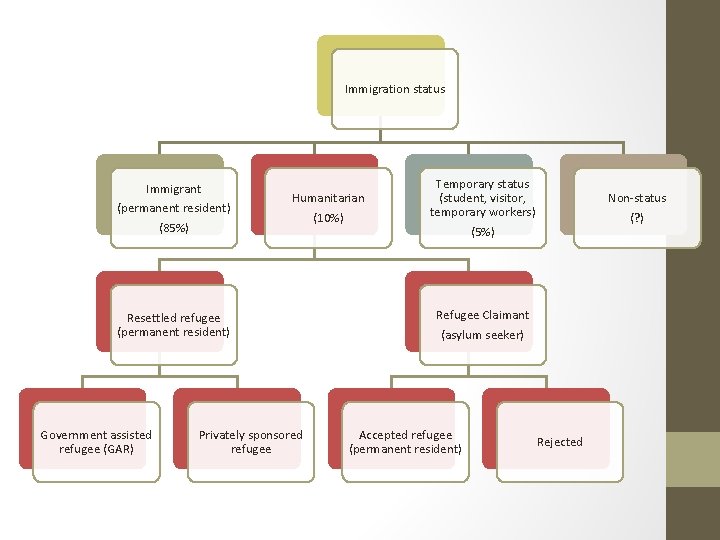
Displaced persons • Resettled refugee • Forced to flee country • Conflict, persecution, violence, violations of human rights • Accepted as refugee before arriving in Canada • Refugee Claimant • Enters country by own means and makes refugee claim at border or within Canada • Undergoes quasi-judicial process to determine if claim is accepted • Immigrant • Voluntary resettlement in another country • E. g. for work purposes, reunite with family members
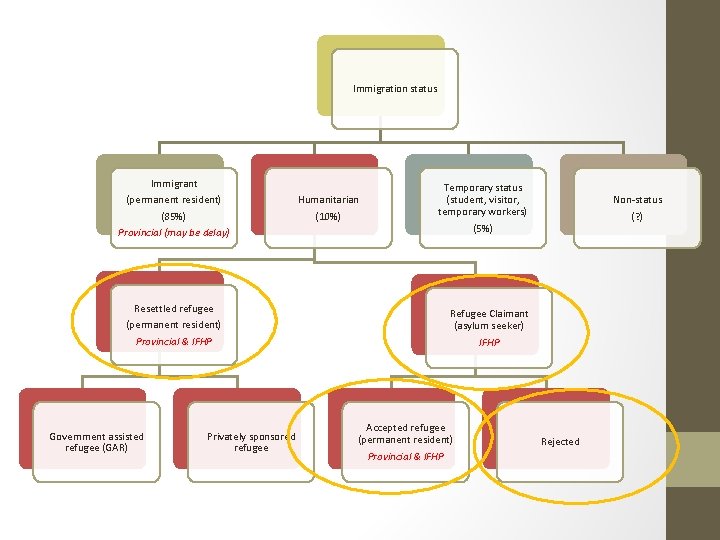
Immigration status Immigrant (permanent resident) (85%) Humanitarian (10%) Resettled refugee (permanent resident) Government assisted refugee (GAR) Privately sponsored refugee Temporary status (student, visitor, temporary workers) (5%) Non-status (? ) Refugee Claimant (asylum seeker) Accepted refugee (permanent resident) Rejected
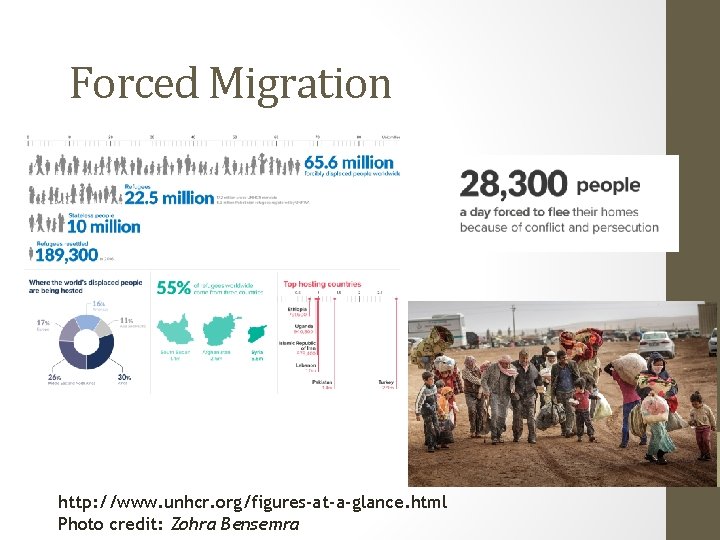
Forced Migration http: //www. unhcr. org/figures-at-a-glance. html Photo credit: Zohra Bensemra
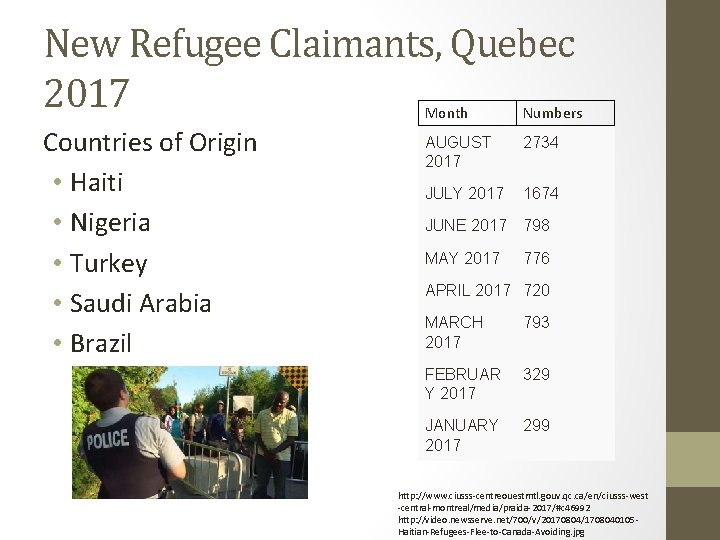
New Refugee Claimants, Quebec 2017 Countries of Origin • Haiti • Nigeria • Turkey • Saudi Arabia • Brazil Month Numbers AUGUST 2017 2734 JULY 2017 1674 JUNE 2017 798 MAY 2017 776 APRIL 2017 720 MARCH 2017 793 FEBRUAR Y 2017 329 JANUARY 2017 299 http: //www. ciusss-centreouestmtl. gouv. qc. ca/en/ciusss-west -central-montreal/media/praida-2017/#c 46992 http: //video. newsserve. net/700/v/20170804/1708040105 Haitian-Refugees-Flee-to-Canada-Avoiding. jpg
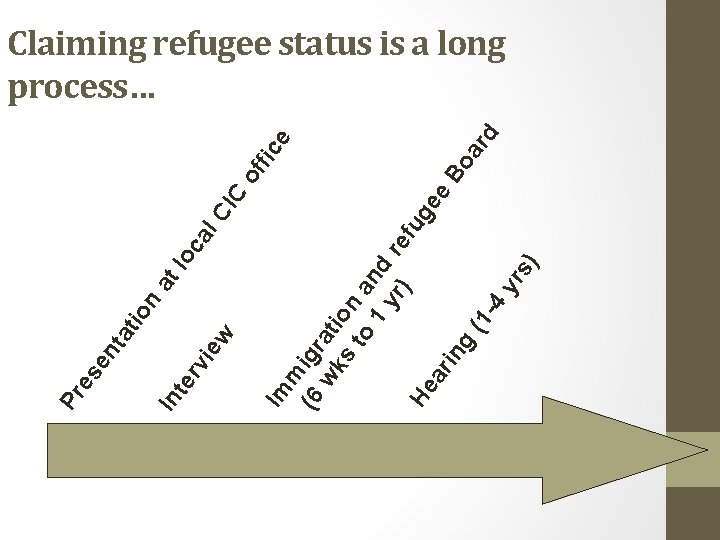
te ti o w ta ie en rv es n at lo ca l. C IC of fi c Im e m (6 i g r w k a ti s on to a 1 nd yr re ) fu He ge ar e in Bo g ar (1 d -4 yr s) In Pr Claiming refugee status is a long process…
…with an uncertain outcome i. Stockphoto
CHALLENGES TO ACCESSING HEALTHCARE
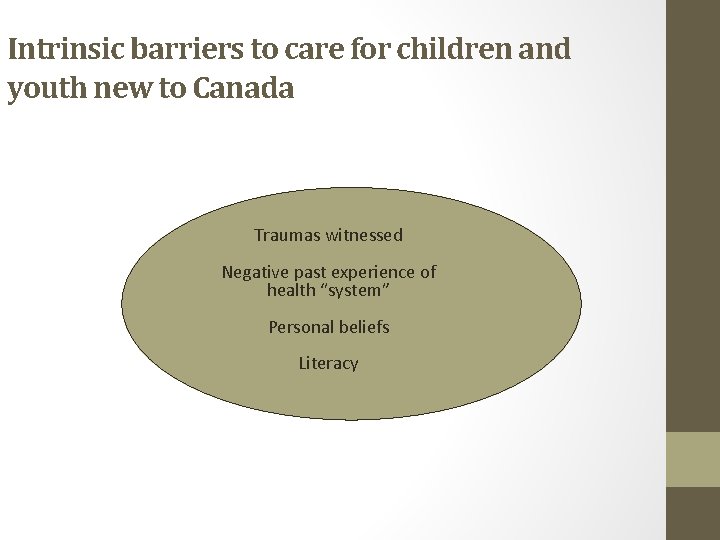
Intrinsic barriers to care for children and youth new to Canada Traumas witnessed Negative past experience of health “system” Personal beliefs Literacy
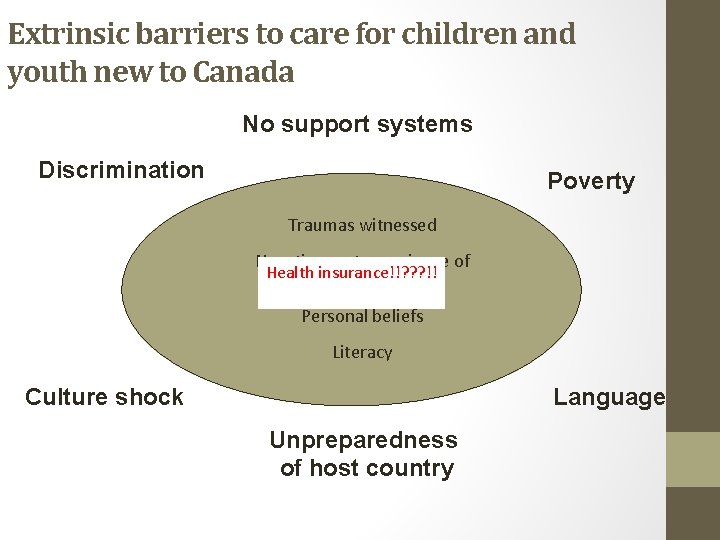
Extrinsic barriers to care for children and youth new to Canada No support systems Discrimination Poverty Traumas witnessed Negative past experience of Health insurance!!? ? ? !! health “system” Personal beliefs Literacy Culture shock Language Unpreparedness of host country
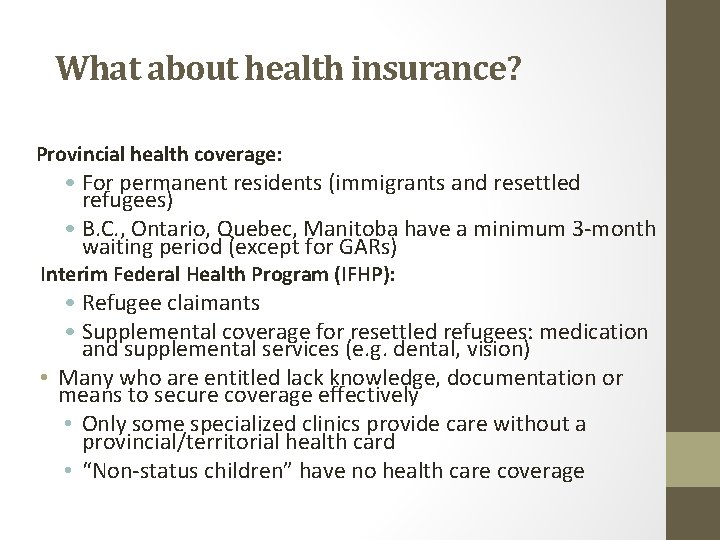
What about health insurance? Provincial health coverage: • For permanent residents (immigrants and resettled refugees) • B. C. , Ontario, Quebec, Manitoba have a minimum 3 -month waiting period (except for GARs) Interim Federal Health Program (IFHP): • Refugee claimants • Supplemental coverage for resettled refugees: medication and supplemental services (e. g. dental, vision) • Many who are entitled lack knowledge, documentation or means to secure coverage effectively • Only some specialized clinics provide care without a provincial/territorial health card • “Non-status children” have no health care coverage
Immigration status Immigrant (permanent resident) (85%) Provincial (may be delay) Resettled refugee (permanent resident) Provincial & IFHP Government assisted refugee (GAR) Privately sponsored refugee Humanitarian (10%) Temporary status (student, visitor, temporary workers) (5%) Non-status (? ) Refugee Claimant (asylum seeker) IFHP Accepted refugee (permanent resident) Provincial & IFHP Rejected
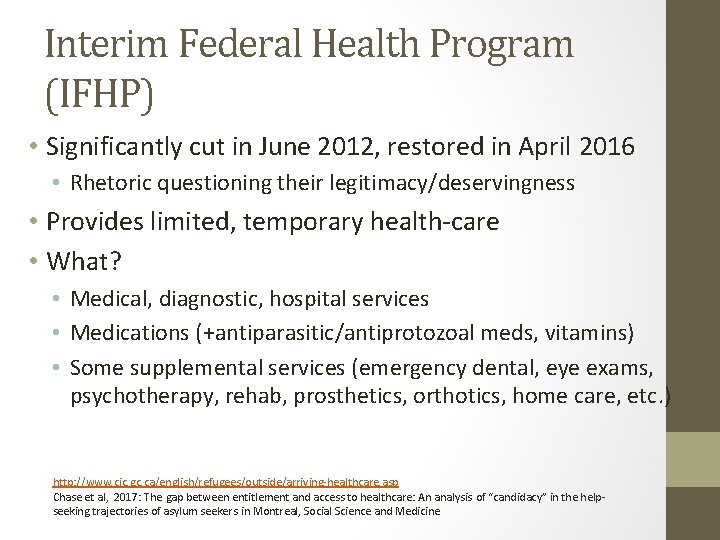
Interim Federal Health Program (IFHP) • Significantly cut in June 2012, restored in April 2016 • Rhetoric questioning their legitimacy/deservingness • Provides limited, temporary health-care • What? • Medical, diagnostic, hospital services • Medications (+antiparasitic/antiprotozoal meds, vitamins) • Some supplemental services (emergency dental, eye exams, psychotherapy, rehab, prosthetics, orthotics, home care, etc. ) http: //www. cic. gc. ca/english/refugees/outside/arriving-healthcare. asp Chase et al, 2017: The gap between entitlement and access to healthcare: An analysis of “candidacy” in the helpseeking trajectories of asylum seekers in Montreal, Social Science and Medicine
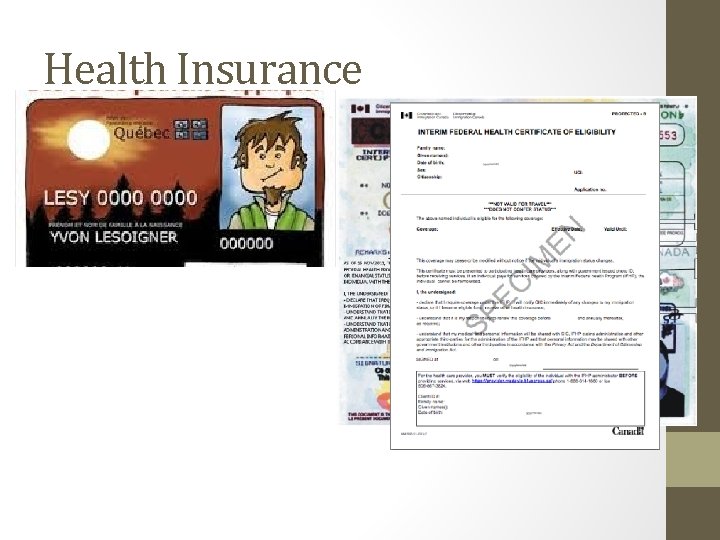
Health Insurance
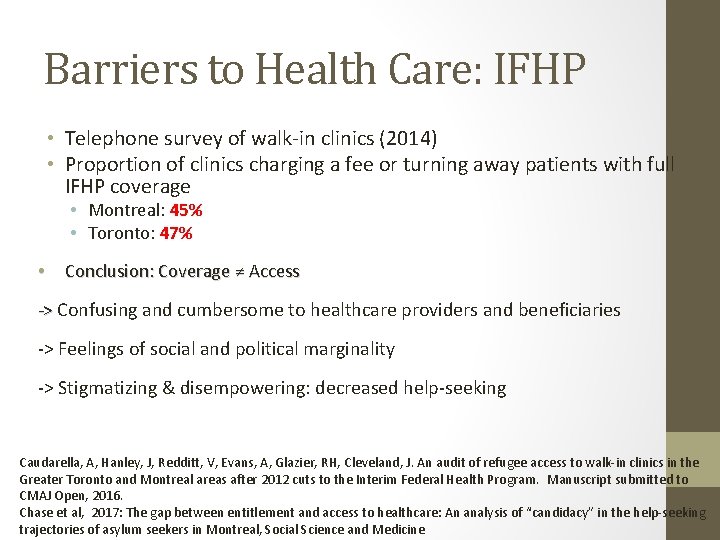
Barriers to Health Care: IFHP • Telephone survey of walk-in clinics (2014) • Proportion of clinics charging a fee or turning away patients with full IFHP coverage • Montreal: 45% • Toronto: 47% • Conclusion: Coverage ≠ Access -> Confusing and cumbersome to healthcare providers and beneficiaries -> Feelings of social and political marginality -> Stigmatizing & disempowering: decreased help-seeking Caudarella, A, Hanley, J, Redditt, V, Evans, A, Glazier, RH, Cleveland, J. An audit of refugee access to walk-in clinics in the Greater Toronto and Montreal areas after 2012 cuts to the Interim Federal Health Program. Manuscript submitted to CMAJ Open, 2016. Chase et al, 2017: The gap between entitlement and access to healthcare: An analysis of “candidacy” in the help-seeking trajectories of asylum seekers in Montreal, Social Science and Medicine
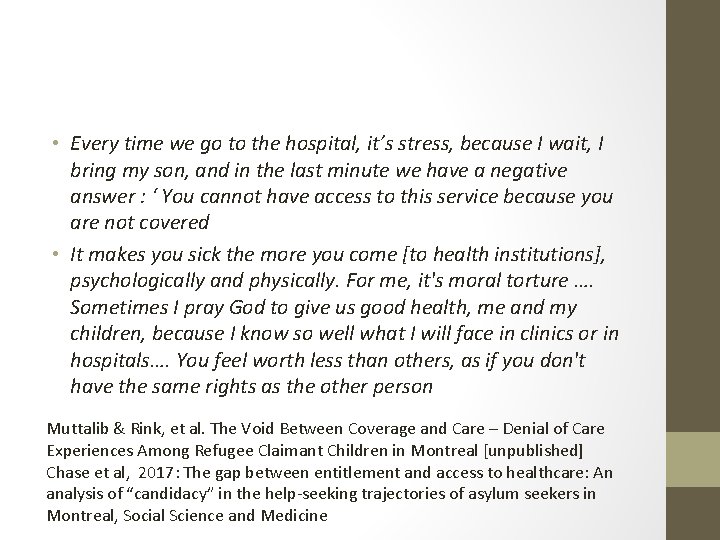
• Every time we go to the hospital, it’s stress, because I wait, I bring my son, and in the last minute we have a negative answer : ‘ You cannot have access to this service because you are not covered • It makes you sick the more you come [to health institutions], psychologically and physically. For me, it's moral torture …. Sometimes I pray God to give us good health, me and my children, because I know so well what I will face in clinics or in hospitals…. You feel worth less than others, as if you don't have the same rights as the other person Muttalib & Rink, et al. The Void Between Coverage and Care – Denial of Care Experiences Among Refugee Claimant Children in Montreal [unpublished] Chase et al, 2017: The gap between entitlement and access to healthcare: An analysis of “candidacy” in the help-seeking trajectories of asylum seekers in Montreal, Social Science and Medicine
HEALTH ISSUES
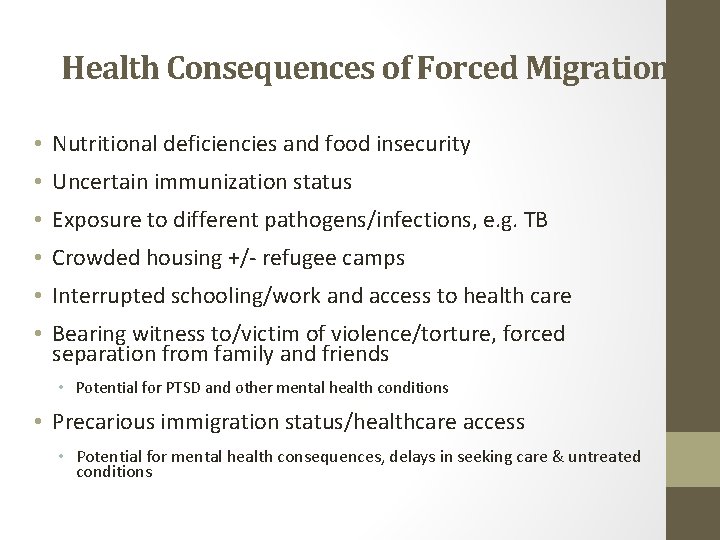
Health Consequences of Forced Migration • Nutritional deficiencies and food insecurity • Uncertain immunization status • Exposure to different pathogens/infections, e. g. TB • Crowded housing +/- refugee camps • Interrupted schooling/work and access to health care • Bearing witness to/victim of violence/torture, forced separation from family and friends • Potential for PTSD and other mental health conditions • Precarious immigration status/healthcare access • Potential for mental health consequences, delays in seeking care & untreated conditions
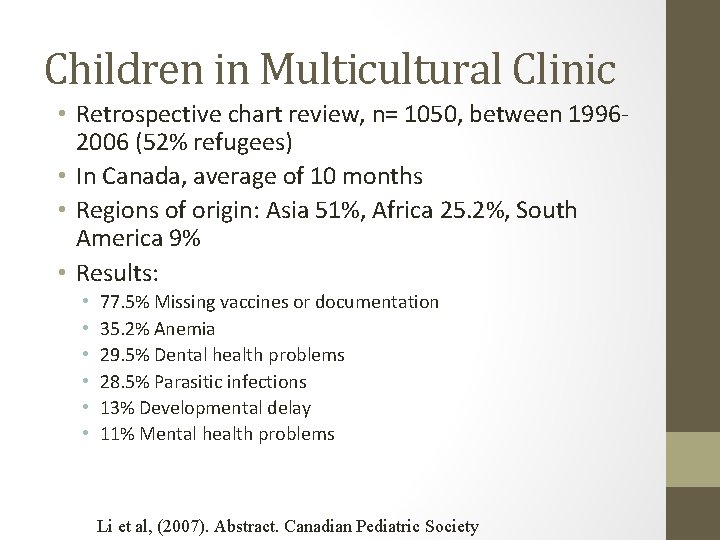
Children in Multicultural Clinic • Retrospective chart review, n= 1050, between 19962006 (52% refugees) • In Canada, average of 10 months • Regions of origin: Asia 51%, Africa 25. 2%, South America 9% • Results: • • • 77. 5% Missing vaccines or documentation 35. 2% Anemia 29. 5% Dental health problems 28. 5% Parasitic infections 13% Developmental delay 11% Mental health problems Li et al, (2007). Abstract. Canadian Pediatric Society
PROPOSED SOLUTIONS
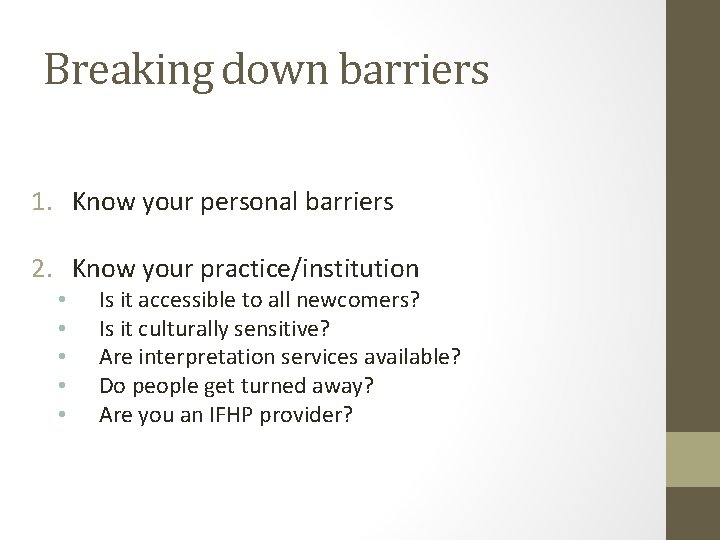
Breaking down barriers 1. Know your personal barriers 2. Know your practice/institution • • • Is it accessible to all newcomers? Is it culturally sensitive? Are interpretation services available? Do people get turned away? Are you an IFHP provider?
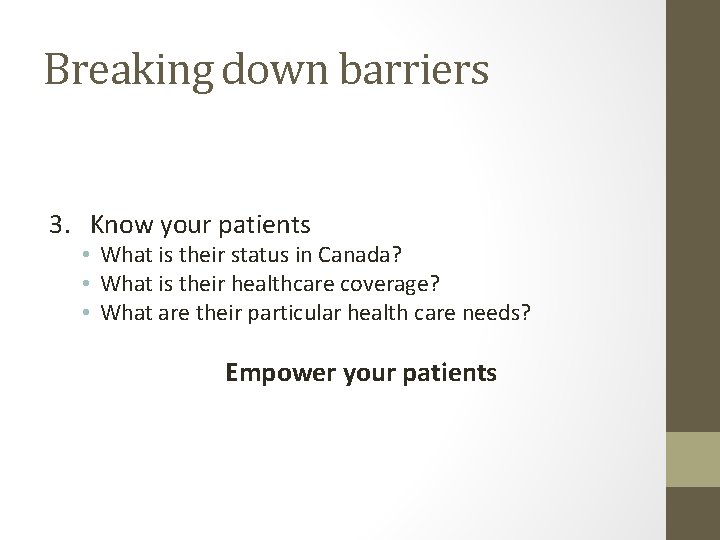
Breaking down barriers 3. Know your patients • What is their status in Canada? • What is their healthcare coverage? • What are their particular health care needs? Empower your patients
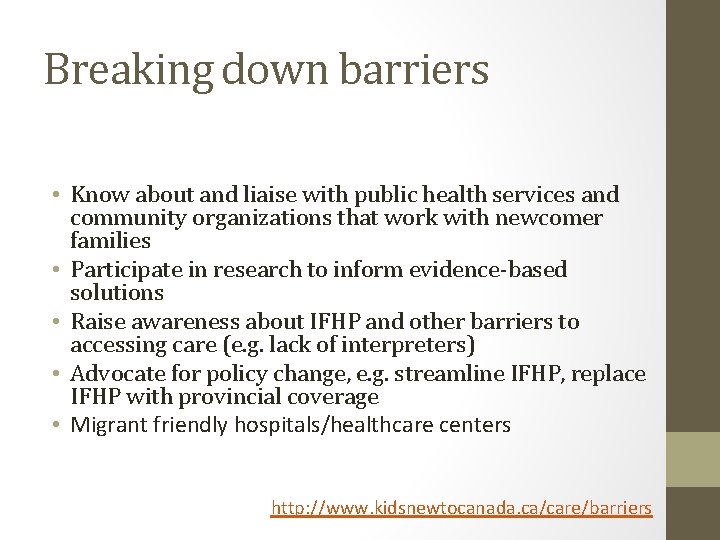
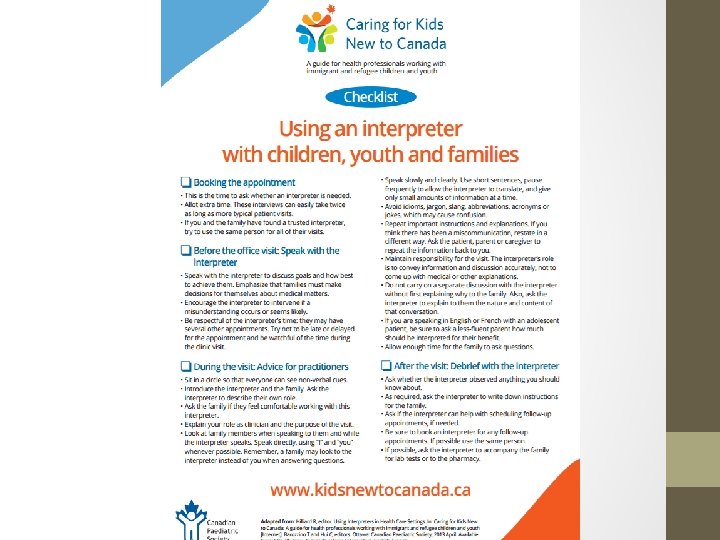
Breaking down barriers • Know about and liaise with public health services and community organizations that work with newcomer families • Participate in research to inform evidence-based solutions • Raise awareness about IFHP and other barriers to accessing care (e. g. lack of interpreters) • Advocate for policy change, e. g. streamline IFHP, replace IFHP with provincial coverage • Migrant friendly hospitals/healthcare centers http: //www. kidsnewtocanada. ca/care/barriers
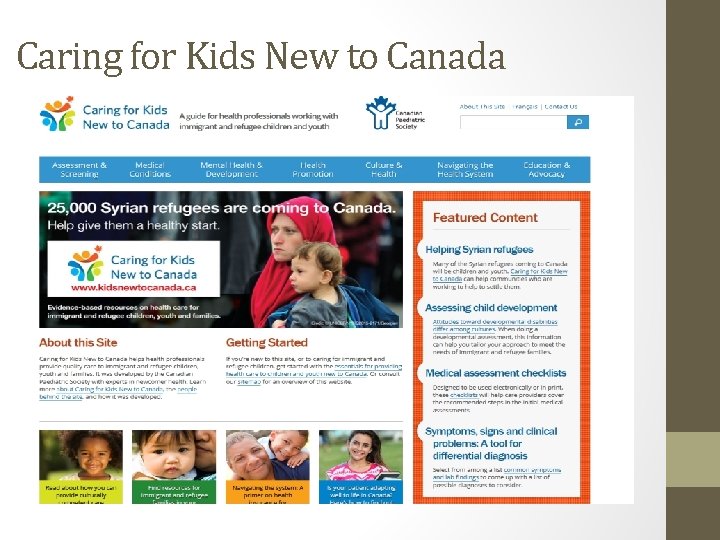
Caring for Kids New to Canada
Resources • • • Multicultural clinic YMCA CDAR/PRAIDA Centre de services préventifs de Cote des Neiges Action Refugiés Montréal Maison d’Haiti Baobab familial Maison Bleu www. kidsnewtocanada. ca
Children’s Without Borders • Multi-disciplinary advocacy group at the MCH • Promote and advocate for improved access to health care for immigrant, refugee claimant and nonstatus children • Activities: • Raise awareness among healthcare community • Create partnerships with front-line organizations • Advocate for policy changes to improve access for this vulnerable population
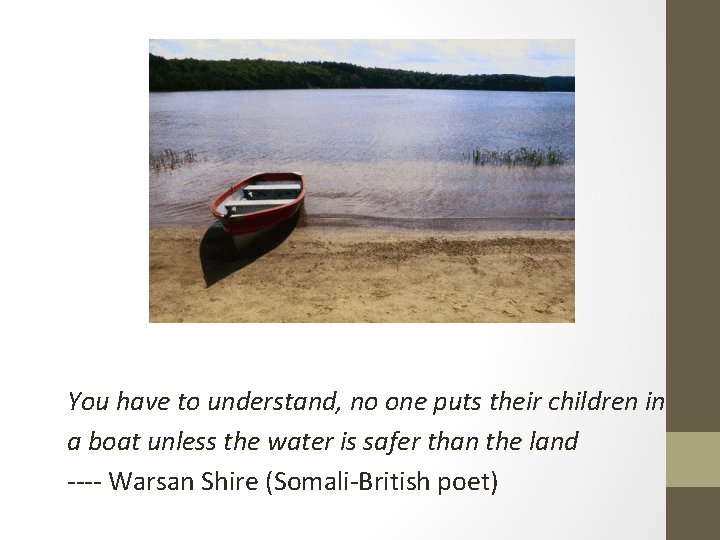
You have to understand, no one puts their children in a boat unless the water is safer than the land ---- Warsan Shire (Somali-British poet)
Acknowledgements • Children’s Without Borders Grand Rounds March 2017 (Esli Osmanlliu, Patricia Li, Gillian Seidman, Samir Shaheen. Hussain) • Elisa Ruano Cea