
Refugees A Legal Discussion Nicole Lindbergh 11 18
Refugees: A Legal Discussion Nicole Lindbergh 11. 18. 17
“ No one would leave home unless home chased you, fire under feet, hot blood in your belly. ” Home, by Warsan Shire
The Crisis You Know: • 51% of refugees are children. • 55% of refugees come from: • Syria (5. 5 million) • Afghanistan (2. 5 million) • South Sudan (1. 4 million) • 65. 6 million displaced people in the world (UNHCR 2017) • 22. 5 million refugees • 40. 3 million internally displaced people • 2. 8 million asylum seekers
1 What is a refugee? 2 What are the rights of refugees? 3 Why and how do they leave? 4 5 What happens to refugees? What are the legal mechanisms that protect refugees? Learning Objectives: 6 What are our obligations towards them?
“ No one would choose to crawl under fences, be beaten until your shadow leaves you, raped, then drowned, forced to the bottom of the boat because you are darker, be sold, starved, shot at the border like a sick animal, be pitied, lost your name, lose your family, make a refugee camp a home for a year or two or ten, stripped and searched, find prison everywhere ” Home, by Warsan Shire
What is a refugee?
Any person who: “owing to a well-founded fear of being persecuted for reasons of race, religion, nationality, membership of a particular social group or political opinion, is outside the country of his nationality and is unable or, owing to such fear, is unwilling to avail himself of the protection of that country; or, who, not having a nationality and being outside the country of his former habitual residence as a result of such events is unable, or, owing to such fear, is unwilling to return to it. ” –UN Convention on Refugees, 1951, revised 1967 What is a refugee?
What does that mean? • You must be persecuted. • You must not have protection on the basis of your nationality or citizenship. • You must be unable to return to your home country based on that fear of persecution.
“ No one leaves home unless home is the mouth of a shark you only run for the border when you see the whole city running as well. Home, by Warsan Shire ”
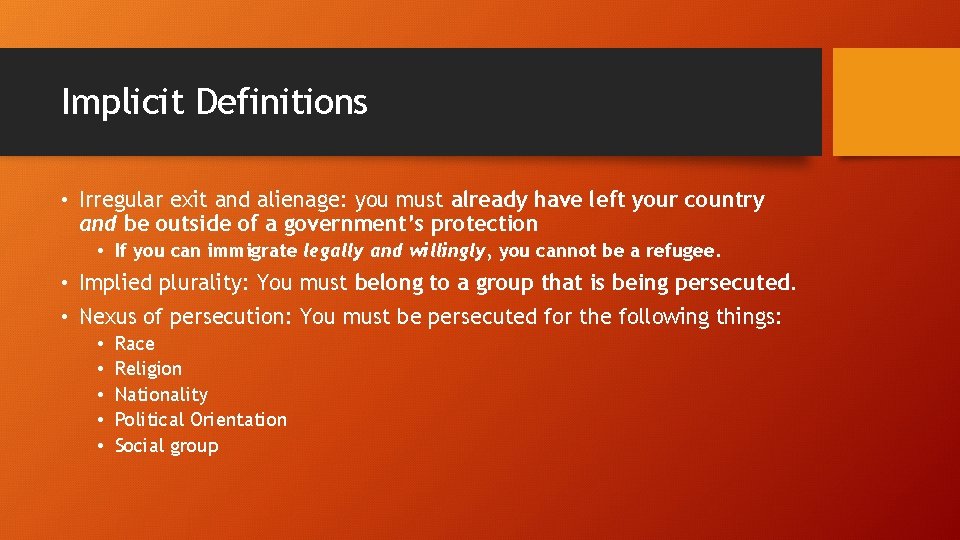
Implicit Definitions • Irregular exit and alienage: you must already have left your country and be outside of a government’s protection • If you can immigrate legally and willingly, you cannot be a refugee. • Implied plurality: You must belong to a group that is being persecuted. • Nexus of persecution: You must be persecuted for the following things: • • • Race Religion Nationality Political Orientation Social group
What are the rights of refugees?
What is a refugee? Any person who: “owing to a well-founded fear of being persecuted for reasons of race, religion, nationality, membership of a particular social group or political opinion, is outside the country of his nationality and is unable or, owing to such fear, is unwilling to avail himself of the protection of that country; or, who, not having a nationality and being outside the country of his former habitual residence as a result of such events is unable, or, owing to such fear, is unwilling to return to it. ” 1951, revised 1967 –UN Convention on Refugees,
Rights: Dignity Protection against refoulment Citizenship
BIG DISTINCTION Refugees, ultimately, are deprived of citizenship, and are therefore entitled to citizenship. They are not entitled to specific citizenship or hosting in specific countries
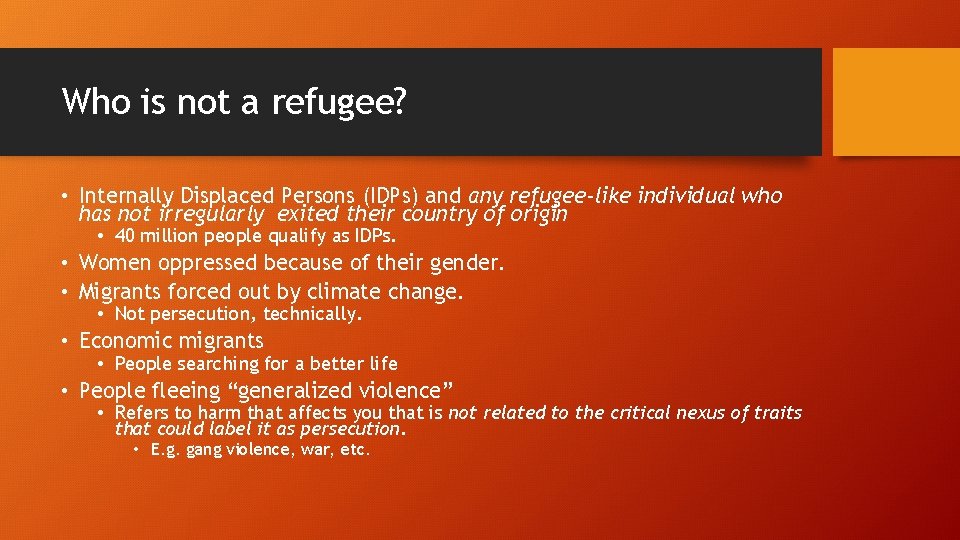
Who is not a refugee? • Internally Displaced Persons (IDPs) and any refugee-like individual who has not irregularly exited their country of origin • 40 million people qualify as IDPs. • Women oppressed because of their gender. • Migrants forced out by climate change. • Not persecution, technically. • Economic migrants • People searching for a better life • People fleeing “generalized violence” • Refers to harm that affects you that is not related to the critical nexus of traits that could label it as persecution. • E. g. gang violence, war, etc.
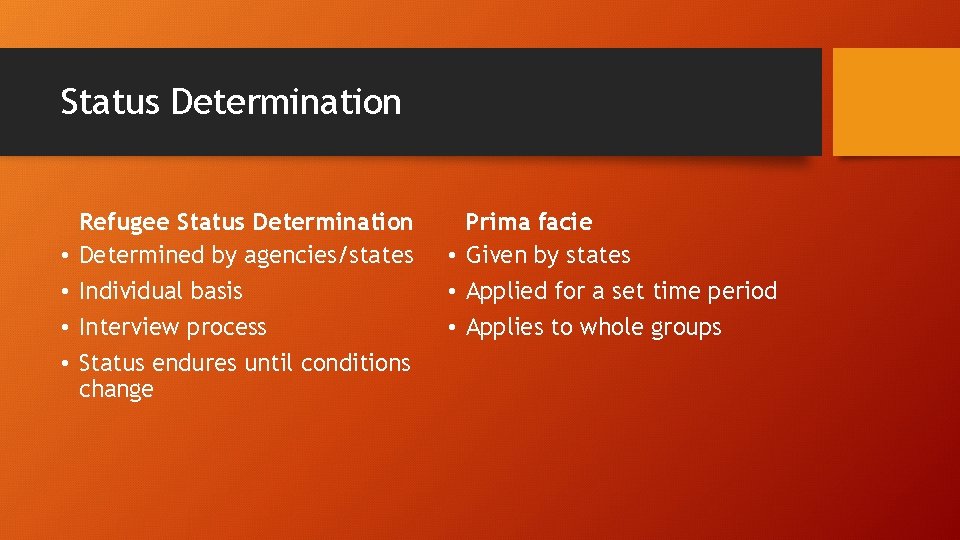
Status Determination • • Refugee Status Determination Determined by agencies/states Individual basis Interview process Status endures until conditions change Prima facie • Given by states • Applied for a set time period • Applies to whole groups
“ You have to understand, no one puts their children in a boat unless the water is safer than the land ” Home, by Warsan Shire
VOLUNTARY repatriation Three Durable Solutions of Refugees: Local integration Resettlement
How do they leave?
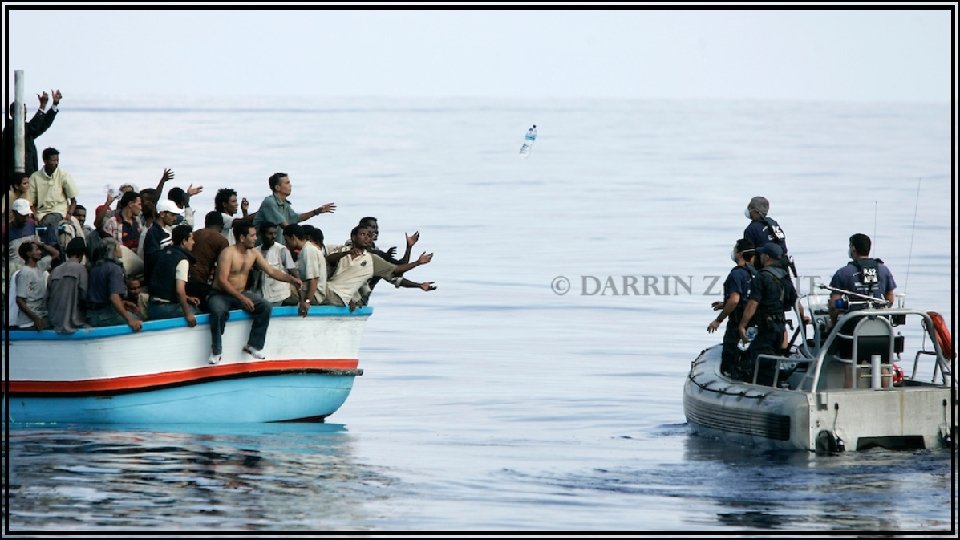
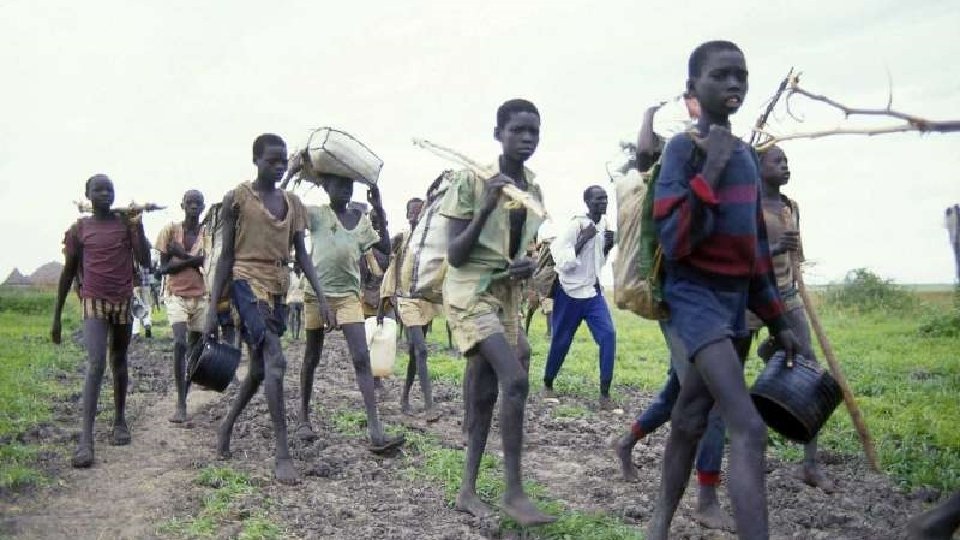
Irregular Exit By Sea • Extremely treacherous • Interdiction possible… • Operation Vigilant Sentry • Australia’s aggressive interdiction policy By Land • Illegally crossing borders • Weeks or months of walking • Smugglers • For profit illegal smugglers • Friendly smugglers • Churches, ironically
“ Who would choose to spend days and nights in the stomach of a truck unless the miles travelled meant something more than journey. Home, by Warsan Shire ”
What are the legal mechanisms protecting refugees?
Adjudicative procedures Host Countries • Harbor impermanently refugees until they are repatriated, resettled, or are allowed to integrate. • Right to asylum Convention Signatories • Obligated to perform adjudicative procedures themselves or to disjunctively adjudicate them through intermediates • Refugee Status Determination (RSD) • Prima facie status
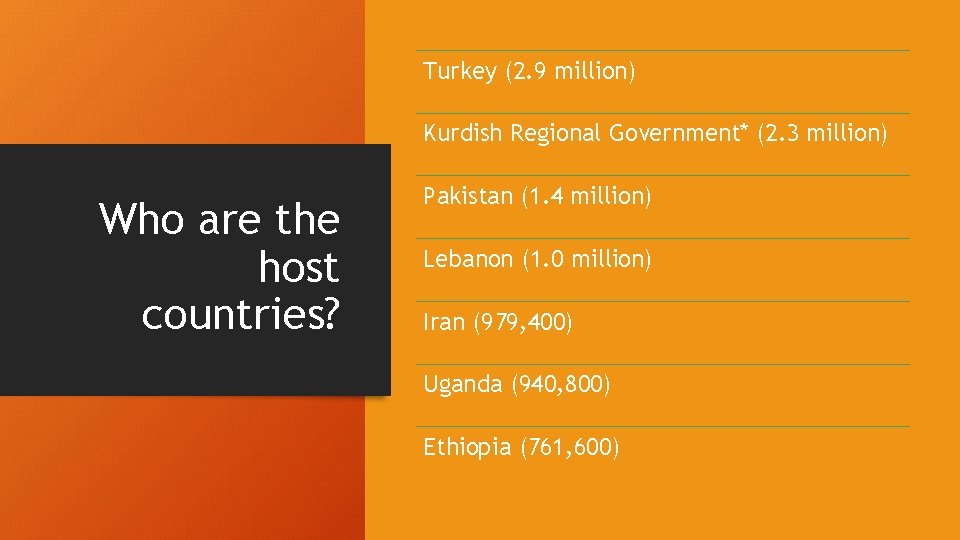
Turkey (2. 9 million) Kurdish Regional Government* (2. 3 million) Who are the host countries? Pakistan (1. 4 million) Lebanon (1. 0 million) Iran (979, 400) Uganda (940, 800) Ethiopia (761, 600)
What happens to refugees?
“ No one chooses refugee camps or strip searches where your body is left aching, or prison, because prison is safer than a city of fire and one prison guard in the night is better than a truckload of men, who look like your father no one could take it no one could stomach it no one skin is tough enough. Home, by Warsan Shire ”
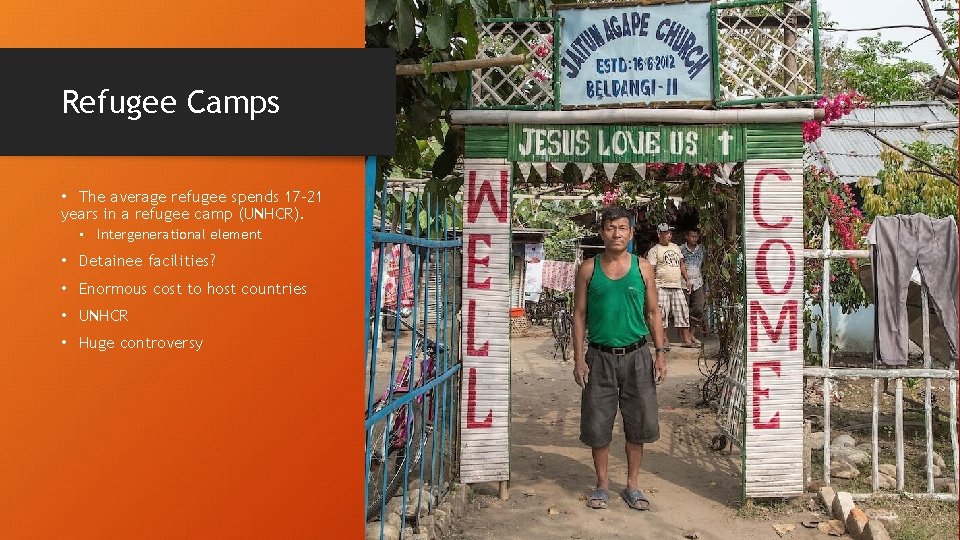
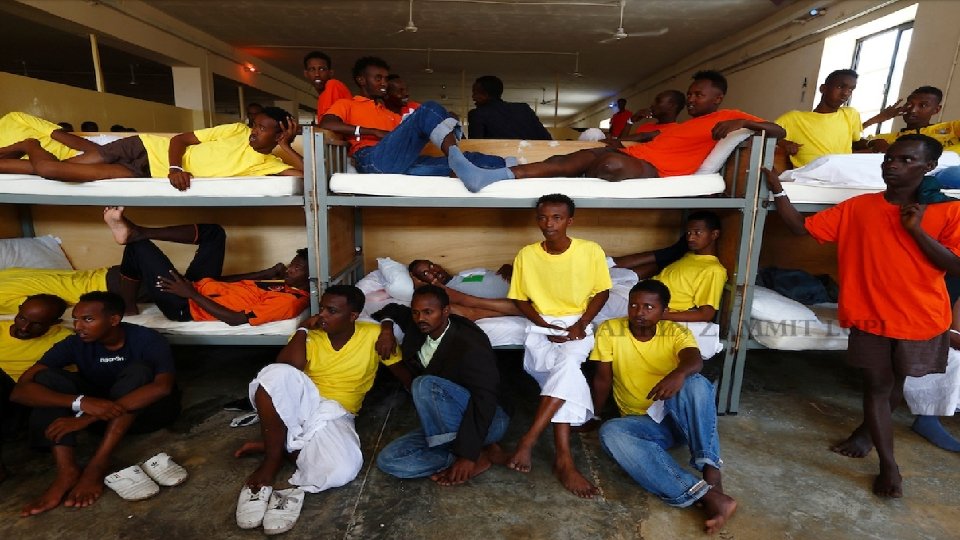
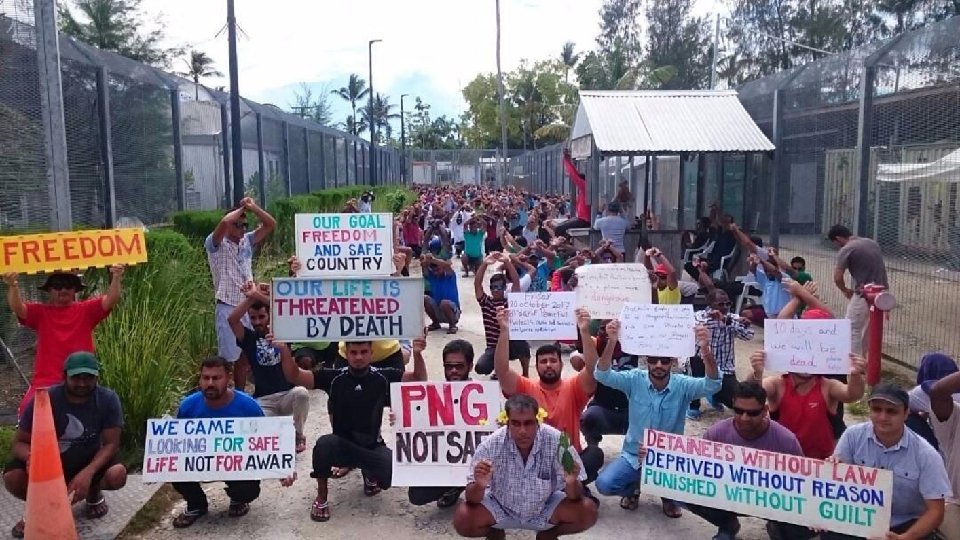
Refugee Camps • The average refugee spends 17 -21 years in a refugee camp (UNHCR). • Intergenerational element • Detainee facilities? • Enormous cost to host countries • UNHCR • Huge controversy
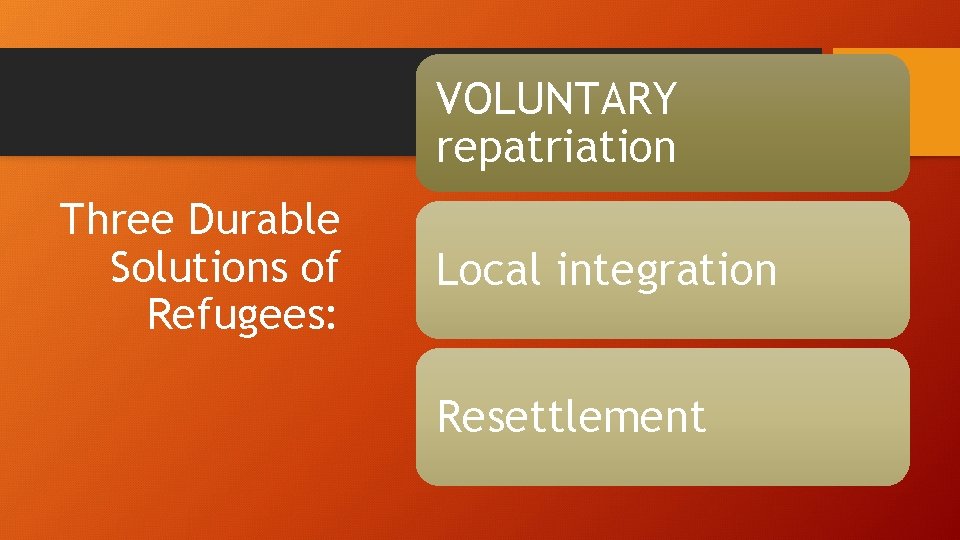
VOLUNTARY repatriation Three Durable Solutions of Refugees: Local integration Resettlement
552, 200 refugees returned in 2016 Repatriation Most returned to Afghanistan Protection against refoulment still stands: must be voluntary
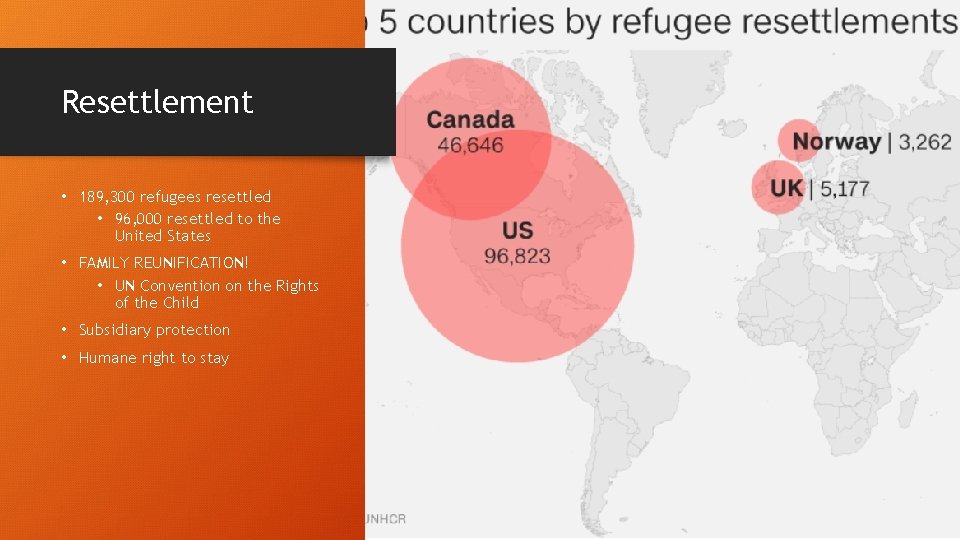
Resettlement • 189, 300 refugees resettled • 96, 000 resettled to the United States • FAMILY REUNIFICATION! • UN Convention on the Rights of the Child • Subsidiary protection • Humane right to stay
“ And if you survive and you are greeted on the other side, with go home blacks, refugees, dirty immigrants, asylum seekers sucking our country dry of milk… look what they’ve done to their own countries what will they do to ours? ” Home, by Warsan Shire
What are our obligations towards them?
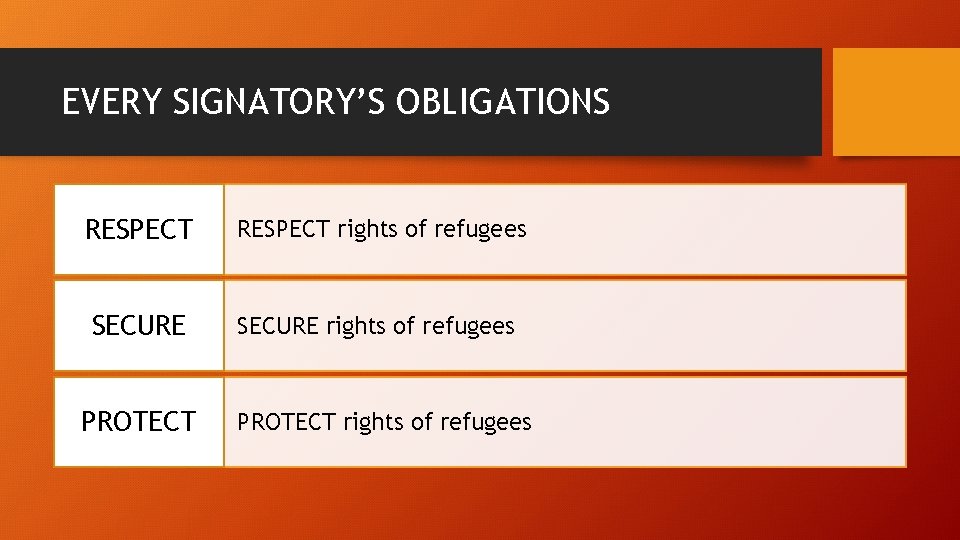
EVERY SIGNATORY’S OBLIGATIONS RESPECT rights of refugees SECURE rights of refugees PROTECT rights of refugees
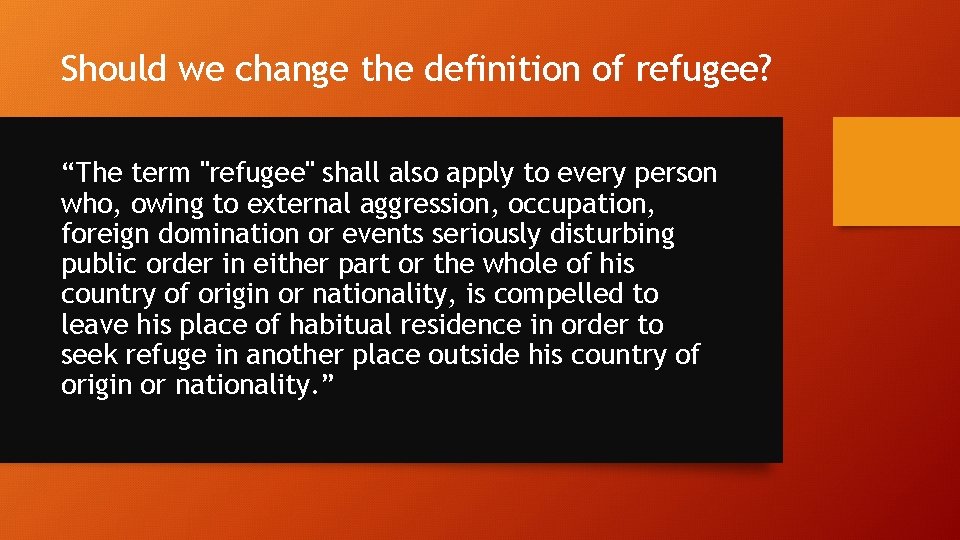
Should we change the definition of refugee? “The term "refugee" shall also apply to every person who, owing to external aggression, occupation, foreign domination or events seriously disturbing public order in either part or the whole of his country of origin or nationality, is compelled to leave his place of habitual residence in order to seek refuge in another place outside his country of origin or nationality. ”
“ Ishark want to go home, but home is the mouth of a home is the barrel of the gun and no one would leave home unless home chased you to the shore Home, by Warsan Shire ”
- Slides: 39